分类: business

  • Belize sugar cane harvest and milling season starts

    Belize sugar cane harvest and milling season starts

    BELMOPAN, Belize – The 2026 sugarcane harvest and milling season has officially commenced in Northern Belize, signaling the beginning of what industry leaders project to be a remarkably productive crop year characterized by strengthened collaboration, improved agricultural conditions, and promising output forecasts.

    Prime Minister John Briceño delivered an inspiring address during the season’s inauguration, praising the resilience of sugarcane farmers who persevered through significant challenges including disease outbreaks, labor shortages, climate change impacts, rising operational costs, and scheduling delays. “Rather than retreating in the face of adversity, you demonstrated remarkable entrepreneurship by continuing to plant, maintain, and prepare your fields,” Briceño stated. “Your dedication has sustained families and communities across the region, earning the nation’s gratitude.”

    The season opening ceremony gathered government representatives, members of the Belize Sugarcane Farmers Associations, and milling company executives. Officials reported substantially healthier cane fields, superior harvest quality, and enhanced operational preparedness throughout the industry compared to previous seasons.

    Comprehensive preparatory efforts by farmers, associations, millers, and technical partners have established the foundation for a timely, efficient, and productive harvesting and milling process. These measures include advanced field management protocols, intensified disease surveillance systems, and beneficial weather patterns that have collectively contributed to a more stable and promising agricultural outlook.

    Early performance indicators already demonstrate improved cane quality and a more streamlined initiation of milling operations, suggesting favorable economic outcomes for both agricultural producers and the broader Belizean economy.

    The 2026 crop exemplifies unprecedented coordination across the entire sugarcane value chain, encompassing harvesting, transportation, and milling activities. This integrated approach is expected to enhance operational efficiency and strengthen industry resilience throughout the season.

    As harvesting and milling operations commence, the sugarcane sector begins with renewed confidence, unified purpose, and widespread optimism for achieving a safe, productive, and successful harvest for all stakeholders involved.

    This development follows December’s interim agreement between the Belize Sugar Cane Farmers Association and American Sugar Refinery/Belize Sugar Industries Ltd, which facilitated the current season’s launch. Authorities anticipate the season will yield approximately 1.3 million tonnes of sugarcane for processing.


  • NGC, EOG sign gas supply agreement

    NGC, EOG sign gas supply agreement

    In a significant development for Trinidad and Tobago’s energy sector, the National Gas Company (NGC) has finalized a major natural gas supply arrangement with upstream producer EOG Resources Trinidad Ltd. The agreement, announced on January 16, represents a strategic move to ensure sustained and reliable gas delivery to the domestic energy market.

    NGC Chairman Gerald Ramdeen characterized the agreement as a milestone achievement that demonstrates the company’s determined efforts to collaborate with upstream partners in securing commercially viable natural gas supplies. This development follows closely on NGC’s recent acquisition of the Trinidad Region Onshore Compressor (TROC) asset, collectively forming part of a comprehensive strategy to stabilize gas availability and restore profitability to the company’s core operations.

    The successfully negotiated arrangement concludes what both parties describe as mutually beneficial terms. However, the announcement contained pointed criticism of previous energy policies, noting that the current administration has adopted a fundamentally different approach to gas allocation compared to the former government.

    Specifically, the release cited the bpTT Cypre project as an example of previous failed policy—a project delivering 250 million standard cubic feet of gas daily at peak capacity without guaranteeing any portion for domestic market needs. The new policy ethos embraced by both NGC and the Ministry of Energy and Energy Industries mandates that future natural gas exploration must include proportional allocations for domestic consumption.

    The additional gas supply will enable NGC to meet its contractual commitments to Atlantic LNG while simultaneously increasing availability for downstream customers. Negotiations were spearheaded by acting NGC president Edmund Subryan, supported by specialized legal and commercial teams, who continue to advance additional gas supply stabilization initiatives with board-level and ministerial support.

  • Govt negotiates sale of CL Financial shares to Proman, ends Privy Council appeal

    Govt negotiates sale of CL Financial shares to Proman, ends Privy Council appeal

    The Trinidadian government has reached a landmark settlement to terminate a high-stakes Privy Council appeal concerning the controversial 2009 sale of CL Financial assets, a case described as posing a “serious threat to the country’s economic well-being.”

    The Office of the Attorney General announced on January 19 that the state, as majority shareholder and largest creditor of collapsed conglomerate CL Financial Ltd (CLF), has opted to discontinue the appeal process involving Proman Holdings Barbados Ltd. The decision follows extensive consultation with King’s Counsel in London regarding litigation risks and prospects before the nation’s highest appellate court.

    The dispute originated from a February 2009 purchase agreement where CLF, under then-chairman Lawrence Duprey, attempted to transfer a 51% stake in Clico Energy Company Ltd (now Process Energy Trinidad Ltd) to Proman for US$46.5 million. The transaction was subsequently invalidated by High Court Justice Devindra Rampersad in September 2021, who ruled the company had been “grossly undervalued.” This decision was later upheld by the Court of Appeal, which further characterized the transaction as fraudulent.

    Under the settlement, CLF—with court approval and agreement from its liquidator—will formally transfer the disputed shares to Proman Holdings Barbados Ltd. This compromise allows the government to recover significant funds while avoiding substantial financial and legal risks associated with continuing the litigation. The disputed judgment was valued at over TT$2 billion, encompassing both the original purchase price and dividends collected since 2009.

    Attorney General John Jeremie stated the settlement “balanced the national interest, the prospects of success and the need to protect public finances,” bringing finality to one of the most significant disputes arising from CLF’s collapse. The government has spent an estimated TT$28 billion rescuing CLF and its subsidiaries, with an additional TT$3-4 billion incurred in related legal and administrative expenses.

    In related developments, the Central Bank has sought an adjournment in its long-running lawsuit against former CLF directors, including Duprey (who died in August 2024), to review the newly published Coleman Commission report. Simultaneously, activist Kendal Dolly has filed Freedom of Information requests seeking transparency regarding the substantial legal fees incurred by the state throughout the protracted CLF litigation matters.

  • WINAIR expands to bridge air travel gap between Northern and Southern Caribbean

    WINAIR expands to bridge air travel gap between Northern and Southern Caribbean

    In a significant development for regional aviation, WINAIR has officially expanded its operational network to bridge the long-standing connectivity gap between the Northern and Southern Caribbean. The airline, one of the region’s most established carriers, conducted its inaugural flight to Barbados on January 15, 2026, marking a pivotal moment in Caribbean air travel.

    The historic flight originated from the British Virgin Islands (BVI), with an intermediate stop in St. Kitts and Nevis, before completing the final 75-minute segment to Barbados. This strategic expansion represents a concerted effort to enhance regional integration through improved air transportation infrastructure.

    Barbados Tourism Marketing Inc. officials welcomed the new service with considerable enthusiasm. Chief Operations Officer Cheryl Carter emphasized the route’s significance during arrival ceremonies, noting that it provides essential seat capacity from the Caribbean, which constitutes Barbados’ third-largest tourism market. Carter further elaborated that WINAIR’s entry effectively addresses historical connectivity challenges between the Northern Caribbean and Barbados.

    The new service establishes vital air links between Barbados and key Northern Caribbean destinations including St. Maarten and the British Virgin Islands. Public Relations Manager Belle Hunter characterized the development as reinforcing Barbados’ emerging status as a critical regional aviation hub, while simultaneously demonstrating WINAIR’s strategic investment in the island’s connectivity potential.

    The inaugural flight, commanded by Captain Denrolin Crooke and First Officer Brian Alleyne, received a traditional water cannon salute upon arrival at RLB International Airport despite challenging weather conditions encountered during the return journey. Aviation authorities view this expansion as a substantial step toward creating a more integrated Caribbean transportation network that could stimulate tourism, trade, and regional cooperation.

  • Global economy shows signs of modest uptick despite Trump-era challenges

    Global economy shows signs of modest uptick despite Trump-era challenges

    WASHINGTON, DC — Defying earlier expectations of economic turbulence, the global economy is demonstrating remarkable resilience with the International Monetary Fund projecting 3.3 percent growth for 2026, according to its January World Economic Outlook release. This revised forecast represents a 0.2 percentage point increase from October 2024 estimates, signaling stronger-than-anticipated performance despite persistent trade policy uncertainties.

    The IMF’s analysis, presented during a Brussels media briefing, identifies countervailing forces shaping the economic landscape. While trade disruptions continue to create headwinds, these challenges are being mitigated by robust technological investments—particularly in artificial intelligence—across North America and Asia. Supportive fiscal policies and accommodative financial conditions have further bolstered economic stability.

    Pierre-Olivier Gourinchas, Director of the IMF’s Research Department, emphasized that ‘global activity continues to show notable resilience despite significant trade disruptions and heightened uncertainty.’ The upward revision primarily reflects improved outlooks for both the United States and China, whose economies have absorbed tariff-related shocks more rapidly than initially projected.

    Inflation metrics indicate a gradual moderation, with global headline inflation expected to decline from 4.1 percent in 2025 to 3.8 percent in 2026, eventually easing to 3.4 percent in 2027. This deceleration pattern suggests a more prolonged return to target levels in the United States compared to other major economies. For import-dependent nations like St. Kitts and Nevis, this trend could alleviate pressure on domestic prices resulting from elevated import costs.

    Despite the optimistic revisions, the IMF cautions that risks remain skewed toward the downside. Economic growth is becoming increasingly concentrated within specific sectors, notably information technology and artificial intelligence. The United States has experienced particularly pronounced IT investment, reaching record-high shares of economic output.

    The report highlights potential vulnerabilities in equity markets, where US market capitalization has surged relative to overall economic output. This divergence raises concerns about consumer spending sensitivity to potential market corrections. Additionally, growing foreign exposure to US equities could amplify global spillover effects during periods of market volatility.

    Conversely, the technology boom presents significant upside potential. Should anticipated productivity gains materialize, the IMF estimates global output could increase by an additional 0.3 percent in 2026, providing further momentum to the cautiously optimistic outlook.

  • Mogelijke vervalsing documenten Grassalco-dochter in Guyana

    Mogelijke vervalsing documenten Grassalco-dochter in Guyana

    Serious concerns have emerged regarding the establishment and registration of GuySure Aggregate and Sand Inc, a foreign subsidiary of Suriname’s state-owned mining company Grassalco. Official documents from Guyana reveal that five private individuals were registered as shareholders during the incorporation process, raising fundamental questions about the ownership structure and the legitimacy of this overseas venture.

    Internal investigations within Grassalco have uncovered irregularities in the documentation process surrounding GuySure’s formation. The audit revealed that certain critical documents were scanned and added to the internal system at a later date, without appearing in the regular document flow initially. Administrative deviations from standard procedures were also identified.

    The subsidiary’s launch in May 2025 was publicly promoted by the Surinamese government as Grassalco’s strategic international expansion. Former President Chan Santokhi traveled to Georgetown to inaugurate the company alongside now-suspended CEO Wesley Rozenhout. At the time, no mention was made of individual shareholders in the corporate structure.

    The Guyanese registration records now identify five individuals as shareholders: Wesley Rozenhout, Patrick Bel, Wendy Aminta, Ajay Surjbalising, and Negesty Winter. The relationship between these private shareholders and Grassalco’s status as a state-owned enterprise remains unclear, with no transparency regarding underlying agreements.

    These developments occur amidst broader turmoil at Grassalco. Earlier this month, Rozenhout was suspended by the Board of Commissioners pending an investigation into the disappearance of over four kilograms of gold from the state company. The board cited potential violations of corporate statutes as justification for the suspension.

    In response to the growing crisis, Natascha Kalo has been appointed as delegated commissioner with expanded oversight responsibilities until new leadership is established. The company is currently undergoing a comprehensive ‘quickscan’ assessment while daily operations continue under heightened supervision.

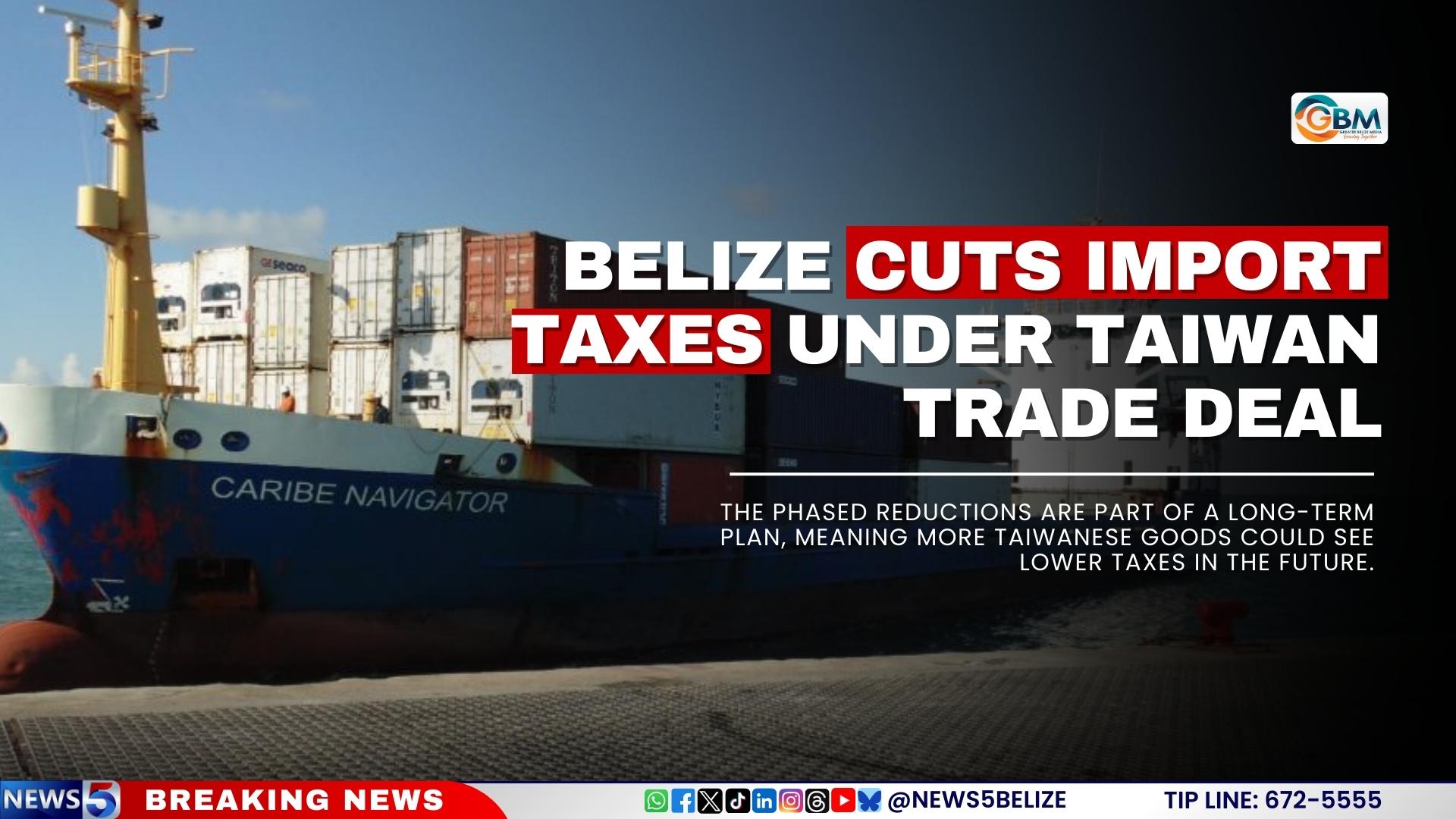
  • Belize Cuts Import Taxes Under Taiwan Trade Deal

    Belize Cuts Import Taxes Under Taiwan Trade Deal

    The Belizean government has enacted the conclusive round of import tariff reductions, marking full implementation of its bilateral trade agreement with Taiwan. Approved by Cabinet on Wednesday, these measures amend the nation’s Customs and Excise Duties legislation to execute the fourth and final phase of scheduled duty eliminations under the Belize-Taiwan Economic Cooperation Agreement (ECA).

    This legislative action fulfills Belize’s contractual obligations under the phased tariff elimination schedule established in the ECA. The revised regulations will immediately reduce import levies on designated categories of Taiwanese merchandise, effectively decreasing their retail prices for Belizean consumers.

    Government officials characterize this development as achieving dual objectives: honoring international trade commitments while simultaneously strengthening economic partnerships with Taiwan. The tariff reductions form part of a strategic, multi-year economic plan designed to enhance bilateral trade flows and increase accessibility of imported goods for the Belizean market.

    Analysts project that continued implementation of such trade facilitation measures will stimulate competitive pricing in domestic markets while fostering deeper economic integration between the two nations. The completed tariff elimination schedule establishes a framework for potential future expansion of trade cooperation initiatives.

  • EU waarschuwt voor economische schade door Trumps heffingenplan

    EU waarschuwt voor economische schade door Trumps heffingenplan

    The European Union has delivered a forceful response to former U.S. President Donald Trump’s announced plan to reinstitute sweeping import tariffs, warning that such protectionist measures could severely damage both European and American economies while undermining transatlantic relations.

    In an official statement released Monday, European officials emphasized that protectionist trade policies typically result in increased business costs, disruption of global supply chains, and elevated consumer prices. The EU specifically highlighted that export-dependent sectors including manufacturing, agriculture, and logistics would likely bear the brunt of the economic impact.

    Brussels pointed to previous trade conflicts as evidence that reciprocal tariffs tend to suppress economic growth and generate financial market volatility. The European Commission stressed that stable trade relationships remain crucial for investment security, job preservation, and economic recovery, particularly during a period when the global economy already faces pressure from geopolitical tensions and persistent inflation.

    The warning extended beyond transatlantic concerns, noting that trade disruptions between the United States and Europe could create ripple effects across developing nations that depend on predictable market access and stable trade flows.

    The EU reaffirmed its commitment to diplomatic dialogue and multilateral cooperation through World Trade Organization frameworks. Simultaneously, European authorities made clear their readiness to implement protective measures to safeguard the bloc’s economic interests should the tariff proposal materialize.

  • ‘Butch’ Stewart’s love affair with Air Jamaica

    ‘Butch’ Stewart’s love affair with Air Jamaica

    A decade-long saga of national pride, monumental challenges, and ultimate sacrifice defines Gordon ‘Butch’ Stewart’s stewardship of Air Jamaica, as commemorated on the fifth anniversary of the iconic businessman’s passing. The Jamaica Observer’s retrospective series reveals the full scope of this complex chapter in Caribbean aviation history.

    When Stewart’s Air Jamaica Acquisition Group (AJAG) assumed control in 1994 with a US$26.5 million investment, he inherited an airline battered by multiple crises. The once-beloved ‘Love Bird’ had earned the notorious nickname ‘ganja bird’ due to rampant drug smuggling operations that exploited inadequate security protocols. Simultaneously, political patronage drained resources as officials and their associates routinely flew without payment, while government support for fleet modernization remained insufficient.

    Stewart immediately implemented a radical transformation strategy centered on his ‘on-time no-line’ philosophy. His vision encompassed fleet modernization, route expansion, operational efficiency improvements, and elevating Air Jamaica to premier carrier status through strategic alliances. The revitalization produced remarkable achievements: the aging fleet was replaced with 20 state-of-the-art Airbus aircraft, twelve new gateways were established, and the airline won international accolades including ‘Best Airline Servicing the Caribbean.’

    The progress was dramatically undermined in May 1995 when the U.S. Federal Aviation Administration downgraded Jamaica to Category II status due to concerns about the Civil Aviation Division’s oversight capabilities. This designation created devastating operational and financial consequences, with PricewaterhouseCoopers estimating losses exceeding US$150 million over the subsequent 2.5 years. The restrictions crippled route expansion plans, forced uneconomical leasing arrangements, and prevented utilization of new aircraft.

    Despite these setbacks, Stewart’s team achieved extraordinary operational successes. The Montego Bay hub increased aircraft utilization from below six hours to approximately ten hours daily, while code-sharing agreements with Delta Airlines and coveted landing slots at London’s Heathrow Airport significantly enhanced international connectivity. The airline became particularly vital for Jamaican diaspora communities and informal commercial importers who relied on its services for economic sustenance.

    A 2006 MIT study quantified Air Jamaica’s enormous economic impact, estimating US$5.491 billion in total contributions to Jamaica’s economy between 1995-2004. This included US$1.83 billion in direct incremental benefits and US$3.661 billion in indirect contributions through employment and visitor expenditures. These gains occurred despite accumulated losses of US$674 million during Stewart’s tenure.

    The final blows came from external forces: the 9/11 terrorist attacks devastated global air travel, while Jamaica’s reputation suffered from international coverage of crime and violence. Without government support equivalent to the US$19 billion bailout provided to U.S. carriers, Stewart made the painful decision to return the airline to government control in December 2004, ultimately leading to its acquisition by Caribbean Airlines and eventual dissolution.

  • Newsday’s winding-up petition adjourned to January 23

    Newsday’s winding-up petition adjourned to January 23

    The High Court has postponed the critical winding-up petition against Daily News Ltd, publisher of Trinidad and Tobago’s Newsday newspaper, until January 23 following a brief hearing on January 19. Justice Marissa Robertson granted the adjournment request after company attorneys cited procedural requirements under the Companies Act.

    Legal representatives Gregory Pantin and Miguel Vasquez of Hamel-Smith and Co. appeared before the court, explaining that the petition filed on December 31 was officially gazetted on January 15—later than initially anticipated. This timing complication affected the company’s ability to meet the mandatory seven-day statutory period for advertisement in both the Gazette and at least one local daily newspaper before the hearing.

    Pantin clarified that the delay prevented the company from filing its certificate of compliance with the court registry. He further noted that no creditors or contributories had submitted notices of intention to appear at Monday’s hearing, despite the published invitation for interested parties to support or oppose the winding-up order.

    Justice Robertson reviewed her judicial calendar before scheduling the rescheduled hearing for 10 am on January 23. The proceedings mark a pivotal moment for Newsday, which launched on September 20, 1993, as the youngest among the nation’s three daily newspapers. The outcome could determine whether the publication ceases operations after more than three decades of service.