分类: business

  • Iwokrama, Guyana Tourism Authority ink accord to promote tourism development in Region 9.

    Iwokrama, Guyana Tourism Authority ink accord to promote tourism development in Region 9.

    In a landmark move for sustainable tourism development, the Iwokrama International Centre for Rainforest Conservation and Development has formalized a collaborative partnership with the Guyana Tourism Authority (GTA) through a newly signed Memorandum of Understanding. This strategic alliance, announced on February 19, 2026, aims to accelerate tourism growth in Guyana’s North Rupununi area (Region 9) through comprehensive capacity building, market development, and sustainable product enhancement.

    The agreement establishes a community tourism training institute at the Iwokrama River Lodge, creating an educational hub for developing professional expertise across various tourism disciplines. This initiative represents a significant advancement in Guyana’s community-based tourism infrastructure, combining conservation excellence with economic development.

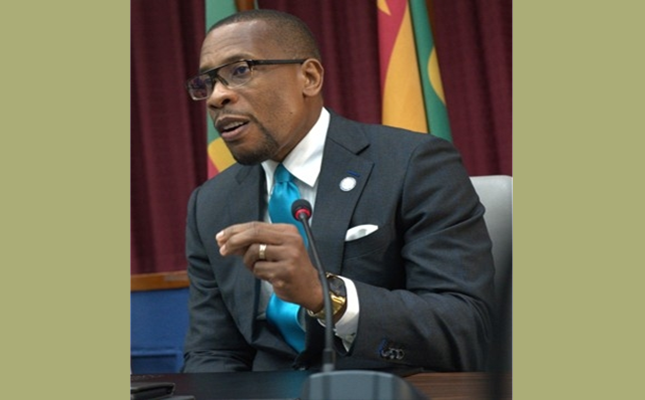
    Iwokrama CEO Dane Gobin emphasized the alignment between both organizations’ operational objectives, noting the Centre’s unique position as “the only internationally certified area for Recreational Services in the region.” This certification includes the prestigious Good Travel Seal, initially awarded in 2023 and successfully renewed in 2026 following demonstrated commitments to sustainability benchmarks.

    GTA Director Kamrul Baksh characterized the partnership as a crucial step in strengthening Guyana’s global positioning as a premier nature-based tourism destination. “This reflects our shared commitment to sustainable tourism development that protects our natural heritage while creating meaningful opportunities for communities and visitors alike,” Baksh stated.

    The collaboration builds upon Guyana’s remarkable tourism performance, which recorded 34,923 visitor arrivals in January 2026 alone—a 17.2% increase compared to January 2025, representing the highest January arrivals in the nation’s history. This growth trajectory underscores Guyana’s emerging status as a leading ecotourism destination.

    Established in 1996 through a joint initiative of the Guyanese government and Commonwealth Secretariat, the Iwokrama International Centre manages 371,000 hectares of protected rainforest with a mandate to generate ecological, economic, and social benefits for both local communities and the international community. The GTA operates as a semi-autonomous governmental entity focused on developing sustainable tourism that maximizes socio-economic benefits while preserving Guyana’s natural and cultural heritage.
  • Wood, Massy and Tagman launch new joint-venture business in Guyana

    Wood, Massy and Tagman launch new joint-venture business in Guyana

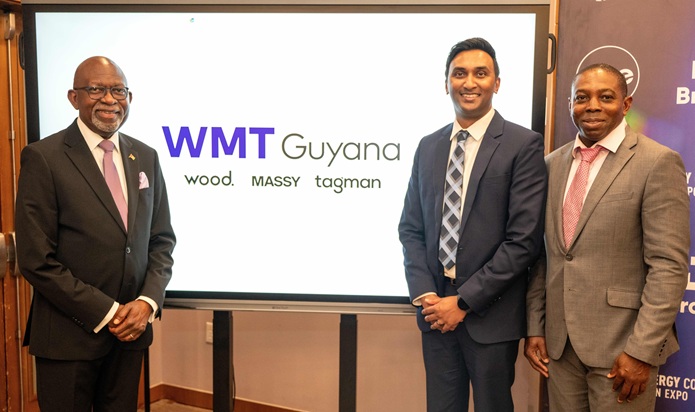
    In a significant development for Guyana’s burgeoning energy industry, three major firms—Wood, Massy, and Tagman—have officially established a new joint-venture operating company named WMT Guyana. The announcement, made on February 19, 2026, reveals a strategic partnership where Guyanese consultancy Tagman Inc. holds a controlling 51% stake, emphasizing the venture’s commitment to local leadership.

    The collaboration unites Wood’s global engineering prowess, Massy’s regional operational strength, and Tagman’s three decades of in-country expertise. WMT Guyana will specialize in engineering-led studies, brownfield maintenance, modifications, and early-phase project solutions tailored for Guyana’s specific market needs. This fusion of international standards with deep regional knowledge aims to provide stability and confidence for energy sector clients operating in the country.

    Executive leadership from all three companies expressed strong confidence in the venture. Alex Graham, CEO of Tagman Inc., described it as a “long-term commitment to building a strong, locally anchored operating company.” Vaughn Martin, Group Executive Vice President of Massy Group, characterized the partnership as a “natural progression” for serving Guyana’s expanding energy sector. Jason Mohan of Wood highlighted the venture’s focus on “safe, high-quality and predictable delivery” backed by global technical expertise.

    The new entity will absorb the existing Massy Wood Guyana joint venture, signaling a consolidation of resources and capabilities. Company representatives emphasized their commitment to developing local talent and building a robust, Guyanese-driven supply chain as part of their investment in the country’s energy future.

  • AUA Parts Ways With Senior Vice President and Chief Operating Officer (Antigua) Vernon Solomon

    AUA Parts Ways With Senior Vice President and Chief Operating Officer (Antigua) Vernon Solomon

    In a significant executive reshuffle, the American University of Antigua (AUA) College of Medicine has officially severed ties with its Senior Vice President and Chief Operating Officer, Vernon Solomon. The separation marks a pivotal moment in the institution’s operational leadership, though the specific catalysts behind this corporate decision remain formally undisclosed.

    The university administration has moved swiftly to address the vacuum in its executive hierarchy, initiating an immediate search for a successor to steward its Antigua-based operations. This transition occurs as AUA continues to fortify its position within the competitive landscape of Caribbean medical education, serving a substantial cohort of international students.

    Industry analysts are scrutinizing the potential implications of this high-profile departure on AUA’s institutional strategy and day-to-day governance. Executive changes of this magnitude within academic organizations often signal broader strategic realignments, potentially affecting operational protocols, stakeholder relationships, and long-term institutional planning.

    The broader academic and medical education sectors are observing this development with keen interest, given AUA’s established role in training physicians for the global market. The incoming operational leadership will inherit the challenges and opportunities of an evolving educational environment, including technological integration and changing accreditation standards.

  • St. Kitts, Nevis to introduce biometric data collection for citizenship applicants

    St. Kitts, Nevis to introduce biometric data collection for citizenship applicants

    In a landmark policy shift, the Federation of St. Kitts and Nevis will implement mandatory biometric data collection for all applicants to its Citizenship by Investment Program (CIP) beginning Q1 2026. This sweeping reform represents the most significant modernization of the four-decade-old program in its history, directly impacting thousands of current applicants and existing citizenship holders, including a substantial demographic of dual nationals residing in the Gulf region.

    The biometric verification requirement forms the cornerstone of a comprehensive restructuring designed to align the program with international border security standards practiced by the European Union, the United States, and the United Kingdom. According to official statements from the St. Kitts and Nevis Citizenship Unit, the enhancements are necessary to address growing global scrutiny of investor citizenship schemes and to reinforce the program’s credibility among international partners and financial institutions.

    Prime Minister Dr. Terrance Drew emphasized that the reforms aim to strengthen due diligence procedures and ensure the program continues to fulfill evolving international expectations. The revised framework will place greater emphasis on establishing ‘genuine links’ to the nation, moving beyond purely financial contributions to assess deeper engagement metrics for applicants.

    For investors based in the Gulf, the changes signal a new era of compliance requirements. Industry analysts anticipate the introduction of additional procedural steps will extend processing timelines, though the strengthened compliance framework is expected to bolster the program’s long-term viability and international acceptance. Detailed guidance regarding biometric collection facilities in key investor markets, including the Gulf region, will be issued prior to the rollout.

    The policy evolution reflects a broader challenge for nations operating citizenship investment programs: balancing market competitiveness against increasingly stringent regulatory thresholds. For prospective applicants, this shift necessitates strategic planning that incorporates physical presence considerations and potential business operational commitments alongside financial investments.

  • TDC Automotive Division: Driving Towards Electronic Vehicle Innovation at Suzuki e-Vitara Regional Launch

    TDC Automotive Division: Driving Towards Electronic Vehicle Innovation at Suzuki e-Vitara Regional Launch

    In a strategic move accelerating the Caribbean’s electric mobility transition, TDC Automotive Division has marked a significant milestone through its participation in the regional unveiling of Suzuki’s e-Vitara in Barbados. The February 2026 event brought together authorized dealers, regional partners, and Suzuki executives to showcase the manufacturer’s groundbreaking electric vehicle offering.

    As the official Suzuki distributor for St. Kitts and Nevis, TDC Automotive demonstrated its commitment to sustainable transportation solutions through the introduction of the e-Vitara, which combines advanced electric propulsion with the rugged reliability characteristic of the Vitara lineage. The vehicle represents a technological leap forward with zero tailpipe emissions, sophisticated safety implementations, and intelligent connectivity features.

    Mr. Duran Merchant, Sales and Service Manager for TDC’s St. Kitts operations, represented the company at the launch event. His participation included critical discussions surrounding regional electric vehicle infrastructure development, market preparedness assessments, after-sales support frameworks, and comprehensive product training initiatives.

    Merchant emphasized the transformative nature of this development, stating: ‘This launch signifies the rapid evolution occurring within the automotive sector and underscores TDC Automotive’s strategic positioning to deliver innovative mobility solutions. Our ongoing efforts include exploring infrastructure partnerships and consumer education programs essential for widespread EV technology adoption.’

    He further elaborated on the company’s comprehensive approach: ‘These strategic dialogues constitute integral components of our broader vision to prepare the local market for seamless electric vehicle integration and sustainable long-term support. This moment represents a watershed for the regional automotive landscape, reinforcing our dedication to innovative and environmentally conscious transportation alternatives that align with international environmental standards and shifting consumer preferences.’

    Suzuki has maintained a strong presence throughout the Federation for decades, earning recognition for vehicle efficiency, dependability, and value retention. The incorporation of electric technology marks a natural progression in enhancing this established legacy.

    TDC Automotive Division continues to prioritize excellence across sales, service, and customer support operations while positioning itself at the vanguard of automotive modernization throughout its markets.

  • Guyana Energy Conference: Interesse in nauwere samenwerking met Suriname groeit

    Guyana Energy Conference: Interesse in nauwere samenwerking met Suriname groeit

    Georgetown witnessed significant developments in regional energy cooperation during the fifth Guyana Energy Conference and Supply Chain Expo held at the Marriott Hotel. President Irfan Ali of Guyana articulated a strategic vision for leveraging energy resources to drive national development, while simultaneously revealing potential collaborative ventures with neighboring Suriname in gas development.

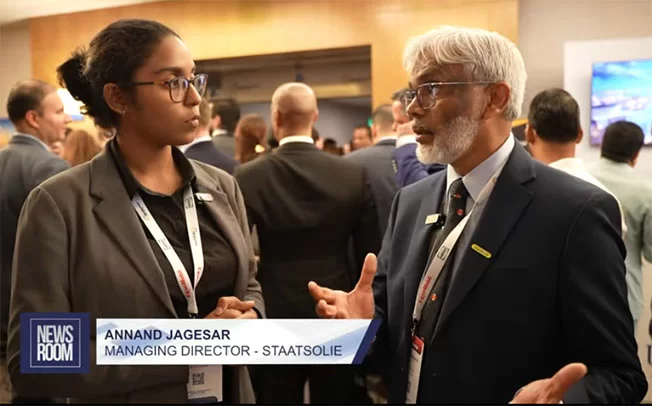
    Staatsolie CEO Annand Jagersar, attending the conference, confirmed in an exclusive interview that formal dialogue regarding bilateral partnerships is imminent. “Exxon has approached us to initiate discussions, and there’s concurrent interest from the Guyanese government,” Jagersar stated. He outlined multiple potential cooperation frameworks, including Suriname’s possible procurement of Guyanese gas, joint infrastructure development such as pipelines and transportation networks, and the consolidation of gas discoveries from both nations to achieve necessary project scale.

    “Gas projects fundamentally require scale economics. By combining discoveries from both countries, we can establish stronger economic viability,” Jagersar emphasized, highlighting the strategic rationale behind the proposed collaboration.

    The CEO revealed that scheduled discussions with Exxon are already set for this week, with parallel negotiations involving Guyanese government officials expected shortly. Jagersar identified the Berbice region as a geographically logical hub for cross-border cooperation, suggesting potential economic development activities on both sides of the river.

    President Ali reinforced the critical connection between infrastructure and sustainable development during his address. “Large-scale development must begin with infrastructure foundations,” he asserted, noting that economic growth only becomes sustainable when supported by robust transportation networks, port facilities, and energy infrastructure. He specifically referenced Guyana’s gas-to-energy project, scheduled to become operational later this year.

    Since his re-election in September 2025, President Ali has prioritized optimal utilization of Guyana’s gas reserves. Beyond the current project, authorities are evaluating a second gas-to-energy initiative in Berbice. The president emphasized that energy sector development should not only strengthen Guyana’s economy but also generate regional opportunities.

    The conference served as a platform for industry experts, regional partners, and stakeholders to discuss investment opportunities, local participation, and supply chain expansion. With increasing oil and gas activities in both Guyana and Suriname, strategic cooperation focusing on scale optimization, infrastructure development, and joint market approaches is receiving heightened attention.

  • Mahler Says Big Port Of Belize Development Soon

    Mahler Says Big Port Of Belize Development Soon

    BELIZE CITY – Tourism Minister Anthony Mahler has issued a compelling appeal to Southside Belize City residents to retain their property holdings, revealing that transformative economic development centered around the Port of Belize is poised to commence imminently.

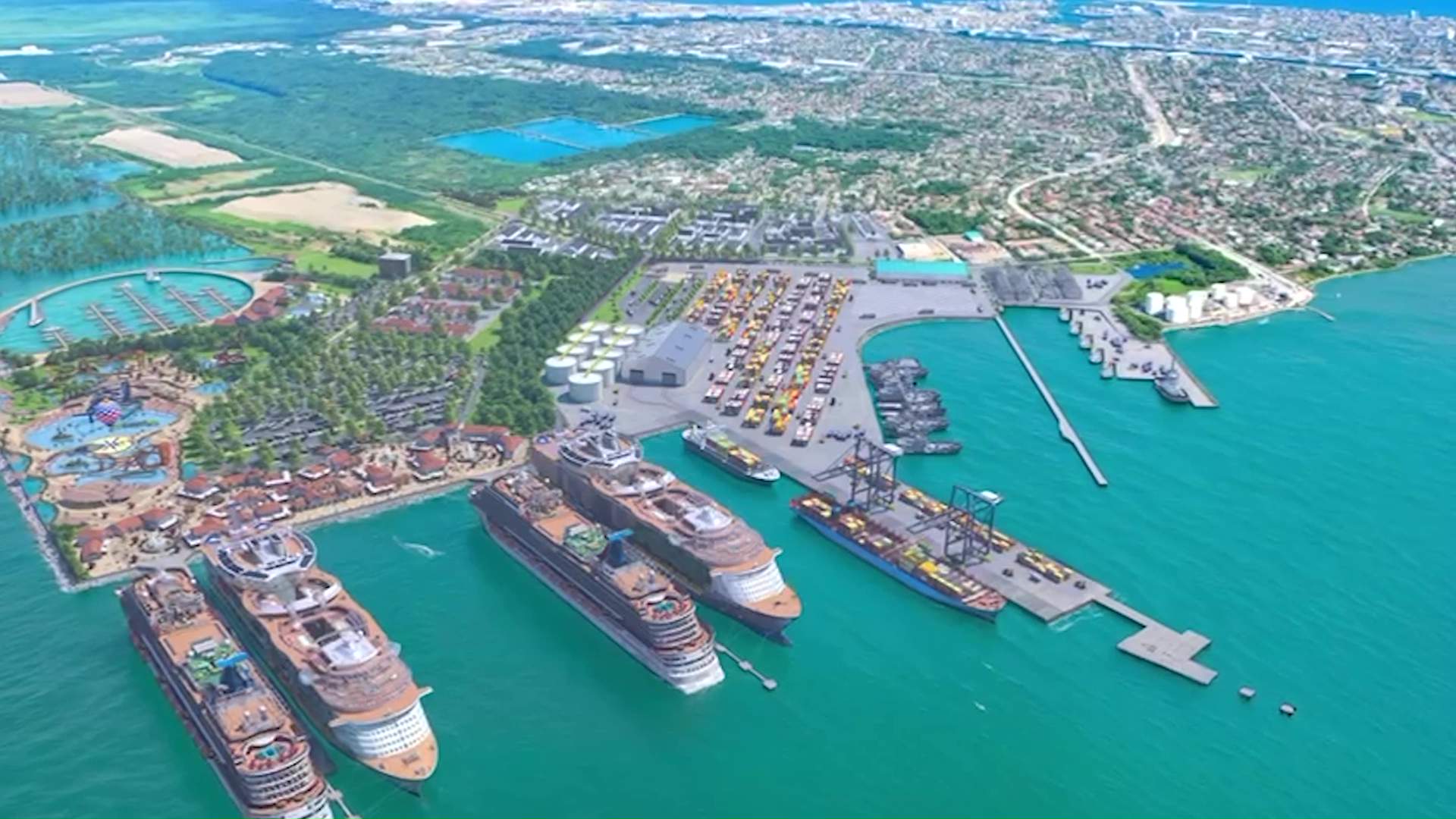
    Speaking at a land distribution ceremony in Port Loyola on February 18, 2026, Minister Mahler confirmed that the government has advanced to critical negotiations with substantial international investors regarding the port’s modernization. The ambitious initiative, projected to require investment exceeding hundreds of millions of Belize dollars, represents one of the most significant infrastructure undertakings in recent national history.

    Minister Mahler emphasized the strategic importance of land ownership as foundational wealth creation, drawing parallels between property ownership and economic empowerment. “Those who have accumulated substantial wealth predominantly possess extensive land holdings,” Mahler stated. “This provides them with leverage capacity for financial institutions and attracts complementary business investments to their properties.”

    The government’s parallel initiative to distribute house lots to approximately 100,000 Belizeans forms part of this comprehensive national development strategy. Mahler characterized these combined efforts as transformative for both Belize City and the broader region, potentially reshaping the economic landscape for generations.

    Environmental and social impact assessments (ESIA) are currently underway, indicating the project’s advanced planning stage. While specific timelines remain undisclosed, Minister Mahler confirmed that construction activities are expected to commence in the near term, marking a new chapter in Belize’s economic development narrative.

  • Trinidad and Tobago proposes CARICOM energy ministers forum

    Trinidad and Tobago proposes CARICOM energy ministers forum

    In a landmark move to foster regional energy collaboration, Trinidad and Tobago’s Energy Minister Dr. Roodal Moonilal has formally proposed establishing a dedicated forum for CARICOM natural resources and energy ministers. The initiative, unveiled during the ‘Regional Energy Security’ panel at the 2026 Guyana Energy Conference, aims to synchronize policies among the Caribbean’s major hydrocarbon producers.

    Dr. Moonilal expressed astonishment that such a collaborative mechanism didn’t previously exist, emphasizing that regular ministerial engagement would prevent duplicated efforts and enhance investment coordination. ‘We need to work together on investment policies and strategies to ensure we’re aware of each other’s activities across the Caribbean,’ he stated during the conference opening.

    The proposal comes amid significant shifts in the region’s energy landscape. Trinidad, historically the Caribbean’s sole major oil producer for nearly a century, now shares the stage with Guyana—currently producing approximately one million barrels of crude daily—and emerging producer Suriname, which anticipates output of 220,000 barrels from its offshore Gran Morgu project by 2028.

    Critical developments are accelerating regional cooperation: Trinidad is advancing toward large-scale gas production following OFAC licensing approvals, while Guyana and Suriname are finalizing a memorandum of understanding for joint gas production within the coming month. Notably, substantial gas reserves have been identified in maritime territory spanning both nations.

    Suriname’s Minister of Oil, Gas and Environment Patrick Loys Brunings endorsed the forum concept, highlighting its potential to support the region’s transition from fossil fuels to renewables. ‘Gas will play a crucial role in powering electricity and transportation during this transition,’ Brunings told Demerara Waves Online News, suggesting Trinidad and Suriname could lead regional sustainability efforts.

    Guyana’s Minister of Natural Resources Vickram Bharrat immediately backed the initiative, characterizing regular energy ministerial meetings as ‘critical and important’ for achieving scaled collaborative projects. He advocated expanding participation beyond the three primary producers to include wider CARICOM representation, signaling broad regional commitment to energy integration.

  • BCWU Claps Back at BCWJ

    BCWU Claps Back at BCWJ

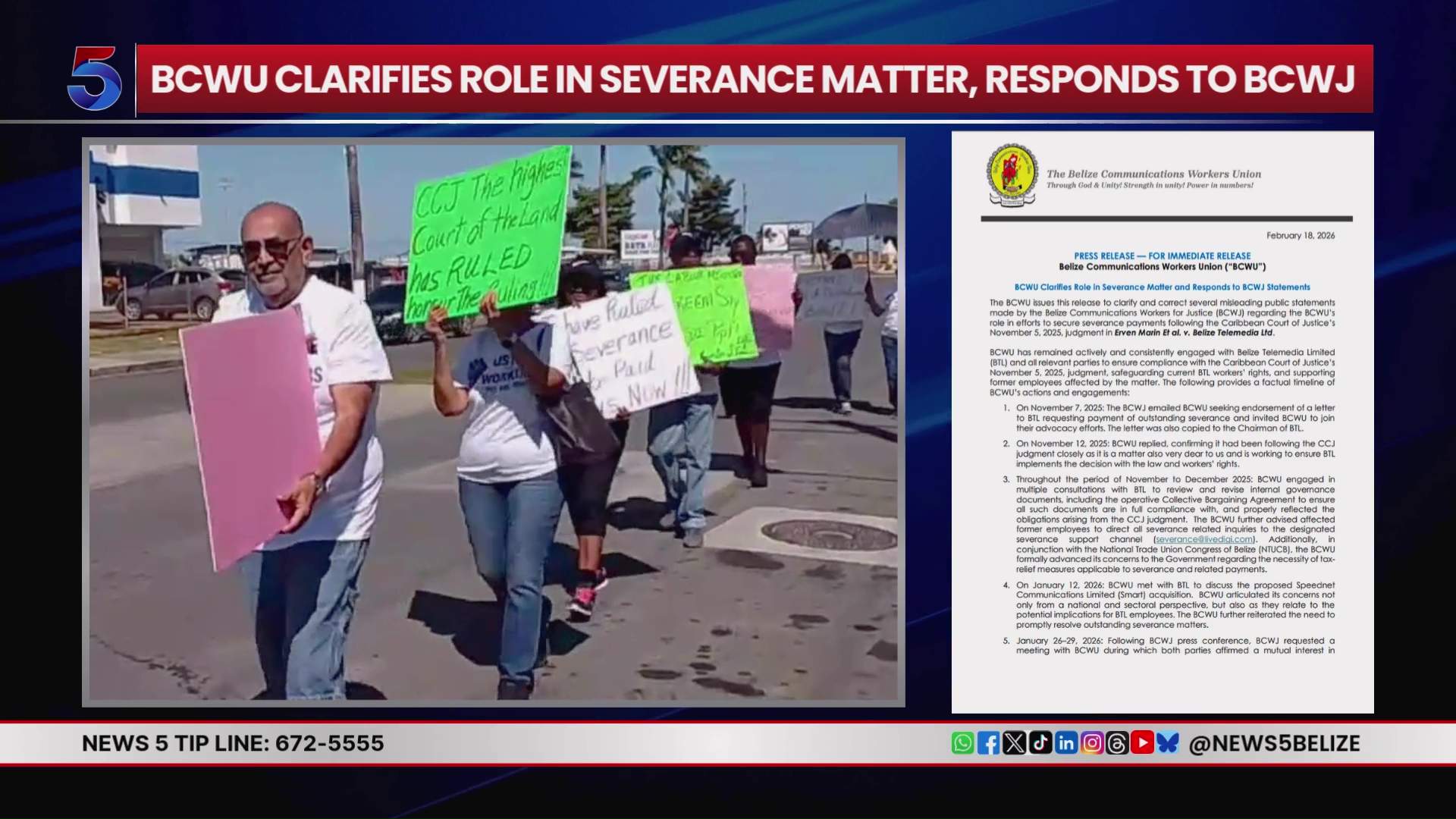
    In a significant development for Belize’s labor landscape, the Belize Communications Workers Union (BCWU) has successfully negotiated the settlement of outstanding severance payments from Belize Telemedia Limited (BTL) following a landmark Caribbean Court of Justice ruling. The breakthrough comes after months of strategic negotiations and contrasts sharply with the approach taken by a splinter labor group.

    The dispute resolution process began in earnest after the November 5, 2025 CCJ decision that unequivocally affirmed Telemedia’s obligation to provide severance payments to affected workers. Contrary to claims made by the breakaway Belize Communications Workers for Justice (BCWJ), the BCWU maintained continuous engagement with both the company and broader labor institutions throughout the negotiation period.

    Between November and December 2025, the union conducted intensive consultations with BTL management to align internal agreements with the judicial mandate. Simultaneously, the BCWU collaborated with the National Trade Union Congress of Belize to address concerning tax implications that could have diminished the value of severance packages for workers.

    Following BCWJ’s January press conference criticizing the pace of implementation, the established union extended an olive branch, inviting the rival group to join formal negotiations. BCWJ reportedly declined this collaborative approach in favor of independent protest actions. After convening an emergency membership meeting, BCWU members democratically determined not to endorse the protests officially, though individuals retained the right to show personal support outside working hours.

    The persistent diplomatic engagement yielded concrete results on February 17, 2026, when BTL formally committed to settling all outstanding severance obligations. The BCWU characterizes this outcome as a testament to constructive dialogue and respect for established labor relations processes, contrasting it with more confrontational approaches that risked destabilizing negotiations.

  • ECCB to Establish Office to Regulate Conduct of Financial Institutions

    ECCB to Establish Office to Regulate Conduct of Financial Institutions

    In a significant regulatory development for the Eastern Caribbean region, the Eastern Caribbean Central Bank (ECCB) is moving to establish a dedicated Office of Financial Conduct following widespread concerns about customer treatment by financial institutions. The announcement comes as the bank acknowledges its current limitations in addressing persistent complaints regarding fees, charges, and market conduct practices across the Eastern Caribbean Currency Union (ECCU).

    Governor Timothy Antoine confirmed the regulatory gap during a press briefing following the 112th Monetary Council Meeting at the bank’s headquarters in St. Kitts and Nevis. “The ECCB presently lacks legal authority to regulate fees, charges, or market conduct,” Antoine stated, highlighting the institution’s constrained mandate despite increasing customer grievances.

    The regulatory transformation is underway through comprehensive amendments to the Banking Act across ECCU member territories. Three nations—St. Kitts and Nevis, Antigua and Barbuda, and St. Vincent and the Grenadines—have already enacted the necessary legislative changes, with Montserrat expected to complete the process imminently. Governor Antoine expressed confidence that all member territories would implement the amendments by mid-2026.

    Upon full implementation, the newly established Office of Financial Conduct will assume responsibility for reviewing customer complaints, investigating financial institutions, and overseeing market conduct and financial inclusion initiatives. “This will empower the Central Bank to address market conduct and financial inclusion issues with proper legal authority,” Antoine emphasized.

    Concurrently, the ECCB is advancing its First Step Savings Account initiative, designed to eliminate barriers to banking access. The program allows account opening with minimal identification, requires no minimum balance, provides interest earnings, and includes basic banking features. Transaction and balance limits apply, with provisions for upgrading to standard accounts once thresholds are exceeded.

    Governor Antoine called upon media organizations to monitor financial institutions’ implementation of the First Step program, ensuring the initiative genuinely enhances financial accessibility for ECCU residents.