分类: business

  • Instability in Cuba and Venezuela redirects tourism to Dominican Republic and Mexico

    Instability in Cuba and Venezuela redirects tourism to Dominican Republic and Mexico

    Recent geopolitical turbulence in Cuba and Venezuela has triggered a significant reconfiguration of Caribbean tourism flows, with travelers increasingly favoring destinations perceived as more secure and stable. Industry reports confirm that the Dominican Republic and Mexico’s Riviera Maya are emerging as primary beneficiaries of this regional shift.

    According to Carlos Garrido, President of the Spanish Confederation of Travel Agencies (CEAV), both nations are functioning as ‘refuge’ destinations, absorbing redirected tourist demand while experiencing consequent price increases. Toni Chaves, President of the Riviera Maya Hotel Association, acknowledged that uncertainty in other Caribbean markets may have contributed to robust demand in the Mexican Caribbean, though he characterized this influence as marginal within broader structural tourism transformations.

    Chaves elaborated that the ongoing industry transformation preferentially advantages destinations demonstrating superior air connectivity, operational reliability, enhanced safety perceptions, substantial hotel capacity, competitive pricing, and strategic backing from tour operators in source markets—all areas where the Riviera Maya maintains strong competitiveness.

    The Dominican Republic’s tourism sector is experiencing unprecedented growth, having recorded 11.6 million visitors in the previous year. This historic achievement represents a remarkable 37.8% increase compared to 2022, solidifying its status as one of the Caribbean’s premier tourism destinations.

    Conversely, Cuba’s tourism industry continues its precipitous decline, concluding the year with merely 1.8 million international visitors—its lowest arrival figures since 2002. This represents a dramatic fall from its 2018 peak of 4.7 million visitors. The sector’s collapse has been accelerated by U.S. sanctions implemented during the Trump administration, compounded by Cuba’s severe economic and energy crises and diminished air connectivity.

    At January’s FITUR tourism fair, Cuban Tourism Minister Juan Carlos García attributed the sector’s challenges primarily to the U.S. economic embargo. Executives from Meliá Hotels International confirmed that growing instability has further deteriorated an already challenging situation, acknowledging the redirection of bookings from Cuba toward Mexican and Dominican properties. The hotel group has consequently reduced room availability in Cuba this month, aligning operations with current occupancy levels and supply constraints.

    Venezuela is simultaneously navigating what industry leaders describe as an exceptionally complex period. The Federal Aviation Administration’s November advisory urging extreme caution when flying over Venezuela and the southern Caribbean prompted multiple international airlines to suspend or reduce operations. According to César Gutiérrez, President of the Spanish Federation of Territorial Associations of Travel Agencies (Fetave), the tourism slowdown stems less from diminished tourist interest and more from operational challenges and compromised air connectivity, further reinforcing the regional pivot toward more stable destinations.


  • FTC alerted to SurePay’s new 30-cent over-the-counter payment fee

    FTC alerted to SurePay’s new 30-cent over-the-counter payment fee

    A proposed convenience fee by bill payment processor SurePay (Barbados) has ignited a significant consumer rights debate, drawing scrutiny from the nation’s fair trade regulator. Effective March 16, the company plans to implement a VAT-inclusive 30-cent charge on all over-the-counter cash and cheque bill payments, a move it attributes to escalating operational costs associated with handling physical currency and processing cheques.

    The Barbados Consumer Empowerment Network (BCEN) has formally petitioned the Fair Trading Commission (FTC) to conduct a comprehensive review of the fee’s fairness, necessity, and proportionality. BCEN Executive Chair Maureen Holder articulated deep concerns that the seemingly nominal charge would disproportionately impact vulnerable demographics, including seniors, low-income households, and individuals with limited digital access. Holder emphasized that for these groups, counter services are not a premium convenience but an essential utility, and layering additional fees exacerbates existing financial strains from rising living costs.

    In response to inquiries, FTC Chief Executive Officer Brian Reece confirmed the agency’s awareness of the emerging situation but declined to comment on any potential regulatory action. Reece stated the commission must first be guided by thoroughly grounded facts and legal principles before making any determination on the merits of the case.

    The controversy highlights a broader tension between national digitalization efforts and financial inclusivity. BCEN argues that penalizing in-person transactions creates a discriminatory two-tier system, effectively charging a premium for essential services to those who are least able to transition to digital platforms. This, they contend, runs counter to national goals of financial inclusion and consumer protection. The central demand from consumer advocates is for absolute transparency: a clear justification for the fee’s necessity, evidence that alternative cost-saving measures were explored, and safeguards against the gradual accumulation of small charges that incrementally increase the cost of living.

  • Parliament: Henderson says regulatory ECCU financial services Bill ‘late’ but necessary

    Parliament: Henderson says regulatory ECCU financial services Bill ‘late’ but necessary

    The Eastern Caribbean Currency Union is poised to establish a comprehensive regulatory framework for payment services with the introduction of the Payment System and Services Bill 2026. Dr. Vince Henderson, Minister for Foreign Affairs, International Business, Trade and Energy, praised both Finance Minister Dr. Irving McIntyre and the Eastern Caribbean Central Bank (ECCB) for presenting the groundbreaking legislation to Parliament on Monday.

    The bill represents a significant milestone in financial regulation, creating a structured licensing system for payment service providers while expanding oversight mechanisms and enhancing consumer protection protocols across member states. During parliamentary proceedings, Dr. Henderson emphasized the urgent need for such regulation, noting the region has witnessed both the emergence and instability of money transfer systems.

    “This legislative action comes at a crucial time,” Henderson stated. “Our primary objective is to establish regulatory safeguards that protect consumers and their hard-earned money as we transition toward an increasingly cashless society.”

    The minister articulated a dual-focused approach: implementing necessary consumer protections while actively fostering innovation within the financial technology sector. He highlighted the importance of developing indigenous payment solutions that reduce dependency on international corporations like Visa, MasterCard, and American Express, thereby minimizing transaction fees for local businesses and consumers.

    Henderson specifically advocated for creating regionally developed money transfer systems and mobile banking platforms that would keep financial benefits within the Eastern Caribbean economic zone. “We must evolve from mere technology consumers to becoming creators and innovators,” he asserted. “This means developing our own properly regulated financial services that attract both local and international investment while generating employment opportunities.”

    The minister further connected digital financial infrastructure to energy security, noting that reliable electricity is fundamental to electronic payment systems. He drew attention to ongoing state investments in energy projects as essential components of national development strategy, all ultimately directed toward improving living standards and creating economic opportunities for citizens.

    This legislative initiative marks a coordinated effort to modernize financial services while ensuring economic benefits remain within the Eastern Caribbean community, representing a significant step toward financial sovereignty and technological self-reliance in the region.

  • ECCB to introduce banknotes honouring Caribbean Heroes by 2027

    ECCB to introduce banknotes honouring Caribbean Heroes by 2027

    The Eastern Caribbean Central Bank (ECCB) has embarked on a transformative journey to redefine regional identity and financial modernization through two significant initiatives: a historic currency redesign and strategic financial policy adjustments.

    In a landmark decision following its 112th Monetary Council meeting, the ECCB announced the gradual replacement of Queen Elizabeth II’s portrait on EC dollar banknotes with images of Caribbean national heroes. Governor Timothy Antoine characterized this move as “a historic step toward strengthening regional identity” that will commence circulation in 2027. The phased approach ensures economic prudence by allowing newer banknotes to remain in circulation until natural wear necessitates replacement.

    Concurrently, the ECCB addressed monetary policy concerns regarding the region’s savings landscape. With excess liquidity reaching unprecedented levels—deposits across the Eastern Caribbean Currency Union (ECCU) have surpassed EC$28 billion and are growing faster than loans—the minimum savings rate remains anchored at 2%. Governor Antoine clarified that market liberalization would likely drive rates below 1%, stating definitively: “There should be no expectation that the minimum savings rate will go up.”

    Rather than promoting traditional savings, the ECCB is championing investment diversification through newly introduced financial products. Recent innovations include mutual funds and retail bond programs that have already attracted nearly 350 new investors across the currency union. The bank’s ambitious goal aims to increase regional investment participation from the current 4% to 20% within the next decade.

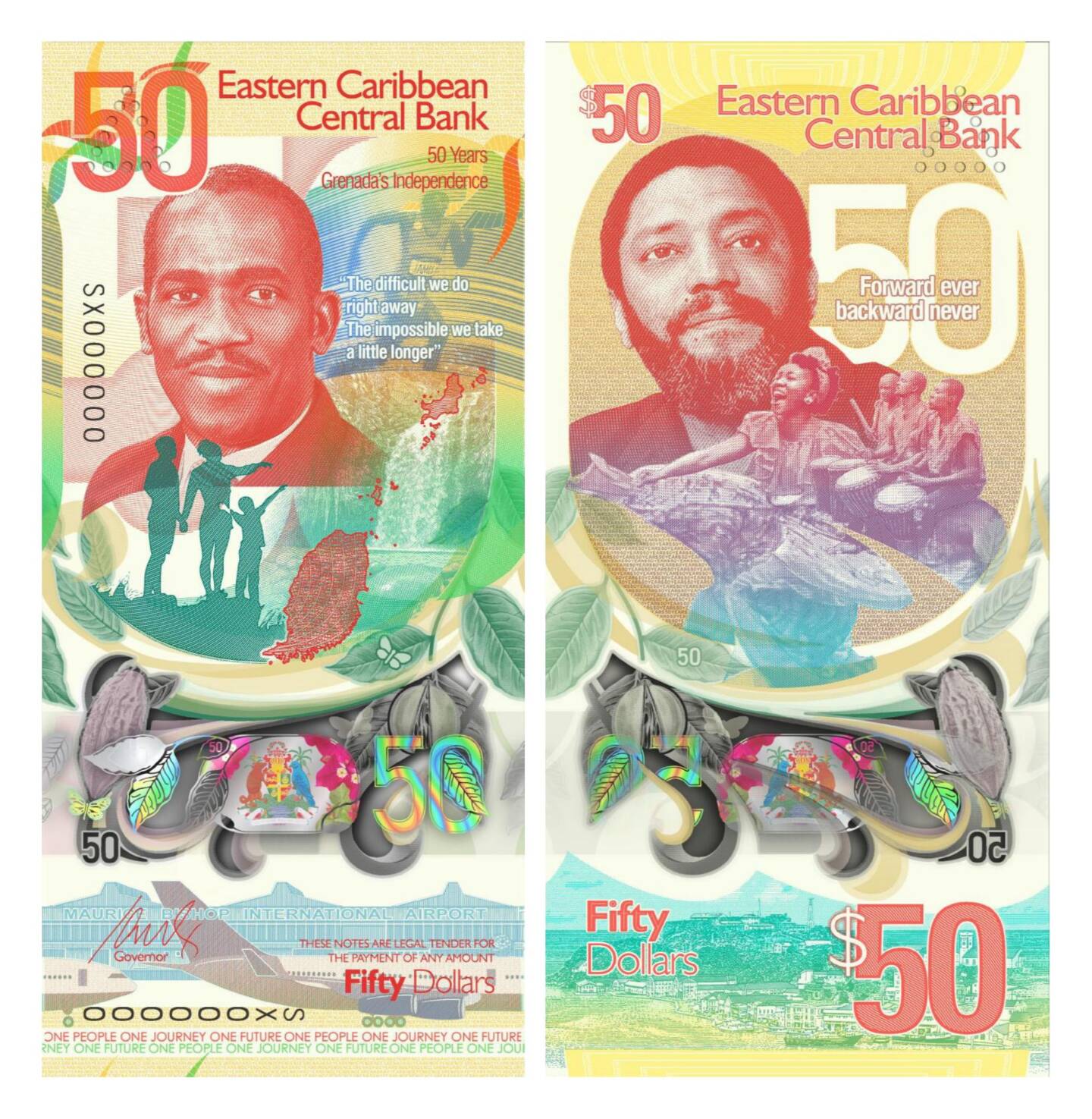
    These developments build upon the ECCB’s ongoing modernization efforts, including the 2024 commemorative EC$50 note celebrating Grenada’s independence anniversary and the recent EC$2 polymer banknote honoring cricket legend Sir Vivian Richards. The integration of cultural heritage with financial innovation represents a comprehensive strategy to strengthen both economic resilience and regional identity across the Eastern Caribbean.

  • Warner Bros. says ‘reviewing’ new takeover bid from Paramount

    Warner Bros. says ‘reviewing’ new takeover bid from Paramount

    NEW YORK — The media industry’s consolidation landscape intensified dramatically as Warner Bros. Discovery (WBD) confirmed receiving a revised acquisition proposal from Paramount Skydance, creating a complex bidding war that could redefine Hollywood’s power structure. The development emerged Tuesday despite WBD’s board simultaneously reaffirming its commitment to a previously arranged merger agreement with streaming titan Netflix.

    The WBD board disclosed in an official statement that it is carefully evaluating Paramount Skydance’s renewed overture with assistance from financial and legal advisors. While specific terms of the enhanced proposal remain confidential, the board explicitly maintained its position supporting the Netflix transaction, noting that the existing arrangement ‘remains in effect’ and that directors ‘continue to recommend in favor of the Netflix transaction.’

    The competitive dynamics reveal sharply different strategic approaches. Paramount Skydance’s previous $108 billion offer for complete acquisition of WBD was previously rejected, while Netflix’s current proposal values the company at approximately $83 billion for a more targeted merger. Industry analysts anticipate Netflix may elevate its bid to remain competitive with Paramount’s revised terms.

    Notably, Netflix’s proposition excludes WBD’s television assets including CNN and Discovery networks. These properties would instead be transferred to a newly established publicly traded entity dubbed Global Networks should the Netflix agreement proceed.

    The high-stakes corporate struggle has attracted attention at the highest levels of government. The White House has reportedly begun monitoring developments, with President Donald Trump asserting he would become ‘involved’ in merger decisions. The U.S. Department of Justice has already initiated its review process for Netflix’s proposed acquisition.

    Political tensions surfaced when President Trump demanded Netflix dismiss board member Susan Rice following her comments regarding Democratic intentions to pursue corporate accountability should the party regain congressional power in November’s midterm elections. The escalating regulatory scrutiny ensures that whichever transaction ultimately prevails will face extensive antitrust examination before implementation.

  • MJS Industrial and Technology Park generates 3,800 jobs

    MJS Industrial and Technology Park generates 3,800 jobs

    KINGSTON, Jamaica — In a remarkable demonstration of economic growth, the MJS Industrial and Technology Park has emerged as one of Jamaica’s most successful Special Economic Zone (SEZ) developments, generating approximately 3,800 new jobs within just three years of operation.

    Executive Chairman and CEO Michael Subratie revealed to JIS News that the 65-acre facility located in Angels, near Spanish Town, was strategically conceived to address increasing demand from both international and domestic investors seeking a business-friendly environment enhanced by Jamaica’s SEZ framework.

    ‘We identified significant interest from foreign direct investors seeking locations conducive to their operational requirements,’ Subratie explained. ‘The Special Economic Zone incentives played a pivotal role in attracting these investors to our development.’

    The park’s completed Phase One encompasses 320,000 square feet across 15 acres, now fully occupied by a diverse tenant mix deliberately curated to serve both public and private sectors. Current occupants include three business process outsourcing (BPO) operators, two manufacturing enterprises, and two Government of Jamaica entities. Notably, food manufacturer Honey Bun is establishing a new production line for sliced bread and high-demand pastries at the facility.

    Government representation includes the Jamaica Fire Brigade, whose headquarters at the park provides strategic island-wide access during natural disasters.

    Subratie emphasized that MJS was designed as more than merely an industrial complex. Through innovative collaboration with GC Foster College, employees enjoy access to sports facilities, while the park incorporates sustainable features including solar energy systems, an on-site well, and a secure, professionally managed environment.

    ‘We’ve established a working environment where organizations can operate sustainably, embodying economic, social, and governance principles in practice,’ Subratie stated.

    The overwhelming success of Phase One has prompted accelerated expansion plans. Phase Two, comprising an additional 300,000 square feet on 30 acres behind the existing development, is currently underway with approved development plans and financing being secured.

    Subratie noted that while the Phase Two space is already fully allocated, an additional 400,000 square feet remains available for new investors under Phase Three of the master plan. This land is fully serviced with complete infrastructure, enabling investors to design and construct customized facilities tailored to their specific operational needs.

    The CEO underscored the crucial partnership cultivated with the Special Economic Zone Authority (SEZA), which provided substantial support throughout the development process. Tax exemptions, incentives, regulatory guidance, and security frameworks under the SEZ regime have been instrumental to MJS’s rapid growth and ability to attract high-quality tenants.

    ‘This partnership has ensured both developers and occupants maintain compliance and position themselves for long-term success,’ Subratie reiterated.

    As expansion continues, Subratie remains confident about the park’s trajectory: ‘This represents a genuine success story. We’ve created 3,800 jobs in three years, we’re expanding rapidly, and we’re prepared to welcome the next wave of investors to Spanish Town.’

    Interested investors and tenants may contact michaelsubratie@gmail.com regarding the available 400,000 square-foot space.

  • BOJ cuts policy rate to 5.5 per cent in cautious adjustment

    BOJ cuts policy rate to 5.5 per cent in cautious adjustment

    KINGSTON, Jamaica — In a significant monetary policy shift, the Bank of Jamaica (BOJ) has implemented a 25 basis point reduction in its benchmark interest rate, lowering the overnight placement rate for deposit-taking institutions to 5.5 percent annually. The unanimous decision by the Monetary Policy Committee (MPC) marks a strategic adjustment following months of consistently controlled inflation metrics.

    Governor Richard Byles announced the policy modification during Tuesday’s Quarterly Monetary Policy Report presentation at the BOJ headquarters, characterizing the move as a ‘cautious adjustment’ grounded in comprehensive analysis of recent economic indicators. ‘This decision followed a detailed assessment of the most recent inflation out-turn and the near-term outlook for prices,’ Byles explained, emphasizing the central bank’s evidence-based approach to policy formulation.

    The inflationary landscape has demonstrated remarkable stability, with January 2026 headline inflation recorded at 3.9 percent—a decline from December 2025’s 4.5 percent and notably below the bank’s projections. This measurement places inflation just under the lower threshold of the BOJ’s target range of 4-6 percent. Governor Byles attributed this favorable trend primarily to reduced food prices resulting from agricultural recovery after Hurricane Melissa’s impact in October 2025.

    Core inflation, which excludes volatile food and energy components, similarly decreased to 3.9 percent in January from 4.2 percent the previous month. This development extends Jamaica’s inflation containment streak to 17 consecutive months within or below target levels since August 2024.

    The central bank’s strategic foreign exchange interventions have further supported price stability. Between November 2025 and January 2026, the BOJ injected approximately US$365 million into the market through its B-FXITT platform, with an additional US$87 million directed to state-owned refinery Petrojam. Despite these substantial sales, the bank achieved net purchases of approximately US$152 million during the three-month period following Hurricane Melissa.

    Cumulatively, the BOJ sold US$1.1 billion via its foreign exchange facility in the twelve months ending January 2026, matching the previous year’s intervention scale. Governor Byles affirmed the institution’s commitment to maintaining ‘relative stability in the foreign exchange market’ through proactive measures, noting that exchange rate appreciation since November 2025 reflects strengthened remittance flows and strategic use of Jamaica’s robust foreign reserves.

  • Agriculture ministry says egg supply under watch amid farmers concerns

    Agriculture ministry says egg supply under watch amid farmers concerns

    Jamaica’s Ministry of Agriculture, Fisheries and Mining is implementing strategic measures to balance market stability with local industry recovery following devastating hurricane impacts on the nation’s egg production sector. The government’s intervention comes as domestic producers struggle to rebuild after successive hurricanes crippled poultry operations.

    The crisis began with Hurricane Beryl in 2024, which disrupted production cycles across the industry. Before full recovery could occur, Hurricane Melissa struck on October 28, 2025, delivering a catastrophic blow to poultry infrastructure. Official assessments confirmed losses of approximately 400,000 laying hens, representing a substantial portion of the nation’s egg-laying capacity.

    This dual disaster scenario prompted immediate government action. The ministry authorized temporary egg imports with waived import duties, additional stamp duties, and general consumption tax—a measure initially scheduled to conclude on February 28, 2026. However, current production data indicates slower-than-expected recovery, with output for the first half of 2026 projected at 30-40% below the five-year average.

    Market analysis reveals domestic egg supply declined by approximately 40% post-Melissa, with full recovery estimated to require eight to twelve months. Monthly production levels are not expected to surpass 2025 benchmarks until August 2026 at the earliest, prompting the ministry to seek extension of import waivers until May 2026.

    The Jamaica Egg Farmers Association had previously implemented significant price adjustments, increasing recommended rates from $550 to $670 per dozen for unbranded eggs and from $580 to $700 for branded varieties. These increases, attributed to reduced production capacity and elevated operational costs, have placed additional pressure on consumers and hospitality businesses.

    The ministry emphasizes that its temporary import strategy remains under continuous evaluation to ensure neither local farmers nor consumers face market disadvantages. This calibrated approach aims to maintain price stability while domestic producers rebuild capacity, with the government committing to regular monitoring of both supply chains and farmer livelihoods throughout the recovery period.

  • Vrees voor mondiale spanningen na verhoogde importtarieven door VS

    Vrees voor mondiale spanningen na verhoogde importtarieven door VS

    The United States has ignited international economic apprehensions with its announcement of sweeping tariff increases on imported goods, raising base rates to approximately 15%. This protectionist measure, unveiled by the Trump administration, aims to shield domestic industries and address persistent trade deficits that Washington claims disadvantage American businesses.

    The policy shift has triggered immediate concerns among trading partners worldwide, with European and Asian nations evaluating potential countermeasures. Economic analysts warn that elevated import duties could catalyze inflationary pressures, disrupt global supply chains, and diminish investment stability across international markets.

    Financial markets responded with measured caution to the announcement, while multinational corporations began recalculating operational costs in anticipation of heightened trade expenses. The tariff implementation follows extensive legal deliberations within the U.S. regarding previous trade measures, with the current administration seeking to establish a modified statutory foundation for the levies.

    Smaller export-dependent economies, particularly Caribbean nations, face indirect consequences through potential declines in global trade volumes, commodity price fluctuations, and altered capital flows. The timing proves particularly delicate as the global economy navigates post-inflation recovery amid ongoing geopolitical tensions.

    International financial institutions caution that escalated trade conflicts could significantly impede worldwide economic recovery efforts. While the tariff structure may remain temporarily effective, its long-term political viability remains uncertain, creating additional uncertainty for global trade planning.

  • Tourism minister: Carnival 2026 records 13% increase in visitor arrivals

    Tourism minister: Carnival 2026 records 13% increase in visitor arrivals

    Dominica has recorded a substantial increase in tourist arrivals during its Carnival 2026 festivities, marking a significant recovery for the island’s tourism sector. According to Tourism Minister Denise Charles-Pemberton, the two-week pre-Carnival period welcomed approximately 9,300 visitors, representing a robust 13 percent growth compared to the same timeframe in 2025.

    The breakdown of arrival statistics reveals even more promising trends: air arrivals surged by 14 percent while sea arrivals increased by 11 percent. The most dramatic growth occurred on Carnival Friday itself, which witnessed a remarkable 38 percent spike in visitor numbers compared to the previous year, indicating that Dominica’s Carnival is increasingly becoming a primary attraction for international travelers.

    Minister Charles-Pemberton credited this tourism success to strategic government investments in transportation infrastructure and destination accessibility. “Significant upgrades to the Douglas Charles airport, coupled with expanded flight capacity from 5,379 to over 8,000 seats, have dramatically enhanced our capability to accommodate visitors during major festivals like Carnival,” the Minister explained during her address.

    The tourism boost has generated widespread economic benefits across multiple sectors. Small and large businesses in accommodation, transportation, food services, retail, and entertainment have all reported increased revenue streams directly attributable to the festival tourism expansion.

    Cultural exports have also played a crucial role in Dominica’s tourism promotion. The Minister highlighted recent international recognition of Dominican Bouyon artists by BET (Black Entertainment Television) as a significant factor in raising the island’s global profile and attracting culturally-minded travelers.

    The Minister extended commendations to numerous organizations and individuals who contributed to the event’s success, including the Dominica Festivals Committee, Discover Dominica Authority, the National Bank of Dominica, various sponsors, the Dominica Police Force, NEP workers, event organizers, volunteers, carnival groups, costume bands, and both domestic and international carnival patrons.

    Looking ahead, Dominica’s national festival calendar continues with upcoming events including the Gospel Festival scheduled for February 28 at the Windsor Park Sports Stadium and Jazz ‘n Creole set for May 3, 2026, at the Cabrits in Portsmouth.