
Rudolf Elias, the former Managing Director of Staatsolie Maatschappij Suriname N.V., has been appointed as the President-Commissioner of the state-owned company. In an interview with Starnieuws, Elias expressed his enthusiasm for contributing once again to Suriname’s future. He emphasized that without a solid plan, oil—and even more oil—could become a curse rather than a blessing. “We must collectively advocate for a well-thought-out strategy,” he stated. Elias highlighted the importance of a broad societal discussion and a robust roadmap to counteract the so-called ‘oil curse,’ citing examples from Venezuela, Nigeria, and Guyana. He warned that without proper planning, 80% of Suriname’s population could face increasing poverty rather than prosperity. Alongside Elias, Sergio Akiemboto (Chief of Staff at the President’s Office), Aroon Samjhawan, Ewald Poetisi, Rudie Chin Jen Sem, Chantal Doekhie, and Edgar Caffé have been appointed to the new Board of Commissioners of Staatsolie. Elias served as Managing Director from 2015 to 2020, during which Suriname made its first significant offshore oil discoveries. Under his leadership, the company charted a strategic course towards participation in offshore projects and the enhancement of local content in the oil industry. Since leaving Staatsolie, Elias has remained active as an entrepreneur, consultant, and speaker on sustainable development and energy policy. Over the years, he has been a strong advocate for transparency, good governance, and long-term planning in the energy sector. His return as President-Commissioner is seen within the industry as a step towards strengthening policy, oversight, and continuity in the strategic development of the company.
分类: business
-

Economy : Adoption of a budget of 345 billion (2025-2026)
In a significant move toward economic recovery and state restoration, Haiti’s Council of Ministers convened an extraordinary meeting on October 9, 2025, at the National Palace in Port-au-Prince. This marked a symbolic return to the premises, which had been under the control of criminal gangs since January 2024. The meeting, chaired by Presidential Advisor Leslie Voltaire and attended by Prime Minister Alix Didier Bien Aimé, resulted in the adoption of a 345 billion gourdes budget for the 2025-2026 fiscal year. The budget, developed in collaboration with the Ministry of Economy and Finance (MEF) and the Ministry of Planning and External Cooperation, underscores the government’s commitment to restoring public security, organizing democratic elections, stabilizing macroeconomic indicators, and improving living conditions. Notably, 70% of the budget will be financed through tax and customs revenues, with no new tax measures introduced. Sectoral priorities include significant allocations for salaries (35%), public security and elections (16%), and education (15%). The government also emphasized support for local production, protection of investments, and adjustments to the General Tax Code. Despite reports of gunfire near the palace during the meeting, officials denied any disruption, affirming the council’s focus on advancing Haiti’s strategic priorities.
-

Credit Reporting System Launched to Expand Access to Finance
The Central Bank of Belize has unveiled a groundbreaking initiative with the establishment of a national Credit Reporting System (CRS), a significant leap forward in the nation’s financial infrastructure. This system aims to enhance access to credit for Belizeans, particularly benefiting micro, small, and medium-sized enterprises (MSMEs) and households. CRIF Information Services Limited, the licensed credit bureau, will spearhead the collection and dissemination of borrowers’ credit data from banks, credit unions, and other lending institutions. This move is poised to address longstanding information gaps, enabling lenders to make more informed decisions on creditworthiness. Governor Kareem Michael hailed the CRS as a transformative measure toward financial inclusion and stability, emphasizing its role in fostering fairness and transparency in lending practices. By allowing individuals to build verifiable credit histories, the system will serve as ‘reputational collateral,’ unlocking financial opportunities previously inaccessible. Over time, the CRS is expected to lower borrowing costs by enabling financial institutions to better assess risk and reward responsible borrowers. Additionally, it will standardize information sharing among lenders, fostering competition and enhancing the efficiency of the credit market. In compliance with the Credit Reporting Act, CRIF is mandated to ensure stringent privacy and accuracy safeguards for all stored credit information. The system is slated to become operational in early 2026, following thorough data integration and security compliance testing.
-

RFHL director retires
Shameer Ronnie Mohammed, former chairman of Caribbean Airlines, has officially resigned from his position as a director at Republic Financial Holdings Limited (RFHL). The announcement was made public on October 8 through a notice on the Trinidad and Tobago Stock Exchange’s website, citing compliance with Section 64(1)(B) of the Securities Act. Mohammed, who joined RFHL’s board in 2019, has been recognized for his extensive leadership and operational expertise in the agricultural and manufacturing sectors. Since 2000, he has served as the Group Executive Director of Nutrimix Group, where he played a pivotal role in executing strategic initiatives. Earlier this year, Mohammed also stepped down as chairman of Caribbean Airlines, with attorney Reyna Kowlessar taking over the role. RFHL, the parent company of Republic Bank and its subsidiaries across the Caribbean and beyond, was established to enhance operational efficiency, strategic focus, and shareholder value. Mohammed’s departure marks a significant transition for the financial group, which continues to prioritize international best practices and diversified growth.
-

PM optimistic after high-level energy talks
Prime Minister Kamla Persad-Bissessar of Trinidad and Tobago has conveyed a sense of optimism following high-level discussions with executives from three leading energy corporations. The meetings, held on October 9, involved representatives from bpTT, Proman, and Woodside, focusing on mutual interests and potential collaborative opportunities. The Energy Ministry highlighted the significance of these talks in a statement released on October 10, emphasizing the critical role of robust partnerships in advancing the nation’s energy sector and delivering long-term benefits to its citizens. Attorney General John Jeremie, Energy Minister Dr. Roodal Moonilal, and Minister in the Energy Ministry Ernesto Kesar were also present during these discussions. In a separate statement from the Office of the Prime Minister (OPM), Persad-Bissessar reiterated the government’s commitment to enhancing energy security by fortifying ties with major energy players. She emphasized that such efforts aim to position Trinidad and Tobago as a competitive and attractive hub for investment. The Prime Minister further stated that these international partnerships are pivotal in strategically and responsibly harnessing the country’s energy resources, paving the way for a more prosperous future.
-
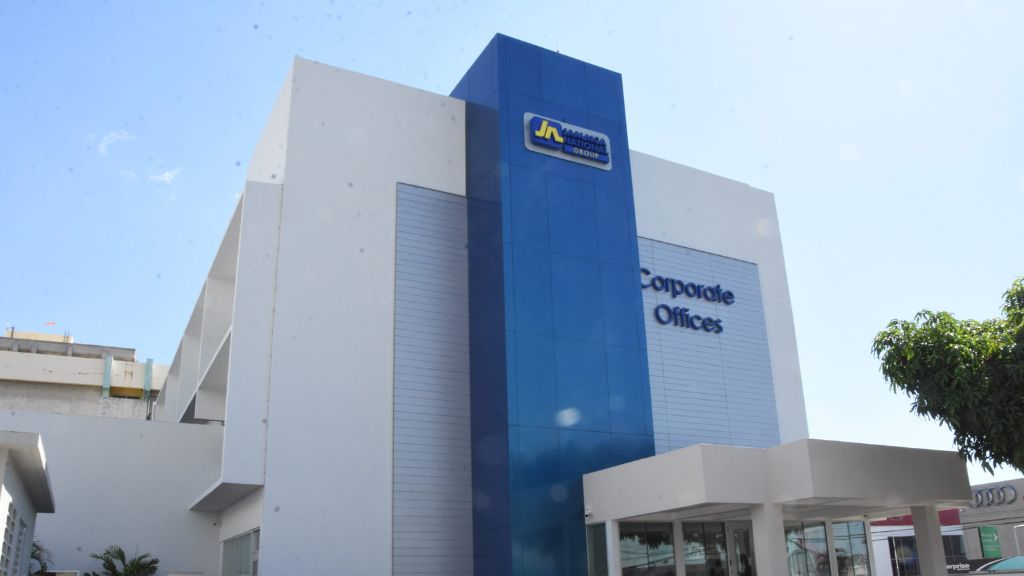
JN Financial Group on track to return to profitability
KINGSTON, Jamaica — The JN Financial Group (JNFG), the financial holding entity of the Jamaica National Group, has announced significant strides toward restoring profitability. This follows a series of strategic decisions aimed at bolstering its financial health and refining its operational focus. The group’s audited financial statements for the fiscal year ending March 31, 2025, revealed a consolidated loss of $1.87 billion, marking a substantial improvement from the $2.52 billion loss reported the previous year. This financial outcome was heavily influenced by a one-time $4.3 billion charge associated with the divestment of an 80.1% stake in JN Bank United Kingdom (UK).
Despite the reported loss, JNFG emphasized that these results underscore steady progress toward achieving long-term financial stability. The company attributes this progress to a comprehensive restructuring initiative and a renewed focus on its core business areas. Key strategic moves included the sale of JN Bank UK, which ceased to be a subsidiary in September 2024, resulting in a $4.8 billion reduction in the group’s investment in subsidiaries. Additionally, the sale of JN General Insurance (JNGI) to British Caribbean Insurance Company Limited was finalized on June 6, 2025, while a share sale agreement for JN Fund Managers (JNFM) was signed in August and is pending regulatory approval.
JNFG reassured stakeholders that the sale of JNFM would not impact client assets or services, as the entity operates strictly as an intermediary. Client funds remain securely invested in Government of Jamaica and corporate bonds, Bank of Jamaica (BOJ) certificates of deposit, and both local and international equities, all registered with the Jamaica Central Securities Depository and the BOJ.
The group’s strategy for returning to profitability hinges on enhanced performance in banking, remittance, and life insurance operations, supported by significant investments in technology and customer experience. JN Bank, which remains well-capitalized and compliant with BOJ requirements, reported a pre-tax profit of $582 million and an after-tax profit of $439 million for the fiscal year ending March 2025. The bank is focused on strengthening capital resilience, improving operational efficiency, and expanding digital services, including upgrades to its mobile and online platforms.
JN Money is advancing its digital transformation while expanding its global presence, having recently entered 10 new countries and additional U.S. states, with further growth anticipated before year-end. Meanwhile, JN Life Insurance is working to boost profitability by increasing its market share and diversifying its product portfolio to meet evolving customer needs.
JNFG highlighted that ongoing efficiency measures, disciplined cost management, and targeted investments in digital platforms—such as the ONE JN Passport, JN Bank LIVE mobile app, JN Pay wallet, and upgraded ATMs and POS solutions—are central to its strategy. The group expressed confidence that these initiatives, combined with enhanced customer service and product innovation, will ensure operational stability and drive sustained improvements in the coming financial year and beyond.
-

That stubborn 10 per cent
Amidst severe financial constraints, the government remains committed to fulfilling its pledge of a ten per cent salary increase for public servants during the 2014-2019 period, as promised during the election campaign. This commitment, however, places the administration in a precarious position, given the current economic challenges of declining revenue, rising debt, and the potential threat of a credit rating downgrade. Finance Minister Davendranath Tancoo is reportedly grappling with the complexities of reconciling this promise with other pressing national priorities, as evidenced by the delayed announcement of the national budget, which is typically presented by early October. The situation is further complicated by the unresolved wage negotiations for the 2020-2022 period, raising questions about whether the Public Services Association (PSA) will accept a similar five per cent increase agreed upon by other unions or push for more. Additionally, the settlement with the PSA could set a precedent for other unions, such as the Oilfields Workers’ Trade Union (OWTU), potentially reigniting industrial unrest if parity is not achieved. The government’s decision to offer the PSA a ten per cent increase is not merely a labour agreement but a move that could significantly impact the broader industrial relations landscape, with other unions likely to demand similar terms. As the government navigates these challenges, the future of its relationship with the labour movement remains uncertain, with potentially significant implications for the country’s economic stability.
-

FirstRock completes third KFC project in Costa Rica
KINGSTON, Jamaica — FirstRock Real Estate Investments (FirstRock) has successfully concluded its third development initiative for KFC Costa Rica, executed through its subsidiary, First Rock LATAM S.A. This ambitious project, initiated in April, encompasses a state-of-the-art restaurant and a cutting-edge distribution center. The restaurant phase reached completion in June, followed by the delivery of the distribution facility in August. Located in Coyol, a prominent industrial zone in Costa Rica, the distribution center is poised to enhance KFC’s logistical efficiency across the region. FirstRock extended gratitude to its collaborators, including Constarq, KFC’s development team, ITFCR, and BAC Credomatic, for their pivotal roles in the project’s success. This milestone underscores FirstRock’s growing influence in Latin America and the Caribbean, reaffirming its dedication to creating long-term value through strategic real estate investments.
-

New 2026 Forester for KIG
Kingston Industrial Garage (KIG), the authorized dealer for Subaru in Jamaica, officially launched the 2026 Subaru Forester on October 4 at its Spanish Town Road showroom. The event marked the debut of the latest iteration of the popular sport utility vehicle, which has long been a favorite among Jamaican drivers for its reliability and adaptability to local terrain.
Jeffrey Panton, Managing Director of KIG, emphasized the significance of the Forester to the Subaru brand and its loyal customer base. ‘The Forester is a cornerstone of our lineup. Its performance and durability make it one of the top choices for Jamaican drivers,’ Panton stated in an interview with the Jamaica Observer’s Auto magazine.
The 2026 Forester boasts a bold, redesigned exterior that aligns with Subaru’s philosophy of blending functionality with aesthetics. Subtle design elements, such as hummingbird motifs and paw prints, add a touch of personality to the vehicle. The car’s spacious glasshouse ensures excellent visibility, while the redesigned front seats enhance safety and comfort. A powered rear tailgate opens to a reshaped cargo area, making loading and unloading more convenient.
Inside, the Forester features a fully digital 12.3-inch driver instrument cluster and an 11.6-inch vertical infotainment screen, equipped with USB ports, Apple CarPlay, Android Auto, and a 10W wireless charger. The vehicle is built on Subaru’s advanced Global Platform, which improves safety, chassis dynamics, and overall driving experience. Key upgrades include a larger 2.5-liter four-cylinder engine and dual-pinion electronic power steering for a smoother ride.
The Forester retains Subaru’s legendary symmetrical all-wheel-drive system, now further refined for enhanced performance across various road conditions. Advanced safety features, such as Vehicle Dynamics Control and the upgraded EyeSight system, which now includes a wide-angle monocular camera, ensure superior protection for drivers and passengers alike.
Panton expressed confidence in the Forester’s ability to thrive in the competitive automotive market, citing Subaru’s proven reliability and technological advancements. He also shared updates on KIG’s expansion plans, including a new showroom in Montego Bay, expected to be completed by the end of 2026.
The 2026 Subaru Forester represents a harmonious blend of innovation and tradition, offering a fresh design while staying true to the elements that have made it a trusted choice for Subaru enthusiasts.
-

FID and Casino Gaming Commission sign MOU for information sharing and compliance
KINGSTON, Jamaica – In a significant move to bolster the fight against financial crimes linked to casino operations, the Financial Investigations Division (FID) and the Casino Gaming Commission (CGC) have formalized their collaboration through a Memorandum of Understanding (MOU). The agreement, announced on Friday, aims to enhance the prevention, detection, investigation, and enforcement of illicit financial activities within the casino sector.