
The highly anticipated Extraordinary General Meeting (EGM) of Staatsolie, scheduled for today, was abruptly canceled at the last minute. The meeting, convened by Board Chairman Gonda Asadang and the Ministry of Natural Resources (NH), was set to address critical governance changes within the company. Notably, the Ministry of Oil & Gas, which oversees policy in the sector, appeared conspicuously absent from the discussions. The primary agenda items included the resignation of current Board of Commissioners (BOC) members and the appointment of new appointees: Rudolf Elias (Chairman), Sergio Akiemboto (Chief of Staff at the President’s Office), Aroon Samjhawan, Ewald Poetisi, Rudie Chin Jen Sem, Chantal Doekhie, and Edgar Caffé. Staatsolie’s Managing Director, Annand Jagesar, confirmed to Starnieuws that the management was informed of the cancellation this morning. ‘We were notified that the EGM will not proceed today. Beyond that, the management is unaware of the reasons behind this decision,’ Jagesar stated. According to Staatsolie’s statutes, an EGM must be convened at least 15 days in advance, though deviations can be approved during the meeting itself. The reasons for the postponement and the new date for the meeting remain undisclosed, leaving stakeholders in the dark about the future of the company’s leadership.
分类: business
-

PM Browne Meets with The Antigua and Barbuda and Montserrat Bankers Association
The Antigua and Barbuda and Montserrat Bankers Association (ABMBA) recently convened with Prime Minister Gaston Browne and senior officials from the Ministry of Finance and Corporate Governance to bolster collaboration on financial inclusion and sector resilience. The meeting, held in recognition of October as Financial Literacy Month within the Eastern Caribbean Currency Union (ECCU), emphasized the importance of integrating financial education into national school curricula.
Discussions centered on improving access to financial services for underserved and vulnerable groups, as well as enhancing business confidence across the nation. Both parties reaffirmed their commitment to developing innovative financial products and expanding credit access for small and medium-sized enterprises (SMEs). This initiative is part of a broader roadmap aimed at promoting economic empowerment and fostering long-term collaboration in the banking sector.
Addressing regional and local concerns, the ABMBA and the Ministry of Finance highlighted the rise in banking-related crimes. They urged the public to remain vigilant against scams and fraudulent schemes, agreeing to expand public awareness campaigns that promote responsible banking practices.
The Ministry of Finance and the ABMBA reiterated their dedication to building a secure, inclusive, and resilient financial system that supports the economic advancement of citizens across Antigua and Barbuda and Montserrat.
-

Economy : Summary, key points of the 2025-2026 budget
The Haitian Council of Ministers has officially approved the 2025-2026 national budget, totaling 345 billion gourdes, marking a 6.8% increase from the previous fiscal year. This budget is strategically designed to address critical priorities such as public security, electoral organization, and macroeconomic stabilization, as outlined by the Transitional Government. The budget aims to restore confidence, consolidate progress, and lay the groundwork for inclusive and sustainable growth. Key areas of focus include the restoration of public security, the organization of general elections, economic recovery, and the modernization of tax administration. The budget also emphasizes a territorialized approach to public spending, ensuring greater transparency and efficiency in resource allocation. Macroeconomic projections indicate a modest real GDP growth rate of 0.3%, with an end-of-period inflation rate of 23.4%. The budget will be primarily financed through domestic resources, including tax and customs revenues, which account for 70.5% of the total funding. Capital expenditures, representing 38.2% of the budget, will focus on infrastructure rehabilitation, regional recovery, and social protection systems. Specific initiatives include the rehabilitation of police stations, the strengthening of the Haitian National Police and Army, and the introduction of reliable technologies to ensure transparent elections. Additionally, the budget allocates resources for food security, healthcare, education, and gender-based violence prevention, aiming to address the needs of the most vulnerable populations.
-
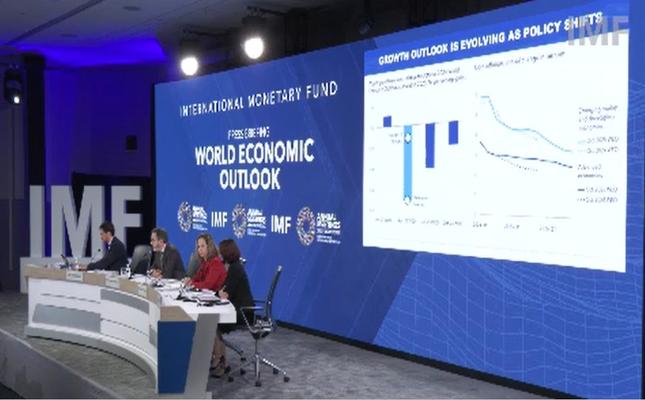
IMF projects continued global growth despite trade tensions and potential economic headwinds
The International Monetary Fund (IMF) has projected a resilient global economic growth trajectory, forecasting expansions of 3.2% in 2025 and 3.1% in 2026, despite persistent trade tensions and broader economic uncertainties. These projections were unveiled during the IMF-World Bank Annual Meetings in Washington, D.C., where officials highlighted the complex interplay of evolving trade policies and fiscal dynamics shaping the global outlook. Pierre-Olivier Gourinchas, IMF’s Chief Economist, emphasized that while inflationary pressures have increased modestly, the impact of tariff shocks has been mitigated by trade exemptions and new agreements. He noted that many countries have avoided retaliatory tariffs, and private-sector adaptability has cushioned the effects of policy shifts. However, Gourinchas warned that risks remain, particularly in advanced economies like the U.S., where growth projections have been revised downward due to inflationary and labor market challenges. In Latin America and the Caribbean, the IMF has revised growth forecasts upward, with Mexico leading the region. Guyana, driven by its booming oil sector, remains the Caribbean’s fastest-growing economy, though growth is expected to slow significantly in 2025.
-
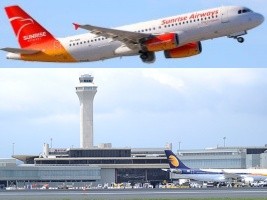
Travel : Sunrise Airways wants to open a direct route between Haiti and Newark (NJ)
Sunrise Airways, a privately owned Haitian airline, is taking significant strides to expand its international reach by proposing a wet lease agreement for a direct flight route between Haiti and Newark Liberty International Airport (EWR) in the United States. This innovative approach involves leasing an aircraft and its crew from a third-party operator, along with outsourcing insurance, maintenance, and other operational aspects. This strategy allows Sunrise Airways to expedite the launch of the Newark route without the need to invest in owning or leasing entire aircraft and staffing. The proposal is under close scrutiny by aviation regulators and industry experts, as its success could mark a pivotal moment in Haiti’s efforts to rebuild its tourism sector and enhance its global appeal. To proceed, Sunrise Airways must secure approval from U.S. aviation authorities, who will evaluate compliance with safety, security, and bilateral agreements. This process includes rigorous reviews of maintenance records, crew credentials, insurance, and liability provisions, as well as adherence to U.S. aviation standards. Regulators will also ensure that the wet lease agreement does not compromise safety or oversight, potentially requiring additional safeguards such as joint oversight or insurance guarantees. If approved, the direct Haiti-Newark route would have far-reaching implications, opening new tourism opportunities, improving travel conditions for Americans, and facilitating access to the U.S. for Haitians and the large Haitian diaspora. The route would also strengthen ties between Haiti and its largest trading partner, the United States, while serving as a vital transportation link for the Haitian diaspora in New Jersey, New York, and Florida. Newark Liberty International Airport, a major hub in the Northeast, would provide convenient access for travelers, further enhancing the route’s potential impact.
-
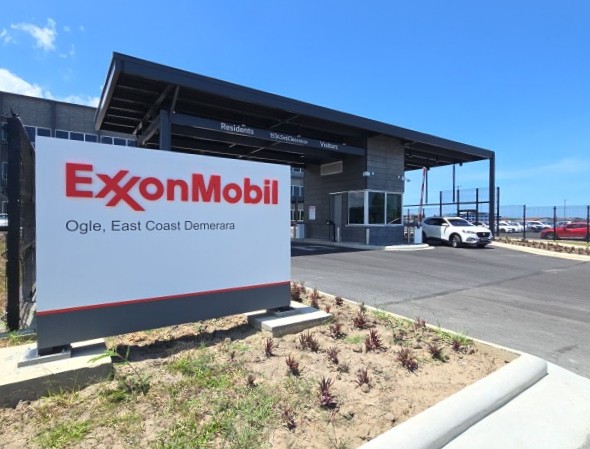
Converting into liquefied natural gas not a priority – ExxonMobil Guyana’s chief
ExxonMobil Guyana’s CEO, Alistair Routledge, announced on Monday that the company’s focus in Guyana will be on utilizing natural gas for domestic growth rather than converting it into Liquefied Natural Gas (LNG) for export. This decision comes as ExxonMobil prepares to develop its first non-associated gas field at Longtail in the Stabroek Block. Routledge emphasized that the gas would primarily support power generation, data centers, and an alumina plant, aligning with Guyana’s broader economic development goals. While LNG conversion remains an option, the immediate priority is to maximize the gas’s value within the country. The company aims to complete environmental impact studies by late 2026 and submit a field development plan (FDP) to the Guyanese government. Initial production will focus on condensate, a liquid byproduct of natural gas, for global export. Gas reinjection into wells will also be employed to enhance condensate recovery, with natural gas extraction expected to begin 10 to 15 years after Longtail’s condensate production starts. ExxonMobil forecasts a daily production rate of over one billion cubic feet of natural gas from Longtail. In contrast, water reinjection will be used at the Hammerhead field, which contains heavier oil, with gas potentially exported to existing pipelines or the Liza Unity FPSO to boost oil recovery.
-

Business chambers welcome budget presentation
In the wake of the 2025/2026 budget presentation, Dianne Joseph, President of the TT Coalition of Services Industries (TTCSI), emphasized the need for the government to prioritize implementation over mere promises. While applauding initiatives such as the removal of VAT on basic food items and the establishment of a $1 billion National Investment Fund Holding Company Ltd, Joseph cautioned that past governments have struggled with execution. She stressed that without the right teams and strategies in place, the budget’s ambitious goals may remain unfulfilled. Joseph highlighted ongoing issues with online business registration, noting that despite promises, many members still face bureaucratic hurdles. She called for accountability and strategic planning to ensure the budget’s success. The American Chamber of Commerce of TT (Amcham TT) and other business associations welcomed aspects of the budget, particularly enhancements to the Customs and Excise Division and potential reforms to the VAT system. However, they emphasized the importance of inter-agency coordination and the establishment of oversight mechanisms to ensure lasting impact. Kiran Singh, President of the San Fernando Chamber of Commerce, praised the reduction in super gas prices, which he said would benefit the MSME sector by reducing transportation costs. However, concerns were raised about proposed rental taxes and electrical surcharges, which could increase costs for landlords and tenants. The TT Chamber of Industry and Commerce also highlighted measures to boost non-energy exports, including investment in agriculture and the establishment of an Export Academy. Overall, while the budget has been well-received, business leaders are calling for effective implementation to translate promises into tangible benefits.
-

Tancoo: New board will revamp CAL
In a significant move to address long-standing financial mismanagement, Caribbean Airlines (CAL) has appointed a new board of directors tasked with rectifying what Finance Minister Davendranath Tancoo described as ‘criminal negligence’ under the previous administration. During the 2025/2026 budget presentation in Parliament on October 13, Tancoo revealed that CAL had spent over $60 million on audits conducted by Ernst & Young and PriceWaterhouseCoopers (PwC) but failed to submit audited financial statements for nearly a decade. Despite this lack of transparency, the former finance minister repeatedly approved funding for CAL between 2017 and 2025 to cover operational pressures. Tancoo condemned this as a failure of governance, stating that the airline had descended into inefficiency and fiscal indiscipline. The new board, appointed by the Ministry of Finance, is expected to implement stringent measures to restore accountability and modernize governance standards. This includes updating the outdated State Enterprise Performance Monitoring Manual to align with international best practices in corporate governance, transparency, and fiscal responsibility. The leadership transition also saw the immediate resignation of CEO Garvin Medera, who was replaced by Chief Operating Officer Nirmala Ramai. Medera expressed gratitude to employees, partners, and customers for their support during his tenure. Under Ramai’s leadership, CAL will focus on five key initiatives: enhancing employee and stakeholder communication, improving operational efficiency, elevating customer experience, developing a sustainable growth plan, and conducting comprehensive audits to strengthen governance and accountability. The airline remains committed to its full schedule and aims to prioritize internal talent development for career advancement opportunities.
-

Tancoo defends projected US$73 oil price
Trinidad and Tobago’s Minister of Finance, Davendranath Tancoo, has justified the government’s decision to base its fiscal 2026 budget on an oil price of US$73.25 per barrel and natural gas at $4.25 per million British thermal units (MMBtu). The announcement was made during a post-budget forum organized by the TT Chamber of Industry and Commerce on October 14 in San Fernando. The event saw Tancoo addressing concerns raised by Nalini Ramkissoon, the business development manager at Heritage Petroleum Ltd, regarding the rationale behind the selected prices. Tancoo explained that the figures were derived from projections by the Ministry of Energy and Energy Industries, which utilized a ‘basket of prices’ methodology developed under the previous administration. The projections included optimistic, pessimistic, and moderate estimates, with the government opting for the middle figure to ensure realism. Tancoo acknowledged that this approach might differ from other metrics, such as the Brent crude oil price. He also emphasized that the budget incorporates various contingencies to account for potential fluctuations in oil and gas prices. The US Energy Information Administration (US EIA) has forecasted a decline in oil prices, with Brent crude expected to drop to US$52 per barrel by early 2026. Similarly, natural gas prices are projected to average US$3.90/MMBtu in 2026. Tancoo’s maiden budget, presented on October 13, outlined expenditures of $59.2 billion and revenues of $55.4 billion, resulting in a $3.9 billion deficit. Oil revenue is anticipated to contribute $11.254 billion, while non-oil revenue is forecasted at $43.402 billion, with capital revenue expected to reach $0.711 billion.
-

Tancoo unveils NIS overhaul: higher rates, later retirement age
In a landmark announcement during the 2026 national budget presentation on October 13, Finance Minister Davendranath Tancoo unveiled sweeping reforms for the National Insurance Scheme (NIS). Without immediate action, Tancoo warned, the fund could face collapse within the next decade, leaving hundreds of thousands of retirees without income protection. The proposed measures include a phased increase in contribution rates and a gradual rise in the retirement age from 60 to 65 over the next ten years. Effective January 5, 2026, contribution rates will rise by three per cent, with another three per cent increase scheduled for January 4, 2027. Starting in January 2028, the retirement age for full NIS pensions will incrementally increase by one year every two years, reaching 65 by 2036. Tancoo assured that those retiring before January 1, 2028, and all existing pensioners will remain unaffected. Early retirees will still qualify for reduced pensions, with a minimum of $3,000. The Finance Minister emphasized the urgency of these reforms, citing years of inaction under the previous administration that allowed the NIS’s financial challenges to deepen. Annual benefit payments now exceed $6 billion, a 65 per cent increase over two decades, while payouts have consistently outpaced contributions since 2020, forcing the National Insurance Board (NIB) to liquidate assets. The 11th Actuarial Review projected fund depletion by 2033 or 2034 without intervention. Tancoo criticized the former PNM government for ignoring repeated warnings and delaying necessary reforms. He pledged that under his administration, the NIS would not be allowed to fail, ensuring protection for over 200,000 vulnerable citizens. Additionally, private pensions will be exempt from income tax starting January 1, as previously promised.