
分类: business

  • Havana prepares to host the largest trade fair in the Caribbean

    Havana prepares to host the largest trade fair in the Caribbean

    From November 24 to 29, 2025, the 41st edition of the Havana International Fair (FIHAV 2025) will convene in Cuba, serving as a pivotal platform for national and international businesses to explore trade opportunities and gain insights into the country’s productive and export capabilities. This year’s event is particularly significant as it unfolds against a backdrop of heightened economic challenges, including the intensification of the U.S. government’s economic blockade and the aftermath of Hurricane Melissa, which severely impacted the eastern regions of Cuba.

    Oscar Pérez-Oliva Fraga, Cuba’s Deputy Prime Minister and Minister of Foreign Trade and Investment, emphasized the importance of FIHAV 2025 during a recent press conference. He highlighted that the fair will feature the 8th Investment Forum, where an updated Foreign Investment Opportunities Portfolio will be unveiled. Additionally, the Caribbean Banking Forum will be held to foster regional integration and collaborative strategies among Caricom member states, the Caribbean Banking Association, and the Cuban banking system.

    To date, 16 official delegations and representatives from 47 countries have confirmed their participation, with notable attendance from China. Other key participants include the Director of the Colon Free Zone in Panama, executive secretaries of ALBA-TCP and the Latin American Economic System, the Secretary General of the Latin American Integration Association, and 15 trade and foreign investment promotion agencies. This diverse participation underscores the global interest in Cuba’s economic potential despite its current adversities.

  • Look beyond IMF as access to climate finance tightens – senator

    Look beyond IMF as access to climate finance tightens – senator

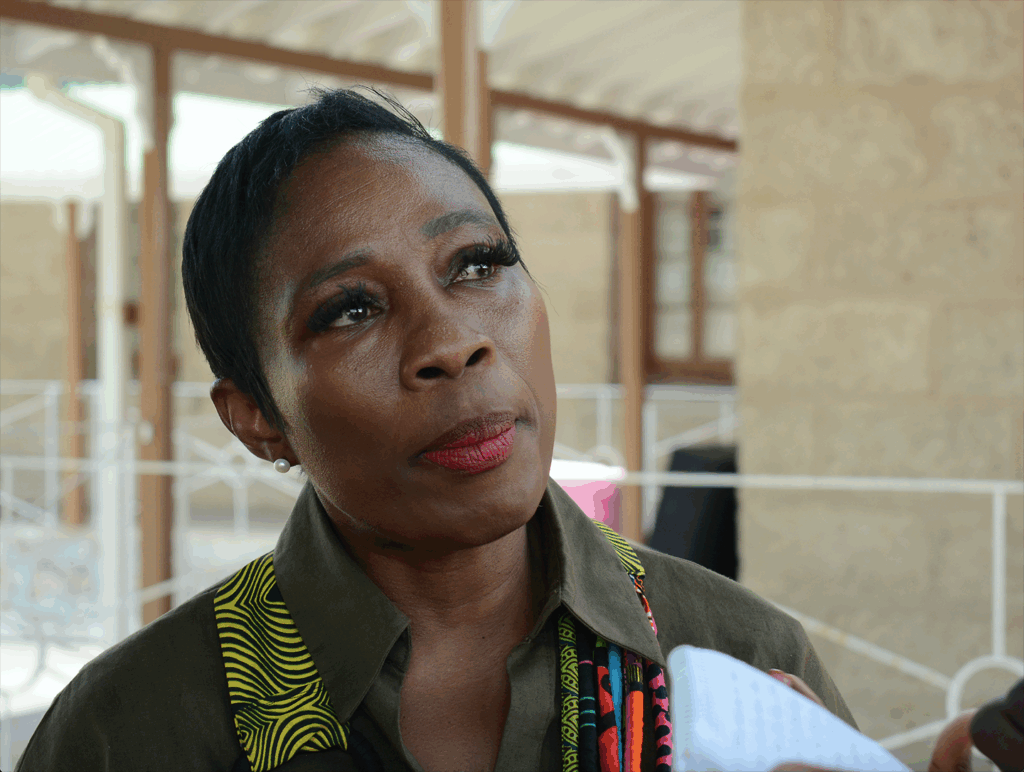
    Barbados is taking decisive steps to diversify its development financing sources and reduce its dependence on traditional international lenders, as global climate finance becomes increasingly constrained. Senator Shantal Munro-Knight, Minister in the Prime Minister’s Office with responsibility for Culture, emphasized the urgency of this shift during a Senate session on Wednesday. The Senate debated the Development Bank of Latin America and the Caribbean (CAF) Bill, which formalizes Barbados’ full membership in CAF by replacing the Latin American Development Bank Act. Munro-Knight highlighted that while some global institutions are retreating from climate financing, CAF offers a regional alternative that is flexible, responsive, and tailored to the needs of small states like Barbados. She pointed out that the International Monetary Fund (IMF) is being urged to return to its core mission, potentially reducing its focus on climate financing, which poses challenges for middle-income, climate-vulnerable nations. Munro-Knight stressed the need for Barbados to proactively build partnerships and buffers to mitigate external shocks. She noted a decline in official development assistance (ODA) to Latin America and the Caribbean, with private capital primarily flowing into energy projects, leaving critical sectors like health, education, and housing underfunded. CAF, she argued, understands the region’s realities and provides a platform for Caribbean nations to shape solutions collectively. Under the new legislation, Barbados will acquire 34,834 Series C shares in CAF, valued at $494.6 million, enabling access to financing worth 18 times that amount over 15 years. This investment will transition Barbados to full membership, granting it a seat on CAF’s board of directors and enhancing its influence in regional decision-making. CAF has already demonstrated its value as a development partner, approving $700,000 in technical assistance for the Barbados Water Authority and funding infrastructure projects on the South Coast. Additionally, CAF has supported cultural initiatives like CARIFESTA and heritage projects, including the digitization of national archives and the development of a heritage district. The phased investment over 15 years will allow Barbados to manage its financial commitments while gaining immediate access to development resources, safeguarding its fiscal space and strengthening its resilience to climate and economic shocks.

  • Economy : 66 new civil servants integrated into the Ministry of Economy and Finance

    Economy : 66 new civil servants integrated into the Ministry of Economy and Finance

    On November 10, 2025, Haiti’s Ministry of Economy and Finance (MEF) officially integrated 66 new civil servants into its ranks. The event marked a significant step in bolstering the institution’s workforce and advancing its mission. The Director of Administrative Affairs and Budget warmly welcomed the newcomers, expressing confidence in their skills, energy, and dedication to excellence. Drawing parallels to the American dream, he emphasized that success within the Ministry is attainable through clear goals, hard work, and adherence to rules, sharing his own journey from humble beginnings to his current leadership role. Each new employee was introduced individually, with many expressing their long-held aspirations to join the Ministry. They pledged to contribute their expertise and commitment to the efficient functioning of the civil service, taking pride in being part of this select group. Jean Bouco Jean Jacques, the Director General, reaffirmed the transparency of the recruitment process, though he acknowledged delays caused by security challenges and budgetary constraints. The event concluded with remarks by Ms. Franceline Herolde, who underscored the principles and responsibilities of civil servants. She highlighted their role in ensuring legality, continuity, impartial service to citizens, and national development, drawing comparisons between the public and private sectors.

  • Canada Opens Doors for Belizean Women Entrepreneur

    Canada Opens Doors for Belizean Women Entrepreneur

    Belizean women entrepreneurs are poised to make a significant leap onto the global stage with the launch of the GRIT Project, an initiative aimed at fostering resilient and inclusive trade. Funded by Global Affairs Canada and spearheaded by Caribbean Export, this four-year program is designed to equip women-led businesses with the tools necessary to compete in international markets. The project offers comprehensive training, market intelligence, and export readiness support, focusing on resilience, inclusion, and scalability. The initiative is expected to benefit over 800 women entrepreneurs across six Caribbean nations, including Belize, with Canada identified as the primary target market. The GRIT Project, which stands for Generating Resilient and Inclusive Trade, is seen as a transformative opportunity for Belizean women to expand their businesses and contribute to the prosperity of their communities. Narda Garcia, CEO of the Office of Prime Minister & Investment, emphasized the significance of the project, stating that ‘grit’ embodies the spirit of Belizean women, who are determined to turn ideas into successful enterprises. The program will also address challenges such as market access and financing, providing a pathway for businesses to meet both domestic and international standards. Shalwa Leslie, a participant from Farm to Perfection, shared her enthusiasm for the project, noting that while the journey will be challenging, it presents a valuable opportunity for growth and international market penetration. Caribbean Export will work closely with entrepreneurs to develop market entry strategies and build capacity, ensuring that businesses are well-prepared for global competition. The GRIT Project is expected to indirectly benefit up to 10,000 women, marking a significant step forward for Belizean businesses on the international stage.

  • Belize Bets on Solar for Energy Independence by 2030

    Belize Bets on Solar for Energy Independence by 2030

    Belize is making significant strides toward achieving energy independence by 2030, with solar power at the forefront of its strategy. Currently, the nation relies heavily on electricity imports from Mexico, which account for approximately 50% of its energy supply. However, under the leadership of the Briceño administration, Belize is shifting its focus to renewable energy sources, particularly solar and hydropower.

  • Development : $80 million from the World Bank for road infrastructure

    Development : $80 million from the World Bank for road infrastructure

    In a significant move to bolster Haiti’s infrastructure, the World Bank has greenlit an $80 million initiative aimed at enhancing rural road connectivity and accessibility across key regions. The Haiti Resilient Corridors Project, approved on November 11, 2025, will focus on the West, South, Southeast, and North departments, targeting critical road sections such as National Road 2, Departmental Route 41, and the border road linking Ouanaminthe to the Dominican Republic. The project will restore and modernize essential bridges like La Digue, Côte-de-Fer, and Mahot, alongside improving culverts and rural roads to create a sustainable and resilient network. Additionally, it will fortify the Ministry of Public Works’ capacity to address geological and climate risks by renewing emergency bridge stocks. The initiative also includes the rehabilitation of 100 kilometers of tertiary and rural roads in vulnerable urban areas, particularly in the South, Nippes, Grand’Anse, and Southeast departments, to enhance transportation reliability, especially during the rainy season. The project is set to benefit nearly 2.9 million people by providing better access to sustainable transportation infrastructure and services, while also generating 300,000 direct workdays for the local workforce. A notable aspect of the project is its emphasis on gender inclusion, supporting training and certification for women in heavy equipment operation and road construction techniques, alongside capacity building for Ministry and construction company staff.

  • BIS bereidt zich voor op promotie tijdens carrièrebeurs in Amsterdam

    BIS bereidt zich voor op promotie tijdens carrièrebeurs in Amsterdam

    The Ministry of Foreign Affairs, International Trade, and Cooperation (BIS) of Suriname recently hosted an information session to prepare for the country’s participation in the ‘Working in the Caribbean’ career fair, scheduled for April 24–25, 2026, at the Amsterdam RAI. Organized in collaboration with Memory Events B.V. from the Netherlands, the session aimed to inform government bodies, businesses, and institutions about the event and foster coordinated representation of Suriname. Director Henna Soerdjoesing emphasized that the fair presents a unique opportunity to position Suriname as an attractive destination for international professionals. A dedicated Suriname pavilion will be set up at the event, showcasing local businesses, educational institutions, and organizations to a broad audience. The session featured presentations by Geert Nab (CEO) and Myléne van Puffelen (COO) of Memory Events B.V., who detailed the fair’s concept and practical preparations. Attendees actively engaged in discussions, demonstrating keen interest and registering for further participation. BIS aims to lead a strong Surinamese delegation to the fair, which seeks to attract professionals from the Netherlands and the Caribbean to explore career opportunities in the region.

  • CDB and RevUP Caribbean unveil ongoing support platform for entrepreneurs across the Caribbean

    CDB and RevUP Caribbean unveil ongoing support platform for entrepreneurs across the Caribbean

    The Caribbean Development Bank (CDB) has partnered with RevUP Caribbean to unveil the RevUP Founders Growth and Community Support Network, a groundbreaking digital platform designed to provide continuous support to entrepreneurs across the Caribbean. This initiative, backed by a USD 250,000 technical assistance grant from CDB, marks a significant advancement in regional entrepreneurial development. The announcement was made at a recent RevUP Caribbean event, where Lisa Harding, CDB’s Division Chief for Private Sector, highlighted the Bank’s commitment to innovation-driven growth. ‘Our future competitiveness hinges on leveraging new technologies, nurturing creativity, and financing enterprises that can transform our economies,’ Harding stated. The RevUP Community is a multi-tiered membership platform offering tailored resources, mentorship, investor connections, and regional collaboration. It features four participation levels, providing access to a verified digital network, business tools, and expert-led events such as coaching, governance sessions, pitch training, and investor access via FirstAngels Caribbean. The platform, hosted on Zoho, connects founders with mentors, board members, investors, and service providers across the Caribbean, Europe, and Latin America. Sandra Glasgow, Managing Director of RevUP Caribbean, described the initiative as a ‘lifelong ecosystem’ designed to support entrepreneurs at every stage of their journey. Harding also emphasized the importance of strategic partnerships in driving business expansion, noting CDB’s role as both a financier and a partner in fostering innovation and global competitiveness. Building on the success of RevUP’s incubator program, which has supported 145 founders, generated over USD 1 million in additional revenue, and created 131 new jobs in women-led enterprises, CDB is now funding Phase II of the initiative. This phase focuses on entrepreneurship, innovation, and investment readiness as key pillars of sustainable growth, ensuring the Caribbean remains competitive and resilient in a rapidly changing global market.

  • Gov’t announces commencement of potato season and arrival of seeds

    Gov’t announces commencement of potato season and arrival of seeds

    The Ministry of Agriculture, Fisheries, Blue and Green Economy has unveiled plans for an early start to the 2025/26 white potato planting season. This initiative follows the arrival of a significant shipment of seed potatoes on the island, comprising 1,160 bags of two high-yielding varieties: Desiree and Spunta. The seeds, imported to bolster local agricultural output, will first undergo rigorous testing by the Division of Agriculture’s Plant Quarantine Unit to ensure they meet stringent quality standards and are free from diseases. Upon successful inspection, the seeds will be made available for purchase starting mid-November 2025. The Ministry has also committed to releasing detailed pricing and package information soon, which will include seeds, agro-chemicals, inputs, tilling services, and transportation. Planting is slated to occur from December 2025 through January 2026, with harvests expected between March and April 2026, approximately 90 to 110 days post-planting. To streamline the process, the Ministry is encouraging farmers and cooperative members to pre-register with their Extension Officer or at local Farmer Service Centres to secure necessary inputs and technical support. Agriculture officials emphasize that white potatoes remain a profitable short-term crop with strong market demand, urging farmers to capitalize on this opportunity to enhance local production and income. For further details, interested parties can contact the Main Office Division of Agriculture at Vanoulst House, Goodwill Road, or via phone at 266-3994/3807/3271.

  • GCIC urges resolve impasse involving Ports Authority terminal staff

    GCIC urges resolve impasse involving Ports Authority terminal staff

    The Grenada Chamber of Industry and Commerce (GCIC) has issued an urgent appeal to the Grenada Ports Authority (GPA) and workers’ representatives to engage in time-bound, mediated negotiations to resolve the ongoing industrial dispute. Emphasizing the critical role of the port in the nation’s economy, GCIC warned that prolonged disruptions could have severe repercussions for households, businesses, and essential services. The Chamber’s President highlighted the particularly sensitive timing, with the pre-Christmas import season in full swing, perishable goods and pharmaceuticals in transit, and tourism operators managing high-season logistics. The impasse threatens to escalate price pressures, cause supply shortages, delay projects, and lead to widespread income losses. To mitigate these risks, GCIC proposed a temporary halt to disruptive actions, the appointment of a mutually acceptable mediator, and the publication of a joint progress update within 72 hours. The Chamber also offered to facilitate dialogue, provide neutral data on supply-chain impacts, and host multistakeholder sessions to foster clarity and consensus. ‘A fair, respectful, and clear resolution is in everyone’s interest,’ the President concluded, stressing the importance of safeguarding national welfare.