GEORGETOWN, Guyana — The Guyanese government has confirmed that negotiations remain ongoing with US-based energy infrastructure firm Curlew Midstream regarding a proposed bulk fuel storage facility, a project that has already missed its initial deadline for completion by the end of 2025.
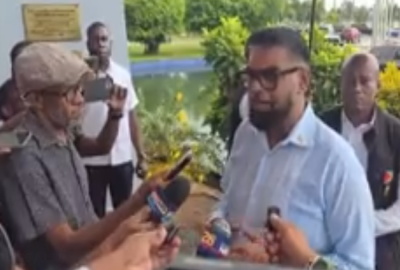
President Irfaan Ali addressed reporters, stating, “We are in discussion with the legal team. They’re handling those negotiations. I’m not going to comment on where those negotiations are but they have a proposal in and we’re looking at that.” This confirmation comes amid emerging legal challenges and apparent last-minute changes to the previously agreed terms.
Court documents from a separate litigation filed in February 2026 reveal that Curlew Midstream’s board had met with high-level Guyanese officials to finalize remaining commercial points, providing due diligence materials and financial documents with expectations that execution of the Fuel Exchange Agreement was imminent. According to filings, President Ali himself met with company representatives on January 10, 2026, confirming that Natural Resources Minister Vickram Bharrat would execute the agreement within two days.
However, the arrangement encountered significant obstacles when the Guyanese government subsequently presented a “signable agreement” that unexpectedly incorporated terms from a new consultant not previously involved in negotiations. These eleventh-hour modifications introduced substantial changes to key commercial points that were inconsistent with terms previously agreed upon in October 2025, when both parties had reached consensus on crude pricing, refined product pricing, terminal construction in Georgetown and Lethem, and prepayment arrangements.
President Ali, without specifically referencing Curlew Midstream, emphasized the strategic importance of such storage infrastructure amid rising global oil prices fueled by Middle East conflicts. “Just imagine if we had a massive storage facility in Guyana under these challenges—the role Guyana could have played,” he stated, adding that several Middle Eastern nations were evaluating countries for investment opportunities to guarantee long-term energy security.
The proposed $300 million facility would store 750,000 barrels of various fuel products and was expected to refine at least 30,000 barrels of crude daily for domestic consumption. Curlew Midstream had projected that its terminal would enable price-advantaged trading, dramatically reducing wholesale and retail fuel prices while potentially positioning Guyana as an exporter of high-quality fuels to Caribbean Community (CARICOM) nations.
When questioned about two US court cases concerning alleged intellectual property theft and their potential impact on the approval process, President Ali stated he was unaware of such litigation, noting that involved parties would need to resolve those matters separately.