分类: business

  • Big FIFA World Cup bucks for Jamaicans in Florida

    Big FIFA World Cup bucks for Jamaicans in Florida

    Even though Jamaica’s senior men’s national football team failed to secure a spot in the 2026 FIFA World Cup, Jamaican entrepreneurs and residents across Florida have already begun tapping into the massive economic opportunities the global tournament is bringing to the Sunshine State. With the tournament’s opening match just days away, industry leaders and local officials project the financial windfall for Jamaican-linked businesses will be far larger than initial projections.

    Oliver Mair, Jamaica’s Consul General for the southern United States, which includes Florida, laid out the unique advantages Jamaican vendors and brands hold in the region in an exclusive interview with the Jamaica Observer. Mair notes that multiple World Cup participating teams have set up their pre-tournament training camps across Broward County, a South Florida region home to the largest concentration of Jamaican residents in the United States. Cities including Lauderhill, Lauderdale Lakes, Miramar, Sunrise, and Pembroke Pines have large enough Jamaican populations that the area is widely nicknamed “Little Jamaica” by locals.

    While no official World Cup matches will be held in Broward County — all Florida-based games are concentrated in Miami — local community leaders and business associations have worked to position the area as a key hub for off-match World Cup activity, ensuring local Jamaican operators get a slice of the tournament’s revenue. Even without Jamaica’s national team in the main draw, Mair says the influx of global football fans creates a one-of-a-kind chance to showcase Jamaican culture and consumer brands to an international audience.

    “Lots of fans from all over the world are converging on South Florida, and that gives us the perfect stage to put Jamaican products front and center,” Mair explained. Iconic Jamaican brands already reporting strong sales growth tied to the tournament include Grace Kennedy, a leading Caribbean food conglomerate, and Juici Patties, a popular Jamaican fast-food chain known for its signature fried meat patties — an ideal matchday snack. Jamaican beer brand Red Stripe is also seeing a surge in demand among fans gathering to watch matches.

    Beyond food and beverage, a full slate of community-led events and watch parties is drawing fans who have been priced out of the exorbitant official match tickets. Mair highlighted just how steep official ticket costs have become, noting one Jamaican contact paid $1,900 for a single opening round ticket, with upper-tier seats for the final expected to fetch as much as $15,000. That has created massive demand for affordable off-match events, with dozens of public watch parties and fan celebrations planned across Broward County’s Jamaican community throughout the tournament.

    To kick off the tournament-related activity, the City of Lauderhill, the Caribbean Americas Soccer Association, and Broward County hosted a pre-tournament launch weekend centered on a series of friendly youth matches. Last Saturday, Jamaica’s Under-20 Reggae Boyz notched a lopsided 9-0 win over Haiti’s under-20 side at the Lauderhill Sports Complex. The following day, the young Jamaican squad fell to Miami United’s under-20 team in a penalty shootout at Broward County Stadium.

    The launch weekend alone already delivered significant economic gains for local Jamaican small businesses and community sports groups. Michael Mitchell, a former captain of the Jamaica College Manning Cup team and owner of Gasick Hospitality Services, reported his catering stall selling authentic Jamaican jerk chicken, fried festival, and escovitch fish completely sold out of inventory during the two-day event.

    “With the World Cup right here in Florida, this is a game-changer for our small community businesses,” Mitchell said. “Thousands of extra tourists are pouring into the area, and that means way more revenue than we see in a normal period. We’re leaning into this chance as much as we can.”

    Local Jamaican-linked sports clubs are also leveraging the tournament to hit fundraising goals. The Sunballerz Netball Club, a mostly Jamaican community team based in Florida, hosted a food sale at the launch weekend event to raise funds for club operations. “We’ve been a strong club for two years now, and we’re hoping the World Cup helps us grow into something even bigger,” said Nikisha Tyndall, the club’s only non-Jamaican member and an Antiguan native.

    Annette Payne, president of the Caricom Sports and Netball Club, added that the World Cup has created the ideal opportunity to raise the funds her team needs to compete in an invitational tournament in Canada this July. She praised the City of Lauderhill for prioritizing local Jamaican vendors and community groups for tournament-related event spots, giving small operators access to the massive fan base that will be in the region through the end of the tournament.

    Beyond business, Mair said the whole community is embracing the chance to be part of what is widely called “the greatest show on Earth.” Strong hotel booking numbers have already been recorded across Broward County, with several top Jamaican musical artists scheduled to perform at tournament-related events throughout the competition. Mair added that local Jamaican residents are largely rooting for fellow Caribbean side Haiti, which did qualify for the 2026 tournament, and are eager to welcome fans from across the region to South Florida.


  • The world behind Barita’s next chapter

    The world behind Barita’s next chapter

    KINGSTON, Jamaica — For years, Paul Simpson’s high-profile meetings with global political and business leaders at major international forums were largely dismissed as elite-level networking for the top Jamaican financial executive. Today, those connections have emerged as a core pillar of Cornerstone, Simpson’s financial group, as it guides subsidiary Barita into a sweeping new era spanning digital banking, asset management, real estate development, cross-regional growth and technology-driven financial services. The group frames these long-standing engagements as a deliberate knowledge-gathering exercise: studying how larger, faster-growing economies built the systems Jamaica needs to compete in the modern global economy.

    As the founder, president and chief executive officer of Cornerstone, Simpson’s years of photos alongside leaders in technology, payments, infrastructure, industrial development and economic policy tell a quiet story of strategic planning. For the group, the value of these interactions has never been just exclusive access — it is firsthand exposure to cutting-edge ideas, institutional frameworks and scalable execution models that will shape Barita’s next chapter.

    This new era stretches far beyond Barita’s historic identity as a traditional investment house. Cornerstone’s bold vision reimagines Barita as an integrated platform operating at the intersection of finance, technology, capital markets, real estate and regional development. The group’s central wager is that a homegrown Jamaican financial institution can build a strong local foundation, learn from global best practices, and ultimately compete successfully across the broader Caribbean and Latin American marketplace.

    Technology sits at the heart of this transformation. One of Simpson’s most notable engagements was a meeting with Elon Musk, the visionary entrepreneur behind SpaceX, Tesla and xAI, and co-founder of PayPal. For Simpson, the meeting carried two layers of relevance. First, on a national level, he thanked Musk for Starlink’s critical role in restoring communications across Jamaica in the wake of Hurricane Melissa, when reliable connectivity was essential for disaster relief, recovery coordination and emergency response.

    The second relevance was deeply strategic. Long before Musk became a global household name for electric vehicles, space exploration and artificial intelligence, he helped build PayPal — the fintech pioneer that revolutionized digital payments and proved how technology could rewrite the rules of global money movement. That history resonates directly with Cornerstone, as the group’s own digital banking ambitions revolve around the same core question: how can technology cut friction from financial services, making transactions faster, more affordable and accessible to underserved populations?

    To advance this goal, Cornerstone has established technology operations based in Miami, positioning the group closer to the top talent, strategic partners and innovation ecosystems that are reshaping payments, banking, AI, customer experience and digital transformation globally. “Our view has always been that Jamaica and the Caribbean should not be bystanders in the next wave of financial technology,” Simpson explained in an interview. “We have to build relationships with the people and ecosystems shaping the future, understand the technologies transforming global banking and payments, then apply those lessons to solve real problems for our people.”

    This focus on learning from global peers also drives Simpson’s engagement across Latin America. In one widely shared photo, Simpson appears alongside Edgar Amador Zamora, Mexico’s secretary of finance and public credit. The connection is strategic: Mexico has emerged as one of Latin America’s most dynamic fintech markets, with rapid growth in digital payments, digital banking, financial inclusion and technology-enabled financial services. For Cornerstone, Latin America is more than a neighboring region — it is a living market laboratory.

    Many of the challenges Barita’s digital banking platform is designed to address in Jamaica are shared across much of Latin America and the Caribbean: large populations of underserved customers, exorbitant transaction costs, heavy economic dependence on remittance flows, limited access to formal banking services, and small businesses desperate for faster money movement solutions. “Many of the challenges we are seeking to solve are not unique to Jamaica,” Simpson noted. “Across Latin America and the Caribbean there are millions of people who remain underserved by traditional financial institutions, millions more who depend on remittances, and countless businesses seeking faster, more efficient ways to transact.”

    That reality has pushed Cornerstone to think beyond a Jamaica-only business model. “As we build our platform, we are not only thinking about Jamaica. We are thinking about how technology can create a more connected financial ecosystem across the wider region,” Simpson said.

    While the Mexico connection focuses on financial inclusion and regional scale, Simpson’s engagement with German leaders highlights another critical pillar of Cornerstone’s strategy: economic competitiveness. A photo of Simpson with German Chancellor Friedrich Merz underscores the group’s interest in Germany, a country long renowned for its industrial leadership, engineering excellence, renewable energy transition and consistent technological innovation. For Jamaica, these themes are particularly urgent, as the country grapples with long-standing constraints including high energy costs, infrastructure gaps, low productivity, inefficient logistics and weak global competitiveness. Cornerstone’s interest in these issues extends beyond financial services, especially as the group expands its real estate and infrastructure development footprint.

    Simpson emphasized that the core value of these engagements lies in learning how advanced economies have approached long-term structural economic transformation. Another high-profile meeting, with Turkish President Recep Tayyip Erdoğan, offers a distinct set of lessons for large-scale infrastructure delivery, a priority as Cornerstone expands into real estate development.

    Over the past two decades, Türkiye has undertaken one of the world’s most ambitious infrastructure build-outs, spanning transportation networks, affordable housing, logistics hubs, energy projects, ports, airports and urban renewal. For Cornerstone, Türkiye’s experience offers a clear blueprint: how emerging economies can plan and execute large-scale projects efficiently. That expertise is directly relevant as Cornerstone grows its real estate division, which already holds a portfolio of strategic land parcels earmarked for residential, commercial, industrial, tourism and infrastructure developments. Bernhard Stocker, a recently appointed industry veteran, will lead the group’s real estate development arm.

    Cornerstone has also spent years cultivating partnerships with Turkish construction, engineering and infrastructure firms, with the goal of adapting global best practices in project execution and construction management to the needs of Jamaica and the wider Caribbean. “As we look at Jamaica’s future, we believe there is tremendous value in studying countries that have successfully transformed their economies through infrastructure investment and disciplined execution,” Simpson said. “Türkiye’s experience demonstrates what can be achieved when long-term vision is matched with the ability to deliver.”

    Taken together, these high-profile connections map out the full outline of Cornerstone’s new growth playbook. Musk represents technology, digital payments, artificial intelligence and connectivity. Mexico points the way toward financial inclusion and regional digital banking scale. Germany offers lessons in industrial competitiveness, energy transition and innovation. Türkiye provides a model for infrastructure delivery and large-scale development.

    The common thread running through all these engagements is Simpson’s core argument: Jamaica and the Caribbean cannot build their next phase of economic growth in isolation. This philosophy is the driving force behind Barita’s ongoing transformation. The group is shifting away from a conventional, narrow financial services model to build a far broader integrated platform that unites banking, investments, technology, real estate and regional ambition.

    Even with this clear strategic vision, the greatest hurdle remains execution. Relationships with global leaders and institutions open doors to ideas, capital and technical expertise, but they do not guarantee customer adoption, profitable projects or successful regional expansion. The ultimate test will be whether Cornerstone can translate its global exposure into tangible local products, investable projects and measurable value for both customers and shareholders.

    That makes the next phase of Barita’s development far more than a story of regulatory approvals, acquisitions or photo opportunities. It will ultimately be defined by whether a Jamaican-born financial group can turn global connections into a sustainable, leading Caribbean platform — and whether the bold ambition behind the headlines can be converted into real, on-the-ground results.

  • JHTA renews call for urgent talks on proposed GCT increase

    JHTA renews call for urgent talks on proposed GCT increase

    KINGSTON, Jamaica — Jamaica’s primary tourism industry advocacy group is escalating its calls for the government to open talks over a planned General Consumption Tax (GCT) increase for tourism-related activities, warning that the unconsulted policy shift threatens to destabilize one of the nation’s most critical economic drivers.

    In an official statement released Wednesday, the Jamaica Hotel and Tourist Association (JHTA) revealed that its leadership has been requesting formal discussions with government officials since March, with no response to date. Association President Christopher Jarrett emphasized that the proposed tax adjustment carries far-reaching consequences for tourism businesses, their workers, local investors, and regional communities across Jamaica, making stakeholder input non-negotiable.

    Jarrett clarified that the industry does not oppose the government’s core priorities, including post-Hurricane Melissa national recovery efforts and responsible fiscal management. However, he stressed that a policy of this magnitude that directly impacts the tourism sector cannot be finalized without meaningful consultation.

    “As a longstanding committed partner to Jamaica’s national growth and development, we are deeply disappointed that repeated requests for dialogue since March have gone unanswered,” Jarrett stated in the release. “This proposal will reshape the trajectory of our sector, and we deserve the opportunity to lay out our concerns before any final decision is made.”

    The JHTA president emphasized that the association is seeking collaborative problem-solving, not conflict. “We are only asking to have our voices heard. Decisions this impactful require genuine engagement with the industry that will live with their outcomes. Tourism must have a place at the policy table, and open dialogue should be a foundational step in this process,” he added.

    A key point of contention for the sector is the large number of long-term binding contracts that many hotels, tourist attractions, and tour operators hold through 2027 and beyond. These pre-negotiated agreements leave businesses with little flexibility to absorb new tax costs or pass them on to customers without eroding profit margins and undermining the global competitiveness of Jamaica’s tourism product, the JHTA argues.

    “Most tourism operators locked in pricing and contractual commitments years in advance to secure bookings and investment. A sudden, unplanned change to the tax regime creates avoidable operational and financial strain that demands careful review and collaborative discussion,” Jarrett explained.

    He also reminded policymakers of tourism’s outsize role in Jamaica’s economy: the sector is one of the nation’s largest employers, a top generator of foreign exchange, and a key support system for thousands of small and medium-sized enterprises operating across the island.

    “We do not disagree with the government’s goal of maintaining a stable, strong fiscal position,” Jarrett noted. “But reaching that goal must include input from one of the country’s most economically vital sectors. We are confident that there is enough goodwill and shared expertise on both sides to craft a balanced solution that works for all.”

    The JHTA is calling for immediate talks, warning that ongoing uncertainty around the tax proposal is already complicating critical decisions for businesses around investment, daily operations, and staffing. “Every additional day without dialogue adds more uncertainty for companies making choices that shape Jamaica’s economic future. Our sector is ready to engage constructively and find common ground, but the time for meaningful talks is right now,” Jarrett said.

    Despite the lack of response to date, the association remains optimistic that direct engagement between the Jamaican government and tourism industry stakeholders can deliver an outcome that both upholds the government’s fiscal goals and preserves the long-term competitiveness of Jamaica’s key tourism sector.

  • Dominican Republic set for largest energy expansion in decades

    Dominican Republic set for largest energy expansion in decades

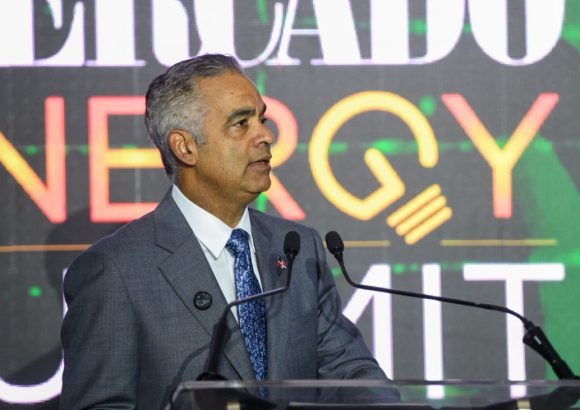
    Santo Domingo — The Dominican Republic is gearing up for its most ambitious expansion of energy infrastructure in more than 30 years, according to the nation’s top energy official. Joel Santos, Minister of Energy and Mines, announced that total installed firm generation capacity will surge by over 50% between 2025 and 2028, a development set to reshape the country’s economic trajectory.

    Addressing attendees of the 2026 Energy Market Summit held in the capital city Santo Domingo, Santos framed the planned expansion as a foundational investment that will reinforce the Dominican Republic’s capacity to underpin broad-based economic growth, draw in foreign and domestic capital, and sharpen its competitive edge in the Caribbean region. Currently, the country operates 2,000 megawatts of renewable energy capacity across its national grid, with a further 1,000 megawatts scheduled to connect to the system by 2028 via projects that are already in active development.

    Santos emphasized that this large-scale expansion is a direct response to rapidly rising demand for electricity across the Dominican Republic. National peak electricity demand is projected to hit 4,250 megawatts this year alone, marking a nearly 59% jump from peak demand recorded back in 2019. He attributed this sharp increase to the robust expansion of the country’s core economic sectors, including tourism, manufacturing, domestic commerce, and consumer-focused services, noting that energy infrastructure development cannot lag behind overall economic growth if the country hopes to sustain long-term, inclusive development. “We cannot build a stronger economy on a weak energy foundation,” Santos told summit attendees, “every new hotel, every new factory, every new business relies on consistent, affordable power to operate.”

    The national government’s strategic energy plan centers on diversification of the country’s energy mix, integrating expanded renewable energy supplies, increased natural gas generation, and utility-scale energy storage systems to boost both the reliability and climate resilience of the national grid. Beyond generation capacity expansion, the administration is also advancing parallel efforts to extend electricity access to underserved communities, roll out widespread energy efficiency programs, strengthen the country’s energy regulatory framework, and accelerate the transition to a sector that is both more economically competitive and environmentally sustainable.

  • BWU vows to defend workers amid layoffs

    BWU vows to defend workers amid layoffs

    One of Barbados’ most established construction firms is moving forward with planned staff cuts that have put it at odds with the country’s main labor organization, even as the national construction sector sees widespread growth. 66-year-old C.O. Williams Construction Ltd., which grew from a small one-tractor earthmoving business launched by founder Charles Williams in 1960 into a leading player in the island’s civil engineering and infrastructure space, notified all employees of impending redundancies in an internal June 5 memo, with cuts set to begin as early as June 12, 2026.

    In the official notice, the firm cited mounting pressures that have eroded its ability to maintain its current headcount. General manager Marc Atwell wrote that long-running operational challenges have sharply reduced the company’s competitiveness, forcing leadership to restructure and downsize the workforce to align with current needs. The memo followed all required notification protocols under company policy and Barbadian national labor law, and Atwell directed employees with questions to reach out to the company’s human resources department for further clarity. Neither Atwell nor other company leaders have responded to additional requests for comment since the memo became public.

    While Atwell did not disclose the exact number of workers facing job loss, the Barbados Workers’ Union (BWU), the exclusive bargaining agent for the company’s employees, says approximately 30 positions are set to be cut. The union has already entered into preliminary discussions with company leadership over the cuts, but has rejected framing the downsizing as a routine administrative step and is demanding concrete evidence to justify the layoffs.

    BWU officials emphasized that every affected worker supports a household with financial and personal obligations that cannot be reduced to line items on a corporate budget. The union’s top priority, it says, is protecting the dignity, legal rights, and earned entitlements of any workers impacted by the cuts, and ensuring no employee faces unfair treatment during the selection process. Company leaders have told the union that the planned layoffs stem from broader industry pressures, including lost contracts and ongoing headwinds across Barbados’ construction sector. But union leaders have pushed back against shifting the entire burden of these challenges onto workers, who did not create the market conditions the firm is facing.

    The BWU has demanded that C.O. Williams open meaningful consultation with the union, share verifiable evidence justifying the need for cuts, commit to a fair and objective process for selecting which roles will be eliminated, and guarantee that all legally required and contractually agreed severance and benefits are paid in full to displaced workers. The organization also used the dispute to highlight a broader national priority: building a Barbadian construction sector that prioritizes skilled labor, worker experience, and decent working conditions.

    The union’s stance is firm: it opposes unnecessary job cuts and will continue to uphold the principle that workers should never be treated as disposable when businesses face economic pressure. The planned layoffs come at a time when Barbados is experiencing a nationwide construction boom, a context that makes the company’s justification for downsizing all the more questionable to union leadership.

  • Tour operators call for reopening of Bush Bush Sanctuary

    Tour operators call for reopening of Bush Bush Sanctuary

    For months, a key protected eco-tourism destination in Trinidad and Tobago has remained shuttered, and the nation’s leading inbound tour operator collective is pushing authorities to reverse the closure, calling the current public health measure disproportionate and damaging to local livelihoods.

    The Trinidad and Tobago Incoming Tour Operators Association (TTITOA) is demanding a targeted, evidence-based rewrite of the current policy governing access to the Bush Bush Sanctuary, a protected natural area located within the Nariva Swamp. The site was sealed off to all visitors and entry permits suspended in March 2026, after local health authorities confirmed yellow fever viral traces in a deceased howler monkey found within the sanctuary’s boundaries.

    In an official statement released this week, TTITOA Vice President Stephen Broadbridge highlighted that the prolonged full closure has already caused immediate, measurable harm to local eco-tourism businesses and community members who rely on visitor activity for stable income. Unlike many casual tourist destinations, guided tours of Bush Bush Sanctuary have operated as a core community-led sustainable tourism offering for more than 30 years, providing a consistent livelihood for hundreds of people living in surrounding settlements.

    Broadbridge added that past yellow fever scares in the region do not support a full, long-term closure. More than a decade ago, a similar event unfolded when dead howler monkeys linked to yellow fever were discovered in the sanctuary. At that time, officials allowed tours to continue, the outbreak faded on its own, and no cases of human infection were ever recorded, he noted.

    TTITOA argues that the current blanket suspension of access fails to stand up to scrutiny on both public health and economic grounds. The association points out that yellow fever risks cannot be contained to the Bush Bush Sanctuary alone: both howler monkey populations (the species in which the virus was detected) and mosquito vectors that can spread yellow fever are distributed across multiple regions of Trinidad. If risk exists nationwide, closing just one site does little to improve overall public health safety, the group says, creating an issue of policy consistency that stakeholders have repeatedly questioned.

    Further, the association notes that eco-tourists who travel to Trinidad and Tobago specifically to visit sites like Bush Bush Sanctuary are typically well-informed about regional health risks, and the vast majority obtain required yellow fever vaccinations before arriving, which drastically reduces the chance of viral transmission.

    Instead of a full site closure, TTITOA has put forward a series of alternative policy recommendations that balance public health protection with the economic survival of the local tourism sector. The group is calling for strengthened public health advisories that mandate or strongly encourage vaccination for all visitors entering the sanctuary, clear, transparent risk communication strategies for tour operators and guests, and the resumption and expansion of the government’s game warden program. The warden program would allow the state to consistently monitor the sanctuary’s ecosystem, track yellow fever activity in local animal populations, and protect the ecologically sensitive site from unsustainable activity.

    The tourism sector in Trinidad and Tobago has already faced prolonged economic strain in recent years, and TTITOA emphasizes that overly restrictive, unbalanced measures threaten the long-term viability of a sector that supports thousands of livelihoods across the country. The association is urging public health and tourism authorities to open direct dialogue with industry stakeholders to craft response measures that are both effective at protecting public health and considerate of the sector’s economic needs.

    As of press time, repeated attempts by local media to reach Tourism Minister Satyakama Maharaj and Agriculture, Land and Fisheries Minister Ravi Ratiram for comment on TTITOA’s demands have not been successful.

  • Antigua and Barbuda Native, Dr. Dave Ray Awarded Honorary Doctorate at Grand Doctorate Convocation in San Francisco

    Antigua and Barbuda Native, Dr. Dave Ray Awarded Honorary Doctorate at Grand Doctorate Convocation in San Francisco

    On June 6, 2026, at a grand doctorate convocation ceremony hosted in San Francisco, California, Dr. Dave Ray — a dual-connected professional who is a US-based national of Antigua and Barbuda — received an Honorary Doctor of Philosophy in Business Administration from EuroAsian University, an international academic institution headquartered in Tallinn, Estonia.

    The honorary degree was conferred in recognition of Dr. Ray’s 37 years of transformative entrepreneurial work spanning both Antigua and the United States. Over nearly four decades of building and scaling his ventures, Dr. Ray has created and maintained stable full-time and part-time employment for 173 workers, lifting livelihoods across two regional economies. He was among 93 distinguished honorees at this year’s convocation, a truly global cohort of leaders representing 16 countries and territories across the Caribbean, Africa, Europe, North America, and multiple US states. The Caribbean honorees included representatives from St. Kitts and Nevis, Barbados, Jamaica, Guyana, Trinidad and Tobago, The Bahamas, and Belize, while African honorees hailed from South Africa, Burkina Faso, and Guinea, alongside peers from the United Kingdom and Canada’s Saskatchewan province.

    A rare combination of seasoned scholar and hands-on industry practitioner, Dr. Ray already holds two earned doctorates: a PhD in Business Management and Applied Sciences from Walden University, awarded in August 2010, and a Doctorate in Professional Cosmetology from the National Institute of Cosmetology — an accredited program affiliated with the University of Alabama, Tuscaloosa — which he earned in July 2012. Beyond his private sector work, Dr. Ray currently serves as the official US Diaspora Representative for the Government of Antigua and Barbuda, acting as a key bridge between the island nation and its community of expatriates and professionals working in the United States.

    In remarks following the conferral of his honorary degree, Dr. Ray emphasized that professional recognition carries meaning only when it expands positive impact for others. “Inspiring others is not enough — we must influence action,” he stated. Dr. Ray went on to outline his ongoing commitments: setting a high bar of leadership for his five grandchildren, sharing decades of institutional knowledge to advance innovation in the global beauty industry, and expanding access to economic opportunity for underserved communities across regions.

    Throughout his decades-long career, Dr. Ray has positioned himself as a catalytic leader in the beauty and personal care sector. He has led industry-focused seminars and professional development workshops for emerging practitioners, led product research and development initiatives for major global beauty brands, and developed product lines tailored to both general consumer markets and underserved ethnic hair and skincare segments. His work uniquely blends visionary entrepreneurial leadership, applied market-driven research, and tangible, sustained workforce development that creates long-term value for workers and communities alike.

    EuroAsian University, the institution granting the honorary degree, is an international higher education organization centered on advancing cross-border academic excellence and celebrating outstanding leaders who drive inclusive social and economic progress across the globe.

  • VES betwist begrotingstekort van 5,1%: Werkelijk tekort is 7,7% van BBP

    VES betwist begrotingstekort van 5,1%: Werkelijk tekort is 7,7% van BBP

    Paramaribo, Suriname – The Association of Economists of Suriname (VES) has raised sharp questions over the methodological approach the current administration has used to calculate its projected 2026 national budget deficit, arguing that the actual gap between public spending and revenue is far larger than the government has reported. According to VES Secretary Swami Girdhari, the real deficit will reach 7.7% of gross domestic product (GDP), not the 5.1% officially claimed by the Surinamese government.

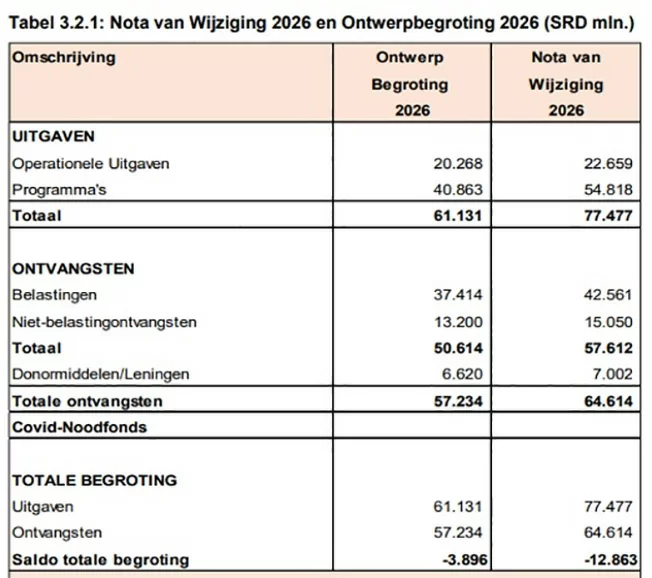
    The Council of Ministers gave its approval to the 2026 Amended Budget Memorandum on May 21, which outlines total projected public spending of 77.4 billion Surinamese dollars (SRD) against total projected revenue of 64.6 billion SRD. Under the government’s calculation framework, this results in a deficit of 12.8 billion SRD, which equals 5.1% of the 252.2 billion SRD official projected GDP for 2026.

    Girdhari, in an interview with local outlet Starnieuws, noted that the biggest red flag is the sharp upward revision to the 2026 GDP estimate. As recently as September 2025, official projections put national GDP at roughly 180 billion SRD. The new 252.2 billion SRD estimate represents a 40% increase in just nine months. Even after accounting for projected annual inflation of roughly 10%, the implied real GDP growth comes out to nearly 30% – a figure Girdhari says lacks clear justification. “The question is whether this level of growth is realistic,” Girdhari said. “The Ministry of Finance and Planning needs to provide the public with a full breakdown of the underlying calculations that led to this estimate.”

    A core point of VES criticism centers on the government’s classification of borrowed funds as regular revenue. Per the amended budget, the government expects 42.5 billion SRD in direct and indirect tax revenue and 15 billion SRD in non-tax revenue, totaling 57.5 billion SRD in baseline receipts. The administration then adds 7 billion SRD in new loans to hit the 64.6 billion SRD total revenue figure.

    This accounting approach is fundamentally incorrect, Girdhari argues. “Loans are not revenue – they are financing instruments that increase the state’s future debt obligations, and should never be counted as regular operating income,” he explained. When the 7 billion SRD in new loans is excluded from revenue in line with standard international budget accounting rules, the actual financing gap grows to nearly 20 billion SRD, pushing the deficit up to the 7.7% of GDP the VES estimates. The association emphasizes that international fiscal standards require a clear separation between regular revenue streams (including taxes, non-tax receipts, and grants) and financing sources such as loans and reserve withdrawals, noting that this distinction is required to produce a transparent, accurate picture of the government’s true fiscal position.

    VES also warns that financing the deficit and meeting existing debt obligations remains a major unaddressed risk for 2026. The current budget framework leaves the government heavily dependent on new borrowing to cover a large share of planned spending, and 9.4 billion SRD in existing debt repayments are scheduled for next year. The association is calling for the publication of an up-to-date debt sustainability analysis to give the public a complete view of the country’s overall fiscal standing, saying the government has not yet explained how it will meet its existing debt repayment obligations.

    Beyond 2026, VES has raised concerns over the government’s medium-term fiscal projections included in the budget’s Medium-Term Fiscal Framework, which covers the 2026 to 2030 period. The government projects steady growth in both revenue and spending over the five-year window, with budget surpluses emerging between 2027 and 2029, growing to 9.6 billion SRD by 2029. However, the framework projects a return to deficit in 2030, with a shortfall of 9.9 billion SRD.

    Girdhari calls this swing from a nearly 10 billion SRD surplus to a nearly 10 billion SRD deficit in just one year – a 20 billion SRD shift – extremely unusual. He notes that the shift is driven almost entirely by soaring debt repayment requirements: scheduled debt repayments rise from 9.3 billion SRD in 2029 to 32.3 billion SRD in 2030. This jump is tied to the November 2025 debt restructuring agreement, which requires Suriname to repay roughly $1 billion in 2030. “In practice, this shifts a massive financial burden onto the administration that takes office in 2030,” Girdhari said.

    Finally, the association is warning against excessive optimism around anticipated future oil revenue, which appears to underpin much of the current budget framework. VES says the government risks implicitly counting unearned future oil income in its current spending plans, despite the fact that these revenues have not yet been realized. Girdhari pointed to global precedent showing that countries that increase public spending before commodity revenues actually materialize often face severe fiscal crises when output or prices fall short of projections.

    To address these risks, VES is calling for strict fiscal discipline, full public transparency around all budget calculations, a robust savings and investment strategy for future resource revenues, and strong institutional safeguards to reduce the impact of politically driven budget cycles that prioritize short-term spending over long-term fiscal stability.

  • Top former US govt trade expert to discuss “Growing Business with the United States” in Guyana

    Top former US govt trade expert to discuss “Growing Business with the United States” in Guyana

    Against a backdrop of shifting global trade dynamics and recent U.S. tariff policy changes that have impacted cross-border commerce, World Trade Centre Georgetown (WTCG) is preparing to host a high-profile business luncheon focused on expanding commercial ties between Guyanese enterprises and the U.S. market. Scheduled for Wednesday, June 17, 2026, the event titled “Growing Business with the United States” will feature Arun Venkataraman, a globally recognized veteran trade policy expert with decades of high-level experience in international commerce.

    This luncheon forms a core part of WTCG’s long-standing mission to foster and strengthen bilateral trade and investment links between Guyana and its international economic partners. As Guyana continues to grow its global economic footprint and work to diversify its national export base, the organization has curated this event to give local business leaders direct access to insights from one of the most authoritative voices on U.S. trade and commercial policy.

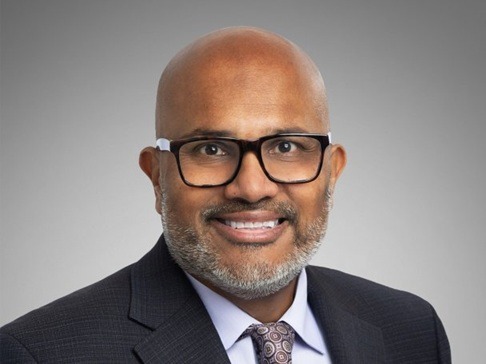
    Venkataraman brings over 25 years of specialized experience across international trade, commercial strategy, and global economic policy. Most recently, he held a Senate-confirmed position as Assistant Secretary of Commerce for Global Markets and Director General of the U.S. and Foreign Commercial Service at the International Trade Administration, serving from 2022 to 2025. In this senior role, he led U.S. federal government initiatives to expand commercial opportunities for both American enterprises operating abroad and international firms looking to enter and invest in the U.S. market.

    His core responsibilities during his tenure included facilitating cross-border business transactions, advocating for improved global commercial policy frameworks, resolving trade and investment barriers, and negotiating bilateral agreements to strengthen commercial cooperation between the U.S. and partner nations. During the upcoming luncheon, WTCG confirms Venkataraman will deliver actionable insights on current U.S. trade and commercial policies, existing trade preference programs, and other regulatory mechanisms designed to support foreign businesses entering the U.S. market. His presentation will center specifically on how Guyanese companies can leverage these frameworks to boost export volumes, build strategic cross-border partnerships, attract foreign direct investment, and strengthen their overall global competitiveness.

    The event comes at a critical juncture for Guyanese exporters, as global trade continues to be reshaped by evolving geopolitical dynamics, ongoing global supply chain realignment, and shifting trade and investment policies among the world’s largest economies. Policy decisions made by the U.S. on tariffs, market access, and commercial partnerships increasingly shape global business strategies and the competitive position of exporters across every region, including Guyana.

    For Guyana, deep familiarity with these evolving policy shifts has grown even more urgent following recent changes to U.S. tariff rules that affect a range of Guyanese exports. The elimination of duty-free treatment for certain products, replaced by tariff rates as high as 15 percent, has created new headwinds for exporters working to maintain and grow their share of the U.S. market. These policy changes underscore the urgent need for local businesses to stay updated on evolving U.S. trade rules and develop targeted strategies to preserve their competitiveness while capitalizing on new emerging opportunities in the U.S. market.

    In an increasingly complex global trading landscape, access to authoritative, first-hand insight on U.S. trade policy is an invaluable resource for local enterprises. WTCG emphasizes that Guyanese businesses need to understand both the challenges created by recent policy shifts and the untapped opportunities that remain within the growing framework of U.S.-Guyana commercial relations.

    This exclusive luncheon offers a one-of-a-kind chance to gain direct insight from a leader who helped shape and implement U.S. trade policy at the highest level of government. WTCG argues that equipping local businesses with timely, accurate information and practical industry knowledge is essential to allow Guyana to fully capitalize on its rapid economic expansion, while deepening its integration into regional and global value chains.

    The event is expected to deliver particular value for exporters, manufacturers, service providers, cross-border investors, business support organizations, and entrepreneurs seeking to expand their commercial operations beyond Guyana’s borders. Beyond the formal presentation, attendees will have the opportunity to engage directly with Venkataraman during a dedicated question-and-answer session, as well as in targeted private one-on-one discussions following the main program.

    The luncheon aligns with WTCG’s core institutional mission: connecting Guyanese businesses to global markets and creating avenues for meaningful international economic engagement. As a member of the World Trade Centers Association Network, which includes more than 300 World Trade Centers across over 100 countries, WTCG remains dedicated to providing local Guyanese enterprises with access to world-class expertise, actionable market intelligence, and high-impact business development opportunities.

    All members of Guyana’s business community and interested stakeholders are invited to register for the event. For registration details and additional information, interested attendees may contact the WTCG Secretariat at 592-763-9824 or 592-515-9824 to speak with Ms. Noel or Ms. Peters.

  • ECCB Career Opportunity: Facilities Maintenance Technician

    ECCB Career Opportunity: Facilities Maintenance Technician

    The Eastern Caribbean Central Bank (ECCB), the primary monetary authority for the Eastern Caribbean Currency Union (ECCU) with its headquarters in Basseterre, Saint Christopher and Nevis, has announced an open call for qualified applicants from across ECCU member states to fill a vacant position of Facilities Maintenance Technician specializing in Electricals within the organization. The role is housed in the Facilities Maintenance Unit of the bank’s Support Services Management Department (SSMD).

    The selected candidate will be permanently based at the ECCB’s headquarters in St. Kitts, with an initial two-year fixed-term contract. Following the completion of the initial contract term, the appointment may be renewed, or the technician may be transitioned to a permanent role within the bank, contingent on satisfactory work performance.

    To be considered for the position, applicants must meet a set of clear academic and professional requirements. A minimum qualification of a technical certification from an accredited apprenticeship program, a diploma, or an associate degree in Electrical Engineering Technology is required, with a full bachelor’s degree in an engineering discipline listed as a preferred qualification. Candidates must also have 3 to 5 years of hands-on professional experience troubleshooting critical industrial machinery and building infrastructure, with prior experience working in a commercial office setting considered a strong advantage.

    Beyond academic and experience credentials, the ECCB is seeking candidates with a robust skill set aligned to the role’s demands. Required soft and technical skills include advanced engineering and technical troubleshooting abilities, working knowledge of modern energy management protocols and regional building codes, strong written and verbal communication capabilities, advanced analytical and critical thinking skills, a proactive professional attitude and demonstrated strong work ethic, flexible scheduling, excellent time management and proven multitasking skills, and the ability to collaborate effectively on cross-functional teams while also completing independent work with minimal supervision.

    The successful hire will report directly to both the Director of SSMD and the Facilities Engineer of the Facilities Maintenance Unit. Core job responsibilities include conducting specialized maintenance for campus solar energy systems and passenger elevators, servicing and inspecting core campus electrical infrastructure and specialized life safety systems, performing scheduled and reactive maintenance for the campus’s backup generator fleet, ensuring all work adheres to regional and organizational health and safety compliance standards, and completing any other job-related tasks assigned by the ECCB’s executive leadership and department management.

    Interested candidates can access full vacancy details and official application forms via the ECCB’s official careers page at https://www.eccb-centralbank.org/careers. All applications must be submitted no later than Friday, June 19, 2026.

    In addition to the completed application form, applicants are required to submit a full updated curriculum vitae, two original professional reference letters, certified copies of all academic and professional credentials, official academic transcripts, and a recent original or certified copy of a criminal record check or police character certificate. All supporting documentation can be uploaded directly to the corresponding fields in the online application form, or alternatively submitted via email to the ECCB’s Human Resource Department at [email protected].

    This vacancy announcement was published via NOW Grenada, which notes that it is not responsible for the content, opinions or statements shared in contributor-provided announcements, and provides a channel for users to report any abusive content.