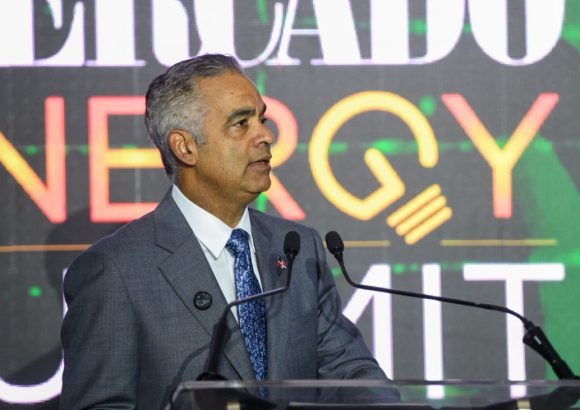
Santo Domingo — The Dominican Republic is gearing up for its most ambitious expansion of energy infrastructure in more than 30 years, according to the nation’s top energy official. Joel Santos, Minister of Energy and Mines, announced that total installed firm generation capacity will surge by over 50% between 2025 and 2028, a development set to reshape the country’s economic trajectory.
Addressing attendees of the 2026 Energy Market Summit held in the capital city Santo Domingo, Santos framed the planned expansion as a foundational investment that will reinforce the Dominican Republic’s capacity to underpin broad-based economic growth, draw in foreign and domestic capital, and sharpen its competitive edge in the Caribbean region. Currently, the country operates 2,000 megawatts of renewable energy capacity across its national grid, with a further 1,000 megawatts scheduled to connect to the system by 2028 via projects that are already in active development.
Santos emphasized that this large-scale expansion is a direct response to rapidly rising demand for electricity across the Dominican Republic. National peak electricity demand is projected to hit 4,250 megawatts this year alone, marking a nearly 59% jump from peak demand recorded back in 2019. He attributed this sharp increase to the robust expansion of the country’s core economic sectors, including tourism, manufacturing, domestic commerce, and consumer-focused services, noting that energy infrastructure development cannot lag behind overall economic growth if the country hopes to sustain long-term, inclusive development. “We cannot build a stronger economy on a weak energy foundation,” Santos told summit attendees, “every new hotel, every new factory, every new business relies on consistent, affordable power to operate.”
The national government’s strategic energy plan centers on diversification of the country’s energy mix, integrating expanded renewable energy supplies, increased natural gas generation, and utility-scale energy storage systems to boost both the reliability and climate resilience of the national grid. Beyond generation capacity expansion, the administration is also advancing parallel efforts to extend electricity access to underserved communities, roll out widespread energy efficiency programs, strengthen the country’s energy regulatory framework, and accelerate the transition to a sector that is both more economically competitive and environmentally sustainable.