分类: business

  • WISYNCO’S US$35-M BET

    WISYNCO’S US$35-M BET

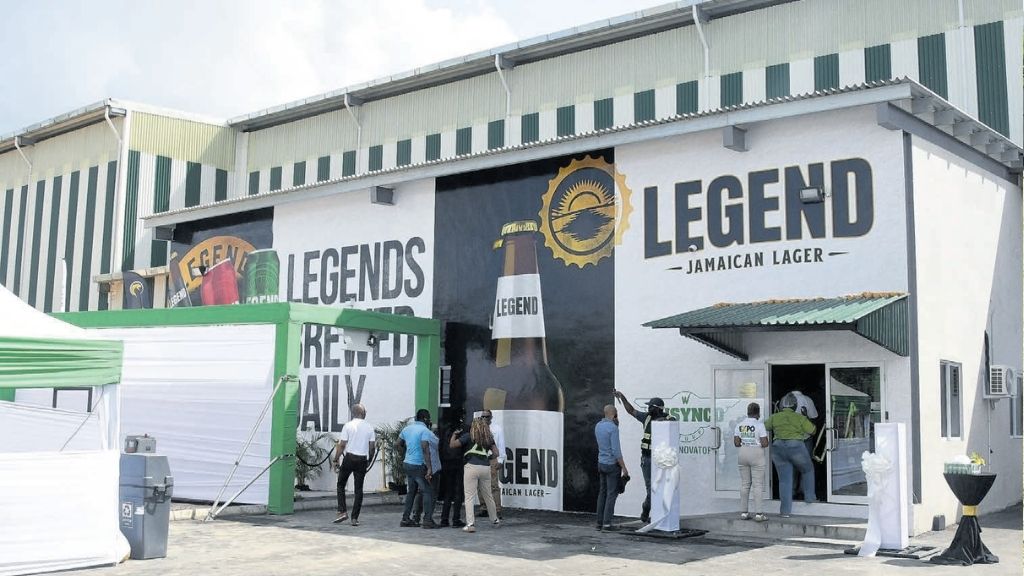
    Jamaican manufacturing giant Wisynco Group has initiated regulatory procedures to export beverages from its newly operational Devon Reynolds Brewery into the United States market. This strategic move marks the company’s first major foray into international markets despite exports currently constituting merely 2% of its total revenue.

    Chairman William Mahfood revealed the development during Tuesday’s inauguration of the US$35-million facility at Lakes Pen, St Catherine, identifying the U.S. as a potential cornerstone of the company’s long-term international strategy. “We’re currently navigating the registration process and anticipate commencing exports to both U.S. and Caribbean markets within coming months,” Mahfood stated, acknowledging this represents a “significant breakthrough” for the predominantly domestic-focused company.

    The state-of-the-art brewery, commissioned in June 2025, substantially enhances Wisynco’s production capabilities across beer, stout, malt beverages, ready-to-drink products, and the internationally recognized Stone’s Ginger Wine. CEO Andrew Mahfood emphasized the facility’s design as a flexible manufacturing platform rather than a single-category operation, noting it “significantly expands our capacity, strengthens our ability to meet growing market demand, and provides flexibility to diversify our product portfolio meaningfully.

    A critical component of the export strategy involves advanced packaging solutions. The facility incorporates high-speed canning and glass bottling lines alongside existing PET production, enabling customized output based on international market requirements. Andrew Mahfood highlighted the economic advantage: “A 40-foot container of Bigga in plastic holds approximately 1,500 cases. The same container accommodines nearly 3,000 cases of canned Bigga, significantly improving freight absorption and enhancing price competitiveness in overseas markets.” Cans additionally provide extended shelf life—a crucial factor for export products undergoing extended transit periods.

    While initial production focuses on satisfying robust domestic demand, particularly from Jamaica’s hospitality sector, the company acknowledges exports as a longer-term objective. The annual report identifies export growth as a strategic priority, with new production lines expected to improve shelf life, reduce freight sensitivity, and ensure packaging meets international standards.

    The Devon Reynolds Brewery, named in honor of the Production Director’s 43-year tenure and leadership in the facility’s development, boasts an initial annual capacity of 150,000 hectolitres with designed scalability. Production Director Devon Reynolds confirmed the facility’s expansion-ready design: “We are built to expand. The can line operates at 30,000 cans hourly, and we’ve allocated space for additional larger glass lines.”

    Currently employing approximately 85 manufacturing personnel with total operation-related employment estimated between 350-400, the brewery represents Wisynco’s first large-scale entry into brewed and alcoholic categories. Andrew Mahfood grounded this strategic pivot in long-term consumption trends, noting Jamaica’s per capita beer consumption of 20 liters significantly trails Trinidad’s 40 liters and North America’s 65-70 liters, indicating substantial market growth potential.


  • Jamaica fights AI misinformation; courts India and South America in tourism recovery push

    Jamaica fights AI misinformation; courts India and South America in tourism recovery push

    Jamaica’s tourism sector is mounting a sophisticated defense against AI-generated misinformation while aggressively pursuing market diversification in response to Hurricane Melissa’s impact. Tourism Minister Edmund Bartlett revealed his ministry is allocating substantial resources to combat digitally fabricated content that has damaged the island’s reputation since the October 2025 hurricane.

    Bartlett identified deep fake videos and geolocation-debunked ‘aftermath’ photos as particularly damaging false narratives requiring continuous correction. The ministry’s current $4.5 billion marketing budget includes dedicated allocations of $270 million for airlift support and $163.5 million for cruise shipping assistance. Projections indicate increased spending to $4.8 billion for the 2026/27 fiscal year with an additional $457 million for airline and cruise support.

    The misinformation challenge has complicated airline partnerships, necessitating incentives to maintain routes despite booking fluctuations. Bartlett emphasized partnership-based marketing over direct revenue guarantees, noting early successes with high load factors despite reduced rotations. Initial winter season data shows 45,000 stopover visitors and 65,000 cruise passengers, achieving 94% of 2025 arrival targets.

    Market diversification represents a strategic pillar, with India and South America identified as priority growth markets. The India initiative focuses on Delhi, Mumbai, and Chennai through partnerships with Emirates (via Dubai), Air India, and existing European/North American carriers. South America, particularly Brazil and Argentina, shows remarkable growth with 77% more visitors in 2025 totaling 31,000 tourists.

    Bartlett credited private sector collaboration with major brands like Sandals and Iberostar as crucial to recovery efforts. Hotel reopening timelines indicate Princess properties returning by early February, Sandals by March/April, while seven Hyatt properties sustained significant damage requiring extended repairs.

    The recovery process has prompted planned revisions to Jamaica’s Tourism Act to address the growing villa and Airbnb subsector, which now comprises over 15% of accommodation stock. The legislative review will establish clearer regulations and tax structures for short-term rentals.

  • Patrick Hylton appointed PSOJ’s new president

    Patrick Hylton appointed PSOJ’s new president

    KINGSTON, Jamaica – The Private Sector Organisation of Jamaica (PSOJ) has announced the appointment of distinguished banking executive Patrick Hylton as its new president, marking a significant leadership transition for the influential business association. The appointment was formally disclosed through an official media release issued on Tuesday.

    Hylton, formerly president and chief executive officer of the National Commercial Bank Financial Group, assumes leadership from outgoing president Metry Seaga, who concluded a productive three-year tenure. The transition occurs as Jamaica’s private sector faces critical economic challenges and opportunities.

    Sacha Vaccianna Riley, PSOJ executive director, emphasized Hylton’s qualifications in the announcement: ‘Patrick Hylton represents transformational leadership with substantial credibility throughout the private sector and demonstrates unwavering commitment to national development. His expertise and steady guidance will prove invaluable as PSOJ advances its advocacy agenda concentrating on productivity enhancement, competitiveness, and sustainable economic expansion.’ Riley simultaneously expressed the organization’s profound gratitude to Seaga for three years of exemplary service and significant organizational impact.

    Concurrent with the presidential announcement, PSOJ revealed its newly structured vice-presidential team for the upcoming term. The appointments include three new vice presidents: Joanna Banks of Sagicor Group Jamaica, Mathew Lyn representing Caribbean Broilers Group, and Mariame McIntosh Robinson serving as an individual member. They will collaborate with continuing Vice Presidents Gail Moss-Solomon of GraceKennedy Limited and Hugh Grant of Jamaica Public Service, forming a diversified leadership coalition.

    The organization outlined that Hylton’s strategic priorities will involve strengthening private-sector advocacy initiatives, deepening public-private collaboration mechanisms, and championing policy frameworks that stimulate enterprise growth, investment attraction, and inclusive economic development. Hylton is expected to work closely with the PSOJ board, secretariat, and membership base to execute this comprehensive agenda.

  • The Dominican Republic’s next export power play: Intellectual Property

    The Dominican Republic’s next export power play: Intellectual Property

    A transformative economic evolution is underway within the Dominican Republic’s institutional framework, positioning the nation for unprecedented competitiveness in the global knowledge economy. While neighboring Latin American countries continue pursuing marginal gains in traditional exports, the DR has been systematically constructing a sophisticated infrastructure for large-scale intellectual property exports.

    At the forefront of this strategic shift are two pivotal institutions: the National Office of Industrial Property (ONAPI) and the Ministry of Industry, Commerce, and MSMEs (MICM). Contrary to conventional perception as merely a trademark and patent registry, ONAPI has evolved into a fully digitized, ISO-standard intellectual property governance system featuring rare institutional consistency within the region. Its E-SERPI platform, CATI networks, and transparent registration data represent fundamental economic infrastructure rather than bureaucratic achievements.

    Complementing this foundation, MICM functions as the demand-side engine through its strategic initiatives in productivity enhancement, digital transformation, MSME modernization, circular economy development, and industrial innovation. The ministry has established critical pathways for converting registered intellectual property into commercially viable assets through IoT adoption programs, export onboarding systems, quality certification routes, and enterprise transformation frameworks.

    This institutional development aligns with global economic transformations documented by UNCTAD, which reports $3.8 trillion in digital service exports, and WIPO data showing 8-12% annual growth in IP licensing across emerging markets. The contemporary economic landscape increasingly rewards nations exporting ideas, designs, software, scientific innovation, and creative intellectual property rather than traditional commodities.

    A comprehensive whitepaper titled ‘Exportable Intellectual Property: Establishing a New Dominican Economic Pillar’ outlines an integrated national pipeline connecting ONAPI’s IP production capabilities with MICM’s industrial policy and export readiness programs, ProDominicana’s market activation functions, and Central Bank export performance tracking. This architectural framework provides a practical roadmap for transforming invention, software development, design, research, and creative output into revenue-generating national assets.

    The timing coincides with significant recognition for the Dominican startup ecosystem, as strategy firm Successment received ADOEXPO’s award for contributions to export innovation—signaling the country’s emerging presence in global knowledge economy discussions. With institutional foundations established, talent available, and market conditions favorable, the Dominican Republic stands at a decisive crossroads: continue competing through traditional factors like price and logistics, or embrace creativity, invention, and intellectual capability as the currency of modern economic leadership.

  • Punta Cana Air Cargo Hub expands with new Uniworld Air Cargo service

    Punta Cana Air Cargo Hub expands with new Uniworld Air Cargo service

    PUNTA CANA – A strategic partnership between DP World Dominican Republic and the Punta Cana Free Trade Zone (PCFTZ) has achieved a significant milestone with the integration of a new Uniworld Air Cargo aircraft into their multimodal logistics platform. This development substantially enhances the Dominican Republic’s air freight capabilities and solidifies Punta Cana’s position as an emerging logistics hub for the Americas.

    The collaboration, formalized through a 2022 strategic alliance, leverages DP World’s extensive global logistics network with the premier connectivity of Punta Cana International Airport (PUJ). This synergy was designed to establish a dominant freight gateway in the Caribbean region.

    Operationalizing this expansion, the newly introduced aircraft will execute a consistent bi-weekly service every Tuesday and Saturday. This route is strategically designed to facilitate transit cargo, channeling an estimated 120 tons monthly from origins in South America, Central America, and the Caribbean to key European markets. The service will specialize in transporting temperature-sensitive perishables including flowers and fresh fruit, alongside pharmaceuticals, parcel shipments, and general dry cargo. Primary export nations include Colombia, Ecuador, and Peru, with core European destinations set for Madrid, Frankfurt, and London. Future network expansion to Canadian markets is under active consideration.

    Supporting these sophisticated operations, the Punta Cana Air Cargo Hub is equipped with state-of-the-art infrastructure. This includes an extensive 4,000-square-meter cold chain storage facility, specialized transit processing protocols, direct tarmac access for efficiency, and advanced security and handling systems.

    This latest achievement builds upon the successful introduction of the first cargo aircraft in early 2024, which served as a critical proof-of-concept, validating the terminal’s operational readiness and infrastructural robustness for handling complex logistics demands.

  • BTL Bets Big on Speednet While Cable Deals Crumble

    BTL Bets Big on Speednet While Cable Deals Crumble

    In a significant consolidation move within Belize’s telecommunications sector, state-owned Belize Telemedia Limited (BTL) is advancing with an ambitious $80 million acquisition of Speednet Communications. This strategic play unfolds against a backdrop of failed negotiations with two other local providers, highlighting contrasting fortunes in the nation’s media landscape.

    The transaction structure, confirmed by the Office of Lord Ashcroft, involves a $10 million cash payment with the remaining $70 million financed through four-year loan notes. The Waterloo Group Charitable Trust, Speednet’s majority stakeholder, has emphasized full transparency regarding ownership, explicitly stating that Lord Ashcroft maintains no economic interest in the trust.

    BTL’s leadership anticipates substantial operational benefits from the merger, projecting enhanced cash flow generation and significant reduction in redundant expenditures. A particularly valuable advantage involves gaining complete control over inbound roaming rates—a financial adjustment potentially worth tens of millions to the Belizean economy. Company executives indicate these savings will be strategically reinvested into next-generation technological infrastructure, crucial for competing with emerging satellite services like Starlink.

    Consumer assurances form a key part of BTL’s public messaging, with commitments to uninterrupted service and potential price reductions pending regulatory authorization from Belize’s Public Utilities Commission.

    This forward momentum contrasts sharply with recently abandoned acquisition attempts involving Centaur Communications and Central TV & Internet. Representatives from these firms cited insurmountable political, media, and reputational pressures—rather than financial terms—as decisive factors undermining commercially viable agreements.

    The diverging outcomes raise fundamental questions about market dynamics, transparency protocols, and telecommunications sovereignty in Belize. As BTL’s consolidation effort progresses, intensified public scrutiny and rigorous regulatory review appear inevitable. The emerging debate centers on whether industry integration will ultimately drive efficiency and innovation or constrict consumer choice and market competition.

  • Cabinet Yet to Be Briefed on BTL Negotiations

    Cabinet Yet to Be Briefed on BTL Negotiations

    In a significant development for Belize’s telecommunications sector, Centaur Communications has formally terminated acquisition negotiations with Belize Telemedia Limited (BTL). The proposed $170 million deal to acquire the Centaur Group of Companies collapsed despite acknowledging potential commercial and strategic advantages.

    Centaur’s representative Jaime Briceño communicated the decision to BTL Chairman Markhelm Lizarraga in a formal letter, citing political pressures and reputational concerns as primary factors. Briceño emphasized that financial considerations were not the determining factor, but rather the external political environment and personal toll on stakeholders involved in the protracted negotiations.

    The acquisition’s controversial nature stems from BTL’s unique ownership structure, with nearly half of the company being government-owned. This has raised questions about transparency and proper disclosure procedures. Immigration Minister Kareem Musa revealed that the cabinet had not yet been formally briefed on the negotiation details, though he anticipated the matter would be addressed in tomorrow’s cabinet meeting.

    Minister Musa acknowledged intense scrutiny from both media and civil society, stating that full public disclosure is essential given the transaction’s magnitude and government involvement. He noted that Prime Minister John Briceño has recused himself from discussions due to family interests in the involved companies, though Minister Musa clarified that the Prime Minister himself holds no direct ownership.

    The minister expressed reservations about forming a position on the acquisition, citing insufficient familiarity with technical details and emphasizing the need to consider technological evolution and international competition in any telecommunications sector decisions.

  • Media Owners Warn BTL-Speednet Deal Threatens Press Freedom

    Media Owners Warn BTL-Speednet Deal Threatens Press Freedom

    BELIZE CITY – Prominent independent media proprietors have issued a stark warning regarding the proposed acquisition of Speednet by Belize Telemedia Limited (BTL), asserting that the consolidation poses an existential threat to press freedom and democratic discourse in the nation.

    During an urgent press conference convened on Monday, the owners of Channel 7, Plus TV, and XTV (formerly Krem Television) presented a unified front against the telecommunications merger. They articulated grave concerns that the transaction would concentrate excessive control over critical communication infrastructure within a single entity, potentially enabling censorship and undermining media independence.

    Jules Vasquez, proprietor of Channel 7, delivered a forceful condemnation of the proposed arrangement. “This path is fraught with dangers for free speech, freedom of expression, and the free press,” Vasquez asserted. “It is fundamentally unlawful for a handful of government-appointed BTL board members to unilaterally determine the telecommunications future of our entire nation through closed-door decisions that will profoundly impact how citizens connect with each other and the global community.”

    Mose Hyde of XTV echoed these sentiments, emphasizing the crucial role of competition in maintaining media diversity. “The very reason viewers can choose between morning and evening programming across different channels is because healthy competition exists within our ecosystem,” Hyde explained. “We speak from traumatic experience regarding the dangers of concentrated control over vital telecommunications infrastructure. While this is undoubtedly about self-preservation for independent media outlets, it is equally about defending the public’s right to choice and diversity in information sources.”

    The media executives emphasized that their opposition stems from both professional self-interest and broader public concern, noting that competitive telecommunications markets foster progressive development and protect democratic values. Their collective stance represents an unusual show of unity among typically competitive media entities, underscoring the perceived severity of the threat.

    This development occurs amidst ongoing national discussions about media independence and corporate consolidation in Belize’s telecommunications sector, which remains fundamental to information dissemination and public discourse.

  • Louis Wade Questions BTL’s Role in Smart Sale

    Louis Wade Questions BTL’s Role in Smart Sale

    In a striking commentary on January 12, 2026, prominent media executive Louis Wade, owner of Plus TV, voiced substantial concerns regarding Belize Telemedia Limited’s (BTL) prospective acquisition of Smart. While explicitly affirming his support for the sellers’ prerogative to divest their private enterprise, Wade directed pointed criticism toward the prospective buyer. He characterized BTL as a historically monopolistic entity with a demonstrable record of poor stewardship within the open marketplace of ideas. Wade’s critique traversed BTL’s entire operational history, referencing its phases under government ownership, the controversial ‘golden share’ era, and its current structure, which he describes as a ‘government-owned private entity.’ He contends this blurred ownership model means it fundamentally remains a public instrument, thereby posing a significant threat to principles of fair competition and market transparency. This perspective adds a critical voice to a story receiving extensive coverage from outlets like Greater Belize Media, which has been reporting on the negotiations by incorporating viewpoints from the broader business community, independent senators, and trade unions.

  • Centaur Says it “Brings the Discussions to a Close at This Time” with BTL

    Centaur Says it “Brings the Discussions to a Close at This Time” with BTL

    Centaur Communications Corp. Ltd has formally withdrawn from acquisition negotiations with Belize Telemedia Limited (BTL), concluding nearly a decade of intermittent discussions. The company announced its decision on January 12, 2026, citing significant external factors that ultimately overshadowed the transaction’s commercial merits.

    In an official public statement, Centaur revealed that dialogue regarding a potential acquisition commenced in 2017 under previous leadership structures and continued through subsequent administrative changes. Despite acknowledging the strategic and financial benefits of the proposed merger, the company identified mounting political and reputational considerations that compelled termination of negotiations.

    ‘From a commercial and strategic standpoint, Centaur remains confident that the proposed transaction presented clear mutual financial and operational merits,’ the company stated. However, it emphasized that ‘broader external considerations’ necessitated discontinuing discussions at this time.

    The telecommunications provider highlighted its substantial infrastructure assets, including a comprehensive fibre-optic network extending from the Mexican border to Belize City. The company currently delivers broadband coverage to over 90% of Northern Belize’s towns and communities, with internet and related services now constituting more than 90% of total revenue.

    Centaur expressed appreciation for BTL’s interest and the professional nature of negotiations throughout the evaluation process. The decision underscores how external market forces and political climates can influence corporate consolidation attempts even when transactions demonstrate clear business logic.