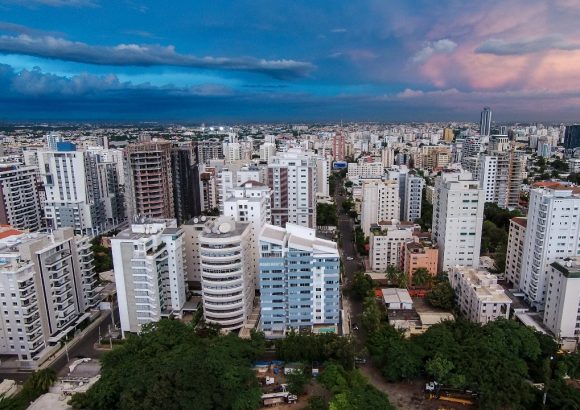
Every emerging entrepreneurial ecosystem goes through a defining pivot point where the core narrative around its potential shifts. For years, outsiders and insiders alike raised foundational questions about the Dominican Republic’s startup and innovation landscape: Does a genuine ecosystem even exist here? Are there skilled founders, capable talent, accessible capital, and institutional buy-in? Can the country actually produce scalable startups, or will innovation remain nothing more than a hollow marketing slogan?
Those questions were reasonable once, but they no longer hold the relevance they did decades ago. Today, the Dominican Republic boasts a growing cohort of entrepreneurs building solutions across every major economic sector. Local universities are steadily graduating a new generation of digitally skilled talent, large domestic corporate groups are prioritizing technological modernization, and public institutions are having more serious conversations about national competitiveness, digital transformation, export expansion, and foreign direct investment attraction. The country’s large global diaspora brings not just capital, but decades of industry expertise and a deep personal stake in the nation’s future. Most notably, global stakeholders are no longer viewing the Dominican Republic solely as a tropical tourist destination – they see it as a viable place to invest, build operations, and form lasting business partnerships.
This progress does not mean the ecosystem is fully mature. It means the conversation has fundamentally changed. The question is no longer whether the Dominican Republic has untapped innovation potential. It is whether the country can organize that potential into a cohesive regional strategy before other markets lock in the Caribbean’s innovation opportunity.
### An open regional leadership gap remains in the Caribbean
Across Latin America, major innovation hubs have already staked out clear, durable positions in the global startup economy. Miami has emerged as a leading capital hub, attracting tech talent, venture funding, media attention, and entrepreneurial ambition from across the region. Mexico City offers unrivaled market scale, Medellín boasts powerful narrative and growth momentum, Bogotá has deep institutional support for innovation, São Paulo draws market gravity from its massive domestic economy, and San Juan is leveraging tax incentives and U.S. market access to carve out its own niche.
But the Caribbean as a whole still lacks a single undisputed hub that naturally brings together the region’s innovation, capital, talent, policy leadership, and business development. There is no shortage of skilled founders, committed operators, serious investors, forward-thinking public servants, and engaged diaspora leaders working to modernize Caribbean economies. What the region lacks is a central meeting point where all these stakeholders can connect systematically.
This leadership vacuum is a once-in-a-generation opening – and Santo Domingo is perfectly positioned to seize it. The Dominican capital does not need to copy Miami, Medellín, or Panama City to succeed; it has unique inherent advantages that set it apart. It shares a close proximity to the U.S. market, boasts a large, economically influential diaspora, has world-class tourism infrastructure that already brings global visitors to its doorstep, and counts private sector groups with existing regional expansion ambition. Its services economy is primed for evolution, its workforce is increasingly digital, bilingual, and commercially savvy, and its cultural DNA prioritizes adaptability, connection, negotiation, and resilience – all critical traits for a thriving innovation ecosystem.
These advantages are significant, but they will not translate into strategic leadership on their own. They require intentional organization.
### From visibility to coordination: The next critical phase
For years, the Dominican Republic’s core priority was building visibility for its emerging innovation ecosystem. That work was not wasted: it gave local startups much-needed exposure, granted founders social legitimacy, helped investors see that entrepreneurship was more than a niche passion project, and pushed corporations to recognize that innovation is a core competitive imperative, not just a corporate department or marketing campaign. It also helped public institutions connect digital transformation, talent development, export growth, and investment attraction into a unified national strategy.
Visibility opened the door, but visibility alone is not enough to convert attention into tangible economic progress. A founder can have widespread name recognition and still struggle to secure seed funding. A country can earn international praise and still remain under-positioned to capture regional market share. A well-attended innovation conference can generate buzz and still fail to produce a pipeline of investable deals or actionable partnerships. A sophisticated policy discussion around innovation can sound impressive and still fail to reach the founders and operators building companies on the ground.
This is the most common trap that emerging ecosystems fall into: they master the language of innovation long before they learn how to turn that conversation into lasting economic relationships. The Dominican Republic’s next challenge is avoiding this trap. The next phase is not more noise – it is intentional coordination.
### What a functional regional innovation hub actually delivers
A credible innovation hub is far more than a venue for occasional conferences and networking events. It is a structured space that makes the regional market more transparent and accessible for all stakeholders. Founders can easily identify investors actively looking for new opportunities in the Caribbean. Investors can quickly assess which founders have the teams and traction to scale. Corporations can identify emerging technologies that can improve their procurement, distribution, data analytics, logistics, customer experience, and open new revenue streams. Local banks can learn how to assess risk in new tech-enabled sectors. Policymakers can gather input from on-the-ground operators before designing regulatory frameworks in isolation. Diaspora stakeholders can find structured pathways to contribute beyond one-off donations or casual goodwill.
This structured connection matters because trust remains the scarcest resource in emerging innovation markets. Capital flows to where trust exists, as do partnerships, progressive policy, corporate sponsorship, and large procurement contracts. Trust is rarely built through flashy press announcements and big keynote speeches. It is built through consistent, repeated interaction between committed stakeholders who have a shared stake in building something lasting.
This is why the Dominican Republic should shift its focus from hosting one-off innovation events to building a sustained, structured “market room” for the Caribbean. An event fills a spot on a calendar; a market room organizes sustained attention and connection from global stakeholders. That difference has long-term implications for market leadership.
### Santo Domingo’s opportunity goes far beyond local startups
The goal is not simply to build a better local startup scene for the Dominican Republic. That would be too small an ambition. The far larger opportunity is positioning Santo Domingo as the primary regional meeting point for everyone building the future of the Caribbean economy: founders, investors, tourism operators, financial institutions, universities, public agencies, diaspora entrepreneurs, technology firms, remote workers, venture builders, and global brands seeking trusted access to the region.
The Dominican Republic has already proven it can attract global attention – the country’s $10 billion-plus tourism industry is testimony to that strength. The next question is whether it can turn that attention into long-term commitment. Commitment is different: it means tangible investments, cross-border partnerships, regional headquarters, product pilot programs, corporate procurement contracts, talent development pipelines, exportable digital services, and lasting institutional relationships.
This is where the real competition for regional leadership plays out. Countries do not win the future by being admired for their potential. They win by being useful. Useful to global capital seeking new untapped opportunities. Useful to talent looking for a supportive place to build. Useful to multinational companies seeking a gateway to the Caribbean. Useful to regional institutions looking for a neutral meeting ground. Useful to local founders scaling across borders. Useful to the entire Caribbean region that currently lacks a central hub.
Santo Domingo can become exactly that kind of useful hub if it positions itself as the place where Caribbean opportunity becomes easier to understand, easier to trust, and easier to access for global stakeholders.
### The ecosystem is already taking shape – the next step is intentional building
Many of the foundational pieces are already falling into place. Serious conversations around digital nomad mobility, startup financing, venture capital development, diaspora engagement, innovation policy, corporate transformation, and nearshore outsourcing opportunity are growing more common every year. More international operators are approaching the Dominican Republic with curiosity about business opportunities, not just leisure travel. Local founders are increasingly thinking beyond the small domestic market to scale regionally and globally. Domestic institutions are slowly waking up to the reality that innovation is no longer a niche optional conversation – it is core to the country’s long-term economic competitiveness.
Events like the Digital Nomad Summit Santo Domingo are part of this broader shift, but the movement toward a regional hub is far bigger than any single gathering. The real story is that the room is already starting to form. Now the country has to decide who will be part of it, what standards of excellence it will set, and whether it will build a room for passive spectators or active builders.
That distinction matters. Spectators show up because something interesting is already happening. Builders show up because they want to shape what happens next. The Dominican Republic needs more builders in the room to seize this moment.
### Seizing the moment before the opportunity is locked in
The most critical window for capturing leadership in an emerging market is not when every analyst and investor agrees the opportunity is obvious. By that point, the best strategic positions have already been taken by early movers. The critical moment comes earlier, when signals of growth are still scattered, when talent is visible but not yet organized, when capital is curious but not yet committed, when institutions are interested but not yet aligned, and when international attention is present but not yet captured by any single player.
That is exactly where the Dominican Republic stands today. The ecosystem is not finished, it is not fully coordinated, and it is not yet mature. But it is clearly moving in the right direction.
The country can either wait for other markets to define the Caribbean’s innovation agenda, or it can step up to build the central room where that agenda is negotiated. Santo Domingo already has all the ingredients it needs to pull this off. The only remaining question is whether the country has the discipline to make the jump from building visibility to building coordinated strategy, from casual conversation to tangible economic conversion, and from broad ambition to structured institutional architecture.
The future of the Dominican Republic’s innovation economy will not be decided by which side has the best ideas. It will be decided by which side builds the room where ideas turn into trusted, funded, partnered, and commercially viable businesses. That is the real opportunity waiting for Santo Domingo right now. It is not about hosting more conversations. It is about becoming the room the entire Caribbean cannot ignore.