作者: admin

  • DENIED

    DENIED

    A recent ruling from global track and field governing body World Athletics has thrown international athletics into controversy, after regulators blocked 11 elite athletes — four of whom are decorated Jamaican competitors — from changing their sporting nationality to compete for Turkey. The high-profile athletes affected include some of the Caribbean nation’s top Olympic medal-winners: reigning Olympic discus champion Roje Stona, 2024 Olympic shot put bronze medalist Rajindra Campbell, long jump star and Olympic and World Championships silver medalist Wayne Pinnock, and rising triple jump standout Jaydon Hibbert.

    In an official public statement released Thursday, World Athletics’ Nationality Review Panel, the body tasked with evaluating nationality transfer requests, determined the 11 applications were part of a coordinated, state-backed recruitment strategy led by the Turkish government. The panel claims the initiative offers large financial contracts to elite athletes specifically to improve Turkey’s medal standing ahead of the 2028 Los Angeles Olympic Games, and that the transfers run counter to existing rules.

    This decision marks the most aggressive action World Athletics has taken to date to crack down on what the organization frames as the commercialization of national sporting allegiance. The governing body argues that approving the transfers would erode the integrity of global elite competition, noting rules require athletes to hold a genuine personal connection to the nation they represent internationally.

    But the ruling has drawn sharp pushback from athlete agents, legal experts, and athletics insiders, who say the decision raises major red flags over inconsistent rule enforcement, procedural fairness, and basic athlete rights.

    Paul Doyle, the agent representing Roje Stona, called the ruling nonsensical, pointing to a long history of similar nationality transfers that have been approved by World Athletics in recent years. “Athletes have transferred allegiances for decades,” Doyle noted. “When you look at the ones approved, even in the past five years, it makes zero sense that these would be denied.”

    Doyle’s criticism echoes widespread industry concern that World Athletics is applying rules selectively, specifically because of the coordinated, large-scale nature of Turkey’s recruitment push, and following pushback from the Jamaica Athletics Administrative Association. A core point of contention is the panel’s choice to evaluate all 11 applications as a single group, rather than conducting individual assessments of each athlete’s case.

    Sports attorney Emir Crowne has questioned whether this group-based approach undermines the fundamental fairness of the process. “It raises questions as to whether the athletes were unfairly grouped together as opposed to an individualised assessment of each case,” Crowne explained.

    Beyond procedural issues, the ruling has sparked debate over whether it amounts to unlawful restraint of trade. Veteran athlete agent Cubie Seegobin did not mince words, arguing that the case could ultimately end up in international sports court. He noted that governing bodies need to adapt to the realities of a modern, globalized sports economy, where athlete mobility is increasingly common.

    Seegobin also highlighted major concerns over timing. World Athletics will not implement new, stricter nationality transfer rules until March 27, 2026, after approving the regulatory changes in March of that year. All 11 athletes submitted their transfer requests well before the new rules were proposed. “They should have let this go through and then implement the new ruling moving forward,” Seegobin argued. “This is going to cause confusion and disruption.”

    For the athletes involved, the consequences of the ruling are already immediate and life-altering. Many had already cut ties with Jamaica’s national athletics program, turning down opportunities to compete for their home country in anticipation of representing Turkey. The denial leaves them in regulatory limbo: they cannot compete for Turkey at major international events, and have already stepped away from Jamaican programming.

    Doyle confirmed that Stona, one of Jamaica’s biggest track stars, has been hit particularly hard by the decision. “He’s not happy, obviously, but he understands that it’s a process, and, hopefully we can get through this and it will work out as favourable as possible for him. You know, honestly, the hope was that he would be eligible right away. That’s obviously not going to be the case now, but he’s pretty devastated,” Doyle said.

    While the athletes are still eligible to compete in lower-tier non-championship events such as road races and club competitions, their path to the 2028 Olympics and World Athletics Championships is now completely unclear. Legal teams have already confirmed they are preparing to appeal the ruling at the highest available level, but the appeals process itself has drawn criticism over procedural fairness.

    Crowne explains that current rules require athletes to first request reconsideration from the same Nationality Review Panel that rejected their applications, before they can escalate the case to the independent Court of Arbitration for Sport. “To me, that in itself seems procedurally unfair,” he said. “You have to go back to the same panel and ask them to reconsider before accessing another independent body.”

  • Antigua and Barbuda near global average as Caribbean households shoulder high health costs

    Antigua and Barbuda near global average as Caribbean households shoulder high health costs

    New regional health expenditure data compiled by the Caribbean Community (CARICOM) statistical agency CARISTATS has revealed that households in Antigua and Barbuda shoulder a lower direct healthcare cost burden than nearly all other Caribbean nations, though their out-of-pocket (OOP) spending still outpaces the global average.

    Out-of-pocket spending refers to direct payments by patients for medical services not covered by public health plans or private insurance schemes. Per CARISTATS’ analysis, which draws data from the World Health Organization’s Global Health Expenditure Database and was published through the World Bank, OOP spending makes up 20.8% of Antigua and Barbuda’s total annual national health expenditure. This rank positions the dual-island nation among the Caribbean countries with the smallest household cost burdens for healthcare, while the figure still sits 3.5 percentage points higher than the current global average of 17.3%.

    The broader CARICOM region tells a starker story: household OOP burdens are far heavier across most member states, with the majority recording OOP spending that makes up more than 25% of total national health expenditure. This widespread trend highlights systemic gaps in regional insurance coverage and a widespread reliance on private healthcare providers that pass costs directly to patients.

    Haiti tops the list of nations with the highest OOP shares, with households covering 52.4% of all national healthcare costs through direct out-of-pocket payments. Barbados ranks second at 49.5%, followed closely by Grenada at 48.5%. Analysts have noted that Barbados’ high figure is particularly notable, given the country’s classification as a high-income economy with a formal universal public health system. The elevated share suggests that even with universal public coverage, many Barbadian patients still opt for or rely on private care and pay for services directly out of pocket.

    Antigua and Barbuda’s comparatively low OOP share aligns it with other regional low-burden performers: Jamaica records a 20.2% OOP share, while Suriname sits even closer to the global benchmark at 19.7%.

    A key takeaway from the aggregated data challenges common assumptions about healthcare financing: the structure and funding model of a country’s healthcare system plays a far larger role in shaping household out-of-pocket burdens than national income levels alone.

    Researchers emphasized that the findings underscore persistent systemic challenges across the entire Caribbean region. Limited health insurance coverage and uneven access to consistent, affordable public health services continue to shift a disproportionate share of healthcare costs onto individual patients — a problem that persists even in countries that outperform their regional peers on this metric.

  • LETTER: The Forgotten Backbone of Every Election: A Call for Respect and Fairness

    LETTER: The Forgotten Backbone of Every Election: A Call for Respect and Fairness

    Across Antigua and Barbuda, every national election cycle unfolds with a familiar, vibrant opening act. City streets and rural townships thrumming with upbeat music, decked in the bright branded colors of competing parties, as throngs of passionate supporters turn out to rally behind their chosen candidates. Of all the political groups active on the campaign trail, the grassroots teams of the Antigua and Barbuda Labour Party (ABLP) have long been recognized for their unmatched grit and relentless commitment to the party’s cause.

    These rank-and-file campaigners — ordinary men and women from communities across the twin islands — pour far more than their time into the electoral fight. Many drain their personal energy reserves and dip into their own pockets to keep campaign operations running. Day after day, night after night, they canvass neighborhood by neighborhood, coordinate large public rallies and small community meetings, turn out infrequent voters to the polls, and advocate relentlessly for their party’s candidates. Their work is the invisible engine that delivers electoral victory, without which no campaign could cross the finish line.

    Yet once the last ballot is counted and confetti from victory celebrations settles, a long-running, troubling pattern comes into sharp focus. Time and again, the very grassroots workers who carried the campaign on their shoulders are pushed to the margins and forgotten once their work is done.

    This repeated neglect has spawned deep frustration, widespread disappointment, and a growing sense of unfairness among rank-and-file campaigners. The situation also forces a critical reckoning with core questions at the heart of local electoral politics: Who reaps the real rewards of a political victory? Is grassroots loyalty and hard work actually valued by party leadership, or does public recognition and opportunity only extend to a small, privileged circle of party insiders?

    Campaign workers are not demanding unearned handouts or special favors. What they do seek is basic fairness, public respect, and formal acknowledgement of the contributions they make. They are calling for a political system that rewards on-the-ground effort, recognizes consistent dedication, and does not cast aside the people who do the hard work once an election ends.

    Most importantly, the current moment demands reflection from both supporters and party leaders alike. For rank-and-file ABLP supporters, the time has come to recognize their own inherent value to the political process. Political engagement should never require self-neglect or unreciprocated blind loyalty. Instead, it should be built on a foundation of mutual respect, where both the party and its grassroots base lift each other up.

    For elected party leaders, the message is equally clear: no political victory is achieved alone. Every electoral win is made possible by hundreds of committed individuals working behind the scenes. Choosing to ignore their contributions does not just erode team morale — it weakens the entire foundation of future campaign efforts and long-term party trust.

    Meaningful change must begin with institutional accountability. The era of treating grassroots workers as disposable tools to be used during election season and discarded immediately afterward has to end. The true strength of any political movement lies in its people, and when those people feel undervalued and unappreciated, the entire political system suffers damage.

    This conversation extends far beyond the outcome of a single election. It is about building a lasting political culture rooted in respect, fairness, and genuine appreciation for all contributions — no matter how small or behind-the-scenes — where every person who helps a party succeed gets the recognition they deserve.

  • CRICKET WEST INDIES: 2026 West Indies Champiosnhip – Round 1 recap

    CRICKET WEST INDIES: 2026 West Indies Champiosnhip – Round 1 recap

    The 2026 edition of the West Indies First-Class Championship kicked off in spectacular fashion last week, with three opening-round matches across Antigua and Jamaica delivering a deluge of batting milestones, inspired bowling performances, and unexpected results that have set the stage for a highly competitive regional tournament. Across the three fixtures, fans were treated to seven centuries, three five-wicket innings hauls, and one stunning ten-wicket match haul, proving that the region’s top domestic red-ball cricket remains as thrilling as ever.

    The most eye-catching individual performance came from Barbados Pride batsman Kevin Wickham, who wrote his name into West Indies domestic cricket history by scoring centuries in both innings of his side’s clash against Jamaica Scorpions at Chedwin Park. The elegant right-hander becomes only the third Barbadian batsman this century to achieve the rare feat of twin hundreds in a regional first-class match, following in the footsteps of veteran captain Kraigg Brathwaite, who hit 102 and 122 against Guyana in 2015, and all-rounder Ryan Hinds, who notched 168 and 150 against the Leeward Islands in 2006.

    Wickham’s first innings dominance yielded a brutal 153 off just 190 deliveries, decorated with six boundaries and 12 towering sixes that sent spectators into applause. He followed that up with an unbeaten 108 in the second innings to set Jamaica a challenging 324-run target for victory. Speaking after his innings, Wickham noted that his simple approach at the crease was key to his success: “My mindset was just to play straight. It was about getting in on this wicket and batting for a long period. Once I was there, I knew the runs would come. The pitch was tough, but I backed my game.”

    However, Wickham’s historic performance would ultimately not secure a win for Barbados, as the hosts’ opening pair delivered a clinical counterattack to chase down the target. Jamaica Scorpions captain John Campbell and left-handed opening partner Kirk McKenzie put together a commanding 242-run first-wicket stand, the foundation of a convincing seven-wicket victory that earned the Scorpions maximum points. Campbell notched his 11th regional first-class century with a polished 126, featuring 11 fours and six sixes, while McKenzie compiled a calm, well-constructed unbeaten 135 — his third first-class hundred — to steer the Scorpions across the finish line.

    At the Sir Vivian Richards Stadium in Antigua, defending champions Guyana Harpy Eagles pulled off a impressive come-from-behind win against the Windward Islands Volcanoes, overcoming a first-innings deficit to claim a four-wicket victory. Left-arm spinner Gudakesh Motie was named Player of the Match for a match-winning performance with the ball, claiming sensational match figures of 10 wickets for just 119 runs. His spin wizardry broke the back of the Windward Islands batting line-up, setting up a comfortable win for the defending champions shortly after the tea break on day three.

    The most lopsided result of the opening round came in the second Antigua fixture at Coolidge Cricket Ground, where Trinidad & Tobago Red Force recorded an emphatic innings and 271-run victory over the Leeward Islands Hurricanes. After dismissing the Hurricanes for just 138 on the opening day, Red Force batsman Amir Jangoo stole the show with an unbeaten marathon double century that put the game out of the hosts’ reach. Jangoo spent nearly eight hours at the crease, scoring 203 with 16 fours and five sixes to record his second first-class century — remarkably, his first was also a double hundred.

    Reflecting on his knock, Jangoo credited his teammates for taking pressure off early in his innings, saying: “I think it was a pretty difficult time to start, Oshane Thomas and Justin Greaves bowled well, thankfully Josh and Terrance took some pressure off me because they scored freely which got me into my innings so all I had to do was put away the bad balls and rotate as much as possible and ensure I cashed in at the end. The innings was more about kicking on from my start because for my whole career I haven’t made use of my starts, 17 fifties and one hundred before this, so happy to convert from this fifty and looking for many more.”

    Jangoo shared an unbroken 253-run sixth-wicket partnership with Terrance Hinds, who scored his own second regional century to help Red Force declare on a mammoth 507 for 5, leaving the Hurricanes with an imposing 369-run first-innings deficit. The hosts collapsed to 46 for 5 in their second innings, and despite a fighting unbeaten 56 from captain Justin Greaves, they were all out for just 98. Off-spinner Khary Pierre led the Red Force bowling attack with figures of 4 for 37.

    Red Force captain Joshua Da Silva praised his side for a near-perfect opening to their campaign, as they chase a first domestic first-class title in more than 20 years: “Overall, we had a good three days, we started off well with the ball and that set the momentum for us, which we followed up with the bat with outstanding knocks from Jangoo and Hinds. All in all, we had a great three days and even though we didn’t expect to get the ten wickets so quickly, we were patient enough for long periods and that helped us.”

    The second round of the 2026 West Indies Championship is scheduled to get underway on Sunday, April 19, with all three fixtures set to resume hostilities across the two host nations.

  • NDMD to Host Faith-Based Geophysical Hazards Symposium

    NDMD to Host Faith-Based Geophysical Hazards Symposium

    As Caribbean communities continue to prioritize climate and disaster risk reduction, the Nevis Disaster Management Department (NDMD) is set to wrap up the first phase of its groundbreaking Multi-Hazard Awareness Calendar with a landmark Faith-Based Geophysical Hazards Symposium on April 28, 2026.

    The two-and-a-half-hour event will be held from 6:00 p.m. to 8:35 p.m. at Nevis’ Malcolm Guishard Recreational Park, bringing together a cross-sector group of stakeholders to advance a collaborative approach to disaster preparedness. Under the official theme “Faith, Science, and Preparedness: Strengthening Community Resilience to Geophysical Hazards”, the symposium caps four months of targeted community outreach that integrated faith institutions and local schools into NDMD’s national hazard education strategy.

    Between January and April 2026, NDMD rolled out a month-by-month hazard awareness campaign focused on the four primary geophysical risks facing Nevis: earthquakes, landslides, tsunamis, and volcanic activity. Each month, the department partnered with a local primary school and a regional faith organization to deliver tailored, community-accessible education. January’s earthquake awareness programming was delivered in partnership with Charlestown Primary School and the Wesleyan Holiness Church, while February’s landslide-focused activities were hosted by St. James Primary School and Ebenezer United Church of Jesus Christ Apostolic. March’s tsunami awareness initiative paired St. Thomas’/Lowlands Primary School with the Seventh-day Adventist Church, and April’s volcano outreach was led by Joycelyn Liburd Primary School alongside the Church of God of Prophecy.

    This model was built on the core recognition that schools and faith-based organizations are uniquely positioned as trusted community hubs that can drive sustained education, shape preparedness behaviors, and connect with residents far more effectively than top-down government outreach alone. Unlike traditional disaster awareness campaigns that often end with public awareness events, the NDMD’s strategy is designed to embed disaster preparedness into existing community institutions, creating long-term resilience rather than short-term awareness.

    The upcoming April 28 symposium will serve as a convening space for reflection, consolidation, and scaling of this collaborative model. Attendees will include local faith leaders, primary school educators, national disaster management officials, international development partners, and regional scientific experts. The agenda is designed to both deepen public understanding of Nevis’ geophysical hazard profile and equip community stakeholders with actionable preparedness tools.

    A central goal of the event is to formalize the role of faith-based organizations as core partners in national disaster communication and community resilience efforts. These organizations are integrated into existing NDMD infrastructure, including the network of District Disaster Chairs and Disaster Communications Ambassadors (DCA), which are designed to strengthen “last-mile” communication — ensuring that preparedness messaging reaches even remote, hard-to-access communities — and coordinate local emergency responses when hazards occur.

    The symposium’s varied program will highlight the intersection of faith, science, and public policy. Attendees will hear faith-led presentations that connect scriptural teachings to hazard awareness and proactive preparedness, alongside NDMD-led sessions covering national disaster communication systems and local community preparedness planning. Organizers will also formally introduce the newly expanded community-level disaster leadership structure that embeds faith and education partners into disaster planning. A featured segment will highlight ongoing resilience-building collaboration between NDMD and international development organization Mercy Corps, and the UWI Seismic Research Center will deliver a technical update on regional geophysical monitoring efforts. The event will close with an interactive public question-and-answer session to address local residents’ specific concerns.

    In its official press release announcing the symposium, NDMD emphasized that the event is far more than a one-off public education activity. Instead, it represents a deliberate, long-term step toward institutionalizing a community-centered approach to disaster communication that leverages the strengths of faith leadership, scientific expertise, and government governance to build a safer, more disaster-resilient Nevis for all residents.

  • Will it be Ciceron or Gros Islet? Carnival Queen Pageant rivalry heats up

    Will it be Ciceron or Gros Islet? Carnival Queen Pageant rivalry heats up

    The National Carnival Queen Pageant, one of Saint Lucia’s most anticipated annual cultural events, is gearing up for its 2024 installment, bringing with it all the beloved fanfare that has made it a staple of the island’s summer calendar. From fiery social media debates between supporter groups to tense sponsorship competition and the time-honored inter-regional rivalries that draw audiences year after year, this year’s iteration is on track to deliver all the excitement pageant fans have come to expect.

    Following a series of regional auditions, organizers have narrowed the field to nine finalists representing constituencies across the island: Ciceron (Castries South), Desruisseaux (Micoud South), Gros Islet, Mabouya Valley (Dennery North), Dennery South, and La Clery (Castries North). Castries South in fact boasts two finalists this year, Faith Edward and Sydney James, both hailing from the Ciceron community. Gros Islet is sending three delegates to the competition: Adel Montoute, Derrelle DuBois from Grande Riviere, and Simone Sonson from Reduit. The 2023 crown was claimed by Ermele Tisson, a contestant from Choiseul, who will pass on her title at the July 4 event.

    The pageant has already garnered playful public attention from two sitting members of parliament, who have opened up about their regional loyalties in lighthearted interviews ahead of the main event. While many local politicians typically avoid picking favorites to keep an air of neutrality, both MPs have been open about where their loyalties lie, much to the amusement of pageant followers.

    Dr Ernest Hilaire, Saint Lucia’s Minister for Tourism and Culture and the sitting MP for Castries South, spoke at the official sashing ceremony for contestants, noting that this year’s pageant has him more excited than he has been in any previous year. Joking with the audience, he quipped that his heightened anticipation had nothing to do with Castries South fielding two contestants from the Ciceron community, barely hiding his amusement as he made the tongue-in-cheek comment. Hilaire confirmed he will be in attendance at the July 4 finals to cheer for Edward and James, alongside all other competing delegates who he said he expects to deliver strong performances.

    Kenson Casimir, Minister for Education, Youth Development and Sports and MP for Gros Islet, which is sending three contestants to the competition, has a long history of providing financial support to local delegates, and confirmed he will extend that support equally to all three Gros Islet contestants this year, with no preferential treatment for any candidate.

    What makes Casimir’s support particularly notable is that one of his constituency’s delegates, Adel Montoute, is the daughter of Spider Montoute, Casimir’s former political opponent. When asked if he would favor Montoute less because of the family’s political history, Casimir was refreshingly honest. He told reporters he is openly rooting for a Gros Islet candidate to take the crown, and specifically said he would be overjoyed to see Montoute win.

    Casimir explained his personal connection to Montoute: the candidate hails from Marie Therese Street in Gros Islet, the same neighborhood where Casimir was born and raised. Drawing on longstanding local tradition of inter-neighborhood rivalry within Gros Islet, he noted that he would be proud to see a candidate from his home street take the title, while also adding that DuBois and Sonson both have strong shots at victory as well. Speaking ahead of the pageant, Casimir shared that he is already counting down the days to the July 4 event, confident that his constituency’s delegates will put on a show to remember.

  • Nevis Participates in High-level Geothermal Dialogue Ahead of Global Sustainable Islands Summit 2026

    Nevis Participates in High-level Geothermal Dialogue Ahead of Global Sustainable Islands Summit 2026

    As the 2026 Global Sustainable Islands Summit (GSIS) approaches, a three-member delegation from St. Kitts and Nevis, including Naftalie Errar, Project Coordinator at the Nevis Electricity Company (NEVLEC) and lead for Nevis’ transformative Geothermal Energy Project, is participating in a high-level regional geothermal study tour across Portugal. The trip, organized under the European Union’s landmark Global Gateway initiative, has sparked growing international attention on Nevis’ emerging potential to become a trailblazer for geothermal power across the Caribbean.

    The study visit kicked off in Lisbon with opening strategic discussions headlined by Portugal’s Secretary of State for Energy, Jean Barroca, bringing together senior energy officials from across the Caribbean. Participating island nations include Dominica, Grenada, St. Lucia, Saba, St. Vincent and the Grenadines, alongside St. Kitts and Nevis. Key regional governing bodies — the Organisation of Eastern Caribbean States (OECS), the Caribbean Centre for Renewable Energy and Energy Efficiency (CCREEE), and the Caribbean Electric Utility Services Corporation (CARILEC) — are also represented at the event, underscoring the widespread regional commitment to advancing accessible, scalable clean energy solutions for small island states.

    After wrapping up initial talks in Lisbon, the full delegation will travel to the Azores archipelago, stopping at the islands of São Miguel and Terceira for on-site engagement with local geothermal plant operators and energy institutions. These hands-on sessions are designed to give Caribbean stakeholders firsthand insight into proven geothermal operations, covering critical topics from grid integration strategies and sustainable resource management to innovative financing structures and risk mitigation frameworks.

    For Nevis, the lessons from the Azores hold particularly high stakes. Like most small Eastern Caribbean island nations, Nevis grapples with a constrained national power grid, some of the highest electricity costs in the world, and acute vulnerability to global energy market shocks. The Azores, a Portuguese island archipelago that has successfully integrated geothermal energy into its local energy system, offers a tested, economically viable model that aligns directly with Nevis’ unique geographic and energy challenges.

    Insights gained from the study tour will directly shape Nevis’ ongoing work to move its geothermal project from the development phase into full-scale commercial power generation. For the island, the project is far more than an energy infrastructure investment: it represents a cornerstone for long-term energy independence, downward pressure on household electricity costs, and strengthened overall economic resilience.

    The Portugal study visit will culminate at the GSIS 2026, set to take place April 20–22 in Gran Canaria, Spain, where delegation members will join a high-profile EU-Caribbean roundtable focused on expanding energy and infrastructure partnerships. The roundtable will create critical connections between Caribbean energy decision-makers and European public and private sector stakeholders, opening doors to new financing opportunities, tested policy frameworks, and targeted implementation support for regional geothermal projects.

    As global momentum accelerates around equitable sustainable development for small island states, Nevis has emerged as an active, forward-thinking leader through its geothermal ambitions and consistent participation in high-level international climate forums. Beyond the tangible benefits for Nevis residents, the island’s geothermal project has the potential to serve as a replicable blueprint for renewable baseload power across the Caribbean. If successful, it could also lay the groundwork for expanded cross-island energy collaboration, including the future export of surplus clean power to neighboring island nations.

  • Special Immigration Order 2025

    Special Immigration Order 2025

    On Thursday, April 16, 2026, the official online public notice portal of Jamaica published a brief official announcement directing readers to an external document containing the full text of the 2025 Special Immigration Order, released by the country’s Ministry of National Security. The notice, posted at 11:19 PM local time, provides a direct link to the portable document format (PDF) copy of the official order, enabling members of the public, immigration stakeholders, legal professionals, and affected individuals to access the full regulatory text for review and compliance.

    As a core regulatory document governing immigration matters within Jamaica’s jurisdiction, the Special Immigration Order outlines updated rules, entry requirements, residency provisions, and procedural adjustments for non-citizens seeking entry, stay, or status adjustment in the country. The public release of this order aligns with the government’s commitment to transparency around national security and immigration policy, allowing all impacted parties to familiarize themselves with new regulatory frameworks before any provisions take full effect.

    Immigration regulations are a key component of a country’s national security infrastructure, and public notice of updates to these rules ensures that all stakeholders, including travel operators, legal advisors, and prospective migrants, have sufficient time to adapt their processes and plans to meet the new requirements. The Ministry of National Security has not released additional commentary alongside the published notice, directing all inquiries to the official document linked in the portal announcement.

  • COMMENTARY: Cultivating community through Art

    COMMENTARY: Cultivating community through Art

    Opening with a timeless reflection from Michelangelo, the conversation around art begins with one of humanity’s most enduring questions: what makes art meaningful to ordinary people? Far from the distant, mystified practice that it is often made out to be, art is fundamentally a subjective expression of an artist’s perspective, and every audience member brings their own lived experience to interpreting it. This inherent subjectivity is not a flaw—it is what makes art such a powerful unifying force, capable of bridging divides between generations, ethnic groups, and religious communities across the globe.

    The very word “art” traces its roots back to the Latin term ars, which translates to skill, craft, or creative practice. While the first recorded written use of the term dates to 13th-century European manuscripts, linguistic historians believe its variants were in use as early as the founding of the Roman Empire. For many, the first formal introduction to art comes in high school, where it is often sidelined as an extracurricular or less important subject. But this overlooks a key opportunity: integrating art into core school curricula alongside other disciplines unlocks unique creative benefits for students that extend far beyond the art room.

    This principle is at the heart of the STEAM education framework, which adds Arts to the original STEM focus on Science, Technology, Engineering, and Mathematics. STEAM uses artistic practice as a gateway to drive student inquiry, collaborative dialogue, and critical thinking. Research and education experts widely agree that this interdisciplinary approach boosts cognitive function and improves reading proficiency, making it a critical investment in long-term student success. That is why advocates argue governments around the world must increase public investment in cultural and creative arts—investment that delivers returns across every area of education and social development.

    The United Nations Educational, Scientific and Cultural Organization (UNESCO) has long recognized art’s global public value. In 2019, UNESCO officially proclaimed World Art Day, an annual global observance held every April 15, to celebrate artistic expression, expand access to art around the world, and honor art’s contributions to global development. The date of April 15 was chosen specifically to honor Leonardo da Vinci, who the organization holds up as a global symbol of freedom of expression, tolerance, and cross-cultural brotherhood. UNESCO’s charter for the day emphasizes that art nurtures creativity, innovation, and cultural diversity, while fostering the open dialogue and curiosity that are foundational to building a free, peaceful, and equitable world. When we protect artistic freedom and support artists, we build the conditions for a more connected and peaceful global community.

    Each year, World Art Day focuses on a new theme that reflects evolving global priorities for artistic engagement. The 2026 theme, unveiled ahead of the April 15 observance, is “A Garden of Expression: Cultivating Community Through Art”. This framing positions art as a shared, living practice: just as a garden thrives when tended collectively by a community, art grows deeper meaning when it is shared, nurtured, and co-created among groups of people. The theme centers building social connection, collective unity, and shared cultural expression, while highlighting art’s unique ability to create feelings of belonging that bind communities together. Beyond celebrating finished artistic works, the 2026 observance also shines a spotlight on K-12 arts education, noting that widespread access to creative learning paves the way for more inclusive and equitable education systems globally.

    For people of all artistic skill levels, there are countless accessible ways to participate in World Art Day 2026, no matter where you live. One of the most popular ways to celebrate is to explore local cultural institutions: many museums and community art galleries host special themed exhibitions and offer discounted or even free admission for the annual observance. If you have ever wanted to explore your own creativity, the day is the perfect occasion to experiment with a new art form—from painting and drawing to sculpting and photography, the joy of creating is open to everyone, regardless of experience. For those looking to connect with other art lovers in their area, local art studios and community centers often host free or low-cost special workshops and classes for World Art Day, giving attendees the chance to learn a new creative skill and build connections with fellow creators in their region.

    As iconic American artist Georgia O’Keeffe once put it: “I found I could say things with color and shapes that I couldn’t say any other way – things I had no words for.” This is the core power of art that World Art Day seeks to celebrate: it gives voice to the ideas and connections that bind us, even when we cannot put those feelings into words.

    This commentary was written by Wayne Campbell, an educator and social commentator focused on how development policy shapes culture and gender equity.

  • UWI Five Islands expands community outreach and academic offerings

    UWI Five Islands expands community outreach and academic offerings

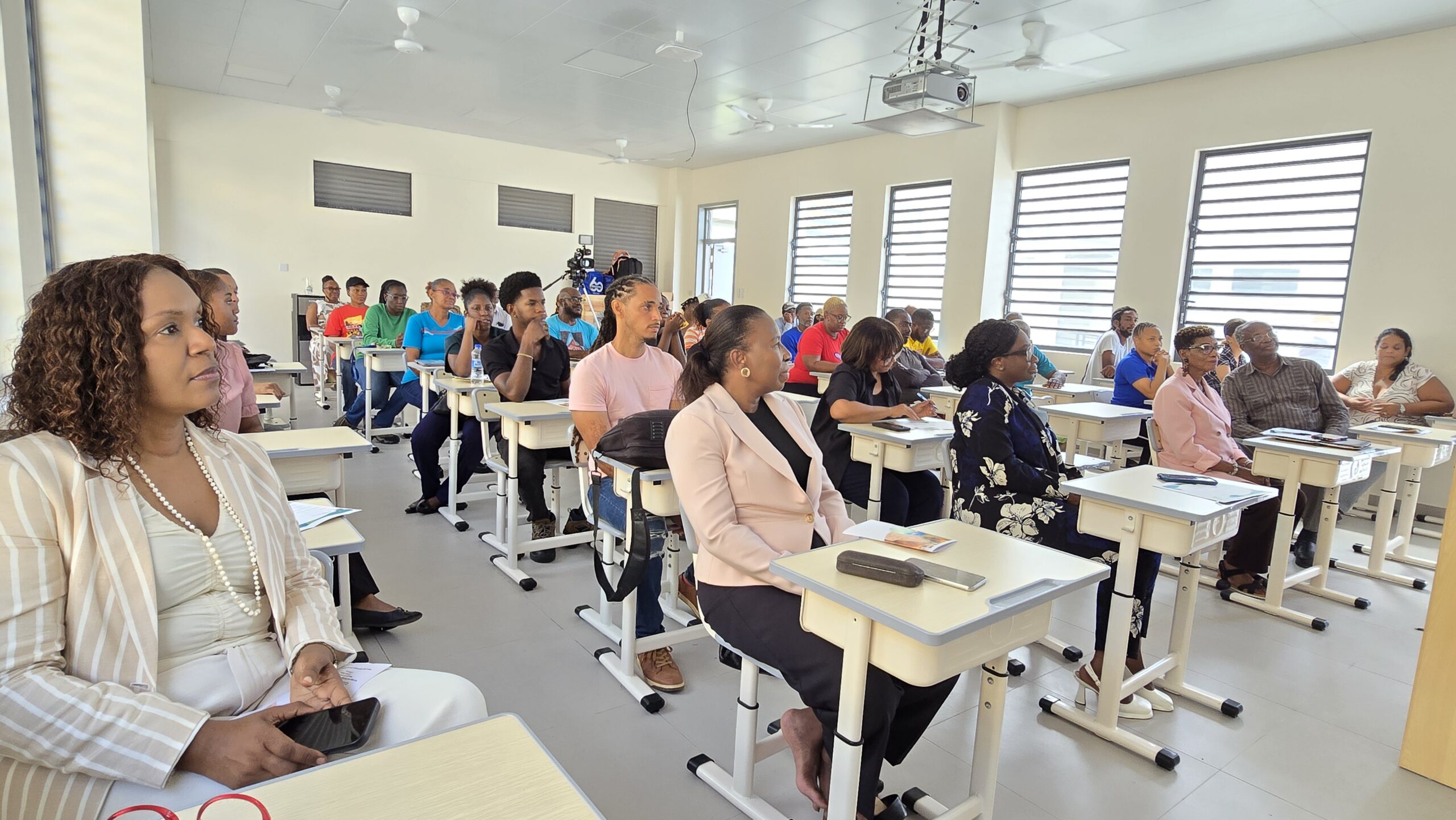
    The University of the West Indies (UWI) Five Islands campus has announced a significant expansion of both its community engagement efforts and academic program portfolio, marking a key milestone in the institution’s growth trajectory in the Caribbean region.

    Long positioned as a regional higher education hub focused on accessible learning, the Five Islands campus has ramped up its community outreach to address pressing local needs. New initiatives include free financial literacy workshops for small business owners across Antigua and Barbuda, STEM outreach programs for underserved secondary school students, and collaborative environmental conservation projects with local coastal protection nonprofits. University leadership notes that these programs are designed to bridge the gap between academic research and community action, bringing institutional resources directly to residents who stand to benefit most.

    Parallel to its community-focused expansion, the campus has added 6 new undergraduate and graduate degree programs aligned with growing regional industry demand. The new offerings include a bachelor’s degree in sustainable tourism management, a master’s program in digital public governance, and certifications in climate resilience planning—fields projected to drive job growth across the Caribbean over the next decade. Campus administration reports that enrollment for the new programs will open for the upcoming fall semester, with need-based scholarships available to support local students.

    Local education stakeholders have welcomed the expansion, noting that the moves will strengthen the campus’s role as a driver of social and economic development for Antigua and Barbuda, while expanding access to world-class UWI education for students across the Eastern Caribbean.