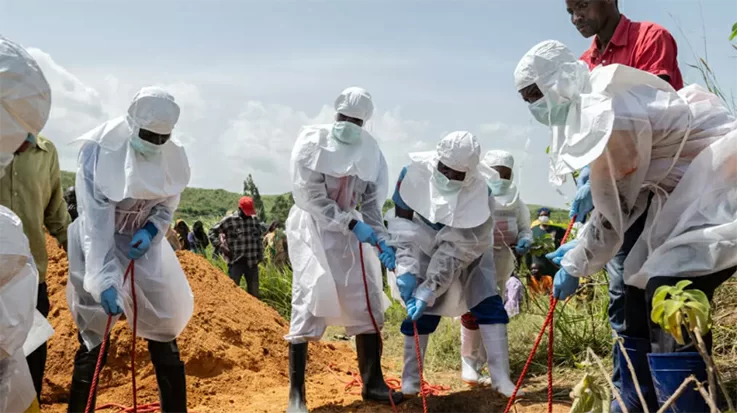
The World Health Organization (WHO) has sounded the highest alarm over a rapidly expanding Ebola outbreak that is advancing across eastern Democratic Republic of the Congo (DRC) and crossing into neighboring Uganda. Caused by the rare Bundibugyo strain of the Ebola virus, the outbreak has already claimed an estimated 220 lives and is outpacing current public health response efforts to contain its spread.
The epicenter of the current crisis is the conflict-stricken province of Ituri in the DRC, where the first confirmed cases were detected on May 15. Since the initial detection, the virus has spread at an alarming rate, prompting WHO leadership to formally declare the event a Public Health Emergency of International Concern (PHEIC), the body’s highest level of global public health alert.
Frontline public health workers battling the outbreak face severe, life-threatening barriers to their work. In the unstable Ituri region, medical facilities responding to the crisis have come under repeated attack. Over the past weekend, an attack on a hospital in Mongbwalu forced 25 patients receiving Ebola care to escape, creating new risks of uncontrolled transmission. These violent attacks mirror incidents during the 2018-2020 Ebola outbreak in the same region, which killed dozens of healthcare workers responding to the crisis.
Much of the hostility towards response teams stems from deep-rooted mistrust and fear among local communities. Many residents are skeptical of public health control measures, including restrictions on traditional large-scale funeral gatherings that are a major vector for Ebola transmission, and some even deny the existence of the outbreak entirely. This community resistance has significantly complicated efforts to trace contacts, isolate cases, and implement life-saving preventive measures.
During a recent African Union summit meeting, WHO Director-General Tedros Adhanom Ghebreyesus emphasized that the current outbreak is overwhelming existing response capacity. As of the latest update, more than 900 suspected cases have been reported, with 101 confirmed by laboratory testing, confirming the virus remains far from contained. Tedros warned that the epidemic is likely to grow worse before it can be brought under control, and announced he will travel to the DRC in person to coordinate and support on-the-ground response efforts.
Neighboring Uganda confirmed two new Ebola cases on Monday, bringing the country’s total case count to seven. WHO has warned that other neighboring countries surrounding the DRC face a high risk of imported cases, and urged these nations to immediately activate cross-border surveillance and preventive measures to stop the outbreak from spreading further beyond the DRC’s borders. Experts identify unsafe traditional funeral practices, driven by community resistance to restrictions, as one of the key factors fueling the outbreak’s rapid spread across the region.