作者: admin

  • Friday calls for end to Cuba embargo, support for Haiti

    Friday calls for end to Cuba embargo, support for Haiti

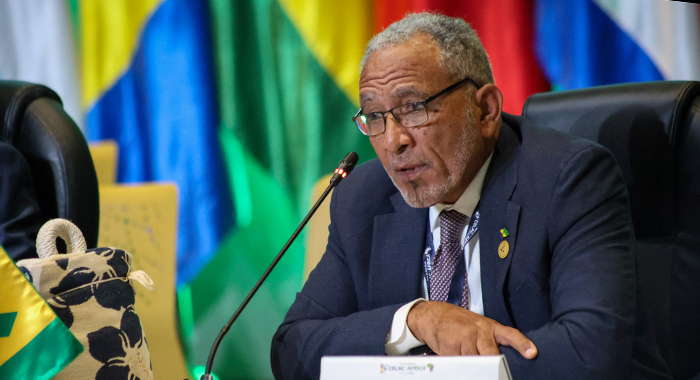
    Prime Minister Godwin Friday of St. Vincent and the Grenadines has issued a powerful appeal for hemispheric solidarity, calling for the immediate termination of the United States’ economic embargo against Cuba and increased international support for Haiti during his address at the CELAC summit in Colombia.

    Addressing fellow leaders from the Americas, Friday characterized the six-decade-long sanctions against Cuba as “anti-development measures” that continue to inflict severe hardship on the Cuban population. He specifically highlighted how extraterritorial provisions and Cuba’s controversial designation as a state sponsor of terrorism have crippled the nation’s access to international financial systems and impeded socioeconomic progress.

    The Vincentian leader emphasized that the overwhelming majority of United Nations member states have consistently voted to condemn the embargo, with 165 countries supporting a resolution last year demanding its cessation. Despite this global consensus, Washington maintains its position, recently exacerbating Cuba’s energy crisis through efforts to restrict oil shipments to the island.

    Turning to the deteriorating situation in Haiti, Friday expressed profound solidarity with the Haitian people as they confront escalating gang violence and political instability following President Jovenel Moïse’s 2021 assassination. He advocated for Haitian-led solutions, strengthened security institutions, and concrete actions against illicit arms trafficking while supporting the timeline for elections outlined in the National Pact for Stability.

    Friday positioned these dual challenges as critical tests of international commitment to justice and South-South cooperation, urging CELAC and African nations to form a united front. He concluded with a vision of a coordinated Global South capable of reshaping international law, global governance structures, and development financing toward greater equity.
  • In war Medicine, the miracle of Life

    In war Medicine, the miracle of Life

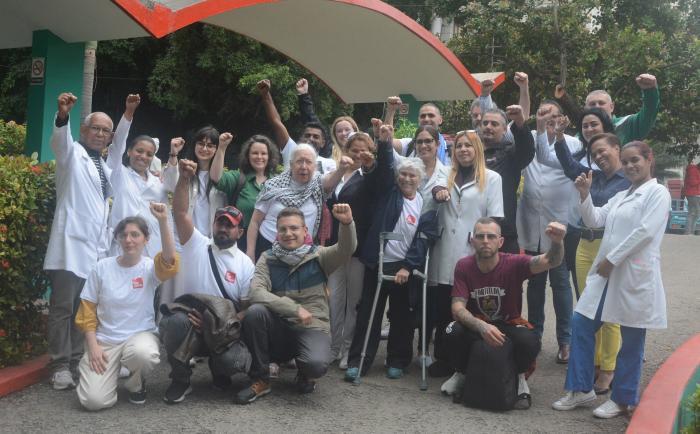
    At Havana’s Ramón González Coro Maternity and Obstetrics Hospital, medical professionals continue delivering critical care to high-risk pregnancies and newborns despite severe resource constraints, demonstrating remarkable resilience through innovative problem-solving and international solidarity.

    A European Solidarity Convoy arrived on March 17th with approximately five tons of medical supplies, medicines, and basic necessities, providing crucial support to the facility that specializes in complex cases including pregnant women with diabetes, heart conditions, and cancer. The delegation expressed astonishment at Cuba’s ability to maintain medical services amid significant challenges.

    Dr. Otto Rafael Recio, the institution’s director, explained their approach using a medical metaphor: “Much like a fetus with intrauterine growth restriction prioritizes vital organs, our country is focusing on essential healthcare functions.” The hospital has implemented strategic reorganizations of surgical activities and patient care to ensure service continuity.

    The reality of practicing “wartime medicine” was detailed by oncologist Raiza Ruiz, who described working with an “absolute minimum for everything.” Most medications and treatments for her specialty require imports, but Cuba faces purchasing restrictions despite having budget allocations through programs like the Maternal and Child Health Program (PAMI).

    Innovative solutions emerge from necessity. Two recently graduated engineers successfully repaired a previously unusable anesthesia machine by developing their own software when donors couldn’t provide the necessary programming. The equipment now functions fully, saving lives instead of collecting dust.

    The hospital has faced extreme situations, including generator failures during surgeries that required completion using emergency lamps. For newborns on German-made Dragger ventilators, battery replacements are unavailable due to trade restrictions, forcing staff to resort to manual ventilation during power outages.

    Andrea Santor of solidarity organization Cuba Va recalled how Cuba extended medical assistance to Italy during COVID-19’s devastating peak in Turin: “A small island, with fewer resources than capitalist countries, extended a helping hand when we needed it most.”

    Patient Maureen Echevarría Peña, hospitalized throughout her third trimester for hypertension and diabetes, expressed confidence in her medical team despite resource limitations. “The hospital has gone to great lengths to ensure I lack nothing,” she stated, focusing on her upcoming delivery rather than material shortages.

    The emotional visit concluded with a profound acknowledgment from a convoy member: “Thank you for the effort you make despite the difficulties, for the example of resilience you are.”

  • For Cuba, “Humanity Made Solidarity”

    For Cuba, “Humanity Made Solidarity”

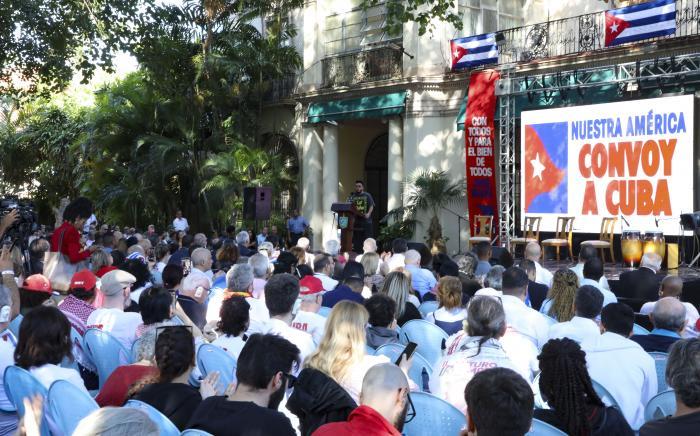
    HAVANA – In a powerful demonstration of global solidarity, over 600 delegates from 33 nations convened at the Cuban Institute of Friendship with the Peoples (ICAP) headquarters on March 21st for the “Our America to Cuba Convoy” welcoming ceremony. The event featured Cuba’s highest leadership, including President Miguel Díaz-Canel Bermúdez, and became a platform for resounding condemnation of the six-decade US economic embargo against the Caribbean nation.

    David Adler, co-general coordinator of Progressive International, set the tone by declaring: “Cuba has taught us what international solidarity means. We will never leave Cuba alone because fighting for Cuba is fighting for the right to self-determination of the peoples of the world.” Adler characterized the US blockade as a unique humanitarian crisis, asserting that convoy members represented millions globally who reject the policy of economic suffocation.

    The gathering served three fundamental purposes, according to Adler: humanitarian support for a nation under unprecedented sanctions, defense of Cuba’s revolutionary achievements as a viable alternative to capitalism, and resistance against what participants termed “genocidal policies” of the US government.

    Manolo de los Santos, executive director of The People’s Forum, praised Cuba’s resilience, stating: “This nation has given us the greatest lesson in what it means to create a true alternative to the horrors of capitalism and imperialism.” He explicitly labeled the blockade as “an act of genocide” for depriving Cubans of basic rights to life, peace, and normal international relations.

    Brazilian student leader Bianca Borges, president of the National Union of Students of Brazil, framed the event as elevating “the banners of solidarity, anti-imperialism, hope, and sovereignty” against imperial domination. She emphasized that solidarity with Cuba remains fundamental for achieving a just, integrated Latin America free from foreign domination.

    Fernando González Llort, Hero of the Republic and ICAP president, reaffirmed Cuba’s commitment to internationalist principles, telling attendees: “You represent the certainty that no imperial siege can ever imprison the dignity of our peoples. The homeland we defend is not a strip of land under siege—it is a piece of humanity that refuses to surrender.”

    The ceremony concluded with participants vowing to combat media misinformation about Cuba upon returning to their home countries, positioning the convoy as the beginning of sustained international advocacy rather than a singular event.

  • Column: De vogel en de lente die niet wijkt

    Column: De vogel en de lente die niet wijkt

    In the midst of global uncertainty, an unexpected friendship bridges cultural divides through the power of poetry. Indra Toelsie reveals how meaningful exchanges with Mahdi, an Afghan friend, have created a profound dialogue beyond words through shared verses of Persian literature.

    Their connection transcends geographical boundaries, with Mahdi recently sharing a poignant poem by renowned Iranian poet Forough Farrokhzad in response to Toelsie’s contemplation about ‘the spring that never fades.’ The selection serves as a powerful metaphor for resilience, depicting a small bird that instinctively takes flight to find its partner upon sensing spring’s arrival—unburdened by human concerns, debts, or news cycles, soaring above danger into pure, carefree freedom.

    This avian imagery becomes a mirror for human experience, prompting reflection on how modern life entraps us in endless streams of information, worries, and obligations. Remarkably, it is Mahdi—living in a country where conflict and instability define daily existence—who reminds Toelsie of life’s simplest yet most powerful truth: the freedom of the human spirit and the confidence that spring inevitably finds its way, even through the harshest circumstances.

    Their cultural exchange deepened when Mahdi introduced Toelsie to Persian poetry’s emotional resonance during a bus ride in Beijing. Sharing headphones, they listened together to a Persian poem set to music. Though Toelsie understood no words, the emotional transmission was complete—tears welling as the melody communicated universal human experiences beyond linguistic barriers, exemplifying how music and poetry form an international language that needs no translation.

    The essay acknowledges those periods when spring feels perpetually distant, when adversity and unrest create webs of fear and doubt. Yet the image of the fearless bird continues to provide courage—a reminder to release anxieties, trust innate strengths, and rise above daily tumult.

    Mahdi’s poetic selection builds bridges between their disparate worlds, connecting his struggle with Toelsie’s search, his hope with her longing. The message remains clear: however challenging the circumstances, however distant spring may appear, the human soul can maintain its freedom. Spring never truly retreats as long as we maintain the courage to fly.

    Ultimately, Farrokhzad’s poem extends an invitation to everyone: become your own bird. Live with confidence and simplicity, refuse paralysis over the unchangeable, and seek the spring residing within every heart—allowing it to bloom despite external challenges. Mahdi’s hopeful message resonates universally: as long as we continue to fly and maintain hope, spring will never fade.

  • LVV-minister Noersalim wil lokale producten voor schoolvoeding

    LVV-minister Noersalim wil lokale producten voor schoolvoeding

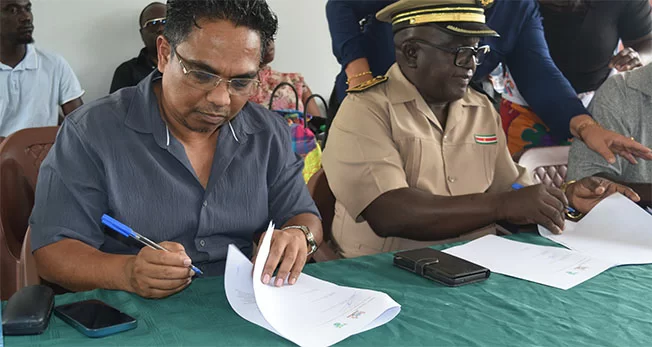
    In a significant move toward agricultural self-sufficiency, Suriname’s Minister of Agriculture, Livestock, and Fisheries Mike Noersalim has announced a comprehensive national strategy to source all school meal products locally. The initiative, unveiled during the launch ceremony of the highland rice project in Pokigron, represents a major shift in the government’s approach to food security and rural development.

    The ambitious program will require that all components of school meals—including rice, protein sources, and vegetables—be supplied by domestic producers rather than imported goods. Currently, students in participating interior schools receive meals consisting of rice with fish or meat and vegetables, but vegetables have been primarily sourced from Paramaribo or Saramacca regions.

    Minister Noersalim emphasized the program’s strategic importance during his address to traditional leaders, farmers, and residents of Pokigron. ‘The government is implementing the school feeding program with the specific intention of utilizing all locally grown products,’ he stated, highlighting the interconnected nature of agricultural development and food security.

    The ministry has already initiated a nationwide livestock program training entrepreneurs in poultry farming, with plans to extend these training programs to interior villages. ‘We have rice, complemented by chicken, and then we need vegetables to complete the meal,’ Noersalim explained, outlining the comprehensive approach to meal planning.

    The highland rice project, a three-year initiative implemented in collaboration with the Ministry of Regional Development, marks the beginning of this agricultural transformation. The ceremony was attended by Regional Development Minister Miquella Huur, Assembly member Silvana Afonsoewa, and District Commissioner Humphrey Jeroe, demonstrating cross-ministerial support for the initiative.

    Minister Noersalim connected the local sourcing mandate to broader global challenges, noting that President Jennifer Simons has called for proactive measures in response to international tensions that have driven increased transportation costs and more expensive import products. He encouraged villagers to plant fruit trees as part of local juice production efforts.

    Addressing market access concerns, the minister pointed to the Directorate of Agricultural Research, Marketing, and Processing as a key resource for ensuring market guarantees. He emphasized the importance of establishing community hubs or processing units where agricultural products could be collected and distributed efficiently.

    The success of these projects depends on collective effort and cooperation, Noersalim stressed, warning that results would be elusive without proper collaboration. The ministry has already begun supporting land preparation for farmers seeking to expand their cultivation areas.

    Finally, the minister highlighted the critical role of agricultural cooperatives in organizing production and enabling targeted ministry support. By establishing clear production structures through cooperatives, the government aims to create a sustainable framework for Suriname’s agricultural development and food security goals.

  • Education : The Minister of Education shared his priorities with the IDB and the Global Partnership for Education

    Education : The Minister of Education shared his priorities with the IDB and the Global Partnership for Education

    In a significant development for Haiti’s education sector, newly appointed Minister of National Education Vijonet Déméro has articulated his comprehensive reform vision during crucial meetings with two major international partners last week.

    The Minister engaged in separate discussions with representatives from the Inter-American Development Bank (IDB) and the Global Partnership for Education (GPE), outlining an ambitious strategic framework aimed at transforming Haiti’s educational landscape. The proposed initiatives encompass multiple critical areas including pedagogical enhancement, infrastructure rehabilitation, and systemic modernization.

    Central to Minister Déméro’s priorities are fundamental improvements in teaching quality and learning outcomes, alongside expanded educational access nationwide. The administration plans substantial investments in vocational training programs and public school infrastructure restoration. A notable emphasis on teacher development includes both initial training and continuous professional enhancement programs.

    The strategic blueprint further incorporates innovative approaches such as education system decentralization and comprehensive digital transformation. A cornerstone of this digital initiative is the establishment of a dedicated Institute for Digital Education, which will focus on capacity building for ministry personnel and educators nationwide.

    Additional components of the reform package include organizational strengthening of technical and departmental education directorates, optimization of the Education Management Information System (SIGE), and implementation of standardized management protocols for educational institutions. The ministry also plans curriculum modernization, early childhood development programs, and promotion of economic literacy and civic engagement.

    Corinne Cathala, IDB Resident Representative in Haiti, expressed strong endorsement of the minister’s clearly articulated vision, committing to explore collaborative implementation pathways through technical teams and the Ministry’s Project Coordination Unit. IDB technicians highlighted significant achievements from previous three-year interventions while discussing potential activities for the forthcoming biennium.

    In parallel discussions with GPE representatives, including education expert Mohamed Yassine and ONAPE Director General Hervé Boursiquot, emphasis was placed on revitalizing Haiti’s Local Education Partnership Group and Education Sector Group. These platforms serve as consultative mechanisms for consensus-building around priority actions in the education sector.

    The high-level meetings featured participation from key education officials including Professor Ecclésiaste Télémaque (Minister’s Chief of Staff), DDE Coordinator Jean Wilnor Pierre, UCP Coordinator Louis Fritz Dorminvil, and IDB education specialists Marie Evane Tamagnan, Sidney Vasconcelos, and Jeff Schleiden Colo.

  • Fire reported at Don Ernesto Parrillada in Santo Domingo’s Colonial City

    Fire reported at Don Ernesto Parrillada in Santo Domingo’s Colonial City

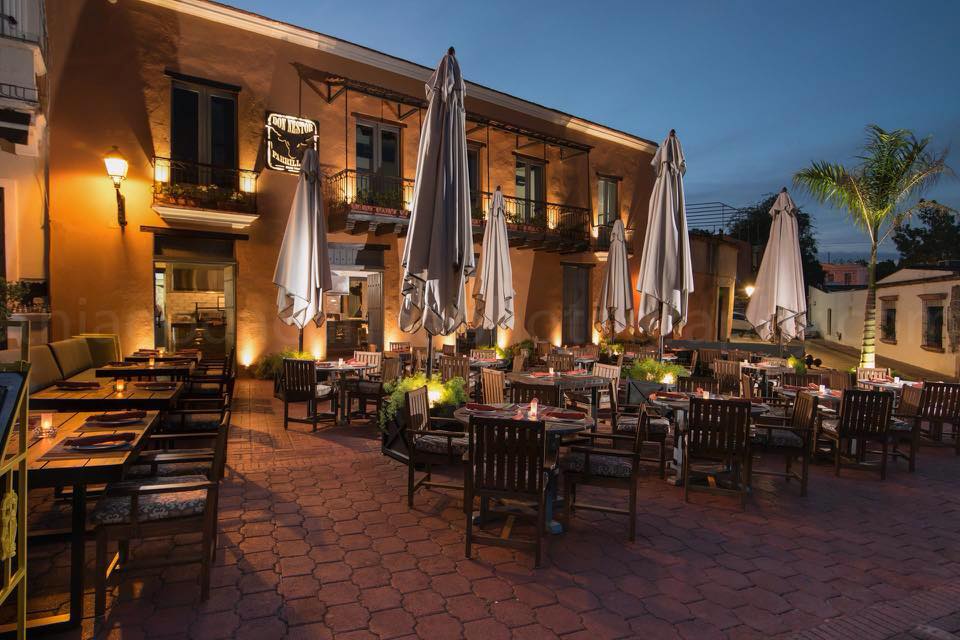
    A significant fire erupted at the renowned Don Néstor Parrillada restaurant in Santo Domingo’s historic Colonial City district on Sunday evening, triggering emergency responses and raising questions about safety protocols in one of the Dominican Republic’s prime tourist destinations.

    The blaze originated approximately at 6:30 p.m. within the establishment’s grill section, according to preliminary reports. Quick-thinking employees from adjacent businesses immediately deployed fire extinguishers in a bid to contain the flames before professional emergency crews reached the scene at Plaza España. The coordinated efforts between these first responders and subsequently arrived firefighters successfully prevented the conflagration from extending to neighboring properties.

    Through the activation of established safety protocols and efficient evacuation procedures, all restaurant staff and patrons were safely escorted from the premises without reported injuries. While the precise trigger of the incident remains under official investigation, the event has prompted immediate damage assessment by restaurant management and broader discussions regarding fire safety standards in high-density historic zones.

    The Colonial City, recognized as a UNESCO World Heritage site and major tourism attraction, faces ongoing challenges in balancing historic preservation with modern safety requirements. This incident marks the latest in a series of safety evaluations concerning commercial establishments operating within culturally significant architectures that often present unique fire prevention complications.

  • Elections : Risks of infiltration on the CEP list by political parties complicit with gangs

    Elections : Risks of infiltration on the CEP list by political parties complicit with gangs

    Haiti’s fragile electoral process faces unprecedented challenges as the Civil Society Initiative (ISC) raises alarms about potential infiltration by gang-affiliated political entities. While acknowledging the efforts of the Provisional Electoral Council (CEP) to facilitate elections, the ISC expresses grave concerns regarding the integrity of the democratic process.

    The organization has identified a critical vulnerability among the 320 political parties registered with the CEP, warning that groups complicit with criminal gangs may exploit the system to gain political legitimacy. This development threatens to undermine Haiti’s already precarious security situation and democratic institutions.

    In response to these threats, the ISC has issued urgent appeals to multiple government bodies. The Justice system, Judicial Police, and CEP have been called upon to implement comprehensive screening mechanisms that would prevent politicians with gang affiliations from participating in elections. The civil society group emphasizes that Haiti’s judicial system must maintain its sovereign authority to prosecute and punish offenders without delegating these functions to international courts.

    Beyond security concerns, the ISC has highlighted additional complications in election preparation. The proposed voter re-registration process could potentially disenfranchise significant portions of the electorate and create unnecessary delays. The organization advocates for utilizing existing Dermalog identification cards and National Identification Office (ONI) registries to streamline voter list compilation, as successfully implemented in previous elections.

    Financial integrity represents another critical challenge. Past elections have been marred by excessive campaign spending that prioritized donor interests over public welfare. The ISC insists that electoral legislation regarding funding limits must be strictly enforced by relevant authorities including the Ministry of Finance, Anti-Corruption Unit (ULCC), and Superior Court of Accounts.

    For Haiti to emerge from its current crisis, the ISC emphasizes that elections must transcend mere procedural compliance. The process must establish genuine security, demonstrate democratic transparency, and maintain credibility with both domestic and international observers to restore faith in Haiti’s governance institutions.

  • Dominican Republic advances climate monitoring deal with Italian Space Agency

    Dominican Republic advances climate monitoring deal with Italian Space Agency

    Santo Domingo has taken a significant step toward technological advancement in climate security through a new partnership with Italy’s space sector. The National Council for Climate Change and Carbon Market (CNCCMC) has announced substantial progress in finalizing a cooperative agreement with the Italian Space Agency, marking a pivotal development in geospatial monitoring capabilities for the Caribbean nation.

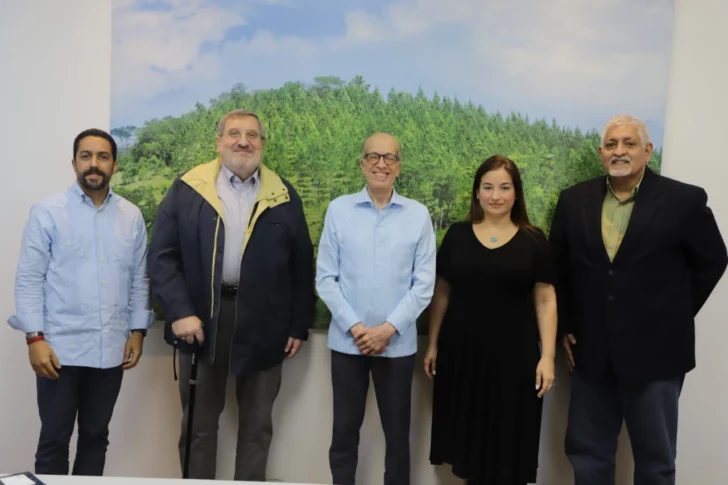
    This groundbreaking initiative, spearheaded by CNCCMC Vice President Max Puig, focuses on leveraging sophisticated satellite technology to transform disaster risk management. The collaboration will provide Dominican authorities with enhanced access to both real-time and historical satellite data, enabling more precise forecasting and response mechanisms for extreme weather phenomena including hurricanes, floods, and various hydrometeorological hazards.

    The partnership emerged from high-level discussions involving Marco Lisi, a representative connected to Italy’s Foreign Ministry and the European Space Agency’s Galileo navigation program, alongside academic experts from Pedro Henríquez Ureña University. This multilateral engagement underscores the international commitment to addressing climate vulnerabilities in the region.

    Central to the cooperation are several strategic components: the enhancement of early warning systems, the development of a comprehensive Climate Risk Atlas, and the potential establishment of a national satellite data processing center dedicated to climate analysis. This infrastructure will serve as the foundation for improved disaster preparedness and climate adaptation strategies.

    Officials emphasize that this agreement represents a transformative approach to climate resilience, integrating cutting-edge technology with international knowledge sharing. The initiative aligns with the Dominican Republic’s broader strategy to modernize its climate change adaptation framework through technological innovation and global partnerships, ultimately creating a more secure future for its citizens in the face of escalating climate challenges.

  • Caribbean Cinemas closes Malecón branch after violent incident

    Caribbean Cinemas closes Malecón branch after violent incident

    SANTO DOMINGO – A tragic law enforcement incident resulted in the death of National Police Officer Dary Daniel Andújar Pérez, 22, who succumbed to injuries sustained during an intervention at Caribbean Cinemas’ Cinema Centro Malecón on George Washington Avenue. The fatal confrontation occurred Sunday afternoon while the theater facility was closed to the public.

    Preliminary investigative reports indicate Officer Andújar Pérez responded to an active threat situation involving an armed individual who was allegedly threatening cinema employees. During the intervention, private security guard Santo Pimentel Lebrón was also killed in the exchange. Authorities currently believe Pimentel Lebrón may have inflicted the fatal injury that ultimately caused the officer’s death despite emergency surgical intervention at the National Police General Teaching Hospital (Hosgedopol).

    The incident connects to an earlier attempted homicide report at the same location involving a security guard from Eulen company and a female employee. Caribbean Cinemas management confirmed the incident occurred during non-operational hours and acknowledged that police intervention potentially prevented further casualties.

    National Police Director Andrés Modesto Cruz Cruz publicly honored Officer Andújar Pérez’s bravery and dedication to duty while extending official condolences to the bereaved family. The case remains under active investigation by judicial authorities with forensic analysis pending from INACIF. The cinema chain has implemented emergency protocols, cooperated fully with investigators, and temporarily shuttered the Malecón location pending completion of official proceedings.