作者: admin

  • Belize Moves Early to Help Farmers Ahead of Drought

    Belize Moves Early to Help Farmers Ahead of Drought

    As climate forecasts point to a heightened risk of severe drought later this year, the government of Belize has moved ahead of the curve to activate a comprehensive support plan for agricultural producers across the country’s most vulnerable regions.

    Developed over nearly two years of collaborative work between the Belizean Ministry of Agriculture, Food Security and New Growth Industries, the National Meteorological Service, and the United Nations World Food Programme (WFP), the initiative introduces a first-of-its-kind Anticipatory Action system for the country. The framework was greenlit after long-range weather projections confirmed a high probability of below-average rainfall across Belize in the coming months.

    The core of the program delivers advance cash assistance to smallholder and commercial farmers operating in Orange Walk, Corozal, and Cayo — the three regions identified as facing the greatest drought risk. With this flexible funding, producers can invest upfront in drought adaptation tools: reinforced water storage infrastructure, climate-resilient seed varieties, and expanded irrigation equipment that will help them preserve crops through extended dry periods. Government officials emphasize that this pre-emptive investment is designed to lock in crop protection and cut avoidable production losses before drought conditions even set in.

    The proactive approach comes as climate scientists warn that El Niño conditions, which typically bring drier-than-average weather to much of Central America, are on track to develop by July. Northern and western Belize, the regions that host the bulk of the country’s small-scale agricultural operations, are particularly exposed, as most local farming systems rely entirely on natural rainfall rather than established irrigation networks.

    For WFP Representative Brian Bogart, the shift from post-disaster response to pre-emptive action marks a critical evolution in climate risk management. “Acting before a crisis hits doesn’t just protect farmers’ harvests — it safeguards their livelihoods and cuts the long-term public cost of emergency disaster response,” Bogart explained. “When farmers are able to keep their crops healthy and their incomes stable, entire communities avoid the cascading impacts of drought that can last for years after dry conditions end.”

    In recent years, Belize has seen a steady increase in the frequency and intensity of extreme climate events including prolonged droughts, a trend that has placed growing economic pressure on the agricultural sector — one of the country’s largest employers and export earners. Belizean authorities frame the new Anticipatory Action system as a foundational step toward more proactive climate planning, designed to build long-term resilience for the rural communities that are most vulnerable to shifting weather patterns.

    The entire initiative has been made possible through financial and technical support from a coalition of international development partners, including the governments of Canada, Ireland, and the United States, along with the European Union. This international backing has allowed Belize to build out the data infrastructure and delivery systems needed to turn early climate warnings into tangible action for at-risk producers.

    As the country prepares for the potential dry spell, officials stress that this pre-emptive model sets a new standard for climate adaptation across small island and developing states. By acting early, Belize aims not only to reduce immediate drought damage and protect rural livelihoods, but also to strengthen the nation’s overall capacity to face growing climate challenges in the decades ahead.

  • British High Commission supports Levera mangrove reforestation project

    British High Commission supports Levera mangrove reforestation project

    A landmark environmental partnership between the British High Commission in St George’s and Grenada’s St Patrick Environmental Community and Tourism Organisation (SPECTO) is driving forward critical ecosystem recovery at the Levera Pond, one of the Caribbean island nation’s most ecologically significant wetland sites. The collaboration, known as the Levera Pond Recovery: Mangrove Restoration and Education Initiative, is fully funded through the UK Government’s Bilateral Programme Fund, bringing both financial and community-focused support to a landscape still reeling from extreme weather damage.

    The initiative targets two core restoration priorities: expanding ongoing mangrove reforestation work across the protected wetlands, and rebuilding the popular public boardwalk that was heavily destroyed when Hurricane Beryl swept through Grenada in 2024. As a Ramsar-designated wetland of international importance, Levera’s mangrove ecosystems play an irreplaceable role in supporting native biodiversity, buffering coastal communities against storm surges, and maintaining the natural balance of the region’s marine and terrestrial habitats.

    Months into the project, early progress already demonstrates the power of cross-sector and community collaboration. To date, teams have successfully planted 423 mangrove seedlings, encompassing both native red and black mangrove species critical to the local ecosystem. Coordinated by project implementer Michael Forteau, the planting activities have been carried out by SPECTO community volunteers alongside students from Grenada’s TA Marryshow Community College (TAMCC), blending hands-on restoration work with impactful environmental education. The project has also delivered immediate local economic benefits, creating five full-time temporary positions for community members to support ongoing work at the site.

    During a recent site visit to assess progress, Resident British Commissioner Victor Clark joined SPECTO representatives for a mangrove planting activity and tour of the new boardwalk construction. After observing the work firsthand, Clark emphasized the urgency of protecting the vulnerable Levera ecosystem, noting that hurricane damage and additional stress from nearby construction have put the site at heightened risk. “Protecting the fragile environment and ecosystems of the Ramsar-designated Levera wetlands in Grenada is critically important — especially in the wake of Hurricane Beryl and the damage caused by nearby construction,” Clark said. “Seeing the impact firsthand has only strengthened my conviction, and I am proud that the British High Commission is partnering with SPECTO to support this vital work.”

    When the project wraps up later this year, organizers plan to host a public official launch event to celebrate the completed boardwalk reconstruction and showcase the early progress of the newly planted mangroves. Beyond this specific initiative, the British High Commission has reaffirmed its long-term commitment to supporting environmentally sustainable projects across Grenada that protect native biodiversity, build community climate resilience, and advance inclusive, sustainable local development.

  • Dominica to host gospel song writing workshop with focus on liturgical music

    Dominica to host gospel song writing workshop with focus on liturgical music

    Dominica is set to make history in its liturgical and cultural landscape with the launch of the world’s first-ever Gospel Songwriting Workshop, an innovative two-day program tailored for aspiring and established creators seeking to hone their sacred music composition craft. Organized by the Institute of Spiritual Leadership and Growth Mentorship, the initiative fills a longstanding gap for creators eager to connect their artistic practice to the theological roots of Catholic worship, blending deep spiritual learning with hands-on technical training.

    Ivenia Benjamin, founder of the Institute and lead organizer of the event, outlined that the workshop’s core mission goes far beyond teaching basic songwriting techniques. Instead of framing composition as merely an artistic pursuit, the program encourages participants to approach songwriting as a form of prayer and a core component of religious ministry, while reaffirming the central role that music plays in Catholic liturgy and collective worship.

    Over the course of the two split sessions, attendees will dive into a structured curriculum that balances academic grounding, practical skill-building, and collaborative creative work. The program opens with exploration of the biblical and theological foundations of sacred music, helping participants understand the historical and spiritual purpose of liturgical song. From there, creators will learn actionable composition techniques to craft everything from hymns and praise songs to musical settings for segments of the Catholic Mass. The curriculum also emphasizes inclusive creativity, teaching creators how to weave local cultural and linguistic traditions into their work to make worship more accessible and resonant for diverse congregations. Collaborative co-writing exercises with peers and expert facilitators are also designed to build new creators’ confidence in both composing new work and performing it for audiences.

    Leading the workshop is a lineup of highly experienced, widely respected sacred music composers and clergy, bringing decades of collective experience and contribution to global Catholic liturgical music. Headlining the local faculty is Monsignor Eustace Thomas, a priest with nearly 60 years of service, who has earned acclaim for his extensive catalog of beloved Catholic hymns written in both English and Creole. His best-known works include *We Are the Living Stones*, *Together We Are Christ’s Body*, and *This is My Body, This is My Blood*, among many others. Joining him is Monsignor William John-Lewis, a distinguished Dominican composer and priest whose popular liturgical compositions include *Agneau de Dieu*, *Senyè Pran Pityé*, and *Forbes Te Deum*.

    The program will also feature a special in-person session from international guest facilitator Brother Paschal Jordan OSB, a Benedictine monk of Guyanese descent based in Trinidad. Brother Jordan is internationally celebrated for his extensive body of sacred work, including well-known pieces such as *To Be the Body*, *Praise to the Lord*, and *In God’s House*, and will travel to Dominica specifically to lead the workshop’s second session.

    Unlike many similar faith-based arts programs that are held on consecutive days, this workshop is structured as two non-consecutive Saturdays to accommodate participants with existing work and family commitments. The first session, led by the local facilitator team, will take place on May 16, 2026, at the Diocesan Pastoral Centre in Morne Bruce, running from 9:00 AM to 3:30 PM. Brother Jordan will lead the second and final session one week later on May 23, 2026, at the same venue, keeping the same daily schedule.

    Benjamin shared that the Institute’s ultimate goal for the initiative is to uplift new, diverse creators, encouraging what the organization describes as “new voices to sing a new song to the Lord.” By nurturing a new generation of liturgical composers, the Institute hopes to enrich communal worship across Dominica and draw worshippers closer to the core of their faith. Organizers note that the combination of rigorous theological teaching, hands-on technical training, and intentional spiritual formation makes this event a one-of-a-kind gathering that is poised to leave a lasting mark on Dominica’s religious and cultural community. Interested participants can reach out to the Institute of Spiritual Leadership and Growth Mentorship at (767) 295 9089 for additional registration and program details.

  • Traffic Arrangements – The Carenage, St George’s

    Traffic Arrangements – The Carenage, St George’s

    Motorists and local residents in Grenada will soon face adjusted traffic patterns around the Carenage district, as law enforcement has officially announced new permanent-until-further-notice traffic regulations to accommodate a critical infrastructure upgrade. The upcoming project, a full sewer line installation led by the National Water and Sewerage Authority (NAWASA), will trigger the adjusted road rules starting Thursday, 7 May 2026. The changes will only take effect during overnight hours, running daily from 9 p.m. to 3 a.m. to minimize disruption to peak daytime travel.

    Under the new framework, the main Carenage public road will switch to a single one-way flow, with all traffic required to travel toward the Sendall tunnel direction. Additional route restrictions will be in place on H A Blaize Street: drivers moving along this thoroughfare will be banned from making right turns onto Hughes Street. Instead, all vehicles must continue along H A Blaize Street until connecting to the Tanteen Public Road to continue their journeys.

    The Royal Grenada Police Force (RGPF), which issued the official public notification from the Office of the Commissioner of Police, has acknowledged that the detours and route changes may create temporary disruptions for road users. In the public announcement, the force issued an apology for any inconvenience the traffic adjustments may cause, and urged all commuters, delivery services, and local residents to plan alternate routes in advance and comply with the new rules during the construction period.

    This infrastructure work aims to upgrade Grenada’s aging public sewer network, supporting long-term public health and urban development in the Carenage area. The traffic restrictions will remain in place until project officials complete the installation work and issue a formal notice lifting the route adjustments. Local road users are encouraged to check official RGPF and NAWASA updates for any changes to the timeline or traffic arrangements.

  • Simmonds retained by Royals

    Simmonds retained by Royals

    The Caribbean Premier League (CPL), one of the world’s most exciting regional Twenty20 cricket tournaments, is moving forward with preparations for its 2026 season by doubling down on its commitment to nurturing homegrown emerging talent. Ahead of the upcoming player draft, every CPL franchise has exercised their one allowed pre-draft retention, all of which went to young prospects in the league’s mandatory Breakout Player category.

    Leading the group of retained rising stars is 24-year-old left-arm fast bowler Ramon Simmonds, who will remain with the Barbados Royals. A native of Barbados, Simmonds has already earned four T20 international caps for the West Indies national team, marking him as one of the most promising young fast bowling talents in the Caribbean.

    The five other Breakout Players retained by their respective franchises include Joshua James, who will stay with the Antigua & Barbuda Falcons; Quentin Sampson, retained by the Guyana Amazon Warriors; Navin Bidaisee, who remains with the St Kitts & Nevis Patriots; Ackeem Auguste, held by the Saint Lucia Kings; and Nathan Edward, retained by the Trinbago Knight Riders.

    All six selected players earned their retention spots thanks to strong recent performances, proven on-field potential, and rapidly growing influence across regional domestic cricket circuits. Under the 2026 CPL competition rules, each franchise will ultimately include three Breakout Players in their final full season squad. To ensure these young prospects get meaningful high-level game time, the league has also introduced a mandate requiring every team to play at least one Breakout Player in every match of the upcoming season.

    This regulatory structure marks a clear, intentional step forward for the CPL’s long-running mission to cultivate emerging cricket talent across the Caribbean. By reserving the only allowed pre-draft retention exclusively for a Breakout Player, league organizers have guaranteed that young domestic prospects get priority attention and secure spots in squad plans ahead of the open draft. With all pre-draft business now complete, all six CPL franchises will fill their remaining vacant roster spots during the upcoming player selection event, which is shaping up to be one of the most competitive and highly anticipated drafts in the league’s history.

  • Obductierapport: overleden goudzoekers niet door kogels geraakt

    Obductierapport: overleden goudzoekers niet door kogels geraakt

    On May 7, Suriname police released key findings from an autopsy into the deaths of two illegal gold miners who died during a government task force operation at a Zijin Mining concession, confirming the pair were not killed by gunfire as previously speculated.

    During a public press briefing, Regional Commander Sharveen Koelfat of Central Suriname presented partial results of the autopsy report, which was finalized and delivered to law enforcement mid-briefing. The two miners died from severe head and brain trauma sustained after falling from a significant height, Koelfat confirmed. Quoting directly from the document, Koelfat noted the first victim suffered compression of the cerebellum and fractures to the left anterior and middle cranial base, all consistent with a high fall. The second victim also showed brain swelling and blunt force head trauma that traced back to the same fall event.

    Koelfat added that forensic pathologists conducted a full search for bullet fragments and entry wounds, and found no evidence of projectile damage on either body. He went on to clarify key protocols that govern the task force’s work at the mining concession, countering circulating misinformation about the operation. Task force members are not permitted to remove any gold or gold-bearing rock from the site, Koelfat explained; all potential ore is left at the location, and personnel are searched by the mining company’s own security team before leaving the concession area.

    He also outlined the task force’s rules of engagement for eviction operations: officers only fire their weapons in exceptional, emergency circumstances. In most cases, Koelfat noted, illegal miners immediately flee when the task force arrives, often choosing extremely dangerous escape routes to avoid detection. Common high-risk choices include scaling steep cliff faces, running across uneven, jagged rock terrain, or jumping into open water while carrying heavy backpacks loaded with stolen ore. The commander also highlighted that illegal miners regularly document their unauthorized activities on social media, sharing videos that show them firing weapons and chanting hostile slogans against police, including calls for “war on the police”.

    Koelfat added that illegal miners often have advance intelligence about operations inside the concession, including controlled blasting work that uses explosives to loosen gold-bearing ore. Information on these operations spreads rapidly as far as the capital Paramaribo, drawing groups of unauthorized prospectors to the site to collect ore after blasts, despite the well-documented life-threatening risks of their activity. To date, four illegal miners have died in incidents connected to unauthorized prospecting at the concession in a short span of time, police confirmed.

  • Odwin wins coveted award at SMU

    Odwin wins coveted award at SMU

    Barbados’ leading women’s golfer Emily Odwin has earned another prestigious milestone in her burgeoning athletic and academic career, taking home Southern Methodist University’s top individual honor for student-athletes.

    The 22-year-old senior was named Female Student-Athlete of the Year at SMU’s annual Mustang Awards held earlier this week, an award that celebrates exceptional excellence both on the competitive course and in the classroom. Designed to recognize standout team leaders who lift their peers and elevate the university’s athletic reputation, the honor puts a spotlight on Odwin’s consistent contributions to the SMU Mustangs women’s golf program over the past season. Beyond her win, she also earned nominations for two additional awards at the McFarlin Auditorium ceremony: the Student-Athlete Choice Award and the Perseverance Award.

    This collegiate season has stood out as one of Odwin’s most impressive to date. Across 31 competitive rounds, she posted a stellar average score of 71.82, a mark that secures her fifth place on the SMU women’s golf program’s all-time leaderboard. She also earned a coveted spot in the nationally recognized Augusta National Women’s Amateur, all while maintaining an impressive 3.76 cumulative grade point average. Currently the reigning Barbados Olympic Association Senior Female Athlete of the Year, Odwin was quick to share credit for her latest recognition, emphasizing the critical role her teammates and support staff have played in her success.

    “It’s really easy to succeed when you’re surrounded by great teammates and a dedicated support system,” Odwin said in comments after the awards ceremony. “At the end of the day, this isn’t just my award – it’s a collective achievement for our whole group.”

    Fresh off her award win, Odwin and the Mustangs are already preparing for their next big test: the Waco Regional of the NCAA Division I Women’s Golf Championship, which tees off this coming Monday in Texas. The team, seeded fourth in the regional, will compete over three days at Waco’s Ridgewood Country Club, with a spot in the national championship tournament on the line. A win or high enough placement would send SMU to its third national championship appearance in the last four seasons, with the final tournament scheduled for May 22-27 in Carlsbad, California.

    Odwin made clear her focus remains fixed on the road ahead, not on past accolades. “The job’s not done,” she said. “We head to Regionals this weekend, and I’m so excited for what this team can do. I truly believe this group has what it takes to contend for a national championship – I wouldn’t have returned for my senior season after the fall if I didn’t believe that deep down. Right now, our goal is to get through Regionals, and we’re taking it one round at a time.”

    The award win comes on the heels of another strong performance for Odwin just weeks prior: in late April, she tied for seventh place at the U.S. Women’s Open Qualifying Tournament held in Corral de Tierra, California, cementing her status as one of the top young amateur golfers in the hemisphere.

  • Meet Gabi: The World’s First Robot Buddhist Monk

    Meet Gabi: The World’s First Robot Buddhist Monk

    In a groundbreaking intersection of artificial intelligence and religious tradition, a 4-foot-3-inch humanoid robot named Gabi has made global history as the world’s first machine to be formally ordained as a Buddhist monk. The unprecedented ordination ceremony took place Wednesday at Jogye Temple, located in the heart of Seoul, South Korea, just two weeks ahead of the widely celebrated Buddha’s Birthday on May 24.

    Dressed meticulously for the sacred occasion, Gabi was outfitted in traditional ceremonial grey and brown monastic robes, adorned with a wooden beaded rosary, and fitted with flesh-colored gloves to honor the solemnity of the ritual. When the key moment of the ordination arrived, the robot executed pre-programmed sacred gestures flawlessly: it folded its mechanical limbs into the traditional prayer position, performed a respectful bow to the senior monks officiating the service, and recited its monastic vows aloud before the gathered congregation.

    Witnesses to the event shared that when a leading monk posed the core ordination question — “Will you devote yourself to the holy Buddha?” — Gabi responded immediately and clearly, stating without hesitation, “Yes, I will devote myself.” Following the formal completion of the vows, Gabi was officially welcomed into the monastic community of Jogye Temple.

    Moving forward, the newly ordained robotic monk will take on ceremonial responsibilities during the upcoming Buddha’s Birthday festivities. Organizers confirmed that Gabi will lead community chanting processions and serve in an honorary monastic role throughout the multi-day celebration. The historic milestone has sparked widespread conversation about the evolving role of technology in religious and cultural spaces, as faith communities around the world explore how digital innovation can be integrated into traditional spiritual practices.

  • IICA and Central American Agricultural Council strengthen partnership to advance agriculture and food security in the region

    IICA and Central American Agricultural Council strengthen partnership to advance agriculture and food security in the region

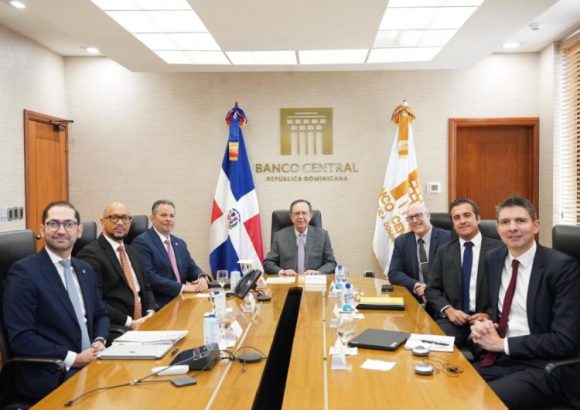
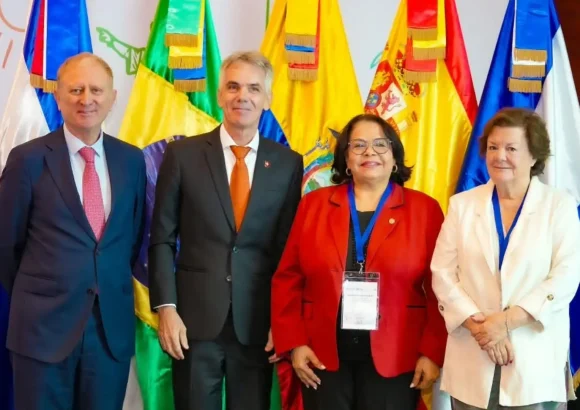
    Top agricultural leaders from two key inter-American organizations have sealed a new collaborative agreement to advance a unified regional agenda focused on lifting up agricultural resilience and productivity across Mesoamerica. The deal was reached during working meetings hosted at the headquarters of the Inter-American Institute for Cooperation on Agriculture (IICA) in Costa Rica, bringing together IICA Director General Muhammad Ibrahim and David Martínez, Executive Secretary of the Central American Agricultural Council (CAC).

    A public statement issued by IICA outlines that the joint agenda will center on three high-priority pillars critical to the region’s agricultural growth: expanding accessible agricultural insurance products, establishing regional guarantee funds, and refining targeted financing mechanisms to deliver much-needed support to small and large agricultural actors across the area. Beyond these core focus areas, the discussions also centered on deepening institutional collaboration around project design, streamlined resource allocation, and on-the-ground operational support for shared initiatives. As part of the growing partnership, Martínez formally extended an invitation for Ibrahim to take part in upcoming strategic CAC planning meetings scheduled for the coming weeks.

    To contextualize the partnership, the CAC operates as the official agricultural governing body under the Central American Integration System, tasked with developing and rolling out coordinated regional policies and cross-border projects spanning agriculture, forestry, and fisheries. Its membership includes the national agriculture ministers of eight regional economies: Belize, Costa Rica, the Dominican Republic, El Salvador, Guatemala, Honduras, Nicaragua, and Panama. At its core, the organization’s overarching mission is to advance regional food security and raise the global competitiveness of Central America’s agricultural sectors.

    One of the most urgent topics on the meeting’s agenda was preparing for the forecasted intense El Niño event projected to hit Central America later this year. Climatic forecasts warn that this event could bring extreme drought to the region’s vulnerable Dry Corridor, alongside sustained higher-than-average temperatures and significantly reduced rainfall across large swathes of agricultural land. During talks, both leaders prioritized developing data-driven decision-support tools built on peer-reviewed scientific evidence and actionable lessons drawn from past El Niño events to help farmers and policymakers adapt to coming climate shocks.

    Martínez’s official visit also served as an opportunity to reinforce long-term institutional ties between the two organizations, underscoring the critical value of coordinated regional collective action on a range of shared challenges. These cross-cutting issues include agricultural biosecurity, sustained food security, the complex links between agricultural disruption and human migration, and inclusive regional market development.

    For IICA, Central America has grown in strategic importance in recent years as a hub for project delivery, as well as technical and administrative support for national-level agricultural programs across the hemisphere. As such, IICA officials framed the deepened partnership with the CAC Executive Secretariat and other regional stakeholders as a core strategic priority for the institute’s work in the coming years, positioning the alliance to deliver tangible, long-term benefits for agricultural communities across Mesoamerica.

  • Service programme to become mandatory in secondary schools

    Service programme to become mandatory in secondary schools

    Barbados’ national secondary education system is rolling out an ambitious new Community Service Learning (CSL) initiative, crafted to redefine student engagement with local communities and expand learning beyond traditional classroom boundaries. Introduced as a core component of the Ministry of Education Transformation’s whole-child education framework, the programme will require compulsory participation from every student, spanning first form through sixth form. Its core goal is to shift learning focus from purely academic achievement to hands-on service development, leadership practice, and intentional cultivation of civic responsibility.

    Hannah Connell, the national coordinator of the new CSL initiative, shared details of the programme’s mission and rollout timeline in an interview with Barbados TODAY on Thursday. A former national hurdler who recently returned to Barbados after completing overseas study, Connell emphasized that the programme is far more than a standard volunteering requirement. It is structured to help young Barbadians forge a strong personal identity, clarify their sense of purpose, and gain tangible, real-world life experience that cannot be taught from a textbook.

    “For me, being part of this work is about embodying the same ethos of community investment that shaped so many of us,” Connell explained. “When people pour their time and energy into lifting you up, it changes your life forever. This programme gives students the chance to pass that impact forward to their own communities. Giving back gives you a profound sense of national pride, and it reminds you that you’re capable of more than just advancing your own goals—you have the power to lift up your community and help it grow.”

    The initiative traces its origins to advocacy from Minister of Education Transformation Chad Blackman, with planning kicking off earlier this year. Unlike many education reforms that focus solely on improving test scores, the CSL programme aligns with the Barbadian government’s broader push to expand learning beyond four walls of the classroom, prioritizing the holistic development of young people.

    Full implementation is proceeding in a phased, deliberate rollout across all secondary schools on the island to avoid disruption to existing school operations. Right now, the programme leadership team is holding working sessions with school administrations, training principals, identifying on-site school coordinators, developing standardized planning templates, and building out the sustained support systems required for long-term success. Connell stressed that while participation is mandatory for all students, the national ministry will provide ongoing support to every school to ensure rollout stays manageable and well-structured.

    Service activities will be tailored to each school’s unique strengths and community needs, Connell noted. Students have the flexibility to participate through existing school clubs or design new community-focused projects that align with their personal interests. The programme also rejects passive participation: instead of simply attending meetings or showing up for one-off events, students are expected to take active, ongoing roles in their community projects.

    A core long-term objective of the initiative is to prepare young people for life after graduation, Connell explained. By exposing students to hands-on professional and community experiences early on, the programme helps build the soft skills and real-world awareness that make graduates more competitive for employment and more prepared to navigate adult life. “When students leave school, they won’t just have textbook knowledge—they’ll have a voice, an understanding of how the world works, and the confidence to take on whatever opportunity comes next, whether that’s further education or full-time work,” she said.

    At its core, the CSL programme’s vision is to nurture well-rounded, civically engaged young people through intentional, meaningful community interaction. It balances academic priorities with investment in character growth, active citizenship, national pride, and practical life skills that will serve students long after they graduate. To expand the programme’s impact, Connell is calling on local community groups, churches, individual volunteers, and private citizens to partner with secondary schools to create safe, rewarding service opportunities for participating students. She added that the team will put tailored provisions in place to accommodate any group or individual that expresses interest in supporting the initiative, whether they want to contribute to existing projects or help develop new ones.

    Connell also addressed concerns from parents who may worry that the mandatory requirement will place extra stress on students or pull focus from academic coursework. “This programme was never designed to overwhelm students or take away from their academic work,” she reassured. “Its whole purpose is to build character, confidence, responsibility, and national pride, while giving students hands-on experience that prepares them for success across every area of their adult lives.”