作者: admin

  • Deadly Highway Collision Claims Three Lives Near August Pine Ridge

    Deadly Highway Collision Claims Three Lives Near August Pine Ridge

    A devastating Sunday night head-on collision has left three people dead and a tight-knit northern Belize community grappling with unthinkable grief, after a pickup truck carrying a group of local residents crashed into a sugar cane-hauling semi-truck just outside August Pine Ridge Village in the Orange Walk District.

    The fatal crash occurred when the red Ford F-150 pickup, traveling in the opposite direction of the 18-wheeler Freightliner truck that was pulling two wooden trailers full of harvested sugar cane, collided directly with the left front section of one of the trailers. The force of the impact was catastrophic: more than half of the pickup’s driver-side roof was sheared off, the vehicle careened out of control, and three of its occupants were killed instantly. Broken debris from the sugar cane truck still lines the side of the highway, a visible marker of the collision’s violent force.

    Authorities have officially identified the three victims as 35-year-old Byron Magaña, his partner 32-year-old Sherlin Henriquez, and 29-year-old Selvin Cortez, all local residents from nearby San Felipe and August Pine Ridge. Surviving the crash were Cortez’s wife and the couple’s two young children, who sustained non-fatal but serious injuries and remain hospitalized for treatment. Out of concern for the woman’s severe head trauma, law enforcement initially delayed informing her of her husband’s death.

    All three deceased worked together as drivers at Tillett’s Bus Service, and were close friends who often took weekend trips together. Polo Magaña, Byron Magaña’s father, told local outlet News Five that the group had headed to Corozal for their weekend outing, as they had done many times before. The grieving father said he still cannot process the sudden loss of his son and his partner, who had lived on his family property for the past year. “I cant believe it, I can’t believe that is happening to me. My good young son, very, very good,” he said. “I will really miss them. He and his wife. His wife was a very good person too.”

    For 17-year-old Christopher Cruz, the loss of his uncle Selvin Cortez has left an especially painful void. Cruz told News Five that he was getting ready for bed when family arrived to tell him about the crash, and he never expected the outcome to be fatal. When he reached the crash site, he broke down at the sight of the destroyed pickup. Cruz recalled that just recently, when he asked his uncle for help buying a motorcycle to launch his own welding business, Cortez agreed immediately without hesitation. “He was a good person. Whenever I wanted a favor he was always there for me,” Cruz said. “He helped me buy my bike. When I asked him he said, yes. He never said, no.”

    Assistant Superintendent Stacy Smith, staff officer for the district, shared preliminary details of the ongoing investigation, confirming the sequence of events that led to the tragedy. As authorities continue to piece together the full circumstances of the collision, three local families are now left to mourn lives cut far too short, while the surviving mother and her two young children begin what is expected to be a long physical and emotional recovery. The sudden tragedy has sent shockwaves through the small community, where nearly everyone connected to the victims is sharing in the pain of the loss.

    This report is adapted from on-the-ground coverage by Paul Lopez for News Five.

  • 53 deelnemers in Nickerie getraind voor werk in toerisme en dienstverlening

    53 deelnemers in Nickerie getraind voor werk in toerisme en dienstverlening

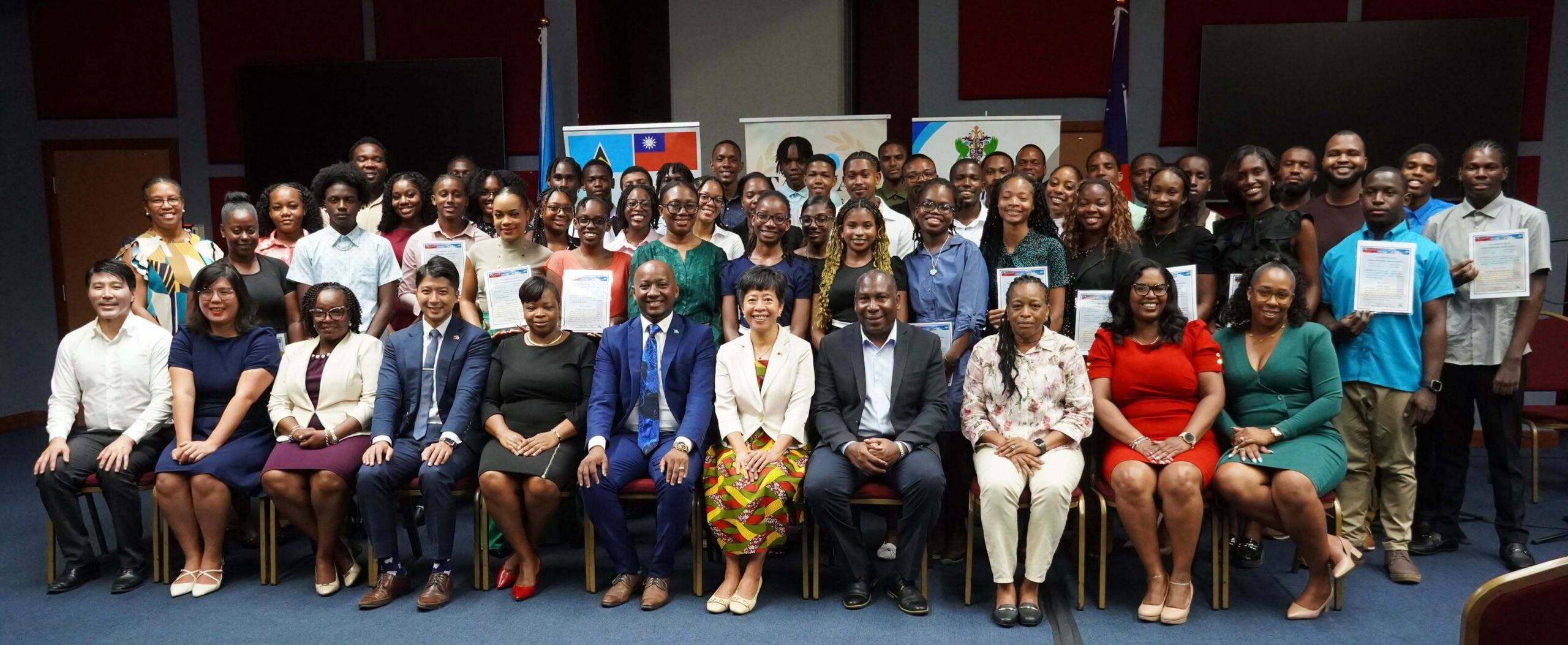
    Fifty-three job seekers in Suriname’s western district of Nickerie have successfully completed a fully government-subsidized professional training program to qualify as Customer Experience Officers, marking a key milestone in the country’s workforce development initiative aimed at boosting local employment.

    The five-day, practice-focused training was delivered by the Suriname Hospitality and Tourism Training Centre Foundation (SHTTC), and forms part of the national Leri Fu Feni Wroko initiative. This falls under the broader Training for Employment program, run by the Ministry of Public Health, Welfare and Labor of Suriname with financial and logistical backing from the Inter-American Development Bank (IDB). The curriculum centered on building high-demand core professional competencies, including customer-centric thinking, interpersonal communication, service delivery excellence, and professional workplace etiquette—skills that translate across multiple growing sectors of Suriname’s economy.

    At the recent certificate awarding ceremony, Deputy Minister Raj Jadnanansing emphasized that earning the professional certification is not the final outcome of the program, but rather the foundational starting point for participants’ new professional careers. All graduates will continue to receive personalized support and guidance as they pursue open roles in the local labor market. Jadnanansing noted that the government’s targeted investment in these skills training programs directly responds to the need to strengthen Suriname’s overall workforce, with a particular focus on expanding opportunities for young people in Nickerie.

    He also highlighted the growing range of employment opportunities opening up in the district, particularly in the expanding tourism sector. Western Suriname is projected to see strong economic growth in coming years, driven in large part by ongoing development in the region’s burgeoning oil and gas sector, which will create ripple effects across hospitality, customer service, and supporting industries.

    Representatives from all partner organizations, including the IDB, SHTTC, and the Nickerie district administration, echoed the deputy minister’s remarks, reinforcing the critical role of upskilling programs in reducing local unemployment and driving inclusive economic growth. They encouraged graduates to remain proactive in continuing their professional development and engaging with placement support services to secure sustainable employment.

    Looking ahead, the Surinamese government has confirmed that additional rounds of this fully subsidized professional training will be organized in Nickerie in the future, aligned with local labor market demand and the needs of job seekers in the district.

  • Late‑Night Ride Turns Fatal in Punta Gorda

    Late‑Night Ride Turns Fatal in Punta Gorda

    A devastating late-night traffic incident has shaken the Punta Gorda community in Belize, leaving one motorcyclist dead and a second rider in critical medical care following a violent crash on the Thomas Vincent Ramos Highway. The collision unfolded shortly after 10:00 p.m. on Sunday, April 19, 2026, when 24-year-old Brenton Cofius of Forest Home Village, operating a motorcycle northbound near the local “Dollar Sign” monument at the entrance of Punta Gorda, lost control of the vehicle. The motorcycle veered off the paved roadway before slamming into a stationary tree, leaving both Cofius and his 30-year-old passenger Carl Mangar of Elridgeville with severe head trauma.

    First responding police officers arrived at the scene within minutes to find both men lying on the highway, unconscious and badly injured. Emergency crews rushed the pair to a nearby medical facility for urgent treatment, but Cofius ultimately succumbed to his life-threatening injuries. Mangar remains hospitalized as he continues to fight for recovery.

    Local law enforcement has launched a full investigation into the circumstances of the crash, and the damaged motorcycle has been impounded for forensic examination. In response to widespread community speculation about a potential police chase leading up to the incident, ASP Stacy Smith, a staff officer with the Belize Police Department, confirmed that authorities have found no evidence to support that claim to date. “I had specifically placed that inquiry to the southern commander and he informed me that they have no information suggesting that so far,” Smith shared in an official briefing.

    As family members of the victims and local residents wait for answers from investigators, regional authorities have renewed their public safety call for all motorists, and particularly motorcyclists, to practice extreme defensive driving, especially after dark when visibility is reduced and hazard risks are elevated. The original report of the crash was adapted from a televised newscast transcript published by local media, which has remained a top trending topic for local audiences following the tragedy.

  • John Doe Identified as Emin Lino After Fatal Highway Crash

    John Doe Identified as Emin Lino After Fatal Highway Crash

    Nearly 48 hours after a fatal head-on collision on Belize’s Philip Goldson Highway left one man dead, law enforcement officials have confirmed the identity of the victim, closing an initial gap in the ongoing investigation. The deceased, previously listed as an unidentified John Doe, has been formally named as 30-year-old Emin Leonardo Lino, a long-time resident of Belize City. Lino’s common-law wife came forward to local authorities on Saturday, one day after the crash occurred, to confirm his identity, police confirmed in a recent update.

    The fatal collision took place Friday night in the vicinity of Mile 14 and a Half along the highway, where Lino was killed instantly on impact. Within days of the crash, law enforcement arrested 41-year-old Nelson W. Garcia Vega, a Salvadoran national and construction worker based in Burrell Boom Village, on suspicion of causing the fatal incident.

    On Monday evening, Garcia Vega made his first court appearance at the Belize City Magistrate’s Court, where he faces a slate of criminal and traffic charges. The most severe count is manslaughter by negligence, paired with multiple moving violations—most notably driving while over the legal blood alcohol limit. Appearing before the court without legal representation, Garcia Vega did not enter a formal plea during the initial hearing. Prosecutors did not raise objections to a bail request, leading the magistrate to set bail at $6,000 Belize dollars, plus two additional sureties. Garcia Vega met all bail requirements by late Monday afternoon and was released from custody ahead of his next scheduled court date.

    The case is set to resume on June 15, when prosecutors will formally present the full details of their evidence against Garcia Vega as the investigation into the crash continues. Police have not yet released additional details about the exact circumstances of the collision, including what vehicles were involved or whether any other people were injured in the incident.

  • Washington : Haiti’s Minister of Planning met with the IOM Directorate

    Washington : Haiti’s Minister of Planning met with the IOM Directorate

    On April 21, 2026, high-level diplomatic discussions took place in Washington D.C. between Haiti’s top planning official and leadership from the International Organization for Migration (IOM), centered on addressing Haiti’s deepening migration challenges and aligning international support with the country’s national development priorities.

    Sandra Paulemon, Haiti’s Minister of Planning and External Cooperation, convened the meeting with an IOM delegation headed by Director General Amy E. Pope. The delegation also included Michele Sison, director of IOM’s Washington-based global office, and Laura D’Elsa, Senior Advisor on Multilateral Partnerships.

    Haiti is currently grappling with a cascading set of interconnected crises that have reshaped its migration landscape: rising rates of internal displacement driven by instability, mounting pressure from large-scale forced returns of Haitian migrants from other countries, and growing strain on local communities that host displaced populations. Opening the talks, Paulemon publicly commended IOM for its unwavering commitment to supporting Haiti through these turbulent times, and laid out the Haitian government’s vision for future collaboration.

    Paulemon emphasized that any joint work between Haiti and IOM must center the Haitian government’s stated national priorities, particularly those outlined in the country’s National Pact for Stability and the Organization of Elections. She called for far better coordination of international interventions across the country, stressing that all programming must align with the pact’s core economic and social recovery objectives.

    Three core practical priorities anchored the discussions: expanding protection and support for internally displaced Haitians, strengthening reception services and assistance for returning migrants especially along border regions, and upgrading Haiti’s national migration management infrastructure.

    A key gap Paulemon highlighted during the meeting is the persistent geographic imbalance in existing international aid: the vast majority of current interventions are concentrated in Haiti’s capital, Port-au-Prince, leaving the country’s strategically critical border regions vastly under-served. She underscored that these border territories play an irreplaceable role in Haiti’s long-term economic and political stability, making increased investment there non-negotiable.

    Beyond addressing immediate migration challenges, Paulemon outlined a new development-focused vision that leverages the country’s diaspora to revitalize border economies. She noted that border zones are uniquely positioned as strategic hubs for cross-border investment, trade, and local value creation, and that deeper integration between the Haitian diaspora and these regional economies could unlock significant growth. To turn this vision into action, she proposed launching targeted pilot projects to support diaspora-led small and medium-sized enterprises, revitalize underperforming cross-border markets, and build out robust local value chains in key sectors including agriculture, trade, and logistics.

    For these initiatives to deliver long-term impact, Paulemon stressed that they must be embedded into existing national development pipelines, aligned with the Ministry of Planning’s existing monitoring and implementation frameworks, and backed by coordinated funding and support from the broader international community to ensure coherence and the ability to scale successful projects.

    The talks also covered opportunities for enhanced trilateral cooperation between Haiti, IOM, and the neighboring Dominican Republic. Key areas of potential collaboration include joint management of migrant returns, improved protection for vulnerable migrants on both sides of the border, and more streamlined coordination at official border crossings. Paulemon noted that stronger cross-border collaboration in these areas would boost the effectiveness of humanitarian response across the island and improve overall migration governance for both nations.

    Closing the meeting, Paulemon reaffirmed the Haitian government’s unwavering commitment to deepening its longstanding partnership with IOM, built on a foundation of mutual trust and shared responsibility for addressing Haiti’s most pressing challenges.

  • New KHMH Leadership Heading To CBA Negotiations

    New KHMH Leadership Heading To CBA Negotiations

    As the calendar hits April 20, 2026, the recently installed leadership team at Belize’s Karl Heusner Memorial Hospital Authority (KHMH) — the nation’s largest and busiest public health facility — is already facing its first critical test just days after announcing a new era of collaborative leadership. Fresh off pledges of partnership between hospital management and the KHMH Workers Union (KHMHAU), collective bargaining agreement (CBA) negotiations are days away, and core demands have already set the stage for tense discussions, with outcomes that could reshape working conditions and patient care for years to come.

    The talks mark the first major milestone in what both sides have framed as a new chapter for the struggling public hospital, opening with a thin veil of cautious optimism that is quickly giving way to high-stakes bargaining. For union leadership, returning to the negotiation table to hash out a new CBA is the top immediate priority, according to KHMHAU President Roy Briceno.

    “What me and my executive committee are focused on, first and foremost, is getting back around the table and launching these CBA negotiations,” Briceno stated. “That is our primary goal — it’s critical for our members and long overdue.”

    Sitting across from the union at the negotiating table is newly appointed Chief Executive Officer Sherine Reyes, who has laid out an institutional improvement plan focused on lifting outcomes for both patients and hospital staff. The plan, which won approval from KHMH’s board of directors, has been circulated for discussion across every level of the facility, from frontline unit teams to senior directorates.

    “We submitted our institutional improvement plan to the board, and it was approved. We’ve been sharing that plan with every member of staff over the past month, and we’re still holding discussions at every level of the organization,” Reyes explained. “Our goal is to make this institution better for the patients of Belize, and for the people who work here every day.”

    While the majority of staff have expressed support for Reyes’ vision of systemic improvement, mounting pressure has pushed the union to table bold demands. Across Belize, public sector workers have received two consecutive 4% salary increases in the past year — a benchmark that has amplified calls for long-overdue compensation adjustments at KHMH, where workers currently have no formal pension plan.

    Beyond salary adjustments, the union is also pushing for improved allowances and updated working conditions. At the top of their monetary demand is a 20% across-the-board pay raise for all KHMH staff, Briceno confirmed.

    “We’re looking at allowances, we’re looking at working conditions, and we’re looking at a pay raise — a 20% raise for all our staff here at KHMH,” Briceno said. “We don’t have a pension, and government has already given public workers two 4% raises, one last year and one this year. That’s why we’re pushing for a 20% compensation increase.”

    Reyes, who was widely favored by staff for the CEO role, acknowledges the high expectations placed on her new leadership but says sustainable progress requires balanced decision-making, not unconditional approval of every demand. She notes that credible leadership depends on integrity and hard work, not simply saying yes to secure popularity.

    “You mentioned early on that I was the favorite among staff, but you can’t stay popular just by saying yes to everything,” Reyes noted. “People need to see that you’re willing to put in the work, that you lead with integrity. You can’t agree to every request that comes across the table.”

    Her priority is striking a balance between upgrading staff benefits and working conditions, while also lifting the quality of care and services for the thousands of Belizeans who rely on KHMH for care each year. She admits the facility has long-standing shortcomings, but says she is committed to addressing gaps alongside staff, integrating public feedback to build a stronger hospital for current and future generations of Belizeans.

    “We know we have shortcomings, and we plan to work with our staff to fix them. We’re going to provide the necessary training, we’re going to take public recommendations seriously, and we’re going to build a better institution — not just for us, but for the generations that come after us,” Reyes said.

    Right now, both sides have expressed initial goodwill toward the negotiation process, but with a bold 20% pay raise already on the table, the coming weeks of talks will likely define the future of KHMH, its workforce, and the quality of care it delivers to Belize. This report was prepared by Shane Williams for News Five.

  • New KHMH CEO Takes on Staffing Uncertainty

    New KHMH CEO Takes on Staffing Uncertainty

    When Sharine Reyes stepped into the role of Chief Executive Officer at Karl Heusner Memorial Hospital (KHMH), Belize’s largest public healthcare facility, she did not inherit a typical leadership post. Instead, the new CEO immediately faced a web of interconnected staffing challenges that threaten to destabilize care delivery across the entire institution – issues rooted in both national policy shifts and regional economic trends.

    The most pressing question hanging over KHMH’s workforce right now is the future of Cuban medical professionals currently serving in Belize’s public health system. For years, Cuban doctors and nurses have filled critical gaps in Belize’s understaffed healthcare network, but uncertainty around the continuation of this bilateral arrangement has left hospital leadership scrambling to plan for potential sudden vacancies. Compounding this insecurity is a steady brain drain of locally trained nursing staff, who are regularly lured away by higher salaries and better career opportunities offered by larger regional economies and Belize’s own fast-growing private healthcare sector.

    These dual pressures have put KHMH’s long-term staffing stability in serious question, a concern that does not stay confined within the hospital’s walls. As Reyes emphasized in a recent interview, this is a national issue that impacts every community in Belize. “That is very concerning and it should be concerning to all of us as a nation since this affects us nationally,” she noted.

    Despite the magnitude of the challenges, Reyes remains optimistic that the Belizean government will deliver targeted solutions to stabilize the hospital’s workforce. She confirmed that following advocacy from KHMH leadership, the institution has now been added to a national nursing retention strategy designed to keep skilled local healthcare workers in the country. Initially, KHMH was excluded from the national plan, but after hospital leadership raised formal concerns and opened discussions with government officials, the decision was reversed. Officials have already requested staffing data and financial projections from KHMH to assess what level of state support the hospital needs to implement its own retention measures.

    Reyes made clear that she has confidence in the government’s ability to turn the plan into action. “But we have hopes in the government. They, I know they have a plan in place to address those challenges, so we’re hoping that whatever plan they have in place, that materialize,” she said. In response to questions from journalist Shane Williams about how the plan will specifically address nurse retention at KHMH, Reyes confirmed that government representatives have already signaled their commitment to supporting the hospital through this process.

    Looking ahead over the coming weeks, Reyes says that beyond tackling the immediate staffing crisis, one of her top priorities is to shine a spotlight on the innovative, trailblazing programs already advancing care at KHMH. While the staffing challenges remain significant, the new CEO is framing her tenure as an opportunity to both resolve systemic gaps and showcase the hospital’s ongoing contributions to public health in Belize.

    This report is adapted from a transcribed broadcast of the outlet’s evening news segment.

  • The truth about Cuba will not be silenced

    The truth about Cuba will not be silenced

    On April 19, at the historic Bay of Pigs, Cuba’s top leader Miguel Díaz-Canel Bermúdez — who serves as First Secretary of the Central Committee of the Communist Party of Cuba and President of the Republic — officially kicked off a nationwide mass movement called “My Signature for the Homeland” by adding his own signature first. This new initiative grows out of a call Díaz-Canel made during ceremonies marking the 65th anniversary of the proclamation of the socialist character of the Cuban Revolution, aiming to rally both domestic Cuban organizations and global allies to spread accurate, unfiltered information about Cuba across every region of the world. It also serves as a public, tangible manifestation of the Declaration of the Revolutionary Government, recently published by Cuban state newspaper Granma.

    In the days following the movement’s launch, millions of Cuban residents from the westernmost tip of the island to its eastern border have been participating in the signature drive, turning public squares and community parks across the country into gathering points for collective national expression. This Sunday, April 20, saw the first large wave of participation, with signature collections set to continue in coming days to allow people of all ages, professions, religious backgrounds and social sectors to take part. For every participant, adding a signature is more than a symbolic act: it is a public declaration that the Cuban people refuse to be intimidated or coerced by growing, repeated threats from the United States government.

    The core of the movement’s message echoes the text of the Revolutionary Government’s declaration, titled *Bay of Pigs is Today and Forever!* The declaration emphasizes that Cuba is a nation rooted in centuries of shared history and unshakable collective convictions. It frames the Cuban people as a peace-loving, solidarity-focused population that builds its future through daily work and persistent reclamation of its right to self-determination. Just as 65 years ago, Cuban forces defeated foreign-backed aggression on the sands of the Bay of Pigs under the iconic rallying cry “Homeland or Death!”, the declaration affirms that the Cuban people will once again secure victory in their ongoing defense of national sovereignty and the socialist system they have chosen.

    Across the island, the signature drive has underscored a unified national position: the Cuban people will never surrender their fundamental right to chart their own independent course of historical development, even in the face of long-standing external pressure and intervention.

  • We will defend our Homeland at any cost

    We will defend our Homeland at any cost

    Sixty-five years after Cuban forces secured the first major military defeat of U.S. imperialism in the Americas at the Bay of Pigs, tens of thousands of Cubans across every province of the island have come together to participate in the nationwide “My Signature for the Homeland” movement, throwing unified public support behind the Revolutionary Government’s latest declaration of sovereignty.

    Across the country, the movement brought together Cubans of all generations, professions and backgrounds, each adding their name to the statement to reaffirm national unity, reject long-standing foreign intervention, and defend the Cuban Revolution against ongoing external pressure.

    In the southern coastal province of Cienfuegos, crowds gathered at José Martí Park to kick off local activities. Damián Cosme, an educator and recipient of Cuba’s Hero of Labor honor, emphasized his unwavering commitment to the revolutionary cause, stating he was prepared to fulfill every demand the Revolution placed before him, even giving his life if called upon. Anay Morera Guillen, secretary of the Central Workers’ Union of Cuba in Cienfuegos, added a clear message for the global community: “We are here to tell the world that Cuba will not surrender. Now, when the Homeland needs us most, we are more united than ever to overcome every adversity.”

    Across central Cuba in Sancti Spíritus, the movement extended beyond collective public action to become a intergenerational family commitment for many participants. Transportation worker Andrés Concepción traveled to the signing event with his wife Yudiana, his adult son Dairon, and his young daughter Dina, describing the act as a personal and family duty driven by pure conviction. “These are moments to give a resounding yes to our country,” Concepción explained. “It’s the legacy from colonial times, but it’s also about continuity, which is of utmost importance. For us, it’s not over. There will be Cuba and the Revolution forever.” He framed his participation as a passing of legacy from his parents’ generation to his own, and on to his children and future descendants, noting no one had pressured him to attend: “It is a way of demonstrating to imperialism and the entire world the unity we have as a people, our rejection of the United States blockade, our repudiation of war, violence, and terrorism, and the commitment to peace that we have always had as a nation.”

    In Bayamo, the historic hub of Granma province, generations of residents gathered in Revolution Square to echo the resolve that carried Cuba to victory at the Bay of Pigs, reaffirming that national freedom is non-negotiable. Representing the country’s veteran revolutionary combatants, Reynaldo Fernández Moreno denounced the ongoing harassment from the U.S. government: “The United States has not relented in its efforts to crush the Cuban Revolution through various plans of aggression to divide and destabilize us.” He also called out what he described as Washington’s hypocrisy, noting U.S. officials falsely accuse Cuba of supporting terrorism while carrying out thousands of subversive campaigns intended to break the Cuban people’s capacity for resistance.

    At the Valle del Yabú Agricultural Enterprise in Santa Clara, veteran tourism worker Manuel Soliño Guevara, another Hero of Labor of the Republic of Cuba, added his signature after completing a day of volunteer farm work. He reaffirmed his commitment to the homeland, echoing the iconic revolutionary slogan first introduced by Fidel Castro 66 years prior: “Homeland or Death.” Soliño emphasized that unity of purpose is critical to protecting peace and preventing foreign military aggression, noting that Cuba has never posed a threat to any other nation.

    In Santiago de Cuba, widely known as the cradle of the Cuban Revolution, commemorations for the 65th anniversary opened with flag-raising ceremonies at the province’s most iconic historic sites. Young activist Yesenia Acuña Borrero spoke at the Revolution Plaza named for fallen independence hero Antonio Maceo, in front of his equestrian monument, reaffirming: “Although we are a people who love peace, our flag will be defended at any cost.” Nearby, at the Guillermón Moncada Stadium, hundreds of residents of all ages gathered to celebrate the anniversary, which stands as a permanent demonstration of the Cuban people’s refusal to tolerate foreign interference or invasion. Local resident Yaney León added: “Without a doubt, I also take this opportunity to pledge my support for the Homeland, for our dignity, and for peace.”

    In eastern Cuba’s Holguín province, thousands of signatories used their participation to reaffirm Cuba’s long-held core commitment to peace, paired with the unshakable conviction that defending national sovereignty is a supreme duty for all Cubans. At a patriotic gathering in Calixto García Park in the provincial capital, young public health professional Elaine Cruz Bobas spoke before the signature drive began, stating: “The truth of these people will not be silenced. The suffering of millions of Cubans as a result of the blockade and the brutal economic war is an act of genocide.”

    At José Martí Park in Ciego de Ávila, provincial economy and planning worker Edilia Gutiérrez Cordero arrived early on the Sunday of the event. While her daily work centers on balancing budgets and calculating achievable development targets, on this day her task was to add her name to the statement of national commitment. “My signature for the Homeland is a way of saying: We are here,” she said, her voice cutting through the park’s bustle. She repeated the line firmly, standing against what she described as escalating imperialist threat. Gutiérrez explained that her signature carried both a yes and a no: it was a yes to Cuban sovereignty and national presence, and a resounding no to the war foreign powers seek to impose on the island. Even amid widespread economic hardship caused by the decades-long U.S. blockade, she described herself as happy: “Every day I make Cuba the way I want, because I feel free in the country where I was born. That freedom is not an empty phrase. It is the freedom to choose to stay, to build alongside my compatriots, and to stand in solidarity.”

    In Las Tunas, hundreds of residents gathered in José Martí Square in front of a monument to the national hero to condemn the U.S. blockade and repeated threats from the U.S. government. University professor Carlos Alberto Suárez Arcos noted that the gathering was marked by hope and energy, pointing out that global solidarity actions for Cuba continue to grow because the island remains a powerful global symbol. “It is not a weapon of mass destruction, it is a soul of mass construction,” Suárez Arcos said.

    In Camagüey’s Victoria de Girón neighborhood, the neighborhood named for the 1961 Bay of Pigs victory, hundreds of local residents gathered to add their signatures. Two young participants shared powerful reflections on the meaning of their participation. University of Camagüey student Yolanda Molina Castillo emphasized that her signature was no empty gesture, noting: “History confirms our tradition of struggle, and the examples are written in the blood of thousands of men and women who fell for this freedom and peace we enjoy.” Juan Carlos Blanco, another young Camagüey resident, told reporters his signature was a binding oath: “I signed for Cuba and for Fidel, for the Homeland, the Revolution, and Socialism. My signature is my commitment to defend our future, our principles, and our sovereignty.”

    In the eastern border province of Guantánamo, at the historic Arroyo Hondo agricultural complex where Cuban independence leaders José Martí and Máximo Gómez relaunched their revolution in 1895, agricultural worker Taylienis Acosta Jiménez put forward a clear message to U.S. political leaders threatening Cuba. “Here are my hands, if needed to save the Revolution,” she said. “I am like my people: peaceful. Gringo, think before you attack us. If you do, there will be deaths and grieving families on both sides; something very painful. It is your responsibility to prevent it.”

  • Bread Prices Rise at Sunnyside Bakery

    Bread Prices Rise at Sunnyside Bakery

    For Belizean households that rely on affordable daily staples to make ends meet, a new round of price increases at one of the country’s popular local bakeries is adding another layer of financial strain. Starting April 20, 2026, Sunnyside Bakery has raised prices across a range of its best-selling baked products, a change that directly impacts everyday shoppers who purchase bread and buns on a regular basis.

    The bakery’s leadership confirmed the price adjustments are a direct response to skyrocketing raw material expenses that have squeezed profit margins across Belize’s food production sector. Under the new pricing structure, customers will now pay $4.50 for both raisin buns and wheat bread, while plain non-raisin buns and Creole bread carry a new price tag of $3 per unit. In a public statement, the bakery emphasized that the price hike was not a voluntary choice, but an unavoidable adjustment forced by broader market conditions.

    Businesses across Belize have been grappling with sustained increases in both wholesale input costs and day-to-day operating expenses for months, and Sunnyside Bakery is far from alone in passing these additional costs on to consumers. The impact of even small increases on staple goods resonates deeply across the country, where many working families are already stretched thin by rising bills across every category of household spending: food, energy utilities, and public and private transportation have all grown more expensive in recent months.

    What may seem like a minor uptick in the cost of a daily loaf of bread adds up quickly for households that purchase baked goods regularly, putting additional strain on already tight monthly budgets. This local price adjustment offers a clear, on-the-ground look at the broader economic pressures that are reshaping daily life for ordinary Belizeans, as cost of living increases continue to impact core household expenses. This report probes the root causes of this latest price increase and examines what it reveals about the wider economic challenges facing the nation.