作者: admin

  • WATCH: ABLP Leader says he wants a strong mandate to better face global challenges

    WATCH: ABLP Leader says he wants a strong mandate to better face global challenges

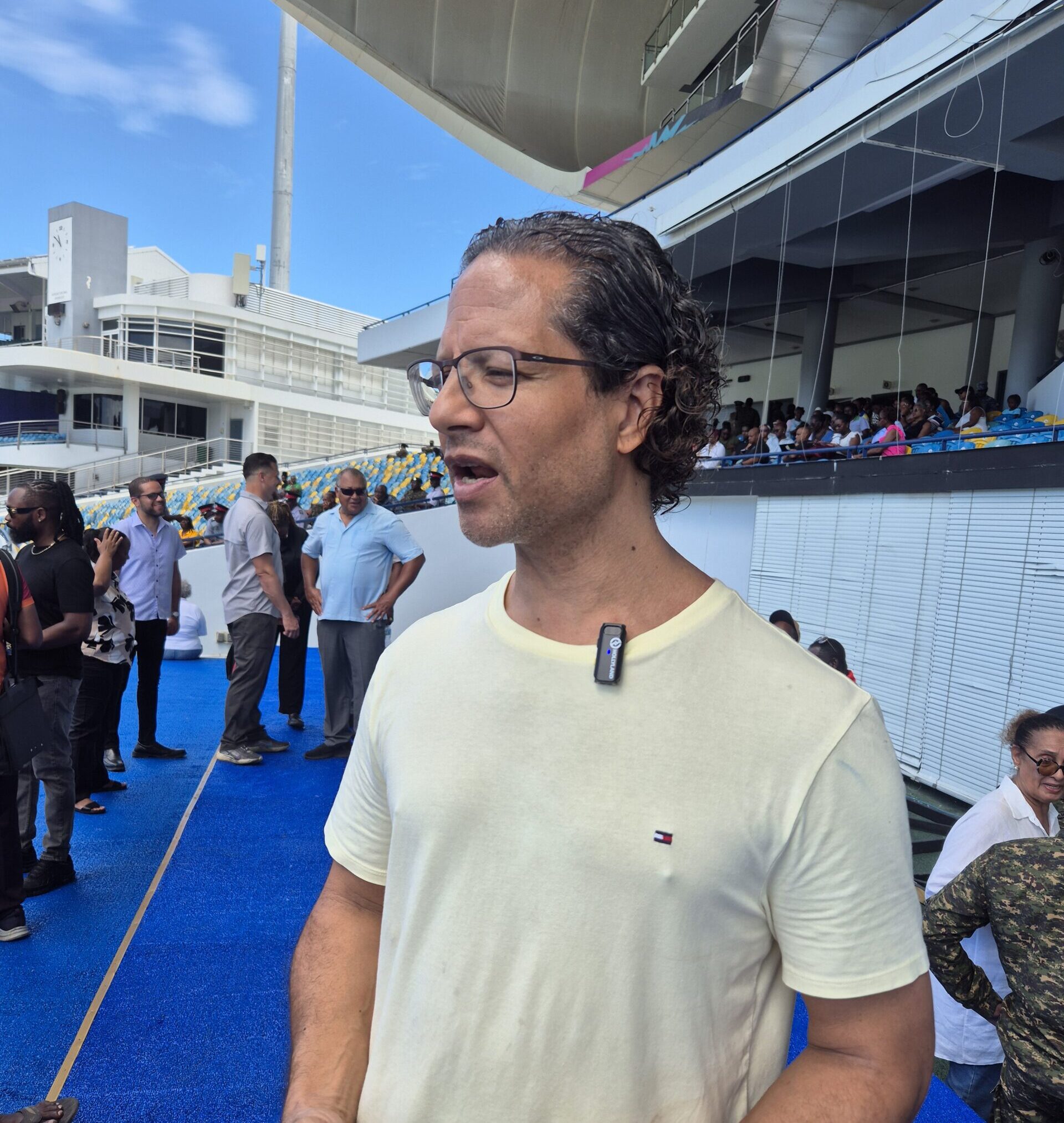
    As campaigning ramps up ahead of the April 30 general election in Antigua and Barbuda, Prime Minister Gaston Browne has defended his decision to call an early vote, framing the move as a critical step to prepare the nation for mounting global uncertainty. Speaking at the official launch of the Antigua and Barbuda Labour Party’s election manifesto on Monday, Browne laid out the core logic behind the early poll: his administration needs a renewed, strong mandate from voters to deliver steady leadership and robust international representation at a time of global volatility.

    Browne emphasized that holding an early election eliminates the distraction of looming campaign logistics while the country confronts pressing cross-border challenges. “We don’t want to be in a situation in which we have to deal with these global challenges and that we have to look behind our backs preparing for the election,” he told gathered party supporters. By going to the polls early, the government can secure a full five-year term of public backing immediately, allowing it to govern decisively without lingering political uncertainty over the next few years.

    The Prime Minister rejected claims that the early election was called for partisan political convenience, stressing that the decision is rooted entirely in national interest. “We do so not for convenience, but for clarity. Not for politics, but for your future,” he said. Browne reiterated that a unified government with overwhelming public support is a non-negotiable foundation for effectively advancing Antigua and Barbuda’s interests on the global stage, adding “Our nation must have a strong government supported strongly by our people.”

    In an address that balanced candor and optimism, Browne also acknowledged the ongoing economic pressures that ordinary households and families are facing across the country. Even as he recognized these current struggles, he expressed firm confidence that living conditions will continue to improve in the coming years, regardless of external headwinds. With less than a month remaining until voting day on April 30, campaign activity across the country is accelerating as parties make their final cases to voters.

  • “Botanical Bridges 2026” opens in Santo Domingo to advance biodiversity cooperation

    “Botanical Bridges 2026” opens in Santo Domingo to advance biodiversity cooperation

    In Santo Domingo, the Dr. Rafael M. Moscoso National Botanical Garden has marked a major milestone for global botanical science by officially inaugurating the international congress “Botanical Bridges 2026”, an initiative centered on advancing cross-border biodiversity conservation and strengthening collaborative research across the Latin American and Caribbean region. The opening ceremony, hosted at the venue’s iconic Domus Grande space, wove together vibrant cultural performances, formal addresses from leading national institutions, and opening academic dialogues, all framed to celebrate and center Dominican environmental and cultural heritage.

    Throughout the inaugural proceedings, participating institutional representatives repeatedly underscored the urgent need for coordinated action among botanical organizations worldwide to address accelerating biodiversity loss. Lina Ramírez, a representative of the regional botanical garden network, told attendees that coordinated, cross-institutional joint efforts are not just beneficial, but essential, to successfully protect at-risk ecosystems and guarantee that natural resources can be used responsibly and sustainably for future generations.

    For his part, Pedro Suárez, director of the host Dr. Rafael M. Moscoso National Botanical Garden, reaffirmed the institution’s longstanding dedication to advancing original botanical research and expanding public environmental education. He also highlighted that the timing of the congress holds special meaning, as it coincides with the garden’s 50th year of operations, research, and community engagement.

    A key emotional and ceremonial highlight of the opening event was a formal tribute to Brígido Peguero, a pioneering Dominican biologist whose decades of work have fundamentally expanded global understanding of the Dominican Republic’s unique native flora. The ceremony also drew a roster of high-profile stakeholders, including Dominican First Lady Raquel Arbaje and Environment Minister Paíno Henríquez, alongside dozens of leading academic researchers and international delegation representatives from botanical institutions across the globe.

    Moving forward, “Botanical Bridges 2026” will operate as an ongoing, open platform for scientific knowledge sharing and the cultivation of long-term cross-border partnerships, all aimed at advancing evidence-based biodiversity protection and inclusive sustainable development across the region.

  • Police roll out strategy to tackle recent spike in violence

    Police roll out strategy to tackle recent spike in violence

    BASSETERRE, St. Kitts – In the wake of a string of fatal shooting incidents that have claimed three lives across the island over the past fortnight, law enforcement leadership has rolled out a multi-pronged, cross-agency strategy to reverse the alarming spike in violent crime and restore public safety.

  • Column: Corruptie als systeem: wie houdt nog toezicht op de toezichthouders?

    Column: Corruptie als systeem: wie houdt nog toezicht op de toezichthouders?

    A long-standing pattern of unaddressed misconduct at the Surinamese state-owned enterprise Canawaima has pulled back the curtain on deep-rooted systemic failures in the oversight of the country’s public sector entities, a pattern that has persisted across successive government changes.

    Every transition of power in Suriname follows a familiar routine: supervisory boards (Raden van Commissarissen, or RvCs) and executive teams at all state-owned companies are replaced. The theory promises fresh leadership, a new strategic direction, and strengthened independent oversight. In practice, however, the only meaningful shift tends to be who gets to hold the levers of power – while long-standing structural problems remain untouched.

    The core mandate of a supervisory board is clear: to provide independent oversight, enforce accountability, and safeguard good governance. But what happens when the overseers themselves become the source of corruption and mismanagement? Long before many newly appointed supervisory boards and executive teams have even settled into their roles, allegations of impropriety have already emerged across multiple state entities. Irregularities have been flagged at Suriname’s Telecommunications Authority, the Central Milk Board, and the State Health Insurance Fund. At gold mining firm Grassalco, investigations have been repeatedly announced, but no results have ever been made public, and no officials have been held to account for wrongdoing.

    The latest controversy to erupt centers on Canawaima, the critical ferry and transport enterprise connecting Suriname and Guyana. What is unfolding at the company is no isolated scandal – it is a clear symptom of a much deeper systemic rot across Suriname’s public sector. The Canawaima trade union, led by Dayanand Dwarka, has already formally revoked its confidence in the company’s supervisory board and sounded the alarm over pervasive misconduct.

    The allegations leveled against the board are severe: conflict of interest, widespread financial mismanagement, and the routine overstepping of institutional authority. Rather than limiting itself to independent oversight, the board has directly inserted itself into the day-to-day operational management of the company. In effect, the referee has stepped onto the field to play the game – while also controlling the final score. This is not simply poor governance; it is outright abuse of power.

    The accusations go even further. There is documented evidence that financial flows within the company are routed through opaque structures linked directly to supervisory board members. These include shell companies registered in the names of board members’ family members, questionable invoicing practices, and entirely non-transparent transactions. Far from being isolated missteps, these patterns point to a systemic scheme that diverts public funds toward private gain.

    Crucially, Canawaima does not have to be a troubled enterprise. It boasts strong revenue-generating capacity and holds a strategically vital role in cross-border trade and connectivity between Suriname and Guyana, moving massive volumes of capital through its operations annually. Yet for years, that revenue has been captured by executives and overseers who have manipulated the system for their own benefit. The core problem is that state-owned enterprises are not being governed – they are being hollowed out from the inside, even as top officials draw exorbitantly high public salaries.

    A bitter power struggle has paralyzed Canawaima’s operations. The company’s terminal manager has come under intense fire from the board, while he in turn accuses the supervisory board of repeated overreach and unethical behavior. The end result is institutional chaos that has strained service delivery, leaving ordinary Surinamese citizens to bear the consequences of elite infighting and corruption.

    Despite the mounting evidence, no decisive action has been taken to address the crisis. Suriname’s president has repeatedly pledged to crack down hard on corruption and promised that no wrongdoer will be protected. But on-the-ground reality tells a different story: dossiers of alleged misconduct pile up, investigations drag on indefinitely, and meaningful sanctions are never imposed. The current system does not correct itself – it protects insiders. Corruption is no longer an aberration; it has become a profitable business model, one that survives on public funds and persists because there are no consequences for misconduct.

    The question that lingers over Suriname’s public sector is as simple as it is confronting: who will watch the watchmen? As long as supervisory boards themselves face credible allegations of corruption and self-dealing, the entire concept of independent oversight becomes a meaningless farce. Without credible oversight, good governance becomes nothing more than an illusion, and state-owned enterprises become nothing more than playthings for powerful personal interests.

    What Suriname needs right now is not another unpublicized investigation that will be buried in a government drawer. What it requires is genuine political will to intervene impartially, hold wrongdoers to account regardless of their standing, and attach real consequences to misconduct. Until that happens, the broken system will remain intact – and ordinary Surinamese society will continue to pay the price.

  • NASCAR rising star named SVG tourism ambassador

    NASCAR rising star named SVG tourism ambassador

    A rising young star in NASCAR’s O’Reilly Auto Parts Series, Rajah Caruth, who traces his family heritage to St. Vincent and the Grenadines, has entered into an official six-month partnership as a brand ambassador for the St. Vincent and the Grenadines Tourism Authority (SVGTA), alongside Caribbean entertainment and lifestyle leader TEMPO Networks.

    At 23 years old, Caruth has already cemented his place in NASCAR history as one of the most electrifying young competitors to climb the ranks of the sport’s top tiers. His path to professional stock car racing is nothing short of extraordinary: he cut his teeth competing in virtual iRacing simulator events before working his way up to physical NASCAR tracks, a journey that stands as a testament to his relentless grit, raw natural talent, and ability to break long-standing barriers in the motorsports world.

    For Caruth, this new ambassadorship role is far more than a professional partnership—it is deeply personal. The SVGTA highlighted in an official press statement that the driver’s parents are of Vincentian descent, giving him an unbroken, direct tie to the Caribbean island nation that he now carries onto the global motorsports stage with immense pride.

    As part of the collaboration, co-branded marks for SVGTA’s “Discover SVG” campaign and TEMPO Networks will be featured across several of Caruth’s key racing assets throughout the 2024 racing season. This placement will deliver unparalleled high-visibility exposure for the destination during NASCAR events that reach millions of viewers across the globe.

    TEMPO Networks, which boasts a multi-platform footprint that spans the entire Caribbean and reaches global Caribbean diaspora communities, will act as the initiative’s lead media and storytelling partner. The network will carry Caruth’s personal journey and the unique story of St. Vincent and the Grenadines (SVG) to audiences across every region of the world. As a platform dedicated to elevating the full breadth and diversity of Caribbean culture, TEMPO will use this partnership to place SVG at the center of a broader regional narrative, introducing the island destination to entirely new global audiences and untapped tourism markets.

    The partnership will make its official public debut on May 2 during the Andy’s Frozen Custard 300 at Texas Motor Speedway. Throughout the remainder of the racing season, additional planned activities include on-the-ground documentation of Caruth’s upcoming first official visit to SVG, where he will explore and share his family heritage with his global fanbase.

    Caruth will also use the partnership to bring his youth mentorship work and his popular “Racing with Rajah” STEM education curriculum to communities across SVG and the wider Caribbean diaspora. The collaboration will also launch co-branded travel experiences that blend the high-octane excitement of NASCAR with the unique tropical tourism offerings of St. Vincent and the Grenadines.

    All three partner parties have expressed overwhelming enthusiasm for the collaboration and its far-reaching potential. “It means a lot to officially be able to represent St Vincent and the Grenadines and Tempo, and hopefully drive not just tourism to the country but awareness to the Caribbean diaspora and community,” Caruth shared in a statement. “I am proud of my heritage and exude it daily with my practices and core values.”

    Kishore Shallow, SVG’s Minister of Tourism, shared that the nation is deeply proud of Caruth’s trajectory as an emerging global sports leader. “Partnering with him and TEMPO marks a significant milestone, with tremendous potential ahead,” Shallow noted. “Rajah embodies the energy and ambition of our people, and his story is a powerful reflection of who we are. Showcasing his journey through TEMPO Networks to audiences worldwide is both inspiring and impactful, further positioning our country as a vibrant and compelling tourist destination.”

    Frederick A. Morton Jr., founder and CEO of TEMPO Networks, echoed Shallow’s optimism, noting that for 20 years, TEMPO has centered its mission on amplifying Caribbean culture to global audiences. “This partnership reflects exactly where we’re going next,” Morton explained. “Rajah is an extraordinary young talent whose rise is inspiring a new generation, and St. Vincent & the Grenadines is one of the Caribbean’s most breathtaking and dynamic destinations. Through this partnership, we are connecting the Caribbean to new audiences, new markets, and new possibilities.”

  • Ali defends takeover of Georgetown roads from City Council

    Ali defends takeover of Georgetown roads from City Council

    On Monday, April 20, 2026, Guyanese President Irfaan Ali publicly pushed back against fierce opposition criticism of his administration’s controversial move to seize control of more than 50 major roads in Georgetown from the city’s elected Mayor and City Council, dismissing accusations that the power grab amounts to authoritarian overreach. Speaking at the official opening of the upgraded Aubrey Barker Road — a key corridor now extended from Mandela Avenue to the Ogle/Eccles bypass — Ali did not shy away from laying out his ruling party’s clear political ambitions ahead of upcoming Local Government Elections, expected to be held later this year.

    The President openly confirmed that the People’s Progressive Party Civic (PPP/C) is aiming to win a majority of the 30 available City Council seats, stating that his party’s intentions have never been ambiguous. “Yes, I’m interested in seeing a People’s Progressive Party Civic-led city council. I’m interested in seeing strong government, strong leadership at the City Hall so don’t guess what I’m saying. My intentions are clear and the intentions of the PPP Civic are clear as ever. We want a chance to run this city because the city deserves better than what it has today,” Ali told attendees at the commissioning event.

    The opposition bloc A Partnership for National Unity (APNU) has repeatedly argued that the road takeover is a politically motivated power play, pointing out that Georgetown has long been an opposition stronghold that does not favor the PPP/C. Ali pushed back forcefully against these claims, setting out what he framed as a purely development-focused rationale for the policy shift. “Let me set the record straight. We’re not taking roads for politics. We are designating roads as public roads in the cause of progress. We have no political interest in dispossessing any entity,” he told the assembled crowd.

    Under the new designation, the rehabilitated Aubrey Barker Road will now fall under the management and maintenance purview of Guyana’s Ministry of Public Works, rather than remaining under city council control. Ali emphasized that this change was necessary to prevent the roadway from falling into the same state of disrepair that plagues dozens of other city streets under current municipal management. Rejecting claims that the move is politically motivated, the President framed the central government’s intervention as a responsible approach to governance that puts public needs above partisan gain. “We’re not playing politics with potholes. We’re not campaigning with congestion. We’re not grandstanding with gridlock. We’re governing and governing requires responsibility,” he said.

    Ali laid out a long-term vision to transform Georgetown into the most dynamic and well-developed city in the Caribbean, noting that this goal depends on modern, reliable infrastructure that can keep pace with rapid growth. He explained that the surge in vehicle ownership across the capital has created urgent demand for upgraded road networks that boost traffic safety and support higher economic productivity, a need the current municipal administration has failed to meet. “It’s not merely to transfer responsibility but is to accelerate modernisation under our national development agenda,” he added, confirming that the designation of more than 50 Georgetown roads as public roads follows this same development-focused logic.

    The President also announced plans to expand central government intervention beyond road management, in the wake of a recent poorly executed national clean-up campaign that left much of Georgetown’s drainage network clogged with silt, overgrown vegetation and discarded solid waste. Ali said the central government would take over drainage and flood control responsibility from the City Council, dismissing the ongoing partisan blame game and promising sustained action with public support. “I am not interested in this blame game. If they don’t want to open the koker and if they don’t want to maintain the drain, we will show the people of this city we’re ready to do it and with their support, we will do it continuously,” he said.

    For context, Georgetown’s City Council has argued for decades that its ability to deliver basic services has been systematically undermined by central government policy. Dating all the way back to 1994, municipal leaders have complained that the central government has repeatedly blocked the council from accessing critical new revenue streams — including revenue from a municipal lottery, littering fines, waste-to-energy projects, and adjusted property rates and taxes — that would allow it to properly fund infrastructure maintenance and public service operations.

  • War, lower green energy output drive up fuel surcharge

    War, lower green energy output drive up fuel surcharge

    St. Vincent and the Grenadines’ main electricity provider VINLEC announced this Monday a notable uptick in the fuel surcharge that will appear on customers’ April electricity bills. The new surcharge rate will land at EC$0.6650 per kilowatt-hour, marking an increase of EC$0.116 from the March rate of EC$0.5490.

    In an official press statement published this week, the utility firm detailed the two key drivers behind the price adjustment. First, international benchmark fuel prices have climbed significantly in recent weeks, raising the operational cost of running fossil-fuel-powered generation facilities. Second, output from the company’s renewable energy assets has dropped below typical levels, forcing a greater reliance on more expensive fuel-based electricity generation to meet customer demand.

    VINLEC also emphasized that global fuel price volatility is being heavily shaped by the persistent military conflict in the Middle East, a region that plays a critical role in global energy supply chains. The ongoing tensions have disrupted energy markets and pushed up crude and fuel prices across the globe, a spillover effect that reaches small island energy providers like VINLEC.

    To address potential customer concerns, the company clarified the nature of the fuel surcharge itself. It explained that the surcharge is a 100% pass-through cost designed solely to recoup what VINLEC spends on fuel for power generation. The firm explicitly stated that it earns no profit from this specific charge, framing the adjustment as a necessary response to external market pressures outside of its control.

    Looking ahead, VINLEC reaffirmed its long-standing commitment to delivering consistent, safe, and reliable electricity service to all residential and commercial customers across the region. To help customers offset the impact of the higher surcharge on their monthly bills, the company is urging users to adopt energy conservation habits where practical, from turning off unused appliances to adjusting cooling system usage.

    Customers with questions or concerns about the new surcharge or their upcoming April bill are directed to reach out to VINLEC’s Customer Services Department through multiple channels: via email at [email protected], by phone at 456-1701 (extensions 237 and 238), or through the company’s official Facebook page.

  • Regering belooft ingrijpen bij Canawaima: RvC onder druk na crisis

    Regering belooft ingrijpen bij Canawaima: RvC onder druk na crisis

    A brewing governance scandal at Suriname’s state-owned Canawaima Management Company (CMC) erupted into open industrial action this week, prompting the country’s transport ministry to commit to sweeping leadership changes at the firm, which operates the critical cross-border ferry link between Suriname and Guyana.

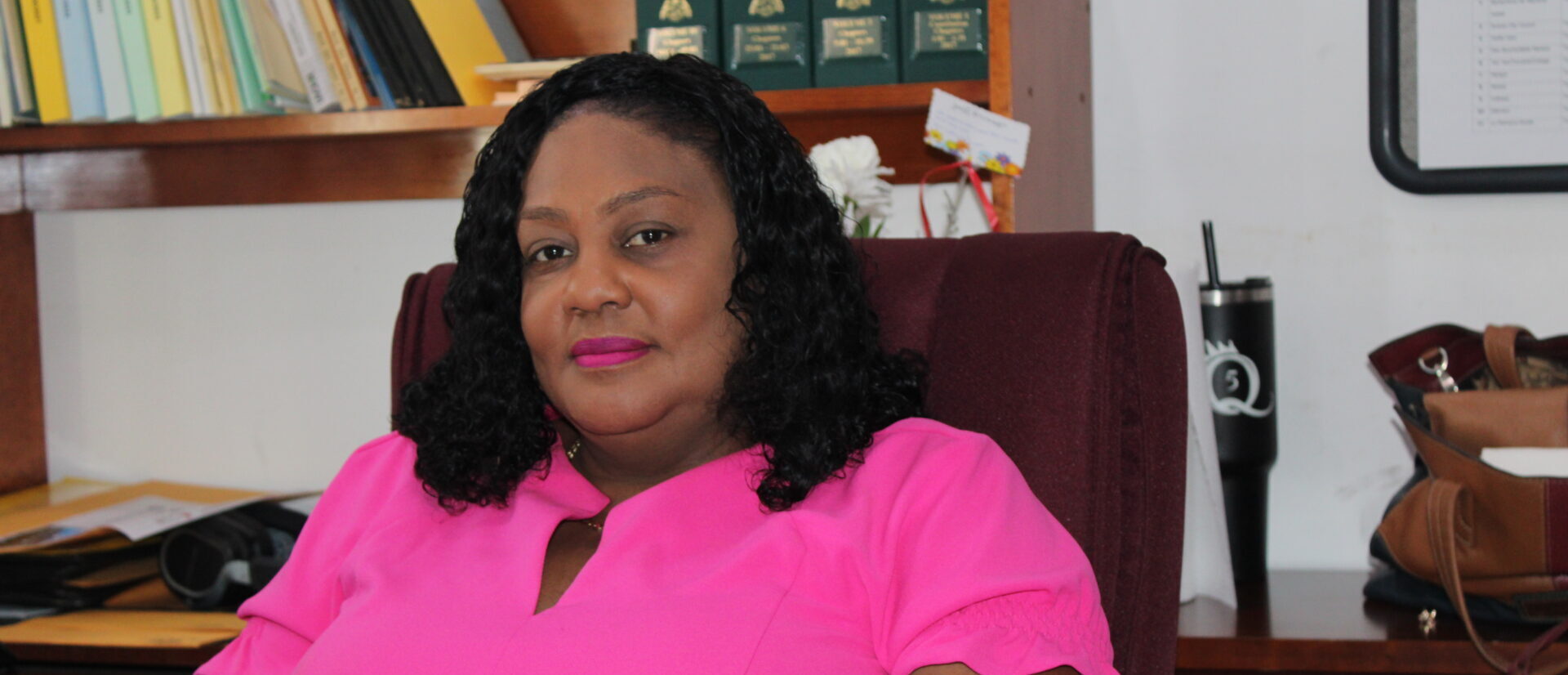
    The crisis escalated sharply on Monday when employees launched a short strike to protest alleged conflicts of interest and improper operational interference by CMC’s Supervisory Board (RvC). Following the industrial action, union leadership pulled its full confidence in the current board and formally called on Minister of Transport, Communication and Tourism Raymond Landveld to step in to resolve the mismanagement.

    Dayanand Dwarka, chair of CMC’s employees’ union, told reporters after meeting with the minister that the situation had become untenable for staff. “What has already come to light is not only confirmed to be true, it is likely just the tip of the iceberg of broader irregularities within the company,” Dwarka said. In response to the union’s demands, Landveld gave a firm commitment to intervene in the company’s leadership, after which workers agreed to resume their duties.

    The call for government intervention was not limited to union representatives. Lesley Daniël, CMC’s newly appointed terminal manager, also submitted a formal written request to Landveld, urging urgent and decisive action to address the internal turmoil. The walkout immediately disrupted daily ferry operations connecting Suriname and Guyana, a key trade and travel route that highlights the stakes of the ongoing crisis for cross-border activity.

    Two senior members of the current Supervisory Board — president-commissioner Richenel Vrieze and board member Edgar van Genderen — defended their actions in a separate letter sent to Landveld on Monday. The pair argued that the board was forced to intervene directly in daily company operations because senior management failed to address persistent disorder in both the ferry service and the company’s human resources structure.

    The board leaders did not directly address the specific allegations of conflict of interest leveled against them, including claims related to payments to companies that Vrieze holds personal stakes in. They confirmed that invoices and other financial documentation for these companies have not yet been submitted to CMC’s executive leadership, claiming the documents were stolen while Vrieze was attending a staff meeting on board the company’s ferry.

    Their explanation has failed to ease government concerns, according to Dwarka, who said Landveld has committed to removing both Vrieze and van Genderen from their positions. Minister Landveld is also currently considering replacing the entire Supervisory Board to resolve the crisis. Dwarka emphasized that only structural organizational changes will be enough to rebuild trust among staff and restore stable operations at the critical state-owned enterprise.

  • FLASH – First major forecasts for the 2026 hurricane season in Haiti

    FLASH – First major forecasts for the 2026 hurricane season in Haiti

    As the Atlantic hurricane season, which officially kicks off on June 1, draws near, two leading U.S. meteorological institutions have released their first preliminary forecasts for 2026, with specific implications for hurricane-vulnerable Haiti.

    The Tropical Meteorology Project team at Colorado State University (CSU) notes that the combined forces of a projected strong El Niño event and near-average Atlantic sea surface temperatures will create conditions that are far less conducive to the formation and intensification of tropical storms and hurricanes. In their inaugural 2026 forecast, the CSU team predicts 13 named storms will form across the Atlantic basin this season. Of these, 6 are expected to strengthen into hurricanes, with just 2 reaching Category 3 intensity or higher on the Saffir-Simpson scale. These projected numbers mark a slight dip from the 30-year seasonal average, which stands at 14 named storms and 7 full hurricanes annually.

    The U.S. National Oceanic and Atmospheric Administration (NOAA) echoed this outlook in its latest monthly climate update, confirming that there is roughly a 50% probability that the ongoing El Niño event will strengthen into a powerful event that will dominate atmospheric and oceanic conditions across the Atlantic through hurricane season. The agency added that overall conditions across the basin, especially the Caribbean region where Haiti is located, are broadly unfavorable for tropical cyclone development.

    Historical data supports the expectation that a strong El Niño will suppress hurricane activity. Past climate records show that standard El Niño events typically reduce overall accumulated cyclone energy (ACE), a key metric measuring total seasonal cyclonic activity, by 32%. For so-called “Super El Niño” events, that reduction jumps to 58%, sharply cutting the likelihood of frequent or intense storm formation.

    A second contributing factor to the projected below-average activity is the relatively cool sea surface temperatures recorded across large swathes of the Atlantic this year. A widespread cooling trend has been observed across the North Atlantic since mid-February 2026, with broad regions of the eastern Atlantic and key sections of the Atlantic’s main hurricane development zone registering water temperatures at or below long-term averages.

    That said, forecasters note a conflicting signal in current conditions: much of the western Atlantic remains significantly warmer than the 30-year average, creating a mixed picture between tropical and subtropical zones of the basin. In recent hurricane seasons, widespread warm Atlantic waters have offset the storm-suppressing effects of El Niño, leading to more active seasons than initially predicted. As of early April 2026, however, overall basin-wide conditions do not point to a sharp uptick in significant tropical cyclone activity before the season gets underway.

  • Magín Díaz represents Dominican Republic at 2026 Spring Meetings

    Magín Díaz represents Dominican Republic at 2026 Spring Meetings

    Against a backdrop of mounting global economic volatility, fueled in large part by escalating geopolitical tensions across the Middle East, the Dominican Republic’s top economic leadership traveled to Washington, D.C. to take part in the 2026 joint Spring Meetings of the World Bank and International Monetary Fund, which ran from April 13 to 18.

    Leading the national delegation, Finance and Economy Minister Magín Díaz held high-level strategic discussions with a range of influential global economic stakeholders, starting with a productive meeting with Inter-American Development Bank President Ilan Goldfajn. He was joined by Central Bank Governor Héctor Valdez Albizu for closed-door policy sessions chaired by IMF Managing Director Kristalina Georgieva, where participants centered talks on updated global and regional growth outlooks, alongside coordinated fiscal and monetary policy approaches to counter widespread economic headwinds.

    Beyond multilateral forums, Díaz expanded the delegation’s engagement to bilateral and institutional partnership building with senior U.S. officials and leading financial sector figures. The delegation held formal talks with members of the U.S. House Financial Services Committee, led by committee chair French Hill, and met with representatives led by Michael Kaplan to work toward restarting paused technical cooperation programs between the two sides. Additional meetings with leaders of major global investment banks and top international credit rating agencies underscored broad market confidence in the Dominican Republic’s prudent economic stewardship, even as external pressures weigh on emerging markets across the globe.

    As one of the most high-profile recurring gatherings in the global economic calendar, the annual World Bank-IMF Spring Meetings bring together heads of state finance bodies, multilateral financial institutions, and private sector leaders to align on collaborative policy frameworks that foster widespread economic stability, inclusive sustainable development, and long-term growth at a time of growing international complexity.