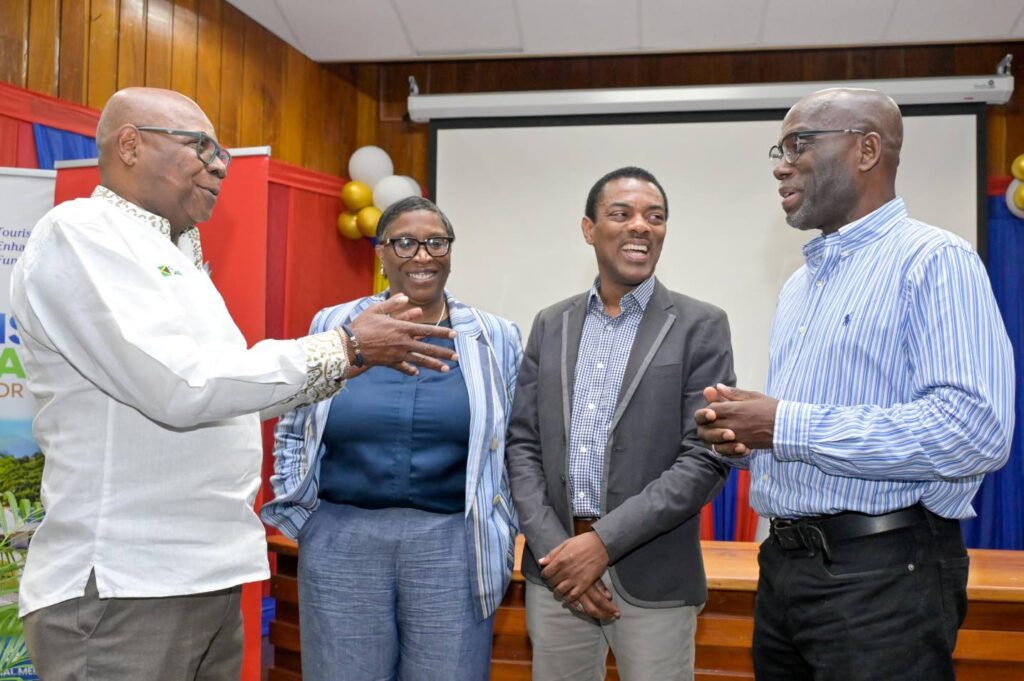
At a strategic industry workshop held Thursday on the Mona campus of Jamaica’s The University of the West Indies, St. Andrew, Tourism Minister Edmund Bartlett has called for a fundamental reimagining of Jamaica’s tourism sector, urging stakeholders to move beyond outdated metrics of visitor arrivals and hotel occupancy and reposition the industry as an inclusive engine of national growth.\n\nOpening the workshop, titled ‘The Event Playbook: Strategies for Event Tourism Success’, Bartlett reflected on decades of narrow public perception surrounding Jamaican tourism. For generations, he explained, the sector was widely viewed as an exclusive space, reserved only for large hotel chains, big corporate players, and disconnected from the daily lives and economic prospects of ordinary Jamaicans. This exclusion, he noted, stretched across small business owners, local community groups, creative practitioners, small-scale farmers, local artisans, and young Jamaicans seeking economic opportunity.\n\nBut that outdated narrative is rapidly changing, Bartlett emphasized, pointing to tangible shifts that have opened new doors for broad-based participation in tourism’s growth. He credited this transformation to intentional government policy reforms, deliberate efforts to build stronger connections between tourism and other domestic sectors, and a steady expansion of the country’s tourism product portfolio. Beyond traditional beach and resort offerings, Jamaica now nurtures fast-growing segments including community-led cultural tourism, local gastronomy tourism, sports and event tourism, health and wellness tourism, and tourism anchored in the island’s creative economy.\n\nUsing the workshop as a platform to reinforce his bold strategic agenda, Bartlett reaffirmed his vision for the transformative Tourism 3.0 initiative, a framework built from the ground up to expand the overall tourism economy by centering broad participation across all segments of Jamaican society.\n\n“Tourism 3.0 marks a fundamental paradigm shift,” Bartlett said. “It tells us that we can no longer reduce tourism to just counting arrivals, filling hotel rooms, and managing attractions. Instead, we must frame tourism as a cross-cutting national development platform. It must create space for Jamaicans to participate not just as employees, but as business owners, local suppliers, content creators, innovators, independent service providers, and entrepreneurs.”\n\nWhen Bartlett first unveiled the Tourism 3.0 concept, he framed it as a total reset for Jamaica’s tourism industry, built on a completely new operational framework. Today, he reaffirmed that the shift is designed to modernize the sector’s operating model, making it more efficient, far more inclusive, and accessible to a much wider range of investors and local stakeholders — with a specific focus on small operators and creative entrepreneurs, who have long been sidelined from the sector’s historic growth.\n\nA core element of the new framework is a strategic geographic differentiation of tourism experiences across the island, ensuring every region can leverage its unique strengths to drive local economic growth. Bartlett outlined that the island’s south coast will be developed as a global hub for accessible tourism, delivering one-of-a-kind experiences that cater to under-served visitor segments. The well-established north coast will retain its role as Jamaica’s anchor for high-end wealth and luxury tourism, a position complemented by the unique offerings of the north-eastern corridor.\n\nLooking ahead, a major new priority for the Tourism 3.0 agenda is the development of urban city tourism, with the capital city Kingston positioned to take on a new leading role in the country’s tourism ecosystem. “City tourism is a big priority for us moving forward,” Bartlett said. “And that means Kingston is ready to claim its rightful place in Jamaica’s tourism story.”