作者: admin

  • Lucy Belle-Matthew, sworn-in as Roseau mayor, outlines Council priorities

    Lucy Belle-Matthew, sworn-in as Roseau mayor, outlines Council priorities

    On a formal Monday swearing-in ceremony, Lucy Belle-Matthew took office as the new mayor of Dominica’s capital city, Roseau, laying out a clear, action-focused policy agenda centered on three long-standing urban challenges: inadequate sanitation, unregulated private property management, and disorderly street vending.

    Belle-Matthew earned her mandate after a competitive March 2026 city council election, where she ran as the representative for Ward 4. She secured a solid victory, polling 408 votes to defeat her challenger Sherman Boston, who garnered 267 votes.

    In her first official inaugural address to the city and its residents, the new mayor opened with pressing property regulation issues, emphasizing that owners of vacant lots and crumbling, dilapidated buildings must bring their holdings into compliance with existing city council rules. “We are appealing to the owners of such properties to take immediate action to comply with Council’s regulation,” Belle-Matthew stated. To strengthen the city’s ability to enforce these rules, she revealed the council plans to propose revisions to local property tax legislation, adding that the council’s regulatory authority must be acknowledged and upheld across the municipality. “There cannot be full and effective representation without your commitment to pay your taxes and fulfilling your obligation to Council,” she added.

    Belle-Matthew also took a moment to praise the national Government of Dominica for its ongoing investments in upgrading municipal housing stock, noting that the national initiative has already delivered tangible improvements to living standards for hundreds of local families. She called on private property owners and all community members to partner with the city council to advance local sanitation improvement projects, framing public cleanliness as a shared responsibility rather than solely a government task.

    Shifting focus to urban public space management, the mayor called out unregulated street vending as a growing public safety concern, particularly in Roseau’s densely populated city center, where vendors have occupied sidewalks and public roadways. “Vending in some areas of the city has become a major hazard due to the congestion and disorderly vending practices,” she explained. Rejecting heavy-handed crackdowns that would threaten vendors’ livelihoods, Belle-Matthew outlined a balanced approach: the city will restructure vending locations to restore public access to sidewalks and streets, but will offer existing vendors the option to relocate to available, properly zoned space at the Roseau Market, where they can continue operating their businesses without disruption. “This situation cannot be allowed to continue. We will seek to address this issue in an orderly manner,” she said. “If you are relocated to the Roseau market, we want you to make a good living by applying your trade. But we have a statutory duty which we must execute.”

  • Karate quartet barely miss out on CAC Games qualification

    Karate quartet barely miss out on CAC Games qualification

    Four up-and-coming karate athletes from Barbados’ national squad have fallen just short of securing automatic berths to the 2024 Central American and Caribbean (CAC) Games, landing reserve positions instead after a strong showing at the regional qualification tournament hosted in the Dominican Republic last month. Joseph Tseu, Kodie King, Shannan Skeete and Ric-Anne Brathwaite left everything on the competition mat between April 16 and 18 at the CAC Qualifiers, ultimately walking away with reserve slots that could see them compete at the main Games, set to run from July 24 to August 8 in the Dominican Republic. Tseu holds the first reserve spot for men’s kata, while King (84kg kumite), Skeete (61kg kumite) and Brathwaite (68kg kumite) are listed as second reserves across their respective sparring divisions. Should any qualified athlete withdraw before the tournament kicks off, the Barbadian reserves will step in to fill the vacant position. Despite missing out on automatic qualification, the team’s coaching staff framed the outing as a promising, respectable showing for the small island nation’s karate program. Assistant coach Corey Greaves, who traveled to the qualification event alongside head coach Cameron King, shared the team’s takeaways in an interview with Barbados TODAY. “We didn’t hit our ultimate goal of locking in qualifying spots, but landing first and second reserves across multiple disciplines means we held our own out here,” Greaves said. “Now we just wait and hope for an opening that lets one of our athletes step into the main draw.” Greaves emphasized that every athlete on the trip turned in a better performance than at past competitions, with the revised qualifying structure giving competitors more opportunities to compete and gain critical experience. He broke down the structure of the qualification tournament, noting that the host Dominican Republic automatically claimed one of the eight total spots available across each division, leaving seven spots open for all other competing nations. Athletes who did not secure one of the four immediate automatic berths advanced to a round-robin playoff to compete for the final three qualification positions. With the possibility of last-minute withdrawals still on the table ahead of the summer Games, Greaves confirmed that the four reserves will maintain a rigorous training schedule back home in Barbados to stay ready if called upon. A key part of that preparation for the kumite athletes, he added, is maintaining their required weight classes to meet tournament regulations. While Greaves expressed optimism about the long-term future of competitive karate in Barbados, he also shared measured concerns about the pace of the sport’s growth on the island compared to regional powerhouses. “Karate is growing steadily, and we’re seeing more athletes from other martial arts backgrounds transition into competitive sports karate now that the World Karate Federation has opened a formal pathway for cross-discipline participation,” he explained. “More and more young athletes are drawn to this side of the sport because it offers a clear path to compete at the Olympics and Commonwealth Games, something traditional karate does not provide. That said, the sport is not growing as quickly as I would like to see it. Countries like Mexico and other Latin American nations bring 20 or more athletes to major regional events, while Barbados rarely travels with more than 10 competitors. When there are 14 possible spots across different divisions and categories, we can only compete for 10 of them because we simply don’t have the depth of athlete numbers to match our regional rivals.” Greaves added that small athlete pools are a widespread challenge across the Caribbean, but noted that English-speaking Caribbean nations, including Barbados, are steadily expanding their ranks of competitive sports karate athletes, setting the foundation for stronger showings at future events.

  • Region moves to strengthen disaster response data systems

    Region moves to strengthen disaster response data systems

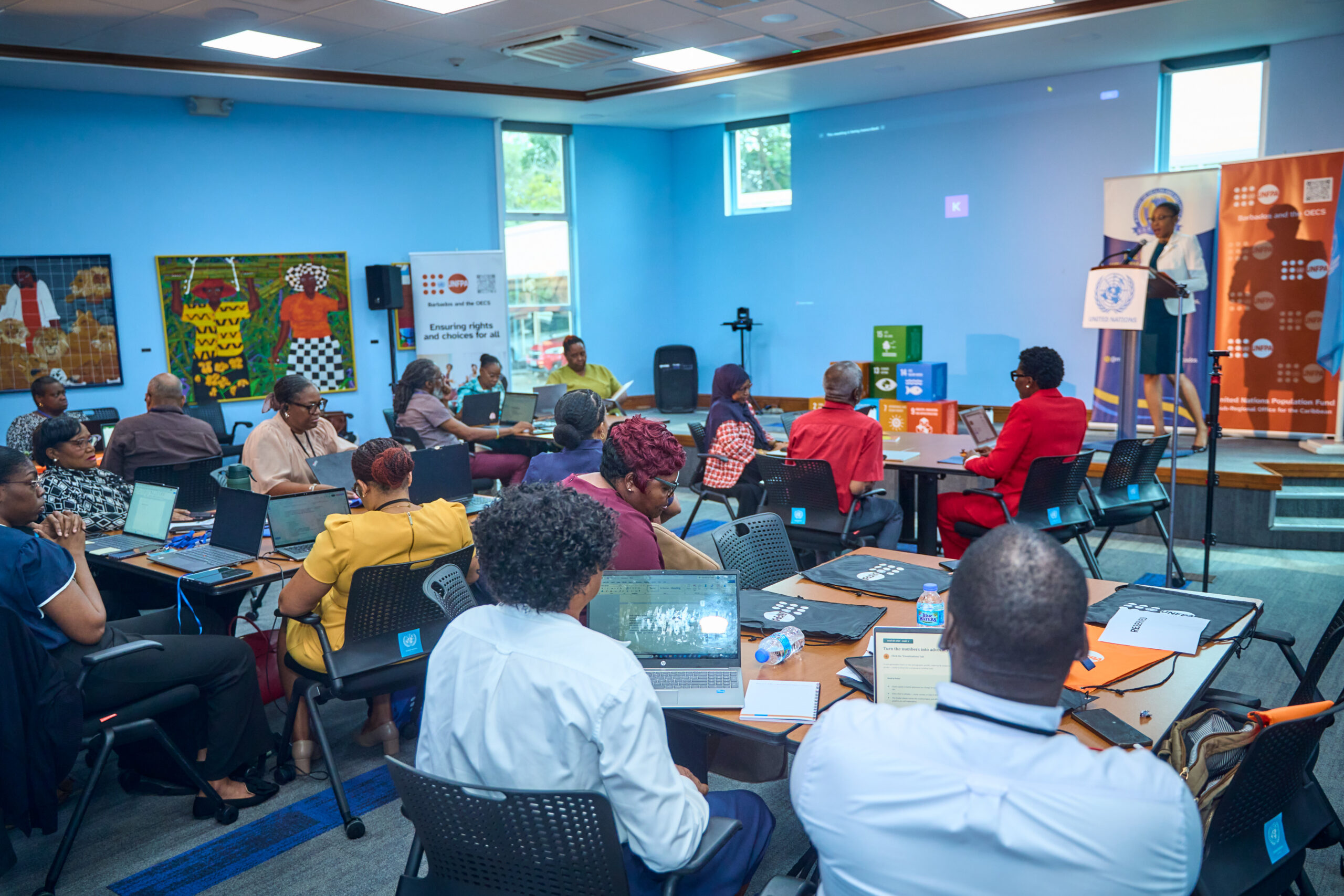
    As climate change intensifies the frequency and severity of natural hazards across the Caribbean, the region’s growing exposure to catastrophic disaster impacts has pushed regional cooperation bodies and national governments to prioritize improvements in how they track and respond to population displacement. Over the past 10 years alone, more than 5 million people in the region have been forced to leave their homes following major disasters, a statistic that underscores the urgent gap in consistent, actionable data for response efforts. To address this critical shortcoming, a two-day collaborative workshop opened this week at Bridgetown’s Courtyard by Marriott, bringing together a cross-sector group of stakeholders from 13 member states of the Caribbean Disaster Emergency Management Agency (CDEMA). Attendees include representatives from national disaster management offices, regional intergovernmental agencies, United Nations partnership bodies, and independent technical experts, all united by a shared goal: drafting universal standard operating procedures (SOPs) for collecting and analyzing displacement data as part of end-to-end disaster management.

    Barbados’ Minister of Home Affairs and Information Gregory Nicholls opened the workshop with official endorsement of the initiative, outlining Barbados’ existing approach to integrated disaster displacement management. “Comprehensive disaster management in Barbados addresses the displacement of individuals through a coordinated, policy-driven system that integrates preparedness, emergency response and long-term recovery,” Nicholls stated.

    Mandela Christian, CDEMA’s Programme Manager for Preparedness and Response, emphasized that the lack of standardized displacement data has long created bottlenecks for effective response across the region. After every major hazard event, he explained, the same fundamental questions go unanswered without consistent tracking: How many people have been displaced? Where are they currently residing — in official emergency shelters, informal community settlements, or with host families across the island or national boundaries? What specific humanitarian needs do they have, and what planning is in place to address those needs and make displacement more manageable? “These are things that we need to know in order to provide critical support to our population or citizens,” Christian noted. He added that reliable standardized data is not only critical for immediate humanitarian aid delivery, but also for logistics coordination, civilian protection, public health response, and the dignified long-term recovery that must follow any emergency.

    Christian detailed the core objectives of the workshop, explaining that the new SOPs will be embedded within CDEMA’s existing damage assessment and needs analysis data framework. The protocols will cover three key stages of disaster response: pre-impact baseline data assessment, initial shelter operations management, and early post-disaster damage and humanitarian needs evaluation. The SOPs will also establish common terminology for displacement tracking, uniform data collection standards, cross-system interoperability rules, and clear delineation of roles and responsibilities for everyone from local shelter managers to national emergency operation centers and regional coordination bodies. “It will establish common definitions, data collection standards, interoperability protocols, and enhance clarity on lines of responsibilities across shelter managers, emergency operation centres, and regional systems that depend on that information to coordinate an effective response,” Christian said. He added that the harmonized protocols will also directly strengthen the information management infrastructure of the Caribbean Development Partners Group and regional coordination centers, ensuring that when regional response mechanisms are activated, the data shared across coordination structures is consistent, reliable, and usable for immediate action.

    Nicholls echoed the importance of people-centered data practices, stressing that reliable displacement data exists first to serve affected communities, not bureaucratic processes. “Good data helps respondents locate families faster, match assistance to real needs, and protects dignity. Especially when systems are under stress, displacement data must always serve people and not processes,” he said. Standardized data also eases the burden on frontline communities and responders, he explained, by allowing for more targeted aid distribution, more efficient management of shelter occupancy flows, and reduced strain on both host families that take in displaced people and the first responders working on the ground.

    The minister also highlighted the often-overlooked impact of disaster displacement on education, noting that most emergency shelters in the region are repurposed school buildings. While using school facilities as shelters is sometimes unavoidable, Nicholls explained, the government of Barbados prioritizes minimizing disruption and returning schools to their core educational function as quickly as possible. “Recovery is not only about infrastructure but also about children returning to safe, stable learning environments without delay. Better displacement and shelter data is key to enabling that transition,” he stressed.

    Looking ahead, Nicholls outlined Barbados’ ongoing work to link disaster displacement management with broader regional migration governance and the CARICOM free movement framework. As climate change increasingly drives cross-border mobility across the Caribbean, the country is developing a new modernized facility to support displaced people from across the region. “We have deliberately streamlined our integration processes, strengthening coordination with disaster preparedness, response and recovery frameworks, recognising that climate-related hazards increasingly shape mobility across our region as we move forward together with continued collaboration to address the remaining vulnerabilities,” he said.

  • PM Browne Says He Has Never Refused Duty-Free Vehicle Waivers, Signals Willingness to Codify Policy

    PM Browne Says He Has Never Refused Duty-Free Vehicle Waivers, Signals Willingness to Codify Policy

    The top leader of Antigua and Barbuda has pushed back against criticism of the nation’s duty-free vehicle concession program, confirming that no eligible applicant has been locked out of the benefit during his nearly 12 years in office, and confirming the government is ready to turn the longstanding administrative policy into formal law.

    Speaking during his regular segment on the popular local radio program *Browne and Browne Show* broadcast on Pointe FM, Prime Minister Gaston Browne, who also leads the Antigua and Barbuda Labour Party, mounted a robust defense of the existing concession approval process, emphasizing that it has remained open to all qualifying people from its inception.

    “In the almost 12 years I’ve served as prime minister, I have never ever refused anybody who qualified the opportunity to access a duty-free concession,” Browne stated during the interview.

    The prime minister’s public remarks come as local political circles have engaged in sustained debate over how the program is run. Currently, duty-free vehicle waivers are awarded on a discretionary, case-by-case basis, leading to opposition criticism over perceived gaps in transparency and inconsistent application of eligibility rules.

    Browne acknowledged the concerns raised by opponents, signaling that while the program has functioned as an administrative policy up to this point, his administration has no objection to enshrining its rules in national legislation to codify the process. “We have no difficulty codifying our duty-free regime in law,” he said.

    He added that formalizing the system through legislation would bring much-needed additional clarity to the criteria and process for granting concessions, but stood by the current framework, noting it already delivers broad access to eligible applicants across the country. The duty-free vehicle concession program has been a core plank of government policy in Antigua and Barbuda for decades, with waivers reserved for specific groups including public servants and other pre-qualified individuals, all of which require final government approval.

    Browne’s latest comments mark a clear shift in the government’s position, indicating a willingness to revise the program’s structure to address longstanding transparency concerns while doubling down on the assertion that the current system operates fairly and includes all qualified applicants. The national opposition has repeatedly questioned the governance of the concession program in recent months, but as of press time, no official response to Browne’s latest announcement has been released.

  • CIBC Caribbean boosts prize money as it searches for Unsung Heroes

    CIBC Caribbean boosts prize money as it searches for Unsung Heroes

    For the second consecutive year, CIBC Caribbean has launched a regional search to shine a spotlight on unrecognized community changemakers across its 10-country service area, announcing a significant increase in prize rewards for this cycle’s top contenders.

    The Unsung Heroes programme, a flagship community outreach initiative of the bank’s charitable arm the CIBC Caribbean ComTrust Foundation, was first revived in 2025 after a decade-long pause. In its relaunch year, the campaign drew 39 nominations from individuals working across a wide spectrum of community service sectors.

    Mark St Hill, Chief Executive Officer of CIBC Caribbean and Chair of the CIBC Caribbean ComTrust Foundation, highlighted that the 2025 relaunch exceeded all expectations, generating widespread positive engagement across the region. “Last year’s return of the Unsung Heroes Programme was a resounding success, and we are anticipating an even more meaningful, far-reaching campaign this year as we seek out and honor the people who quietly lift up their local communities every day,” St Hill shared in an official statement.

    He went on to reflect on the 2025 cohort of honorees, noting that beyond the top three regional winners – 2025 Regional Unsung Hero Lucinda Mini Smith of the British Virgin Islands, first runner-up Venetta Zakers of St Kitts and Nevis, and second runner-up Joshuanette Francis of Antigua and Barbuda – the programme elevated the work of dozens of national unsung heroes active in causes ranging from environmental conservation, mentorship for at-risk youth and support for vulnerable women, to food access for unhoused populations and care for elderly and marginalized community members.

    St Hill emphasized that the contributions of quiet community advocates cannot be quantified, but the bank sought to provide tangible recognition of their impact by boosting prize allocations for 2026. The 2026 Regional Unsung Hero will receive a $10,000 USD reward – double the top prize from last year’s cycle. First runner-up prize money has jumped from $3,000 USD to $7,000 USD, while the second runner-up award has increased from $1,500 USD to $5,000 USD.

    Eligibility for the 2026 campaign is open to any person aged 10 years or older who has made a sustained positive impact in their community and has not previously received major public recognition or rewards for their work. Nominations can be submitted in two categories: outstanding long-term community service, and extraordinary acts of heroism, bravery, or exceptional kindness carried out within the 12 months leading up to the 2026 campaign launch.

    The nomination window will run from April 1 through July 31, 2026. Local national winners will be selected from the nominee pool and announced in August, with all national honorees automatically advancing to consideration for the regional awards. Regional winners will be revealed by the end of August 2026. In September, the top three regional recipients and each of their guests will travel to Barbados for a dedicated awards ceremony to celebrate their work and present their prizes. Additionally, a $1,000 USD special prize will be awarded to the person who nominates the 2026 Regional Unsung Hero. Full details about the programme and nomination instructions are available on CIBC Caribbean’s official website at CIBCCaribbean.com.

  • CIBC Caribbean boosts prize money as it searches for Unsung Heroes

    CIBC Caribbean boosts prize money as it searches for Unsung Heroes

    CIBC Caribbean is launching its second annual search for quiet, unrecognized community changemakers across its 10-nation regional footprint, announcing a major increase in prize rewards for this year’s top honorees.

    First revived in 2025 after a decade-long pause, the bank’s flagship community outreach initiative, the CIBC Caribbean Unsung Heroes programme, drew 39 nominations across a wide range of community service sectors in its debut relaunch year. Mark St Hill, Chief Executive Officer of CIBC Caribbean and Chair of the CIBC Caribbean ComTrust Foundation — the bank’s charitable arm that sponsors the programme — shared that the 2025 relaunch exceeded all expectations, and organizers are preparing for an even more impactful campaign in 2026 focused on lifting up people who work tirelessly without fanfare to improve local communities.

    St Hill highlighted the breadth of impact recognized in the programme’s first relaunch year: 2025 Regional Unsung Hero Lucinda Mini Smith from the British Virgin Islands, first runner-up Venetta Zakers from St Kitts and Nevis, and second runner-up Joshuanette Francis from Antigua and Barbuda were joined by dozens of national honorees working across critical causes. These included environmental conservation, support for at-risk youth and marginalized women, food access for unhoused populations, and care for elderly and vulnerable community members.

    St Hill emphasized that the contributions of these quiet advocates cannot be quantified, but the bank sought to deliver meaningful, tangible recognition for their work, leading to the decision to boost prize purses for 2026 regional winners. The 2026 Regional Unsung Hero will take home $10,000 USD — double the top prize awarded in 2025. First runner-up will receive $7,000 USD, up from $3,000 USD last year, while second runner-up will get $5,000 USD, a major jump from 2025’s $1,500 USD award. A $1,000 USD bonus prize will also go to the person who nominates the 2026 Regional Unsung Hero.

    The 2026 campaign is open to any person aged 10 or older who has driven positive change in their community but has not received widespread public recognition or major formal awards. Nominations can be submitted in two categories: sustained outstanding community service, and an extraordinary act of heroism, bravery, or exceptional kindness completed within the 12 months leading up to the 2026 campaign launch.

    The nomination window opens in April 2026 and closes at the end of July 2026. Local national winners will be selected and announced in August, with these national honorees advancing to the regional awards competition. Regional top winners will be named by the end of August 2026. In September, the three top regional honorees and each of their guests will travel to Barbados for a dedicated awards ceremony to present their prizes. Full details on the programme and the nomination process are available on CIBC Caribbean’s official website.

  • Money in Seconds: Central Bank of Belize to Launch BIPS

    Money in Seconds: Central Bank of Belize to Launch BIPS

    In a major announcement made public on April 21, 2026, the Central Bank of Belize has officially revealed plans to roll out the country’s first modern instant payments infrastructure, the Belize Instant Payments System (BIPS), with a full launch targeted for the first quarter of 2028.

    Designed to address longstanding pain points in the nation’s existing financial transfer framework, BIPS is engineered to transform how individuals and businesses move money across the country. Unlike current processing systems that can leave domestic transfers pending for hours or even multiple business days, the new platform will enable real-time sending and receiving of funds, while also reducing transaction costs and strengthening security protocols for all users.

    Central Bank Governor Kareem Michael confirmed that the regulatory institution has already executed a formal implementation contract with U.S.-based financial technology firm Montran Corporation to build and deploy the new system. According to Governor Michael, BIPS is far more than a simple payment upgrade: it stands as a cornerstone of the central bank’s national strategy to reinforce the overall resilience of Belize’s financial system, boost operational efficiency across the banking sector, and expand meaningful financial inclusion for underserved communities across the country.

    The initiative builds on a decade of incremental payments modernization work in Belize. It traces its roots back to the 2016 launch of the Automated Payment and Securities Settlement System (APSSS), the nation’s first major shift toward electronic transfers and automated clearing, which laid the technical groundwork for the faster, more seamless system being introduced today.

    To ensure the platform delivers on its promised benefits, the Central Bank is now urging all domestic commercial banks to prioritize technical upgrades to their internal infrastructure to enable full interoperability with BIPS. Governor Michael emphasized that cross-institution compatibility will be the single most critical factor in the system’s long-term success, noting that BIPS will eventually become a core component of Belize’s national financial backbone. Moving forward, the central bank will work closely with local financial institutions to coordinate the upgrade timeline ahead of the 2028 go-live date.

  • Public Service Transfers Suspended for 2026; PSU Backs Government Decision

    Public Service Transfers Suspended for 2026; PSU Backs Government Decision

    In a policy shift announced in late April 2026, the Government of Belize has enacted a full suspension of all public service transfers that involve a change of jurisdiction for the entire calendar year, extending the current postings of all affected public officers by 12 months.

    The official order is formalized in Circular Memorandum No. 26 of 2026, dated April 20 and issued by Rolando Zetina, Chief Executive Officer of the Ministry of the Public Service and Disaster Risk Management. Per the document, while Regulation 101(1) of the 2014 Belize Constitution (Public Service) Regulations requires standard tours of duty to run between two and three years, the ministry has determined that the 2026 cycle of postings requires an extra year at current duty stations, citing the “exigencies of the service” as the core justification for the change. Under the new policy, no applications for cross-jurisdiction transfers will be reviewed or approved this year, and department chief executives have been instructed to submit formal requests for the one-year extensions where operationally required.

    In an official statement responding to the announcement, the Public Service Union (PSU), the country’s leading body representing public sector employees, confirmed it fully endorses the government’s decision, framing the suspension as both “timely and necessary”.

    The union outlined longstanding concerns that have driven its support for the policy: in recent years, many transfers have been carried out as punitive measures rather than for operational efficiency, placing unnecessary financial strain on national public finances. According to PSU estimates, annual costs associated with public service transfers—including transfer grants, rental subsidies, commuting allowances, and hardship stipends—add up to millions of Belize dollars each year, draining resources that could be allocated to core public services.

    Beyond budget concerns, the union also referenced Regulation 96 of the Public Service Regulations, which mandates that all transfers must be conducted strictly to advance public service interests, and cannot be used as a replacement for formal disciplinary procedures. The PSU stated that it has documented multiple cases in which transfers were allegedly deployed to victimize, intimidate, or marginalize public officers who have fallen out of favor with administrative leadership.

    As the policy moves forward, the PSU has laid out two key demands to ensure equitable implementation. First, the organization stressed that all eligible public officers must continue to receive all applicable allowances without interruption during their extended tours of duty, and has called on finance officials across all government ministries to put in place the necessary administrative and budgetary provisions to avoid any stoppages in pay and benefits. Second, the union is calling on the Ministry of the Public Service and Disaster Risk Management to maintain close oversight of how the suspension is implemented across departments, and to proactively put safeguards in place to prevent the continued misuse of transfers as a tool for retaliation against public servants once the moratorium is lifted.

  • Notice: Works At Fadi Building Supplies To Fresh And Eazy Supermarket

    Notice: Works At Fadi Building Supplies To Fresh And Eazy Supermarket

    A new phase of major infrastructure upgrades is set to get underway on a key stretch of All Saints Road in Antigua and Barbuda, with the Ministry of Works issuing a public notice outlining adjusted traffic arrangements for area road users. The rehabilitation project, which forms part of the broader government-led All Saints Road Project, will focus on the section of roadway stretching between FADI Building Supplies and the Fresh and Eazy Supermarket, and is scheduled to take place overnight to minimize disruption to daily travel.

    The approved detour plan will go into effect starting at 7:00 p.m. on Tuesday, April 21, 2026, and will remain in place until 7:00 a.m. the following morning. Clear routing guidelines have been outlined for both outbound and inbound commuters: for drivers traveling out of the main town center, the detour requires a left turn at the Hazelroy’s intersection on All Saints Road, before following the marked route shown on official project maps. For those heading into town, drivers will turn right at the Fresh and Eazy Supermarket junction and continue along the mapped detour path.

    To ensure steady, safe traffic flow through the adjusted route, trained flag persons will be stationed at key points along the detour. Commuters are reminded that specific segments of the temporary route are designated as one-way traffic zones, with all markings and restrictions clearly displayed on official project maps, and additional directional signage placed along the route to guide drivers traveling in both directions.

    Residents who live in the immediate area surrounding the work zone will be granted special local access to their properties throughout the duration of the overnight works. Authorities are urging all road users to exercise extra caution when traveling near the construction site, as heavy-duty construction equipment will be operating in close proximity to the temporary passageways.

    Importantly, the Ministry of Works has confirmed that all commercial businesses located along the affected stretch of road will remain open for regular operations throughout the works period. As construction activities are expected to cause some unavoidable travel delays, project stakeholders and regular commuters are encouraged to adjust their travel itineraries ahead of time to accommodate the overnight disruption.

    Anyone seeking additional information or clarification on the works or detour arrangements can contact the Project Implementation Management Unit directly by phone at 562-9173 during regular business hours.

  • CCJ questions AG Nandlall about whether making commentary on Mohameds was “proper”

    CCJ questions AG Nandlall about whether making commentary on Mohameds was “proper”

    On Tuesday, April 21, 2026, the Caribbean Court of Justice (CCJ) opened a tense session focused on more than just the legal merits of an extradition appeal: judges zeroed in on controversial public statements made by Guyana’s top legal official, Attorney General Anil Nandlall, regarding two US-sanctioned and wanted Guyanese businessmen, Nazar Mohamed and Azruddin Mohamed.

    The case currently before the regional court stems from the Mohameds’ appeal of an Arrest Warrant Authorization (ATP) issued last October by Guyana’s Home Affairs Minister Oneidge Walrond. The ATP authorized a local magistrate to move forward with an arrest warrant to open extradition committal proceedings for the pair, who have been sanctioned by the US Treasury Department’s Office of Foreign Assets Control over allegations of financial misconduct. All lower court proceedings have been put on hold pending the CCJ’s final ruling, which has not yet been scheduled.

    During Tuesday’s hearing, the issue of Nandlall’s public commentary took center stage after the Mohameds’ legal team argued that the attorney general’s repeated public statements created a taint of bias that undermines the fairness of the entire extradition process.

    CCJ President Winston Anderson acknowledged that all legal professionals, including government lawyers, hold a protected right to free speech. Still, he emphasized that out-of-court statements that risk eroding public trust in judicial processes or compromising the fairness of ongoing proceedings have no place in a functional democracy. “Statements which are made outside of these proceedings and which could have the effect of undermining the fairness of the proceedings, or which could undermine public confidence in the administration of justice, should be avoided,” Anderson stated, adding that he expected legal representatives to adhere to professional guidelines and that the court would prefer not to address the issue again.

    Anderson went on to press Nandlall, noting that while serious allegations against the Mohameds are already on the public record, there was no clear reason for the government’s chief legal advisor to issue public pronouncements on the ongoing case. The court highlighted that the “elephant in the room” is the Mohameds’ core claim: that Nandlall’s public comments revealed a predetermined bias against them in any extradition request, a claim that Minister Walrond – who received legal advice from Nandlall before issuing the ATP – did not refute from her position in the courtroom.

    Justice Chile Eboe-Osuji expanded on the court’s concerns, clarifying that the issue is not whether the Attorney General has the authority to make formal decisions in the case, but whether his public comments – which included criminal accusations against the applicants, ongoing public commentary on the extradition process, and implied criticism of Principal Magistrate Judy Latchman who is assigned to the committal proceedings – have irreparably biased the process. Eboe-Osuji posed a sharp question to Nandlall: “Is there something to be said that it is part of the job of the AG to bring the population back to say, look, respect the process, let the process take its course rather than making comments that might add to that negative public view on the matter?”

    Judge Arif Bulkan also pushed back on Nandlall’s attempts to frame the controversy as a product of political rivalry, pointing out that the attorney general had failed to directly address the court’s core question about his comments on the extradition case and its expected outcome. Nandlall pushed back against the judges’ questioning, denying he had ever commented on the projected outcome of the proceedings. He argued his public remarks focused instead on public concerns over the length of the ongoing committal process and referenced already public information: the US sanctions against the Mohameds that had been widely reported by international outlets including Reuters.

    Nandlall further defended his comments by noting many of the remarks were made during the 2025 Guyanese general and regional election campaign, a period when public debate over political and policy issues is heightened. “This is his rap sheet; this is what we have to speak about,” he told the court, adding that he had not made any improper statements. He argued that any perceived missteps stem from incorrect quotation, and that his comments were framed appropriately with respect for the judicial system, and any use of his remarks against him is politically motivated. “The comments that were made were in their proper context. They may have been disputed and used for political purposes, but they were not improper statements,” he said.

    The Mohameds’ legal team has argued that Minister Walrond’s decision to authorize the arrest warrant is fatally biased because she acted on advice from Nandlall, who has repeatedly publicly condemned the pair and commented on their multiple ongoing court cases at every level of the Guyanese judicial system, from the magistrates’ court to the Court of Appeal. They also point out that Walrond herself publicly spoke out against the Mohameds during the 2025 election campaign.

    In closing the court’s questioning on the issue, President Anderson noted that the panel of judges was actively questioning whether Nandlall’s comments aligned with the standards of best practice needed to strengthen democratic governance and the rule of law in Guyana. Nandlall reiterated that his role was limited to providing legal advice to the Home Affairs Minister, who retained full authority to make the final decision on the ATP.