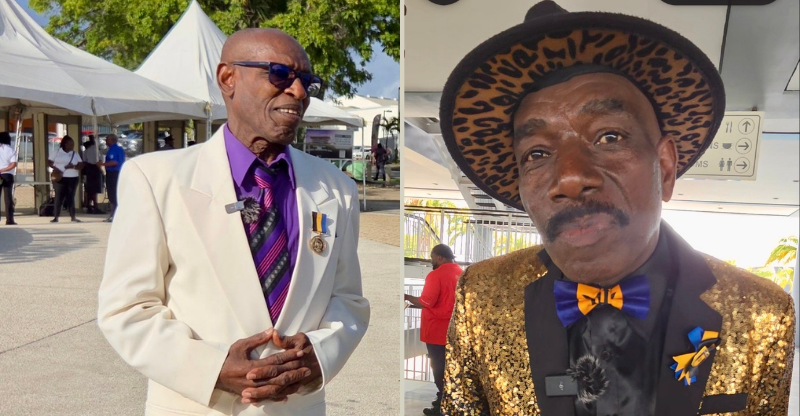
To millions of cricket followers across the globe, Sir Garfield Sobers remains an unparalleled sporting icon: a record-breaking athlete whose name is etched into the history books of the sport, celebrated for his extraordinary on-field statistics and unmatched career achievements. But to the people of his home nation Barbados, Sir Garry — as he was affectionately known — was far more than a global celebrity; he was a neighbor, a mentor, a friend, and one of their own. Long before the official state funeral service kicked off on Wednesday, hundreds of mourners and admirers began streaming through the gates of Kensington Oval, the iconic Bridgetown cricket ground that hosted many of Sobers’ greatest triumphs, to trade personal memories and pay their final respects. Agnes Haynes, a longtime Barbadian resident who never had a close personal connection to Sobers, still recalled the quiet magic that made him stand out even in his home community. She remembered how local cricket fans would spend hours in lively debate, poring over Sobers’ run totals from international tours and arguing over whether any other player in the world could match his skill. What stuck with Haynes most, though, was a chance meeting she had with Sobers after he received his knighthood: she said she was struck by how remarkably ordinary and down-to-earth he remained, even after achieving global fame. For Haynes, the funeral was not a day of grief, but an opportunity to celebrate the extraordinary life of a local legend who never lost his roots. Social media creator Allan Baje, who paid his respects as Sobers lay in state on Tuesday, returned to Kensington Oval on Wednesday to honor his former youth coach. Clad in a custom-tailored suit stitched in Barbados’ national colors, Baje shared his decades-long personal connection to the cricket star. Baje attended Bay Primary School as a child, and recalled Sobers regularly traveling to the school on weekends to coach young local players in cricket. Off the pitch, the pair shared even more ties: Sobers was a passionate horse racing fan who owned a racehorse that Baje’s father cared for, and Baje grew up in the same Bayland neighborhood as the legend. Baje remembered spending casual evenings playing dominoes with Sobers, and spotting him regularly at local practice sessions when the West Indies cricket team played home matches at Wanderers. For Baje, Sobers’ greatest legacy extends far beyond his cricket records: he was a symbol of what it means to rise from humble, small-town beginnings to global stardom, without ever letting success change his character. “He was always humble in his daily life,” Baje said. Veteran Barbadian entertainer Tony “Poser” Grazette was another early arrival at the funeral, who remembered Sobers as a generous, one-of-a-kind friend. “He gave his all like he would take his shirt off his back and give to you,” Grazette said. “He was always very humble and would give you any kind of advice.” Grazette recalled early days entertaining Sobers and fellow West Indies cricket legend Sir Wes Hall at the Island Inn, where he would always make sure the crowd knew the sporting icons were in the house. “I thank God for his life and what he gave to us and the world, and I know he’s resting peacefully,” Grazette said. Like many Barbadians who knew Sobers, Grazette said it is impossible to sum up the full impact the legend had on his home country and the global sporting community in just a few words. “The very best, very best and a very wonderful good person. Always was, always will be, and may he rest in peace,” he said.
作者: admin
-

Amadi Hendrickson makes history as St. Kitts and Nevis’ 1st sailor at CAC Games – WIC News
The 2026 Central American and Caribbean (CAC) Games in Santo Domingo, Dominican Republic, will welcome a groundbreaking new competitor: Amadi Byron Hendrickson, the first sailor from St. Kitts and Nevis ever to compete at the regional multi-sport event. This milestone marks not only a personal achievement for Hendrickson but also a historic leap forward for sailing development across the small Caribbean federation.
Hendrickson’s sailing career began just six years ago, in 2020, when he first stepped into a boat with the Nevis Aquatic and Sailing Centre, starting out in the RS Feva class before working his way up to the competitive ILCA 7 division, where he will compete at the Games. Through consistent hard work and relentless perseverance, he rapidly developed his skills to become one of St. Kitts and Nevis’ top competitive sailors. His rise from new enthusiast to national representative stands as a testament to the steady growth of sailing as a competitive sport within the federation’s borders.
Beyond his competitive achievements, Hendrickson has emerged as a leading ambassador for sailing in St. Kitts and Nevis. His upbeat outlook, contagious passion for the sport, and commitment to lifting up new participants have made him a beloved role model for the country’s emerging young sailors. He currently serves as an instructor for the Nevis Aquatic and Sailing Centre’s Learn to Sail and Adult Sailing Programs, paying forward the support he received by introducing a new generation of enthusiasts to the sport that transformed his own journey.
Throughout the 2026 CAC Games, Hendrickson will be accompanied and coached by Nicholas Dupré, president of the St. Kitts and Nevis Sailing Association (SKNSA). In an official statement, the SKNSA expressed its deep gratitude to the St. Kitts and Nevis Olympic Committee for enabling Hendrickson to compete on one of the region’s most high-profile international sporting stages.
This year’s CAC Games carry extra historic weight of their own: 2026 marks the 100th anniversary of the region’s longest-running multi-sport event. More than 6,000 athletes from 37 nations across Central America and the Caribbean will compete across 40 different sports through the duration of the Games, which run from July 29 to August 8. Sailing events will be hosted at Punta Salinas on the Dominican Republic’s southern coast. As the nation’s first sailing competitor at a major elite multi-sport Games, Hendrickson carries the pride of St. Kitts and Nevis’ entire sailing community as he heads to the starting line.
-

Community Consultation on Proposed Conaree Health Centre
Residents of six local communities in St. Kitts have received a formal invitation to participate in an upcoming public consultation focused on the planned development of the Conaree Health Centre and the long-term trajectory of local public healthcare services. The consultation, which is open to all members of the general public, specifically targets residents from the nearby villages of Conaree, Half Moon Bay, Canada, Keys, Needsmust and Kitstoddart’s, who will be directly affected by the new healthcare facility.
Scheduled to kick off at 6:30 p.m. local time on Thursday, 6th August, the community gathering will be hosted at the Conaree Community Centre, a central and accessible venue for local residents. Top government and health officials are set to attend the event to answer questions, collect public feedback, and share detailed updates on the proposal. Among the key attendees are the Honourable Prime Minister of St. Kitts and Nevis, the national Minister of Health, and Dr. Terrance Drew, who serves as both the Parliamentary Representative for Constituency 8 and a lead stakeholder for the project.
This consultation marks a key step in the planning process for the new health centre, designed to expand access to primary care services for thousands of local residents. Local officials have emphasized that public input will play a critical role in shaping the facility’s design, service offerings, and timeline for development, encouraging all affected residents to attend and share their perspectives on local healthcare needs.
-
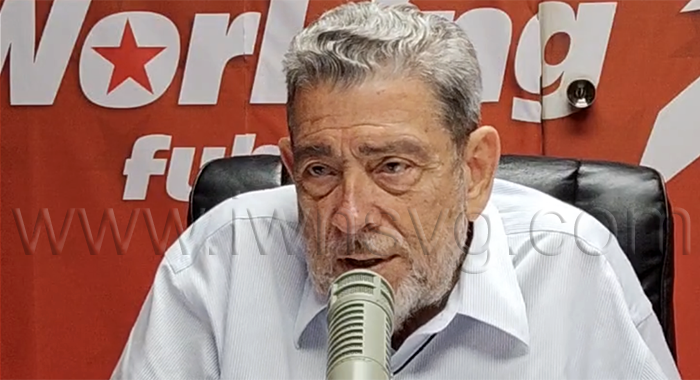
Gonsalves attempts to revise his 2023 position on bail for murder
St. Vincent and the Grenadines (SVG) Opposition Leader Ralph Gonsalves has walked back widespread interpretations of his past controversial comments about judicial bail grants for murder accused, pushing back against claims he opposes bail access in murder cases entirely amid his high-profile constitutional challenge to SVG’s existing bail legislation.
Gonsalves, who served as SVG’s prime minister and national security minister when he delivered the original remarks at a 2023 regional crime symposium in Port of Spain, Trinidad, revisited the three-year-old comments during a Wednesday broadcast on Star FM, the radio station owned by his political party. He argues his original criticism has been consistently misrepresented, and that his current position — which calls for judicial discretion to hear bail applications for murder charges, rather than an automatic statutory ban — aligns with what he actually said at the event.
Recalling his symposium intervention, Gonsalves explained he was responding to data from Trinidad, Barbados and the Bahamas, three Caribbean nations outside the Organisation of Eastern Caribbean States (of which SVG is a member). At the time, 2023 had seen SVG hit a record high homicide count of 55, amid a regional surge in violent crime. Gonsalves said his concern was not that judges were permitted to consider bail for murder cases at all, but that a subset of judges in the three referenced jurisdictions were granting bail in scenarios where any reasonable assessment would have denied it. He famously compared those decisions to being made by judges “living on Mars,” and also raised concerns about potential unequal treatment of defendants based on their legal representation. Those 2023 remarks drew widespread condemnation from regional legal associations, legal practitioners and media outlets.
Today, Gonsalves leads a team of attorneys in a landmark constitutional challenge to SVG’s Criminal Procedure Code Section 43, which currently imposes a limited but rigid ban on judicial bail consideration for murder accused: defendants cannot apply for bail until either nine months have passed or their preliminary inquiry concludes, whichever comes earlier. The challenge is brought on behalf of a 16-year-old minor charged with murder, with Gonsalves arguing the automatic statutory pre-trial detention bar violates core constitutional protections, including the right to personal liberty, equal protection under the law, freedom of movement, and the separation of powers. He emphasized that automatic detention by legislative mandate, rather than court-ordered detention following individual assessment, is fundamentally unconstitutional, and that every defendant deserves individualized review of their bail eligibility by the High Court.
While the broader constitutional question remains pending before the courts, Justice Gertel Thom has already granted bail to the 16-year-old defendant — a decision Gonsalves calls unprecedented in modern SVG history. The bail application was fiercely opposed by the Attorney General’s Chambers and the Director of Public Prosecutions’ Office, but Thom ruled in favor of release after a case-specific risk assessment. The teen was granted bail with a $25,000 Eastern Caribbean dollar bond and two sureties; she is required to check in three times weekly at the Colonarie police station, but does not need to surrender her expired passport. Gonsalves noted the defendant’s circumstances make her a low flight risk: she is a minor with no valid passport, no voter identification, is unemployed and has very limited financial means, with no allegations that she poses a danger to the community or threatens witness testimony. “If she couldn’t get bail, I don’t know who else could have gotten bail,” Gonsalves told radio listeners.
SVG has recorded 28 homicides so far this year, and on current trend, the 2025 full-year total is projected to surpass 40, keeping violent crime at the forefront of the country’s political and policy agenda.
-
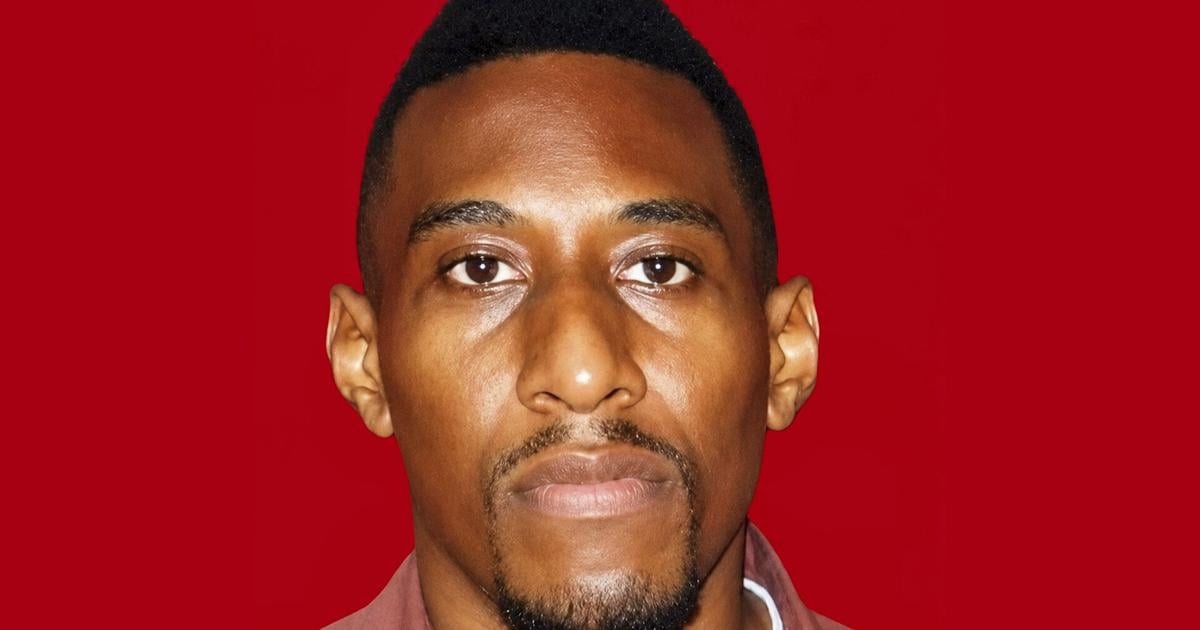
Off-duty cop killed in Caroni attack
A devastating act of violence has shaken the law enforcement community of Trinidad and Tobago, after an off-duty police constable was gunned down during an attempted armed robbery in Caroni late Tuesday night. Forty-eight-year-old Romell Kerry Douglas, assigned to the Four Roads Police Station, had his licensed service weapon stolen by attackers following the fatal shooting.
The tragedy unfolded at approximately 11:05 p.m., as Douglas sat in his private vehicle at the intersection of Hydraulic Trace and Caroni South Bank Road in Kelly Village. Investigators confirm that a white Nissan Tiida pulled alongside Douglas’ car, and the individuals inside immediately initiated an attempted robbery. The confrontation quickly escalated into an exchange of gunfire: Douglas managed to return fire, striking one of the suspects before succumbing to his own gunshot wounds. First responders arrived on the scene 10 minutes after the incident, and Douglas was pronounced dead at the location. His service weapon remained missing, taken by the attackers during the chaos.
One of the suspects involved in the attack, 19-year-old Adetola Ammon of Arima, was transported to the Arima Health Facility with gunshot wounds he sustained during the shootout, and later died in medical care. Law enforcement recovered the suspects’ Nissan Tiida shortly after the shooting, and as of Wednesday night, a coordinated, large-scale manhunt was already active for the two remaining at-large suspects.
On Wednesday, senior leadership of the Trinidad and Tobago Police Service (TTPS) paid public tribute to Douglas ahead of a scheduled news conference, holding a solemn minute of silence to honor the fallen officer. Senior officers including ASP Joel Forbes, ASP Ancil Corrie, and TTPS Public Information Officer ASP Owie Russell stood in respectful silence during the tribute. Russell confirmed that Police Commissioner Allister Guevarro and the entire TTPS executive had formally extended deep condolences to Douglas’ family, friends, and fellow officers.
Local residents who spoke with the Trinidad Express Wednesday expressed profound shock at the killing, with many highlighting the deep anxiety the incident has sparked amid the country’s ongoing state of emergency. One resident told the outlet, “We have officers being killed during a state of emergency…imagine that. I don’t know what else we can do to get a hand on the crime situation in this country.”
Leadership of the TTPS Social and Welfare Association has issued a strong condemnation of the killing, and issued a public appeal for community assistance to bring the remaining perpetrators to justice. Association head ASP Ishmael Pitt remembered Douglas as an exemplary, deeply professional and committed officer whose death represents an incalculable loss for both the association and the broader TTPS. “We condemn this in the strongest possible way,” Pitt said. “PC Douglas was a tremendous officer. He was very professional, very dedicated and this will definitely be a great loss to our membership and also to the Police Service at large.”
Pitt confirmed that association representatives have already begun supporting Douglas’ next of kin, and are working to ensure all eligible organizational benefits are promptly made available to Douglas’ beneficiaries. When asked about widespread concerns that officers may be deliberately targeted amid the current state of emergency, Pitt emphasized that the association views any attack on an officer, on or off duty, as unacceptable. He declined to draw a direct link between Douglas’ killing and the current national security measures, instead urging all serving officers to maintain strict vigilance in both professional and personal settings. “Regardless of the period, it is always a matter of great concern whenever law enforcement officers come under this type of attack,” Pitt said. “We want to emphasise to all members the need to exercise every level of safety and caution while executing their duties, and even in their personal lives.”
The Prison Officers Association of Trinidad and Tobago also issued a formal statement Wednesday extending its deepest condolences to Douglas’ loved ones and colleagues. “The loss of a fellow law enforcement officer is a profound tragedy that is felt across the entire protective services community. We mourn alongside the Trinidad and Tobago Police Service and stand in solidarity with all those affected by this senseless act of violence,” the association said. “We pray that God grants strength, comfort, and peace to his loved ones during this time of immense grief and that his colleagues find courage as they continue to serve and protect the people of Trinidad and Tobago. May Police Constable Douglas’ service, dedication, and sacrifice never be forgotten. Our thoughts and prayers remain with his family, friends, and the entire Trinidad and Tobago Police Service.”
As of Wednesday night, the national murder toll for the current year stood at 220, a slight decrease from the 225 recorded at the same point in 2025.
-

Come back home to T&T
Trinidad and Tobago is grappling with a persistent national shortage of nursing professionals, driven largely by mass outmigration of qualified workers to nations with far more competitive compensation and benefit packages, the country’s Health Minister Dr. Lackram Bodoe has confirmed. Speaking to reporters on Tuesday following the official launch handover ceremony for the inaugural Nursing Assistant Programme at the Port of Spain campus of the College of Science, Technology, and Applied Arts of Trinidad and Tobago (COSTAATT), Bodoe framed the crisis as part of a larger global trend, while outlining the government’s multi-pronged strategy to rebuild and strengthen the domestic healthcare workforce.
Bodoe emphasized that expanding the local care pipeline requires investment across all tiers of the nursing profession, not just increasing the number of registered nurses. “When we talk about building a robust nursing workforce, we cannot overlook the critical role that nursing assistants play in supporting frontline care delivery,” he told reporters. Under the new COSTAATT programme, the first cohort of 200 aspiring nursing assistants is scheduled to begin training in September, with a second intake of 200 additional candidates planned for January 2024. “This is a meaningful step forward, and the Ministry of Health remains committed to exploring every possible avenue to recruit and retain skilled nursing professionals across the country,” he added.
The minister openly acknowledged that retaining experienced nurses remains one of the sector’s most pressing challenges, as thousands of trained professionals have relocated abroad in search of better career and financial opportunities. “Many of our nurses have left our shores to seek greener pastures, and the core of the issue is that destination countries are able to offer far more attractive compensation packages than we can currently provide,” Bodoe explained. “Our goal right now is to create incentives that will encourage these skilled professionals to return home and serve the people of Trinidad and Tobago.” To advance this goal, the national Cabinet has already given formal approval to a new diaspora engagement programme designed to facilitate the return of expatriate healthcare workers to the country’s public health system.
When asked about ongoing negotiations to raise nursing salaries to stem the outmigration wave, Bodoe confirmed that active discussions are already underway. “As Health Minister, I have collected detailed data from regional health authorities (RHAs) across the country, and those materials have been passed to the Minister of Finance to guide negotiations with collective bargaining bodies,” he said.
Beyond the nursing shortage, Bodoe also addressed growing public complaints about access to critical medications under the country’s Chronic Disease Assistance Programme (CDAP), noting that he has ordered full reports from all regional health authorities to get a clear picture of the scope of the issue. Preliminary investigations indicate that most reported drug shortages stem from distribution gaps rather than a systemic national lack of medication, according to the minister. “Even if a medication is out of stock at one local health centre, it is almost always available at another facility within the same region,” Bodoe said. “We have issued new instructions requiring pharmacists to first check stock at nearby facilities and connect patients to available medication before turning anyone away.”
Bodoe added that broader systemic issues, including understaffing from the nursing shortage and global post-pandemic supply chain disruptions, have contributed to access gaps, and his team is working at speed to resolve these bottlenecks. “We are actively addressing every layer of these supply and distribution issues to ensure all Trinbagonians can access the chronic care medications they need,” he said.
The minister also responded to public concerns about long wait times and limited access to laboratory testing at public health facilities, confirming he has requested full reports from regional health authorities to assess the scale of the problem. He noted that while many routine tests are available at local health centers, specialized testing is often routed to the country’s major public hospitals, where services are already available for referred patients.
Finally, Bodoe provided an update on the long-awaited opening of the new Central Block at the Port of Spain General Hospital. While the facility was officially handed over from the Urban Development Corporation of Trinidad and Tobago (UDeCOTT) to the Ministry of Health on July 14, no firm opening date has been set. Work is still ongoing to commission all medical equipment, train clinical and administrative staff, and complete mandatory safety and operational inspections. “We will not set an opening date just to satisfy public demand,” Bodoe said. “Our top priority is ensuring that when the first patient walks through the doors, the facility is completely safe, fully operational, and ready to deliver high-quality care that the public deserves.”
-
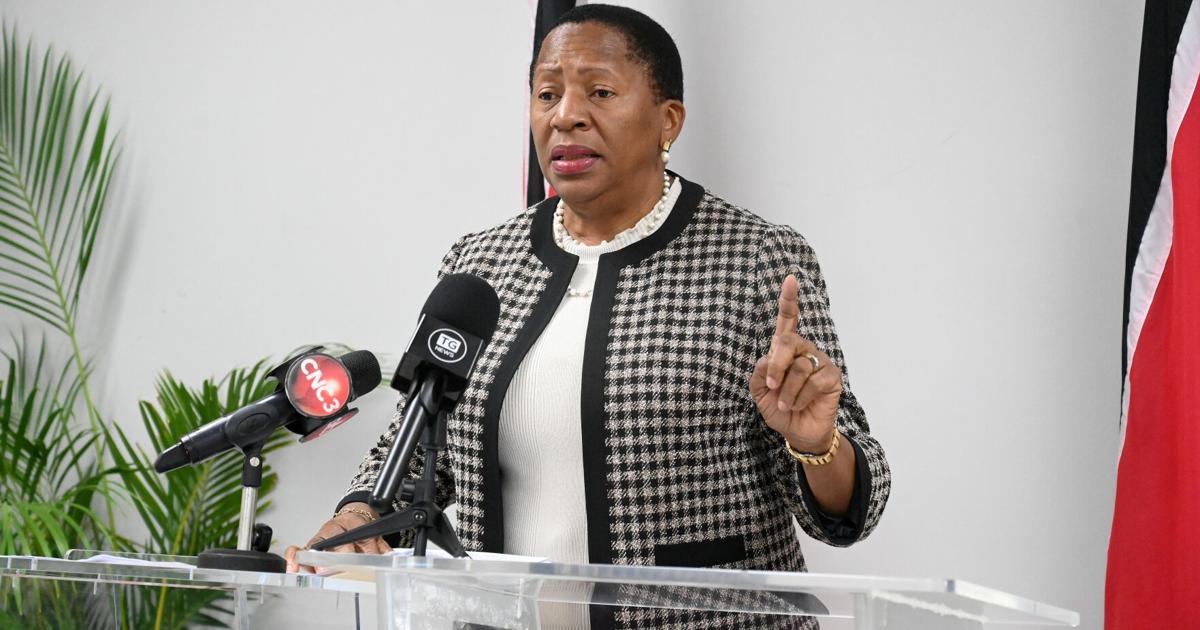
Penny to CoP: Explain leak of court order
In a press briefing held Wednesday at the Opposition Leader’s Office in Port of Spain, Pennelope Beckles, leader of Trinidad and Tobago’s main opposition People’s National Movement (PNM), is demanding full transparency into a major breach of court protocol that saw legally sealed legal documents related to a funding investigation into the party leaked to the public before they were even officially served. The breach centers on a court order compelling the PNM to turn over full financial records tied to the reconstruction of the party’s Balisier House headquarters in Port of Spain, which has become the latest flashpoint in a long-running political dispute over the party’s financing.
Beckles laid out the timeline of the controversy to reporters, recalling that the current ruling government first leveled explosive claims against the PNM back in 2025. Shortly after Prime Minister Kamla Persad-Bissessar returned from that year’s United Nations General Assembly, she publicly alleged inside Parliament that the PNM’s Balisier House reconstruction fund was fueled by drug trafficking and other illicit activities. Notably, Beckles pointed out, the Prime Minister has never repeated those unsubstantiated claims outside the protected walls of Parliament, where she enjoys parliamentary privilege from defamation claims.
The formal investigation moved forward on July 16, when PNM General Secretary Foster Cummings was served a court order under the 2019 Civil Asset Recovery and Management and Unexplained Wealth Act, requiring the party to disclose all records detailing the sources of funding for the headquarters project. Beckles confirmed that she was scheduled to receive a copy of the order shortly after Cummings, but what has sparked alarm is the fact that the full contents of the order—including all supporting affidavits and particulars—were published and circulated publicly before Cummings was even officially handed the document.
Under the legislation that authorized this court action, Beckles emphasized, all court filings related to these types of unexplained wealth investigations are explicitly required to be kept under seal. Section 58.1 of the act mandates sealed filings for all High Court documents in these matters, and Section 74 enforces strict confidentiality requirements for any official involved in administering the legislation—from agency trustees and property managers to legal advisors and contracted experts. All parties are legally required to treat all case-related documents and information as strictly secret.
The law treats breaches of this confidentiality rule as a serious criminal offense. Anyone who recklessly or intentionally discloses protected information is liable for criminal prosecution, carrying penalties of up to a TT $250,000 fine and five years imprisonment on summary conviction, and up to a TT $500,000 fine and seven years imprisonment for indictment. Compounding the breach, Beckles added, a video of the moment the court order was served to Cummings was also recorded and circulated publicly, a move she called a troubling indicator of the state of governance in the country.
Beckles has formally called on Commissioner of Police Allister Guevarro to launch a full public investigation and answer for how this leak occurred. The PNM leader stressed that the party is not seeking any special exemption from legal process—only that existing laws and procedures be followed correctly. She argued the leak raises serious questions about the integrity of the rule of law under the current administration, and whether the public can still trust the government to uphold due process.
“They are more concerned with the drama than they are concerned with the procedure,” Beckles said of the ruling administration, rejecting what she frames as a politically motivated public relations campaign against the PNM. She added that the party has no intention of litigating the case through the media, and will pursue all legal arguments through the proper court channels. The PNM has already assembled a full legal team to respond to the court order, and Beckles reiterated that the party has nothing to hide regarding the Balisier House project.
Beckles explained that the PNM has owned the land for the headquarters for roughly 65 years, and all funding for the reconstruction has come from a combination of public party fundraisers, car raffles, and voluntary donations from supporters—all of which are a matter of public record. She also urged the public to question the timing of the investigation and the leak, asserting that the high-profile, improper release of the sealed documents was no accidental oversight. “Do not think that the way this matter is going is by accident,” she said.
-
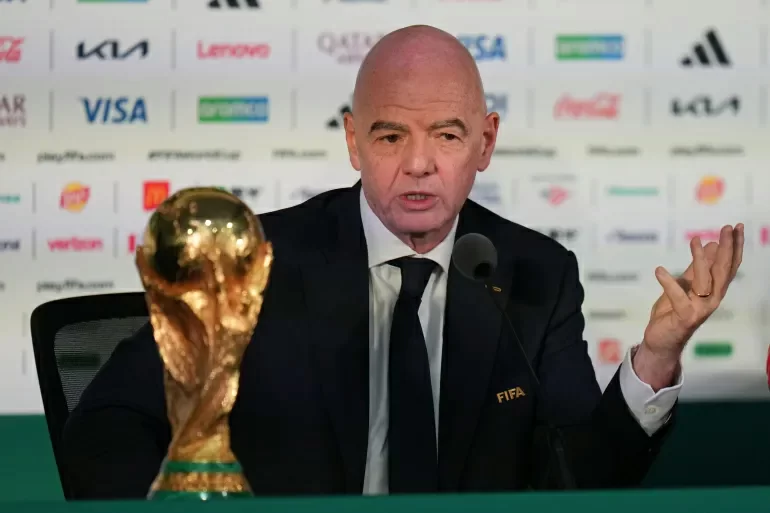
Infantino, FIFA, Kushner en het plan om het WK te verkopen
Just weeks after the final whistle of the 2026 expanded 48-team FIFA World Cup, which was lifted by Spain following a tense final win over Argentina, football’s global governing body finds itself mired in a fresh firestorm over a radical new proposal that threatens to reshape the future of the world’s biggest sporting tournament. FIFA president Gianni Infantino has put forward a plan to sell minority stakes in future World Cup editions and other FIFA events to private investors, a move that has drawn fierce condemnation from across the football ecosystem, including from his own predecessor, European football’s governing body UEFA, and Britain’s new prime minister. Even talk of a full UEFA boycott of FIFA tournaments is now on the table as critics warn the plan risks selling football’s soul to profit-driven external interests.
At the core of the proposal is the creation of a $20 billion subsidiary, FIFA Forward Enterprise (FFE), which will take over management of the World Cup and other top FIFA events. FIFA says it will retain a majority stake in FFE, keeping full control over all sporting decisions, tournament regulations, fixture schedules and governance of the sport. Up to $4.2 billion would be raised through the sale of minority shares to outside private investors, with U.S. venture capital firm Thrive Eternal—founded by Joshua Kushner, brother of Donald Trump’s son-in-law Jared Kushner—lined up as the potential leader of the investor group.
FIFA frames the plan as a natural extension of its existing revenue model, which already generates billions annually from broadcasting rights, sponsorship deals and commercial partnerships. The organization argues that all net proceeds from the share sale will be reinvested back into global football development, from grassroots amateur programs to elite international competitions, lifting the sport across all member nations. “Football is the most popular sport in the world. Some parts of the game have turned that popularity into enormous commercial value. We celebrate that success and want it to continue, because it lifts the entire sport to a higher level,” Infantino said in a statement defending the plan.
Infantino has given FIFA’s 211 global member associations a deadline of September 19 to approve the proposal, which includes a one-time $20 billion payout as part of the deal. He has described the creation of the $20 billion subsidiary as a “unique financing opportunity” and said he is fulfilling his duty to put the plan before FIFA’s membership for a vote.
But critics have lined up to reject the proposal outright, arguing it crosses a fundamental line by turning the cultural institution of the World Cup into a tradeable commodity for profit. Leading the condemnation is former FIFA president Sepp Blatter, who led the organization for 17 years until 2015, when he was replaced by Infantino. Blatter called the plan unthinkable during his tenure, warning that turning FIFA into a profit-focused enterprise will strip it of its core purpose.
“Football does not belong to any individual, nor to any institution. It belongs to the people,” Blatter told Reuters. “The World Cup is not commercial property for a handful of administrators. It is part of the cultural heritage of global football. FIFA is the guardian of the World Cup, not its owner. Modern football has survived for more than a century because it belongs to the people. That principle must never change.” Blatter added that profit-seeking investors with demands for influence are fundamentally at odds with the interests of FIFA’s member associations, arguing the plan would destroy the soul of the game.
UEFA, the European football confederation that counts 55 of FIFA’s 211 member associations, has issued an equally sharp rebuke, saying the proposal crosses a red line that football authorities should never cross. “The soul and governance of football are not trade goods, especially not without transparency over who will benefit financially. Nobody owns football. It is not FIFA’s to sell,” the organization said. UEFA will hold an emergency meeting later this week to discuss the proposal, and a boycott of FIFA tournaments is being floated as a possible response.
Britain’s newly appointed prime minister Andy Burnham has also added his voice to the criticism, writing on social media: “Football does not belong to investors, it belongs to the fans who fill stadiums every week. The World Cup is not a product, it is the biggest sports competition in the world, and it was never anyone’s to sell. If you sell a part of it, you have sold the whole of it. Football belongs to the fans, and it always will.”
Even CONCACAF, the confederation covering North and Central America and the Caribbean—host region for the 2026 World Cup—has raised concerns, saying it was not consulted on the plan and that the lack of transparency around the proposal is deeply worrying.
This latest controversy comes as criticism of FIFA’s recent decisions continues to simmer following the 2026 tournament. Even before the tournament kicked off, the biggest point of contention was exorbitant ticket and travel prices that priced out many average-income fans, continuing a long-running critique that FIFA prioritizes corporate revenue over supporter access. During the tournament, Infantino’s decision to suspend a red card issued to U.S. striker Folarin Balogun drew fierce pushback from UEFA, which said the move undermined the competitive integrity of the tournament. Even the mandatory hydration breaks introduced for the 2026 edition were criticized as commercially motivated interruptions that disrupted the flow of matches.
FIFA has drawn parallels between its proposed model and existing minority stake frameworks used in other professional sports, most notably cricket. England’s The Hundred competition, run by the England and Wales Cricket Board, sells minority stakes to investors while retaining central governance control, a structure similar to what FIFA has proposed. The Indian Premier League, which pioneered the franchise equity model in 2008, has seen its total valuation rise more than 11% this year to $20.6 billion, a growth success that FIFA appears to be aiming to replicate. Still, analysts point out that even minority shareholders almost always demand some level of input into strategic decisions—a reality that lies at the heart of critics’ concerns that outside investors will eventually reshape football governance to prioritize returns over the sport’s cultural and social mission.
With Europe accounting for just over a quarter of FIFA’s voting members and having produced six of the last eight World Cup winners, a coordinated rejection from UEFA could derail Infantino’s plan. As the football world braces for the September vote, the future of the World Cup as a global public sporting institution hangs in the balance.
-

Saint Kitts and Nevis expresses concern at Black Sea security incidents | Insurance Marine News
The small Caribbean island nation of Saint Kitts and Nevis has publicly voiced its deep concern regarding a series of recent security incidents that have disrupted navigation and trade in the Black Sea, according to an official statement published by maritime industry news outlets in late July 2026.
As a state dependent on open, secure global maritime trade routes for its economic activity, the country joins a growing chorus of international actors highlighting the escalating risks to civilian shipping, crew safety, and regional stability in the Black Sea basin. The ongoing disruptions in this key waterway have already created ripple effects across global supply chains, driving up insurance costs for cargo transiting the region and creating uncertainty for maritime operators worldwide.
Saint Kitts and Nevis’ statement underscores that even small, geographically distant nations are not insulated from the consequences of regional security breakdowns in critical maritime corridors. The country has called for renewed diplomatic efforts to de-escalate tensions and establish safeguards to protect commercial shipping and freedom of navigation in the Black Sea, aligning with calls from many other United Nations member states for a return to peaceful, unimpersed maritime activity in the region.
-
Premier Brantley: Geothermal Project Advances Toward Drilling Phase
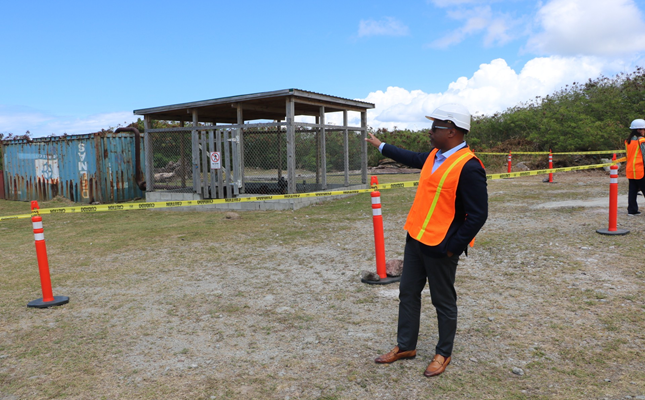
After a period of temporary delays caused by unresolved internal issues, one of the Caribbean’s most high-profile renewable energy initiatives is moving full steam ahead, with Nevis Island Administration (NIA) officials confirming the landmark Nevis Geothermal Project is poised to enter its critical drilling phase by the end of 2026.
In a monthly press briefing on July 28, 2026, Honourable Mark Brantley — Premier of Nevis and the island’s Minister of Finance and Energy — announced that all outstanding barriers to progress have been resolved, clearing the way for mobilization of a specialized drilling rig in the coming weeks. The rig, currently located in Iceland, will undergo final inspection by Nevis project representatives before being shipped to the island’s Hamilton well site, with drilling operations set to launch before the close of the year.
While the original project timeline targeted rig mobilization by August 2026, Brantley noted that only a minor adjustment to the schedule is now needed, thanks to resolved issues and consistent funding flow that has kept the initiative on track for its 2026 drilling target. For decades, Nevis has held untapped geothermal energy potential, but logistical and financial barriers prevented large-scale development of the resource. Brantley emphasized that the project’s steady progress to date would not have been possible without the cross-government partnership between the NIA and the federal government of St. Kitts and Nevis, led by Prime Minister Dr. Terrance Drew.
This collaboration enabled Nevis to secure the critical international financing required to advance the project, turning a long-held community vision into an actionable infrastructure initiative. “This is how the country is supposed to work,” Brantley stated, noting that both Nevis and St. Kitts will share the benefits of clean, low-cost renewable energy once the plant is operational. He extended public gratitude to Drew and the federal administration for their ongoing cooperation.
As the largest renewable energy project ever undertaken by the Federation of St. Kitts and Nevis, the initiative carries transformative potential for the nation’s energy landscape and economic trajectory. The project will unlock Nevis’ abundant underground geothermal resources to generate 30 megawatts of consistent, low-emission electricity for both islands, drastically cutting the nation’s reliance on costly imported fossil fuels while strengthening long-term energy security.
Development costs are covered by a blended international financing package, including a US$51.6 million allocation from the Green Climate Fund administered through the Caribbean Development Bank and the Inter-American Development Bank, alongside a US$20 million investment from the Saudi Fund for Development. The upcoming launch of drilling marks the most significant milestone to date for the project, bringing the federation one step closer to a more sustainable and affordable energy future for all residents.