
Authorities in St Michael have successfully concluded a search operation for a missing individual from the Deacons area. Ricardo Antonio Hinds, a 25-year-old resident of Block 3B, Madison Terrace, who was reported missing on Monday, December 29, has been located and confirmed to be in good health. The local police department officially closed the case after verifying his safety and well-being. In a public statement, law enforcement officials extended their gratitude to both citizens and media outlets for their vital assistance and collaborative spirit throughout the investigation. The coordinated effort between the community and authorities demonstrates the effectiveness of public partnership in resolving such urgent matters, ultimately ensuring a positive outcome for all involved parties.
作者: admin
-
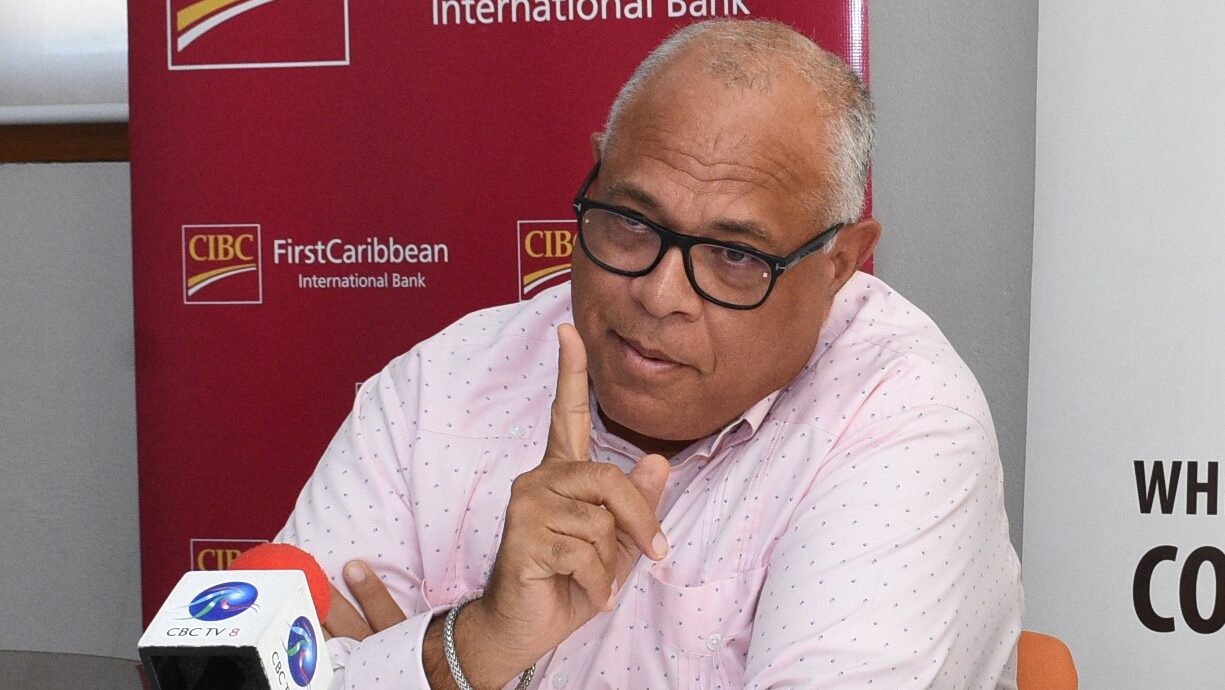
CIBC Caribbean delivers US$159.7 million profit
CIBC Caribbean Bank Limited has demonstrated financial resilience by remaining profitable throughout 2025, despite absorbing a substantial loss from a non-core investment. The institution reported net earnings of US$159.7 million for the fiscal year concluding October 31, representing a decline from the previous year’s US$277.5 million.
CEO Mark St Hill attributed the diminished figures to elevated credit costs, recently implemented tax regulations, and an exceptional investment loss. The bank’s headline performance was significantly affected by atypical financial elements, including a US$56.2 million fair value depreciation on a non-core investment, partially mitigated by a US$2.4 million net gain from previously announced divestitures.
When excluding these extraordinary items, the bank’s adjusted net income reached US$213.5 million, compared to US$285.2 million in 2024. This underlying performance was primarily pressured by increased provisions for credit losses and heightened income taxes resulting from the Bahamas’ adoption of the Global Minimum Tax Framework.
Despite these financial headwinds, CIBC Caribbean successfully expanded its lending operations across the region. The bank’s client-centric strategy, supported by a robust capital foundation, facilitated the development of its largest performing loan portfolio in history. This achievement enabled the institution to maintain solid core operational performance while managing specific credit and operational challenges.
The broader Caribbean economic landscape witnessed moderated expansion in 2025, with tourism growth decelerating across several markets. Inflationary pressures generally receded alongside declining commodity prices, while fiscal conditions improved in certain territories.
Looking forward, the region faces persistent risks including evolving global trade policies, geopolitical tensions, and weather-related disruptions. Nevertheless, the regional outlook remains broadly stable entering 2026.
Financially, strong loan portfolio growth effectively counterbalanced the negative impact of lower US interest rates on net interest income. Operating expenses increased by 6% (US$26 million) due to elevated personnel costs and continued investments in technological infrastructure and strategic initiatives.
The bank reinforced its provision for credit losses, primarily driven by impaired securities and enhanced risk modeling methodologies. CIBC Caribbean maintained strong capital adequacy, with tier one and total capital ratios standing at 18.3% and 20.8% respectively at fiscal year-end. Reflecting this financial strength, the board authorized a quarterly dividend of US$0.0125 per share, payable January 15, 2026.
-

Petition calling for Nicki Minaj to be deported gathers over 50,000 signatures
A controversial petition demanding the deportation of rapper Nicki Minaj to her birthplace of Trinidad and Tobago has rapidly accumulated over 50,000 signatures on Change.org. The campaign emerged following Minaj’s appearance at Turning Point USA’s AmericaFest, where she publicly endorsed former President Donald Trump and Vice President JD Vance while sharing the platform with prominent conservative figures.
The petition specifically addresses U.S. government agencies including ICE, the FBI, and the White House, urging authorities to review Minaj’s residency status. It cites multiple grievances including her verbal attacks on The Carters (Beyoncé and Jay-Z), her marriage to registered sex offender Kenneth Petty, and allegations that she has intimidated her husband’s victims. The petition argues that ‘deporting Nicki Minaj back to her home country, Trinidad, seems the most viable solution to curtail her harmful actions’ and would ‘send a clear message that harassment and support of criminal activity will not be tolerated.’
Many signatories have expressed concerns about Minaj’s apparent political pivot, which marks a significant departure from her previous advocacy for LGBTQ+ rights and racial justice. One signee commented on the petition’s platform about unequal treatment of immigrants, drawing parallels to their own family’s experiences with the immigration system.
While the petition appears to contain satirical elements—the organizer identifies as ‘Pedonika Minaj’—it touches on factual aspects of Minaj’s immigration status. During a recent TikTok live session, Minaj confirmed she is not a U.S. citizen but holds a green card, while controversially suggesting she deserved honorary citizenship due to taxes paid.
Legal experts emphasize that such petitions hold no binding authority and deportation proceedings against a long-term legal resident like Minaj would be highly improbable, particularly given her established residency since childhood. Despite its lack of legal standing, the campaign highlights the intense polarization surrounding celebrity political endorsements and the evolving expectations of artists in sociopolitical discourse.
-

U.S. Remittance Tax Set to Pinch Belizean Wallets
A newly enacted U.S. legislative measure is poised to create significant financial pressure for numerous Belizean households reliant on international monetary support. Effective January 1, a uniform one-percent levy will be imposed on select outbound remittances from the United States, directly impacting transfers destined for Belize.
This fiscal policy, embedded within President Trump’s comprehensive ‘One Big Beautiful Bill’ legislation, will have tangible consequences in Belize despite being implemented stateside. Remittances constitute an essential economic lifeline for thousands of Belizean families, frequently serving as their primary means of securing basic necessities.
Financial service providers including Western Union and money order systems will transmit reduced amounts to recipients. These diminished transfers will inevitably affect household capacities to cover fundamental expenses including nutritional requirements, housing costs, educational expenditures, and healthcare services.
The macroeconomic implications extend beyond individual families to Belize’s national economic landscape. Data from the Inter-American Development Bank reveals that Belize received approximately $173 million in remittances through November this year, with 84% originating from U.S. sources. The traditionally high-volume Christmas transfer period amplifies the potential impact of this taxation measure.
While a one-percent reduction might appear negligible initially, its aggregate effect could generate substantial economic reverberations throughout Belize. Reduced household income typically correlates with decreased local consumer spending, potentially creating downstream effects on businesses and public services across the nation.
-

Correction and Apology to Joshua Francis
In a significant act of journalistic accountability, Dominica News Online has issued a comprehensive public apology and full retraction for falsely labeling political figure Joshua Francis as a self-confessed pedophile. The publication admitted to serious editorial failures in verifying a reader comment that appeared in a December 10, 2025 article about the United Progressive Party’s website launch.
The media organization conducted an extensive internal investigation that completely debunked the allegation. The probe confirmed that Francis never faced any sexual offense charges in a court of law and revealed that a previous case against him had been dismissed years earlier.
This false publication has triggered significant legal consequences, with Francis initiating legal proceedings against the State of the Commonwealth of Dominica for constitutional rights violations. The news outlet acknowledged the severe professional and personal damage caused to Francis, his family, and associates.
Dominica News Online’s management accepted full responsibility for the error and expressed profound regret for the distress caused. The organization announced it is implementing strengthened internal protocols to prevent similar incidents, reaffirming its commitment to journalistic integrity and ethical reporting standards. This case highlights the critical importance of verification processes in digital media and the serious real-world consequences of publishing unsubstantiated claims.
-

China Launches Massive Military Drills Around Taiwan
In a significant escalation of regional tensions, China has initiated comprehensive military maneuvers encircling Taiwan, deploying combined forces from its army, navy, air, and rocket divisions. The extensive two-day exercises, officially designated “Justice Mission-2025,” commenced on December 30, 2025, featuring live-fire artillery drills and precision rocket launches that reportedly landed in closer proximity to Taiwanese territory than previous operations.
The provocative military demonstration comes as a direct response to Washington’s recent authorization of an $11.1 billion defensive arms package to Taipei, including advanced HIMARS rocket systems and surveillance drones. Chinese authorities characterized the drills as a necessary warning against what they term ‘Taiwan independence separatist activities’ and foreign interference in China’s internal affairs.
Taiwan’s defense ministry reported tracking approximately 130 Chinese military aircraft and 22 naval vessels throughout the operation, with an unprecedented 90 warplanes crossing the median line of the Taiwan Strait. Taiwanese armed forces responded with heightened alert status, scrambling fighter jets, deploying naval patrols, and activating coastal missile defense systems.
The exercises generated substantial disruption to civilian air traffic, compelling the cancellation of dozens of commercial flights and affecting over 6,000 travelers. Military analysts observed that the complexity and scale of the drills appear designed to simulate effective blockade scenarios, potentially signaling China’s evolving strategy to deter foreign military intervention in the Taiwan Strait.
International reaction emerged promptly, with Belize’s foreign ministry issuing a formal condemnation of China’s ‘military intimidation’ against Taiwan, emphasizing the undermining of peaceful dialogue and stability in the region. The United States and Taiwanese officials have reiterated the legitimacy of defensive arms agreements and the right to self-defense under international norms.
-

Uitspraak in strafzaak Danielle Veira uitgesteld
In a significant judicial development, the sentencing hearing for Danielle Veira, the former Director of National Security, has been formally postponed until January 30th. The scheduled proceedings were abruptly delayed after Veira’s legal representatives presented a medical certificate to the Court of Appeal, indicating her inability to attend today’s crucial session.
Presiding Judge Cynthia Valstein-Montnor emphasized the judicial preference for the defendant’s physical presence during sentencing announcements. The court additionally requires extended deliberation time to thoroughly consider the appropriate verdict in this complex case.
Veira faces multiple serious charges including complicity in the kidnapping of Rodney Cairo, unlawful entry, armed robbery participation, and unauthorized issuance of firearm permits. The Public Prosecutor has recommended a substantial nine-year prison sentence for the former intelligence chief.
During last week’s emotional courtroom appearance, Veira expressed profound distress, stating she never anticipated facing criminal proceedings. “I have been mockingly portrayed as both suspect and delinquent,” she declared in her final statement, visibly overcome by the gravity of the situation.
The case has drawn considerable public attention due to Veira’s former high-ranking position and the severity of the alleged offenses. Legal experts suggest the medical postponement could indicate strategic developments in the defense approach as the judicial process enters its final phase.
-

How the Law and the Court are continuing to circle around politicians
In a landmark ruling with profound implications for political discourse, the Eastern Caribbean Supreme Court has delivered a powerful judgment in Frederick v. Chastanet [2025], establishing stringent legal boundaries for political speech. The case centered on allegations made by former Prime Minister Allen Chastanet against sitting minister Richard Frederick, whom he accused of corruption, dishonesty, and abuse of office in a widely circulated Facebook video.
The court meticulously applied Saint Lucia’s defamation framework, incorporating the UK Defamation Act 2013 through Article 917A of the Civil Code. Justice Pariagsingh’s ruling emphasized that while robust political debate is essential to democracy, allegations of criminal conduct must be substantiated with evidence rather than presented as rhetorical weapons.
Critical to the case was the failure of Chastanet’s defenses of truth, honest opinion, and public interest. Testimony from key witnesses, including Stephenson King and managing directors of SLASPA and NHC—all appointed during Chastanet’s own administration—systematically dismantled the factual basis for the allegations. Records revealed no objection to the land sale in question, no existing plans for a marine police base on the property, and full compliance with established board processes.
The judgment particularly scrutinized the casual deployment of the term ‘corruption’ in political rhetoric. The court noted that such language carries specific legal connotations of misuse of office, abuse of public trust, and improper enrichment—not merely colorful criticism. By using these terms without evidence, politicians risk eroding public trust and discouraging honest individuals from public service.
Regarding serious harm, the court considered both the significant reach of the Facebook video and the gravity of allegations against a sitting minister. The ruling distinguished between the ‘court of public opinion,’ where unsubstantiated claims may circulate freely, and the legal system where words carry precise consequences.
The court awarded $60,000 in damages to Frederick, noting that while no financial loss was demonstrated, the allegations caused significant humiliation and embarrassment. Aggravating factors included Chastanet’s refusal to apologize, persistence in unsubstantiated claims, and conduct during litigation.
Beyond the immediate case, the judgment raises crucial questions about democratic accountability. It challenges citizens, institutions, and media to move beyond passive consumption of political rhetoric and actively demand evidence for serious allegations. The ruling suggests that effective democracy requires continuous citizen engagement through mechanisms like freedom of information requests, parliamentary petitions, and rigorous media scrutiny—not merely electoral participation every five years.
This decision establishes an important precedent for Caribbean jurisprudence, signaling that the judiciary will hold politicians accountable for unfounded allegations that damage reputations and undermine governance.
-
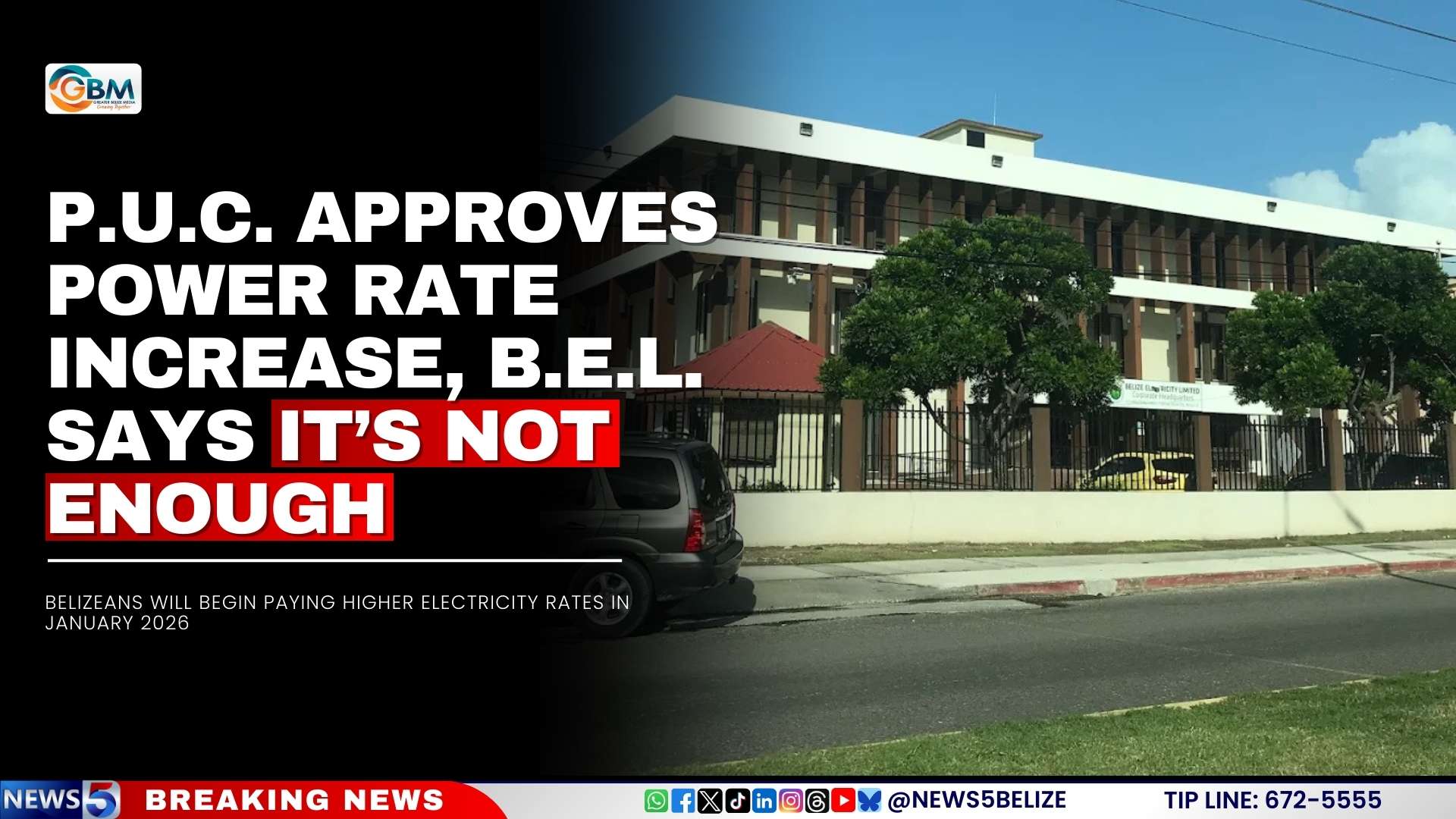
PUC Approves Power Rate Increase, BEL Says It’s Not Enough
The Public Utilities Commission (PUC) of Belize has sanctioned a progressive electricity tariff increase set to commence in January 2026, marking a significant development in the nation’s energy sector. While Belize Electricity Limited (BEL) has consented to implement the approved rate adjustment, the company maintains that the increment falls substantially short of addressing its pressing financial obligations.
The regulatory body authorized a rate elevation of $0.0337 per kilowatt-hour, to be phased over a 30-month period. This decision represents a considerable reduction from BEL’s initial proposal of $0.0549 per kilowatt-hour across 24 months. The discrepancy creates an $18.8 million fiscal gap that the power provider claims was essential for maintaining system reliability during periods of severe supply constraints.
In comprehensive documentation submitted to regulators, BEL detailed substantial financial pressures including $52.5 million in outstanding payments to independent power producers, $92 million in domestic debt, and $82 million in debt service requirements due by 2027. The company further revealed expenditures exceeding $80 million on emergency gas turbine installations to prevent widespread blackouts.
Among these critical infrastructure projects, the San Pedro Gas Turbine initiative accounted for $56.1 million in costs and encountered significant implementation delays. BEL emphasized the necessity of these investments, stating that without them, Belize would have faced scheduled power interruptions of up to two hours daily.
Concurrently, the electricity provider acknowledged operational shortcomings, particularly regarding delayed renewable energy implementations. BEL estimated that postponements in planned solar projects resulted in approximately $53.6 million in forgone consumer savings by 2025. The company indicated that timely completion of these initiatives would have simultaneously boosted profitability and reduced debt levels.
-
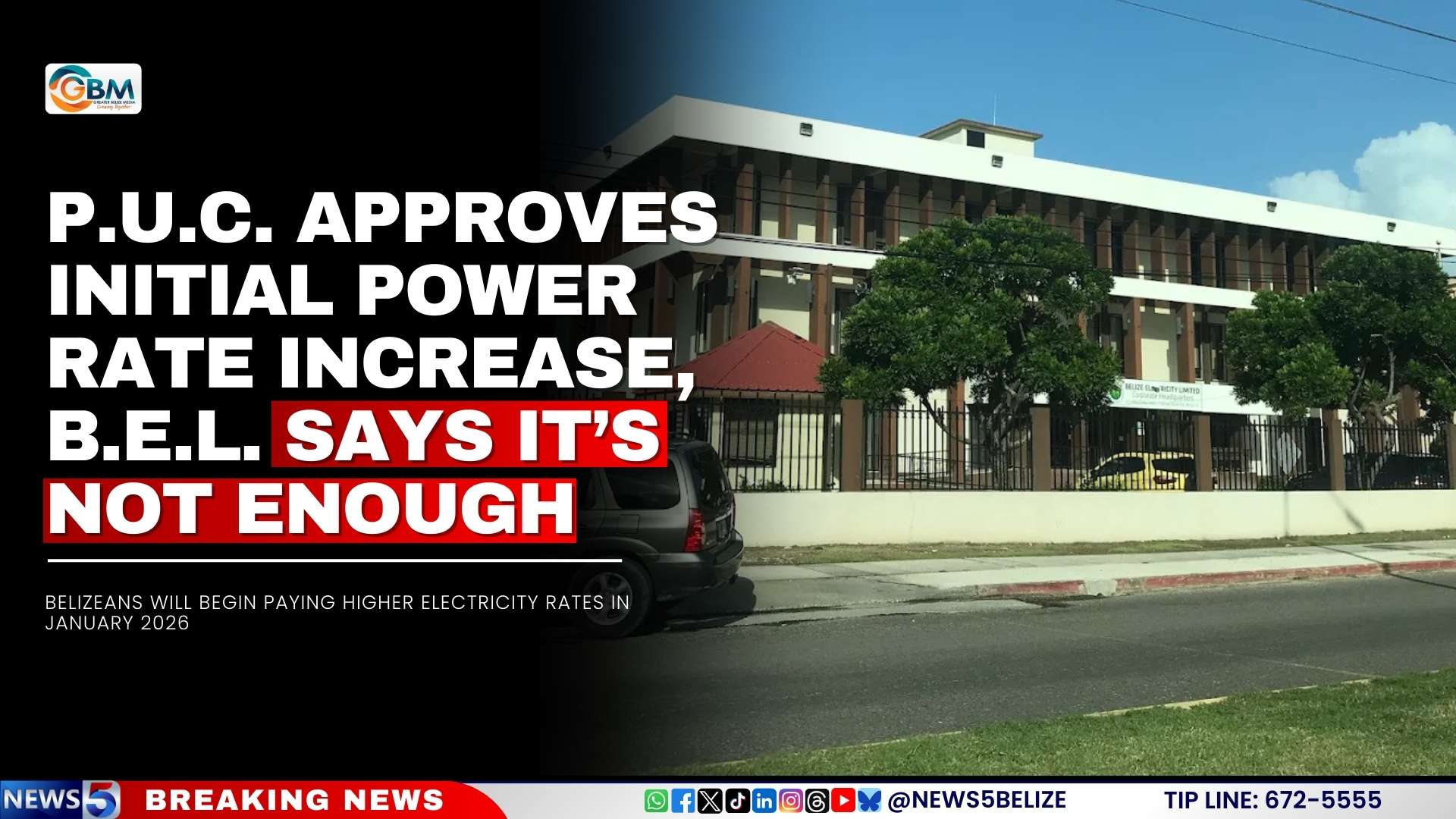
PUC Approves Initial Power Rate Increase, BEL Says It’s Not Enough
Belize’s energy consumers will face increased electricity bills starting January 2026 following the Public Utilities Commission’s (PUC) authorization of a partial rate adjustment for Belize Electricity Limited (BEL). While accepting the implementation of the approved increase, the national utility provider has raised concerns about the long-term financial viability of the nation’s power infrastructure under the current parameters.
The regulatory body has sanctioned a gradual rate elevation of $0.0337 per kilowatt-hour spread across a 30-month timeframe. This decision falls substantially short of BEL’s original petition for a $0.0549 increment over a condensed 24-month period. The discrepancy creates an $18.8 million financial gap that the company asserts represents essential investments made to ensure grid reliability during periods of critical supply constraints.
Financial documentation submitted to regulators reveals BEL’s substantial fiscal challenges, including $52.5 million in outstanding obligations to independent power producers, $92 million in domestic debt, and $82 million in scheduled debt service payments due before 2027. Additionally, the utility has expended over $80 million on emergency power generation infrastructure, including gas turbines deployed to prevent widespread blackouts.
Notable among these emergency measures is the San Pedro Gas Turbine project, which incurred costs of $56.1 million and experienced significant implementation delays. Company officials defended these expenditures as necessary preventive measures, stating that without these investments, Belize would have suffered daily two-hour service interruptions.
Concurrently, BEL acknowledged strategic shortcomings in renewable energy development. Delays in planned solar initiatives have resulted in an estimated $53.6 million in forgone consumer savings through 2025. The company noted that timely completion of these projects would have simultaneously boosted profitability and reduced outstanding debt levels.