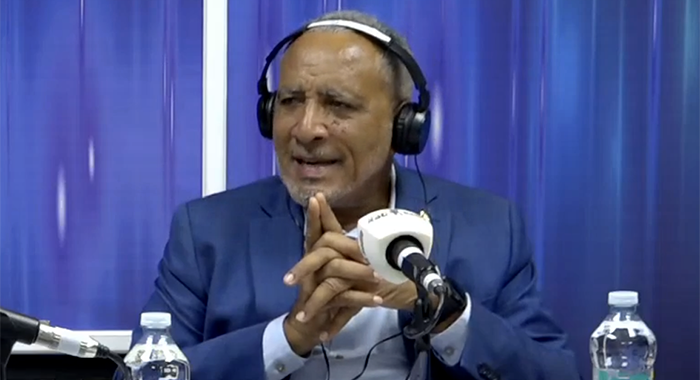
Facing growing public pressure over soaring household and business expenses across St. Vincent and the Grenadines, Prime Minister Godwin Friday laid out a comprehensive two-part strategy this Tuesday to address the nation’s rising cost of living crisis. In an address on NBC Radio, the leader of the eight-month-old New Democratic Party administration outlined that near-term interventions will prioritize curbing skyrocketing electricity costs, while long-term structural reforms will focus on building national economic resilience against volatile global external shocks. The current energy price surge, which has rippled across global oil markets, stems from ongoing conflict in the Gulf region – a challenge Friday confirmed the government is continuously evaluating to soften its impact on ordinary Vincentians. “The current surcharge on electricity is already unacceptably high, but it would be far worse without the proactive steps our administration has already put in place,” Friday stated, emphasizing that both the national government and state-owned electricity utility VINLEC must share the burden of elevated global fuel costs, rather than shifting the entire financial strain onto consumers. For Friday, electricity price inflation sits at the heart of the broader cost-of-living crisis, as every increase in utility costs flows directly through to household budgets and business operating expenses across every sector of the economy. “When VINLEC raises prices, the full surcharge gets passed directly to consumers and business owners. It touches every single person in this country,” he explained, adding that he has deep empathy for working families struggling to cover basic costs amid persistent energy price growth. The prime minister noted that his administration acted swiftly to counter price hikes earlier this year, rolling out targeted measures in May to offset rising diesel costs, the primary fuel used for the nation’s electricity generation. The three core immediate interventions include eliminating port fuel surcharges on all diesel imported by VINLEC, cutting or fully removing excise taxes on this imported fuel to lower the utility’s input costs, and pressuring VINLEC to absorb a portion of global fuel price increases instead of passing 100% of the cost to end users. According to Friday, VINLEC absorbed more than $730,000 in additional fuel costs in July alone, costs that would otherwise have appeared on consumers’ monthly electricity bills. Without these policy interventions, Friday warned, the per-kilowatt-hour fuel surcharge would exceed 90 cents – a level that would place unsustainable pressure on households, businesses and the overall national economy. Beyond pushing for shared cost absorption, Friday called on VINLEC to revise its customer disconnection policies to reflect the ongoing economic strain, urging the utility to extend longer grace periods for customers struggling to pay their bills. “VINLEC has to recognize that they cannot disconnect customers on the same rigid timelines they used before this crisis. We all need to show more flexibility and work together to get through this period,” he said. When discussing the long-term outlook, Friday acknowledged that temporary tax cuts and subsidies are short-term policy tools designed only to cushion the blow of an external price shock, not a permanent solution. Sustainable, long-term relief, he stressed, will require structural reform of the nation’s energy sector, rather than open-ended fiscal subsidies. The administration’s long-term energy strategy centers on reducing national vulnerability to global oil price volatility by investing in affordable renewable energy and building more sustainable domestic energy systems, with VINLEC tapped to lead the renewable transition, rather than treating clean energy as a competing force. “VINLEC has to be at the forefront of this shift so we can build a more stable, sustainable energy supply for the whole country,” Friday told radio listeners. While the government will continue to adjust fuel taxes to lower costs within the limits of constrained national public finances, Friday made clear that St. Vincent and the Grenadines cannot depend on permanent fiscal giveaways to keep electricity prices affordable over time. Beyond energy policy, Friday outlined a series of additional targeted measures to reduce everyday living costs, with a specific focus on low-income households and families with school-aged children. The administration is rolling out periodic VAT-free days to deliver direct, visible financial relief to consumers. The first VAT-free event, held in December 2025 in the capital Kingstown, drew what Friday called a “phenomenal” response, with unprecedented consumer demand. A second VAT-free day has been scheduled for August 28, this time tailored specifically to back-to-school shopping, unlike the broad, general public event held in December. After many businesses reported that they underestimated consumer demand for the December event, the government provided far more advance notice for the August promotion. Friday also called on local retailers to match the government’s fiscal sacrifice by passing additional savings onto consumers through their own price discounts. Friday framed the targeted VAT-free policy as part of a broader government philosophy focused on protecting the nation’s most vulnerable groups during the current cost squeeze. Among other support measures, the administration has raised monthly public assistance payments to EC$500 to support low-income and vulnerable residents, preventing them from being pushed into financial ruin by current economic conditions. The government has also eliminated all registration fees for secondary schools and the national Community College, and will cover all exam fees for the upcoming cohort of final-year secondary school students. “No student should have to fundraise to pay for eight or ten exit exams just to finish their secondary education. This is a core part of public education, and the state will take on this responsibility,” Friday said.
作者: admin
-

LIVE: Presentation of National Budget 2026/2027
The content submitted for processing only contains social media sharing prompts including “Share”, “Tweet”, “Share”, and “Pin”, with no complete, substantive news text included. This means there is no core event, background information, or factual detail available to conduct the requested news analysis, rewriting, or classification. Without a full original news article, it is impossible to carry out the structured processing work as required. Users are advised to provide the complete, full text of the target news story to receive the comprehensive analysis and rewriting output outlined in the requirements.
-
US proposes closure of embassy in Grenada
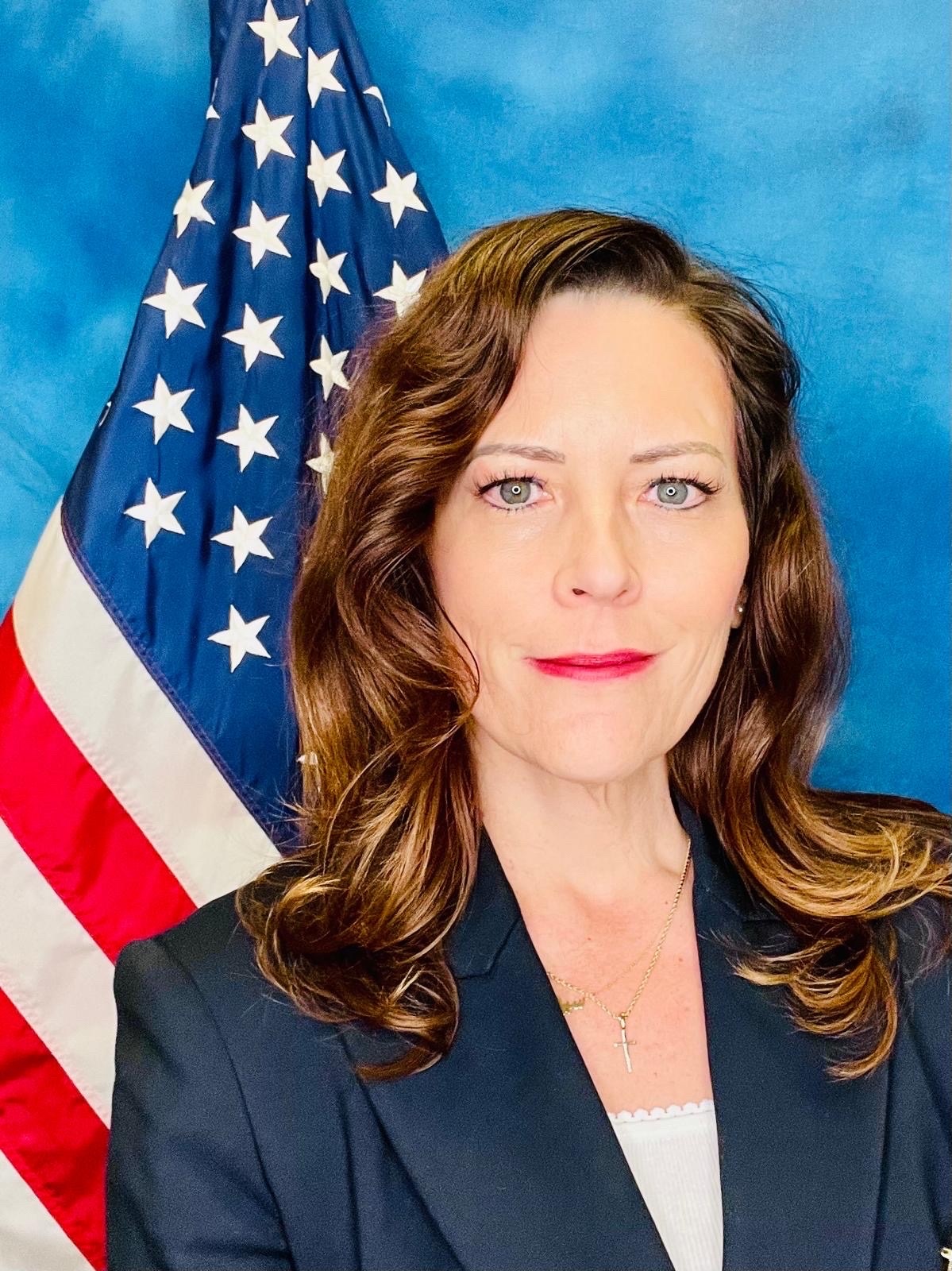
The United States Department of State has officially notified Congress of a proposed restructuring of America’s global diplomatic network, which would shutter the U.S. Embassy in Grenada alongside four other overseas diplomatic outposts, marking the third attempt to close the Grenada mission since it opened more than four decades ago.
Alongside the Grenada embassy, the proposal targets the U.S. consulates in Winnipeg, Canada, and Nagoya, Japan, a consulate in Medan, Indonesia, and an embassy branch office in Douala, Cameroon, as part of a broader push to trim the country’s overseas diplomatic footprint. If approved, all operations at these facilities would be wound down following the completion of mandatory congressional consultation, a requirement under U.S. federal law for any overseas mission closure.
Established in February 1984, just months after the 1983 U.S. military intervention in Grenada, the U.S. Embassy in St. George’s L’anse aux Épines district serves as the primary diplomatic hub for the entire tri-island nation of Grenada, Carriacou, and Petite Martinique. It provides on-the-ground consular support for U.S. citizens traveling, living, and working in the country, and manages all official bilateral relations between Washington and St. George’s. Currently, day-to-day leadership of the mission falls to resident Principal Officer Cindy Diouf, who oversees a team of U.S. Foreign Service staff and locally hired Grenadian employees. Overall oversight of the mission falls to Karin Sullivan, U.S. Chargé d’Affaires for the Eastern Caribbean, who is based at the U.S. Embassy in Bridgetown, Barbados.
Secretary of State Marco Rubio framed the proposed restructuring as a efficiency-driven adjustment, following a series of staffing and budget cuts to the State Department’s domestic operations over the past 12 months. “We are focused on ensuring that our diplomatic footprint is efficient, effective, and delivers results for the American people, while adhering strictly to statutory congressional notification procedures,” a department spokesperson said in an official statement responding to media questions about the plan. The department has not yet released public details on how many total positions across all proposed closures would be eliminated, or what cost savings the restructuring is projected to generate.
This latest proposal is not the first time Washington has targeted the Grenada embassy for closure. A decade after the mission opened, in May 1994, the Bill Clinton administration put forward a similar plan as part of post-Cold War cost-cutting efforts. That proposal was ultimately scrapped after fierce pushback from Congress, led by the Congressional Black Caucus and Republican lawmakers, who argued that closing the mission would disrespect the U.S. military personnel who served and died in the 1983 intervention. A second attempt emerged just over a year ago, in April 2025, when the embassy was included on a leaked list of nearly 30 overseas missions under review for potential closure.
Local and regional stakeholders have already raised significant concerns about the potential impact of shuttering the Grenada mission, particularly for the island’s largest higher education institution, St. George’s University. The university hosts more than 6,000 American students across its medical and veterinary programs, alongside hundreds of U.S.-based faculty and administrative staff, making it one of the largest concentrations of U.S. citizens in the Southern Caribbean. For this community, the on-island embassy provides critical, time-sensitive services, from emergency passport replacements and notary work to consular protection during crises and support for U.S. absentee voting. If the embassy closes, all of these services would need to be routed through the regional hub in Barbados, creating longer wait times and additional travel costs for users. Local businesses tied to U.S. trade, investment, and tourism would also face increased administrative barriers, stakeholders warn.
Under current U.S. law, the State Department cannot move forward with any mission closure until it completes formal consultations with the House Foreign Affairs Committee and the Senate Foreign Relations Committee. As the review process gets underway, no immediate changes to embassy operations or consular services have been announced, and the mission remains open to serve the public as of this reporting.
-

24th annual basketball tournament tips off in Bequia
The Bequia Basketball Association (BBA) launched its highly anticipated 24th annual island tournament on Saturday at the iconic Clive Tannis Hard Court, drawing hundreds of local spectators for an action-packed opening night that blended rising young talent and seasoned senior competition, while highlighting the sport’s steady expanding popularity across the Grenadines island.
Opening night marked a historic milestone for the BBA, with the debut of the association’s brand-new Under-12 Division. This new addition was directly born from the overwhelming success of the BBA’s year-long grassroots youth development initiative, which drew over 100 aspiring young basketball players from across Bequia to participate in training camps and skill-building sessions throughout the past year.
The first tip-off of the tournament went to the new Under-12 bracket, where the Ninjas secured a decisive 10-3 victory over the Falcons. Key to the Ninjas’ win were standout performances from core players Chase Kydd, Solomon Miller, and Kenolyi Ollivierre, who controlled both ends of the court from opening whistle to final buzzer.
The youth action continued shortly after with a matchup in the Under-16 Division, where defending league champions the Golden Knights delivered a convincing 31-11 win over the challenging Hornets squad. What made this result even more notable was the performance of Golden Knights guard Shyanna King, who finished the game as the contest’s top scorer – marking the first time in more than a decade that a female athlete has earned this distinction at the annual Bequia tournament. In a post-opening statement, the BBA highlighted this moment as a marker of progress, noting the consistent and steady increase in female participation across all of the association’s youth programs and competitive divisions across the island. Micah King led all scorers for the losing Hornets side.
Following the conclusion of the youth matchups, BBA President Sabrina Mitchell hosted the official opening ceremony, where she extended warm greetings to competing players, thousands of community supporters, and the tournament’s network of local sponsors. Mitchell emphasized how critical private and community backing has been to the growth of basketball in Bequia, offering special recognition to two local businesses, The Chappy House and Frangipani, for their consistent generous support of the association’s annual youth development camps and the long-running tournament itself. Mitchell also shared positive news for the tournament’s future, confirming that additional corporate sponsors are set to join the initiative as the competition progresses through its scheduled rounds.
The night’s action wrapped up with a highly anticipated competitive matchup in the First Division, where defending champions Court Kings went head-to-head with tournament debutants Smokin’ Aces, a squad made up primarily of emerging talent from across the Southern Grenadines. In what proved to be the most tightly contested game of opening night, Smokin’ Aces pulled off a stunning upset victory, closing out a thrilling 82-78 win after entering halftime trailing the defending champions by just one point, with a first-half score of 36-35.
Smokin’ Aces’ star Elroy Joseph, who recently represented St. Vincent and the Grenadines at the ANOCES Under-23 3×3 Tournament in Tortola where Team SVG brought home a second-place finish, led the upset with a historic individual performance. Joseph finished the night with 33 total points, 2 rebounds, 1 assist, 3 steals, and 1 block, anchoring his squad’s second-half comeback. For the losing Court Kings, forward Augustin Pollard put together a valiant effort in defeat, recording 24 points, 4 rebounds, 2 assists, 1 steal, and 1 block for the defending champions.
In post-opening assessments, the BBA declared the tournament’s opening night a resounding success, noting the overwhelming community turnout and electric atmosphere that created a strong foundation for the weeks of competition ahead. Unfortunately, unexpected severe heavy rainfall that hit the island on Sunday forced organizers to postpone all scheduled matchups for that day. BBA officials confirmed that the postponed fixtures will be rescheduled at a later date, with new dates and times announced to the public once confirmed.
Competitive play is set to resume this coming Wednesday, with three confirmed matchups across the three divisions: the Under-12 Falcons will take on the Ninjas in a rematch of opening night, the Under-16 defending champion Golden Knights will face off against the Titans, and the First Division will see East Blazers square off against the Court Kings, who look to bounce back from their opening night defeat.
In a public press statement, the Bequia Basketball Association extended an open invitation to all residents and visitors across the island to attend the tournament. “Admission to all matchups is completely free for attendees, and food and non-alcoholic and alcoholic beverages will be available for purchase from the on-site concession bar throughout the duration of the tournament,” the statement read.
-

Applications open for selected slots at expanded GEMS Artisan Market
One of Dominica’s most anticipated creative industry events is gearing up for its sophomore edition this year, with a strategic date shift designed to draw a larger, more diverse audience. The GEMS Artisan Market (GAM), which launched to widespread acclaim in its debut 2025 iteration, will return at the end of October, organizers confirmed in an official press statement issued in early August.
In a key change from last year’s August scheduling, the 2026 market has been rescheduled to coincide with Creole Day, a core component of Dominica’s annual Independence festivities. Organizers say the timing adjustment was crafted to capitalize on the annual surge of visitors that travel to the island for the national cultural celebrations. This wave of attendees includes Dominican nationals returning home for the holidays, members of the global Dominican diaspora, regional travelers from neighboring Caribbean islands, and international tourists seeking immersive cultural experiences. All of these groups represent a built-in audience eager to engage with local creators, the release noted.
Conceived as a launchpad for homegrown creative talent, the GEMS Artisan Market opens its doors to a wide range of creators: traditional artisans, independent craft makers, visual artists, small business entrepreneurs, and creatives across all disciplines. The event gives these creators a unique opportunity to showcase and sell their work directly to the seasonal influx of visitors to Dominica. Right now, organizers are actively accepting applications from vendors interested in claiming a spot at this year’s showcase.
Since its inaugural launch, the market has evolved beyond a simple pop-up event to become a foundational pillar of Dominica’s efforts to boost its creative economy. Organizers highlight that GAM plays a critical role in supporting local small business owners, preserving and promoting traditional Dominican craftsmanship, and strengthening the overall creative industries sector that contributes significantly to the island’s cultural identity and tourism economy.
To ensure the event retains its high-quality curation and diverse range of offerings, organizers have capped participation at 50 hand-selected exhibitors for 2026. That marks a major expansion from last year’s 20 spots, allowing more local creators to join the showcase. All vendors are required to complete pre-registration, and spots will be reserved exclusively for applicants that are selected to participate.
The 2026 GEMS Artisan Market is officially scheduled for Wednesday, October 28 and Thursday, October 29, and will be hosted at the Fort Young Hotel. The market will run from 2:00 PM to 10:00 PM each day, giving attendees ample time to browse exhibits. Beyond the opportunity to shop one-of-a-kind handmade and creative goods, the event will center Dominica’s rich cultural heritage across all activities. Visitors will be able to sample authentic local Dominican cuisine, watch live demonstrations of traditional artisan crafts, take advantage of professional networking opportunities with other creatives and industry leaders, and enjoy free nightly entertainment running from 7:00 PM to 9:00 PM both days.
Interested vendors can submit their applications via the GEMS Foundation’s official social media channels, or by reaching out to the Foundation directly. Applications will remain open until all 50 available spots are filled. For additional questions or more detailed information, applicants and interested attendees can reach out via email at [email protected]. A recorded audio interview with Jael Joseph, GEMS Foundation Director of Entertainment, is also available for those seeking more insight into the event’s planning and goals.
-

Byera Linkers, Famalay & Friends win in Shevern John cricket
The 2026 edition of the Shevern John T10 Cricket Tournament wrapped up in thrilling fashion on Sunday at the Owia Playing Field, with two new champions crowned across the men’s and women’s divisions. Byera Linkers took home the men’s title, while Famalay & Friends secured the women’s championship in dominant performances that capped off a successful tournament for the North Windward region.
In the women’s championship decider, Famalay & Friends delivered a clinical display to crush Warriors 11 by a 10-wicket margin. Warriors 11 won the toss and opted to bat first, but their batting lineup failed to find consistent momentum against disciplined bowling and fielding from Famalay & Friends. They were restricted to a total of just 50 runs from their allotted 10 overs, leaving a manageable target for their opponents.
Famalay & Friends responded with an unbroken and commanding batting performance, reaching the 51-run required total without losing a single wicket. The emphatic win secured their position as women’s champions, wrapping up an undefeated and impressive campaign throughout the tournament. The side maintained steady composure during the run chase, never giving Warriors 11 any opening to shift momentum back in their favor and closing out the contest with relative ease.
The men’s final saw another strong showing from the champion side, as Byera Linkers overcame a 66-run target set by Famalay & Friends to claim victory by 7 wickets. Famalay & Friends, already celebrating their women’s title earlier in the day, posted 66 runs after being put in to bat first. Byera Linkers, however, responded with a confident and well-executed chase, finishing the contest at 70 runs for the loss of just 3 wickets.
The comfortable victory highlighted Byera Linkers’ consistent strength across all stages of the tournament, as they overhauled the target without late drama to lift the men’s championship trophy.
Following the conclusion of the final matches, the North Windward Sports Committee issued an official statement extending warm congratulations to both title-winning squads. Organizers also praised every participating team for their dedication, high standards of sportsmanship, and the exciting, entertaining cricket they delivered throughout the multi-day competition.
The press release added special notes of gratitude to Hon. Shevern John, the event’s official sponsors, on-ground volunteers, match officials, attending supporters, and the broader community of North Windward. “Their continued support made this year’s tournament another outstanding success,” the statement read. It went on to note that the annual Shevern John T10 Cricket Tournament serves a dual purpose beyond competition: it provides a high-visibility platform for emerging local cricketing talent to showcase their skills, while simultaneously fostering stronger community cohesion and supporting youth development across the North Windward region.
-

The bottom line
Perspective-altering epiphanies often emerge in the most unexpected learning environments, and for Dr. Ishma Harford, a Commonwealth Scholar studying Health Analysis, Policy and Management, that life-changing insight came during a routine lecture on stakeholder engagement. The session’s core goal was straightforward: unpack how diverse actors interact within healthcare structures, how each party shapes institutional decisions, and how those same decisions ripple out to impact every group involved. What Dr. Harford walked away with, however, was an unplanned, deeply unsettling observation about the fundamental imbalance at the heart of modern care systems.
The analytical framework at the center of the lesson was the stakeholder map, a long-used strategic visualization that sorts actors along two core axes: a stakeholder’s level of power to shape organizational decisions, and their level of vested interest in the final outcome. In simple terms, the tool is designed to align which groups have the capacity to drive change against which groups care most deeply about the results of that change. What this exercise laid bare for Dr. Harford was a glaring paradox: the patient – the very person for whom the entire healthcare system exists – ranks extremely high on interest but shockingly low on decision-making power.
For any patient, the stakes of healthcare decisions could not be higher: outcomes shape personal well-being, long-term health, and even survival, with ripple effects that extend to entire families and social circles. Yet when plotted on the stakeholder map, patients hold almost no formal influence over the systemic decisions that structure their care. This contradiction left Dr. Harford deeply troubled, sparking a passionate debate with his professor that upended the final lecture of the course. How could the entire system, built to serve patients, relegate the people it exists to help to the position of least power, even as they stand to lose the most from bad decisions?
Despite the uncomfortable nature of the conclusion, the underlying logic held up to scrutiny. Citizens fund public healthcare systems through their tax contributions, but they have no direct input into the major policy and operational decisions that govern those systems. Over time, societies have consciously and unconsciously delegated all decision-making authority to small groups of institutional leaders, operating under the assumption that these actors will act in the best interest of the public. But this delegation does not just hand over choice – it surrenders all meaningful power, leaving patients in the weakest possible position on the stakeholder map. Too often, patients are left facing a slow, unresponsive institution that fails to address individual concerns and ignores the lived realities of the people it serves.
This visceral disappointment pushed Dr. Harford to ask a critical question: is there a structural way to center the patient voice in healthcare decision-making? After digging into existing models and global examples, he confirmed that change is possible, even if it requires dismantling long-standing institutional patterns that were never designed to prioritize patient input.
Dr. Harford argues that patient input should not just be added as an afterthought at the final stage of decision-making – it should be the foundational premise that guides every single choice. Every policy, every operational adjustment, every systemic change should be evaluated first and foremost by whether it serves the actual best interests of patients, moving beyond the generic, hollow claims of patient-centered care that permeate most institutional rhetoric today.
There are already proven pathways to integrate meaningful patient participation across the entire decision-making spectrum. At the micro level, care delivery can be completely reshaped by simply asking patients what support they actually need, rather than imposing one-size-fits-all frameworks that fail to address individual circumstances. At the macro policy level, countries like Thailand have already implemented large-scale community consultation processes that give ordinary citizens direct input into major national healthcare decisions.
These opportunities already exist; what is missing in most healthcare systems is the political and institutional will to open space for patient participation, to actually listen to what patients have to say, and to keep patient well-being as the unwavering central focus of the entire system. Real change requires breaking the cycle of institutional stagnation, and reorienting healthcare to make both patient needs and patient voices the non-negotiable top priority and bottom line of all decision-making.
This analysis comes from Dr. Ishma Harford, a practicing medical doctor and Commonwealth Scholar completing a master’s degree in Health Analysis, Policy and Management. *The Health Imperative* is a politically neutral educational column focused on health systems, health policy, and their broader social impacts. NOW Grenada notes that it is not responsible for the opinions and statements shared by contributing authors, and provides a channel for readers to report any abusive content.
-
SVGBF host youth basketball camps in August
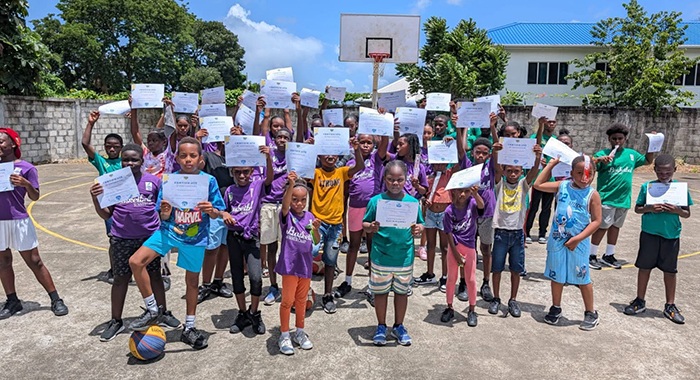
Basketball development for young talent in St. Vincent and the Grenadines is set to get a major boost this August, after the national basketball governing body announced a full slate of free community-focused youth camps designed to nurture the next generation of players both on and off the hardwood.
The initiative kicks off this week with a special girls-only opening session, welcoming athletes aged 7 and older. The opening program will run from 9:30 a.m. to 12 p.m. at the New Montrose Hard Court, giving young female participants a one-of-a-kind chance to train under elite-level guidance. Leading the opening camp are Vasha Adams, a coach certified by the International Basketball Federation (FIBA), and Sancho Lyttle, a native Vincentian who previously competed in the Women’s National Basketball Association (WNBA) — the most prestigious professional women’s basketball league in the world. Lyttle’s decades of experience competing at the sport’s highest peak is expected to bring invaluable insight and motivation to the next generation of local female players.
Following the opening girls-focused session, the federation will roll out two back-to-back one-week co-ed camps, open to all boys and girls aged 7 and older. The first co-ed camp will take place August 10 to 14 at the New Montrose Hard Court. The series will then move to the Chili Hard Court in Georgetown for the second camp, held August 17 to 21, a geographic shift designed to expand access and ensure young athletes from communities across the entire country get the chance to participate, regardless of their location.
All daily camp sessions follow the same 9:30 a.m. to noon schedule, and participating youth will receive complimentary event T-shirts and light refreshments during activities. In an official press statement announcing the program, the St. Vincent and the Grenadines Basketball Federation (SVGBF) emphasized that these youth camps are a core component of the organization’s long-term strategic plan to grow basketball and build a strong pipeline of homegrown talent.
Beyond teaching core basketball fundamentals — including dribbling technique, passing accuracy, shooting form, defensive positioning, and in-game decision making — the program prioritizes building critical life skills that extend far beyond the court. Organizers have placed intentional focus on fostering discipline, collaborative teamwork, respectful sportsmanship, youth safeguarding, and strong self-esteem among all participants. The SVGBF’s ultimate goal is to use basketball as a vehicle to equip young people with the confidence and transferable life tools they need to thrive not just as athletes, but as active members of their local communities.
Parents and guardians interested in registering their children for the camps can access application forms through the federation’s official social media channels. Forms are posted on the SVGBF’s Instagram account (@svg_basketball) and Facebook page (@SVGBasketball). For additional questions or more information about the program, interested parties can contact the SVGBF directly by phone at +1 (784) 498-2919.
-
Dodelijke aardbevingen in Venezuela eisen meer dan 6.000 levens
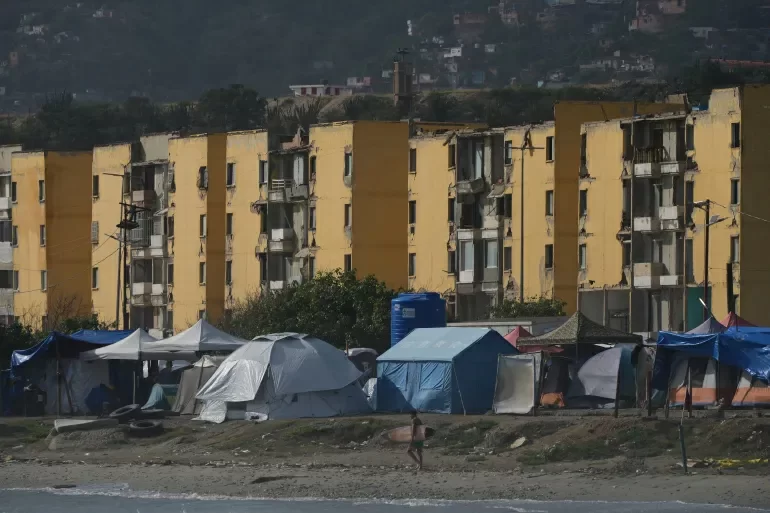
More than a month after two powerful back-to-back earthquakes struck coastal Venezuela, the official death toll from the disaster has climbed to 6,125, the head of Venezuela’s National Assembly, Jorge Rodriguez, announced publicly Monday via a messaging post on Telegram. Alongside the rising fatalities, Rodriguez confirmed that more than 61,000 injured people have received medical treatment at hospitals across the affected regions since the quakes struck.
The two seismic events, registering magnitudes 7.2 and 7.5, hit central Venezuela on June 24, causing catastrophic damage primarily in the coastal state of La Guaira and the capital city of Caracas. As of early August, only 16.5 percent of rubble and collapsed structures from the quakes have been cleared, and widespread public anger has erupted over the slow and insufficient response from the interim government led by President Delcy Rodriguez.
Local residents continue to dig through debris searching for missing loved ones, and many have openly voiced frustration over what they describe as failures of government and military emergency services to deliver timely aid in the disaster’s aftermath. The World Bank has estimated total physical damage from the quakes at nearly $20 billion, a staggering sum for a country already grappling with years of economic and political instability.
While the international community has promised support for recovery efforts, the flow of desperately needed funding remains blocked by ongoing political sanctions. Since January, the United States has enforced strict economic controls on Venezuela, imposed after the military detention of sitting president Nicolás Maduro, and multiple sweeping sanctions remain in full effect. Advocacy groups and humanitarian organizations are now calling for these sanctions to be relaxed or fully lifted to clear the way for aid and reconstruction funding to enter the country.
Despite the political and economic barriers, multiple global humanitarian organizations have moved quickly to deliver life-saving support to impacted communities. On June 30, UNICEF deployed a 47-ton shipment of emergency supplies including medical kits and water purification equipment, enough to meet the basic needs of more than 100,000 children and family members displaced by the disaster. The UN High Commissioner for Refugees (UNHCR) has scaled up emergency relief and protection services in the hardest-hit areas, while also completing a rapid needs assessment to target future aid distribution.
Caritas Venezuela reported that it received and distributed nearly 14,700 tons of emergency supplies including medical equipment and pharmaceuticals between June 25 and July 6. The Dutch Refugee Foundation has allocated €275,000 in immediate funding for acute medical care and psychosocial support for survivors who lost family members or their homes. CARE Netherlands has deployed health kits and mental health support services, while ADRA Netherlands is delivering clean drinking water, hygiene products, and emergency food rations to displaced populations living in temporary tent camps. Additionally, member states of the Caribbean Community have also contributed shipments of humanitarian aid to the Venezuelan government to boost ongoing relief efforts.
-
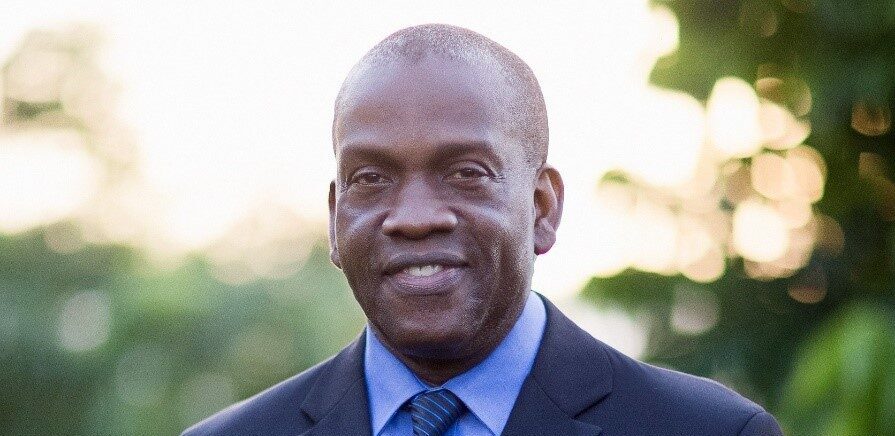
High Court rules president acted unconstitutionally in Opposition Leader appointment dispute
In a historic judgment that reaffirms constitutional guardrails for democratic governance in the Commonwealth of Dominica, former opposition leader Lennox Linton has won a high-profile constitutional challenge against the country’s Attorney General. The High Court has ruled that the Dominican President violated constitutional principles by failing to account for opposition senators’ support when appointing a new Leader of the Opposition.
The dispute stretches back to June 20, 2024, when Jesma Paul-Victor stepped down from the position of Leader of the Opposition. For 18 months following her resignation, the President refused to recognize the backing that four opposition senators extended to Linton for the vacant post, triggering the legal battle. In her official ruling, Justice Zainab Jawara-Alami delivered a decisive rebuke of the executive branch’s interpretation of constitutional authority.
During proceedings, legal representatives for the Attorney General advanced two core arguments. First, they claimed that appointed senators hold no constitutional role in shaping the Leader of the Opposition appointment process, and the President was under no obligation to consider their preferences. Second, they maintained that courts should only intervene in presidential appointments if a decision is proven irrational or unreasonable, arguing the President was within her rights to decline making an appointment for an extended period. The Attorney General also challenged Linton’s legal standing to bring the case, dismissing his action as “meddlesome interloping” that lacked legitimate, specific public interest.
After the case was launched, Paul-Victor was ultimately appointed to the post in January 2026, prompting the Attorney General to request the court dismiss the suit as a now-moot academic issue. Justice Jawara-Alami rejected this motion, emphasizing that the underlying constitutional questions raised were of profound public importance and required formal resolution.
In her ruling, Justice Jawara-Alami struck down every key argument put forward by the Attorney General. She confirmed that once appointed, senators are full voting members of the House of Assembly, entitled to the same constitutional rights and responsibilities as elected representatives, unless the constitution explicitly states otherwise. This means the four opposition senators’ support for Linton was constitutionally relevant and should have been factored into the President’s decision. The judge also clarified that when a candidate meets all requirements laid out in Section 66(2) of the Dominican constitution, appointing a Leader of the Opposition is a mandatory duty for the President, not a discretionary power. Finally, the court upheld Linton’s standing to bring the public interest challenge, noting that constitutional law permits individuals to pursue relief on behalf of the public good.
Central to the court’s reasoning was the fundamental role of the Leader of the Opposition in Dominica’s democratic system. “The office of leader of the opposition is an essential part of the constitutional and democratic framework of the country and serves an important role in ensuring accountability within a democracy,” the court wrote in its official judgment.
Responding to the ruling, Linton framed the outcome as a victory far beyond his individual legal claim. “This victory belongs to every Dominican who believes that public power must be exercised lawfully; that the Opposition has an indispensable role in our democracy; and that the Constitution must remain superior to political convenience, executive preference and partisan maneuvering,” he said. “Today, the Constitution won. Democracy won. Accountability won.”
Linton’s legal team was led by Senior Counsel Anand Ramlogan, alongside Jared Jagroo and Vishaal Siewsaran from Trinidad-based Freedom Law Chambers, instructed by local Dominican attorney Ronald Charles. The Attorney General was represented by Anthony Astaphan SC, Jason Lawrence, Tameka Burton and Levi Peter. The full judgment is publicly available under case number DOMHCV2025-0131.