作者: admin

  • The port that carried Saint Lucia from colony to country

    The port that carried Saint Lucia from colony to country

    The historic Port Castries stands as a living testament to Saint Lucia’s complex colonial past and evolving economic identity. Nestled within a former volcanic crater, this strategic harbor has served as a crucial Atlantic gateway for centuries, originally named “Le Carenage” (safe anchorage) by French colonizers during World War II.

    Throughout its layered history, the port has undergone remarkable transformations. During the 19th century, it emerged as the British Empire’s principal coaling station in the Eastern Caribbean, capable of accommodating the largest warships of the colonial era. The western wharf constructed in 1835 facilitated this vital trade, with the first steamship RMS Solway arriving in 1841.

    The port’s strategic importance came at a cost during wartime. In a daring 1942 attack, a German U-boat torpedoed the British cargo ship SS Umtata while docked alongside RMS Lady Nelson, resulting in the tragic loss of 41 lives whose remains rest at Choc cemetery.

    Economic transitions reshaped the port’s function throughout the 20th century. As coal exports waned in the 1930s, sugarcane cultivation took precedence, later giving way to banana exports in the 1950s. The port buzzed with activity during “banana days” when Geest Industries exported thousands of boxes of “green gold” to European markets from Berth 6.

    Following independence in 1979, Saint Lucia strategically pivoted toward tourism. Cunard—once part of the port’s coaling history—became the first cruise line to establish regular calls at Port Castries. Today, the port welcomes hundreds of thousands of cruise passengers annually, with January 2024 alone seeing 150,323 visitors.

    The Saint Lucia Air and Seaports Authority (SLASPA), managing the port since 1983, has garnered international recognition including the Caribbean Shipping Association’s Nathan Dundas Cruise Port of the Year Award.

    A new chapter unfolds as the government partners with Global Port Holdings to redevelop the waterfront. Saint Lucia Cruise Port confirms plans to integrate the harbor’s rich heritage into the transformation project, acknowledging that authentic historical narratives will enhance visitor experiences through immersive educational environments.

    As Saint Lucia celebrates its 47th independence anniversary, Port Castries continues to embody the nation’s resilience—a symbol of cultural evolution, community identity, and enduring strategic importance in the Caribbean basin.

  • Parmessar: Ontbrekende documenten blokkeren start begrotingsdebat

    Parmessar: Ontbrekende documenten blokkeren start begrotingsdebat

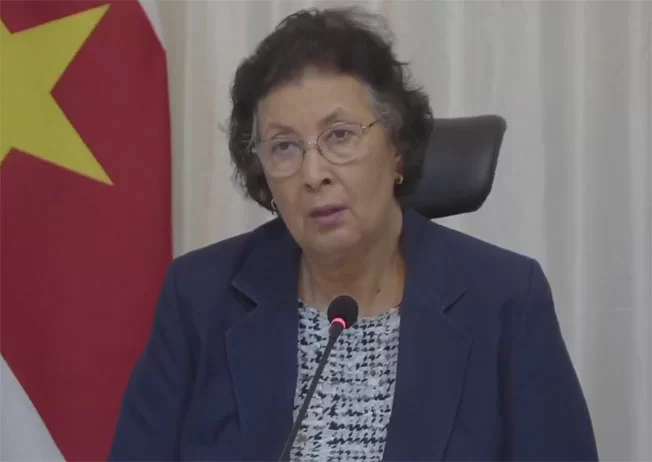
    Suriname’s parliamentary proceedings for the 2026 national budget have encountered significant delays due to incomplete documentation requirements. Rabin Parmessar, opposition leader of the NDP party and chairman of the parliamentary rapporteurs committee, revealed that essential financial documents either remain missing or require substantial revisions before budget deliberations can commence.

    According to Parmessar, the Comptability Law 2024 mandates the submission of several critical documents that have not been presented to the National Assembly in their updated forms. The original 2026 budget was initially submitted on October 1st and underwent thorough examination by the rapporteurs committee. However, recent debt restructuring arrangements have necessitated comprehensive revisions across all budgetary documentation.

    “The rapporteurs committee has meticulously analyzed the originally submitted budget,” Parmessar stated. “But now we await updated figures that must be incorporated throughout all financial documents. These revisions must undergo renewed committee scrutiny before formal budget treatment can begin.”

    The legal framework requires submission of multiple key documents including an updated budget strategy, revised annual financial plan, adjusted five-year financial plan, and modified national debt management strategy. The absence of these properly formatted documents has created both procedural and substantive challenges for parliamentary operations.

    Opposition voices, including VHP party leader Asis Gajadien, have previously criticized the government’s compliance with fiscal regulations, emphasizing that “the Comptability Law 2024 must function substantively rather than merely existing as a formal requirement.” This development highlights ongoing concerns regarding medium-term budgetary discipline and adherence to legislative financial governance standards.

    The situation presents a dual challenge: Parliament awaits technically updated documents while simultaneously addressing fundamental questions about whether the proposed budget meets statutory requirements for medium-term fiscal responsibility and transparency.

  • India’s AI summit overschaduwd door chaos en controverse

    India’s AI summit overschaduwd door chaos en controverse

    At the culminating session of the AI Impact Summit 2026 in New Delhi, Indian Prime Minister Narendra Modi articulated a compelling vision for human-centered artificial intelligence development. The four-day gathering, hosted at Bharat Mandapam convention center, brought together over 250,000 participants from more than 100 nations, establishing itself as the largest edition since the summit’s inception in 2023.

    Modi positioned India as a pivotal force in shaping global AI evolution, citing the nation’s demographic advantage with one of the world’s largest youth populations and its rapidly expanding technology ecosystem. The Prime Minister introduced the MANAV framework (meaning ‘human’ in Sanskrit), a comprehensive set of principles emphasizing ethics, transparency, national sovereignty, accessibility, and legal compliance in AI governance. ‘We are entering an era where humans and intelligent systems will co-create, collaborate, and co-evolve together,’ Modi declared during his keynote address.

    The summit showcased practical AI implementations within India, including the ‘Sarlaben’ digital assistant for dairy farmers and the multilingual Bharat VISTAAR platform that provides agricultural communities with real-time information. Modi called for international cooperation in developing authenticity labeling systems for digital content to combat deepfake manipulation and misinformation. He particularly emphasized child protection mechanisms within AI systems and advocated for open platforms to enable global youth participation in creating safer, more human-centric technology.

    Despite these ambitious declarations, the event faced significant organizational shortcomings that threatened to undermine its impact. Attendees reported extensive queues, overcrowded venues, and inadequate signage throughout the conference facility. Several speakers received confirmation of their session times at the last minute, resulting in scheduling confusion and delays.

    The absence of Microsoft founder Bill Gates, who withdrew participation due to ongoing controversies surrounding his associations with Jeffrey Epstein, attracted considerable attention. Further controversy emerged when an Indian university presented Chinese robotic technology as domestic innovation, raising questions about transparency and authenticity at an event intended to showcase India’s technological leadership.

    The summit concluded Friday with extensive discussions on regulatory frameworks, ethical considerations, and AI’s role in economic and social development, solidifying India’s position as an emerging global power in the rapidly evolving AI landscape.

  • The “fridge” struck again: Valle Nuevo woke up almost below zero and covered in white.

    The “fridge” struck again: Valle Nuevo woke up almost below zero and covered in white.

    Valle Nuevo National Park, renowned as the Dominican Republic’s natural “icebox,” experienced a dramatic return of Arctic conditions early Saturday morning. The protected area witnessed temperatures plunging to near-freezing levels, compelling campers to abandon their tents in search of warmth around crackling campfires.

    According to park administrator Julio César de los Santos, the Automatic Meteorological Station operated by the Dominican Institute of Meteorology (Indomet) recorded a startling 0.2°C at 5:58 AM at its Rancho en Medio location. This temperature reading proved sufficient to generate widespread frost formation across the park’s vegetation as dew particles crystallized into delicate ice formations.

    Meteorological data revealed that even by 7:10 AM, temperatures remained at a frigid 1.6°C with a wind chill factor making it feel like 0.5°C. The mercury gradually climbed to 3.1°C by 7:59 AM, though the persistent wind chill maintained a biting sensation of 1.9°C throughout the morning hours.

    Photographic evidence captured the extraordinary transformation of the typically tropical landscape. Vegetation appeared dusted with hoarfrost—a thin, crystalline layer of ice—while metal containers and exposed surfaces developed freezer-like coatings. The mountainous terrain temporarily adopted the appearance of a winter wonderland, creating surreal visual contrasts against the Caribbean backdrop.

    This meteorological phenomenon represents a recurring weather pattern for Valle Nuevo, which maintains its reputation as one of the coldest regions in the Caribbean nation. The park’s high elevation and unique microclimate regularly produce temperature inversions that create these uncharacteristically cold conditions for the tropical region, offering both challenges for visitors and opportunities for unique ecological observations.

  • Critical minerals and rare earths: the Dominican Republic’s new strategic bet

    Critical minerals and rare earths: the Dominican Republic’s new strategic bet

    SANTO DOMINGO, Dominican Republic – In a strategic address that positions the Caribbean nation at the center of global resource geopolitics, Foreign Minister Roberto Álvarez has articulated the Dominican Republic’s emerging role in the critical minerals sector. Speaking at the Corripio Communications Group Luncheon, Álvarez provided crucial conceptual distinctions while outlining the nation’s substantial geological advantages.

    The diplomatic leader clarified the fundamental difference between rare earth elements and critical minerals, noting that while all 17 rare earth elements fall under the critical minerals umbrella, the broader category encompasses any mineral deemed strategically vital to national security and industrial needs by individual countries.

    These resources form the backbone of advanced technological manufacturing, enabling production across aerospace, defense, automotive, computing, semiconductor, and quantum computing industries. Minister Álvarez illustrated this critical dependency with a compelling example: a single sophisticated aircraft may require up to 2,000 mineral-dependent components, with the absence of just one rendering the entire system inoperable.

    Among the most prized elements discussed were neodymium for permanent magnets in electric motors and wind turbines, scandium for ultra-strong lightweight aluminum alloys, and gallium for semiconductor applications – each representing specialized niches within the broader critical minerals spectrum.

    The address revealed significant international developments, including a U.S.-led initiative involving 55 nations working to secure critical mineral supply chains. This collaboration may yield an international framework agreement potentially establishing minimum price floors for certain minerals – a stabilization mechanism historically applied to commodities like sugar that would enable producing nations to make secure economic projections and attract investment under predictable conditions.

    Geological surveys have identified exceptional Dominican potential, particularly in the Pedernales province where 84 deposits have been documented, though only 15 have undergone comprehensive exploration. Preliminary estimates suggest approximately 65 million metric tons of resources, primarily rare earth elements, alongside other internationally recognized critical minerals including bauxite and strategic metals.

    Minister Álvarez emphasized that the nation faces “very carefully considered” decisions regarding exploration and exploitation frameworks, given the escalating strategic value of these resources. The initiative enjoys presidential endorsement, with President Luis Abinader reportedly committed to developing this sector as a cornerstone of the nation’s economic and geopolitical future.

  • Guyana, St. Kitts and Nevis hold “fruitful” discussions ahead of 50th CARICOM heads meeting

    Guyana, St. Kitts and Nevis hold “fruitful” discussions ahead of 50th CARICOM heads meeting

    In a significant diplomatic engagement ahead of the 50th CARICOM Heads of Government Meeting, Guyanese President Irfaan Ali hosted St. Kitts and Nevis Prime Minister Dr. Terrance Drew at State House this past Saturday. The high-level consultation, described by both leaders as profoundly productive, focused on strengthening bilateral relations and advancing regional integration initiatives within the Caribbean Community.

    Prime Minister Drew, who currently holds the rotating CARICOM chairmanship, emphasized the critical importance of regional unity during the closed-door discussions. “Our dialogue was exceptionally fruitful,” Drew stated following the meeting. “We remain committed to championing regional integration and collective advancement as fundamental pillars of CARICOM’s mission.”

    The strategic dialogue covered multiple dimensions of Caribbean cooperation, with particular attention to enhancing collaborative frameworks between Guyana and St. Kitts and Nevis. Both leaders reaffirmed their dedication to addressing shared regional challenges through coordinated policy approaches and strengthened diplomatic ties.

    The Guyanese delegation included Foreign Affairs Minister Hugh Todd, Public Service Minister Zulfikar Ally, Chief of Defence Staff Brigadier Omar Khan, along with senior officials from the Ministry of Foreign Affairs and national security agencies. This substantial representation underscored the strategic importance both nations attach to the upcoming landmark summit.

    The 50th Meeting of the Conference of Heads of Government, scheduled to convene in St. Kitts and Nevis next week, marks a historic milestone for CARICOM. The pre-summit discussions between President Ali and Prime Minister Drew are expected to set a constructive tone for the broader multilateral negotiations, potentially influencing the regional agenda for the coming year.

  • US visa restrictions on CBI nations raise economic concerns; IMF watching closely

    US visa restrictions on CBI nations raise economic concerns; IMF watching closely

    WASHINGTON, DC — The International Monetary Fund has initiated close surveillance of potential economic repercussions following the Trump administration’s imposition of visa restrictions on Citizenship by Investment (CBI) passport holders from Dominica and Antigua and Barbuda. This diplomatic development emerges despite recent regional commitments to enhance program integrity through stricter transparency protocols.

    The White House justified its provisional measures citing specific security concerns, including the absence of mandatory residency requirements and insufficient biometric data collection within both nations’ investment migration programs. Official statements emphasized that these limitations are essential to address national security vulnerabilities and immigration enforcement objectives.

    Antigua and Barbuda’s Prime Minister Gaston Browne contested the allegations, highlighting his government’s year-long collaborative efforts with multiple US agencies to implement substantive safeguards within their CBI framework. “We have accepted practical suggestions and taken concrete steps to ensure our Programme presents no risk whatsoever to US security,” Browne asserted.

    Although characterized as temporary pending review, these restrictions have raised alarms among economic observers who caution that even short-term measures could undermine investor confidence and program credibility. For Organization of Eastern Caribbean States members that depend significantly on CBI revenue streams, the implications extend beyond diplomatic friction to tangible economic vulnerability.

    The IMF’s measured response indicates that while direct economic impact remains contained, the institution recognizes elevated downside risks affecting revenue stability, travel freedom, and business mobility across the region.

  • Girdhari (VES): Wetten geldelijke voorzieningen moet met spoed worden gecorrigeerd

    Girdhari (VES): Wetten geldelijke voorzieningen moet met spoed worden gecorrigeerd

    Suriname faces mounting public outrage over excessive government salaries as Swami Girdhari, Secretary of the Association of Economists in Suriname (VES), has launched scathing criticism against the nation’s compensation laws for top officials. The economist revealed that judicial and parliamentary authorities receive annual payments ranging from $35,000 to $300,000—dramatically disproportionate to the country’s $6,800 GDP per capita.

    Girdhari exposed how the National Assembly passed controversial legislation in November 2024, just six months before elections, under the guise of ‘synchronization’ reforms. While promoted as eliminating double salaries and increasing transparency, the measures instead created what he termed ‘exorbitant’ compensation packages that disregarded national budget implications.

    The economic expert warned that these astronomical raises are creating ripple effects throughout Suriname’s economy. Private sector businesses, particularly small and medium enterprises, cannot match the pace of public sector increases. Meanwhile, government unions are now using the new top-tier salaries as benchmarks for their negotiations—threatening to destabilize the entire national wage structure.

    Girdhari proposed establishing a ‘Commission of Wise Surinamers’ comprising representatives from parliament, government, judiciary, planning bureau, state council, legal experts, and economists. This independent body would develop a new compensation framework aligned with Suriname’s economic reality, incorporating a ‘Presidential Norm’ where no public official earns more than the president—similar to the Netherlands’ ‘Balkenendenorm’ implemented after similar controversies.

    The economist emphasized that while salary differences based on responsibility, education, and experience are justified, they must operate within a framework of justice and economic sustainability. Eight months after a new government took office, no corrections have been implemented despite previous criticisms from current ruling parties.

  • COE warns of high levels of maritime risk due to abnormal swells on the North coast

    COE warns of high levels of maritime risk due to abnormal swells on the North coast

    Santo Domingo, Dominican Republic — Maritime conditions have shown significant improvement along the nation’s Caribbean coastline, prompting authorities to revise navigational advisories this Saturday. The Dominican Institute of Meteorology (Indomet), through its latest weather bulletin, confirmed that previously hazardous sea conditions have substantially normalized.

    The Emergency Operations Center (COE), acting upon Indomet’s meteorological assessment, officially discontinued the port restriction mandate for fragile, small, and medium-sized vessels operating along the North coast. This decision was formally executed under the legal framework established in Article 2, Chapter 1 of Law 147-02, which governs emergency maritime protocols.

    While conditions have stabilized for most regions, the COE issued specific precautions for vessel operators navigating the Atlantic coastal stretch between Miches (El Seibo) and Cabo Engaño (La Altagracia). Meteorological monitoring indicates persistent abnormal wind patterns and wave activity in this sector, requiring heightened navigational vigilance.

    The national meteorological service confirms that all remaining coastal areas currently experience normal maritime conditions, providing relief to the maritime industry and coastal communities following recent weather disturbances.

  • Economy : Preparation for the Regional Women’s Entrepreneurship Fair in the Great South

    Economy : Preparation for the Regional Women’s Entrepreneurship Fair in the Great South

    The Haitian Ministry of Commerce and Industry (MCI) is advancing its commitment to female economic empowerment through the upcoming Regional Women’s Entrepreneurship Fair, scheduled for March 7-8, 2026, in the Grand Sud region. This strategic initiative forms a core component of the Women’s Entrepreneurship Support Program (PAEF), designed to transform women’s economic participation into a tangible driver of national development.

    Minister James Monazard, championing the program, recently convened a critical working session at the Montana Hotel to finalize preparations. In his opening address, Minister Monazard emphasized the foundational role of women in Haiti’s economic future, stating, “We are preparing Haiti’s future. Women are the pillars of the Haitian economy.”

    The PAEF represents a structured, multi-faceted approach to economic inclusion. Its current cohort includes 40 beneficiaries, with ambitious goals to formalize women-led enterprises, deliver market-relevant training programs, and enhance collaboration between national and international partners to maximize local resource utilization.

    Mona Lisa Dunbar, PAEF Coordinator, clarified that the program extends beyond a single event, constituting a long-term support ecosystem. This includes structuring business activities, building capacity for over 500 women, and providing technical and financial support in partnership with institutions like the Industrial Development Fund (FDI).

    Panel Paulemont, Director of Trade at the Ministry, identified the resource-rich Grand Sud region as an ideal launchpad for this inaugural regional edition, highlighting its significant economic potential.

    The Fair itself is designed to deliver concrete benefits to participants, including dedicated exhibition booths to increase product visibility, curated networking spaces for business promotion, and facilitated access to new economic opportunities aimed at fostering business growth and formalization. This effort specifically targets the gradual integration of women from the informal sector into the formal economy, a move deemed essential for sustainable national growth.