
After weeks of closed-door negotiations between senior management of Windward Island Gases Limited and representatives from the National Workers Union (NWU), a landmark multi-year collective agreement has been reached, delivering tangible financial benefits to hundreds of the firm’s technical and clerical employees. The cornerstone of the new deal is a broad-based general wage increase, with a cumulative 9% raise set to be rolled out in equal annual increments over three years. Beyond base salary adjustments, the revised employment package expands a range of supplementary benefits for staff, bringing in an updated structured compensation framework for workers taking on temporary acting positions, as well as higher monetary allowances for both early-morning breakfast coverage and on-call standby shifts. In a key provision that addresses prior wage gaps, the agreement stipulates that all eligible employees will receive retroactive pay for roughly 12 months of service, with the provision set to take effect starting July 1, 2025. As part of the negotiated understanding, company leadership has also committed to the NWU to refine and upgrade core internal operational processes. This planned operational overhaul is projected to drive higher overall productivity at the firm, creating mutually positive outcomes that will boost satisfaction for workers, the company itself, and its broader client base. The Jamaican Department of Labour is now on track to formally review and finalize the industrial agreement in the near term, bringing the negotiation cycle to a formal close.
作者: admin
-
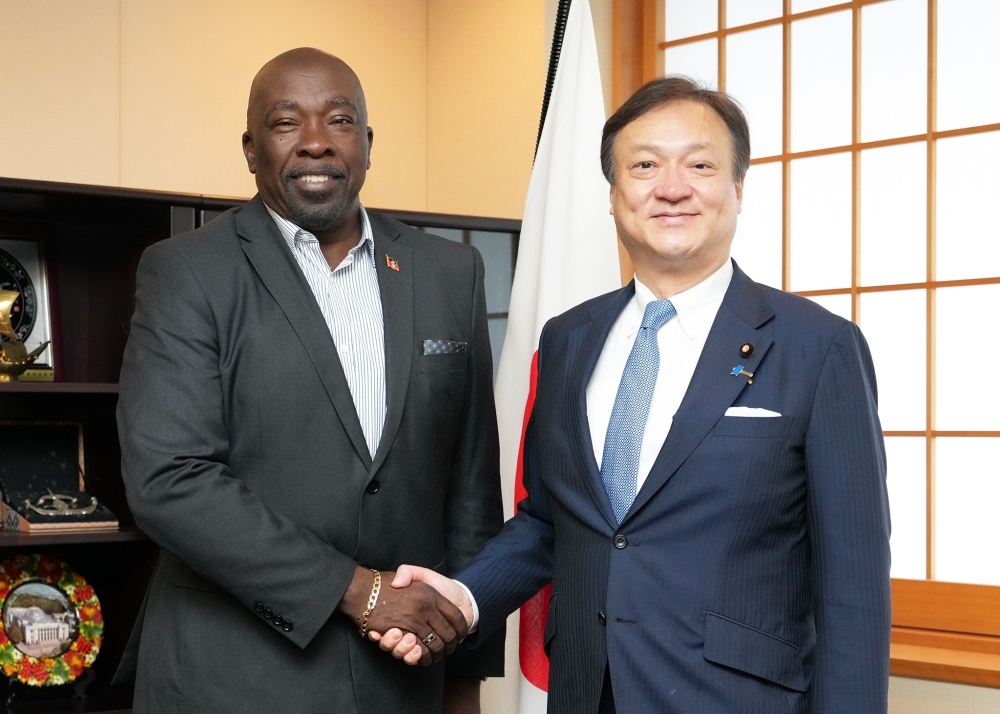
Nicholas, Japanese State Minister Discuss Technology and Bilateral Cooperation
High-level diplomatic talks between the Caribbean nation of Antigua and Barbuda and Japan have closed with a shared pledge to expand bilateral cooperation, centered on leveraging Japanese technological innovation and private sector knowledge to drive mutual progress. The meeting, held Monday in Japan, brought together Melford Nicholas, Antigua and Barbuda’s Minister of Information, Communication Technologies, Utilities and Energy, and Iwao Horii, Japan’s State Minister for Foreign Affairs, for roughly 50 minutes of focused discussion.
Opening the talks, Horii extended a formal welcome to Nicholas, noting that bilateral ties have gained steady momentum since the Japan-CARICOM Ministerial-Level Conference held two years prior, which opened new doors for increased high-level exchanges between the two sides. Against this backdrop, Horii emphasized Japan’s clear intention to build on this momentum and forge a deeper, more interconnected relationship with Antigua and Barbuda.
In response, Nicholas expressed gratitude for the long-standing support Japan has extended to Antigua and Barbuda across multiple critical sectors, highlighting past assistance in water resource management and disaster risk reduction — two areas of vital importance for the small island nation that faces regular climate-related challenges.
Beyond bilateral collaboration, the two ministers also exchanged views on evolving regional geopolitical and socioeconomic developments, as well as opportunities for aligned cooperation in multilateral international forums. By the end of the meeting, both parties reached a consensus to continue advancing closer working ties, building on Japan’s strengths in advanced technology, specialized industry expertise, and private sector capacity to deliver shared benefits for both countries.
-
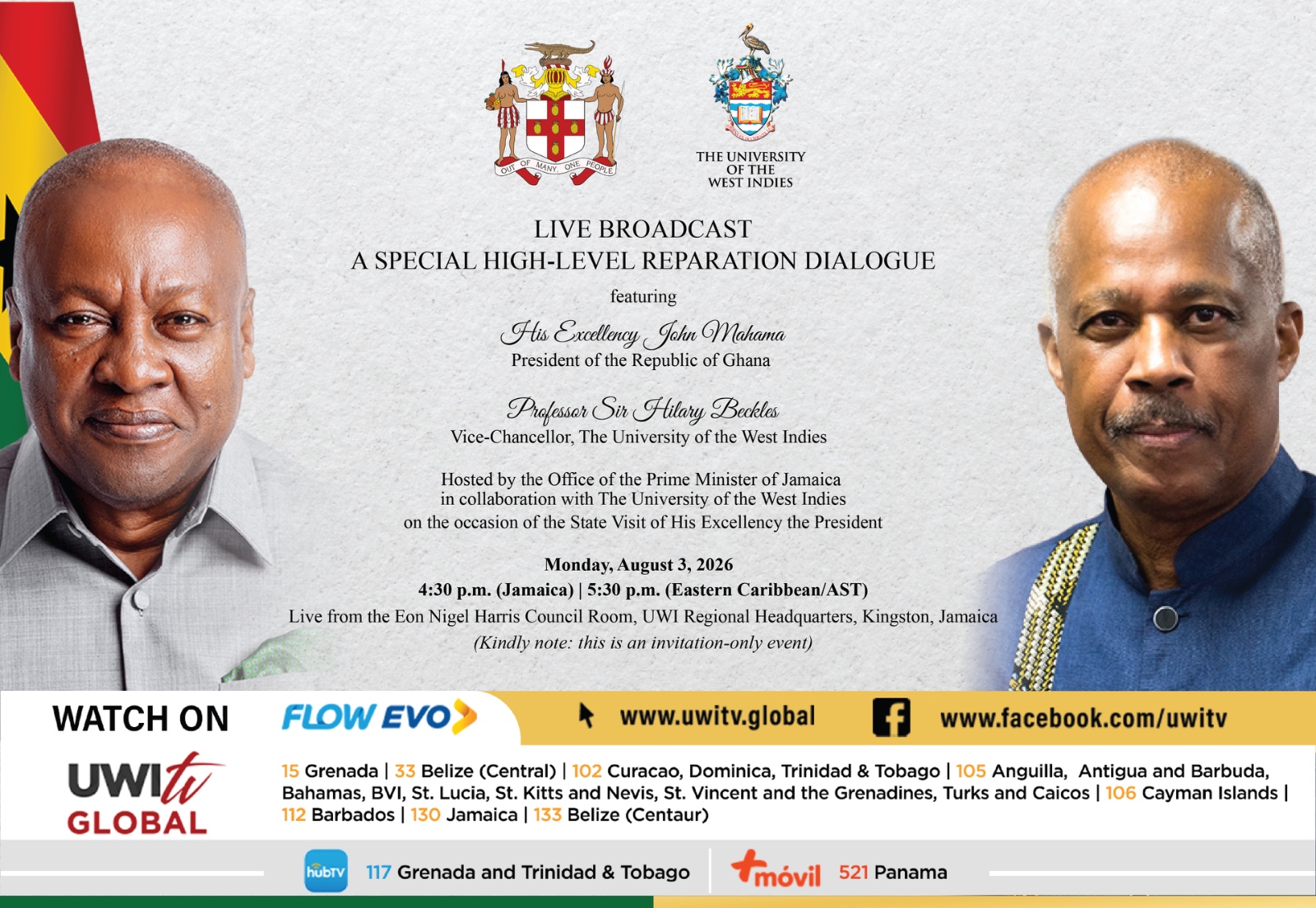
Ghana’s President Mahama, UWI Vice Chancellor Beckles to Hold High-Level Reparations Dialogue
KINGSTON, Jamaica — July 31, 2026 — The University of the West Indies (The UWI), partnering with the Office of the Prime Minister of Jamaica, is set to host a historic high-level conversation on reparatory justice during an official visit by Ghana President John Dramani Mahama to the Caribbean island nation.
The Special High-Level Reparation Dialogue, scheduled for Monday, August 3 at 4:30 p.m. Jamaica local time (5:30 p.m. Atlantic Standard Time for the Eastern Caribbean), will be held in the Eon Nigel Harris Council Room at The UWI’s Regional Headquarters in Jamaica. To expand access for regional and global audiences, the entire conversation will be streamed live via UWI tv across multiple platforms.
This one-on-one dialogue between President Mahama and The UWI Vice-Chancellor, Professor Sir Hilary Beckles, is rooted in the Ghanaian leader’s state visit to Jamaica, extended at the invitation of the Jamaican government. The event carries both timely relevance and deep symbolic weight, coming as the global movement for reparatory justice gains unprecedented momentum. It also reinforces The UWI’s long-standing position as the Caribbean’s leading intellectual hub and a key convener of critical discourse that shapes both regional policy and global advocacy efforts.
Unlike many general discussions on the topic, the exchange will directly connect historical documentation of transatlantic chattel slavery to modern policy frameworks. Attendees and viewers will explore the evolving global reparations agenda, map out legal and moral responsibilities of individual states, and examine the unique role academic and public institutions can play in advancing global equity and restorative justice.
The event’s full programme opens with introductory remarks from Professor Sonjah Stanley Niaah, Director of The UWI’s Centre for Reparation Research. Following the opening, President Mahama and Vice-Chancellor Beckles will deliver their prepared remarks before moving into the structured dialogue. A live question-and-answer session with in-person audience members will follow the core conversation, before a representative from Jamaica’s Ministry of Culture, Gender, Entertainment and Sport delivers closing remarks that highlight the dialogue’s importance for both Jamaica and the wider Caribbean region.
Both working journalists and members of the general public are invited to access the free live stream through multiple channels, including UWI tv’s official website at www.uwitv.global, the platform’s social media accounts, and UWI tv’s dedicated Flow television channels across the Caribbean.
-

Antigua and Barbuda’s Zaine Fredrick Makes History With Miss Caribbean Culture Queen 2026 Victory
In a groundbreaking moment that has made national waves across Antigua and Barbuda, Queen Zaine has etched her name into the history books of the Miss Caribbean Culture Queen pageant, becoming the first competitor from the twin-island nation to claim the prestigious 2026 title in the competition’s two-decade existence.
Zaine delivered a standout performance throughout the event, securing a total score of 1,425 points to outpace her fellow contestants from across the Caribbean region. Her winning run did not end with the overall crown: she also took home two additional subsidiary awards, recognizing her exceptional performance in the talent category and her stunning presentation in the evening gown segment.
Following Zaine in the final rankings was Tresjeur Dedier, representing St. Kitts, who claimed the first runner-up position with a total score of 1,409 points. Rounding out the top three placements was Miriam Alexander of Guyana, who earned 1,396 points to finish as second runner-up.
This landmark victory marks another feather in the cap for Zaine, who already holds the national title of Antigua and Barbuda’s Queen of Carnival. The regional win adds a new milestone to her pageantry career and cements Antigua and Barbuda’s growing presence in Caribbean cultural pageantry, ending a 20-year wait for the nation to claim the coveted title.
-
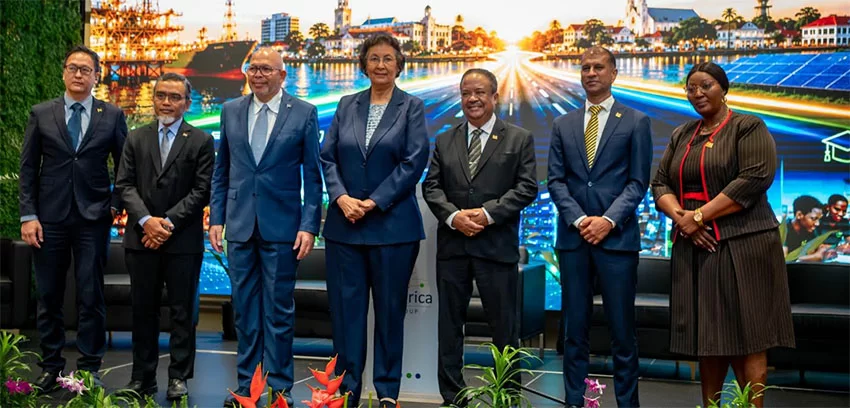
Summit Duurzaam Suriname moet basis leggen voor nationale ontwikkelingsvisie
As Suriname prepares to tap into projected oil and gas revenues that are set to reshape its national economy, top government leaders and cross-sector stakeholders have opened a landmark three-day summit to map a inclusive, sustainable long-term development strategy that avoids the pitfalls of overreliance on energy extraction.
The Summit Duurzaam Suriname 3.0, which kicked off on Monday at Paramaribo’s Hotel Torarica, brings together representatives from the national government, private business sector, civil society organizations, and academic and research institutions to co-design a shared development vision for the country spanning 2040 to 2050. This gathering marks the official launch of a broader national planning process aligned with the existing Roadmap Suriname initiative.
In her opening address to attendees, President Jennifer Simons emphasized that the oil and gas sector alone cannot deliver broad-based shared prosperity for Suriname’s population. While the energy industry will generate substantial revenue, it is inherently capital-intensive and will create far too few quality jobs to lift large segments of the population out of economic hardship. “The oil sector is defined by high revenues and very low employment,” Simons told the summit. “It is the surrounding supporting sectors that must deliver high-quality work opportunities for our people.” To ensure oil and gas gains benefit all of Suriname society rather than a narrow group, Simons argued that the government must direct a large share of energy revenues toward investments in other diverse economic sectors.
Patrick Brunings, Suriname’s Minister of Oil, Gas and Environment, echoed that caution, warning that overconcentration on the energy sector risks eroding the country’s existing economic base. If policymakers focus solely on building local workforce capacity for oil and gas, Brunings explained, skilled labor will drain away from other critical domestic sectors, leaving those industries hollowed out and unable to contribute to long-term economic stability.
Brunings laid out the country’s core goal: building “a green, healthy and sustainable Suriname” that leverages energy revenues rather than being dominated by the oil and gas sector. He also pushed for a stable, cross-party development agenda that will retain its direction even after changes in government leadership, noting that enshrining the national roadmap in legislation would provide the strongest guarantee of long-term policy consistency. President Simons endorsed this position, stressing that the national development vision must enjoy broad public support and transcend individual government administrations.
The summit is structured around 10 key strategic development focus areas, called Strategic Lanes. Over three days of discussion, participants will draw on national data, sector-specific analysis, on-the-ground practical experience, and global best practices to identify the country’s top development priorities for the coming decades.
Karl Eckhorst, chair of the National Development Platform (NOP), the organizing body behind the summit, noted that Suriname is on the cusp of profound economic transformation driven by new oil and gas production, making this a critical moment to make intentional, far-sighted policy choices. “We stand on the eve of major development,” Eckhorst said. “That is why it is important to hold these discussions now, and also take concrete action to prepare ourselves for what comes next.”
Eckhorst clarified that the NOP will not draft a binding national development plan on its own. Instead, the platform will work to gather the building blocks needed to create a broadly supported long-term vision, with active engagement from all segments of Suriname society from the earliest stages of the process. This inclusive approach, he said, will ensure the final development agenda enjoys wide public backing and can provide consistent guidance for future governments regardless of political changes.
-
Security for communities
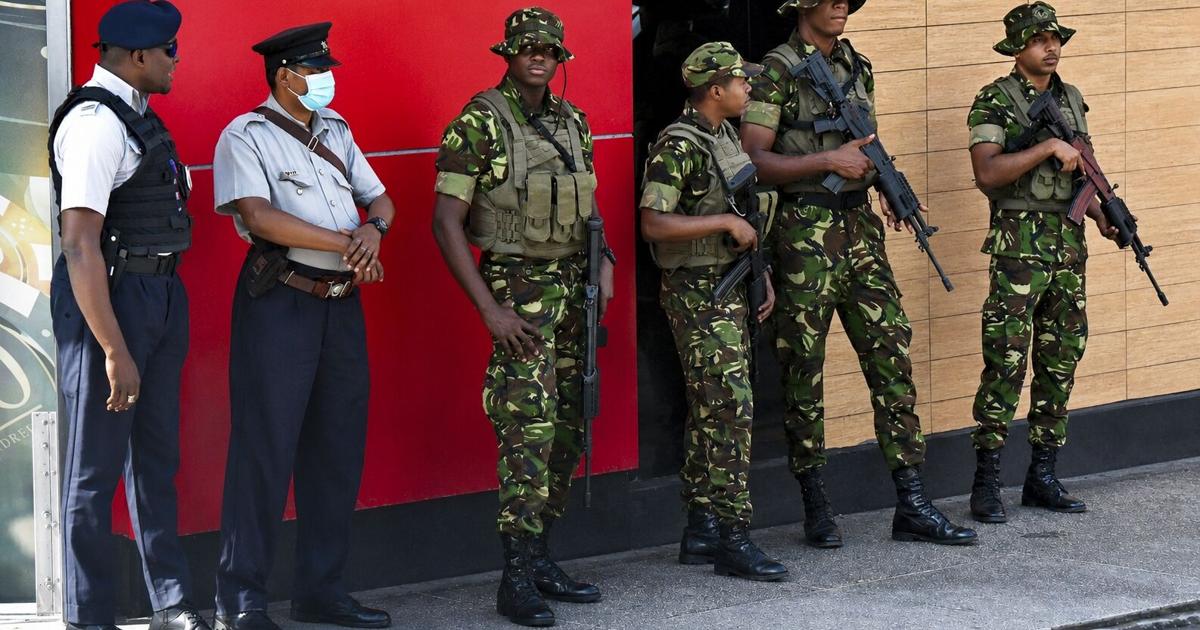
As the country’s existing state of emergency approaches its scheduled September 17 end, Prime Minister Kamla Persad-Bissessar of Trinidad and Tobago has announced a major new expansion of the government’s national anti-crime campaign: the rollout of 30 joint army-police posts across high-traffic intersections, major highways and key community hubs over the next four months.
This new security initiative marks the administration’s next step in crime mitigation, coming after two successive states of emergency implemented since the United National Congress (UNC) government assumed office in May 2025. In an official statement shared to her Facebook platform, the Prime Minister framed the joint posts as a core addition to the government’s updated national security strategy, designed to boost the visible presence of law enforcement and reclaim public spaces that have fallen under the control of criminal groups.
Persad-Bissessar emphasized that the new deployment directly answers years of repeated calls from local residents for increased security coverage across their neighborhoods. The initiative, she noted, embodies the current government’s pledge to tackle rising crime through deeper integrated collaboration between the nation’s different protective service branches.
“I am pleased to inform citizens that in the upcoming four months 30 joint army-police posts will be placed in communities across the country. Many communities have for years requested increased security presence and the protective services and Government is moving aggressively to provide such,” the Prime Minister stated. She added that the permanent posts will not only deter criminal activity but also restore a sense of safety for residents, enabling communities to once again make full use of public areas that have been abandoned due to persistent violence and criminal activity.
Twenty-four locations for the first phase of the program have already been finalized, with an additional six sites set to be confirmed in the coming weeks. To ensure the initiative delivers long-term results, Persad-Bissessar has issued a public call for civil society organizations and private sector groups to partner with law enforcement. “I encourage NGOs, business chambers, community groups and councils to adopt and support these posts and work with the security services,” she said.
The Prime Minister also used the announcement to reaffirm the government’s full confidence in the nation’s top security leadership. She extended formal gratitude to Commissioner of Police Allister Guevarro, SSA Director Alicia Henry, Chief of Defence Staff Commodore Don Polo, Prison Superintendent Elvin Scanterbury, and all rank-and-file officers for their ongoing work to curb criminal activity across the country. “On behalf of all law-abiding citizens I again express sincere gratitude to … all their colleagues and reaffirm our confidence in them, and their shared vision of ending the grip of crime on our nation,” she said.
Homeland Security Minister Roger Alexander expanded on the details of the initiative in an interview with the Express, confirming that the program will be delivered via a coordinated partnership between his ministry, the Trinidad and Tobago Police Service (TTPS) and the Trinidad and Tobago Defence Force. Alexander described the joint posts as a key component of the government’s holistic, cross-agency approach to dismantling criminal networks in high-risk areas.
Unlike intermittent mobile patrols, Alexander explained that uniformed officers will staff permanent, fixed posts at these strategic locations to enable continuous monitoring of key zones. “This is part of our anti-crime initiatives which is holistic. We have put together this particular action to tackle crime and criminality in particular areas. One of the things we try to do is monitor; and I said this when I was a police officer—we control the streets—we are going to control the state of crime,” he said.
The fixed deployment will allow joint patrol teams to respond faster to emergency calls and prevent fleeing offenders from escaping through major transit routes. “So if someone steals a car and the information comes, he must not be able to get away. Persons committing offences must not get away. When communities call, we listen; and coming from a law enforcement background, there are things I could not have done as a police officer, but now this role gives me the advantage to assist the Commissioner of Police and police officers in implementing their anti-crime strategies effectively,” Alexander added.
Beyond the new joint posts, the government is moving forward with widespread manpower expansion across all public security branches. Alexander confirmed that 233 new police officers will complete training and deploy by early September, with a second cohort of recruits already in training. Active recruitment drives are also underway for the Prison Service, Defence Force and Fire Service to boost overall staffing.
As additional personnel come on board, Alexander announced that the government will finally implement the long-unenforced hard labour provision for convicted prisoners. Under the new policy, inmate labor will be leveraged to carry out community cleanup projects across the country. “We have over 400 or more free labour in the prisons; it’s about time we implement it,” he said.
-
It’s pure politics
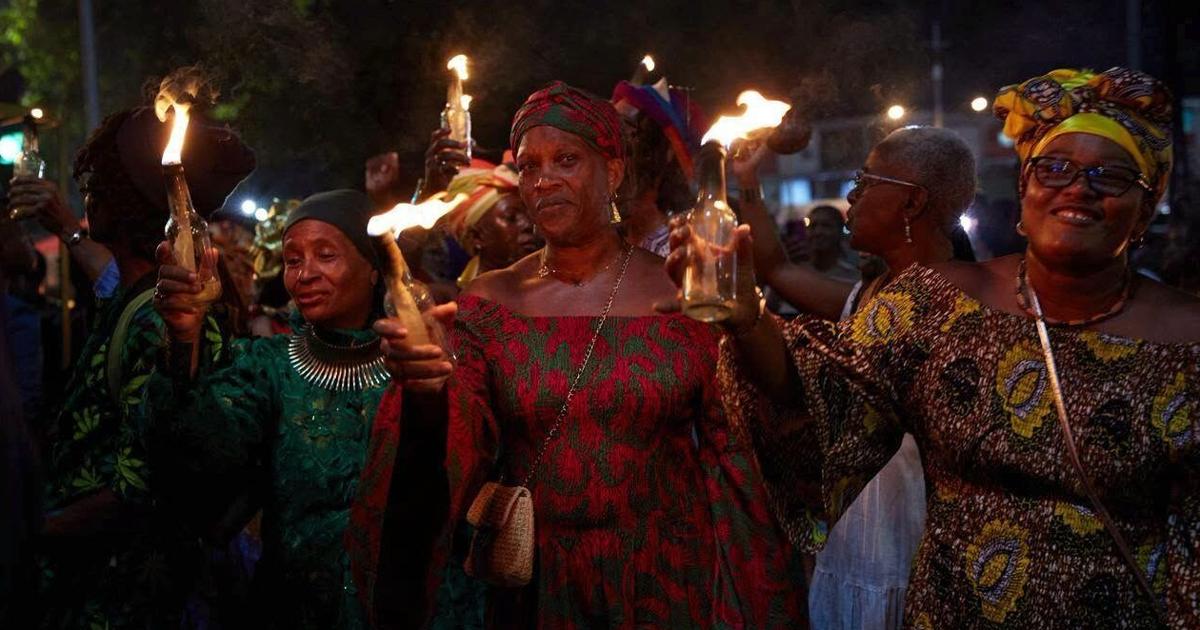
A public verbal feud between Trinidad and Tobago’s top political leaders over racial dynamics and national unity, ignited by incidents during last Saturday’s African Emancipation Day commemorations, has drawn widespread rebuke from the country’s cross-faith religious leadership, who have united to call for an immediate end to divisive rhetoric and a restoration of the nation’s long-standing culture of tolerance.
The conflict began unfolding on Emancipation Day, when Culture Minister Michelle Benjamin was booed by attendees during celebrations at Port of Spain’s Independence Square. Later that same day, crowds at the Lidj Yasu Omowale Village, hosted at Queen’s Park Savannah in the capital, jeered when Prime Minister Kamla Persad-Bissessar’s name was announced. The tension quickly escalated into a public confrontation between the Prime Minister and Opposition Leader Pennelope Beckles, with each leader accusing the other of stoking societal division across the country. Beckles publicly criticized Persad-Bissessar for skipping the official Emancipation Village event at the Savannah and raised alarms over deepening rifts in national society, calling for renewed commitment to unity. In response, Persad-Bissessar dismissed Beckles’ concerns as disingenuous and launched a sharp counterattack against the Opposition Leader.
In interviews following the clash, leaders from across Trinidad and Tobago’s diverse religious landscape uniformly expressed sorrow and regret over the public fight, emphasizing that the nation’s centuries-long tradition of intercultural and interfaith harmony must be protected and preserved above political gain.
Dr. Ellis Burris, president of the Inter Religious Organisation (IRO), slammed what he called “immature behaviour” from both the ruling People’s National Movement and the opposition United National Congress. “This is nothing more than petty politics. There is no excuse for public bickering of this sort on a national holiday that belongs to all of us,” Burris said in a phone interview. “Emancipation Day is a national observance for every Trinidadian, not just one specific group. Why would any side attack others for simply joining in the celebration? That level of confrontation is completely immature.”
Burris added that all citizens have the right to enjoy national holidays regardless of political affiliation, arguing that political rivalry should not spill over into shared national celebrations. “If the government organizes an official event, that is their prerogative. If the opposition wants to host its own gathering, they deserve the same right to do so. There is no reason this should descend into chaos,” he said. Closing his comments, Burris issued a formal appeal for renewed national unity and pride, noting that the nation will soon mark its 64th Independence Day. “We should celebrate this milestone with love and mutual care. Trinidad and Tobago has always been known for our religious and cultural harmony – that is a legacy we cannot afford to lose.”
Manwar Ali, president of the Takaaful Friendly Society, echoed Burris’ criticism, but placed particular blame on Prime Minister Persad-Bissessar for what he called disrespectful conduct. Ali argued that the Prime Minister’s choice to skip the Emancipation Village event, paired with her sarcastic response to criticism, was inappropriate for a national leader. “Emancipation Day deserves the same respect as every other major cultural and religious observance in this country, from Divali to Eid-ul-Fitr,” Ali said. “The Emancipation Support Committee of Trinidad and Tobago earned far more respect than it was given. A leader must be thoughtful and measured in how they respond to public events – this was far from that standard.”
Ali also condemned the open public fight between the two top political leaders, warning that public infighting sets a dangerous example for ordinary citizens. “These two leaders should not be brawling in public. Government and opposition do not have to agree on everything, but they owe it to the public to debate issues constructively in the national interest. When they fight openly, it gives permission for ordinary people to lean into negative, divisive behavior too,” he said. “I reject all talk of racial division. I am a Trinbagonian first, born and raised here alongside people of every background. We have to protect this country and build it together, not fight one another.”
Pandit Mukram Sirjoo, second vice-president of the IRO and chairman of the Trinidad Academy of Hinduism, noted that the division is entirely limited to the political elite, with daily life across multiracial grassroots communities remaining harmonious. “All this fuss is between politicians, not ordinary people. I have no issues with my Muslim or Christian brothers. Walk through any market, visit any local food stall – people of all races eat, work and shop together every day. The problem is at the top, not at the ground level. Grassroots Trinidad is still normal,” Sirjoo said.
Anglican Bishop Claude Berkley echoed calls for collaboration, saying “All of this is deeply regrettable. The nation must come together to work for the common good of all people.”
Canon Knolly Clarke, former dean of Port of Spain’s Holy Trinity Cathedral, called the clash a distressing moment for the nation. “This is a sad occasion. We are supposed to hold ourselves to a standard of dignity and mature conduct as a society. When people in high office behave this badly, it puts our whole country in a bad position,” Clarke said.
Archbishop Barbara Gray-Burke added her voice to the condemnation of racial rhetoric, saying “Emancipation Day is a national event for all of us. There is no place for talk of race that divides us. We should all be able to join this celebration together. I condemn all divisive racial talk and any attempt to ruin the sanctity and beauty of this national observance.”
As of yesterday, attempts to reach Roman Catholic Archbishop Fr Jason Gordon and Monsignor Martin Sirju for comment were unsuccessful.
-
St. Kitts and Nevis launches Independence 43 calendar of activities – WIC News
The twin-island federation of St. Kitts and Nevis has officially launched its comprehensive calendar of activities marking the 43rd anniversary of its national independence, kicking off a cross-community celebration period that will run from early August through late October 2026, culminating in the main Independence Day observances on September 19.
First announced via the St. Kitts and Nevis Information Service (SKNIS) on its official Facebook page, this year’s independence celebrations are organized under the unifying theme “One People, One Vision, Endless Possibility: Independence 43.” The theme was chosen to encapsulate the small Caribbean nation’s ongoing commitment to national unity, inclusive progress, and collective ambition 43 years after it gained full sovereignty in 1983.
Event planners structured the calendar to engage residents of all ages and demographics across both islands, with programming designed to honor the nation’s unique history, strengthen shared national identity, showcase vibrant local cultural traditions, and highlight decades of progress since independence. A wide range of stakeholder groups including local schools, community associations, religious institutions, cultural organizations, and government agencies will collaborate to host and support events throughout the celebration period.
The packed lineup of activities covers diverse interests, from solemn commemorative events to interactive educational forums, lively cultural performances, recreational sporting activities, and community-focused gatherings. Key scheduled events open to all residents include:
– August 1: MV Christmas Disaster Memorial Service, a solemn observance honoring those lost in the historic maritime tragedy
– Multiple installments of “Conversations: Reflections & The Way Forward,” a four-part discussion series exploring the nation’s past and future development
– A series of National Colours Days, encouraging residents to wear individual national flag colors in the lead-up to independence: Green on August 28, Yellow on September 4, Red on September 11, White on September 17, and Black on September 25, culminating in Patriotic Day on September 18 where residents are asked to wear full national colours
– August 29: National Tree Planting Day, a civic-focused event tied to environmental stewardship
– September 12–19: Taste SKN, a week-long celebration of local cuisine running alongside the East Basseterre Festival that continues through October 4
– September 13: National Service of Gratitude followed by a public Gospel Concert
– September 16: National Heroes Day observances, honoring the nation’s pioneering leaders and trailblazers
– September 19: Main Independence Day celebrations, featuring official ceremonial parades, national award presentations, and patriotic community events marking the 1983 sovereignty proclamation
– September 20: Kings Amongst Kings Calypso Extravaganza, showcasing top local calypso talent
– September 26: Brimstone Hill Independence Run, a popular recreational road race held at the iconic historic fortress site
– September 27: Chronicles of Cory Children’s Book Festival paired with a national Independence Concert
– October 8: National Elocution Contest Finals, highlighting student public speaking talent
– October 25: Night of Dance, a showcase of traditional and contemporary local danceIn addition to these featured events, a wide range of smaller community-led activities will take place across both islands in the weeks leading up to and following the main Independence Day, ensuring that residents across every part of the federation can take part in the national celebration.
-
It’s unacceptable
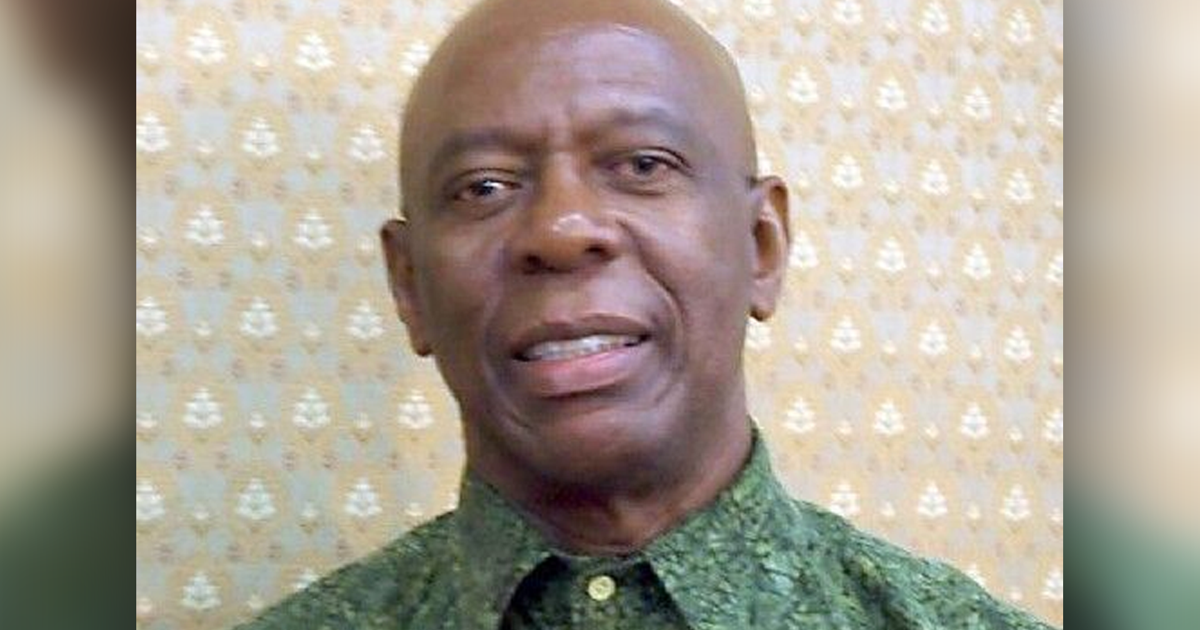
Top political analyst Dr. Winford James has issued a stark call for Trinidad and Tobago’s political leadership to abandon divisive racial rhetoric, warning that long-simmering ethnic tensions could spiral into dangerous outcomes given the nation’s unique history of coexistence between two major ethnic groups spanning more than 70 years.
In an exclusive interview with local outlet Express on Wednesday, James argued that for decades, successive national governments—starting from the administration of Dr. Eric Williams—have failed to meaningfully confront systemic issues of racism, instead allowing racial identity to skew national policy and decision-making. This pattern of avoidance, he emphasized, has set the stage for the dangerous, unacceptable political discourse playing out across the nation today.
“We know racial discord can lead to racial violence. And this is not the way to go. It solves no problems,” James told reporters. He stressed that the small island nation cannot withstand the devastating social and economic fallout of open racial conflict, noting that while the country has enjoyed relative interethnic peace for generations, leaders must actively work to protect that stability instead of putting it at risk.
Turning to the current political landscape, James analyzed the strategy of the opposition People’s National Movement (PNM), which lost national office in recent elections. He noted that the party appears to be prioritizing consolidating its traditional core voter base, which it believes has eroded in recent cycles. However, James warned that shifting demographic and social changes have made reliance on outdated, race-based voting patterns obsolete. Modern voters are far more informed, articulate, and issue-focused than in decades past, he explained, meaning any party that hopes to return to power must expand its appeal beyond its established ethnic and ideological base. Once political support is lost through poor performance or divisive tactics, James added, it is often extremely difficult to win back.
Beyond the question of racial division, James also delivered a broad critique of the quality of national political debate across all major parties. He argued that public discourse is dominated by shallow talking points, empty rhetoric, and counterproductive jargon, rather than substantive discussion of the core challenges that impact daily life for Trinidad and Tobago’s citizens. Neither of the country’s two largest political parties, he claimed, has put forward a credible, convincing policy agenda to address the nation’s most pressing problems. After more than a decade of PNM incumbency preceding their election loss, many voters have already concluded the party failed to deliver on key promises, he added, and the ruling party has failed to fill that policy gap with meaningful solutions of its own.
“We look around and we want to see… what the real issues are that will give the population solace and comfort going forward. But we don’t hear them. We hear shallow pronouncements, rhetoric, and unacceptable jargon on platforms and media,” James said.
He closed by urging leaders to set aside division and come together to build a clear national agenda centered on inclusive development and tangible, meaningful change for all citizens—an agenda he says is noticeably absent from current politics. “This is not the time for separation, but to come together and look at the content of what we need. We need serious conversations. The time has far come when we need to determine what the actual issues are and how we can go about getting people interested in resolving those issues,” James said. “Maintaining that peace requires a clear national agenda centred on development and meaningful change… But for that to happen we need an agenda of development and change, which is not currently evident.”
-

SRP DIES IN CRASH
A 33-year-old off-duty special reserve police constable has died following a high-impact vehicle crash in his assigned policing district of Siparia, Trinidad and Tobago, triggering an outpouring of public grief and renewed calls for road safety awareness across the country.
Seon Gaskill, an officer attached to the Siparia Police Station, suffered fatal injuries in the collision that took place just before 6 p.m. on Sunday along the busy Siparia Oropouche Road. Initial witness accounts confirm that after navigating a curved stretch of the main road, Gaskill lost control of his white Toyota Hilux pickup truck. The vehicle first collided with a parked brown NP 300 before careening into a boundary wall on an empty residential lot.
Local law enforcement and emergency medical responders were dispatched to the scene immediately, but Gaskill was pronounced dead at the site of the crash. Kazim Abdul, the resident who owns the wall damaged in the incident, described the chaotic moments after the crash to local reporters. He told reporters he had just arrived home when he heard a deafening impact. “I heard this loud noise outside and I ran out of the house. I saw the van against the wall, and the wall was broken. The guy was lying on the ground next to the vehicle. It looked like part of his body was beneath the van. He was motionless. The van was a wreck,” Abdul shared.
While Abdul noted that the Siparia Oropouche Road bend is not a notorious high-accident zone, he added that similar incidents have occurred at the same location in past years. “This area does not have a lot of accidents, but a while ago someone ran off the road coming around the same bend. Some years ago, another vehicle ran into my wall,” he said. Abdul emphasized that drivers bear responsibility for adjusting their speed to navigate the curved road, saying, “It is a major road and possibly people have to take their time when negotiating the bend. We have to be careful on the nation’s roads.”
News of Gaskill’s sudden passing spread rapidly across social media over the weekend, with hundreds of messages of condolence pouring in from colleagues, friends, and community members. Many members of the public expressed deep shock and sadness at the loss of the serving officer. Tributes ranged from heartfelt remembrances to messages of support for Gaskill’s family, with one social media user writing, “My real soldier boi, rip king,” and another commenting, “Rest in Paradise Gaskill, hard one.”
Following the crash, Gaskill’s vehicle was impounded and transported to the Siparia Police Station, where investigators are continuing to piece together the exact circumstances that led to the fatal incident.
In comments to reporters following the crash, Brent Batson, road safety coordinator for the Trinidad and Tobago Police Service (TTPS), noted that while overall road fatalities have fallen this year, dangerous driving behavior on local low-speed roads threatens to reverse that progress. Batson reported that as of the current point in 2024, the country has recorded 55 road traffic deaths, a 21% drop from the 70 deaths recorded during the same period in 2023. “Even though the deaths are trending in the right direction, we are seeing a level of risk-taking that could quickly reverse this trend,” Batson warned.
Batson added that three recent fatal traffic crashes, including Gaskill’s, all occurred on non-highway local roads with speed limits as low as 50 kph, a trend that has raised concerns among law enforcement. He cited recent fatal crashes on Rivulet Road in Point Lisas, the Eastern Main Road, and the Southern Main Road, noting that all involved high-risk, reckless behavior that led to loss of life. “We are seeing a lot of high risk accidents. A vehicle ended up on a pole. We are seeing high risk crashes on low speed roads, such as main roads, with speed limits (50 kph). We are engaging in a reckless type of behaviour,” Batson said.
Batson stressed that compliance with road traffic regulations remains the most effective way to prevent preventable deaths, reminding drivers that they cannot account for the actions of other road users. “Speed will make a difference if you can stop the car or if you are going to lose control, and have an unplanned event on the roadway. It could lead to death or injury,” he said. The TTPS extended its official condolences to Gaskill’s family, friends, and colleagues following his death.