作者: admin

  • Suriname threatens ferry MV Canawaima with sailing ban over safety concerns

    Suriname threatens ferry MV Canawaima with sailing ban over safety concerns

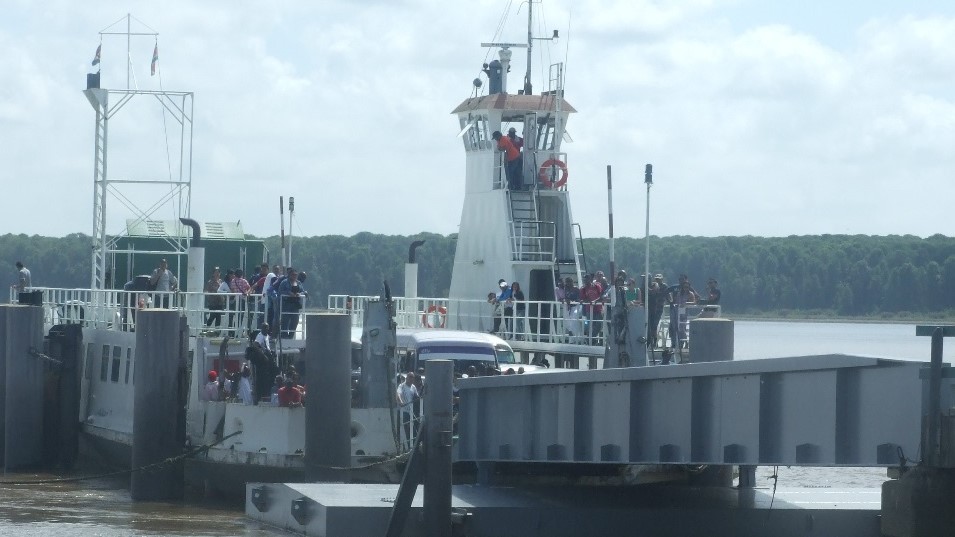
    The Maritime Authority of Suriname (MAS) has delivered a formal final ultimatum to Canawaima Management Company NV, giving the firm one last chance to address critical outstanding safety and operational deficiencies on the cargo vessel MV Canawaima, according to official correspondence dated August 7, 2026.

    The ultimatum comes after a months-long process of regulatory follow-up that began with an initial inspection that identified multiple gaps in the vessel’s compliance with international and national maritime safety standards. In a July 26, 2026 notice, MAS first ordered the company to submit a formal corrective action plan within seven days of receiving the original inspection report. When the deadline passed without a complete response, regulators scheduled a follow-up inspection on August 5, 2026. That re-inspection confirmed that the vast majority of the previously flagged deficiencies had not been remedied, prompting the agency to issue the final warning.

    Under the terms of the new ultimatum, Canawaima Management Company NV must submit a comprehensive corrective action plan that includes a clear, time-bound schedule for addressing all identified deficiencies, completing required major structural repairs, and scheduling mandatory drydocking for the vessel. MAS has set a hard deadline of August 13 for all core safety requirements to be brought into full compliance.

    Key non-negotiable requirements laid out by the regulator cover multiple domains of vessel safety. First, all legally mandated safety equipment must be fully on board, tested, and ready for immediate deployment at all times. All fire-fighting tools and systems must be present, up to date on required inspections, and fully operational, including the vessel’s fire detection and suppression infrastructure.

    The regulator also added documentation and personnel certification requirements to the compliance checklist. All crew members must hold valid, up-to-date Basic Safety Training and Crowd Management certification. For any crew members who have not yet completed the required training and obtained their certificates, the company must provide formal written proof that the relevant training courses will be finished within 30 days.

    Additionally, MAS requires an independent, internationally recognized ship surveyor to conduct a full inspection and risk assessment of the watertight integrity of the MV Canawaima’s hull and cofferdams. A positive, passing assessment from this independent inspection is a prerequisite for the company to be considered for a temporary exemption from the mandatory drydocking requirement.

    MAS has clearly outlined the severe consequences that will take effect if the company fails to meet all requirements by the August 13 deadline. Starting at midnight on August 14, 2026, the MV Canawaima will be placed under a full sailing ban that will remain in force until every single compliance requirement is fully satisfied and verified by MAS regulators.

    In its official communication, MAS emphasized that the safety of the vessel, its crew, and all other commercial shipping traffic in Suriname’s waters is the agency’s top priority. The regulator has called on Canawaima Management Company NV to immediately prioritize and implement all required corrective measures to avoid the upcoming sailing ban.

  • Xue Liu’s Death Sparks Autism Safety Conversation

    Xue Liu’s Death Sparks Autism Safety Conversation

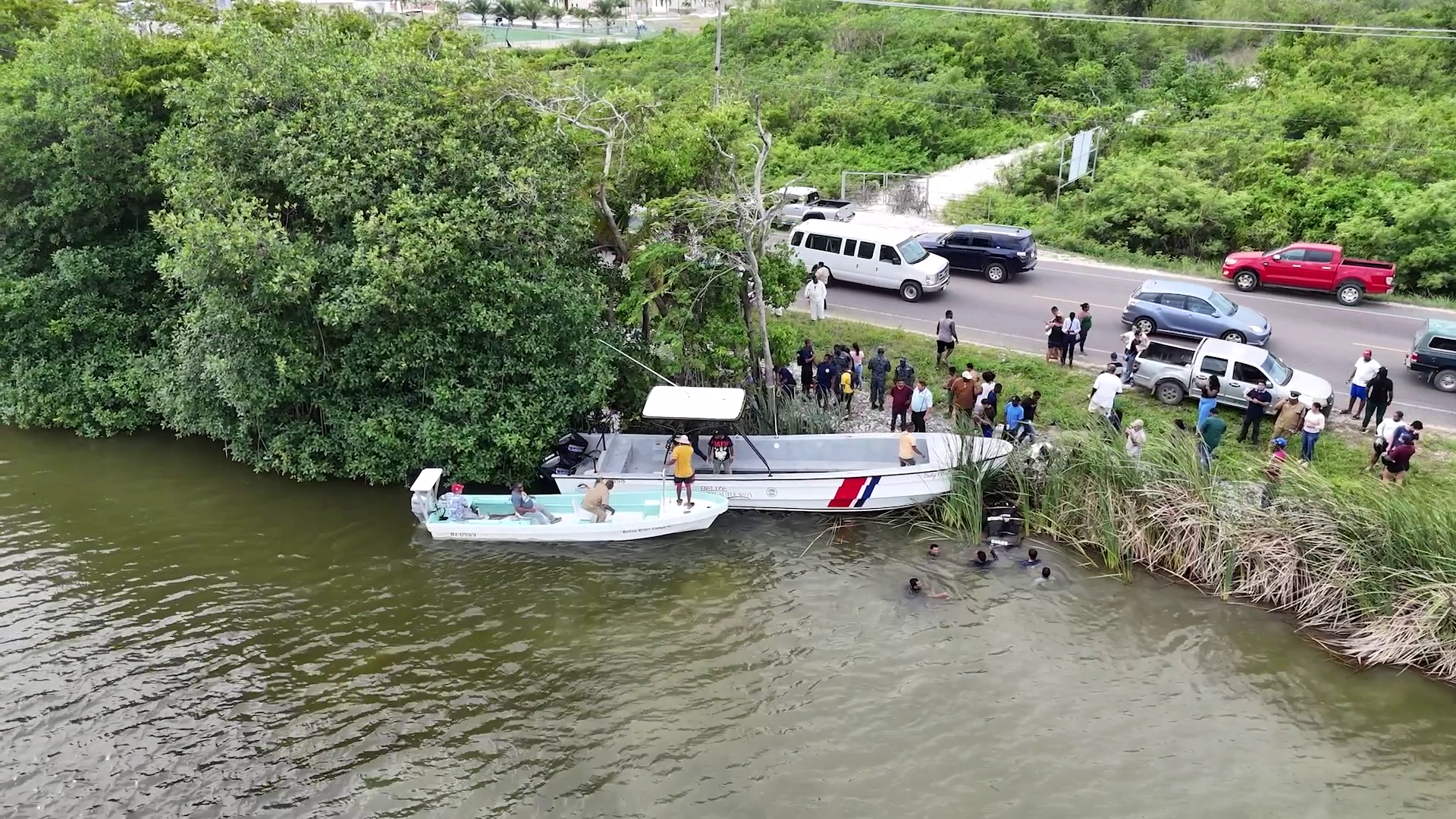
    In August 2026, a devastating drowning incident along the Belize River claimed the life of 18-year-old Xue Liu, a young person on the autism spectrum, and sparked a much-needed national and international dialogue about the unaddressed safety risks facing neurodiverse communities and the relentless burdens shouldered by their caregivers.

    According to initial reports, Liu broke free from her caregiver while fleeing a sudden bee attack and ran directly toward the river, where her body was later recovered. In the aftermath of the tragedy, public discussion quickly turned to criticism of caregiver Shisong Liu, who ran in the opposite direction during the chaotic emergency. But disability advocates argue that blaming the already grieving family misses the larger, systemic gaps in safety support that set the stage for this preventable loss.

    Christy Almeida, founder of the Belize-based advocacy organization Autism Belize, pushed back against widespread condemnation of the Liu family, emphasizing that emergency situations trigger unpredictable instinctive responses even for the most prepared caregivers.

    “I have a really hard time casting blame to any parent, especially parents who have children with special needs, children with disabilities,” Almeida shared in a recent televised interview. “You don’t know what they are dealing with on a daily basis. You don’t know the nights that we don’t sleep. You’re not gonna catch me blaming any family at all because we don’t know what they’re dealing with – their mental health, the toll it takes to be a caregiver.”

    Almeida went on to note that even for neurotypical people, life-threatening crises like a swarm of bee attacks trigger the primal “fight or flight” response, and no one can accurately predict how they will react until they are in the moment. “If you are being chased by a swarm of bees and you’re trying to hold on and this person breaks free, what do you do in that situation? I would like to think if it was my own child, I would throw myself over him and never let go of his hand. But in reality, I don’t know how I would actually react,” she said.

    Beyond the question of caregiver response, the tragedy has brought a little-discussed safety hazard to mainstream attention: the innate attraction many autistic and neurodiverse children have to water, which makes drowning the leading cause of death for young people on the autism spectrum globally. Unlike other common health threats, drowning does not cut life expectancy for neurodiverse people because of inherent disability – it stems from a combination of sensory attraction, limited risk perception, and lack of access to adaptive safety resources.

    “For our neurodiverse community, water is a huge attraction,” Almeida explained. “The floating and the feeling of freedom in the water gives their body a sensation that it is not intellectually realizing that this is danger. When an emergency like a bee attack triggers a flight response, they’re not going to stop and think, ‘Wait a minute, I can’t swim. I can’t do this.’”

    Data from autism advocacy organizations across the globe backs up Almeida’s claim: elopement – the tendency for an autistic person to wander away from a caregiver or safe space – is a common trait, and nearly 90% of deaths related to elopement are caused by drowning. Just in recent months, multiple similar incidents have been reported in the United States, where wandering autistic children have been found dead in nearby bodies of water.

    In response to this tragedy, Almeida is calling for systemic changes to improve autism safety, starting with expanded access to adaptive swimming lessons for neurodiverse children. She is urging local communities, swimming coaches, lifeguard associations, and recreational organizations to develop specialized, accessible swimming programs tailored to the needs of autistic people, to reduce the risk of future fatalities. She also emphasized that constant, proactive safety planning is a non-negotiable necessity for families caring for neurodiverse children, a responsibility that most communities do not provide enough support for.

    This incident has also opened a broader conversation about the lack of public understanding of the daily challenges facing caregiver families of children with disabilities. Advocates note that greater public empathy and systemic support for caregiver mental health are just as critical as safety programming to prevent similar tragedies in the future.

  • Young Rescuers Carry the Weight of Belize River Tragedy

    Young Rescuers Carry the Weight of Belize River Tragedy

    On a Friday in August 2026, a group of young, trained lifeguards from Belize’s 501 Lifeguard Rescue Team answered an urgent call that would leave a lasting emotional mark: a 13-year-old special needs teenager, identified as Xue Liu, had disappeared under the surface of the Belize River after fleeing an attacking swarm of bees. What followed was three and a half hours of grueling work against harsh conditions, as the team pushed through murky, fast-moving water in a desperate bid to bring the teen home alive. The search ultimately ended in tragedy, when the rescuers recovered Liu’s lifeless body, a outcome that still weighs heavily on the young team days later.

    Even amid the danger and heartbreak, the dedication of the rescuers has stood out. Sixteen-year-old Shaun Eck, a high school student who joined the search, cut his foot on an underwater wire holding loose stones within minutes of entering the river. Instead of pulling out to seek treatment, Eck chose to stay and continue the search, saying his team needed extra support and his training prepared him for the challenge. “I didn’t feel the injury at the time, so I just had to push through and do my job,” Eck explained.

    For these young men, rescue work is an extension of the community-focused swimming instruction they provide through Coach Andrew Swimming Club, where they spend their summers teaching children — including kids with special needs — how to be safe in the water. Eck himself learned to swim through the program, and now he works alongside the instructors who taught him: head coach Andrew Gentle and coach Tevon Conorque.

    Gentle, who launched the club’s public classes in 2014, says his commitment to patient, inclusive teaching grew from watching his mother work for 18 years at Stella Maris School, a local institution serving students with disabilities. The club travels across Belize to partner with community organizations including the Hub and YWCA, operating on the core belief that every child, regardless of ability, can learn to swim. That philosophy has earned deep trust from families: Rhonisha Waight, aunt of 7-year-old autistic student Alistaire Gillett, says the instructors’ approach has helped her nephew make incredible progress. Learning to swim is not just a fun activity for children with disabilities, Waight notes, it is a critical life skill that empowers them when caregivers cannot be nearby.

    Conorque, who has worked with the program from its early days, says the work is deeply rewarding. “Some of them might not learn right away for the first class, but due to muscle memory and the strength they gain as they get older, they learn,” he explained. “For me, by the fact that I could give a kid the skill of swimming that makes me feel happy, because probably in the future I save that kid’s life.”

    That same drive to protect the community led the team to join the Belize Coast Guard for the search operation on the Belize River. Even with professional training and prior experience responding to drowning incidents, recovering the teenager’s body was an unprecedented emotional blow for the group. Conorque admitted he felt “a bit lost” in the immediate aftermath of the recovery; while he had prepared himself mentally for a potential negative outcome, the experience was still disorienting. For Eck, the tragedy hit especially close to home: “It hurts to think about because I also have a sister, siblings close to that age. So it really hurts me, especially since I saw it firsthand. But I am getting through it slowly, which is good.”

    Despite the heavy grief the team carries from the incident, their commitment to serving Belize’s local community has not wavered. They have returned to their swimming lessons, continuing to teach young people critical water safety skills one class at a time, guided by the same compassion that pushed them into the dangerous river last Friday.

  • ‘No one will save us’: Caribbean must be self-reliant for economic survival – professor

    ‘No one will save us’: Caribbean must be self-reliant for economic survival – professor

    As the global trading system fractures into competing blocs and large powers increasingly embrace protectionist policies, small island nations of the Caribbean cannot count on outside powers to rescue their economies, leading regional economist Professor Justin Robinson has warned. Delivering a stark message at the Central Bank of Barbados 46th Annual Review Seminar, Robinson emphasized that only deliberate self-reliance and tangible, practical regional integration can secure the Caribbean’s economic future.

    Robinson, who serves as principal of the University of the West Indies at Five Islands in Antigua, opened his address by repeating his widely shared regional mantra: “no one is coming to save us.” He challenged the Caribbean’s long-standing habit of waiting for international markets to stabilize and rebound, arguing that the era of depending on external economic safety nets has definitively ended. For Caribbean societies, he said, a fundamental psychological shift is required to take full control of collective financial destinies.

    For decades, small Caribbean states have operated within a global trading system designed entirely by larger, wealthier major economies. The decades of rapid globalization opened access to affordable foreign goods and services for small open Caribbean economies, but it also left them dangerously dependent on global economic powerhouses. Today, as geopolitical shifts split the global economy into competing trade blocs, with major powers prioritizing protectionism, higher tariffs, and supply chain nationalism, the Caribbean faces disproportionate exposure to economic disruption.

    Contrary to common regional framing of this shift as an unprecedented crisis, Robinson noted that global fragmentation is actually a return to historical norms for the region. “The Caribbean didn’t build the global trading system that is currently fragmented. We were incorporated into it on other people’s terms. So fragmentation is really not a departure from our history, it’s really a return to the normal condition,” he explained. He added that the global trading architecture was never structured to accommodate the unique vulnerabilities of small island states, meaning even minor disruptions have outsized consequences.

    When a large industrial economy imposes new trade barriers, it typically only faces a small dip in overall efficiency. For small island nations, however, trade disruptions strike immediately at the baseline of daily economic survival. “When large economies fragment, they lose efficiency. But when small economies like ours are fragmented against, we really risk actually losing viability, and I think this is really what is at stake for us at this point,” Robinson said.

    The real-world impacts of this global shift are already being felt across the Caribbean, manifesting in sharp spikes in the cost of everyday goods. The region imports the vast majority of its food, fuel, and consumer products, so external supply chain and trade disruptions translate directly to higher domestic prices. Robinson stressed that the urgency of the moment cannot be overstated: while a 0.5% increase in inflation is just a minor data point for large economies, it makes the difference between working households being able to afford groceries across most Caribbean islands. “The costs are real, they are already arriving,” he noted.

    Compounding this economic pressure, the traditional safety nets that long buffered Caribbean economies from domestic hardship are rapidly disappearing. For generations, the region’s development model has relied heavily on outward migration and remittances from citizens living in the Global North. But as wealthy Northern nations implement stricter immigration controls and tighten border policies, this historic escape valve is closing. Robinson framed the current moment as a fundamental crisis of the Caribbean’s long-standing externally dependent development model.

    “Our own failure to develop has been cushioned by the fact that we could export people. That gap is closing. The remittances from those persons again have supported levels of consumption that our economies cannot support,” he explained. Against this backdrop, the core question facing the region is whether leaders and societies will fall back on old patterns of waiting and passive adjustment, or embrace the radical changes needed to build a more resilient economic future.

    To navigate this new reality, Robinson argued that Caribbean nations must move beyond treating regional integration as an ideological ideal and turn it into a practical, everyday tool for economic survival. Though the Caribbean Community (CARICOM) has signed dozens of regional trade agreements on paper, persistent barriers still block meaningful cross-border commerce between member states. High internal transport costs, convoluted border bureaucracy, uncoordinated port management, and conflicting national product standards all make trade between neighboring Caribbean economies unnecessarily difficult and expensive.

    “Regional integration is not a panacea for our problems, but it is one of the areas we have where we can respond and somewhat reduce our vulnerability and negative impact. So regional integration is really no longer a sentiment, I think it becomes a necessity,” Robinson said. He called on national governments and regional institutions to take immediate targeted action to remove these internal frictions, prioritizing modernization of port infrastructure, streamlining of customs clearance processes, and harmonization of product and trade standards across the region.

    Robinson also laid out a clear pathway for retaining more economic value within local communities: strengthening domestic links between key sectors, such as connecting local agriculture and manufacturing directly to the foreign exchange generated by the region’s massive tourism industry. This approach would reduce reliance on costly imported goods and keep more revenue circulating within regional economies, he explained.

    As a working model of successful integration driven by necessity, Robinson highlighted the Organisation of Eastern Caribbean States (OECS). The sub-regional bloc’s member states are all micro-states with extremely small domestic markets, leaving them no choice but to integrate deeply to achieve economic scale. The OECS has already implemented genuine free movement of labor across member states, shared cross-border regulatory frameworks, and a common regional Supreme Court – levels of integration that have not been achieved across the wider Caribbean. “They don’t have a choice but to integrate, and they have levels of integration that are not present in the rest of the region… that comes out of the fact that because of their small size, they view integration as a necessity,” Robinson noted.
  • Pomona Farmer Shot by Plainclothes Policemen

    Pomona Farmer Shot by Plainclothes Policemen

    In a shocking encounter that has raised urgent questions about police conduct in rural Belize, a 46-year-old Pomona cattle farmer is calling for accountability after being shot by three plainclothes police officers who never identified themselves during an unannounced visit to his property on August 7, 2026.

    The farmer, who spoke to reporters by phone from Karl Heusner Memorial Hospital (K.H.M.H.) following emergency surgery, recounted that he was resting near an equipment shed on his land when he was alerted by the barking of his loyal guard dog. When he stood to investigate, he encountered three armed men pointing weapons at him and demanding he raise his hands. With no announcement that the men were law enforcement, the farmer—who previously served as a trained soldier—said he immediately assumed he was the target of an armed robbery.

    Facing three armed attackers, the farmer made the split-second decision to run for safety, rather than drawing the licensed firearm he carried on his property. As he fled, the three men opened fire, striking him in the right knee. After falling to the ground wounded and fearing for his life, he pulled out his legally held weapon and returned fire, forcing the armed men to retreat from the property.

    It was only after the gunfight ended and uniformed police officers arrived at the scene that the farmer learned the men who had shot him were plainclothes law enforcement. One of the plainclothes officers reportedly identified himself only after the shooting, when he approached the wounded farmer. His guard dog—who had accompanied him everywhere and first alerted him to the strangers—was killed in the crossfire.

    The farmer was discharged from K.H.M.H. on August 10, 2026, following surgery to treat his gunshot wound. As of this report, no official explanation has been provided for why plainclothes officers arrived at the farmer’s property with weapons drawn, and no criminal charges have been filed against the farmer following the encounter. The farmer says he is demanding full justice and transparent answers for both the shooting that injured him and the death of his dog, calling the entire incident fundamentally unfair.

    This report is based on a transcript of a televised newscast, with direct quotes preserved as rendered from regional Kriol speech.

  • People are electing parties that will deliver – US deputy secretary of state

    People are electing parties that will deliver – US deputy secretary of state

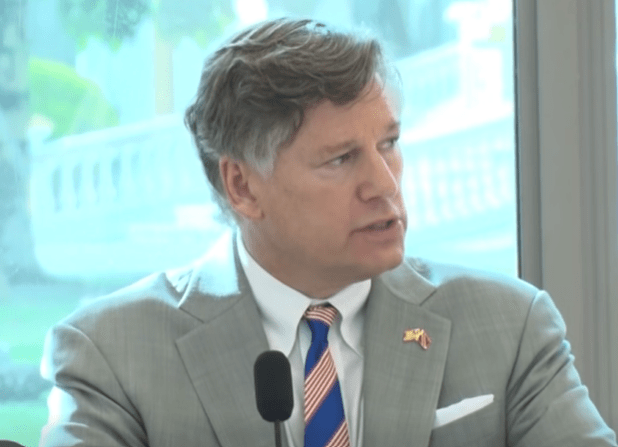
    On Monday, August 10, 2026, U.S. Deputy Secretary of State Christopher Landau delivered remarks during a stop in Trinidad and Tobago, ahead of a planned diplomatic visit to neighboring Guyana. During his address, Landau outlined a shifting global political trend he has observed across democratic nations: voters are increasingly rejecting status-quo politics that prioritize empty rhetoric over tangible progress, and instead electing administrations they trust to deliver measurable results for their populations.

    “Business as usual has stopped delivering meaningful outcomes for ordinary people across the globe,” Landau stated. “Voters everywhere are demanding change.” To illustrate his point, he cited the recent electoral victories of Prime Minister Kamla Persad-Bissessar of Trinidad and Tobago and U.S. President Donald Trump, arguing that both leaders have centered their governance on action rather than lip service.

    “Unlike many former leaders around the world, these two leaders are laser-focused on delivering results, not just speeches,” Landau noted. His comments came during an event marking a major new energy development in the region: energy giant bp Trinidad and Tobago announced that Trinidad and Tobago’s state-run National Gas Company has acquired a 20% stake in the cross-border Manakin-Coucina gas field shared with Venezuela. Separately, bp has purchased the remaining 70% share of Woodside Energy’s Block TTDAA14, which hosts the deepwater Calypso Gas project, bringing bp’s total ownership of the project to 100%.

    The event coincided with another major economic announcement for Trinidad and Tobago: Edwin Bennet, CEO of U.S.-based Pinnacle Steel and Vanadium Company, confirmed the firm would inject an initial $250 million into reopening the idled Point Lisas steel plant, which shut down operations back in 2016. The company targets full commercial production of steel and vanadium by the end of 2027, marking a significant revitalization of the country’s industrial sector.

    Landau lauded Persad-Bissessar’s administration and Trump’s leadership for laying the policy and infrastructure groundwork that has unlocked these new energy projects, in partnership with major firms including ExxonMobil, Curlew, and bp. These developments, he said, will reshape the long-term energy trajectory of both the United States and Trinidad and Tobago.

    “This is what mutually beneficial diplomacy and commercial partnership looks like: both nations advance their own national interests while finding shared solutions that lift all parties. This is a true win-win collaboration,” Landau added. He told Prime Minister Persad-Bissessar that international “capital flows to where it is welcome,” crediting her administration’s pro-investment policies for making the revitalization of shuttered industrial sites like Point Lisas possible.

    Looking ahead, Landau’s upcoming visit to Guyana will center on deepening bilateral cooperation in high-priority strategic sectors, including energy development and critical minerals extraction. As of Monday, the Guyanese government has not yet issued an official public statement confirming the visit to Georgetown.

  • BTL Workers Push Back Against SMART Deal

    BTL Workers Push Back Against SMART Deal

    A proposed corporate consolidation in Belize’s telecommunications sector is facing unexpected and growing pushback from frontline employees, just one week after company leadership gave the green light to move forward with the deal.

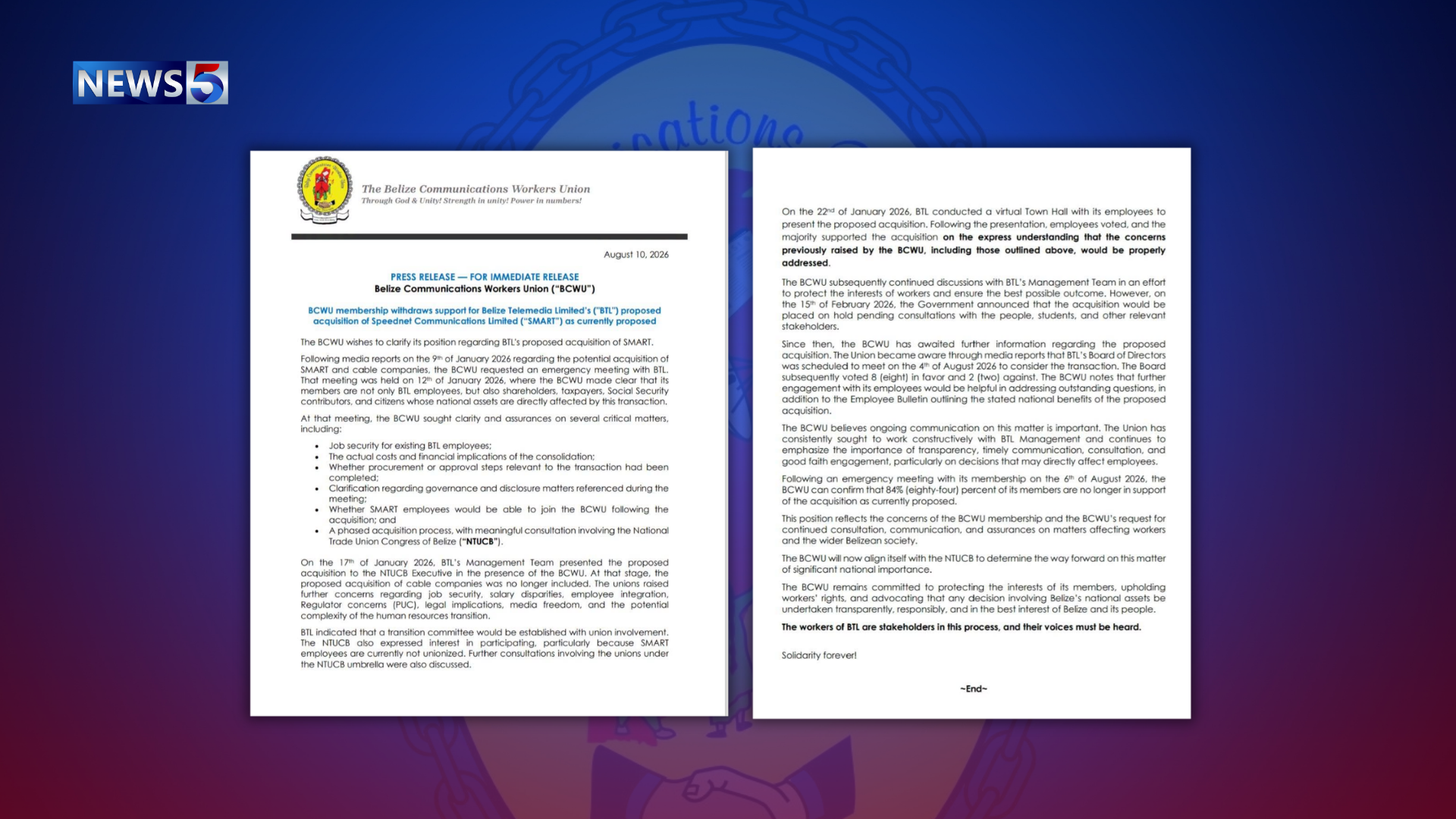
    In August 2026, the Belize Communications Workers Union (BCWU) announced that 84% of its members who work at Belize Telemedia Limited (BTL) now oppose the company’s planned acquisition of competing telecom provider SMART. This marks a sharp reversal from January of the same year, when the majority of BTL staff initially voiced support for the merger.

    Union representatives explain that this early backing was conditional: workers agreed to entertain the acquisition on the understanding that their core concerns – ranging from job security, future corporate governance structures, potential financial risks, and formal worker protection guarantees – would be thoroughly reviewed and addressed by BTL’s leadership before any final vote. After months of waiting for detailed disclosures and meaningful negotiations, the BCWU confirms that nearly all of these critical questions remain unanswered.

    The opposition follows a recent split vote by BTL’s Board of Directors, which advanced the acquisition process with an 8-2 vote in favor of continuing the transaction. Despite the board’s formal approval to move ahead, the union has stressed that rushed action without full transparency and inclusive consultation is unacceptable.

    In a statement, the BCWU emphasized that BTL’s employees are not just hourly or salaried staff – they are key stakeholders with direct, personal stakes in the deal’s outcome. The acquisition touches not only on their individual livelihoods but also on one of Belize’s most critical national infrastructure assets, making worker input a non-negotiable part of the process.

    To amplify their call for accountability, the BCWU has announced it will partner with the National Trade Union Congress of Belize to map out next steps for the opposition movement. The union’s core demand remains unchanged: any final decision on the acquisition must be conducted through open, responsible processes that center the voices of the workers who will be most affected by the outcome.

  • Did BTL Board of Directors Have the Full Picture?

    Did BTL Board of Directors Have the Full Picture?

    Months of simmering political tension over the proposed BTL acquisition of Speednet boiled over this week, as a sitting union senator and top business leaders have raised sharp questions about the integrity of the board’s approval vote and the future of consumer protections in Belize’s reshaping telecommunications market.

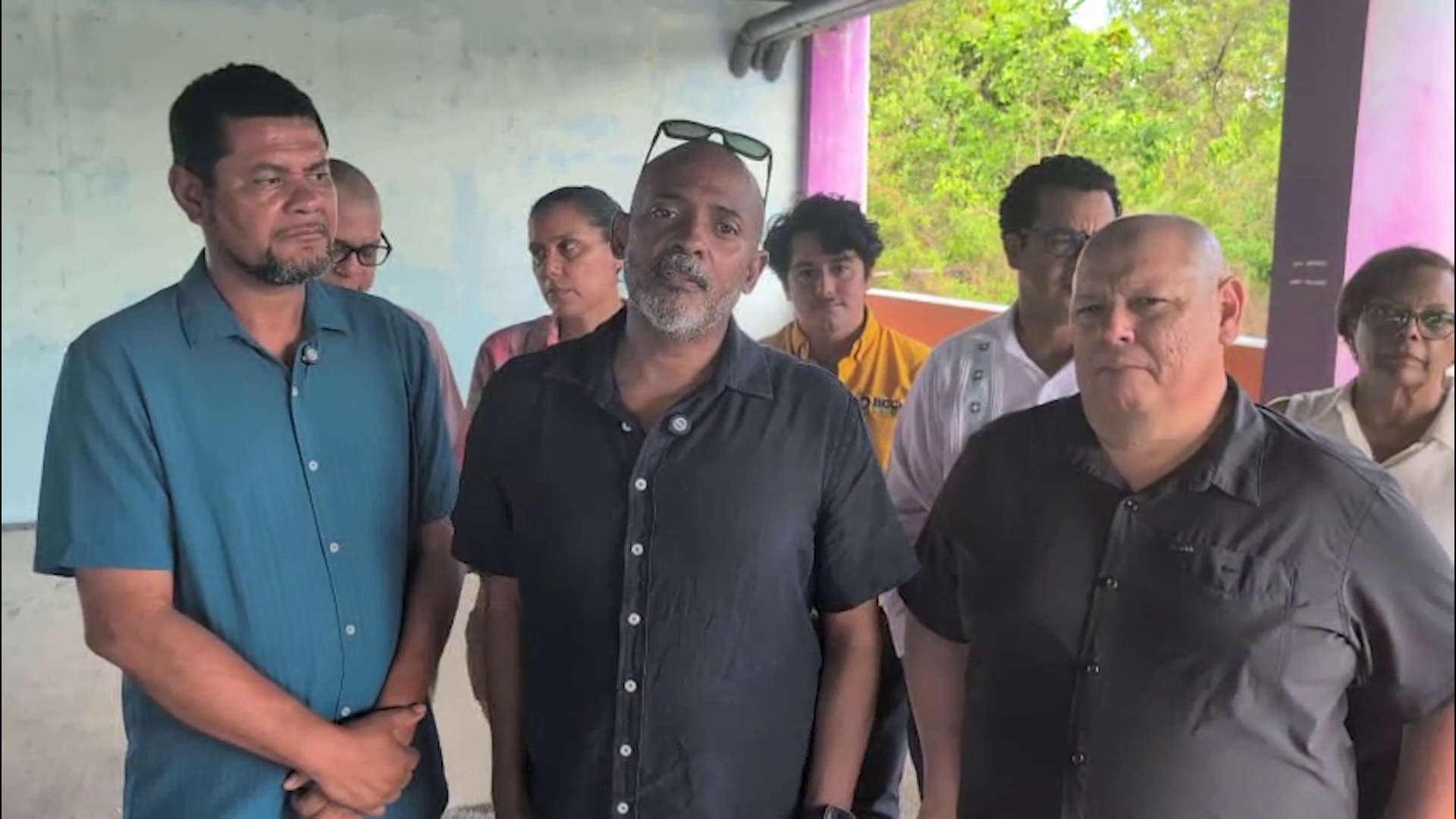
    Speaking publicly on the ongoing debate August 10, 2026, Union Senator Glenfield Dennison waded into the controversy, throwing his support behind BTL director Anissa Perdomo, who voted against the acquisition last Tuesday, and Allan Pollard, the People’s United Party (PUP) mayoral candidate who has publicly opposed the deal. According to Dennison, both figures have aligned with the public and union movement’s stance on the transaction, representing what he calls the will of ordinary Belizeans.

    Dennison’s most critical line of attack targets the majority of BTL board members who backed the acquisition, questioning whether the voting bloc actually had access to complete, accurate information about Speednet’s financial position to make an informed, responsible decision. He argued that the board’s political makeup was structured to guarantee a preordained outcome, noting that most appointeed members hold political alignments that favor the acquisition, making the final vote a foregone conclusion.

    “I don’t think they had enough information to make the decision that they made,” Dennison told reporters, adding that he is willing to reverse his position if full disclosure of the deal’s details proves the Speednet purchase is a strong investment for BTL and Belize. “If that information does prove that buying Speednet was such an excellent investment I will eat my words and take it back.”

    The senator also defended the Senate walkout staged last week by opponents of the acquisition, pushing back against claims the action was unplanned or disorganized. He explained that social partners caucused during a legislative recess and collectively agreed to walk out in protest, with the movement unfolding organically amid rapidly shifting developments on the senate floor. Two separate walkouts were staged simultaneously, he confirmed, and coordination between opposition lawmakers and union representatives aligned to oppose the rushed vote.

    Joining Dennison in calling for greater transparency is William Usher, Vice President of Industry at the Belize Chamber of Commerce and Industry (BCCI), who is sounding the alarm over Speednet’s unclear financial standing and the risk of a new telecom monopoly that could leave Belizean consumers with no protections. Usher emphasized that the public has not been given access to sufficient financial records to build confidence in the transaction, pointing out that any standard commercial lender would require three to five years of audited financial data to approve an $80 million investment – yet only one year of Speednet’s financial records have been made available to stakeholders.

    Usher drew on Belize’s past experience with consolidated telecom markets to warn of the risks ahead, noting that when BTL previously operated as a monopoly, consumers faced higher costs and limited options. He added that current Belizean regulation lacks the necessary legal safeguards to prevent price gouging and unfair practices if the market is consolidated under a single dominant provider, specifically referencing gaps in Section 424 of existing telecom law that leave consumer interests unprotected.

    “If these things are not in place, who are you whether government or the people out here to say listen you are taking advantage of me,” Usher said, echoing widespread public concern over the lack of oversight.

    In response to the growing controversy, the National Trade Union Congress of Belize and the Belize Chamber of Commerce and Industry have announced they will coordinate their efforts on the issue, presenting a united front to push for greater transparency and stronger consumer protections ahead of any finalization of the acquisition. This article is adapted from a transcribed August 10, 2026 evening television newscast.

  • Could BTL Deal Threaten Press Freedom?

    Could BTL Deal Threaten Press Freedom?

    In a coordinated gathering with independent senators and civil society stakeholders on August 10, 2026, Belizean media owners have issued a stark warning that the proposed acquisition of Speednet by BTL poses an existential threat to the country’s foundational press freedom and democratic governance. What is being framed by proponents as a routine telecom industry consolidation, the leaders of independent media outlets argue, would ultimately create a state-aligned telecommunications monopoly that concentrates unprecedented control over national communication infrastructure in the hands of a single entity.

    Senator Louis Wade, who owns local broadcaster Plus TV, explained that modern digital infrastructure has created new, undetectable avenues for interfering with independent media operations that did not exist in previous eras. “Decades ago, authorities seeking to silence critical reporting had to take overt actions like shutting down transmitters or revoking operating licenses,” Wade noted. “Today, through manipulation of IP addresses and digital network management, they can undermine media distribution without the public even noticing what is happening.”
    Wade emphasized that the erosion of press freedom directly undermines the constitutional protections of expression Belize is built on. “Our constitution guarantees freedom of conscience, but that guarantee is meaningless if we cannot share our ideas openly,” he said. “A functioning democracy and a prosperous open market economy both depend on an open marketplace of ideas, where diverse independent perspectives can be heard. That is why we have come together to reject this acquisition.”

    Jules Vasquez, owner of Tropical Vision, echoed Wade’s concerns, noting that independent media in Belize has a long history of resisting efforts to narrow public discourse. “Our organizational identity is rooted in pushing back against systems that block pluralistic opinion,” Vasquez said. “Any state-controlled monopoly over telecommunications poses an inherent threat to independent journalism, and any restriction on free journalism directly threatens how democracy functions. If that line is crossed, we could see far-reaching consequences for the entire country.”

    Mose Hyde, owner of XTV, confirmed that independent media’s opposition to the deal remains unchanged, more than a year after concerns were first raised. The meeting, called by independent senators to confirm the coalition’s stance, reaffirmed the unified opposition that formed in mid-2025. Hyde stressed that the risk is amplified by the fact that the monopoly would fall under partial state control, a structure that gives the government implicit power to penalize critical outlets. “We have already experienced punitive measures for the positions our outlets have taken,” Hyde said. “Today, almost all news distribution to audiences relies on digital telecom infrastructure. That makes us more vulnerable to interference than ever before. This concentration of power is simply unacceptable.”

    Hyde declined to share specific details of the coalition’s next steps, saying only that the gathering was productive and the opposition coalition remains solid. The group has formally called on Belize’s Public Utilities Commission to intervene and block the merger, arguing it would create a dangerous concentration of power in the country’s telecom sector that threatens the public’s right to diverse, independent information.

  • Elections : 5 out of 15 political groups approved by the CEP are led by women

    Elections : 5 out of 15 political groups approved by the CEP are led by women

    As Haiti prepares for its upcoming general elections, a landmark milestone for gender representation in national politics has emerged, after the country’s Provisional Electoral Council (CEP) released its official list of qualified political groups for the vote. Of the 15 coalitions and political organizations granted approval to contest the elections, five are headed by women – accounting for 33% of all registered participating groups.

    On Monday, August 10, 2026, Pédrica Saint Jean, Haiti’s Minister for the Status of Women and Women’s Rights (MCFDF), publicly praised the CEP’s publication of the list, framing the gender breakdown as a tangible win for years of advocacy aimed at breaking down barriers to women’s political leadership.

    Saint Jean linked this progress directly to commitments forged at the National Conference on Women’s Political Participation and Electoral Violence, held in December 2025. The MCFDF emphasized that the growing share of women leading officially registered political structures proves that targeted advocacy work is driving meaningful change toward more gender-equitable participation in Haiti’s democratic governance.

    The five women-led approved groups bring together a total of 53 separate political parties across the Haitian political landscape. The full breakdown of these coalitions is as follows:
    – *DEBLOKE*, headed by general coordinator Marie Yanick Mézile Lhérisson, comprises 11 member political parties
    – *EN AVANT POUR HAITI*, represented by Vilcé Nancy, is made up of 12 parties
    – *LAPEH AK ALYE’L YO*, led by Marie Nelly Verpile Boyer, includes 10 participating parties
    – *ANFÒS POU SOVE LONÈ*, represented by former senator Gilles Cemephise, counts 10 parties among its members
    – *DELIVRANS*, represented by Djina Guillet Délatour, is a coalition of 10 parties

    The full list of all 15 approved political groups is available for public download via HaitiLibre at the link: https://haitilibre.com/docs/groupements-politiques-agrees-08-08-2026.pdf

    In conjunction with welcoming the announcement, Minister Saint Jean issued an urgent nationwide appeal to Haitian women: she called on large numbers of women to complete their voter registration, stand as candidates for a wide range of elected public offices, and engage actively at every stage of the upcoming electoral process.

    Saint Jean also reaffirmed her ministry’s ongoing commitment to supporting women entering the democratic process, offering full backing for women candidates and participants as they navigate the election cycle. She closed by expressing confidence that broad, determined citizen mobilization will pave the way for a far more inclusive and equitable political landscape in Haiti following the elections.