
A public notice has recently been issued formally announcing the re-summons of a person named George, who is listed as an INO Lister. For public accessibility, authorities have provided multiple channels to access the official summons document: while an embedded image of the notice is hosted at the provided external link, individuals who experience trouble loading the image preview can download the full official document via an accompanying PDF link. This re-summons represents a formal procedural step requiring George’s appearance in accordance with relevant official processes, with the public notice structure designed to ensure transparency and proper notification of the required court or official appearance. As an official public notification, the document outlines all required procedural details for the recipient to comply with the summons order, following standard administrative and legal protocols for formal notification of required attendance.
作者: admin
-

Browne Warns Business Interests May Be Supplying Illegal Guns
In a substantive address to the House of Representatives on Monday, Antigua and Barbuda Prime Minister Gaston Browne has drawn urgent attention to the hidden networks behind the country’s illegal firearms trade, alleging that actors with established business interests may be key players in smuggling weapons and ammunition into the twin-island nation. His remarks came during floor debate on the landmark Firearms (Amendment) Bill 2026, which has since been approved by legislators to ramp up penalties for illegal gun-related offenses.
-
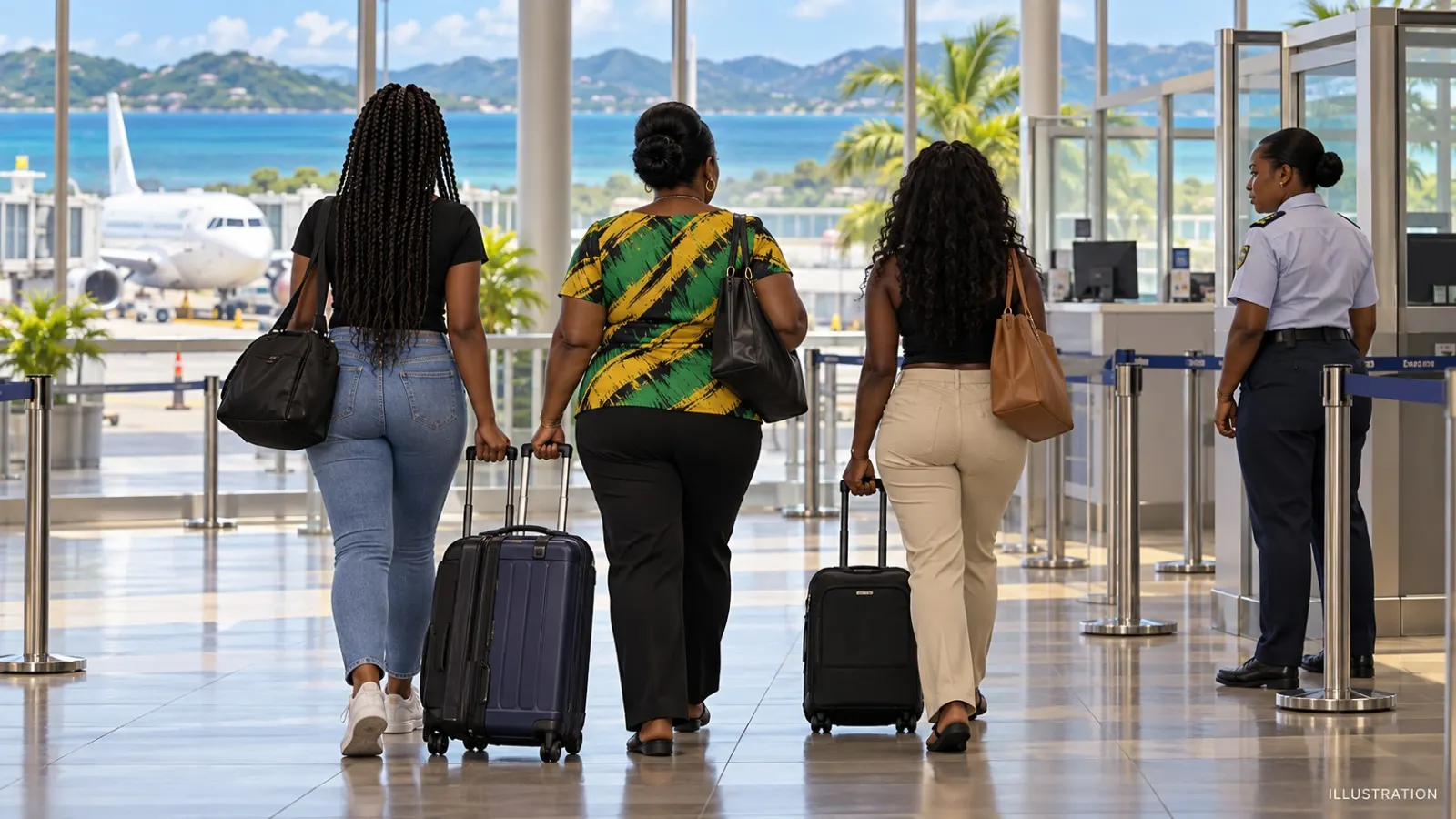
Three Jamaican Women to Be Deported From Antigua and Barbuda After Overstaying
A cross-border immigration case is progressing toward its final stage this week in the Eastern Caribbean, as three Jamaican nationals are set to leave Antigua and Barbuda on Thursday under a court-ordered deportation for violating their entry terms. The three women — 24-year-old Shantel Haynes, 23-year-old Jova Gordon, and 50-year-old Sophia Bonnick — appeared before a St. John’s magistrate earlier this week to face charges of overstaying the period of authorized stay granted to them by Antigua and Barbuda’s Immigration Department.
After reviewing the details of the case, the presiding magistrate ruled that the trio had continued to reside in the dual-island nation without valid legal permission following the expiration of their entry authorization. The ruling formalized the order for their removal from the country, with the deportation process scheduled to be completed by the end of this week. Immigration enforcement actions for overstaying entry terms are a standard practice across Caribbean nations to regulate cross-border movement and uphold national immigration regulations.
-

China’s 77th Anniversary Celebrated with Pledges to Deepen Antigua and Barbuda Partnership
Diplomatic relations between Antigua and Barbuda and China have stood strong for more than four decades, and the two nations have recently reaffirmed their shared commitment to expanding this mutually beneficial partnership across a diverse range of priority sectors. This agreement to deepen ties was made public during a special reception held Tuesday at the Chinese Embassy in Antigua and Barbuda, which was organized to celebrate the 77th anniversary of the founding of the People’s Republic of China.
The high-profile event drew a broad cross-section of Antiguan and Barbudan leadership and international diplomatic representatives, including Governor General Sir Rodney Williams, Prime Minister Gaston Browne, Opposition Leader Jamale Pringle, sitting members of the country’s parliament, and senior officials from the global diplomatic corps based in the nation.
Speaking on behalf of Chinese Ambassador Zhang Wei, a senior embassy representative outlined the tangible progress of ongoing cooperation between the two nations, highlighting recently completed development projects that have already delivered tangible benefits to local communities. Among these completed initiatives are the delivery of 1,500 solar-powered streetlights and 200 residential energy storage systems, projects that expand access to reliable, renewable energy across the island nation. The embassy also confirmed two new major undertakings: the launch of the third phase of the bilateral agricultural technical assistance program, and continued support for a large-scale affordable housing project that will deliver 150 new residential units to local residents.
Human capital development and skills training remain core pillars of the bilateral cooperation framework. Official data shared at the reception shows that in 2025, 367 residents of Antigua and Barbuda participated in 42 professional training programs organized by Chinese authorities. Between January and September 2024, more than 200 Antiguan and Barbudan professionals received specialized training in high-priority fields ranging from agriculture and fisheries to infrastructure development, public healthcare, climate change adaptation, and disaster risk management. Moving forward, the Chinese representative added that Beijing is eager to expand collaboration with Antigua and Barbuda and other developing nations in two emerging critical areas: artificial intelligence innovation and development of climate and disaster early warning systems.
In his remarks at the event, Governor General Sir Rodney Williams reflected on the 41-year history of formal diplomatic relations between the two nations, which were first established on January 1, 1983. He emphasized that the partnership has delivered widespread, lasting benefits to Antigua and Barbuda across key areas including infrastructure development, education, public health, cultural exchange, and professional skills building. Sir Rodney also underscored the critical importance of upholding multilateralism and international law for small island developing states, noting that these foundational principles are essential to protecting the national security, sovereign integrity, and long-term sustainable development of small nations around the world.
-

Air Travel Costs Jump 15.8% in Antigua and Barbuda in August
Antigua and Barbuda has reported a dramatic surge in air travel costs for August 2026, with official data revealing a 15.8% month-over-month jump in passenger air transport pricing that has significantly shifted national inflation metrics. The steep increase in airfares stands as the single largest contributor to overall price movement captured in the latest Consumer Price Index (CPI) publication from the country’s statistics agency.Compiled and published by the National Bureau of Statistics, which operates under the country’s Ministry of Finance and Corporate Governance, the latest inflation report shows that the airfare surge was the primary driver behind a broader 13.2% month-over-month increase across all transport services in August.While transport costs dominated monthly price gains, the broader consumer price basket saw a more moderate 0.8% overall increase between July and August. Food inflation, a key metric for household affordability, softened considerably in August compared to the prior month. After recording an 0.8% decline in July, overall food prices rose just 0.3% in August. Even within the food category, however, sharp regional price shifts were evident: fish and seafood prices skyrocketed by 12.1% over the month, while fresh fruit saw a 4.5% increase, and dairy products including milk, cheese and eggs rose 3.2% month-over-month.Looking at the full 12-month period ending in August 2026, Antigua and Barbuda’s cumulative headline inflation rate hit 5.5%, with the majority of the 12-month price growth driven by non-food categories including the skyrocketing cost of air travel. The latest CPI figures offer policymakers and industry stakeholders updated insight into inflationary pressures across the island nation’s economy, particularly in the critical travel and tourism sector, which often serves as a core economic driver for Caribbean island nations.
-

Pilot Reportedly Stabbed During Fight With Co-Pilot on Flydubai Flight
On Wednesday, a commercial passenger flight operated by low-cost carrier Flydubai was forced to divert and conduct an emergency landing in northwestern Saudi Arabia following a disturbing in-flight incident between two flight crew members, leaving hundreds of passengers’ lives hanging in the balance mid-journey.
Flight FZ1073, which was en route from Dubai International Airport to Tel Aviv with approximately 150 passengers and crew on board, triggered a sequence of emergency alerts that unfolded rapidly over the Red Sea region. According to flight tracking data analyzed by BBC Verify, the Boeing aircraft was cruising at a steady altitude of 34,000 feet when it suddenly plummeted more than 17,000 feet in less than 120 seconds, a dramatic descent that sent shockwaves through the cabin.
Transponder data from the flight tells a chaotic story of the unfolding emergency: the crew first broadcast the general emergency squawk code 7700, before briefly switching to code 7500 — the international transponder signal reserved for cases of unlawful interference with a flight. The aircraft eventually reverted to the general emergency code before touching down at Tabuk Regional Airport.
Multiple passengers on board shared accounts of the incident with Israeli media outlets, alleging that a violent altercation broke out between the two pilots in the cockpit, which culminated in one pilot stabbing the other. One passenger recalled that after the confrontation spilled out of the cockpit, a group of travelers joined together to subdue the aggressor and restrain him before additional qualified pilots, who were traveling as passengers in the rear of the plane, stepped forward to take control of the distressed aircraft.
Officially, many details of the incident remain unconfirmed, as authorities continue their initial investigation. A spokesperson for Tabuk Airport has confirmed that both the captain and first officer sustained injuries during the incident and were transported to a local hospital for treatment, but the airport declined to share any information on how the injuries occurred. Air traffic control records show that the emergency landing request was first received at 8:44 a.m. local time, and the plane touched down safely roughly 60 minutes after the distress call was placed.
Flydubai has released an official statement acknowledging the in-flight incident, confirming that all passengers on board are unharmed and accounted for following the successful landing. The airline noted that it is cooperating fully with Saudi Arabian aviation authorities to investigate the full circumstances of the event, and will release additional updates to the public as more verified details become available.
The unprecedented incident has already raised questions about cockpit security and crew safety protocols on commercial passenger flights across the Middle East, with aviation industry observers waiting for the release of the official investigation report to shed light on what exactly unfolded 34,000 feet above the Arabian Peninsula.
-
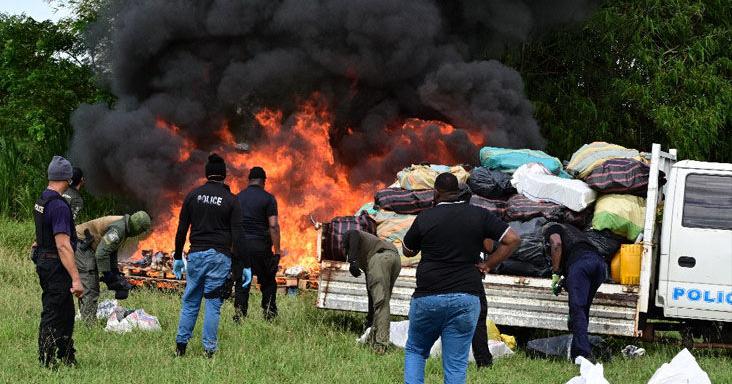
PM: Govt to fight local drug mafia
In a high-stakes public display of commitment to combating the transnational and local drug trade, the Trinidad and Tobago Police Service (TTPS) incinerated more than 8.3 tonnes of seized illegal narcotics at the Caroni Cremation Site on Wednesday. The haul, which includes cocaine, marijuana, heroin and a range of illicit synthetic drugs, carries an estimated street value of more than $1.6 billion — a sum equal to roughly 1% of the twin-island nation’s annual gross domestic product.
Prime Minister Kamla Persad-Bissessar, who leads the United National Congress (UNC) administration, hailed the operation in a public social media statement, crediting uniformed personnel for keeping the dangerous cargo off local streets. “These drugs never reached our communities to poison our young people and tear apart families, and that is entirely thanks to the relentless dedication of the brave men and women of our protective services,” she said. The Prime Minister went on to frame the operation as part of a broader, ongoing campaign against local drug trafficking networks, which she claimed were permitted to operate with impunity for a decade under the previous People’s National Movement (PNM) administration. “The era of the local drug mafia gaining unchecked power is over,” she stated, adding that law enforcement is targeting every layer of the trade: not just intercepting physical drug shipments, but also rooting out criminal accomplices embedded in local financial institutions, distribution rings and the public sector, with critical support from international law enforcement partners.
The operation unfolded shortly after 8 a.m., when a convoy of TTPS vehicles escorted two truckloads of contraband to the cremation site. The seized drugs had been collected across Trinidad between 2005 and 2024, with interdictions taking place at Piarco International Airport and across multiple policing divisions including Eastern, North-Eastern, and Southern. Once on site, roughly two dozen officers unloaded the narcotic-filled packages, cut open the bags to publicly display the contraband on pallets ahead of incineration.
TTPS Commissioner Allister Guevarro, who oversaw the event, noted that one shipment of drugs seized by Southern Division officers had not yet arrived when the fire was lit, but he later commended all participating personnel for their meticulous work and strong work ethic spanning every step of the process, from initial arrests to the final destruction of the contraband. To secure the event, the TTPS deployed a surveillance drone to monitor the perimeter and posted multiple armed officers around the site to prevent any unauthorized interference.
Guevarro used the public destruction to address long-standing public skepticism about how seized narcotics are handled by authorities, referencing a widely circulated past incident where missing seized drugs were claimed to have been eaten by rats. “Critics have long spread the narrative that seized drugs get leaked back onto the street instead of being destroyed. Today, the entire world can see these drugs burned to ash — they can’t be resold, and rats certainly didn’t eat them,” he said. He added that when narcotics are held for years as evidence during ongoing legal proceedings, they often deteriorate naturally: cocaine breaks down from solid blocks into fine powder, while marijuana eventually decomposes into dust. The public exercise was explicitly designed to eliminate any doubt about the fate of the seized contraband, he emphasized, reinforcing transparency and accountability in TTPS counter-narcotics operations.
Some of the destroyed narcotics dated back to a 2005 major cocaine bust on Monos Island, where nine men were detained and seven ultimately charged with trafficking, including two Trinidadian nationals, one Antiguan citizen and four Venezuelan citizens. Guevarro explained that the drugs remained in police custody for nearly 20 years as the legal process moved forward, a common timeline for high-stakes trafficking cases. Another large seizure destroyed during the event was a 1,500-kilogram marijuana shipment intercepted last year in the Caroni Swamp, which was cleared for destruction after no suspects were arrested in the case.
Speaking to reporters on site, Minister of Homeland Security Roger Alexander framed the event as an open declaration of war against the drug trade, which he blamed for devastating local communities. “Narcotics are tearing our communities apart, so we are destroying the narcotics before they can destroy us — this is war,” he said. Alexander called on parents to join the national effort, urging them to search their homes and eliminate any drugs they find, blocking contraband from entering households and neighborhoods before it can harm residents. “Every kilogram we destroy today could save millions of young lives. This is a fight that requires action from everyone, not just law enforcement,” he added. When asked how the current UNC administration’s approach to counter-narcotics differs from previous governments, Alexander highlighted unprecedented levels of coordinated support from Trinidad and Tobago’s international law enforcement allies. He also confirmed that all government agencies collaborated immediately to approve use of the Caroni Cremation Site for the destruction, with no bureaucratic delays.
Guevarro pointed to newly released data from the TTPS Crime and Problem Analysis Branch (CAPA) showing that cocaine seizures rose significantly between 2024 and 2025, while marijuana seizures have stayed relatively stable. He argued that the uptick in seizures is not a sign of more drugs entering the country, but proof that police operations are growing more effective at intercepting contraband before it reaches local communities. “When we seize more drugs, that means our operations are successfully pulling more poison off our streets — that is a win for public safety,” he said. He added that a large shipment of cocaine recently seized by the Trinidad and Tobago Coast Guard in a successful interdiction will be destroyed in a future public operation, noting that rising seizure counts are a promising sign that the national anti-drug strategy is delivering results.
-
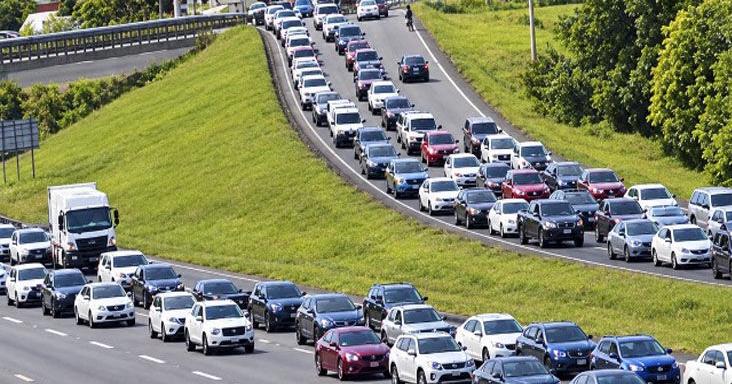
Motorists stuck for hours as early morning accidents cause gridlock
Commuters traveling into Port of Spain from Trinidad’s eastern and southern regions faced crippling multi-hour traffic delays on Thursday, after a cluster of four separate non-fatal accidents shut down lanes across the island nation’s busiest arterial highways. The cascade of incidents began in the pre-dawn rush hour, with three collisions unfolding within a single 60-minute window starting around 5 a.m. Two of these early crashes occurred along the Churchill-Roosevelt Highway, one near the community of Maloney and a second further along the route in El Socorro, while the third took place on the Solomon Hochoy Highway outside Gasparillo. A fourth incident, a pedestrian being struck by a moving vehicle, occurred later that morning along the Beetham Highway, prolonging disruption for thousands of inbound commuters.
-
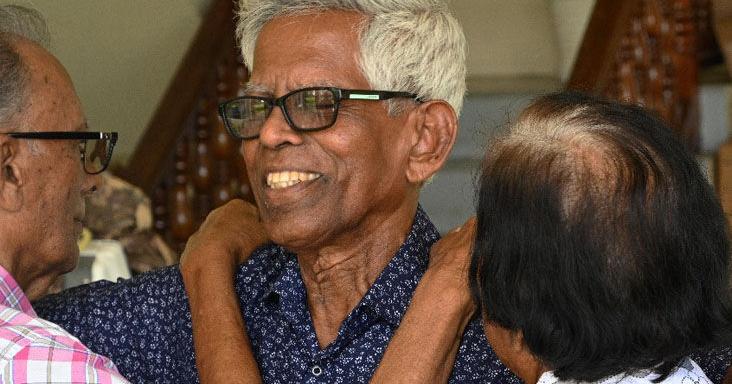
Pensioner on kidnap ordeal: Worse than a jail
For the second time in 2024, a 77-year-old retired air conditioning technician has survived a terrifying kidnapping and armed robbery that left him penned in a dark locked washroom for 10 hours and drained his bank accounts of more than $142,000. Tarran Gallai, who shared his harrowing experience with local outlet the Express, says he is convinced the same gang that abducted him earlier this year targeted him again, pointing to clear similarities in the attackers’ methods and a chilling remark one captor made during this latest ordeal.
The incident unfolded on a Sunday morning, when Gallai left his shared home in San Francique to pick up post-operative eye medication from a neighborhood pharmacy in Debe. It was around 9:30 a.m. when he pulled up in his recently purchased Toyota Yaris, and just as he prepared to step out of the vehicle, two armed men seized him from behind and forced him into their own car at gunpoint.
“I was scared but I tried to keep a clear head,” Gallai recalled of the moment. The attackers told him outright that they intended to kill him if he did not comply with their demands. They drove him to an unoccupied house on Dumfries Road near La Romaine, where they bound his hands and feet tightly to a toilet bowl. Unlike many kidnapping cases where victims are blindfolded, the men left Gallai’s eyes uncovered — a choice that only amplified the horror of his 10-hour confinement in the completely dark, windowless room. He was given no food or water during his entire captivity, and with no chair to sit on, he was forced to remain in an uncomfortable, strained position the entire time.
One of the two kidnappers left the property with Gallai’s car, while the other stayed behind to guard him, checking on his bound prisoner every 30 minutes to prevent any escape attempt. Too restricted to break free, Gallai made the choice to speak gently to his abductor to avoid provoking violence, a decision he says kept him alive through the ordeal. “I was trapped. It was worse than being in jail… I started praying,” he described of the hours that stretched on, before he was finally moved on Monday morning.
The captors drove Gallai to a bank branch in Marabella, and ordered him to withdraw the full $130,000 they demanded, threatening harm if he alerted any bank staff or police. Too terrified to refuse, Gallai followed their instructions, passed the full sum in a bag to the waiting kidnappers at a prearranged spot on Market Street, where they stashed the cash in the trunk of his car before driving off and leaving him unharmed. By 12:30 p.m. that same day, Gallai had made it safely back to his relatives’ home.
In the aftermath, police located Gallai’s Toyota Yaris burned to a shell in Claxton Bay. But the financial damage did not end with the $130,000 bank withdrawal: the attackers kept his bank card, and made multiple additional transactions throughout Sunday, including a $5,000 ATM withdrawal and a series of point-of-sale purchases at supermarkets across Cunupia, Charlieville, and Freeport. In total, the attackers stole $142,486.80 from Gallai’s accounts.
This latest attack comes eight months after Gallai’s first kidnapping in February, which took place in Couva before his scheduled eye operation. Gallai says multiple clues point to the same group being behind both crimes: not only do the methods of the attackers match almost exactly, but one of the captors told him during Sunday’s abduction, “I got you this time again.” Despite the close parallels between the two incidents, the February kidnapping remains unsolved, with no arrests made to date.
Reflecting on the root of the crime, Gallai expressed his frustration that able-bodied people would choose to target and rob vulnerable citizens rather than seek work to support themselves. “People are trying to live as parasites. People don’t want to work and that causes this (kidnappings). They could do things to help themselves,” he told reporters.
In spite of the deep trauma the incident has left him with — he says the experience has left him permanently shaken — Gallai holds out hope that investigators will crack the case this time, unlike the February abduction. He has also issued a warning to other elderly residents, urging all senior citizens to never go out alone, to avoid falling victim to similar targeted attacks. In a surprising show of forgiveness, he added of his attackers, “I wish them luck for their lives.”
Acting Sergeant Narine is leading the ongoing investigation into the kidnapping and robbery, with no updates on arrests or recovery of the stolen funds as of the latest reports.
-
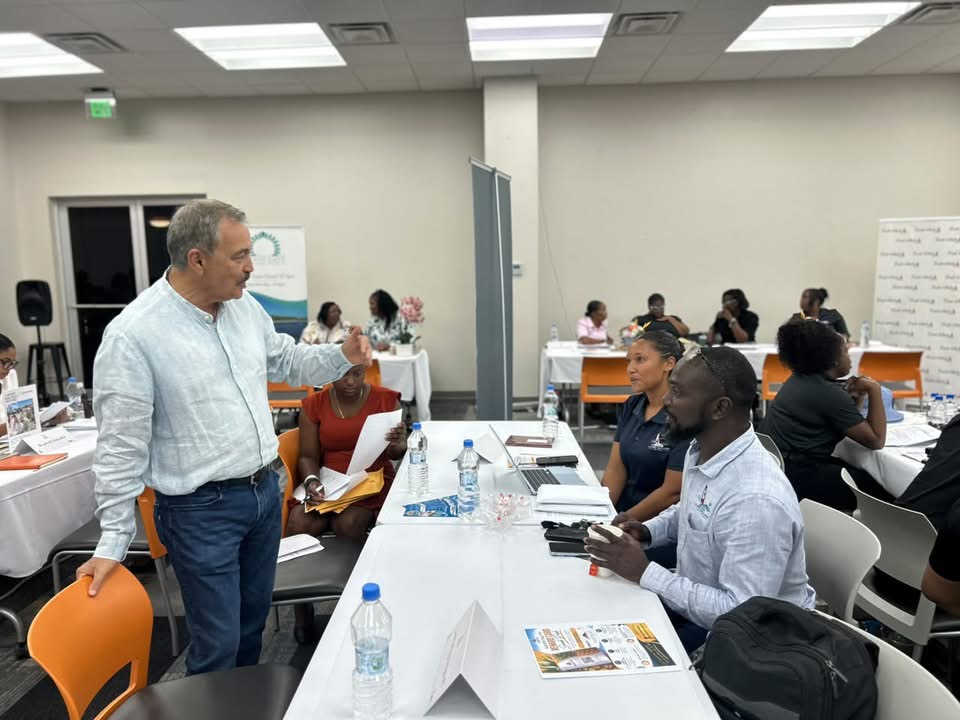
Fernandez Urges Antiguans and Barbudans to Pursue Tourism Careers
Against the backdrop of global Tourism Month celebrations each September, Antigua and Barbuda has hosted a targeted tourism and hospitality job fair that connects local job seekers directly with industry employers, creating a dynamic space for career exploration and industry connection. The event brings a dual purpose to the island nation: it addresses immediate hiring needs across the tourism sector while centering a key strategic goal – ensuring native Antiguans and Barbudans are primed to seize the economic opportunities created by the industry’s ongoing expansion.
Every year, countries and national tourism bodies across the globe mark September as Tourism Month, a observance that builds toward the official celebration of World Tourism Day on September 27. This annual tradition serves as a moment to step back and assess tourism’s far-reaching impact on national economies and local communities, while also shining a well-deserved spotlight on the frontline and behind-the-scenes workers that keep the global tourism machine running.
For the dual-island Caribbean nation of Antigua and Barbuda, tourism is far more than a seasonal industry – it is the backbone of the local economy, weaving through dozens of interconnected sectors. From full-service hotels and fine dining restaurants to ground transportation, commercial aviation, luxury yachting, international cruise operations, independent tour guiding, and a host of small businesses that cater to visitor needs, tourism’s economic footprint touches nearly every corner of community life.
As Antigua and Barbuda presses forward with plans to diversify its tourism product, expanding access and offerings across air travel, cruise arrivals, yachting experiences, and land-based adventure tourism, industry leaders have emphasized that investment in human capital remains non-negotiable for long-term, sustainable growth. Without a skilled, local workforce prepared to fill emerging roles, the sector’s expansion cannot deliver maximum benefit to the communities that call the islands home, making events like the job fair a critical piece of the nation’s tourism development strategy.