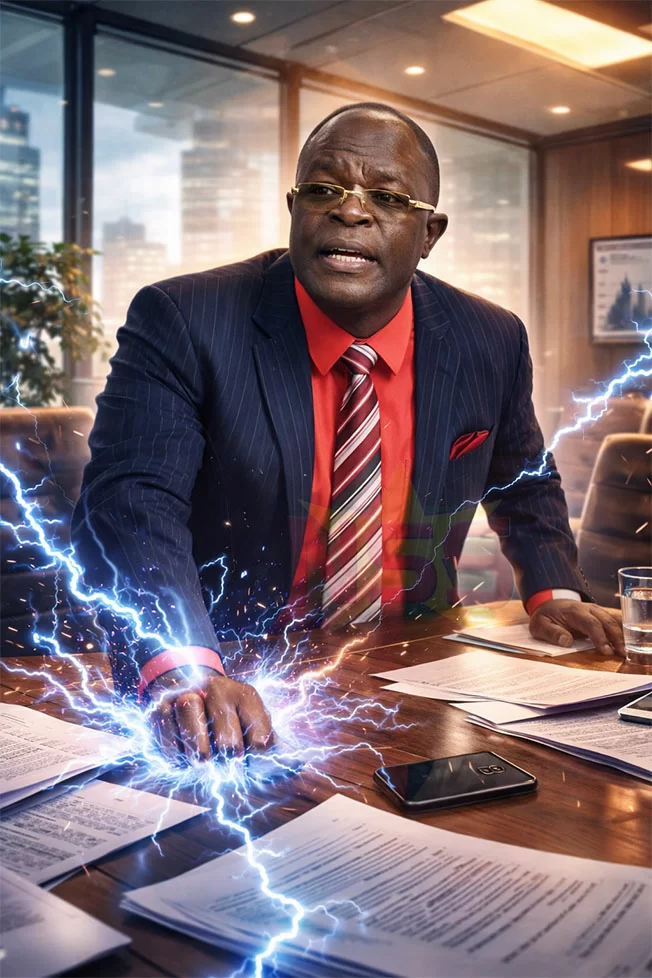
A severe corporate governance crisis has erupted at Energy Company of Suriname (EBS), where CEO Leo Brunswijk’s confrontational leadership style has triggered an executive rebellion and raised concerns about institutional stability. The conflict reached its boiling point when the Board of Commissioners formally requested the CEO to defend his management approach, prompting an explosive reaction from the traditionally authoritative leader.
The company’s entire leadership structure now faces unprecedented strain as Chief Operating Officer, Chief Technology Officer, and Chief Financial Officer have collectively suspended their participation in regular management meetings. In a formal letter to the CEO, the executives cited unprofessional conduct and intimidating behavior, including alleged table-pounding incidents during meetings. They emphasized the statutory equality of all management board members, asserting that corporate governance operates through collegial decision-making rather than monarchical rule.
At the heart of the confrontation lies a critical debt restructuring agreement that requires unanimous executive approval. While both the management team and Board of Commissioners have endorsed the proposal, CEO Brunswijk’s refusal to sign has created an operational deadlock. This missing signature represents more than procedural oversight—it constitutes a fundamental blockage that threatens organizational continuity.
Sources indicate the CEO initially planned to publicly confront the Board through media channels but was confronted with constitutional realities: the shareholder’s representative is the President of Suriname, and those accountable to the Board cannot simultaneously apply pressure through public platforms.
The striking contrast between the CEO’s emotional responses and the management team’s formally worded request for restored professional relationships highlights deeper governance issues. The situation gains additional complexity considering union involvement and the broader political context surrounding Suriname’s primary energy provider.
Industry observers note that the fundamental question transcends the CEO’s anger management issues. The real test involves recognizing that corporate leadership exists within a system of checks and balances, where equality among executives represents administrative necessity rather than personal challenge. Showing respect for the President as shareholder representative demonstrates institutional maturity rather than weakness.
While tensions have temporarily subsided, the underlying structural vulnerabilities remain exposed. For a company responsible for national energy security, uncontrolled power surges—whether electrical or administrative—risk triggering systemic failure. The ultimate challenge lies not in determining who can pound the table hardest, but in identifying the stabilizing switch that prevents the entire nation from descending into governance blackout.
Coinciding with the Holi festival celebrating the victory of good over evil, Suriname faces its own corporate morality play where reason and responsibility must ultimately triumph over momentary passions and power struggles.