
As the 2026 back-to-school season approaches, educators across Belize are escalating a long-running campaign for financial support to cover mandatory classroom costs, with the nation’s largest teachers’ union drawing a clear line in the sand: this will be the final year teachers dip into their own pockets to stock their classrooms.\n\nFor decades, Belizean teachers have borne the brunt of uncompensated classroom expenses, purchasing everything from basic stationery and textbooks to classroom decor and learning aids out of their personal salaries ahead of each new academic year. Now, Nadia Caliz, president of the Belize National Teachers Union (BNTU), has amplified these widespread grievances, turning a years-long request into an official demand from the national government.\n\nIn a public address to union members, Caliz emphasized that the BNTU has repeatedly pushed for the introduction of a dedicated annual resource allowance for all active classroom teachers, and pointed to successful policy precedents across the Caribbean to back the union’s campaign. “When our colleagues from Grenada presented their program at the recent Caribbean Union of Teachers Executive Meeting, they outlined how their national government provides every teacher with a targeted grant every August to cover the cost of classroom materials and learning resources,” Caliz explained. “St. Lucia has also put this policy in place, and there is no reason Belize cannot follow suit.”\n\nCaliz made a direct promise to the nation’s educators that 2026 will mark the end of self-funded classroom preparation: “This is the last September, and I am saying this, the last time, our educators will be going into their pockets to provide these resources. As your union leadership, we understand the burden, and we are committed to securing this allowance for you.”\n\nFor years, the BNTU has raised this issue with the Briceño administration, and while government officials have acknowledged the request, no concrete policy or budget allocation has been approved to date. Caliz questioned whether the government has truly prioritized educators’ needs, noting “They have listened, but did they truly hear us?”\n\nThe core question now hanging over the negotiations is whether the Briceño administration can reallocate funds within its existing national annual budget to create space for the new resource allowance program. As schools prepare to open for the 2026-2027 academic year, all eyes are on the Belizean government to respond to the union’s final demand.\n\nThis report is adapted from a transcribed broadcast of evening television news from Belize.
作者: admin
-

Destiny Wagner Breaks Silence on Pageant Controversy
Nearly three days after a chaotic Miss Universe Belize pageant sparked widespread accusations of score manipulation and organizational misconduct, national director Destiny Wagner has publicly addressed the controversy that has overshadowed Caleigh-Rose West’s historic victory. In her first detailed comments since the Saturday night event, Wagner pushed back firmly against claims of intentional sabotage or altered results, attributing all confusion to uncoordinated production missteps rather than bad faith.
Wagner made clear in her interview with pageant co-host Chealsea Munoz that West’s win was fully earned, rejecting any narrative that the title was improperly secured. She explained that unexpected coordination challenges with the Miss Universe franchise’s El Salvador-based central operations created disruptions that threw the live event off schedule, leading to the errors that triggered public backlash.
Munoz echoed Wagner’s account, noting that last-minute surprises and miscommunication that the production team had not prepped for created avoidable chaos. She specifically addressed the widespread confusion around the announcement of the top five contestants, explaining that organizers accidentally distributed an incorrect delegate list to on-stage announcers in the heat of the live broadcast. The mistake led to six names being called instead of the planned five, with West, who was ultimately named the winner, originally left off the wrong list distributed before the final round.
“Things could absolutely have gone better, but that doesn’t take away from the incredible work all eight contestants put into this competition,” Munoz said, pushing back against public criticism that has centered on production missteps rather than the competitors’ performances. “It’s unfair for people to judge what happened when they weren’t behind the scenes dealing with the chaos of the moment. Caleigh-Rose West earned her spot in the top five and her win fair and square; this was just an honest, human mistake.”
Beyond the top five announcement error, the pageant also faced criticism for featuring imagery of Guatemala’s iconic Tikal Mayan ruins during a segment dedicated to Belizean cultural heritage. In a public statement released after the event, the Miss Universe Belize franchise confirmed that all visual and artistic elements for the cultural segment were selected by a local Belizean team, which has since formally acknowledged and taken responsibility for the accidental misattribution of the landmark.
This report is adapted from a transcript of an evening television news broadcast, with original Kriol language portions transcribed per standardized spelling conventions.
-

Maya History Destroyed by Heavy Machinery Near Guinea Grass
In a devastating blow to Belize’s cultural heritage preservation efforts, a section of an ancient Maya archaeological site in northern Belize has been destroyed by unauthorized heavy machinery activity, with investigators now working to identify the party responsible.
The damage occurred at Complex D of the El Pozito archaeological site, located close to Guinea Grass Village in the Orange Walk District, according to officials from Belize’s Institute of Archaeology. The destruction comes just a few months after a team of research archaeologists completed a comprehensive new survey of the site, which was already being actively monitored by authorities due to ongoing land clearing operations in the surrounding area.
Josue Ramos, senior archaeologist at the Institute of Archaeology, described the incident as a major setback for efforts to protect and document Belize’s ancient Maya legacy. He emphasized that safeguarding the country’s irreplaceable cultural heritage is a shared responsibility across all sectors of society, from private landowners to commercial developers.
Under Belizean law, all registered ancient monuments and archaeological sites receive legal protection regardless of land ownership – whether the land is privately held, leased, or publicly owned crown land. In a 2024 amendment to the National Institute of Culture and History (NICH) Act, government officials successfully pushed through harsher penalties for unauthorized destruction of cultural sites, raising maximum fines from just $5,000 to $75,000 and increasing potential prison sentences from two years to five years for first-time offenders convicted of site damage.
Ramos noted that the institute has put in place a clear collaborative framework to balance development needs with cultural heritage protection, rather than halting private development entirely. Under processes formalized with the 2023 Archaeological Impact Assessment policy, the institute works directly with landowners undertaking construction or land clearing projects. Officials notify landowners of the potential for undiscovered archaeological features on their property, provide a roster of accredited archaeologists to conduct impact assessments, and review mitigation plans proposed by lead archaeologists to ensure development proceeds in a heritage-friendly manner.
“We are here not to stop development, but to work with people and ensure that development is done sustainably,” Ramos explained.
Following the incident at El Pozito, archaeologists have issued a renewed warning to all developers, agricultural operators, and private landowners across Belize: it is a legal and ethical requirement to complete due diligence and consult with Institute of Archaeology authorities before beginning any land-altering work that could impact unrecorded or protected archaeological sites.
-

Fatal Accident Causes Hours-Long Highway Shutdown
On a Saturday afternoon in August 2026, travelers journeying between two major Belizean population centers — Belize City and Orange Walk — encountered crippling travel disruptions after law enforcement authorities closed a critical stretch of the highway near Biscayne Village’s Mile 27 marker. The full road closure was implemented to process the site of a fatal motor vehicle accident, a measure that locked in thousands of commuters, commercial drivers, and pedestrians for more than two hours.
The prolonged shutdown stemmed from a waiting period: local investigators held the entire site while senior officers awaited the arrival of specialized crime scene personnel based in Belize City, as well as a required Justice of the Peace to formally document the fatal incident. Complicating the situation further, no alternate alternate route exists for travel between the two hubs, leaving stranded people with no workarounds for their disrupted journeys. Hundreds of travelers saw pre-planned trips, business appointments, and personal itineraries upended by the unplanned shutdown.
In an interview following the incident, local media questioned Assistant Superintendent of Police Stacy Smith, a senior staff officer with the department, on whether law enforcement could have adjusted protocols to allow limited traffic flow while still protecting the integrity of the accident investigation. Smith defended the decision to maintain a full closure, noting that thorough investigation of the fatal crash took top priority when no immediate risk to other road users was present.
“The integrity of the investigation is paramount,” Smith explained. “Certainly, if there was a matter where life was at risk in terms of the persons in the traffic being upheld, that would take paramount consideration. But where that is not the concern, the integrity of the scene in terms of conducting a thorough investigation is the paramount consideration. Certainly, the view is to do it as expedient as possible but you cannot be expedient at the expense of being thorough.”
Reporters also raised questions about a previously deployed police transit resource, launched in 2021 during the COVID-19 pandemic, that was supposed to offer relocated transport for officers to respond to cross-district incidents more quickly. Smith acknowledged the existence of the dedicated police bus, but noted that she would need to confirm why it was not deployed to speed response efforts for this incident, adding that scheduled departure times may have made it impractical to use for this particular emergency shift.
Witnesses on the ground report that dozens of stranded drivers and walking commuters begged the on-scene ranking officer to allow single-lane traffic passage along the edge of the road, far removed from the protected accident site, but those requests were denied. This report is an edited transcript of an evening television newscast originally broadcast by the outlet, with all statements from speakers transcribed verbatim and adapted to standard English spelling where Creole was originally used.
-

Uniform Donation Brings Back-to-School Relief at Stella Maris
As the 2026 back-to-school season approaches, students across Belize are preparing to return to classrooms, but for low-income families, the cumulative cost of textbooks, school supplies, and mandatory uniforms creates a significant financial strain. For the 147 students of Stella Maris School, however, one of these heavy burdens has been lifted entirely thanks to a cross-border community partnership forged through Belize City’s new sister-city relationship with Miramar, Florida.
The initiative is led by Bridge 501, a nonprofit organization composed of members of the Belizean diaspora based in the United States. What began as a pledge to provide one free uniform per student quickly expanded: overwhelming outpouring of local community support in Miramar allowed the group to double its original commitment, delivering two uniforms for every child at the school.
Belize City Councilor Kaya Cattouse explained that the project grew out of a recent celebratory Belize Day event held to mark the newly formalized sister-city agreement between Belize City and Miramar. Recognizing that school uniforms rank among the costliest back-to-school expenses for Belizean families, stakeholders quickly aligned to address the unmet need at Stella Maris, where a large share of the student body comes from economically vulnerable households.
For parents like Jeslyn Bennett, the timely donation has been life-changing. “It’s not easy being a parent trying to cover uniform costs for our kids,” Bennett shared. “When I heard we would receive two uniforms per child, I cried. It’s such an incredibly generous gesture – I still get goosebumps thinking about it.”
Stella Maris principal Doreth Pascasio-Griffith emphasized that the impact of this donation extends far beyond immediate financial relief. For many of the school’s students who have long struggled to afford proper, intact uniforms, wearing clean, matching new clothing does more than meet the school’s dress code requirement: it transforms their entire experience of attending class.
“Most of our kids come from households with significant financial need, and for too long, many have had to come to school in tattered, worn-out clothing,” Pascasio-Griffith said. “When you don’t have proper clothes, it’s hard to feel confident about being at school. We wanted our students to come to class properly dressed, just like students at any other top school in Belize. This donation gives them that chance.”
Beyond tangible financial support, the principal noted that the new uniforms foster a critical sense of belonging and self-worth among students, reinforcing that their education and well-being matter to people across borders. The donation has removed a major barrier to consistent school attendance and academic engagement, setting the entire student body up for a successful, confident start to the 2026-2027 academic year.
-

Southern Belizean Wins $292,100 Bingo Jackpot
In a life-changing turn of events that has captured the attention of small communities across Belize, a long-time bingo player from the country’s southern region has won a staggering $292,100 jackpot that will let her fulfill a long-held personal dream.
The life-altering win, announced by local media on August 18, 2026, came after the unidentified winner spent years regularly buying bingo tickets, never imagining that one casual purchase would transform her circumstances. In an on-the-record interview with local reporters, the winner shared that she almost skipped buying a ticket on the day she won: “I mi de dah work di play but I seh I neva mi ah buy but I buy and when I win I neem mi want finish the hours.”
When asked to describe the flood of emotions as she watched the final numbers land in her favor, the winner said she felt overwhelming nerves, even comparing her jitters to the anxiety she felt speaking about the win publicly. She added that the windfall has already revealed unexpected changes in her social circle: “Because you have friends weh you neva got and boyfriends weh u neva got.”
When asked directly how she felt about the historic win, the winner simply and enthusiastically replied, “Good. Excellent.”
Unlike many jackpot winners who make elaborate plans for luxury travel or high-end purchases, the southern Belizean has a single, grounded priority for her prize money: finishing construction on her personal home, a project that has likely been out of her reach until this unexpected windfall.
The lucky winning ticket was purchased from Xian Dali, a local retail store located in the Dangriga District of southern Belize. The winner also shared that she had been regularly purchasing bingo tickets for years, and never once expected to claim such a large jackpot. When asked what kept her coming back to play week after week, she put it simply: “Because from one till I finally ketch it.”
This report is adapted from a transcript of a local evening television newscast, with quotations from the winner preserved in their original Belizean Kriol, transcribed using a standardized spelling system for accessibility.
-

DABA Playoff finals take over Massacre Indoor Sports Complex
One of Dominica’s most anticipated amateur basketball tournaments is finally ready to crown its 2026 season champions, as the Dominica Amateur Basketball Association (DABA) prepares to tip off its annual playoff finals this evening, Tuesday, August 18, at the Massacre Indoor Sports Complex. Four competitive squads from two divisions will take the court tonight, each hungry to claim the coveted championship title and end their season on the highest note.
This year’s finals follow a best-of-five series format, meaning the first team to secure three wins in their division will walk away with the league crown. The opening tip-off of the night is scheduled for 7:00 PM, when the West Coast Ballers will face off against the Possie Pacers in the hotly contested Division One Finals. Immediately after that first matchup concludes at 9:00 PM, the spotlight will shift to the Premier Division, where Dr. Darroux PSC Falcons 1 will go head-to-head with Happi 767 SC Dominators in what is shaping up to be a thrilling showdown.
Local basketball fans have been gearing up for these finals for weeks, after what organizers and spectators alike described as an intensely competitive regular season that saw every team fight hard for their playoff spot. This high stakes build up has generated widespread excitement around the matchups, with organisers expecting a packed venue for the opening night of games.
For supporters who are unable to attend the games in person at the Massacre Indoor Sports Complex, DABA has arranged multiple options to follow every play live. Fans can catch full live coverage of the matchups through the DABA official Facebook page, as well as on Digicel Channel 14.
Adding to the excitement of the opening night, popular local DJ Blend will be on site at the venue to provide continuous entertainment between games and throughout the evening. Organisers have issued a public call to all local basketball supporters to turn out in large numbers, fill the arena, and create an electric atmosphere as they cheer on their favourite teams in what is set to be an unforgettable championship series.
-

CXC records more than 35 000 no-shows across CAPE, CSEC exams
The Caribbean Examinations Council (CXC), the regional body overseeing secondary and pre-university standardized assessments across the Caribbean, has disclosed a set of unprecedented and growing challenges impacting its 2025 exam cycle, marking the first documented case of artificial technology misuse during official assessments alongside soaring candidate absenteeism and a sharp uptick in academic misconduct. During a regional performance briefing hosted in Anguilla, CXC Director of Operations Dr. Nicole Manning outlined the three most pervasive integrity violations recorded in this year’s exams, topped by the use of unauthorized electronic devices, candidate collusion, possession of unauthorized exam materials, and the groundbreaking new infraction: intentional misuse of artificial intelligence to gain unfair advantage during assessments. “This is a completely new development for us – we have never recorded confirmed AI misuse in our exams before now,” Dr. Manning stated. To address this emerging threat to academic integrity, CXC has already adapted an internationally recognized AI assessment framework to guide regional secondary and post-secondary institutions in establishing clear, enforceable standards for responsible technology use during high-stakes testing. Dr. Manning also issued a critical public warning to students about the hidden risks of oversharing sensitive information with AI platforms, advising: “To all students: do not input your personal identifiable information into any AI tool or online platform. Sharing this data puts your identity and personal security at severe risk.” Candidates caught violating exam integrity rules face severe penalties, ranging from disqualification of their entire exam results to a permanent ban from future CXC assessment cycles. Alongside new AI-related challenges, the 2025 exam cycle saw a crisis of absenteeism that has raised serious concerns across regional education systems. Official CXC data shows that 3,534 registered candidates missed this year’s pre-university Caribbean Advanced Proficiency Examination (CAPE), while the issue was far more acute at the secondary education level, where 32,403 registered students failed to appear for their Caribbean Secondary Education Certificate (CSEC) exams. Dr. Manning emphasized that exam absenteeism automatically eliminates a candidate’s chance to earn a formal qualification, as missing a core assessment component means no final grade can be issued. “Candidates who skip their exams lose the opportunity entirely, no exceptions,” she explained. “Surveys of absent candidates show many stay away because they feel unprepared, but that is never a valid reason to miss an exam. Just try – nothing beats a trial, and any attempt is better than walking away from the opportunity.” Overall reported exam irregularities jumped 60% year-over-year, rising from 80 confirmed cases in the previous assessment cycle to 128 in 2025. Common additional infractions beyond integrity violations included disruptive behavior in exam halls and unauthorized possession of study notes. Another parallel crisis has emerged in school-based assessment (SBA) requirements, which count toward a candidate’s final grade, with growing rates of non-submission. Dr. Manning explained that non-submissions stem from two root causes: some school administrative centers fail to submit completed student projects on time, while other candidates do not complete the required coursework at all. With non-submission rates climbing steadily, Dr. Manning called on regional education ministries to intervene, helping students understand that skipping any required assessment component results in an ungraded, non-qualifying result. Beyond assessment integrity and absenteeism, CXC also highlighted a widening gender participation gap that becomes more pronounced as students progress through the Caribbean education system. While male and female enrollment is evenly split at the primary school level, male participation drops sharply by the time students reach secondary and post-secondary level exams. For the 2025 CAPE exams, females made up 62% of all registered candidates, compared to just 38% male participation. At the CSEC level, females account for 59% of candidates, with males making up the remaining 41%. Calling for a coordinated regional response to close the gap, Dr. Manning noted: “This disparity has developed over time, and as a regional education community, we must work together to identify solutions that ensure the 50/50 gender balance we see at primary school is maintained as students move into secondary and post-secondary education. We have to support all our children to stay in school and complete their qualifications.” Despite the range of challenges facing the 2025 assessment cycle, CXC also reported notable administrative and accessibility progress across the region. The organization expanded support for students with special educational needs, rolling out customized testing provisions including extra writing time, braille exam papers, and on-site readers across 16 CXC territories for CSEC exams and eight countries for CAPE. CXC also highlighted the success of its emergency response protocols following the impact of a severe Category 5 hurricane that struck Jamaica in October 2025. By implementing a modified assessment pathway for affected exam centers in western Jamaica, the organization ensured that candidates who lost homes and personal property were not denied the opportunity to sit their exams. Finally, CXC recognized Anguilla for its leadership in advancing digital assessment across the region, noting the successful rollout of a new hybrid e-assessment format for CSEC exams. The new model, which allows candidates to view exam questions on screen while writing their answers in traditional physical booklets, eases the transition to full digital testing while preserving uniform regional assessment standards.
-
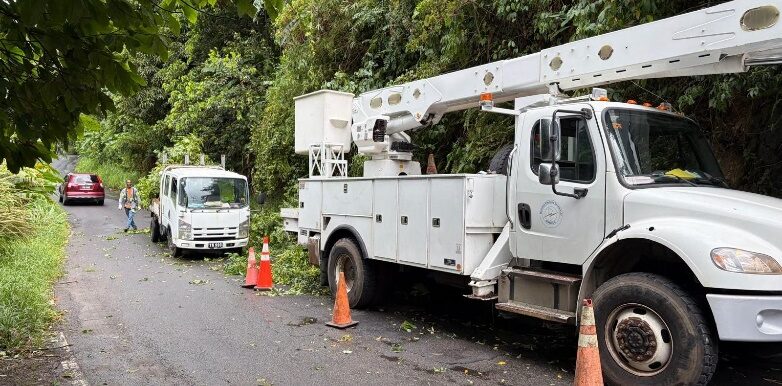
DOMLEC acknowledges customer frustration following prolonged outages
Between August 14 and 15, thousands of customers across Dominica were left without power in a series of widespread, sometimes day-long outages that disrupted daily life across the island. Now, Dominica Electricity Services Ltd. (DOMLEC) has issued a formal apology for the disruptions, while acknowledging multiple unplanned events that knocked the island’s grid offline and outlining steps to improve future response efforts.
In an official media statement released by the company, Acting General Manager Ellise Darwton took accountability for gaps in the utility’s response, noting that the company is actively reviewing protocols to prevent similar prolonged disruptions going forward. “We fully recognize how disruptive and challenging it is to go hours without power, especially when outages stretch overnight and into the next business day,” Darwton said in the statement. “Electricity is the backbone of daily life for our customers – it powers homes, keeps businesses running, preserves food for households, enables critical communication, and supports so many other essential activities. We sincerely apologize for every moment of disruption and frustration this event caused our community.”
According to DOMLEC’s incident breakdown, four separate major outages struck the island’s electrical grid within a 24-hour window. Two of the outages, first at 4:29 a.m. and a second at 1:09 p.m. on Friday, were triggered when the island’s geothermal generation plant disconnected unexpectedly from the main grid. Crews restored service for the first outage by 7:30 a.m. the same day, but severe weather and overgrown vegetation along transmission lines slowed restoration work for the second outage. Later that night, at 10:30 p.m., a falling tree damaged high-tension transmission lines in the Fond Canie area, triggering a third outage. A fourth event knocked out service to communities on the East Coast and Laudat around 4 a.m. Saturday. By 2 p.m. that same day, restoration crews had brought power back online to nearly all affected areas across the island.
Beyond reviewing response protocols, Darwton confirmed that DOMLEC is re-evaluating how it disseminates information to customers during extended outages, including exploring more low-tech, community-focused outreach strategies to reach residents who lack access to internet or battery-powered electronic devices when the power goes out. “We know how critical timely updates are for our customers when service is out for hours,” Darwton explained. “While we pushed out regular updates through national radio and social media during this event, we are conducting a full review of our communication strategy for major grid incidents. We are actively identifying additional, more community-centered methods to reach customers who cannot access electronic devices or internet service when their power is cut.”
Daryl Dalrymple, DOMLEC’s Engineering, Transmission and Distribution Manager, framed the series of outages as a growing pain tied to the broader transformation of Dominica’s electricity sector, which is currently in the process of scaling up geothermal energy generation. “Dominica’s electricity sector is going through a major transition right now,” Dalrymple said. “We are operating with the infrastructure we have in place today, while we work to complete the full geothermal development project and all the associated grid upgrades that come with it.”
Dalrymple added that geothermal development is currently in the first of three planned phases, with DOMLEC working simultaneously to optimize new generation capacity and resolve ongoing technical kinks in the integrated grid system. He also praised line crews and response staff who worked through harsh weather conditions to restore service, emphasizing that worker safety remains the company’s top priority throughout all restoration efforts.
In closing, the DOMLEC statement thanked customers for their patience and understanding throughout the disruptions, reaffirming the company’s commitment to addressing the gaps and challenges exposed by the event. “DOMLEC remains committed to addressing every challenge we have identified during this incident, completing our ongoing system upgrades, and building a more robust, reliable electricity network that will deliver long-term benefits for all of Dominica and its people,” the statement concluded.
-

Union urges govt to raise air traffic controllers’ pay, recognise specialist skills
Barbados’ largest public sector labor organization has issued an urgent warning: without immediate pay raises and greater national recognition for the nation’s air traffic controllers, the country risks losing this critical specialized workforce to higher-paying international employers.
In an interview with local outlet Barbados TODAY on Tuesday, Wayne Walrond, acting general secretary of the National Union of Public Workers (NUPW), emphasized that air traffic controllers hold an extraordinarily high-stakes role that underpins aviation safety across the island. Every day, their decisions directly impact the safe takeoff and landing of thousands of passengers traveling through Barbados’ airports, a responsibility that has long been undercompensated, he argued.
“What we need is better compensation and greater national acknowledgement for these professionals,” Walrond stated. A regional comparison makes the pay gap starkly clear: across many parts of the Caribbean, experienced air traffic controllers earn between $8,000 and $10,000 per month, a pay range that Barbados’ controllers have never reached. Walrond noted that while controllers on the island currently earn around $5,000 monthly, neighboring jurisdictions offer more than double that rate for the same specialized work.
The global aviation industry is already facing a widespread shortage of qualified air traffic controllers, Walrond explained, making Barbados’ skilled workforce an attractive target for international recruiters. If the government fails to adjust pay and recognition to match regional and global standards, the island will inevitably lose trained controllers to jurisdictions offering far better employment terms, he warned.
Currently, Barbados’ air traffic controllers are slotted into standard civil service salary bands, but their specialized skill set and critical role demand a distinct classification that aligns with international aviation requirements, Walrond argued. The government must update their compensation structure to ensure the country remains compliant with global aviation safety standards, he added.
Beyond core aviation safety, Walrond stressed that air traffic controllers are an unsung backbone of Barbados’ crucial tourism sector. When discussions about tourism growth turn to key industry players, attention typically centers on hoteliers, tourism promoters and ancillary service providers that benefit directly from visitor spending. Rarely does the conversation acknowledge the foundational work of air traffic controllers, without which no commercial flight could operate.
“A pilot cannot legally take off or land an aircraft without explicit clearance from the control tower,” Walrond pointed out. A single wide-body commercial flight can carry more than 200 passengers, meaning every air traffic controller holds the lives of hundreds of people in their hands on a daily basis. This level of responsibility is unmatched in most public sector roles, yet it often goes unrecognized by the general public and policymakers alike.
In addition to highlighting the needs of air traffic controllers, Walrond also called attention to the underrecognized work of aeronautical information service officers. These professionals work full daily shifts from sunrise to sunset, verifying the authenticity of operational data shared across aviation agencies to guarantee that all flight operations remain safe, consistent and efficient.