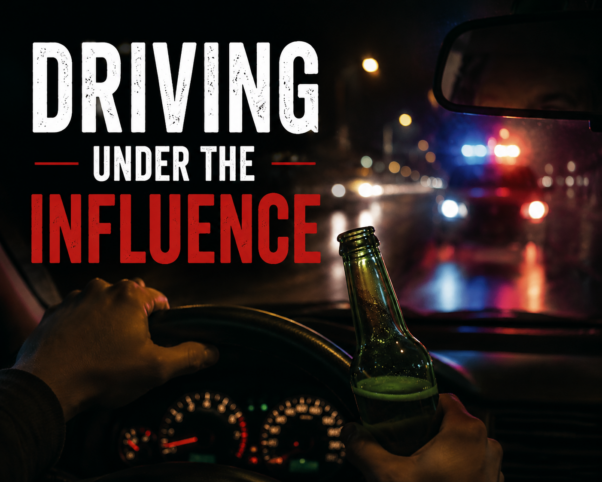
Road safety policy and legal accountability in Antigua and Barbuda have reached an inflection point, with a growing public and policy movement demanding sweeping reform of how the justice system treats fatal crashes caused by extreme driver misconduct. For decades, the nation’s legal framework has framed preventable vehicular deaths as unavoidable tragic accidents, rather than holding offenders accountable for the violent, intentional choices that lead to loss of life. When a driver chooses to operate a multi-ton vehicle while impaired by drugs or alcohol, engage in unauthorized street racing, or travel at speeds that turn a car into a lethal projectile, the outcome is not random chance—it is the direct consequence of a reckless decision.
While recent legislative debates and draft bills have signaled rising recognition that existing penalties are inadequate to deter harm, an uncomfortable truth remains: current Antiguan and Barbudan law still shields extremely reckless drivers from facing full justice for their actions. Reform advocates argue it is past time to update the nation’s legal code to align with global best practices and basic moral standards, by introducing the ability to charge drivers who kill through depraved indifference to human life with murder.
Under current law, the most severe charge available for fatal crashes caused by gross negligence is typically causing death by dangerous driving or manslaughter. Though these offenses carry criminal penalties, they fail to reflect the full moral blameworthiness of offenders who act with complete disregard for human safety. The central legal sticking point is the requirement of intent for murder convictions: traditional murder charges demand premeditation or explicit intent to kill. However, legal systems across the world have long recognized the concepts of implied malice and depraved heart murder, which apply when a person acts with callous disregard for human life, fully aware their actions are likely to cause death or serious harm.
For context, if an individual fires a gun into a crowded public space with no specific intent to kill a particular person, and a bystander dies as a result, they are universally charged with murder. Reformers question why the legal standard is lowered when the weapon in question is a motor vehicle. A driver who travels at twice the posted speed limit through a busy urban street, ignoring traffic signals and crosswalks, creates the same level of arbitrary lethal risk as a shooter firing into a crowd. Treating the resulting death as a minor traffic offense or a lesser manslaughter charge implicitly devalues the lives lost to road violence.
Antigua and Barbuda has already endured devastating, tangible harm from this gap in legislation. The 2018 death of national cyclist André Simon, who was struck by a vehicle on the Sir George Walter Highway and died after a prolonged fight for survival, remains a searing reminder of the human cost of lax legal standards. More recently, the 2024 death of 29-year-old Okeem Lightfoot, a National Solid Waste Management Authority worker killed while on the job, underscored that no one—whether commuting, working, or exercising on public roads—is safe from the consequences of extreme driver negligence. When the justice system labels these avoidable, reckless deaths as something less than murder, it inflicts secondary trauma on bereaved families and erodes public trust in the rule of law.
The legal gap is equally damaging for victims who survive extremely reckless driving incidents but are left with permanent, life-altering disabilities. This reality was highlighted earlier this year when rising young cyclist Tahje Browne suffered catastrophic injuries during a training ride, after a reckless driver nearly killed him. Under current law, unless explicit intent to kill can be proven, offenders in these cases often face only minor traffic citations or mid-level assault charges that do not match the severity of the harm they caused.
To correct this systemic imbalance, legislative reform must expand the scope of violent crime statutes to cover reckless vehicular harm. Advocates propose adding two key offenses to the nation’s penal code: vehicular attempted murder, for cases where a driver intentionally uses a vehicle to target a pedestrian or other road user, and aggravated vehicular assault, a felony-level offense specifically for drivers who cause permanent disability, disfigurement, or grievous bodily harm through impaired driving or extreme recklessness. Upgrading these charges would formally recognize that causing severe harm with a vehicle is a violent crime, not a routine traffic violation.
Antigua and Barbuda would not be breaking new legal ground by adopting these reforms. A growing number of jurisdictions around the world have already updated their penal codes to close the gap between traffic law and violent crime statutes. Across the United States, for example, many state courts use the legal framework of “Watson Murder” and depraved heart murder to secure second-degree murder convictions for fatal impaired driving and extreme street racing cases where the driver showed conscious disregard for human life. In the United Kingdom, legislators have updated sentencing guidelines to set a maximum penalty of life imprisonment for causing death by dangerous driving, bringing sentencing for these offenses in line with homicide standards. Other Commonwealth nations have similarly reformed their manslaughter statutes, using the “reckless indifference to human life” standard to reclassify extreme vehicular fatalities as murder. These global reforms reflect a growing consensus that public education campaigns and small fines are no longer sufficient to deter reckless road behavior: harsher, more proportionate penalties are needed to deter drivers from treating public roads as private race tracks or drinking lounges.
As Antigua and Barbuda’s Parliament begins deliberations on road safety reform, advocates are urging lawmakers to reject half-measures and watered-down amendments. The public has grown weary of watching offenders who destroy innocent lives walk away with minimal prison sentences or short driving bans that allow them to return to the road once their penalty expires.
Crucially, reclassifying extreme lethal reckless driving as murder does not mean every accidental road fatality will be treated as a homicide. Prosecutors would still bear the high burden of proving that a driver operated their vehicle with a level of recklessness so severe it amounted to a complete disregard for human life and abandonment of basic social responsibility. Driving is an essential part of modern life, but it remains a regulated privilege, not an unconditional right. When that privilege is abused to the point of causing death, the vehicle becomes a weapon, and the driver must be treated as a violent offender. It is long past time for Antigua and Barbuda’s laws to reflect the inherent value of every citizen’s life, and Parliament must act now to give the nation’s justice system the tools it needs to hold lethal reckless drivers fully accountable.