作者: admin

  • Fatal Crash Claims Life of John Tesecum

    Fatal Crash Claims Life of John Tesecum

    A tragic traffic incident in the Orange Walk District has resulted in the death of John Tesecum, according to official reports from the National Crime Investigation Branch. The fatal collision occurred on Friday when Tesecum, operating a Nissan Rogue, attempted to overtake another vehicle while navigating a curve.

    Preliminary investigation findings indicate that the driver lost control of his vehicle during this maneuver, causing the SUV to veer off the roadway and into a water-filled drainage ditch. The vehicle became partially submerged following the impact.

    Assistant Commissioner of Police Hilberto Romero, head of the National Crime Investigation Branch, confirmed that emergency responders discovered Tesecum inside the submerged vehicle. Despite being extracted and transported for immediate medical attention, the victim succumbed to injuries sustained in the accident.

    “Police units responded to a fatal road traffic accident in the Orange Walk District,” stated ACP Romero. “Upon arrival at the scene, officers observed a Nissan Rogue within a drainage ditch containing a male individual who was subsequently identified as John Tesecum. The victim received medical treatment but unfortunately succumbed to his injuries.”

    The investigation remains active as authorities continue to examine the precise circumstances surrounding the collision. This incident highlights the dangers associated with overtaking maneuvers on curved road sections, particularly under potentially challenging driving conditions.

  • Regulator abandons one-year wind-down for urgent asset protection

    Regulator abandons one-year wind-down for urgent asset protection

    In a decisive regulatory action, Barbados’s Financial Services Commission (FSC) has petitioned the High Court to initiate the liquidation of Equity Insurance Company Limited, signaling a grave financial deterioration and warning that policyholders may not recover the full value of their claims. This shift from an initially planned one-year run-off period to an urgent liquidation was prompted by what FSC Chief Executive Warrick Ward described as ‘significant additional risk factors’ that have critically undermined the insurer’s stability.

    The FSC’s intervention follows a history of statutory non-compliance by Equity Insurance, culminating in the revocation of its license effective December 31st. The regulator had previously appointed Craig Waterman of PwC to manage the company last August. Waterman’s findings confirmed the necessity of license revocation to protect consumers and creditors. Recent developments, however, including a severe disruption to the company’s crucial reinsurance arrangements, revealed that its financial position poses an intolerable risk, making an orderly, court-supervised wind-up the most prudent path forward.

    Chief Executive Ward emphasized that an immediate liquidation is essential to ensure the equitable distribution of the company’s limited assets according to statutory priorities. Without court supervision, there is a substantial risk of unlawful preferential payments that could disadvantage certain creditor groups. He advised that while existing policies remain technically in force pending the court’s decision, policyholders must confront the ‘real and present possibility’ of insufficient resources to honor all obligations.

    The FSC has concurrently engaged with the General Insurance Association of Barbados (GIAB) to develop bespoke arrangements aimed at helping displaced policyholders secure alternative coverage. Policyholders are urgently encouraged to contact their brokers or seek independent advice to arrange replacement policies ahead of their current policies’ expiration.

    The statutory reserve fund, designed as a safety net in such scenarios, is also acknowledged to be inadequate to cover all outstanding obligations fully. The court process is anticipated to unfold over several months, with a decision on the petition expected within a month and a substantive hearing likely within three. The FSC has committed to maintaining transparency throughout the process, providing ongoing updates via its website and social media platforms.

  • BPO Credit‑Card Scam Sparks Cybercrime Crackdown

    BPO Credit‑Card Scam Sparks Cybercrime Crackdown

    Belizean law enforcement agencies are escalating their efforts to combat cybercrime following the emergence of a sophisticated credit-card fraud scheme operating within the country’s Business Process Outsourcing (BPO) sector. The investigation, initially brought to public attention by News Five, has revealed a complex cross-border operation targeting victims primarily located outside Belize.

    Police Commissioner Dr. Richard Rosado confirmed the multinational nature of the criminal operation, emphasizing the significant challenges investigators face due to the international dimensions of the case. “This is an extremely challenging investigation because it does not have root only in Belize,” Commissioner Rosado stated. “Our investigators are working diligently to gather sufficient evidence to bring the perpetrators to justice.”

    The investigation’s primary complication stems from digital trails that extend beyond Belize’s national borders, requiring coordinated efforts with international law enforcement agencies and meticulous analysis of voluminous cross-border data. Commissioner Rosado highlighted that most complainants are foreign nationals, necessitating formal international complaints to advance the procedural aspects of the case.

    Authorities have engaged Belize’s Financial Intelligence Unit (FIU) as part of the comprehensive probe into the financial crimes. While investigators have identified and interviewed several individuals allegedly involved in the scheme from within the BPO sector, the Commissioner maintained that the investigation remains ongoing with no further details disclosed at this stage.

    The case has prompted increased scrutiny of cybersecurity protocols within Belize’s growing BPO industry, which serves numerous international clients and handles sensitive financial information across borders.

  • Canoe Association Complying with Race but Boycotting Organizers

    Canoe Association Complying with Race but Boycotting Organizers

    BELIZE CITY – In an unprecedented display of athletic dissent, participants of the prestigious Belikin La Ruta Maya canoe race are proceeding with competition while simultaneously executing a coordinated protest against event organizers. The Belize Canoe Association has confirmed teams will comply with all race regulations during the March 2026 event while boycotting all ancillary festivities and media engagements with broadcast partner Love FM.

    The controversy erupted following a last-minute alteration to the race’s traditional finish line location, a decision made without consultation with competing athletes or their representatives. During a tense closed-door meeting at Riverside Tavern after Saturday’s preliminary race, association executives, sponsors, and paddlers voiced unanimous dissatisfaction with what they perceive as systematic disrespect from organizing bodies.

    Elvin Penner, Vice-President of the Belize Canoe Association, articulated the collective frustration: “We have been disrespected as much as anybody could disrespect us. Organizers have explicitly stated that paddlers, fans, and sponsors have no say in this race, despite being its fundamental participants.”

    Competitors highlighted multiple grievances extending beyond the route change. Carlos Linares, a veteran paddler, emphasized the erosion of tradition: “For thirty years, this has been our ending point. To change it last minute while excluding paddlers from decision-making demonstrates profound disregard for those who make the event possible.”

    Financial concerns emerged as another critical issue, with team sponsors noting escalating participation costs creating barriers for athletes. One sponsor questioned the event’s priorities: “Who are the VIPs? It seems the paddlers are treated as slaves rather than valued participants.”

    Prize distribution inequities were also cited by paddler Avis Guydis, who noted consistent underrepresentation of certain categories including intramural, mixed, C-Two, pleasure, and masters divisions in reward allocations.

    Despite calls for complete boycott from some quarters, Association President Jesus Linarez acknowledged the practical limitations of such action given substantial financial investments already made by teams. Instead, the association adopted a compromise position: full race participation coupled with boycott of post-race celebrations and Love FM interviews.

    Complicating safety considerations, the Ministry of Infrastructure Development and Housing (MIDH) revealed it had canceled planned debris clearance along Haulover Creek following the route change. Chief Engineer Evondale Moody confirmed redirected resources to other district projects while noting he could not vouch for the safety of riverbank areas near the new finish line.

    The association’s protest represents a calculated effort to maintain competitive integrity while signaling strong opposition to current organizational practices, with leaders promising to push for structural changes in future editions of Belize’s premier paddling event.

  • MIDH Preparing for Major Projects in Belize City

    MIDH Preparing for Major Projects in Belize City

    Belize City is poised for a transformative infrastructure modernization initiative that will significantly impact daily life and transportation networks over the coming three years. The Ministry of Infrastructure Development and Housing (MIDH), in collaboration with the Belize City Council, has announced comprehensive plans to replace three of the city’s six primary bridges nearly simultaneously.

    The ambitious project portfolio includes:
    1. Replacement of the historic Swing Bridge
    2. Construction of a new BelCan Bridge
    3. Major upgrades to the George Price Highway, including replacement of the Burton Canal Bridge

    Chief Engineer Evondale Moody provided detailed timelines and contingency measures designed to maintain urban connectivity throughout construction. The ministry will implement two temporary bridges to facilitate continued traffic flow between the city’s north and south sides. The Hyde’s Lane temporary bridge, serving north-to-south traffic, is scheduled for completion by July 2026, while the Evergreen Street temporary structure, handling south-to-north movement, will follow a similar timeline.

    Project sequencing indicates preparatory work for the Swing Bridge replacement will commence in April 2026, with full construction beginning January 2027. Notably, the historic swinging mechanism and a section of the current bridge will be preserved for public display. The BelCan Bridge project will advance through contractor selection in March 2026, with award anticipated by April 1st.

    The George Price Highway improvements will address longstanding drainage issues, pavement quality, and traffic flow design from Pound Yard Bridge to Hattieville. Key enhancements include drainage system overhauls, new sidewalk installation, and the creation of boulevard-style sections between Vernon Street and Fabers Road.

    Recognizing the substantial disruption these projects will cause, MIDH officials emphasize public engagement as critical to successful implementation. A town hall meeting scheduled at the Belize Civic Center will provide residents with comprehensive project details, traffic management plans, and opportunity for community input. Ministry representatives acknowledge the inevitable short-term inconveniences while emphasizing the long-term benefits of modernized transportation infrastructure for Belize City’s future development.

  • Chiquibul Sees Alarming Logging Resurgence

    Chiquibul Sees Alarming Logging Resurgence

    Belize’s Chiquibul forest region is experiencing a dangerous resurgence of illegal logging activities, creating an unprecedented challenge for national authorities. The Forest Department, critically understaffed and outmaneuvered, is struggling to contain the escalating environmental threat as sophisticated logging operations intensify along vulnerable border areas.

    Minister of Sustainable Development Orlando Habet revealed the tactical difficulties facing enforcement teams, noting that illegal loggers strategically time their operations during early mornings, late nights, and in remote locations where surveillance is limited. With only a handful of new forest guards joining the force, the ministry is seeking enhanced collaboration with police units and potentially mobilizing the Belize Defense Force for support operations within national parks.

    The effectiveness of current penalties has emerged as a significant concern. Minister Habet acknowledged that while fines theoretically serve as deterrents, outdated legislation has rendered them practically insignificant. Fines that amounted to substantial sums twenty or thirty years ago—such as $5,000—now represent minimal risk for illegal operators who profit substantially from timber extraction. Habet emphasized the urgent need to modernize penalties to thirty, forty, or fifty times current levels to create meaningful disincentives.

    Rafael Manzanero, Executive Director of Friends for Conservation and Development (FCD), provided historical context to the crisis, revealing that between 2010 and 2014, Guatemalan loggers extracted approximately $15 million worth of timber from Chiquibul jungles, penetrating up to seventeen kilometers into Belizean territory. After a period of decline, illegal activities have dramatically resurged over the past two years, particularly along the western border region.

    The combined impact of sophisticated logging operations, inadequate staffing, insufficient penalties, and cross-border incursions is creating irreversible damage to forest ecosystems. Officials warn that the current rate of extraction far exceeds natural regeneration capabilities, threatening both biodiversity and long-term forest health in one of Belize’s most critical conservation areas.

  • VAE sluit aandelenmarkten door regionale spanningen

    VAE sluit aandelenmarkten door regionale spanningen

    The United Arab Emirates has taken the extraordinary step of suspending trading operations at its premier financial hubs—the Dubai Financial Market and Abu Dhabi Securities Exchange—in response to escalating regional hostilities following joint U.S.-Israeli airstrikes against Iranian targets. This decisive action comes after a weekend of heightened security concerns, during which the UAE endured hundreds of Iranian missile and drone assaults, including a direct strike on Abu Dhabi International Airport that resulted in one fatality and seven injuries.

    The UAE’s Capital Markets Authority formally announced Sunday that both exchanges would remain shuttered through Monday and Tuesday as authorities closely monitor the rapidly evolving security situation in the Gulf region. In an official statement, the regulatory body emphasized its commitment to continuous evaluation of developments, pledging to implement additional protective measures if circumstances require further intervention.

    Market analysts identify the primary rationale behind the trading halt as preventive crisis management—an unconventional but globally recognized measure to avert panic-driven selloffs during periods of extreme volatility. Such market suspensions historically occur during wartime scenarios or financial shocks when investors typically rush to liquidate positions, potentially triggering destructive downward spirals that could culminate in full-scale market collapses.

    Global financial markets have demonstrated heightened sensitivity since the initiation of U.S.-Israeli operations against Iran. Regional indicators reflected this strain with Saudi Arabia’s Tadawul Index plunging over 4% Sunday, while Egypt’s EGX 30 benchmark retreated approximately 2.5%. Asian markets including Japan and Hong Kong opened Monday’s session with notable declines, confirming the contagion effect across international trading floors.

    The economic ramifications extend beyond equity markets, with oil prices experiencing sharp increases due to airspace closures above the Gulf region and mounting uncertainties regarding the security of hydrocarbon transportation through the critical Strait of Hormuz. This energy supply disruption exerts substantial pressure on the global economy, elevating fuel costs that ultimately translate into increased expenses for consumers and businesses worldwide.

    Despite the preventive intent, financial experts caution that extended trading suspensions carry significant drawbacks. Investors face temporary capital immobility while markets lose essential price discovery mechanisms. According to Professor Burdin Hickok of New York University, prolonged closures risk undermining Dubai’s status as a premier financial center and potentially eroding investor confidence in the region’s market infrastructure.

    Historical precedents exist for such extraordinary measures within the UAE, primarily following the passing of prominent leaders, though market suspensions triggered by regional conflicts remain exceptionally rare. Other nations have implemented similar protocols, including Russia during its 2022 invasion of Ukraine and Egypt throughout the Arab Spring uprising of 2011.

    Market fundamentals preceding the current geopolitical crisis remained robust, with UAE equities recording nearly 30% gains over the trailing twelve-month period. Haytham Aoun, Assistant Professor at the American University in Dubai, characterizes the suspension as a precautionary maneuver rather than an indication of structural economic vulnerability, suggesting underlying strength should support market recovery once normal operations resume.

  • 650 Women March in Historic Security Forces Rally

    650 Women March in Historic Security Forces Rally

    Belize City witnessed an unprecedented display of female empowerment on March 2, 2026, as 650 uniformed women from the nation’s security forces marched through the streets in a groundbreaking demonstration of gender equality and leadership. The historic Women’s Law Enforcement March, marking the commencement of Women’s Month 2026, featured personnel from the Police Department, Belize Defense Force (B.D.F.), and Coast Guard marching in solidarity—a powerful visual statement about women’s evolving role in national security.

    The ceremonial procession, far exceeding conventional parade expectations, served as both celebration and declaration: women are not merely participating in Belize’s security apparatus but are fundamentally transforming it. Senior officials including Deputy Police Commissioner Sandra Bowden emphasized the vital role women play in national protection, noting that collective participation strengthens institutional capabilities.

    Brigadier General Anthony Velasquez of the B.D.F. highlighted the strategic shift from commitment to concrete action in implementing the Women, Peace and Security Agenda. “We have worked deliberately to integrate women and gender perspectives into policy development, operational planning, recruitment and leadership,” Velasquez stated.

    Statistical evidence presented by Police Commissioner Dr. Richard Rosado revealed significant progress: women currently constitute 33% of police force personnel, with disproportionately higher representation in supervisory roles compared to their male counterparts. Recruitment intakes consistently maintain at least 25% female representation, while promotion rates demonstrate gender parity across ranks.

    Despite these advancements, Governor General Dame Froyla Tzalam, who presided over the event, acknowledged persistent societal challenges including gender-based violence, limited political participation, and the unequal burden of caregiving responsibilities that continue to hinder women’s advancement into leadership positions.

    The march represents a watershed moment in Central American gender relations, signaling both the achievements made and the ongoing transformation within Belize’s security institutions toward greater gender inclusion and equality.

  • Preschool Parade Launches Child Stimulation Month

    Preschool Parade Launches Child Stimulation Month

    The streets of Belize City transformed into a vibrant celebration of early learning on March 2, 2026, as thousands of preschoolers inaugurated Child Stimulation Month with an energetic parade. Departing from traditional backpacks, children adorned career-themed costumes ranging from medical coats to chef hats and police badges, embodying this year’s empowering theme: ‘Start Strong.’

    The Ministry of Education orchestrated this colorful spectacle to emphasize the critical importance of early childhood development. Parents and educators lined the procession routes, offering enthusiastic support as young participants showcased the dynamic nature of Belize’s early education curriculum.

    YWCA Preschool Head Teacher Lisa Bradley-Clare explained the event’s significance: “This initiative serves to highlight and reinforce the fundamental role of early childhood education. Through our play-based methodology and diverse monthly activities, we demonstrate the comprehensive nature of our developmental approach.”

    The school specifically embraced security forces as their career inspiration, with approximately seventy students from their 136-child enrollment participating. When questioned about fostering career awareness, Bradley-Clare noted that while teachers facilitate classroom discussions about future aspirations, parents ultimately select their children’s parade costumes.

    Parent Lorna Garnett expressed overwhelming excitement, particularly as a mother of boys experiencing the event for the first time. “This exposure helps children learn about diverse professions and envision their future potential,” she remarked, capturing the event’s inspirational atmosphere.

    The parade successfully launched a month-long series of activities designed to promote cognitive, social, and emotional development through engaging, play-centered learning experiences.

  • Army Chief tours northern border, says area “under control”

    Army Chief tours northern border, says area “under control”

    In a comprehensive security assessment along the Dominican Republic’s northern frontier, Army Commanding General Major General Jorge Iván Camino Pérez conducted an extensive inspection tour of military installations bordering Haiti. The strategic evaluation commenced at the Manzanillo detachment in Montecristi province, progressing systematically along the critical perimeter fence spanning boundary markers 1 through 79.

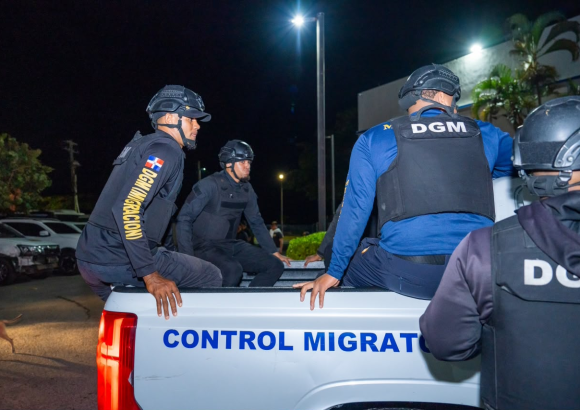
    The general’s inspection encompassed multiple security infrastructures including forward operating posts, surveillance towers, and military detachments under Army jurisdiction across the Montecristi to Dajabón corridor. During an assessment at the historic Beller Fortress in Dajabón, General Camino Pérez disclosed significant operational statistics: February witnessed the interception and transfer of over 14,000 undocumented migrants to the Dirección General de Migración (DGM), while 85 individuals faced referral to the Public Ministry for alleged criminal activities.

    Emphasizing the military’s operational effectiveness, the general characterized the border situation as ‘under control and in order.’ The evaluation extended beyond immediate security concerns to include developmental outreach, with General Camino Pérez joining provincial authorities in Río Limpio, Elías Piña province, to survey proposed sites for new Army detachments requested by local communities.

    The strategic review concluded with examinations of the Las Rosas and Guayajayuco outposts, culminating at the Artibonito River bridge crossing in Guayajayuco, demonstrating the Army’s comprehensive approach to border security management and community engagement.