
Ahead of the 43rd anniversary of Saint Kitts and Nevis’ independence, official authorities have issued a public reminder for residents to participate in the annual National Colours Day observance by wearing green on Friday, August 27, 2026. The notice, officially published at 5:00 PM local time on Thursday, August 26, 2026, invites the general public to join in the nationwide celebration of the country’s sovereign milestone. National Colours Day stands as a key pre-anniversary tradition, designed to foster national pride and collective community spirit across the twin-island federation by encouraging unified public display of national symbolic attire. For this year’s observance, green — a core hue of Saint Kitts and Nevis’ national flag that carries deep cultural and historical meaning for the nation — is the designated colour that all residents are encouraged to wear to mark the occasion.
作者: admin
-
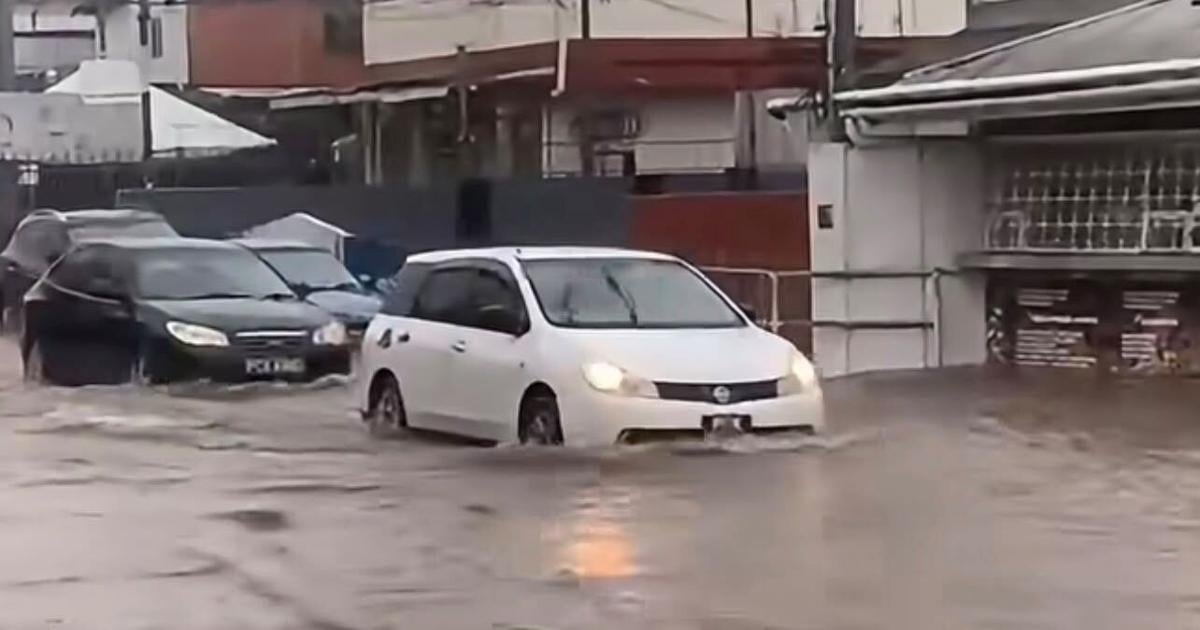
FLOOD CHAOS
A slow-moving tropical wave that drenched Trinidad in hours of torrential downpours on Wednesday unleashed widespread street flooding across the island, bringing daily life to a grinding halt, stranding thousands of commuters and causing scattered power outages that disrupted communities from the capital to the southern coast.
The heavy rain began in the early hours of the morning and persisted into the afternoon across many regions, turning low-lying streets into impassable waterways within just 60 minutes of the first intense downpour. Flooding was first reported across Port of Spain and its surrounding suburbs, eastern communities including St. Augustine, and multiple districts in both central and southern Trinidad. Hard-hit spots in the capital included sections of Cocorite, the busy Wrightson Road corridor, and multiple downtown thoroughfares, with severe inundation reaching South Quay and other central Port of Spain neighborhoods by midday.
Among the thousands trapped by the floodwaters were hundreds of back-to-school shoppers, who had traveled into commercial districts with their children to purchase supplies ahead of the September start of the new academic year. Stranded motorists and pedestrians waited out the flood for up to an hour in covered public spaces such as the Port of Spain City Gate transportation hub, while street vendors were forced to hastily pack up and relocate their stalls to avoid losing inventory to rising waters.
The disruption hit local businesses particularly hard, with many retailers reporting lost sales at one of the busiest shopping periods of the year. One bookseller noted that most local salaries are disbursed at the end of the month, meaning the majority of parents were only able to start purchasing school supplies this week – coinciding directly with the flood event. “Families came into the city planning to get all their shopping done in one day, and the flood just completely derailed their plans,” he explained.
Unexpected severe flooding also disrupted travel across Chaguanas, parts of Cunupia, and sections of Couva, where many local business owners and shoppers described it as the worst inundation the region has seen in years. Many shoppers had intentionally left their personal vehicles at home to avoid traffic in central Chaguanas, only to end up stranded for more than two hours when floodwaters covered major routes. Multiple business owners in Montrose, the area under the Chaguanas flyover, and other central districts said they were caught off guard by the severity of the flooding, as community members had recently completed drain and waterway clearing work ahead of the rainy season. Additional flood reports came from the communities of Cunupia, Enterprise, and Las Lomas.
While most floodwaters across the island receded by mid-afternoon, low-lying areas in Champs Fleurs, St. Augustine, Bamboo #3, San Juan, Aranjuez, Morvant, Laventille, and multiple parts of Port of Spain remained submerged through late Wednesday evening. The severe weather, which also brought strong gusty winds, triggered 11 reported power outages across southern Trinidad. Crews from the Trinidad and Tobago Electricity Commission (T&TEC) deployed emergency response teams immediately, and full power service was restored to all affected areas by Wednesday evening.
Officials from the Trinidad and Tobago Meteorological Service (TTMS) confirmed that the extreme weather was driven by a passing tropical wave that made landfall primarily over Trinidad, with the heaviest impacts concentrated in the southern part of the island before shifting to northwestern districts by early afternoon. Looking ahead to the coming days, TTMS forecasts generally calm conditions for Thursday, with only scattered cloud cover and light showers expected across most regions. There is a low 30% chance of isolated heavy showers or thunderstorms, with the highest risk concentrated over Tobago. Friday is expected to be mostly sunny, with scattered light showers and a 30% chance of isolated heavy downpours or thunderstorms primarily across western Trinidad during the afternoon hours, with clear, calm conditions expected overnight. The service has reminded residents that heavy rain can still trigger sudden street flooding and gusty winds, and urged communities to remain alert to changing weather conditions.
In the wake of the disruption, multiple business associations and individual retailers across Port of Spain have called for urgent, decisive action to address the capital’s chronic annual flooding problem. Many business owners pointed to unregulated public littering as a key contributor to clogged drainage systems, and are calling for the government to install additional public waste bins and disposal facilities across the capital, paired with a sustained public education campaign to discourage indiscriminate garbage dumping that blocks drainage infrastructure.
-

Alexander urges officers to respond promptly
After a two-year gap that left local communities without dedicated fire response coverage, Princes Town has formally welcomed the return of full-time fire and emergency services from a newly renovated temporary facility on King Street. The facility, which now serves more than 180,500 residents across 56 surrounding communities, held its official opening ceremony yesterday led by Minister of Homeland Security Roger Alexander.
The original High Street fire station was shut down in July 2024 after severe structural degradation and a widespread rodent infestation created unacceptable health and safety hazards for on-duty personnel. For 24 months following the closure, all fire-related emergencies in the Princes Town region were handled by crews from stations outside the district, a gap that sparked growing public anxiety over extended emergency response times that put lives and property at risk.
Fire crews began operating from the repurposed King Street building back in May 2026, and the site will remain in use as a temporary base while the government advances planning and pre-construction work for a purpose-built permanent fire station. The total renovation cost for the temporary facility came in at $229,801.25, according to Alexander, who noted that the project repurposed an existing unused Urban Redevelopment Program (URP) building, with fire crews completing most of the renovation work themselves.
In his remarks at the opening ceremony, Alexander framed the launch as more than just the opening of a new municipal building—rather, he called it the restoration of a critical public service that the community had been forced to go without for far too long. “When we close down a vital public service, two years is an unacceptable length of time to go without a replacement,” he said. “If we take a critical service offline today, it should be back up and running somewhere new tomorrow—that is the standard that the public deserves. But for two full years, Princes Town had no operational fire station of its own.”
Alexander acknowledged that the closure of the original station was a non-negotiable step to protect firefighter safety. “The decision to shut down the old station was necessary,” he explained. “The safety of our fire officers can never be compromised.” He reminded crews assigned to the new station that they are responsible for responding to emergencies across a large, diverse service area that includes residential neighborhoods, local commercial operations, and agricultural farms, urging them to prioritize rapid response. “When you save a single life, you save an entire family from destruction,” he said.
Calling the nation’s firefighters “unnoticed heroes”, Alexander reaffirmed the government’s commitment to providing emergency personnel with the proper equipment and infrastructure they need to serve the public effectively. He also encouraged crews to proactively engage with local schools and businesses to deliver fire prevention education, and to conduct regular checks to ensure that fire extinguishers and other critical safety equipment are properly maintained across the region.
Local residents have been issued new contact information for emergency response: the King Street station can be reached directly at 655-2222, while 990 remains active for all emergency reporting.
Looking ahead, Alexander signaled that the coastal community of Moruga is next in line for expanded fire service coverage, noting that long response distances from existing stations have created major barriers to saving lives in emergency situations there. “Sometimes, when you have to travel so far, even your best efforts cannot save many lives,” he said. “So Moruga, you are up next. We will see what we can do.” The minister confirmed that the government will conduct a feasibility study for a dedicated fire station in Moruga and hold discussions on the proposal with the Prime Minister in the coming weeks. He added that the San Juan Fire Station will also receive targeted upgrades as part of the government’s broader push to ensure all communities across the country have access to the high-quality emergency services they are entitled to.
The opening ceremony was attended by multiple local elected officials, including Princes Town Member of Parliament Dr. Aiyna Ali and Naparima Member of Parliament Dr. Narindra Roopnarine. Ali emphasized that the reopening of the station carries far more meaning than a symbolic ceremonial event, saying it delivers tangible, improved protection for the residents and business owners of Princes Town. “This is not just a ceremony—it is about protecting lives, protecting property, and protecting livelihoods,” she said. “Our firefighters deserve safe, healthy, and dignified working conditions. We cannot ask the men and women who run toward danger to work in conditions that put their own health and safety at risk.”
Roopnarine echoed Ali’s remarks, commending the nation’s fire service personnel for their consistent dedication and courage when responding to emergencies across Trinidad and Tobago. He noted that firefighters across the country regularly put their own lives on the line to protect public lives and property, and they deserve full respect and appreciation from the public they serve. Roopnarine expressed his hope that the new temporary Princes Town facility would serve the community well for years to come, and significantly strengthen the region’s overall emergency response capacity.
-
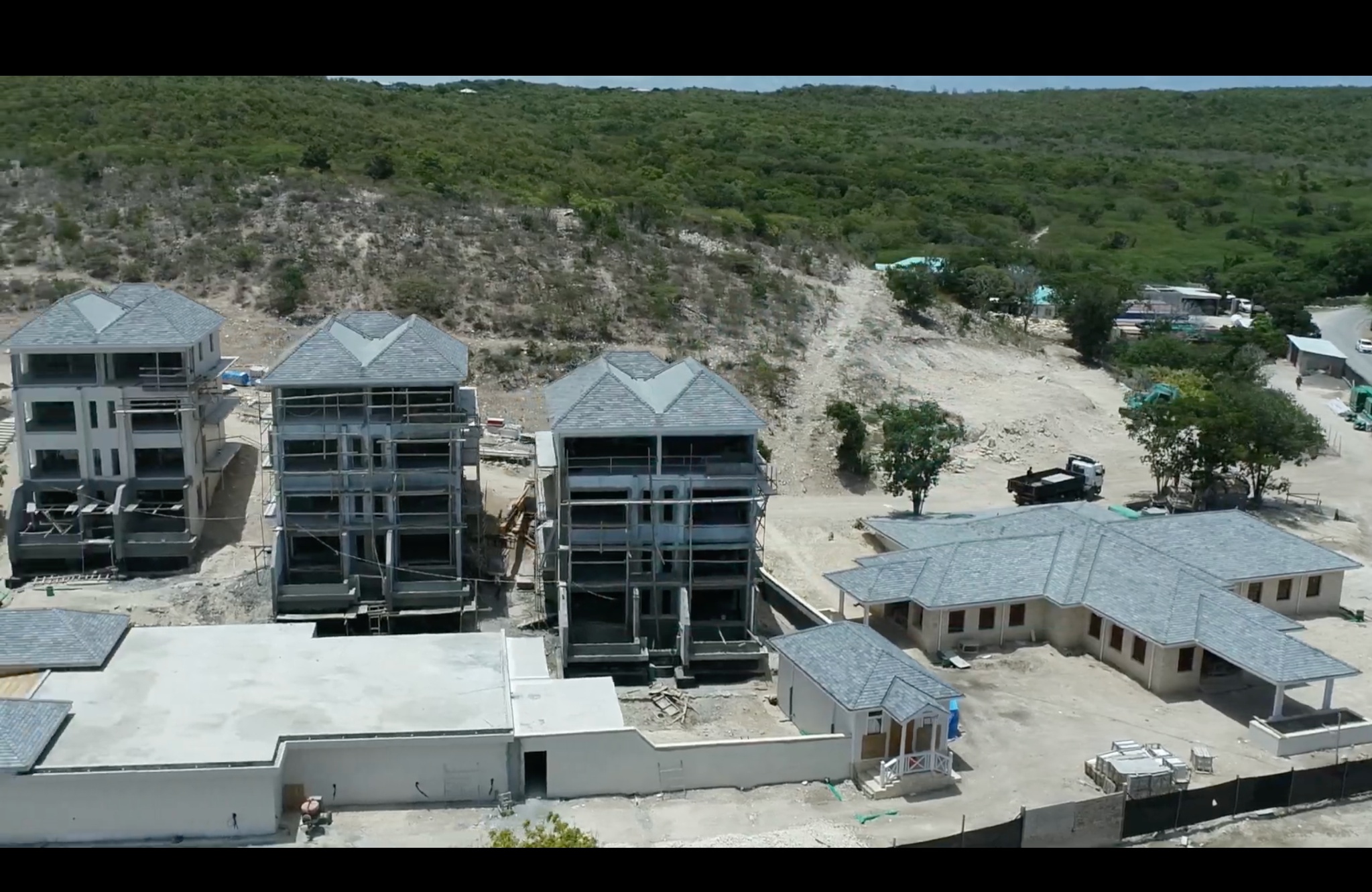
Moon Gate Hotel & Spa Construction Update with Cameron Fraser, August 2026
As the summer of 2026 enters its final stretch, development leader Cameron Fraser has shared an exclusive on-the-ground update for the highly anticipated Moon Gate Hotel & Spa project, a luxury hospitality initiative that has drawn regional attention since it broke ground 18 months ago. In a recent on-site interview, Fraser walked through the milestones achieved over the past quarter, the ongoing adjustments to keep the project on schedule, and what future visitors can expect when the doors open in late 2027.
Fraser, who serves as the lead project manager for the development consortium backing Moon Gate, confirmed that core structural work is now 100% complete. The multi-story main hotel building, which sits on a 12-acre coastal plot, has had its framing, roofing, and foundation work finalized, moving the project into the next phase of interior outfitting and exterior landscaping. “Reaching this structural milestone is a huge win for our entire team, especially given the supply chain headwinds we navigated earlier this year,” Fraser noted in his update. He added that subcontractor teams have already moved on to installing electrical systems, plumbing, and insulation, with preliminary work on the property’s 10,000-square-foot full-service spa beginning last month.
A key highlight of the update was new details on the project’s signature amenities. Moon Gate Hotel & Spa is designed as a eco-conscious luxury retreat, with 85 guest rooms, multiple farm-to-table dining outlets, a cliffside infinity pool, and a range of wellness programming focused on outdoor activity and holistic health. The development has also prioritized sustainable building practices, integrating solar panels to power 40% of the property’s energy needs, a rainwater capture system for landscaping, and locally sourced building materials to cut the project’s carbon footprint. Fraser emphasized that these sustainability commitments have not slowed construction, but rather created new partnerships with regional green building firms that have streamlined workflow.
Addressing concerns about potential construction delays that have impacted many large hospitality projects post-pandemic, Fraser confirmed that Moon Gate remains on track for a soft opening in November 2027, with a grand public launch scheduled for early 2028. Pre-booking inquiries are already open, and the development team has reported more than 200 early reservation requests from guests across North America and Europe. Looking ahead to the coming months, Fraser said the next major milestones will be completing exterior landscaping, opening the construction of the on-site organic garden that will supply the hotel’s restaurants, and beginning the process of hiring and training the 120 full-time and part-time staff that will operate the property.
For the local coastal community where Moon Gate is being built, the project has already delivered measurable economic benefits, creating hundreds of construction jobs and generating increased tax revenue for local public services. Once operational, Fraser said, the hotel is expected to draw thousands of high-spending leisure visitors annually, boosting local small businesses from shops to outdoor activity providers. “This isn’t just building a hotel, it’s investing in the long-term vitality of this region,” Fraser said. “We’re excited to keep moving forward and deliver a destination that both visitors and locals can be proud of.”
-

CWI, African Union extend condolences as Nepal flood death toll rises
Devastating flash floods and triggered mudslides have left a catastrophic trail of destruction across Nepal, driving the confirmed death toll to nearly 400 and leaving more than 1,300 people unaccounted for – including hundreds of international tourists visiting the Himalayan nation – as two major global bodies, Cricket West Indies (CWI) and the African Union Commission, have joined the international community in extending solidarity and condolences to the affected population. As of Thursday 27 August, 2026, rescue teams are continuing a fraught, large-scale search-and-recovery operation across the mountainous country, where challenging terrain, persistent adverse weather, and destroyed infrastructure have severely complicated efforts to reach cut-off remote communities.
Viral imagery circulating on social media and digital platforms captures the full force of the disaster: churning brown floodwaters barrel through populated valley communities, sweeping away paved roads, bridges, and residential buildings, while unstable hillsides collapse into debris flows that bury entire neighborhoods in hard-hit regions. Widespread disruption to transportation, communication, and emergency services has slowed rescue progress, with first responders working around the clock to locate people trapped in collapsed structures or swept away by the fast-moving surges.
Official counts from Kathmandu put the current confirmed death toll at just under 400, with more than 1,300 people listed as missing. Emergency management officials have cautioned that these numbers are likely to shift as teams gain access to isolated, hard-to-reach areas that have been cut off since the disaster began. Hundreds of foreign tourists, who travel to Nepal annually for trekking and mountain expeditions, are among those whose whereabouts remain unknown, adding an international layer of urgency to the search effort.
In an official statement marking the tragedy, CWI President Dr. Kishore Shallow expressed unwavering solidarity with Nepal, a longstanding valued member of the global cricket community that shares deep people-to-people ties with the Caribbean region. “On behalf of Cricket West Indies and the entire West Indies cricket family, I extend our heartfelt prayers, condolences, and solidarity to the people of Nepal following the devastating flash floods,” Shallow said. He emphasized that the connection between Nepal and the Caribbean extends far beyond sport, rooting the bond in the shared global cricket family. “In this moment of profound tragedy, we stand shoulder to shoulder with our friends in Nepal. Our thoughts are with every family affected, those who have lost loved ones, those awaiting news, and the brave responders working to save lives. We pray for strength, comfort, and healing for the people of Nepal, and for the country’s swift recovery.”
The African Union Commission has also issued a formal statement of condolence, with H.E. Mahmoud Ali Youssouf, Chairperson of the AU Commission, saying he was deeply shaken by the scale of loss of life and destruction brought by the disaster. “On behalf of the AU Commission, the Chairperson extends his heartfelt condolences to the Government and people of Nepal, and to the families and loved ones of the victims,” the organization said, adding that the entire African Union stands in solidarity with Nepal during this extraordinarily difficult period.
Rescue efforts continue to face significant obstacles even one week into the operation. Raw footage from the ground shows rescue crews scrambling to reach higher ground as new flood surges push through hilly communities, forcing even experienced first responders to retreat to safety temporarily. The disaster has also sparked new conversations about disaster preparedness and visitor safety in Nepal’s most popular tourist destinations, which draw millions of visitors annually to its iconic mountain landscapes.
As teams continue to comb through debris and reach cut-off areas, Nepali authorities have pledged to release regular updated figures on casualties, missing persons, and the total extent of damage to residential, transportation, and public infrastructure. For hundreds of families across the country and around the world, the wait for news of missing loved ones remains a deeply urgent, emotional ordeal.
-
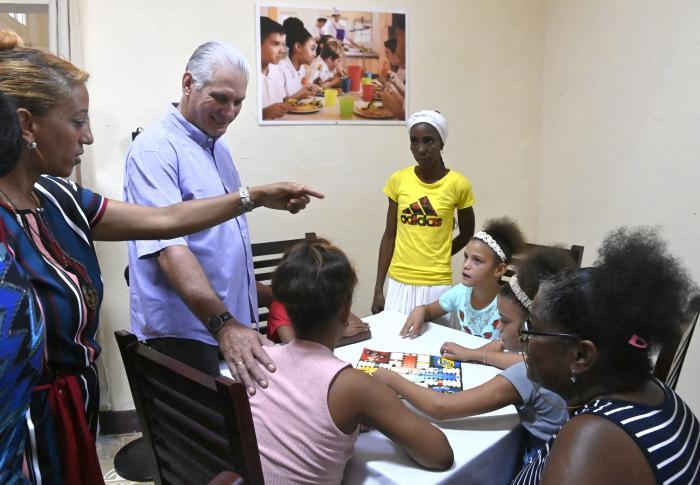
Cuba with its heart in the center of its chest
As Cuba gears up for the start of the 2026-2027 general education school year on September 1st, top government and party officials have toured educational and child welfare facilities in Havana to verify final preparations and reaffirm the nation’s commitment to leaving no young learner behind.
On Wednesday, August 27, Miguel Díaz-Canel Bermúdez, First Secretary of the Central Committee of the Communist Party of Cuba and President of the Republic, led an inspection tour through sites under the Víbora People’s Council in Havana’s Diez de Octubre municipality. Accompanied by Deputy Prime Minister Eduardo Martínez Díaz, Education Minister Naima Ariatne Trujillo Barreto, and other senior officials, the tour began at residential care facilities for children and adolescents without parental guardianship before moving to local schools and the country’s new emergency shelter model for at-risk youth.
Speaking to the presidential press corps during the visit, Minister Trujillo Barreto confirmed that roughly 1.5 million children and adolescents across Cuba are expected to return to classrooms when the new academic term kicks off next week. She noted that preparation work actually started earlier this month, with education professionals cutting short their vacation periods to retrofit campuses, update learning materials, and finalize enrollment plans ahead of the first day of classes.
“Every school is ready to welcome both new and returning students, alongside their family members,” the minister stated. This year’s curriculum framework is designed to incorporate input from all social and economic sectors across the country, with a strong focus on flexible scheduling, individualized learner support, and complementary out-of-class programming that complements core institutional and group learning objectives.
Against Cuba’s current national context, Trujillo Barreto explained that differentiated support will be tailored to the specific needs of each educational level, regional community, classroom cohort, and individual student. To accommodate enrollment demands, many schools will operate double session scheduling where local infrastructure allows. Beyond traditional classroom instruction, the new school year will roll out innovative complementary training projects led by local youth and education professionals, designed to expand learning opportunities outside core lesson times.
As examples of these innovative initiatives, the minister highlighted partnerships with university students specializing in computer science and artificial intelligence, as well as new extracurricular programs focused on arts, music, and sports. She emphasized that local education authorities will retain autonomy to design programming that aligns with their community’s unique resources and needs, ensuring programs remain practical and sustainable over the full academic term.
Trujillo Barreto added that early inspections across the island have already revealed high levels of commitment from education professionals at all levels, as well as strong engagement from cross-sector partners. Moving forward, rigorous ongoing monitoring will be prioritized, particularly to support students who have been disconnected from formal education and require targeted, personalized interventions to re-engage with learning.
The tour through the Víbora community carried deep symbolic meaning, as the area hosts a network of child protection institutions established under Cuba’s recently implemented Children, Adolescents, and Youth Code. After visiting the Víbora II residential home for youth without parental care, where Díaz-Canel asked detailed questions about daily operations, community partnerships, and the children’s academic and recreational schedules, the delegation traveled to the Víbora I Infant Home. There, the president praised the facility’s 10-person staff, noting that their work caring for vulnerable young children requires extraordinary empathy and selfless dedication.
The final stop on the tour was the new Urgent Shelter, a transitional care space designed to provide immediate, safe housing for children and adolescents facing extreme vulnerability, while child protection specialists develop long-term personalized care plans. From the shelter, youth can transition to foster care, live with biological family members prepared to assume guardianship, or move to long-term residential care, depending on what arrangement best serves the child’s needs.
As the new school year approaches, new backpacks and learning supplies already wait in classrooms across the community. During the tour, Díaz-Canel reaffirmed a core principle of Cuba’s revolutionary education system: that every child, regardless of their family background or personal circumstances, deserves access to quality education and protection. The visit underscored the government’s ongoing commitment to upholding this promise, ensuring no young Cuban is left without support as the new academic year begins.
-
Colombia earthquake recovery efforts continue as fresh tremor hits country
Just as Colombian emergency teams and international humanitarian partners ramp up post-disaster reconstruction after a devastating major earthquake, the South American nation has been hit by a new seismic shock, complicating already strained recovery operations.
The 5.1-magnitude tremor struck early on the morning of August 26, with shaking felt across multiple regions of the country – including Bogotá, the capital. This new seismic event comes as recovery work is still ongoing in the areas that bore the brunt of the earlier devastating quake.
As of the latest update from United Nations humanitarian officials, nearly 50,000 people across 25 of the hardest-hit Colombian municipalities have already received life-saving support. The relief distributed so far includes critical supplies: clean drinking water, water storage units, temporary public sanitation infrastructure, and personal hygiene kits tailored for both adult and child survivors.
Official data from Colombian national authorities puts the scale of the initial disaster at overwhelming levels: approximately 325,000 people across the country have been impacted by the first earthquake, with more than 31,000 residential structures completely destroyed. Thousands of additional critical public assets, including schools, healthcare clinics, and other key infrastructure, have also sustained heavy damage or been reduced to rubble.
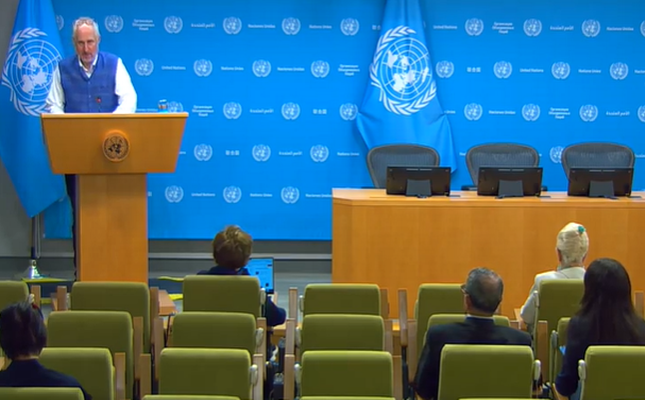
During a recent press briefing at UN Headquarters in New York, Stéphane Dujarric, spokesperson for the UN Secretary-General, outlined that the global body’s $620 million humanitarian appeal for Colombian earthquake relief remains only 47 percent funded. Dujarric emphasized that as assessment teams finish mapping the full scope of destruction caused by the initial quake, urgent additional financial contributions are needed to scale up relief and recovery operations.
He confirmed that UN humanitarian teams will remain embedded with Colombian national authorities to continue delivering essential aid to disaster-affected communities. The UN’s response operation will undergo ongoing close monitoring, with regular public updates provided by the organization’s on-the-ground team based in Bogotá.
-

Column: Vernieuwde aanpak topsectie voetbal vereist
For decades, SV Transvaal (Robinhood) has stood as an unrivaled powerhouse in Surinamese club football, capped off by lifting the Concacaf Caribbean Cup trophy just a few seasons ago. But the country’s all-time record league champion has seen a dramatic and unexpected fall from grace in the 2024 campaign. After claiming the regional title in 2023, the red-green side was eliminated in the semi-finals of this season’s Concacaf Club Shield, the qualifying tournament for the Caribbean Cup — an early exit that has cast a spotlight on the club’s sudden downturn in form.
While Robinhood has maintained its reputation for fluid, well-organized play in recent years, the team has consistently failed to convert that on-pitch quality into match-winning results. The club’s leadership has launched an internal review to pinpoint the root causes of the underperformance, especially given that the current head coach holds a unique advantage over other local managers: years of access to learning opportunities with elite professionals from the Suriname national team. Though many fans and analysts have been quick to blame the manager for the slump, commentator Mireille Hoepel argues that a full organizational deep dive is necessary to identify the actual issues and break what appears to be a developing downward spiral. Early, decisive intervention, Hoepel notes, is critical to putting the historic club back on the path to recovery and restoring its traditional status as Suriname’s leading football outfit.
Robinhood is not alone in its regional struggles. Suriname’s current domestic league champion has also failed to make a mark in international regional competition, dropping both away matches after giving up early first-half leads. These results have severely dented the team’s chances of advancing to the next round of play, and have brought a long-running systemic issue in Surinamese football back to the forefront: the persistent lack of finishing quality among local attacking players.
For years, clubs have addressed this goal-scoring problem by signing foreign strikers to deliver immediate improvements. While this strategy often boosts a club’s short-term performance, it does nothing to develop the finishing skills of domestic talent, Hoepel argues. That said, she acknowledges that top-flight clubs are justified in prioritizing immediate results and titles, and are free to pursue whatever strategy best fits their competitive goals.
Instead, Hoepel proposes a systemic solution led by the Surinamese Football Association (SVB): a targeted short-term training program to develop specialized striker coaches for the nation’s top clubs. Under the plan, every team in the Suriname Major League (SML) would nominate one candidate to attend the training. Ideal candidates could be former strikers looking to transition into specializing in developing the finishing ability of current attackers, though Hoepel says the program should not exclude motivated non-playing candidates who are passionate about improving the attacking side of the game.
Hoepel emphasizes that this specialized coaching focus would bring widespread benefits to Surinamese football at every level. Across all domestic divisions, teams routinely execute strong build-up play and dominate possession, but consistently fall short when it comes to converting chances in front of goal. Finishing is a refined skill that does not develop naturally, she notes; it requires deliberate focus, determination, and hundreds of hours of specialized repetition.
Training a cohort of specialized striker coaches would mark the first step in a broader modernization of Suriname’s senior football setup, Hoepel argues. Over time, specialized coaching training should be expanded to cover every position on the pitch, ensuring that even the smallest technical details get the focused attention they require. With a modern, specialized approach to player development, Hoepel concludes, Suriname’s senior national and club teams can finally grow into competitive contenders on the regional and global stage beyond the country’s borders.
-
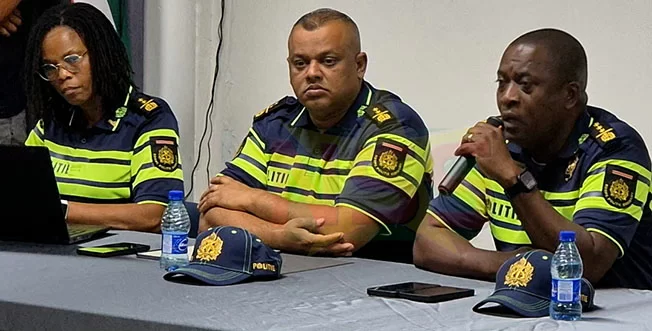
Korpschef Pinas: Politiemensen die de fout ingaan worden aangepakt
At a press conference held this Wednesday, senior leadership of the Korps Politie Suriname (KPS) addressed growing public and media scrutiny over integrity issues within the national police force, with top official Melvin Pinas reaffirming a strict zero-tolerance policy for officers who break the law.
Pinas, who serves as KPS corps chief, made clear that officers who commit criminal offenses cannot expect protection from force leadership. Any member of the force who crosses legal boundaries will face immediate disciplinary and legal action, he emphasized, echoing a core principle that applies equally inside and outside the police service: the rule of law applies to every person, regardless of their position or authority.
Media representatives brought forward a series of recent troubling cases to put the leadership’s stance to the test. Reporters noted that more than ten Surinamese police officers have been imprisoned over the past several months, linked to cases involving drug trafficking and the unexplained disappearance of evidence and property held in police custody. These revelations sparked questions about whether leadership’s anti-corruption and integrity messaging fails to reach frontline officers, or if growing numbers of personnel are disregarding official rules and guidance.
But Pinas pushed back against the narrative that the rising number of exposed cases signals a systemic failure of leadership. Instead, he framed the increase in officers facing charges and punishment as a direct, intentional outcome of the current leadership’s policy of full accountability.
“As long as someone breaks the rules, the law applies equally to all without exception, and immediate action will be taken,” Pinas stated, adding that leadership has already taken formal action against multiple officers over the past year to enforce this standard.
Earlier in the press briefing, Pinas was also asked to respond to unconfirmed claims that organized criminal groups are attempting to infiltrate the Surinamese police force. In response, he reiterated the force’s unchanging position: any officer who chooses to take a “wrong path” remains subject to the full weight of the law. As soon as leadership receives credible information that an officer has violated the law, action is taken immediately, Pinas said.
The discussion highlights that maintaining integrity continues to be a top priority for the KPS. As an institution tasked with combating societal crime, the police force faces the dual challenge of upholding public safety while also preventing the very officers granted investigative and law enforcement powers from becoming involved in criminal activity themselves.
-

UK’s King Charles to visit Guyana in October
On Wednesday, August 26, 2026, official sources confirmed that United Kingdom King Charles III will add Guyana to his multi-stop Caribbean autumn tour scheduled for late October, a trip that will center on attending the 2026 Commonwealth Heads of Government Meeting (CHOGM).
The Guyanese government confirmed that King Charles has accepted its formal invitation, coordinated with the UK government, to visit the South American Caribbean nation in the final weeks of October. The trip is timed to commemorate six decades of formal diplomatic relations between the UK and Guyana, aligning with the full autumn tour itinerary Buckingham Palace unveiled earlier the same day.
Running from October 27 to November 4, 2026, the joint tour by King Charles and Queen Camilla will open in The Bahamas before the pair travel onward to Guyana, concluding their journey in Antigua and Barbuda for the biennial CHOGM summit, set to take place from November 1 to 4. As Head of the Commonwealth — an association of 56 nations primarily made up of former British territories — King Charles holds a ceremonial leadership role for the bloc, making his attendance at the summit a core responsibility of the position.
This upcoming visit will mark a significant milestone: it will be King Charles’ first official trip to Guyana as monarch, though he previously visited the country in a private capacity in 2000, when he held the title of Prince of Wales. The last visit by a reigning British monarch to Guyana took place more than three decades ago, in 1994, when the late Queen Elizabeth II and Prince Philip toured the nation.
Alongside announcing the diplomatic trip, the Royal Family highlighted ongoing development work carried out by The King’s Foundation, His Majesty’s charity focused on environmental sustainability and urban planning, in partnership with the Guyanese government. A public social media post from the Royal Family explained that a team of architects and urban planners from the foundation has collaborated with local authorities to advance Guyana’s national sustainable development goals. Their key projects include drafting a master plan for the regeneration and inclusive growth of Georgetown, Guyana’s capital, with a specific focus on designing pedestrian-friendly healthy streets and expanding accessible public outdoor green spaces. These efforts align directly with the Commonwealth Declaration on Sustainable Urbanism, a global framework for climate-friendly urban development.
Buckingham Palace told reporters that the entire tour is designed to celebrate the diverse communities, unique cultural heritage, and rich natural environments that make up the Commonwealth family of nations. For King Charles, this upcoming Caribbean trip will be his first visit to the region since 2021, when he traveled to Barbados to attend the country’s formal transition to a republic, which removed the late Queen Elizabeth II as its head of state. During that visit, then-Prince of Wales publicly acknowledged the “appalling atrocity of slavery” that the Caribbean region endured under centuries of British colonial rule.
The monarch has a long history of engagement with Caribbean nations: he visited Antigua and Barbuda in 2017 to assess recovery efforts after the widespread destruction caused by Hurricanes Irma and Maria, and previously traveled to The Bahamas in 1973 for the country’s independence celebrations. Earlier this year in May, King Charles traveled across the Atlantic to visit Bermuda, a British Overseas Territory where he serves as head of state, marking his first official visit to an overseas territory since ascending to the throne following Queen Elizabeth II’s death in 2022. That trip came directly after his first state visit to the United States as monarch.