作者: admin

  • Trinidad, Georgetown chambers of commerce to set up trade complaints desk, lobby govts

    Trinidad, Georgetown chambers of commerce to set up trade complaints desk, lobby govts

    On Wednesday, 8 July 2026, two leading regional business representative bodies – the Georgetown Chamber of Commerce and Industry (GCCI) of Guyana and the Trinidad and Tobago Chamber of Industry and Commerce (TTCIC) – formalized a landmark agreement to establish a joint trade complaints desk designed to eliminate long-standing non-tariff barriers that have hampered cross-border commerce between the two CARICOM member states.

    The agreement, signed at a joint press briefing by TTCIC President Karen Yip Chuk and GCCI President Kathy Smith, establishes a structured framework for addressing persistent trade frictions that have blocked market access for producers on both sides. Speaking to reporters after the signing ceremony, TTCIC Chief Executive Officer Dr. Vashti Guyadeen outlined that the new mechanism will operate via a standardized data collection template, allowing business stakeholders from both countries to submit formal complaints about trade barriers. The joint desk will then track these issues and compile empirical evidence to inform targeted solutions.

    According to Dr. Guyadeen, the two organizations aim to fully launch the joint desk within a three-month timeline. Beyond the core complaint-handling function, TTCIC is prioritizing key updates to existing agricultural trade protocols, specifically those governing shipments of pineapple crowns, eddoes, and peppers. The new body will also develop a dedicated process to resolve cross-border taxation disputes, with Dr. Guyadeen emphasizing that addressing these long-running issues will require sustained, ongoing engagement rather than one-off interventions.

    GCCI President Kathy Smith echoed the urgency of the partnership, noting that the agreement itself would not have been necessary if cross-border trade for key Guyanese exports – including pineapples, honey, and red peppers – already operated without restrictions. A joint working group from both chambers is scheduled to convene in two weeks to aggregate data on outstanding trade issues before formal outreach to the Guyanese and Trinidad and Tobago national governments and relevant regulatory agencies. Smith added that the alliance will launch a cross-sector lobbying campaign to bring both public and private sector stakeholders on both sides of the border into alignment on the reform agenda.

    One of the most persistent disputes on the agenda dates back almost 20 years. Guyana has long pushed Trinidad and Tobago to revise its 1935 Beekeeping and Bee Products Act, a regulation that bans the transit of foreign-produced honey into the twin-island nation, introduced originally to prevent the spread of pathogens that could devastate local bee colonies. Successive Trinidad and Tobago governments, from both the People’s National Movement and the United National Congress, have pledged to amend the law following years of lobbying from Guyana, Grenada, and CARICOM leadership. However, TTCIC President Yip Chuk noted that the existing regulation has technical merit, pointing to the risk of catastrophic collapse of local bee populations if disease is introduced. She added that final decisions on the rule must be informed by technical assessments from Trinidad and Tobago’s Ministry of Agriculture and leading industry technical experts.

  • ABEC participates in International Course on Artificial Intelligence and Elections in India

    ABEC participates in International Course on Artificial Intelligence and Elections in India

    St. John’s, Antigua — In a significant step toward modernizing electoral operations and building institutional expertise, the Antigua and Barbuda Electoral Commission (ABEC) has sent two of its staff members to take part in a prestigious international training program centered on the integration of artificial intelligence into election management, as of July 8, 2026.

    Kisher Esprit, Assistant to ABEC’s Human Resource and Training Officer, and Joycelyn Peters, a Data Entry Clerk II, are the commission’s official representatives at the five-day Certificate Course on Artificial Intelligence, Elections and Democratic Governance. Hosted by the India International Institute of Democracy and Election Management (IIIDEM), the program is being held on IIIDEM’s New Delhi campus from July 6 to July 10, 2026.

    This training participation is not an isolated initiative for ABEC, but rather a core part of the commission’s long-term strategy to prioritize continuous professional development, embrace global knowledge sharing, and adopt proven best practices from electoral bodies around the world. The overarching goal of these efforts is to steadily raise the quality of electoral services delivered to voters and stakeholders across Antigua and Barbuda.

    By engaging with cross-border insights and cutting-edge innovative approaches to election administration, the two participating officers are expected to bring back actionable knowledge that will strengthen multiple internal processes at ABEC. Key areas set to benefit include staff training frameworks, human resources development, standardized data management protocols, and the development of guidelines for the responsible deployment of emerging technology in day-to-day electoral operations.

    ABEC has publicly expressed its sincere gratitude to the program organizers and their international partner networks for curating this high-value learning opportunity. The commission confirmed it is already preparing to integrate the new skills and insights gained by its staff into its core work, with the aim of further advancing its mandate to deliver impartial, highly professional, and publicly trusted electoral services for the nation.

  • Noor Ahmad returns as Kings announce overseas signings

    Noor Ahmad returns as Kings announce overseas signings

    As the 2026 Republic Bank Caribbean Premier League (CPL) prepares to get underway, the Saint Lucia Kings have made a major move to strengthen their title defense, announcing the addition of five impactful international players to their upcoming campaign. These new international recruits will join a core group of 13 locally selected West Indian players that the franchise, nicknamed the “Boys in Blue,” locked in earlier this year, completing the full squad for the season.

    Leading the group of returning fan favorites is Afghan left-arm wrist-spinner Noor Ahmad, who was instrumental to the Kings claiming their maiden CPL championship title in 2024. During that title-winning run, Ahmad delivered a standout performance, claiming 22 wickets throughout the tournament — including several crucial breakthroughs in the final held in Guyana. After opting to skip the 2025 CPL to compete in other global T20 franchise leagues, his return is widely viewed as a major boost to the side’s title defense hopes.

    New Zealand wicketkeeper-batter Tim Seifert is also making his way back to the Saint Lucia franchise for the upcoming season. A veteran of CPL competition, Seifert turned heads with his explosive batting in the 2025 tournament, hitting a blistering century off just 40 deliveries at the Daren Sammy Cricket Ground. That innings tied Andre Russell’s 2018 record for the fastest hundred in CPL history, cementing Seifert’s reputation as one of the most dangerous hitters in the league.

    The Kings have also added two top-tier Sri Lankan international talents to their batting and bowling lineups: Maheesh Theekshana and Charith Asalanka. Theekshana, a world-class spin bowler, brings elite versatility and consistent performance to both powerplay and death over scenarios, giving the franchise a match-winning weapon across all stages of an innings. Asalanka, meanwhile, adds valuable depth to the batting order and brings proven captaincy experience to the dressing room, a quality that franchise leaders expect will pay dividends throughout the busy tournament schedule.

    Completing the five-player group of overseas signings is United States-based fast bowler Shadley van Schalkwyk. The speedster is expected to thrive in the seam-friendly conditions that characterize Saint Lucia’s home ground at Daren Sammy Cricket Ground, and will look to use the CPL platform to showcase his talents on a global franchise stage.

    Below is the full confirmed 18-player squad for the Saint Lucia Kings ahead of the 2026 CPL season: Roston Chase, Jewel Andrew, Matthew Forde, Kamil Pooran, Darron Nedd, Mckenny Clarke, Joshua Bishop, Damion Joachim, Keon Gaston, Amari Goodridge, Johann Jeremiah, Ackeem Auguste, Noor Ahmad, Tim Seifert, Maheesh Theekshana, Charith Asalanka, Shadley van Schalkwyk.

  • Destination Spotlight: St. Kitts and Nevis

    Destination Spotlight: St. Kitts and Nevis

    Tucked in the heart of the Caribbean, the twin-island nation of St. Kitts and Nevis has emerged as a standout destination for travelers seeking a layered, personalized vacation that blends rich history, untouched natural beauty, and carefully curated luxury—all without the overcrowding that plagues many popular Caribbean getaways. Unlike single-island destinations that force visitors into a one-note travel rhythm, this paired archipelago delivers two distinct, complementary experiences in a single trip, letting adventurers and relaxation seekers alike craft an itinerary that matches their mood.

    On St. Kitts, the larger of the two islands, visitors find a dynamic mix of historic depth and outdoor energy that caters to travelers eager to explore. The island’s capital, Basseterre, strikes a perfect balance between old-world charm and modern vibrancy, with cobblestone historic districts sitting alongside bustling commercial corridors. At Port Zante, the island’s main entry point for cruise and leisure travelers, guests can browse local artisan shops, sample authentic Caribbean street food and fine coastal dining, and immerse themselves in the daily hum of island life.

    One of St. Kitts’ can’t-miss landmarks is Brimstone Hill Fortress National Park, a UNESCO World Heritage Site that stands as one of the most significant historic sites in the entire Caribbean. Built centuries ago during the colonial era, the fortress offers sweeping panoramic views of the surrounding ocean and neighboring islands, alongside walking trails that wind through preserved historic structures. For nature lovers, the dormant Mount Liamuiga volcano offers challenging, rewarding hiking trails through rainforest landscapes, while the iconic St. Kitts Scenic Railway follows the route of 19th-century sugar industry rail lines, carrying passengers through rolling countryside and past sweeping coastal vistas.

    When the sun goes down, the island comes alive at The Strip in Frigate Bay, a popular stretch of beach bars, restaurants, and live music venues that draws both visitors and locals for late-night socializing. Between hiking, sailing on catamarans along the coast, lounging on golden-sand beaches, and exploring historic sites, St. Kitts keeps active travelers engaged from sunrise to sunset.

    A short 45-minute boat ride across a calm channel brings visitors to Nevis, a smaller island that operates at a far gentler pace, designed for travelers looking to disconnect and recharge. Where St. Kitts buzzes with energy, Nevis leans into quiet intimacy and unhurried exploration, making it a haven for anyone seeking escape from the chaos of daily life.

    Nevis’ signature landscape is defined by its lush, green rolling hills, secluded cove beaches, world-class botanical gardens, and deep-rooted Caribbean cultural heritage. Its capital, Charlestown, is a quiet, charming town with preserved colonial architecture, tree-lined historic streets, and a strong sense of local identity that feels untouched by mass tourism. Rising dramatically in the island’s center, Nevis Peak creates one of the most recognizable skyline silhouettes in the entire Caribbean, a constant backdrop for every beach walk and countryside drive.

    For couples planning a romantic retreat, travelers prioritizing wellness and mindfulness, or anyone simply craving a quiet break from busy schedules, Nevis delivers the tranquil, immersive experience many seek from a Caribbean vacation.

    What makes St. Kitts and Nevis such a perfect fit for modern travelers is its intentional contrast. Unlike homogeneous island destinations that offer little variation, this twin-island pairing lets visitors switch between energy and relaxation in the same trip. One day, you can hike a volcanic peak, explore a 17th-century fortress, and dance to live reggae at a beach bar on St. Kitts. The next, you can cross the channel to lounge on a empty secluded beach, wander tropical gardens, and savor slow, farm-to-table meals on Nevis. This flexibility appeals to a wide range of travel styles: it is equally ideal for romantic getaways, cultural history deep dives, wellness retreats, adventure trips, and travelers who prefer smaller, more refined destinations over crowded, commercialized resort hubs.

    As more travelers move beyond the standard all-inclusive beach vacation to seek personalized, varied experiences, St. Kitts and Nevis stands out as a Caribbean gem that delivers the best of all worlds.

  • Dominica Council on Ageing calls for justice following death of elderly man

    Dominica Council on Ageing calls for justice following death of elderly man

    A shocking violent death of an elderly Dominica citizen has sparked urgent calls for accountability and greater public vigilance around protecting vulnerable older people across the island nation. On June 27, the remains of 83-year-old Kenneth Charles, a resident of Canefield, were uncovered in a public manhole running alongside the Canefield highway, prompting swift condemnation and mourning from the Dominica Council on Ageing (DCOA).

    In an official public statement, the advocacy group for senior citizens described Charles’ killing as a brutal, senseless act, and extended its deepest condolences to the families, friends and loved ones of Charles and a second recently deceased individual. The body of that second person, who had been reported missing for an extended period, was recently found in the Castle Bruce area, marking the second tragic death of a member of the community in a short time frame.

    The DCOA’s core demand following the incident is clear: every person responsible for Charles’ death must face full legal accountability. Beyond calls for justice, the organization has urged the Dominican public to adopt a more vigilant, community-focused approach to protecting older adults and other marginalized, vulnerable groups across the country.

    “ We further call on all of us to be caring, vigilant and concerned about such incidences and look out for those who are vulnerable,” the statement read.

    As the investigation moves forward, legal proceedings have already resulted in an arrest in Charles’ case. Thirty-two-year-old Aljai Liverpool was formally charged with Charles’ murder on July 2, and is currently being held on remand at the Dominica State Prison as the case progresses through the judicial system.

    Beyond the immediate incident, the DCOA used the moment to reaffirm the critical, irreplaceable role that senior citizens have played in building modern Dominica. The organization emphasized that older generations laid the social and economic foundation for the country’s current development, and as such, they deserve consistent, proactive support to age with dignity and safety. “Our seniors have paved the way for us as far as possible, we are to assist and empower them to live life to the fullest. They are our treasure and gems. Let us protect them at all times. May they rest in peace,” the statement added.

    In closing, the DCOA stressed that this tragic incident should serve as a national reminder that protecting the safety, well-being and rights of older Dominicans is a collective responsibility shared by every member of society.

  • Derde helft WK 2026: VAR-beslissing bij Argentinië-Egypte zorgt voor controverse

    Derde helft WK 2026: VAR-beslissing bij Argentinië-Egypte zorgt voor controverse

    A contentious late Video Assistant Referee (VAR) decision that disallowed a second Egyptian goal has reignited fierce debate over procedural integrity and potential outside influence at the 2026 World Cup, coming just weeks after a separate controversy involving political interference rocked the tournament. The drama unfolded following Argentina’s dramatic 3-2 comeback win over Egypt in their round of 16 clash in Atlanta, a result that sent Mohamed Salah’s side packing from the competition and left Egyptian officials and football analysts questioning the motives behind the call. This latest row comes on the heels of a previous scandal that saw former U.S. President Donald Trump successfully lobby FIFA to reverse a red card suspension for American striker Folarin Balogun – a move that left lingering questions over how political pressure can shape tournament outcomes, even after Belgium’s 4-1 win over the U.S. did little to fully extinguish those concerns.

    In the aftermath of the knockout defeat, Egypt’s head coach Hossam Hassan has directly alleged that tournament organizers prioritized keeping defending champion Argentina and star forward Lionel Messi in the competition through biased refereeing. “Maybe they wanted Messi to stay in the race,” Hassan told beIN Sports. “The world champion got support at every level.” Hassan’s claims have been echoed by a number of high-profile football figures, with former Chelsea and Tottenham manager José Mourinho famously describing the result as “daylight robbery” across his social media channels.

    Sports industry experts warn that growing overlap between political interests and top-tier football is making it increasingly difficult to distinguish legitimate refereeing calls from biased decision-making. Simon Chadwick, a professor at Emlyon Business School and leading scholar on sports geopolitics, notes that the close political alignment between Argentina’s President Javier Milei and former U.S. President Trump has added an extra layer of sensitivity to the controversy. Chadwick also points out that Hassan’s very public advocacy for the Palestinian people may have created implicit bias among some tournament officials, noting that the coach dedicated a significant portion of his post-match press conference to calling for support for Palestinians, a stance that is unlikely to have gone unnoticed by governing body stakeholders.

    Beyond broader questions of bias, Chadwick highlights clear inconsistencies in how VAR was applied during the critical moments of the match. The disallowed Egyptian goal in the 58th minute came after an unusually delayed VAR review that ultimately ruled out the score for a marginal offside. At the same time, a clear foul by an Argentine player in the build-up to the Egyptian attack was completely overlooked by VAR. Additional inconsistencies abound: Salah appeared to be impeded by Argentine defenders in the build-up to Argentina’s match-winning third goal, but no review was called. A minor shirt pull by Egypt’s Marwan Attia on Lisandro Martinez was heavily scrutinized to invalidate the Egyptian goal, despite far more impactful fouls going unpunished at the other end of the pitch. “Refereeing standards were inconsistent,” Chadwick summarized.

    Not all analysts have backed Egypt’s claims of outright match-fixing, however. Egyptian football analyst Ali El Garni offered a more nuanced take, acknowledging that the disallowed Egyptian goal met the letter of the law for being ruled out, but questioned whether the same level of scrutiny would have been applied if the goal had been scored by Argentina. “50/50 calls went Argentina’s way across the board,” El Garni noted.

    Chadwick stopped short of confirming deliberate match-fixing to keep Messi in the tournament, but acknowledged the star forward’s unrivaled commercial draw for global football’s governing body. “There is no doubt that Messi is a box office draw that the World Cup cannot afford to lose,” he said. He has called for sweeping reforms to increase transparency around VAR decisions, arguing that the technology was designed to eliminate doubt and deliver consistent outcomes, but has instead eroded fan trust and created unintended psychological and competitive disruptions for players. In the wake of the controversy, Egyptian captain Mohamed Salah was photographed waving to hundreds of distraught fans who gathered outside the team’s Atlanta hotel after the elimination, capping a night of disappointment that has left one of the World Cup’s biggest upsets instead mired in debate over the tournament’s legitimacy.

  • From pathways to investment: Tackling the US$6 billion food challenge for the Caribbean

    From pathways to investment: Tackling the US$6 billion food challenge for the Caribbean

    For decades, Caribbean nations have grappled with a deep-seated structural crisis that extends far beyond agricultural policy: a food system that leaves the region among the most food import-dependent on Earth, draining more than $6 billion annually from regional economies while failing to deliver basic food security and public health for local populations. As Small Island Developing States (SIDS), Caribbean countries face overlapping cascading risks that have turned food system fragility into a core barrier to long-term sustainable development. Persistent food insecurity, sky-high rates of diet-related non-communicable diseases, extreme climate vulnerability, and constant exposure to global supply chain shocks that can send food prices soaring overnight are not isolated issues – they are interconnected symptoms of a system in need of wholesale transformation.

    Today, regional leaders have redefined food security as a cross-cutting priority that touches every pillar of national progress: it is no longer simply an agricultural concern, but a foundation of economic resilience, public health, climate adaptation, and inclusive sustainable growth. Recognizing this urgent reality, Caribbean governments through the Caribbean Community (CARICOM) have elevated food systems transformation to a top regional agenda via the 25 x 25 Plus Five Initiative, which targets reduced reliance on food imports while bolstering domestic production, cross-regional food trade, and overall system resilience. Individual nations across Barbados and the Eastern Caribbean have followed this with tailored National Food Systems Pathways, mapping out the specific investments, cross-sector partnerships, and policy overhauls required to realign local food systems with global Sustainable Development Goals.

    But for all this policy progress, one critical bottleneck has continued to block large-scale change: accessible, sufficient financing. Faced with historically high public debt levels and severely constrained fiscal space, Caribbean governments cannot bear the full cost of transformation alone – even as public investment remains an indispensable anchor for the work. Scaling up systemic food system change requires a massive influx of new capital that combines public resources, development finance, and dramatically expanded private sector investment. This gap was the core impetus for a landmark investment forum recently convened in Barbados, which brought together a diverse coalition of stakeholders: national governments, institutional investors, multilateral financial bodies, private sector leaders, regional governance groups, and United Nations agencies, all united around a single groundbreaking premise: food systems should be framed not just as a global development priority, but as a viable, high-impact investable asset class.

    What set this gathering apart from traditional development conferences was its unwavering focus on unlocking private capital – specifically private equity, impact investment, and blended finance structures designed to support small and medium enterprises and build critical infrastructure across every segment of regional food value chains. By connecting growth-starved local food businesses with patient capital and matching investors to scalable, bankable opportunities, the initiative aims to unlock new financing that complements rather than replaces public investment, avoiding further strain on overstretched government balance sheets.

    A landmark deliverable from the forum was the launch of a regional investment Deal Book, which aggregates roughly $320 million in ready-to-explore investment opportunities across seven Caribbean countries. Opportunities span the full food system: from traditional agriculture and artisanal fisheries to value-added agro-processing, cold storage and distribution logistics, and strategic climate-resilient food system infrastructure. The Deal Book serves as a tangible, practical bridge between investors searching for high-impact emerging market opportunities and Caribbean food sector projects searching for the capital to scale, while creating structured pathways for direct engagement between governments, local enterprises, and global and regional investors.

    Initial outcomes from the forum have already exceeded expectations, with tangible progress recorded across four sector-specific deal rooms. Participants dove deep into investment-ready and near-investment-ready projects, collaboratively designing blended finance structures, risk-sharing agreements, and cross-stakeholder partnerships to move projects from planning to implementation.

    Beyond immediate transaction progress, the forum marked a critical shift in regional and global perspective: food systems are now increasingly recognized as strategic drivers of economic diversification, national resilience, global competitiveness, and inclusive growth. Targeted investments across production, processing, logistics, and last-mile distribution will not only strengthen regional supply chains and reduce exposure to external price shocks – they will also spawn new small businesses, generate much-needed formal employment, and improve public health outcomes across the region.

    For the United Nations, the forum reinforced a key lesson about driving systemic change: transforming food systems cannot be achieved through siloed technical work from individual UN agencies. It requires integrated, cross-sector solutions that connect agriculture, nutrition, public health, climate resilience, trade policy, private sector development, and financing into a unified effort. The UN Resident Coordinator System plays a uniquely valuable role in this kind of collective work, uniting disparate capabilities across the UN development system around a shared regional priority.

    In Barbados and the Eastern Caribbean, the UN Resident Coordinator Office (RCO) has already aligned the full range of UN system expertise behind the regional food systems transformation agenda. Working closely with the Food and Agriculture Organization (FAO), the World Food Programme (WFP), the UN Food Systems Coordination Hub, and a range of local and international partners, the RCO has helped align policy support, technical assistance, cross-sector partnerships, and financing pipelines with the priorities that national governments have identified themselves.

    The Barbados forum showcased the power of this integrated, convening-led approach, bringing all relevant stakeholders around the table toward a shared goal. It also highlighted the UN’s unique comparative advantage as a trusted, neutral broker that can bridge gaps between national development priorities and global investment capital.

    As stakeholders emphasize, the true success of the forum will not be measured by the number of dialogues held, but by the volume of investment ultimately mobilized, the number of local food businesses expanded, and the progress delivered toward building resilient, competitive, and food-secure systems across the entire Caribbean. Its most important legacy may therefore be the work that unfolds in the months and years ahead. The hard work of turning commitments into impact starts now.

    This commentary is written by Kenroy Roach, Head of the UN Resident Coordinator Office for Barbados and the Eastern Caribbean.

  • LIVE on DNO from 7PM: Alwin Bully Foundation panel discussion on – Building Sustainable Arts & Culture Industries in Dominica

    LIVE on DNO from 7PM: Alwin Bully Foundation panel discussion on – Building Sustainable Arts & Culture Industries in Dominica

    When attempting to process and rewrite the submitted news content, no actual news text was included alongside the image link and social sharing buttons. This leaves no core journalistic information, event details, contextual background, or stakeholder quotes to analyze, reconstruct, and rewrite into a structured news article. Without the full written content of the original news report, it is impossible to carry out the required in-depth analysis of core points, narrative restructuring, or accuracy verification that the task demands. Anyone seeking a complete processed result will need to provide the full text of the original news story alongside any accompanying links or media references.

  • You Are Invited to Wear Blue Fridays to Fight Against Human Trafficking

    You Are Invited to Wear Blue Fridays to Fight Against Human Trafficking

    In a collective push to turn public attention to the pervasive crisis of human trafficking and child exploitation, Belize’s National Commission for Families and Children (NCFC) has issued a nationwide call for residents, local organizations, and private businesses to participate in Blue Fridays throughout the month of July. The initiative forms a core outreach arm of the ongoing Blue Teddy Bear Campaign, a multi-stakeholder effort dedicated to strengthening protections for vulnerable communities across the Central American nation.

    Unlike large-scale policy-driven campaigns, this effort centers on a small, accessible act of solidarity: wearing blue clothing every Friday. Organizers note that this simple visible gesture is designed to create natural openings for community conversations, break down silence around the topic of human trafficking, and push the public to recognize that ending exploitation cannot be left to government agencies alone. Collective action from every corner of society, they emphasize, is required to keep children and other at-risk groups safe from abuse and exploitation.

    To amplify the campaign’s reach, participants are invited to document their participation by taking photos with friends, colleagues, or family members, then share their posts on popular social media platforms using two official hashtags: #BlueTeddyBear and #WearBlueFriday. Tagging the NCFC in posts also helps organizers track public engagement and highlight community participation across the country.

    The Blue Teddy Bear Campaign itself launched earlier in 2026 as a partnership between NCFC, UNICEF Belize, and Belize’s Ministry of Human Development, Family Support and Gender Affairs. The initiative’s core mission extends beyond basic awareness-raising: it seeks to equip local communities with the tools to identify, prevent, and report violence and abuse against children. At the heart of the campaign’s branding is a distinctive symbol: a blue teddy bear wrapped in a bandage, which stands as a visual representation of the comfort, healing, and targeted protection that the movement aims to deliver to children who have experienced harm. Rather than stopping at raising public consciousness, the campaign prioritizes empowering local institutions including families, schools, community associations, and workplaces to take tangible action against exploitation and trafficking.

  • Education Ministry Congratulates Top 10 Performers in 2026 Grade Six National Assessment

    Education Ministry Congratulates Top 10 Performers in 2026 Grade Six National Assessment

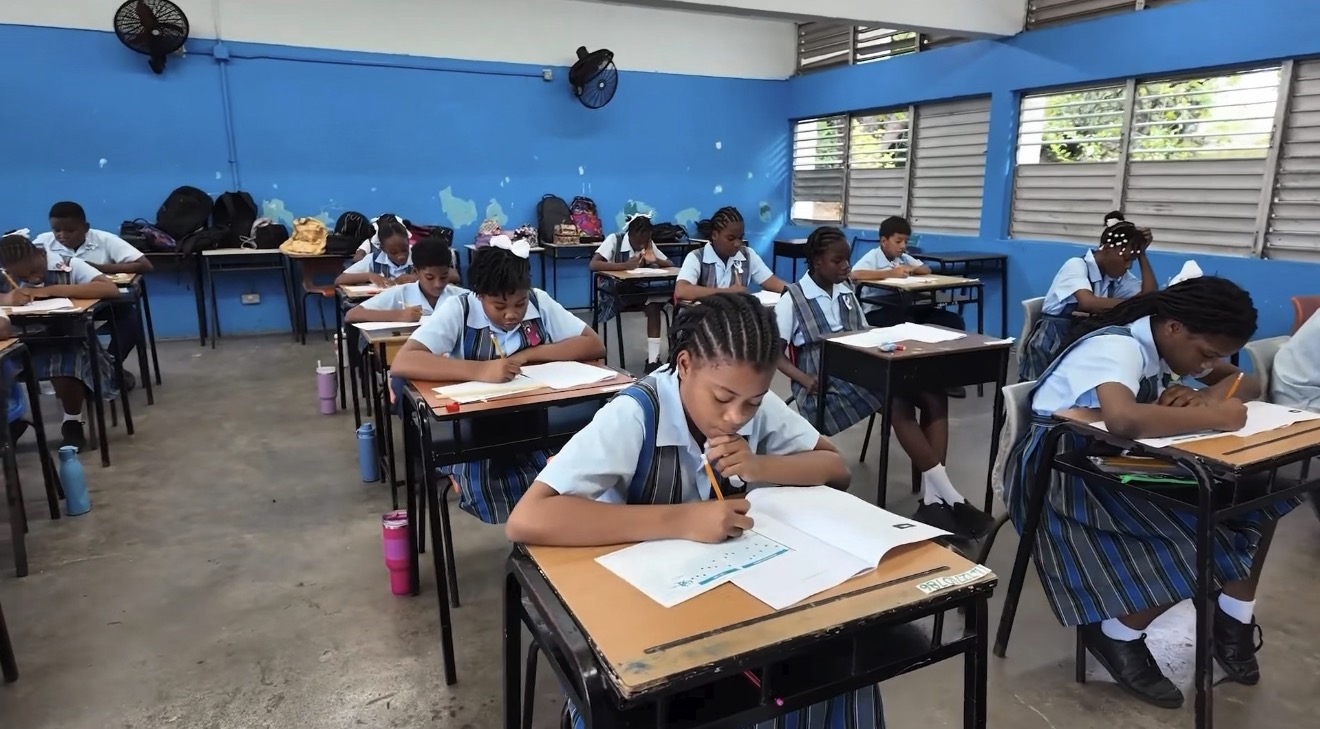
    Officials from the Ministry of Education, Science and Technology have extended formal congratulations to the 10 highest-achieving students across the country following the release of results for the 2026 Grade Six National Assessment, highlighting the outstanding academic rigor and consistent dedication that brought the cohort to their impressive milestones. In an official statement circulated to media and education stakeholders this Wednesday, the ministry emphasized that the standout results posted by these young learners are not accidental, but a direct reflection of months of intentional hard work, steady perseverance, strict personal discipline, and an unwavering commitment to meeting high academic standards. Beyond celebrating the students themselves, the government body also took the opportunity to acknowledge the critical behind-the-scenes support system that helped pave the way for these successes, giving public recognition to school principals, classroom teachers, and the students’ family members and guardians who offered guidance, encouragement, and resources throughout the entire primary school journey. “This outstanding achievement is a testament to your hard work, perseverance, discipline, and commitment to excellence,” the ministry noted in its official message to the honorees. “You have made your families, schools, teachers, and the entire nation proud.” Looking ahead to the next phase of the students’ academic careers, the ministry extended well wishes for continued growth and success as the group prepares to transition from primary education to secondary school, a key milestone that will set the foundation for their future professional and personal pursuits. The full list of top 10 performers, along with their affiliated institutions and special distinctions, has been released to the public alongside the official congratulatory statement. Claiming the overall top spot in the national assessment was Denushka H. Gibbs, a student at Minoah Magnet Primary School. Securing second place and the title of top-performing male student nationwide was Marlenky J. Salien of Baptist Academy of Antigua. Third place went to Necasia B. Ralph from J.T. Ambrose Primary School, who also earned recognition as the highest-scoring student from a government-run primary campus. Fourth place was awarded jointly to Ethan M. T. Lewis and O’Neil S. Henry Jr., both enrolled at Divine Academy of Excellence. Two students tied for sixth place: Riel S. Simon of Minoah Magnet Academy and Annastasia M. Aflak of St. Nicholas Primary School. Eighth place was another tie, claimed by Semaj A. C. McCoy of Baptist Academy of Antigua and Jenae Z. Lewis of Divine Academy of Excellence. Rounding out the top 10 at tenth place is Madison A. C. Williams from St. John’s Lutheran School.