作者: admin

  • Construction firm employee awarded compensation for unfair dismissal

    Construction firm employee awarded compensation for unfair dismissal

    In a landmark ruling delivered at the Employment Rights Tribunal’s (ERT) Warrens Office Complex headquarters in Barbados, tribunal chair Vere P. Brathwaite has awarded former senior civil engineer Allanna Hazell $6,576 in basic compensation for unfair dismissal, while throwing out her allegation that her 2017 termination was tied to her pregnancy. Both legal teams for the claimant and defendant, local construction firm Markham Construction Limited, have claimed victory in the long-running labor dispute, pointing to separate favorable outcomes in the 15-page judgment.

    Hazell, who had been employed by the St. George-based company since January 2015, was dismissed from her role on November 29, 2017. Markham Construction framed the termination as a response to what it called Hazell’s “failure to efficiently and effectively execute assigned job duties”. The former engineer brought her claim to the ERT on two separate grounds, arguing the dismissal violated the Employment Rights Act (ERA) both on procedural unfairness grounds and because it was driven by her pregnancy.

    The three-member ERT panel, which included labor leader Dennis de Peiza and industrial relations consultant Deighton Marshall, ultimately sided with Hazell on the question of unfair dismissal, but rejected the pregnancy discrimination allegation entirely. Crucially, the tribunal found that Markham Construction failed to meet its legal obligations under the ERA by not retaining or producing Hazell’s complete personnel records, despite being formally ordered to submit key documents including her employment contract, performance plans and assessments, disciplinary records, and bonus payment history. Company representatives told the tribunal the records were either lost or never created, a violation of Sections 13 through 17 of the Employment Rights Act, the panel confirmed. No costs were ordered against either party, and the full $6,576 basic award was granted to Hazell with no deductions.

    The dispute traces back to a construction project at Little Kent, Christ Church, which Hazell was assigned to supervise roughly five months before her termination. The tribunal found that a major on-site incident at the project – the collapse of concrete formwork (referred to as “boxing” in court documents) between June and November 2017 – was the direct catalyst for her dismissal.

    Hazell testified that the collapse stemmed from multiple factors, including ground saturation caused by heavy rainfall, the elevation of the work site, and her pregnancy, which made it impossible for her to climb to the high work area to supervise the concrete pour directly. She told the tribunal she requested assistance from company official L. J. Still, who was seriously ill at the time, and when a replacement supervisor left the site without notifying her, the incident proceeded without proper oversight.

    However, the tribunal raised significant questions about the credibility of Hazell’s pregnancy discrimination claim. She was unable to produce any formal medical documentation confirming her pregnancy at the time of the incident or her termination, nor could she provide any evidence that she had formally notified Markham Construction leadership of her pregnancy, either in writing or verbally. Hazell claimed she had shared the information with senior supervisor Winston Walker and submitted a sick certificate to receptionist-accountant Antoinette Massiah, but both employees had left the company before the tribunal, no contact information was available for either, and the certificate was never presented as evidence.

    Markham Construction’s legal team, led by counsel David Hamel-Smith, argued that the company had already conceded the procedural flaws that made Hazell’s dismissal unfair, but maintained that there was no proof pregnancy played any role in the termination. Hamel-Smith told reporters after the ruling that the company’s core position – that pregnancy was not a motivating factor in the firing – had been vindicated by the tribunal’s rejection of that portion of Hazell’s claim.

    Meanwhile, Hazell’s attorney Ella Hoyos called the ruling a win for her client, highlighting the tribunal’s finding that the dismissal was unfair. She also pointed to the ruling’s rebuke of Markham Construction’s poor record-keeping practices, which she said exposed deep flaws in the company’s corporate governance. Markham’s quantity surveying technician Deighton Gooding had testified that leadership had raised concerns about Hazell’s performance long before the Little Kent incident, but the unsigned, undated documentation he submitted to support that claim was rejected by the tribunal as unreliable and suspect. The panel confirmed that Markham Construction had explicitly conceded it failed to follow the progressive disciplinary process required by the ERA, and no formal disciplinary records were produced to back up the company’s performance claims. Gooding also confirmed that the company had paid a preliminary severance package to Hazell after the termination, acknowledging its own procedural missteps in the firing process.


  • Community First Cooperative Credit Union Donates 20 Fans To T.N. Kirnon Primary School

    Community First Cooperative Credit Union Donates 20 Fans To T.N. Kirnon Primary School

    Across Antigua and Barbuda, local financial cooperative Community First Cooperative Credit Union Ltd. (CFCCU) has once again turned its commitment to community education into tangible action, gifting 20 standing fans to T.N. Kirnon Primary School this week. The contribution addresses a common discomfort faced by students and staff during daily school operations, where warm classroom temperatures can distract from focus and dampen engagement. Unlike standard monetary grants, this in-kind donation directly targets the learning environment, reflecting the credit union’s long-held core belief that meaningful support for educational institutions extends far beyond financial transfers. By upgrading the school’s infrastructure to create a cooler, more pleasant space for classes, CFCCU is investing directly in the conditions that help young learners concentrate, grow, and reach their full potential. School representatives have noted that the donation will make an immediate difference for hundreds of students and teachers who use the campus facilities throughout the academic year, highlighting how local corporate social investment can create meaningful, community-focused change that lifts up the next generation.

  • Onderzoek Faerber: langdurige opslag vergroot schimmelgroei in pindasambel

    Onderzoek Faerber: langdurige opslag vergroot schimmelgroei in pindasambel

    A recent undergraduate graduation study from Anton de Kom University of Suriname (AdeKUS) has uncovered critical insights into food safety risks associated with vegetarian peanut sambal, a widely consumed local product. The research, conducted by Cherise Faerber, who earned her Bachelor of Science in Agricultural Production with a concentration in Agroprocessing from the university’s Faculty of Technological Sciences (FTeW), identifies storage duration as the key factor driving declining microbiological quality and elevated mold growth in the popular condiment.

  • Sandy Point grocery store targeted in armed robbery

    Sandy Point grocery store targeted in armed robbery

    St. Kitts and Nevis law enforcement authorities have launched a full investigation into a recent armed robbery at a local grocery store in Sandy Point, while also closing out a separate 2023 robbery case with convictions and sentencing for two local defendants.

    According to an official media release from the Royal St. Christopher and Nevis Police Force (RSCNPF), the latest incident unfolded at Panda Grocery, a popular retail outlet in the Sandy Point district of St. Kitts, between 1 p.m. and 2 p.m. local time on September 5, 2026. Preliminary investigative findings confirm that two masked individuals, both armed, gained entry to the store and threatened staff at gunpoint to hand over all available cash from the registers and safe.

    After stealing an undisclosed amount of local currency, the two suspects fled the crime scene on a bright red motor scooter, heading toward the capital city of Basseterre. Local law enforcement confirmed that no staff or customers were harmed during the confrontation, a small relief amid the unsettling incident.

    Shortly after the robbery, members of the RSCNPF’s specialized Crime Scene Unit responded to the location to conduct forensic processing. Investigators confirmed they have collected multiple pieces of physical evidence that are expected to help identify and apprehend the fleeing suspects as the probe moves forward. Police have not yet released any additional details about potential persons of interest or updates on the manhunt as of Wednesday morning.

    In a related update tied to the Sandy Point community, law enforcement also confirmed sentencings for two local residents convicted of a separate, unrelated robbery that took place in the nearby Belle Vue neighborhood back on November 3, 2023. The sentencing hearing was held September 2, 2026, at the Basseterre High Court, overseen by His Lordship Justice Patrick Thompson Jr. Both defendants, Zhane Warner and Sadonis Jarvis, were found guilty of felony robbery charges following a two-week trial.

    Warner received a two-year custodial sentence that has been suspended for a three-year probationary period, with strict additional court-imposed conditions. One of the core requirements is that Warner must pay a monthly fine of 750 Eastern Caribbean dollars (EC$) for 36 consecutive months, starting October 1, 2026. The court issued a formal warning that any violation of the probation terms will result in an immediate revocation of the suspended sentence, and Warner will be ordered to serve the full two-year term in state custody.

    Co-defendant Jarvis received a harsher sentence: four years of imprisonment at His Majesty’s Prison in St. Kitts. In addition to the custodial term, the court ordered Jarvis to pay 5,000 EC$ in direct compensation to the victim of the 2023 robbery, with payment due within 12 months of his release from incarceration.

  • Productivity down as workforce shrinks, UWI warns

    Productivity down as workforce shrinks, UWI warns

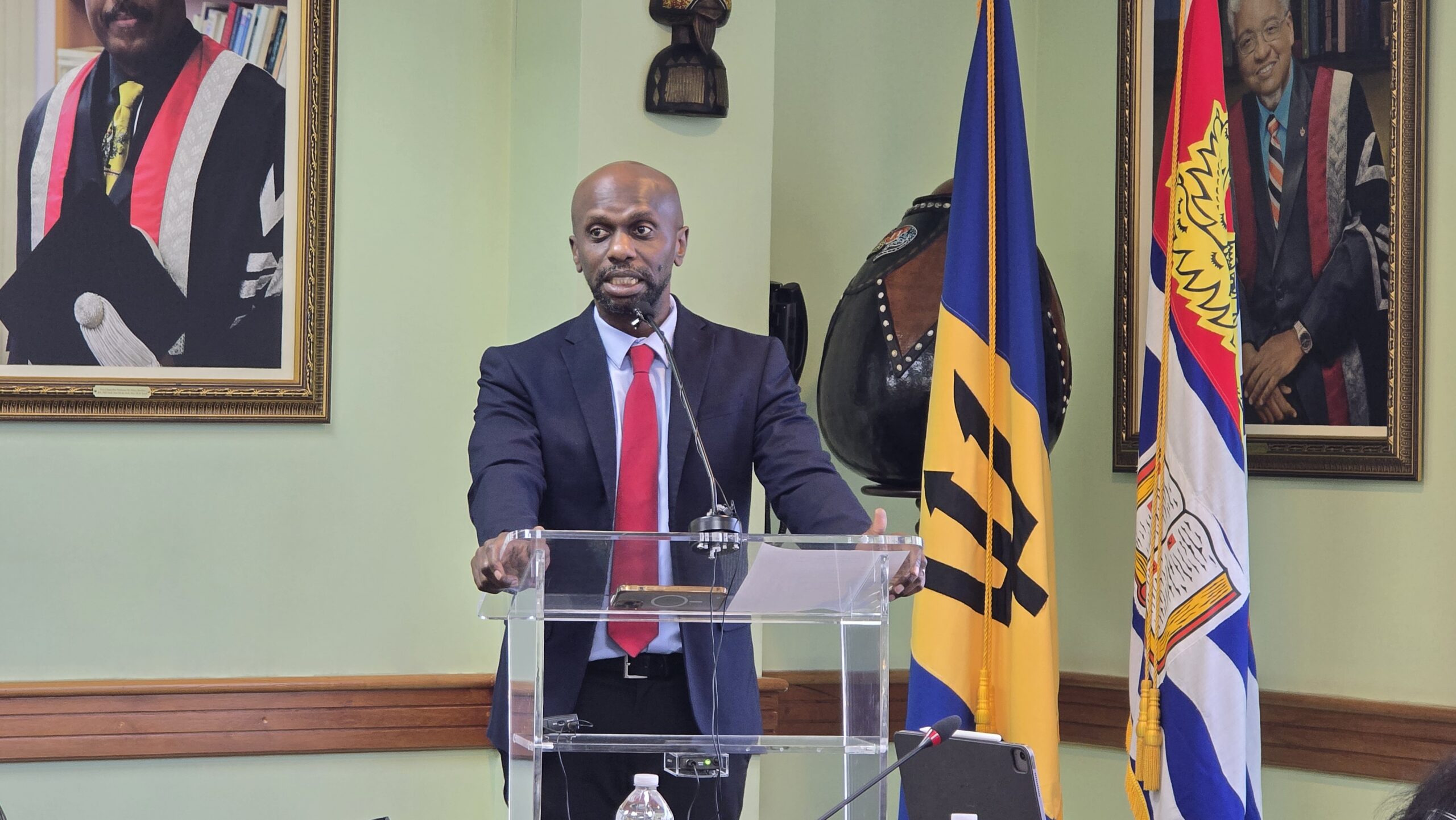
    Barbados is facing a mounting threat to long-term economic growth as plummeting workforce productivity and a shrinking labor pool collide, prompting two leading Caribbean institutions to launch a new collaborative initiative to reverse the trend. On Tuesday, the University of the West Indies (UWI) at Cave Hill joined forces with the Human Resource Management Association of Barbados (HRMAB), signing a landmark memorandum of understanding to tackle pressing workplace challenges that are holding back the island nation’s economic potential.

    Deputy Principal Professor Winston Moore of UWI Cave Hill issued a stark warning about the current state of Barbados’ labor market, revealing that the country’s total workforce shrank by approximately 2,700 workers during the first half of the current year. Driven largely by an aging population where retirements are consistently outpacing new entrants to the workforce, this contraction comes on top of years of sluggish productivity growth. Since 2018, annual labor productivity has averaged just 0.8% nationwide, a figure that leaves Barbados at risk of hitting a permanent “long-run speed limit” on economic expansion, Moore emphasized.

    Barbados’ economy is uniquely dependent on its human capital: the service sector, which employs 86% of all working Barbadians, forms the backbone of the country’s overall output. This makes effective human resource management not just an administrative concern, but a core determinant of Barbados’ global competitiveness, Moore explained during the signing ceremony held at the Jacqueline Wade Conference Room. “Our competitiveness is therefore a human resource question in the most literal sense, and the people in this room are the ones who manage it,” he stressed.

    Moore pointed out that while the Barbadian economy has posted more than 20 consecutive quarters of expansion and unemployment has fallen to roughly 6% in recent years, these positive headline figures mask the underlying demographic and productivity challenges. With growth in economic output reliant on just two drivers – more workers, or higher output per worker – the island is quickly exhausting the first source of growth. “If productivity continues to grow at 0.8% while the labour force contracts, then 0.8% is close to our long-run speed limit, whatever we write in a development plan,” Moore added.

    Contrary to common narratives that frame productivity growth as purely a matter of technological advancement or capital investment, Moore argued that organizational people management is the unsung driver of productivity gains. “Most of what economists call the productivity residual is, on closer inspection, management. It is how work is organised, how people are selected, how quickly a new hire becomes competent, whether a supervisor knows how to have a difficult conversation, whether a good employee sees a reason to stay,” he said. This reality positions human resources professionals as key leaders in solving Barbados’ productivity crisis, particularly through management practices that boost employee engagement and output.

    As the largest provider of skilled new graduates to the Barbadian labor market, UWI Cave Hill carries a unique responsibility for building the nation’s future skills base. The campus currently serves roughly 6,600 students across seven faculties and more than 350 academic programs, producing more than 1,200 graduates annually – 914 at the undergraduate level and 360 at the postgraduate level. “Every decision we take about a course outline, a competency, an assessment method or a work placement becomes part of the national skills stock three or four years later,” Moore noted. “There is no other institution in this country whose curriculum choices show up so directly in the productivity statistics, and none that carries a heavier obligation to get those choices right.”

    The new partnership with HRMAB is designed to bridge the gap between academic training and employer needs, giving the professional association a formal voice in curriculum design and program review at UWI. For the university, HRMAB provides on-the-ground insight into shifting labor market demands, including emerging skills that evolve faster than traditional academic curriculum committees can adapt. In exchange, UWI brings its teaching expertise and research capacity to the partnership, enabling evidence-based testing of workplace interventions rather than relying on anecdote or assumption.

    Under the terms of the agreement, UWI students will gain access to structured work placements, industry mentorship, and exposure to professional HR standards set by HRMAB. For HRMAB members, the partnership opens access to continuing professional development opportunities, UWI faculty expertise, and campus research facilities. The two organizations also plan to conduct joint, cross-sector research on productivity trends to build a more robust evidence base for policy and practice.

    Moore proposed that the first joint initiative under the new partnership be an annual skills demand review, co-conducted by both institutions to align academic output with labor market needs. “If we do that well, it will be worth more than the signature we are about to witness,” he said.

    HRMAB President Tisha Peters echoed the urgency of the partnership, noting that the global future of work is already reshaping skill needs in Barbados. Citing the World Economic Forum’s *Future of Jobs Report 2025*, Peters explained that the global economy is projected to see net growth of 78 million new jobs by 2025, as 170 million new roles created are partially offset by 92 million existing jobs displaced by technological and economic change. By 2030, an estimated 39% of current workers’ core skills will either be transformed or rendered obsolete, she added.

    Peters emphasized that this shift does not mean fewer opportunities, but rather different types of opportunities that require coordinated preparation from academia, professional associations, and employers. “Some graduates may build careers in artificial intelligence, data analytics, cybersecurity, renewable energy or digital transformation. Others will enter familiar professions such as HR, finance, education and healthcare—but will practise them in very different ways,” she said. “The future of work is not only about new jobs; it is also about new ways of doing existing jobs.”

    Pushback against the common claim that technology will displace human workers, Peters noted that the real risk lies in failing to adapt to new tools. “People who did not learn how to work with technology could be at a disadvantage,” she said. She called on academic institutions to combine rigorous core academics with digital literacy, interdisciplinary training, and hands-on practical experience, with the goal of enabling students to use emerging technologies critically, ethically, and responsibly. “The goal is not to replace sound academic thinking with technology, but to use technology to extend it,” she added.

  • Temporary closure: Traffic Department, Young Street, St George’s

    Temporary closure: Traffic Department, Young Street, St George’s

    A key administrative office of the Royal Grenada Police Force’s Traffic Department will soon suspend operations at its downtown St. George’s location, according to an official public announcement from the department. Starting Wednesday, September 9, 2026, the Traffic Department office situated on Young Street within the Inland Revenue Department building will remain closed to the public until a formal reopening date is announced. To avoid disrupting access to critical traffic-related services for local residents and visitors, the department has activated an alternative service point: its existing sub-office at the Galleria Mall in Grand Anse, St. George. All regular services and operational functions that were previously offered at the closed Young Street location will be available at this alternate venue for the duration of the temporary closure. In the announcement, the Traffic Department extended an apology to all members of the public for any disruptions or inconvenience that may arise from this temporary operational shift, and expressed gratitude for the public’s patience, cooperation and understanding through this transition. This official notice was issued on authority of the Commissioner of Police of Grenada.

  • The record contradicts the minister

    The record contradicts the minister

    In democratic public life, there is a line that separates loyal political defense from deliberate disregard for public truth. Health Minister Daniel Cummings of St. Vincent and the Grenadines (SVG) appears to have crossed that line with his recent attempt to clear Chief Medical Officer Dr. Simone Keizer-Beache of any meaningful role in shaping the country’s controversial COVID-19 vaccine mandate. For thousands of Vincentians who bore the brunt of that policy, and for the electorate that handed a resounding rejection of the old order in November 2025 general elections, Cummings’ argument is not just unconvincing — it is a direct affront to public understanding of recent history.

    Cummings’ core claim is straightforward: the vaccine mandate was not the CMO’s doing, but the personal initiative of former Prime Minister Ralph Gonsalves, who insisted on pushing the policy through. On its face, this claim avoids the real question at hand. No reasonable observer has argued that Keizer-Beache held the constitutional authority to enact binding regulation on her own. But that technicality does not erase the overwhelming evidence that she was a central architect of the policy’s core framework.

    The most damning evidence comes from Keizer-Beache’s own sworn affidavit. The document confirms that between June and October 2021, she explicitly advised the Minister of Health, Minister of the Public Service, and the full Cabinet that all frontline public sector workers must be vaccinated, and that unvaccinated staff should be barred from entering workplaces over supposed transmission risks to patients, students, prisoners and the general public. This was not a trivial procedural suggestion — it was the foundational policy premise that the entire mandate was built upon.

    This account is corroborated by multiple independent sources. Former Health Minister St. Clair Prince confirmed that the CMO’s vaccination recommendation formed the basis of the policy, and that after Cabinet approved her advice, the official Special Measures Regulations were drafted to reflect her input. Former Public Service Minister Frederick Stephenson echoed this account, confirming that Cabinet aligned the final regulation with Keizer-Beache’s guidance. Even the Court of Appeal’s official record acknowledges that the mandate was implemented directly in response to the CMO’s formal advice. Against this mountain of public evidence, Cummings’ claim that Keizer-Beache bears no connection to the mandate rings hollow.

    It is critical to draw a clear line between political and professional accountability: Cabinet held the final legal and political authority to approve the policy, and its members bear ultimate political responsibility for its implementation. But accepting that reality does not negate the professional responsibility of the expert who provided the guiding advice. For years, the former Gonsalves administration leaned heavily on Keizer-Beache’s expertise to defend the mandate against criticism. When challenged on mandatory testing for unvaccinated teachers, the former prime minister repeatedly cited the CMO’s advice as justification. When the mandate was fought in court, Keizer-Beache led the defense of the policy. When workers demanded explanations for their loss of livelihood, the public was told the government was simply following expert public health guidance. Now, after a seismic political shift, the public is being asked to accept that Keizer-Beache was a bystander all along. That narrative simply does not hold up to scrutiny.

    What Cummings’ defense ignores is the very real human cost of the mandate that Keizer-Beache helped build. This was no abstract policy debate: hundreds of workers lost their jobs, families lost stable incomes, and many Vincentians lost years of pension benefits, home equity and financial security. Parliamentary records show more than 500 public sector employees were dismissed over the policy, while hundreds more endured years of uncertainty before the new government created a pathway for reemployment. These are not faceless statistics: they are teachers, nurses, police officers, janitors, and ordinary working parents who make up the backbone of SVG’s society. The SVG Public Service Union has long documented the severe financial hardship, psychological distress and widespread violations of worker rights and bodily integrity caused by the policy. Yet Cummings now calls on the nation to overlook this history and celebrate the official whose advice created it.

    This contradiction becomes even more stinging when viewed through the lens of the 2025 general election. The vaccine mandate was no minor side issue during the campaign — it was the core grievance that brought down the long-ruling Unity Labour Party (ULP), which saw its governing majority wiped out and reduced to just a single seat after 14 seats flipped to the opposition. The new National Democratic Party (NDP) administration ran on a clear promise to redress the injustices of the mandate, and its commitment to reinstate affected workers was widely welcomed by the union and the public. That election result was not just a change in governing party: it was a clear repudiation of the coercive, rights-violating style of governance that the mandate came to represent.

    Cummings has also attempted to deflect criticism by arguing that Keizer-Beache should not be punished because her husband is a ULP affiliate. This is a deliberate distraction from the core issue. No reasonable person is calling for retaliation against a public servant because of a spouse’s political affiliation. The question here is not political retaliation — it is professional accountability. If a senior public official makes high-stakes recommendations that lead to widespread harm for hundreds of citizens, examining that decision-making process is not victimization: it is the basic accountability that a democratic public is owed.

    Cummings cannot have it both ways: he cannot argue that public servants must be judged on merit, while also claiming that any scrutiny of the CMO’s professional decisions amounts to political persecution. The principle of merit-based evaluation cuts both ways. A public health official who gives advice that reshapes thousands of lives must be willing to have that advice examined, especially when the outcome was so harmful.

    There is also a critical broader principle at stake for public service in SVG. If the standard set now is that senior public officials who advise on harmful, discredited policies will be insulated from any scrutiny after a change of government, what message does that send to future public servants? Professional independence is a cornerstone of effective public service, but it cannot exist without professional accountability. It is unfair and unsustainable to operate under a system where politicians take all the blame when policies fail, but public officials claim all the credit when policies succeed.

    Adding to the confusion is that Cummings was once an outspoken critic of the previous government’s COVID policies, making his current position all the more difficult to reconcile. The political movement that won power on a promise of change now owes the public a clear explanation for why one of its top ministers is so determined to rehabilitate the reputation of a senior official so closely tied to a policy that caused so much pain.

    Cummings is fully within his rights to praise Keizer-Beache for her current work, recognize her competence, and defend her from unfair political discrimination tied to her husband’s affiliation. What he cannot do is rewrite history. He cannot erase Keizer-Beache’s own sworn testimony, the consistent accounts of former cabinet ministers, the findings of the Court of Appeal, or most importantly, the lived experience of hundreds of Vincentians who lost their livelihoods because of the policy.

    Vincentians have not forgotten what happened during the mandate. They remember being forced to choose between their job and their bodily autonomy. They remember the humiliation, the uncertainty, and the years of stability that were taken from them. They turned out in force in November 2025 to demand that this kind of coercive governance face consequences.

    Cummings’ stance risks sending a dangerous message: that the election only changed the faces in government, not the approach to the people who suffered under the old policies. That would be a profound betrayal of the mandate the electorate delivered in 2025.

    No person in SVG public life is above accountability — not the prime minister, not cabinet ministers, not senior civil servants, and certainly not the chief medical officer. Cummings is correct that public servants should be judged on merit, not political association. But that principle applies to harmful decisions as much as it applies to good work. Keizer-Beache’s professional decisions during the COVID crisis must be evaluated fairly, and if those decisions contributed to years of suffering for hundreds of Vincentians, the public has every right to demand full transparency and accountability.

    Attempting to separate the CMO from the mandate she helped build is not accountability — it is historical revisionism. The electorate that voted for change did not vote to erase the pain of the past or excuse the actors who created it. Vincentians deserve full accountability, not rewritten history, and Minister Cummings must honor the mandate that brought his government to power.

  • What Makes the Toucan Belize’s National Bird?

    What Makes the Toucan Belize’s National Bird?

    Forty-five years after Belize secured its independence, the small Central American nation’s choice of national bird remains one of its most meaningful and recognizable markers of cultural identity, rooted in the country’s deep connection to its rich tropical ecosystems.

    When Belize formally broke away from British rule to become an independent state in 1981, national leaders and civic bodies faced a critical task: crafting a set of unifying national symbols that would reflect the new country’s unique character and natural heritage. Months of deliberation culminated in August 1981, just weeks before the official independence declaration, when the National Symbols Committee approved a finalized roster of national symbols—among them, the iconic Keel-Billed Toucan.

    Distinguished by its oversized, multicolored bill and vivid plumage, the Keel-Billed Toucan is not a rare sight in Belize; the species thrives across nearly all of the country’s forested landscapes, from dense tropical rainforests to scattered woodlands. Its ubiquitous presence across Belize’s terrain made it a natural choice for a nation building its identity around the extraordinary biodiversity that defines its borders. Unlike rare or geographically restricted species, the toucan is a familiar figure for Belizeans across every region, a bird that generations of local communities have encountered in their daily lives.

    Beyond its widespread habitat, the toucan’s striking visual appearance has made it a powerful ambassador for Belize globally. Its bold, vibrant colors mirror the diversity and vitality that the newly independent nation sought to project to the world, tying the country’s global image directly to its natural wealth.

    Today, 45 years on from that pivotal decision in 1981, the Keel-Billed Toucan retains its status as a beloved core symbol of Belizean identity. It appears on national branding, tourism materials, and civic iconography, serving as a constant reminder that Belize’s national character is inextricably linked to the lush, living ecosystems that have shaped its history and its future.

  • MCC Bill Gets Senate Nod, But 21 Amendments Are Still Coming

    MCC Bill Gets Senate Nod, But 21 Amendments Are Still Coming

    BELMOPAN – In a tightly timed legislative session marked by open frustration over procedural urgency, Belize’s Senate has given preliminary approval to the Millennium Challenge Account (MCA) Bill alongside two companion education-focused bills, clearing a key hurdle just 10 days ahead of a critical U.S.-linked deadline for the country’s $125 million development grant. The three-bill package, which includes the standalone Education Bill and Technical and Vocational Education and Training (TVET) Bill, forms the core legislative requirement for Belize’s Millennium Challenge Compact with the United States. This five-year grant is earmarked for sweeping overhauls of Belize’s education and national energy sectors, ahead of a formal launch event scheduled for later this month.

    Lawmakers spent nearly five hours in heated debate over the package, with multiple senators voicing discontent over the compressed timeline that forced the vote before all drafting adjustments could be finalized. Lead government Senator Eamon Courtenay openly acknowledged that the accelerated process fell short of standard legislative protocols. “It is not a satisfactory state of affairs. I confess that immediately and the request made by the government is unusual and extraordinary,” Courtenay stated in remarks from the Senate floor.

    To address lawmakers’ concerns, Courtenay pointed to a September 4 correspondence from Minister Francis Fonseca that formally commits the government to bring 21 pending amendments before Belize’s House of Representatives during its next scheduled sitting. Following debate and approval of the amendments in the lower house, the full adjusted three-bill package will return to the Senate for a second round of review and a final confirmation vote.

    Not all Senate members were willing to support the preliminary approval despite the commitment to future changes. Union Senator Glenfield Dennison requested a formal division vote to record individual stances, before ultimately abstaining from the vote. He was joined in abstention by NGO sector Senator Janelle Chanona and business representative Senator Kevin Herrera. All remaining senators cast votes in favor of advancing the package, pushing it past the required threshold for preliminary passage amid the looming deadline.

  • Ebola death toll surpasses 3,200 as UN agencies intensify response

    Ebola death toll surpasses 3,200 as UN agencies intensify response

    As the death toll from the ongoing Ebola outbreak in the eastern Democratic Republic of the Congo (DRC) crosses the 3,200 mark, United Nations agencies have sharply escalated their intervention efforts, rolling out a revised six-month response plan that requires $1.3 billion in funding to curb the virus’s spread.

    Announced this week by the World Health Organization (WHO), the new strategic framework focuses on boosting interventions across high-risk affected communities, expanding core public health actions including disease surveillance, contact tracing, clinical care, community outreach, and emergency preparedness. The updated plan comes as the outbreak continues to claim new lives in North Kivu, Ituri, and other eastern provinces, against a backdrop of long-running instability that has severely complicated response efforts.

    For months, regional health bodies, UN agencies, and Congolese state authorities have collaborated to contain transmission, but persistent armed clashes and widespread insecurity have blocked access to hard-to-reach communities, slowing critical public health work. Ongoing violence has created extraordinary barriers for frontline health workers, who struggle to track potential virus exposures, monitor suspected cases, and deliver life-saving treatment to infected patients in a timely manner.

    Against this challenging landscape, UN Humanitarian Coordinator Damien Mama launched a four-day assessment visit to North Kivu this week, where he will evaluate ongoing Ebola response operations and review the broader humanitarian crisis unfolding in the region. North Kivu has endured decades of armed conflict, mass population displacement, and repeated humanitarian emergencies, meaning Ebola response efforts must run parallel to interventions supporting communities displaced by violence, grappling with acute food insecurity, and facing widespread loss of livelihoods.

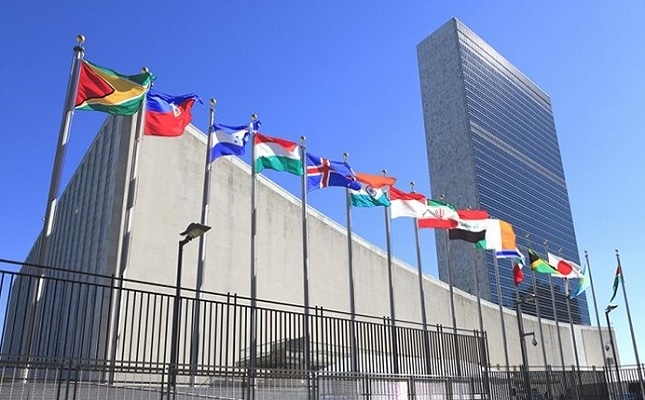
    UN officials confirm the scale of unmet humanitarian need across the DRC remains unprecedented, even as agencies prioritize Ebola containment. Separately, the Food and Agriculture Organization (FAO) has announced it is expanding its targeted support for Ituri and North Kivu, with a core focus on cutting the risk of zoonotic Ebola transmission – the spread of the virus from animal populations to humans. During a Tuesday press briefing at UN Headquarters in New York, FAO leaders outlined that the organization is strengthening veterinary surveillance systems and training local teams to identify and mitigate emerging disease risks. It is also providing direct support to vulnerable households, distributing agricultural seeds, farming tools, poultry, and cash assistance to stabilize local incomes.

    This dual-track support is designed both to reduce public health risks and help families preserve their livelihoods at a time when overlapping conflict and the Ebola outbreak have gutted local economic activity and disrupted access to affordable food across large swathes of eastern DRC.

    The ongoing outbreak has sparked widespread international alarm due to Ebola’s high mortality rate and ability to spread rapidly through close contact. Previous Ebola outbreaks in the DRC have repeatedly underscored that successful containment relies on a combination of early detection, systematic contact tracing, prompt isolation and treatment, and, critically, buy-in and cooperation from affected communities. Health officials have repeatedly emphasized that community engagement is the backbone of effective outbreak control, particularly in regions where widespread fear, rampant misinformation, and deep-seated distrust of outside authorities can leave residents unwilling to collaborate with response teams.

    Compounding existing challenges, the overall response effort is currently hamstrung by a severe funding shortfall. Humanitarian officials report that the DRC’s broader $2.1 billion national Humanitarian Response Plan is only 50 percent funded, leaving UN agencies and partner organizations struggling to maintain basic operations across the country.

    In light of these gaps, the UN and its implementing partners have issued an urgent appeal for additional international backing to sustain critical humanitarian assistance, while ramping up efforts to bring the Ebola outbreak under control. With violence continuing to disrupt access in large parts of eastern DRC, humanitarian agencies warn that successful Ebola containment will require far more than medical intervention: it depends on guaranteed safe access to all affected communities and sustained, long-term financial and political support from the international community. The UN is urging global donors to step up with immediate additional funding as frontline health and humanitarian workers continue their work to contain the outbreak and support communities navigating one of the most complex humanitarian emergencies in the DRC’s recent history.