
Local law enforcement authorities are turning to the community for assistance after a would-be burglar targeted a private home in the quiet Nut Grove neighborhood earlier this week. According to initial police reports, the unidentified suspect attempted to force entry into the residential property at an undetermined time, but the attempt was ultimately unsuccessful. No items were reported stolen from the home, and no residents were injured during the incident. Investigators have released limited descriptive details about the individual of interest and are asking any local residents or passersby who may have noticed suspicious activity in the Nut Grove area around the time of the attempted break-in to come forward with any information, no matter how minor it may seem. Tips from the public can be submitted anonymously through the local police department’s dedicated tip line or official online portal, and authorities note that even small pieces of information could prove critical to identifying the suspect and closing the case. The incident has sparked minor concerns among local residents about neighborhood safety, with law enforcement urging residents to remain vigilant, lock all doors and windows when away from home, and report any unusual activity to police immediately.
作者: admin
-
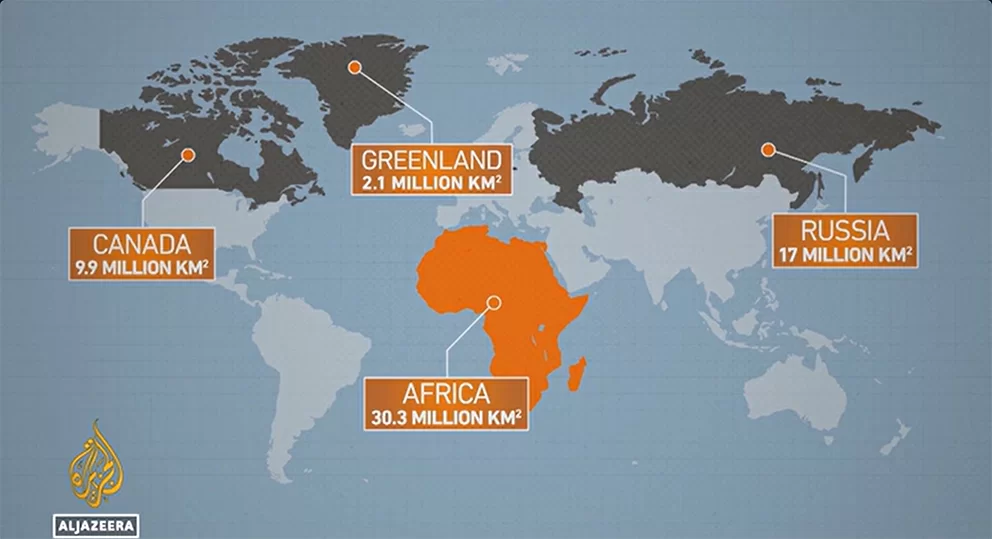
Hoe groot is Afrika echt? Waarom de VN stemde om de wereldkaart te veranderen
On September 8, the United Nations General Assembly took a landmark step to address centuries of geographic bias in global mapping, approving a resolution led by African nations that encourages member states to adopt the Equal Earth map projection — a alternative that corrects the size distortions that have minimized the Global South on traditional maps for hundreds of years.
The resolution, which won backing from 164 member states, faces only one opposing vote from the United States, with six Eastern European nations — Serbia, Estonia, Georgia, Lithuania, Moldova, and Ukraine — abstaining from the vote. The core goal of the measure is to promote a more geographically accurate representation of the world’s continents, replacing the widely used Mercator projection, which was originally developed in 1569 by Flemish cartographer Gerardus Mercator for maritime navigation.
For centuries, the Mercator projection’s design has skewed public perception of global landmasses. Created to preserve straight lines for ocean navigation, it exaggerates the size of land masses closer to the poles while shrinking territories near the equator. This distortion leaves northern, wealthier regions appearing far larger than they actually are relative to equatorial and southern nations. For example, on Mercator maps, Africa appears roughly the same size as Greenland, but in reality, Africa is 14 times larger than the Arctic island. In actual area, Africa spans 30.3 million square kilometers — large enough to fit the entire United States, China, India, and most of Europe within its borders. Combined, the four regions disproportionately shrunk by Mercator — Africa, Latin America, South Asia, and Oceania — cover more than 64 million square kilometers, over 40% of the world’s total land area. By contrast, the entire continent of Europe only measures 10.2 million square kilometers.
The Equal Earth projection, launched in 2018 by three cartographers from the Environmental Systems Research Institute, U.S. National Park Service, and Australia’s Monash University, fixes this long-standing bias. Co-creator Bojan Savric explained in a 2025 interview with AFP that the projection preserves the relative size of all continents while retaining accurate representations of their shapes, matching how landmasses appear on a three-dimensional globe.
Togo’s Foreign Minister Robert Dussey, whose country led the resolution effort, emphasized that maps are far more than navigational tools. “Maps shape education, fuel public imagination, and shape collective global perceptions,” he said, adding that the adopted resolution “affirms the African reality” that has been erased and minimized for centuries.
Reactions to the resolution have been largely positive among supporting nations. France, a co-sponsor of the text, has already announced it will abandon the Mercator projection for official use. French Foreign Minister Jean-Noel Barrot noted that the traditional projection gives the U.S., Russia, and China “disproportionate visual dominance over Africa, Latin America, or Southeast Asia,” while perpetuating the false illusion that Greenland is nearly as large as Africa. “Changing maps will not change the world on its own,” Barrot said. “But correcting a distorted representation is already an act of truth.”
The resolution faced sharp criticism from the U.S. delegation. U.S. representative Yaryna Ferencevych argued that the debate over 16th-century map projections distracts the UN from addressing pressing global issues, claiming the resolution is evidence the body “is losing its credibility.”
Notably, the UN resolution is not legally binding for member states. The world body has stressed it does not ban the Mercator projection or mandate a universal replacement, and instead only encourages governments and international institutions worldwide to adopt the Equal Earth projection as a new standard for more accurate geographic representation.
-

AT&LU Begins Collective Bargaining Talks for WIOC Supervisors
A major milestone for labor representation in Antigua’s energy sector has been reached, as the Antigua Trades and Labour Union (AT&LU) has officially kicked off the process to negotiate a formal Collective Bargaining Agreement for supervisory staff at the West Indies Oil Company (WIOC).
To lay the groundwork for the talks, AT&LU President Bernard de Nully and the union’s on-site shop stewards gathered recently for the inaugural structured meeting with members of WIOC’s newly recognized Supervisory Unit, which now falls under the union’s official representation. The interactive session created a structured space for participating supervisors to lay out their core workplace priorities, from compensation structures to working condition adjustments, all of which will be incorporated into the formal proposals the union will ultimately present to WIOC’s senior leadership.
In comments following the meeting, de Nully emphasized the long-term value of the anticipated agreement. Beyond setting formal employment terms, he explained, the document will embed robust legal and procedural protections that safeguard the supervisors’ long-standing rights, comprehensive benefit packages, and earned employment entitlements for years to come.
The development has already received positive endorsement from the Caribbean Congress of Labour, the regional body coordinating labor organizing across the Caribbean bloc. The organization framed the AT&LU’s initiative as a consequential step forward for expanding robust worker representation and strengthening the role of trade unionism across the entire Caribbean region.
Beyond formalizing employment terms, the regional body noted that the bargaining process will empower WIOC’s supervisory staff by giving them a unified, collective voice in corporate decisions that directly shape their day-to-day working environments. The Caribbean Congress of Labour also used the opportunity to reaffirm its ongoing, unwavering support for all trade unions across the Caribbean that are working to advance better employment conditions, protect fundamental collective bargaining rights, achieve universally accessible decent work, and advance systemic social justice for workers across all sectors.
-
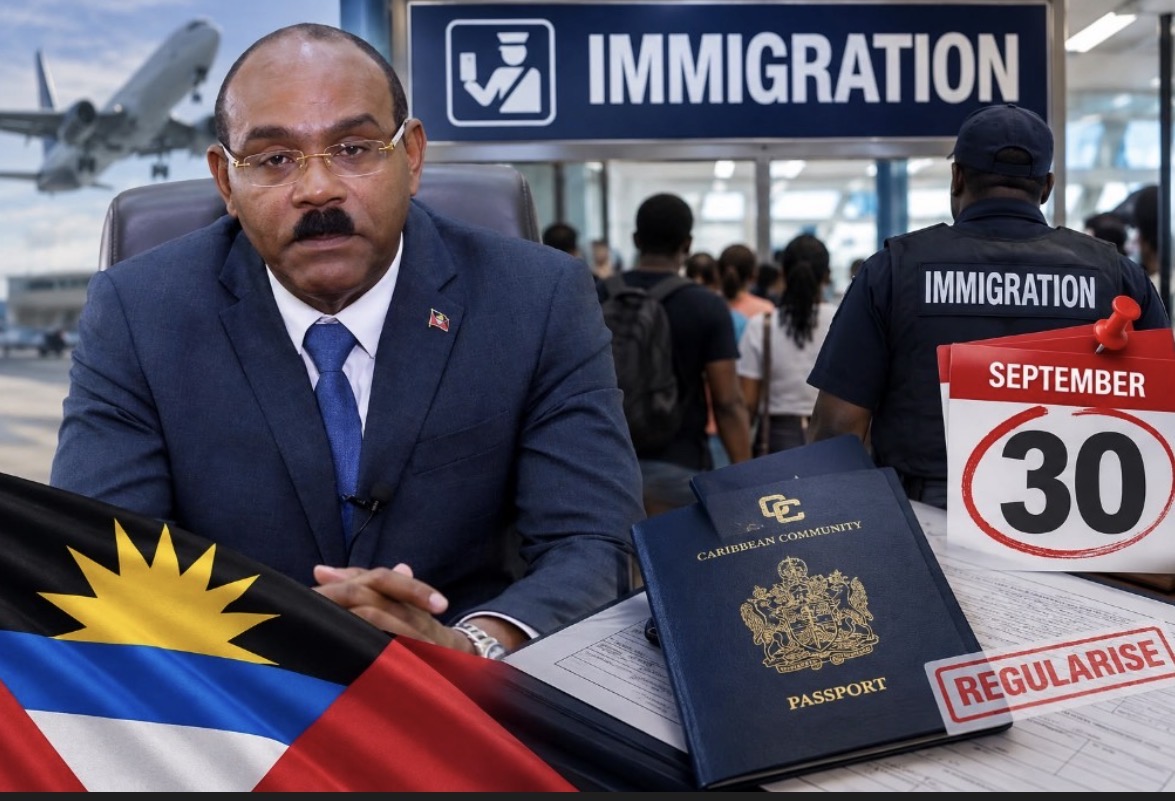
Antigua and Barbuda Vows to Deport Foreign Criminals and Tighten Checks on Undocumented Migrants
Antigua and Barbuda’s Prime Minister Gaston Browne has announced that his administration will ramp up efforts to locate undocumented migrants and expel foreign nationals engaged in criminal activity from the twin-island nation. The announcement came during an appearance on the Browne and Browne Show, where senior law enforcement leaders were discussing the recent apprehension of foreign suspects who were wanted on murder charges in other jurisdictions. Following their arrest, police confirmed the suspects have already been transferred back to the countries where the crimes were committed to face prosecution. For Browne, these high-profile cases underscore a critical gap in the country’s immigration oversight: the absence of fully updated, accurate records on all foreign residents. “Every single immigrant in this country must bring his or her [immigration status] up to date,” Browne stated. “We have to know precisely who is in the country.” The prime minister clarified that undocumented migrants who fail to contribute to the country’s social and economic growth will be required to leave Antigua and Barbuda. “If you’re here illegally and you’re not making a contribution to nation-building, you go from whence you came,” he emphasized. Browne was quick to stress that this new enforcement push is not targeted at the broader immigrant community, noting that foreign-born residents have long been integral to Antigua and Barbuda’s ongoing development. He added that his government has consistently treated immigrants fairly and recognizes the valuable work they have done alongside native-born citizens to build the national economy. That said, Browne argued that a small subset of foreign criminals have been exploiting Antigua and Barbuda as a safe hub to run cross-border illegal operations, most notably drug trafficking. He also confirmed that national security officials have received intelligence indicating that people wanted for serious violent offenses in neighboring Caribbean countries are currently hiding within the nation’s borders. “We are going to make sure we weed them out,” Browne said. “We have to keep this country safe and secure.” A senior police official echoed the prime minister’s concerns, calling for deeper collaboration between law enforcement agencies across the Caribbean region and more robust pre-entry background screening for all people arriving in Antigua and Barbuda. The official noted that the modus operandi and weapons used in a string of recent armed robberies in the country matched patterns typically associated with criminal networks based in other Caribbean jurisdictions. While Browne did not announce a formal timeline for rolling out the intensified enforcement or detail any specific new immigration tracking system, his public remarks make clear that strengthened immigration controls and more rigorous screening of foreign nationals will be central pillars of the government’s ongoing strategy to curb violent crime across the country.
-

Oil Prices Hit $100 a Barrel as Middle East Conflict Fuels Supply Fears
Escalating geopolitical friction in the Middle East has sent shockwaves through global energy markets, pushing international oil prices back to the closely watched $100 per barrel threshold this Wednesday. Market volatility triggered by rising conflict has rekindled widespread fears over potential disruptions to critical cross-border energy supply chains.
In early trading sessions, Brent crude, the global benchmark for oil pricing, notched a 2.3% upward climb, briefly touching the $100 per barrel mark for the first time since July before retreating marginally in later trading. West Texas Intermediate, the U.S. benchmark for crude, recorded a more modest 1.3% gain to settle near the $94 per barrel level.
The latest price surge comes on the heels of two key developments that have ratcheted up regional tensions: recent U.S. military strikes targeting Iranian oil tankers, and a wave of attacks on Saudi Arabian infrastructure—including key oil facilities—carried out by the Iran-aligned Houthi rebel group.
Beyond these targeted strikes, market participants are maintaining intense focus on the Strait of Hormuz, the world’s most vital chokepoint for global oil and liquified natural gas shipments. Uncertainty around the safe passage of tanker traffic through this strategic waterway has added an extra layer of risk premium to oil pricing, as roughly a fifth of global petroleum consumption passes through the strait daily.
Year-to-date, both major crude benchmarks have rallied more than 60%, marking one of the sharpest first-half-to-Third-quarter price climbs in recent decades. This sustained upward trajectory is already rippling through global economies, pushing up prices for gasoline, diesel, and a range of other refined energy products. For consumers already grappling with rising costs across other sectors, the oil price surge has amplified inflationary pressures, putting additional strain on household budgets and forcing central banks to confront tougher policy tradeoffs between taming price growth and sustaining economic expansion.
For small fuel-importing nations across the Caribbean, the impact of this latest price jump could be particularly acute. The region’s economies are almost entirely dependent on imported petroleum to meet domestic energy demand, meaning shifts in global oil prices directly translate to higher import bills, increased transportation costs, and higher pump prices for local consumers.
-
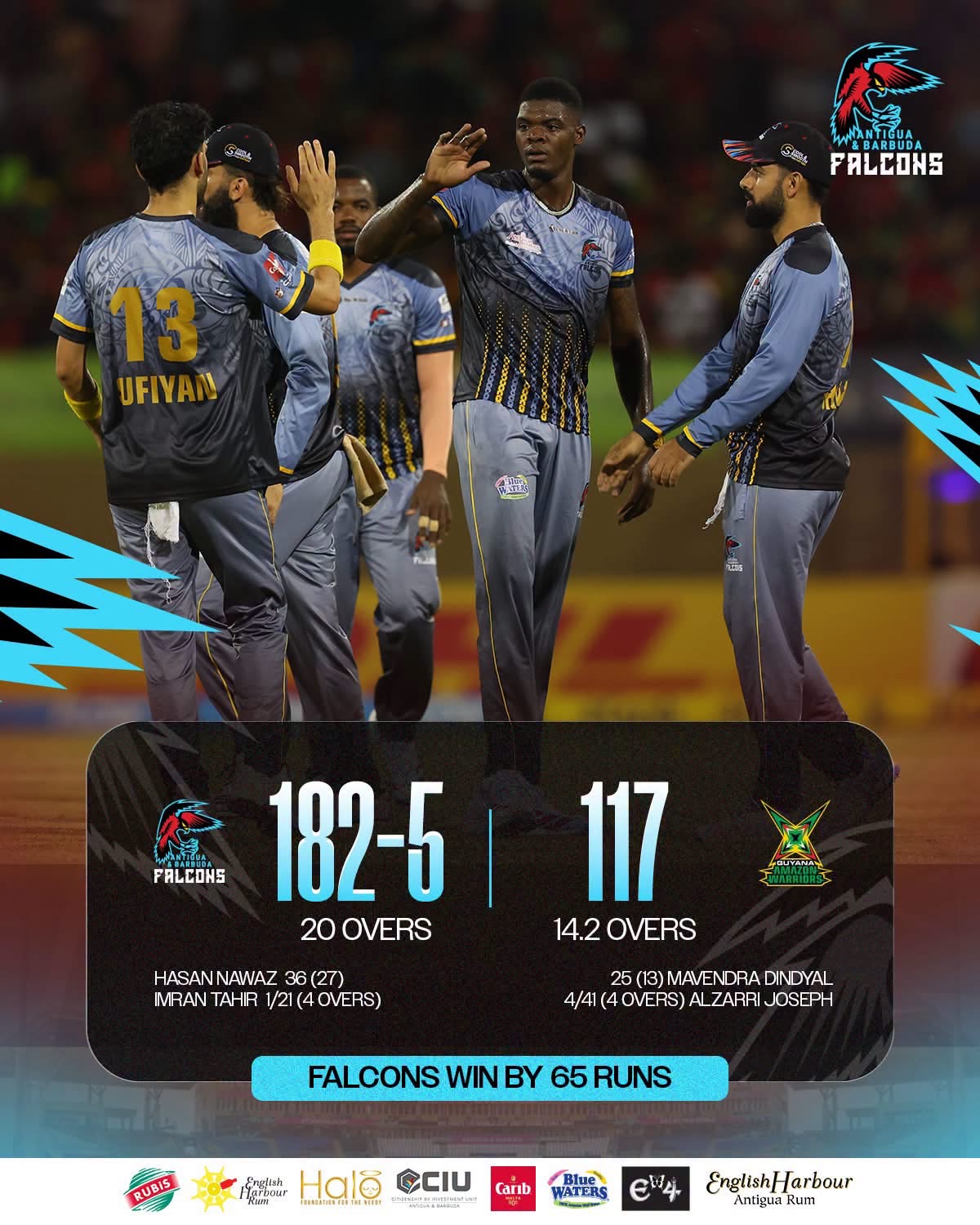
Falcons Crush Amazon Warriors by 65 Runs, Secure CPL Top-Two Finish
In a standout Tuesday night clash at Providence Stadium in the Republic Bank Caribbean Premier League, the Antigua and Barbuda Falcons delivered a masterclass in controlled aggression to hand the previously undefeated Guyana Amazon Warriors their first loss of the campaign, wrapping up a comprehensive 65-run victory that booked their spot in the tournament’s Qualifier 1.
Sent into bat first after winning the toss, the Falcons built their innings patiently through the opening 15 overs before launching a devastating late-innings attack. Contributions from Hasan Nawaz, who hammered 36 runs off 27 deliveries, laid a solid foundation for the middle order, and it was all-rounder Shadab Khan who stole the show with a blistering, unbeaten 30 runs from only nine balls. The Falcons piled on a massive 72 runs in the final five overs of their allocation, closing out their 20 overs at 182 for five wickets and setting the unbeaten Warriors a steep target of 183 to win.
The Guyana Amazon Warriors’ chase fell apart almost from the first over, as Antiguan pace bowler Alzarri Joseph tore through the team’s top order, leaving the Warriors reeling early on. Joseph finished his four-over spell with an impressive four wickets for just 41 runs, putting the Falcons firmly in control of the match. Shadab Khan continued his impactful performance with the ball, claiming two additional wickets for only 19 runs, effectively killing off any chance of a Guyana comeback.
By the 14.2 over, the Warriors were bowled out for just 117 runs, confirming a 65-run defeat for the side and ending their six-match unbeaten winning streak. For his game-changing contributions with both bat and ball, Shadab Khan was named the Player of the Match.
Beyond ending the Warriors’ undefeated run, the result also locked in a top-two finish for the Antigua and Barbuda Falcons on the tournament standings, earning them a direct place in Qualifier 1 as they continue their push for the Caribbean Premier League title.
-
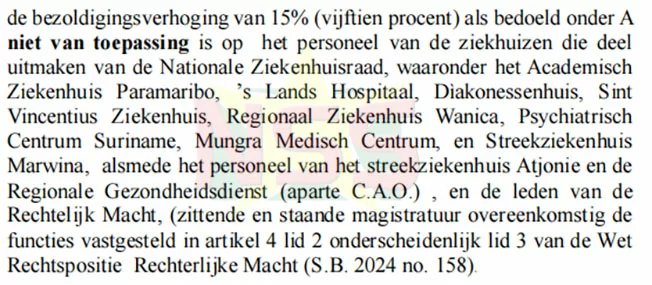
Ziekenhuispersoneel en RGD krijgen geen 15%, nieuwe loonreeks op komst
On September 8, the Surinamese government implemented a new pay resolution that delivers a 15% general wage increase to most civil servants, effective September 1, but carves out key exceptions for thousands of workers across the country’s healthcare and judicial sectors.
Nearly all staff at the nation’s largest public and private non-profit hospitals, as well as employees of the Regional Health Service (RGD), will not receive the across-the-board salary bump. The government justifies this exclusion by announcing that a custom, standalone pay scale will be rolled out for this group of healthcare workers in the near future.
The list of excluded institutions covers almost every major healthcare provider in Suriname: the National Hospital Council-affiliated Academic Hospital Paramaribo, ‘s Lands Hospitaal, Diakonessenhuis, Sint Vincentius Hospital, Wanica Regional Hospital, the Suriname Psychiatric Center, Mungra Medical Center, Marwina District Hospital, and Atjoni District Hospital. The RGD, which operates under its own separate collective labor agreement, is also included in the exemption.
While the government explicitly confirms that a revised pay structure is forthcoming for these healthcare workers, the new resolution offers no concrete details on the timeline for implementation, the size of potential adjustments, or the structure of the new salary scales. This leaves thousands of frontline healthcare employees without clarity on when or how much their pay will be adjusted.
For all other civil servants and equivalent public sector workers, the 15% monthly salary increase was formalized through the September 8 resolution following collective bargaining negotiations with multiple labor unions. The increased pay will be issued to eligible workers at the end of September.
Beyond the healthcare sector, the judiciary forms a second category of excluded workers, but for a distinct procedural reason. President Jennifer Simons reached an agreement with a delegation led by the President of the High Court of Justice that the general 15% increase would not apply to judicial branch members. Separate tailored pay arrangements are currently being developed for both sitting and standing magistrates.
-
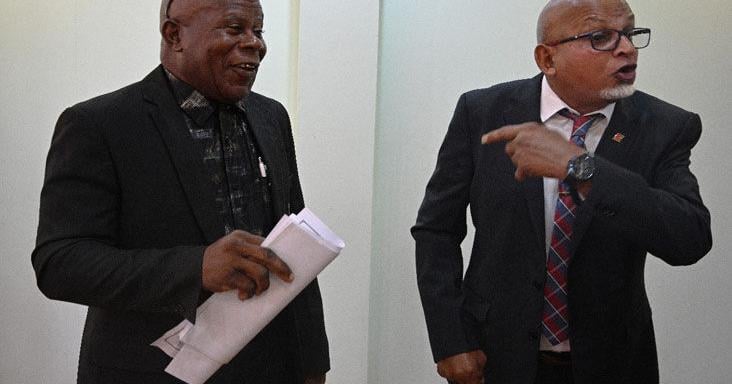
FIRE IN THE CHAMBER
A routine special statutory meeting at Trinidad and Tobago’s Siparia Borough Corporation devolved into shouting, personal insults, and a mass walkout on Thursday, as bitter partisan tensions over committee leadership selection boiled over into open conflict.
The confrontation centers on long-simmering political shifts that have shifted control of the borough to the governing People’s National Movement (PNM). In recent months, two former United National Congress (UNC) members – ex-alderman Victor Roberts and Siparia West/Fyzabad councillor Jason Ali – crossed the floor to join the PNM, and the passing of sitting UNC councillor Romona Victor cemented the PNM’s new majority in the chamber. Thursday’s meeting was convened for the core purpose of selecting chairs and members for all of the corporation’s internal committees, a routine post-shift restructuring that quickly turned contentious.
PNM councillors won every single chair position for the four statutory standing committees, covering key portfolios including finance, planning, resource allocation, personnel, public health, and physical infrastructure. When the meeting moved to select leadership for non-standing committees, Mayor Doonath Mayrhoo introduced a formal guidance letter from Rural Development and Local Government Minister Khadijah Ameen, the corporation’s line minister, to resolve a long-standing ambiguity in the body’s Standing Orders.
Ameen’s letter addressed the open question of whether non-standing committee chairs are selected by the Mayor or appointed via full council vote, grounding her interpretation in Section 68(1) of the Municipal Corporations Act and Standing Order 47, which grants the Minister authority to resolve ambiguities in procedural rules. Her ruling clarified that selection of all non-standing committee and subcommittee chairs falls exclusively to the Mayor, with no requirement for council approval, ratification, or input. Any council resolution seeking to override this power, Ameen noted, would be inconsistent with existing rules and legally invalid.
This interpretation was immediately rejected by Roberts, who stated he had no confidence in either the Minister’s ruling or the advice of Ministry legal director attorney Rondell Donowa, who attended the meeting at the CEO’s request on the Minister’s direction to provide clarifications. When Mayrhoo attempted to invite Donowa to address the chamber to explain the legal basis for the guidance, PNM alderman Christopher Encinas blocked the move, saying the council did not recognize Donowa’s authority to offer input in the meeting, despite holding him in personal high regard.
PNM councillors then requested access to the full text of Ameen’s letter to seek independent legal advice, before Encinas unilaterally announced an adjournment and called on his fellow PNM representatives to exit the chamber. Before the walkout, Roberts had already attempted to introduce a motion to bar both Donowa and journalists from the meeting, a move blocked by corporate secretary Amirah Mohammed, who confirmed the Mayor holds full authority to allow both parties to attend, and that the meeting was legally open to the public.
As the PNM group prepared to leave, the confrontation erupted into open personal insults between Mayrhoo and Roberts. Roberts accused the Mayor of bullying and indiscipline, declaring Mayrhoo unfit to hold his position and calling on the PNM delegation to exit. Mayrhoo shot back with scathing personal remarks, labeling the PNM group a “set of failures” that deserved their 2020 general election defeat and predicting another loss in the upcoming local government elections. He went on to label Roberts a traitor who had been appointed by the UNC, saying the PNM was using him as a “doormat” and had refused to give him a committee chair position despite his defection.
The bitter confrontation is the latest flashpoint in tensions over Roberts’ party switch. Roberts resigned from the UNC last year and confirmed his defection to the PNM after appearing at the party’s 2023 sports and family day event. In May of this year, multiple UNC members held public demonstrations outside the corporation calling for Roberts to resign his seat. After the walkout, Mayrhoo reaffirmed his commitment to keeping the corporation operational, saying he would continue to stand up for the interests of the Siparia borough and maintain governance. The walkout leaves the committee selection process unfinished, with no clear timeline for reconvening the meeting to resolve the procedural deadlock.
-
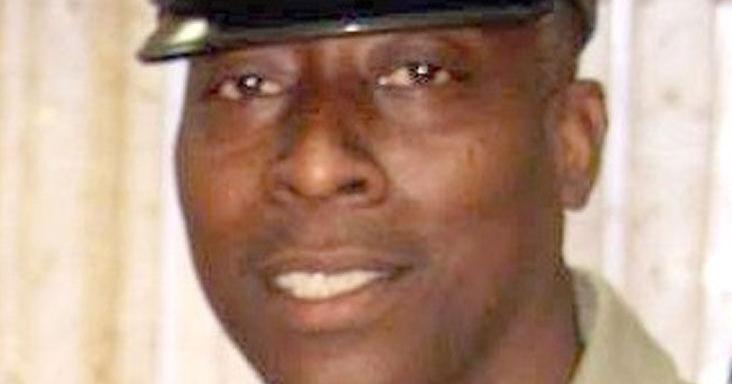
Court ruling triggers prison review
A recent High Court ruling awarding over TT$2.5 million in damages to a former female inmate who endured sexual abuse at the hands of a serving prison officer has sparked urgent calls for a comprehensive audit of operational, administrative, and record-keeping frameworks across Trinidad and Tobago’s national prison service, according to the Prison Officers’ Association of Trinidad and Tobago (POATT).
In the wake of the landmark judgment, acting Prisons Commissioner Elvin Scanterbury has already launched an internal review into all case-related prison documentation, with plans to conduct a full line-by-line review of the court’s ruling to map the alleged sequence of events and identify any required disciplinary or policy changes.
Speaking exclusively to local outlet *Express* on Thursday, POATT General Secretary Lester Logie acknowledged the gravity of the allegations, noting that public scrutiny of the case has already taken a significant toll on the accused officer and their family. However, he stopped short of drawing definitive conclusions, explaining that he has not yet reviewed the full court judgment to understand the legal basis for the damages award or the court’s specific factual findings.
Logie highlighted several systemic red flags raised by the case, starting with gaps in administrative accountability. “The devil is in the details. I would like to read the judgment to see exactly what the justice said,” he explained, pointing to concerns over missing or incomplete prison records and documentation that could have been critical to the court proceedings. He also questioned why the sexual assault allegations, a criminal offence under Trinidad and Tobago law, were resolved through a civil claim rather than criminal prosecution, saying, “Why this matter was not brought before [the criminal courts] beats me.”
Drawing on established prison protocol, Logie noted that the alleged incident reportedly occurred in the early hours of the morning, a window when strict movement controls are already in place. Under standard policy, inmates are not permitted to leave their cells as early as 4 a.m. unless they are assigned to work in the facility’s ration room, and all off-hours movements require pre-approval from supervisory staff, formal logging in official records, and specific key access that only senior supervisors can grant. “We have procedures in place that have a check and balance,” Logie said, adding that all relevant documentation of these protocols and movements must be fully examined as part of the internal review.
Another key point of concern for Logie is the quality of legal representation provided to the Prison Service and the accused officer during the civil proceedings. Based on his current understanding of the case, the accused officer never provided in-person testimony, and the court ruled solely on the basis of sworn affidavits submitted by both parties. “My opinion on the matter, so far, is that this matter probably wasn’t defended well,” Logie said. He added that the physical layout of prison dorms and common areas, as well as the presence of other inmates and staff on duty at the time of the alleged incident, are critical details that should have been brought forward to the court.
Logie emphasized he is not seeking to downplay or dismiss the serious sexual abuse allegations, stressing that the claims demand full, transparent investigation. He said he supports Scanterbury’s internal review and hopes the process will not only bring clarity to the current case but also identify gaps in existing policies that can be closed to prevent similar allegations and systemic failures from arising in the future.
-
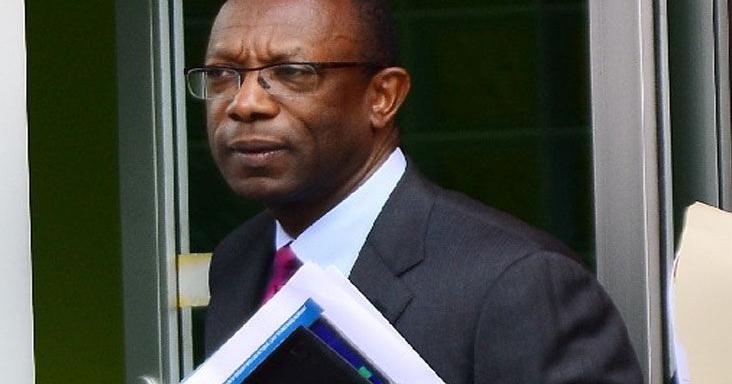
‘Nelson’s conviction caused losses’
A high-stakes legal battle over a $96 million compensation claim against the state has reached the Court of Appeal, with the Office of the Attorney General arguing that the claimant, British King’s Counsel Vincent Nelson, is essentially seeking public payout for harms directly resulting from his own criminal conviction.
The case stems from a 2017 indemnity agreement Nelson struck with the Trinidad and Tobago government, under which he agreed to cooperate as an informer and prosecution witness in an investigation into an alleged kickbacks-for-legal-fees conspiracy targeting former attorney general Anand Ramlogan, SC, and former United National Congress senator Gerald Ramdeen. In exchange, the then-attorney general Faris Al-Rawi committed to recommending to the independent Director of Public Prosecutions (DPP) that no criminal charges be brought against Nelson for matters covered in his notarized statement.
After Nelson pleaded guilty to conspiracy to commit money laundering and corruption in 2019, he was stripped of his ability to practice law by the UK Bar Standards Board, leading to millions in alleged lost income and related financial losses. Nelson argues that these harms trace back to the government’s breach of the 2017 agreement: former prime minister Stuart Young disclosed his confidential notarized statement to the UK’s National Crime Agency (NCA) without following formal procedural requirements under the Mutual Assistance in Criminal Matters Act or other relevant legislation. He contends the High Court erred in dismissing his full claim after finding a breach of contract, arguing he is at minimum entitled to nominal damages or a formal declaration of state wrongdoing.
Representing the Attorney General’s Office, King’s Counsel Tom Poole laid out the state’s defense before a three-judge panel of the Court of Appeal led by Justices Gillian Lucky, Carla Brown-Antoine and Maria Wilson. Poole emphasized that the core of the case turns on a clear legal distinction: Nelson’s loss of earnings and professional standing stem directly from his own criminal conviction and the resulting regulatory action by the Bar Standards Board, not from the government’s disclosure of his statement.
“There’s a danger of conflating confidentiality with immunity,” Poole told the court, arguing Nelson has misinterpreted the 2017 agreement to stretch far beyond what parties actually negotiated. Poole explained that the agreement only guaranteed confidentiality protections for Nelson’s statement, not a blanket promise of immunity from prosecution. Under clause four of the agreement, Al-Rawi only committed to making a recommendation to the DPP – a distinction that reflected the constitutional independence of the DPP’s prosecutorial authority. Al-Rawi made clear in his evidence he could not grant immunity unilaterally, as that power rests solely with the DPP, Poole added.
Poole further noted that Nelson’s own pre-action correspondence explicitly acknowledged he was barred from practicing law because the Bar Standards Board refused to issue him a practising certificate following his conviction. “That is his own explanation for why he could not practise,” Poole said, adding that the “immediate and operative impediment” to Nelson’s claimed income is his conviction, not the NCA disclosure.
The state’s position aligns with a key finding from the initial High Court hearing: while Justice Jacqueline Wilson, KC, ruled the government did breach the confidentiality terms of the agreement by disclosing Nelson’s statement, she concluded the losses Nelson claimed fell outside the scope of the 2017 indemnity, leading her to dismiss the full $96 million claim. Poole told the appeal panel the High Court judge was correct on this central point.
Nelson’s appeal also challenges the High Court’s finding that his potential liability to UK tax authorities is unrelated to the NCA disclosure. His claim includes compensation for lost earnings, lost insurance benefits, a $2.5 million conviction fine, and potential tax liabilities stemming from his guilty plea.
In addition to defending the High Court’s dismissal of Nelson’s claim, the Attorney General’s Office has filed a cross-appeal, challenging the High Court’s core finding that the disclosure of Nelson’s notarized statement amounted to a breach of the 2017 agreement.
The case carries broader procedural context: after Nelson refused to testify in the criminal case against Ramlogan and Ramdeen until his civil claim was resolved, the DPP discontinued all charges against the two men in October 2022, though the prosecution reserved the right to reinstate proceedings at a later date.
Following the conclusion of legal submissions from both parties, the Court of Appeal panel has reserved its ruling, with Justice Lucky confirming that a judgment will be issued no later than six months from the hearing.