作者: admin

  • Police Call for Stronger Enforcement of Noise-Pollution Laws

    Police Call for Stronger Enforcement of Noise-Pollution Laws

    Across Antigua and Barbuda, persistent public outcry over unregulated excessive noise from motorists playing blaring music near sensitive public spaces has pushed top law enforcement officials to call for strengthened enforcement of the country’s existing noise abatement regulations. Superintendent Elson Quammie, who leads the nation’s Traffic Department, outlined the core issue in a recent appearance on the Browne and Browne Show, noting that while the legal framework to curb excessive noise is already in place, inconsistent application of the law has allowed the problem to escalate.

    “We have the Noise Abatement Act, but what I would say is that there is just a lack of enforcement,” Quammie stated during the public discussion. The traffic chief argued that current practices, which often allow violators to avoid meaningful consequences after disturbing residents and visitors in quiet zones, must be revised. Instead of letting offenders go with informal warnings, Quammie stressed that repeat and serious violators should be brought before the court to face formal penalties for their violations.

    Quammie called out specific high-priority areas that have been disproportionately impacted by the noise crisis. He expressed particular alarm over incidents near the Government House roundabout and houses of worship, emphasizing that the seat of national government should not be subjected to unnecessary disruptive noise. He added that schools and other officially designated quiet zones, which serve vulnerable or focused community functions, also demand urgent protection from excessive noise pollution.

    The public conversation on the issue was sparked by a recent high-profile complaint: a motorist reportedly blared music laced with offensive language at extreme volume while dropping off a family member at a local supermarket parking lot. Discussion panelists joined Quammie in highlighting that the problem extends far beyond residential neighborhoods, noting that disruptive noise has even interfered with official government events hosted near the Government House roundabout. In some extreme cases, panelists confirmed, official events have required traffic to be diverted away from the roundabout entirely to avoid the constant loud noise from passing or parked motorists.

    As of the current discussion, no new legislative penalties or island-wide enforcement campaigns have been formally announced. Even so, Quammie’s public remarks signal a potential policy shift, with local police expected to begin making far broader use of the existing Noise Abatement Act and increase the number of violators referred for court prosecution in the coming months.

  • Dominica State College reports strong growth in 2026 enrolment

    Dominica State College reports strong growth in 2026 enrolment

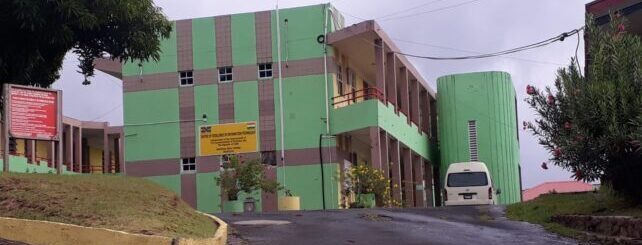
    Dominica State College (DSC), the Caribbean nation’s leading tertiary education institution, has announced a remarkable surge in student enrollment for its 2026 academic intake, with multiple long-running and recently revived programs posting their highest participation numbers in the college’s history.

    Data released by the institution shows broad-based growth across science, business, legal, and technical fields. Enrollment in Biology jumped from 24 students in the 2025 intake to 38 this year. The Bachelor of Science in Business Management and the Paralegal Studies program also hit all-time enrollment highs, welcoming 21 and 29 new and returning students respectively. The Pre-Health program, a critical pathway for learners pursuing medical and allied health careers, attracted a total of 74 students, while two engineering programs hit new enrollment milestones: Automobile Engineering enrolled 23 students, marking the first time the program has crossed 12 accepted learners, and Electrical Engineering hit 26 students, surpassing its previous record of 15.

    Psychology, another fast-growing program, also reached a historic enrollment peak of 21 students, more than 75% higher than its previous high of 12. Meanwhile, Chemistry welcomed its first cohort of students since 2024, with 12 learners joining the 2026 intake.

    Kimberly Benjamin, DSC’s Marketing and Communications Officer, noted that the Associate Degree in Business Administration remains one of the college’s most popular programs, drawing a total of 102 students across all its specialized concentrations this year. This represents a substantial 31% increase from the 78 students enrolled in the program in 2025.

    Beyond growth in existing programs, DSC is also seeing a resurgence of student interest in academic disciplines that were paused in recent years. Physics is being offered again for the first time since 2022, while Geography, brought back last year after a hiatus, is running for a second consecutive year. This extended run signals steady, sustained demand from students for a broader selection of liberal arts and science coursework.

    One of the most notable shifts in the 2026 intake is the dramatic rise in the number of learners seeking to re-enroll and complete interrupted studies. DSC received 239 re-matriculation applications for the 2026 academic year, and accepted 110 of those applicants. In comparison, the college received just 167 re-matriculation applications and accepted 51 last year, meaning acceptances more than doubled year-over-year.

    Benjamin says this sharp increase reflects a growing trend of adult learners seeking second chances to complete degrees they started years ago, or to upskill by pursuing new academic pathways. As the college prepares to launch the 2026/2027 academic year, this enrollment boom has boosted institutional confidence in its mission to deliver accessible, career-relevant, high-quality tertiary education to all learners across Dominica. Benjamin added that the growing demand from adult learners also highlights the urgent need to expand dedicated support systems and flexible academic pathways for this fast-growing student demographic, particularly for those pursuing associate degree programs.

  • Government Considering Jolly Beach Lagoon for Kayaking and Water Sports

    Government Considering Jolly Beach Lagoon for Kayaking and Water Sports

    A new tourism-focused development initiative is being explored by the government of Antigua and Barbuda, which aims to convert an existing natural pond behind the popular Jolly Beach into a purpose-built recreational lagoon for outdoor water activities including kayaking. Prime Minister Gaston Browne first revealed this conceptual plan during a public appearance on the locally broadcast Browne and Browne Show, where he led a broader discussion on the rehabilitation of underutilized ponds and wetlands across the country and their potential conversion for public recreational use.

    During his remarks, Browne highlighted that the Jolly Beach pond was selected as a candidate site for a lagoon facility matching the model of similar recreational water spaces the administration has evaluated for other locations. He laid out the core vision for the project: the pond would undergo dredging to increase its depth, followed by infrastructural upgrades to reshape it into a scenic, activity-friendly lagoon capable of hosting kayaking, casual paddling, and a range of other non-motorized water sports.

    If advanced and brought to completion, the development is expected to deliver a significant boost to the Jolly Beach region’s tourism sector. By adding a new unique recreational attraction to the area’s existing offerings, the project would expand the diversity of activities available to both domestic visitors and international tourists, supporting longer stays and greater local economic spillover from tourism activity.

    Despite the outline of the concept, however, no key details about the project’s next steps have been released to the public. Prime Minister Browne declined to confirm whether preliminary environmental impact or engineering feasibility studies have already been conducted for the proposal. No public estimates have been shared regarding the total projected construction cost, a timeline for breaking ground and completing work, or any information about potential public or private operators that would manage the lagoon once completed. These omissions confirm the plan remains in its very early conceptual phase, with no formal approval or implementation timeline set as of yet.

  • Antigua and Barbuda Now Has About 50,000 Registered Vehicles

    Antigua and Barbuda Now Has About 50,000 Registered Vehicles

    The Caribbean nation of Antigua and Barbuda is facing mounting transportation pressures as its total number of officially registered vehicles pushes past the 49,000 mark, closing in on a round 50,000 threshold. This new vehicle count estimate was shared by the top official of the country’s Traffic Department, Superintendent Elson Quammie, during a recent appearance on the locally broadcast Browne and Browne Show, when he was asked to share an update on how many vehicles are currently operating across the country’s road network.

    When responding to the question, Quammie confirmed that the national registered fleet is “almost 50,000 now”, and noted that the final, fully audited actual number may end up being slightly higher than this preliminary estimate.

    Antigua and Barbuda’s Prime Minister Gaston Browne has previously raised observations that the small island nation may hold one of the highest per capita vehicle ownership rates in the region, if not globally. That trend is showing no signs of slowing: Quammie confirmed that new shipments of vehicles arrive at the country’s ports every single month, adding incremental strain to a road network that is already operating beyond its intended capacity.

    This steady growth in the national vehicle fleet creates cascading challenges across multiple areas of daily life and public planning. The most immediate impacts are already visible in the form of worsening peak-hour traffic congestion, elevated risks to road safety as more drivers share narrower roadways, growing shortages of available parking in population and commercial centers, and increased demand for new road construction projects and more frequent maintenance work on existing infrastructure to handle heavier traffic volumes.

    In response to these emerging strains, national law enforcement agencies have rolled out new traffic management measures, including increased police deployments at high-traffic major intersections, school zones, and the country’s busiest road corridors. The expanded presence is aimed at improving overall traffic flow, reducing unsafe driving behavior, and encouraging all motorists to comply fully with national traffic regulations.

    Notably, Quammie did not provide a detailed geographic breakdown of vehicle registrations between the nation’s two main islands, Antigua and Barbuda, nor did he share data on how many of the 50,000 registered vehicles are currently classified as actively in use on public roads.

  • PM Browne Says He Would Not Actively Support Domestic Banks Acquiring FCIB

    PM Browne Says He Would Not Actively Support Domestic Banks Acquiring FCIB

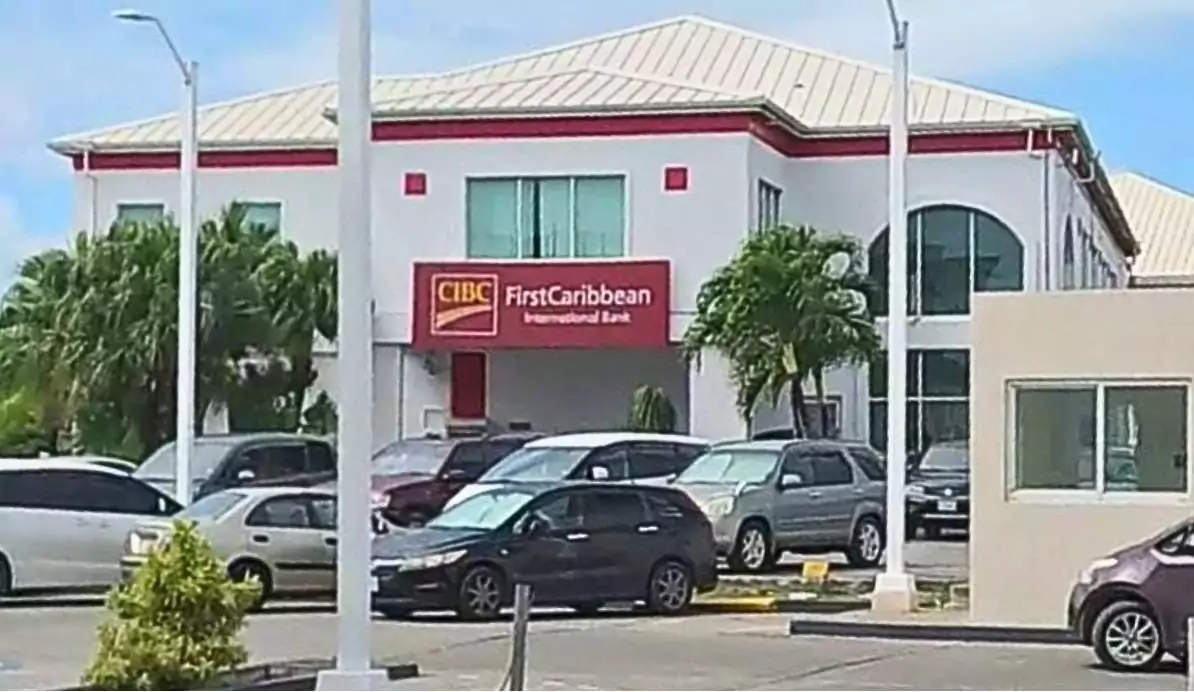
    In a recent public appearance on the *Browne and Browne Show*, Gaston Browne, Prime Minister of Antigua and Barbuda, has publicly stated he will not actively back a potential acquisition of FirstCaribbean International Bank (FCIB) by a domestic financial entity, citing serious risks of excessive consolidation in the country’s banking sector. According to Browne, an undisclosed local bank has already approached his government with an unusual request: to revoke FCIB’s existing banking license, a move that would clear the path for the domestic institution to purchase FCIB’s local operations. The prime minister has chosen not to release the name of the institution that made this request, and no concrete details of the proposed deal—including a formal offer, agreed purchase price, or structured acquisition timeline—have been made public to date. While Browne emphasized that he remains a committed supporter of expanding local ownership across Antigua and Barbuda’s banking industry, he stressed that growing market power among a small cohort of domestic banks would carry dangerous consequences for consumers and market competition. “As much as I’m a proponent for local ownership, I’m very concerned about any further concentration of the market,” he told listeners during the broadcast. Browne also pulled back the curtain on longstanding service quality issues plaguing many of the nation’s local banks, calling out common consumer pain points such as frequently empty automated teller machines, exorbitant service fees, and a widespread reluctance among domestic lenders to issue credit to consumers and small businesses. He warned that allowing further consolidation through the acquisition of FCIB would create large, entrenched financial institutions that face little competitive pressure to upgrade their service standards for customers. Contrary to the push for domestic acquisition, Browne noted that larger multinational banks, such as the Bank of Butterfield, are capable of offering a range of specialized financial services that smaller domestic players are often unable to provide, most notably critical support for trade-related instruments like letters of credit that underpin local business activity. Importantly, the prime minister clarified that his opposition is not an outright block on the deal: he has no intention of legally preventing a domestic institution from moving forward with the acquisition, but he will not campaign for the transaction, use government influence to facilitate it, or provide any active support for the proposal. “As much as I said to them that I would not block them from acquiring it, I would not actively promote it,” he reaffirmed during the program.

  • FOD calls for year-round student support

    FOD calls for year-round student support

    As thousands of students across Barbados stepped back into classrooms for the start of a new academic year, the country’s main opposition Friends of Democracy Party (FOD) is pressing the ruling administration to turn festive opening events into year-round, actionable support for learners of all needs. In a public address marking the 2024 academic launch, FOD education spokesperson Patricia White opened with words of encouragement for students navigating new grades and new challenges, urging young people to hold fast to their ambitions regardless of any barriers they may face.

    “As you begin a new school year, I encourage you to do so with pride, confidence, and a renewed sense of purpose,” White stated. “Do not allow your circumstances to limit your dreams or define your future. Your present situation is not your final destination.”

    But behind the encouraging words, White outlined a series of unaddressed gaps in the government’s education planning that she says are putting vulnerable students at unnecessary disadvantage. Speaking exclusively to Barbados TODAY, she questioned whether the popular back-to-school celebrations, which included traditional stiltwalking performances and musical events that draw crowds to campuses, would translate into consistent, meaningful support for all students – including the growing population of neurodivergent learners who require specialized accommodations.

    “I love the whole shebang with the stiltwalkers and the music, but I also need them to focus on guaranteeing that they will give the children the support that they require all throughout the school year,” she explained. “My central concerns are really how this will translate into tangible and sustainable support for students who are struggling with conditions like ADHD.”

    One of the most high-profile failures White highlighted is the ongoing crisis of deferred school maintenance, which has already disrupted the start of the academic term for one primary school. Wesley Hall Primary School was forced to close its doors immediately before classes were set to begin, after unfinished summer refurbishment work left the campus unsafe, compounded by a documented rodent infestation that rendered parts of the building unfit for students. White called this pattern of last-minute delays unacceptable, noting that disruptive campus displacements have become a regular back-to-school occurrence year after year.

    “Children deserve better than to be delayed in their return to school or pushed to another campus due to delays in refurbishment,” White argued. “Every year this happens. By now, the government should have established a preventative maintenance programme that reduces the likelihood of these displacements.” To address the recurring issue, she proposed implementing a continuous auditing process that tracks contractor progress throughout the summer break, rather than waiting to conduct final inspections on the eve of the new term, when problems are discovered too late to fix before classes start.

    White did offer public praise for one new government initiative: the national school breakfast programme, which aims to provide free nutritious meals to students who would otherwise attend class on empty stomachs. She noted that long-term research has consistently linked food insecurity to poor academic performance and reduced focus in the classroom, making the programme a critical step forward for supporting low-income learners. “Many students have gone to school on empty stomachs in the past, and you simply cannot learn or focus if you are hungry,” she said. “A nutritious meal gives them a solid start to the day. I just hope it works out well and remains sustainable.”

    The opposition spokesperson also called on the Ministry of Education to release full, clear details of its new Universal Access to Education policy, specifically pointing to widespread confusion around the administrative process for nursery school registration. White emphasized that early childhood education is proven to dramatically improve long-term academic outcomes for children, but the lack of transparency around the government’s universal access framework is leaving many families uncertain how to enroll their young children. “While I welcome the initiative, we are still completely lost on the administrative framework surrounding it,” White said. “Research clearly shows that children who enter nursery or preschool at an early age are far better equipped to succeed later in life, but we need full transparency on how this will work practically.”

  • Baptiste: Saint Lucia rejected four US-proposed third-country transfers

    Baptiste: Saint Lucia rejected four US-proposed third-country transfers

    In a public pre-Cabinet briefing held Monday, Saint Lucia’s External Affairs Minister Alva Baptiste has confirmed that the Caribbean nation turned down four of 10 third-country nationals proposed by the United States for transfer under a bilateral temporary relocation agreement, marking the first test of the arrangement between the two nations.

    Following the rejection, six approved migrants arrived in Saint Lucia last week. Baptiste disclosed that the new arrivals hold citizenship from nations across Asia, Africa, and the Caribbean, though their exact nationalities remain undisclosed for privacy. Of the six currently in the country, two have already expressed a desire to return to their home countries, with the Saint Lucian government now coordinating with their respective national embassies to coordinate this voluntary repatriation process. The remaining four have stated that they wish to stay in Saint Lucia for the immediate future.

    To clarify the terms of the agreement for the public, Baptiste repeatedly emphasized that Saint Lucia maintains full, unconditional discretion to vet and reject any individual the U.S. puts forward for relocation, pushing back against early misinformation that the nation had surrendered this sovereign authority. “In this first case, Saint Lucia did not accept all ten individuals that the US had submitted,” he noted during the briefing.

    A third-country national, by definition, refers to an individual deported from one country to a third state that is not their country of origin. Under the two-year temporary agreement between Washington and Castries, Saint Lucia can accept up to 10 third-country nationals per three-month period. Baptiste stressed that the arrangement is not a permanent resettlement program, but a temporary measure to support people facing precarious circumstances.

    Addressing widespread public concern over potential risks to national security and public safety that circulated in local discourse following the transfer, Baptiste confirmed that comprehensive government background checks found no evidence any of the six arrivals posed a threat. “They are certainly not criminals as has been portrayed in some circles,” he said, adding that the group are people who have faced extraordinary hardship related to their immigration status in the U.S. and are now seeking a chance to rebuild their lives with temporary safe haven.

    The transfer and reception process unfolded without incident, Baptiste confirmed, with multiple Saint Lucian government agencies — including the ministries of External Affairs, Health, Equity, and National Security — coordinating alongside international partners to manage the arrival. All program costs are covered by the U.S. government, with additional operational and logistics support provided by international partners, including assistance for voluntary repatriation. Migrants will remain housed under arrangements managed by the Saint Lucian government and its partners, with voluntary repatriation remaining an open option for any individual who chooses to return home at a later date.

    Baptiste also pushed back against criticism that the arrangement would strain the small developing nation’s existing social and economic resources. “We are fully cognisant that as a developing country we have real social and economic challenges, and this government does not minimise them, but our responsibility to the people of Saint Lucia and our responsibility to uphold the principles of human dignity are not competing principles. We can and must do both,” he said.

    The first transfer came after months of negotiations between Saint Lucia and U.S. officials to assess the Caribbean nation’s capacity to participate in the program.

    Speaking alongside Baptiste on Monday, Saint Lucia Prime Minister Philip J. Pierre — who also currently serves as Chairman of the Caribbean Community (CARICOM) — clarified the regional bloc’s position on the agreement. Pierre confirmed that while the arrangement was discussed at the regional level, CARICOM member states retain full sovereign authority to make independent decisions on whether to participate in such programs.

    “In terms of political policies, CARICOM member states make their own decisions. There was discussion; people discussed the agreement, but it was left to individual governments to take the decisions that they felt were right and proper,” Pierre said.

    CARICOM leaders have previously raised collective concerns about the capacity of small island developing states to manage third-country national transit arrangements. They have stressed that any such agreements must not disrupt regional security or divert critical public resources and services away from member states’ own citizens.

    Operationally, the United Nations’ International Organisation for Migration manages on-the-ground implementation of the program in participating countries, while individual national governments retain full authority over all core decisions including admission, legal status, protection, and removal of relocated individuals.

  • Contractor ‘sorry’ for assaulting health minister

    Contractor ‘sorry’ for assaulting health minister

    A 56-year-old Barbadian contractor has issued a full public apology following his court appearance this week on charges of assaulting and making threatening remarks to Minister of Health Senator Lisa Cummins, attributing his outburst to overwhelming personal stress tied to a pending school project deadline.

    Michael Alphonsa Harris, a resident of Seales Avenue in Goodland, St Michael, spoke to reporters immediately after his Tuesday hearing, expressing profound remorse for the altercation that took place on Saturday. The confrontation unfolded after Harris encountered the health minister, capping off an ongoing disagreement between the two.

    “I want to say it nationally: I apologise for my actions,” Harris told reporters. “But my actions happened out of frustration. I was under a lot of pressure to get my school project finished.”

    Detectives from the Black Rock Police Station took Harris into custody and filed the two charges against him following the incident. He appeared before Magistrate Jared Richards at the Traffic Court, where the judge imposed a three-month peace bond and opted not to record a formal conviction against him.

    Under the terms of the court order, any violation of the peace requirement over the next three months would trigger a $2,000 fine or one-month prison sentence for the assault charge, plus an immediate $1,500 fine or an additional one-month prison term for the threatening language charge.

    Harris opened up about his experience spending a night in custody at Dodds Prison ahead of his morning court hearing, noting that while law enforcement and medical staff treated him with courtesy and respect throughout his detainment, the ordeal left a profound mark on him.

    “When I reached the precinct, everyone greeted me with respect. Everybody took care of me very well and told me: ‘Just be strong overnight, you’re gonna be good. Tomorrow you’re gonna get to go home,’” he recounted. “From this morning until I got up, saw a doctor, saw a nurse, checked my pressure… It was an experience that I would not want to go back through again. But in life you learn from that experience… right there, you see it and understand the system.”

    A particularly lasting impact came from Harris’s observation of the other detainees held in the same corridor during his custody. As the oldest person in that section of the facility, he found himself surrounded by young men facing severe criminal charges—a sight that left him deeply distressed.

    “I was there all along in the corridor… I was the oldest guy on that corridor,” Harris said. “I see all the youngsters on that corridor, and it was painful to see so many young men in jail.”

    Drawing on the lessons from his own mistake and what he witnessed behind bars, Harris shared a public message urging young people to avoid impulsive actions that could lead to incarceration and keep themselves out of legal trouble.

    “The young men got to pull up their shoes, as my mother used to tell me, you got to keep your peace,” he advised.

    Now entering the three-month court-supervised peace bond period, Harris says he is fully committed to abiding by the order, meeting any financial obligations that may arise, and closing this troubling chapter of his life for good.

  • Public’s Help Sought to Identify Individual After Attempted Break-In at Nut Grove Home

    Public’s Help Sought to Identify Individual After Attempted Break-In at Nut Grove Home

    Local law enforcement authorities are turning to the community for assistance after a would-be burglar targeted a private home in the quiet Nut Grove neighborhood earlier this week. According to initial police reports, the unidentified suspect attempted to force entry into the residential property at an undetermined time, but the attempt was ultimately unsuccessful. No items were reported stolen from the home, and no residents were injured during the incident. Investigators have released limited descriptive details about the individual of interest and are asking any local residents or passersby who may have noticed suspicious activity in the Nut Grove area around the time of the attempted break-in to come forward with any information, no matter how minor it may seem. Tips from the public can be submitted anonymously through the local police department’s dedicated tip line or official online portal, and authorities note that even small pieces of information could prove critical to identifying the suspect and closing the case. The incident has sparked minor concerns among local residents about neighborhood safety, with law enforcement urging residents to remain vigilant, lock all doors and windows when away from home, and report any unusual activity to police immediately.

  • Hoe groot is Afrika echt? Waarom de VN stemde om de wereldkaart te veranderen

    Hoe groot is Afrika echt? Waarom de VN stemde om de wereldkaart te veranderen

    On September 8, the United Nations General Assembly took a landmark step to address centuries of geographic bias in global mapping, approving a resolution led by African nations that encourages member states to adopt the Equal Earth map projection — a alternative that corrects the size distortions that have minimized the Global South on traditional maps for hundreds of years.

    The resolution, which won backing from 164 member states, faces only one opposing vote from the United States, with six Eastern European nations — Serbia, Estonia, Georgia, Lithuania, Moldova, and Ukraine — abstaining from the vote. The core goal of the measure is to promote a more geographically accurate representation of the world’s continents, replacing the widely used Mercator projection, which was originally developed in 1569 by Flemish cartographer Gerardus Mercator for maritime navigation.

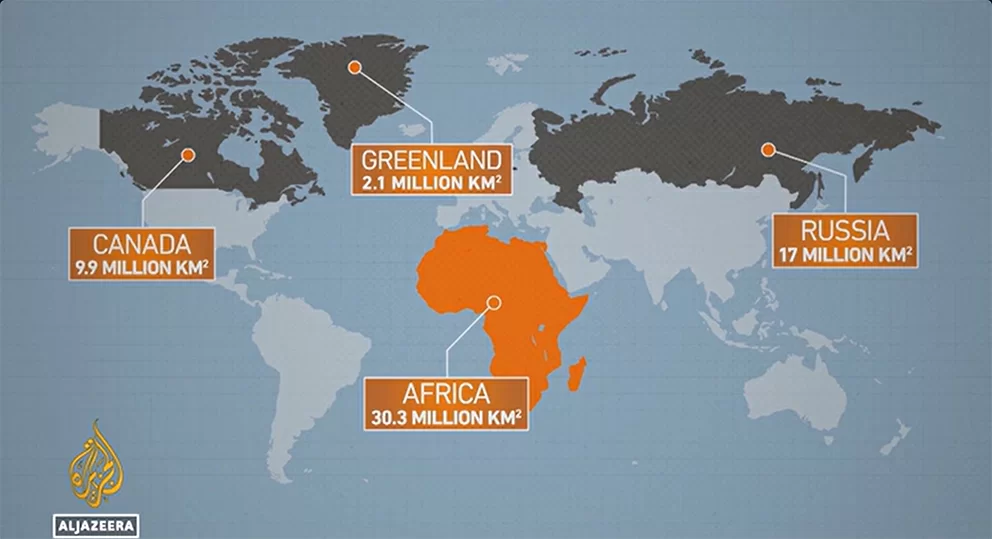
    For centuries, the Mercator projection’s design has skewed public perception of global landmasses. Created to preserve straight lines for ocean navigation, it exaggerates the size of land masses closer to the poles while shrinking territories near the equator. This distortion leaves northern, wealthier regions appearing far larger than they actually are relative to equatorial and southern nations. For example, on Mercator maps, Africa appears roughly the same size as Greenland, but in reality, Africa is 14 times larger than the Arctic island. In actual area, Africa spans 30.3 million square kilometers — large enough to fit the entire United States, China, India, and most of Europe within its borders. Combined, the four regions disproportionately shrunk by Mercator — Africa, Latin America, South Asia, and Oceania — cover more than 64 million square kilometers, over 40% of the world’s total land area. By contrast, the entire continent of Europe only measures 10.2 million square kilometers.

    The Equal Earth projection, launched in 2018 by three cartographers from the Environmental Systems Research Institute, U.S. National Park Service, and Australia’s Monash University, fixes this long-standing bias. Co-creator Bojan Savric explained in a 2025 interview with AFP that the projection preserves the relative size of all continents while retaining accurate representations of their shapes, matching how landmasses appear on a three-dimensional globe.

    Togo’s Foreign Minister Robert Dussey, whose country led the resolution effort, emphasized that maps are far more than navigational tools. “Maps shape education, fuel public imagination, and shape collective global perceptions,” he said, adding that the adopted resolution “affirms the African reality” that has been erased and minimized for centuries.

    Reactions to the resolution have been largely positive among supporting nations. France, a co-sponsor of the text, has already announced it will abandon the Mercator projection for official use. French Foreign Minister Jean-Noel Barrot noted that the traditional projection gives the U.S., Russia, and China “disproportionate visual dominance over Africa, Latin America, or Southeast Asia,” while perpetuating the false illusion that Greenland is nearly as large as Africa. “Changing maps will not change the world on its own,” Barrot said. “But correcting a distorted representation is already an act of truth.”

    The resolution faced sharp criticism from the U.S. delegation. U.S. representative Yaryna Ferencevych argued that the debate over 16th-century map projections distracts the UN from addressing pressing global issues, claiming the resolution is evidence the body “is losing its credibility.”

    Notably, the UN resolution is not legally binding for member states. The world body has stressed it does not ban the Mercator projection or mandate a universal replacement, and instead only encourages governments and international institutions worldwide to adopt the Equal Earth projection as a new standard for more accurate geographic representation.