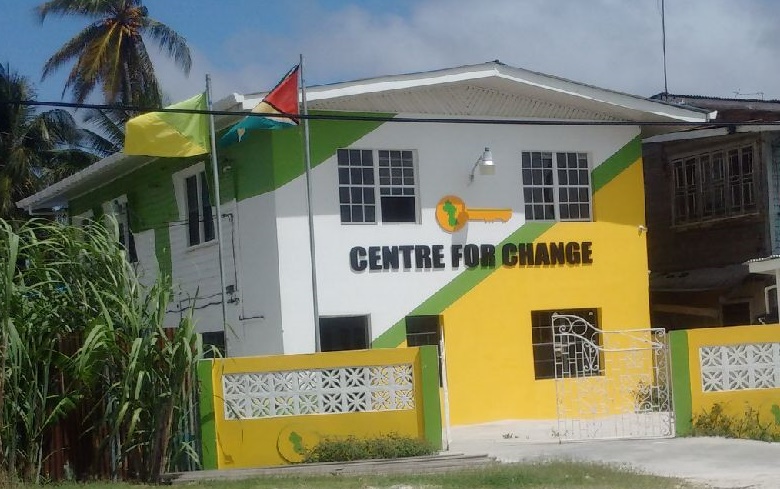
Just three hours after Guyanese President Irfaan Ali formally put forward Ambassador Carolyn Rodrigues-Birkett as the country’s candidate for the next United Nations Secretary-General, the nation’s opposition Alliance For Change (AFC) has thrown its full weight behind the government’s decision.
In an official statement released hours after the nomination announcement on 12 June 2026, the AFC praised Rodrigues-Birkett as an outstanding Guyanese diplomat whose decades of public service, proven professionalism, and longstanding dedication to multilateral cooperation make her uniquely suited for the UN’s top leadership role. “The AFC is proud to endorse her candidacy and wishes her every success in this historic endeavour,” the statement read.
The opposition party has also called on the Guyanese government to move quickly to rally international backing for the nomination, urging immediate outreach to blocs and partners including the Caribbean Community (CARICOM), the Commonwealth, the Organization of American States, the Non-Aligned Movement, and other global stakeholders to build broad cross-regional support.
At 52, Rodrigues-Birkett brings a wealth of high-level diplomatic and international experience to the candidacy. She served as Guyana’s Minister of Foreign Affairs and International Cooperation from 2008 to 2015, before taking on a senior leadership role as a Director at the UN Food and Agriculture Organization. In 2022, she was appointed Guyana’s Permanent Representative to the United Nations, and she currently leads the country’s 2024-2025 term as a member of the UN Security Council. She also previously served as President of the 65th Session of the UN General Assembly, a role that put her consensus-building skills across diverse nations on full display.
The AFC emphasized that Rodrigues-Birkett holds all the core attributes required to steer the UN through a period of unprecedented global strain. “Ambassador Rodrigues-Birkett possesses the experience, diplomatic acumen, integrity, and global perspective required to lead the world’s foremost multilateral institution during a period of unprecedented international challenges,” the statement noted, adding that her decades of work across public service, diplomacy, and global affairs have already earned her widespread respect across the Caribbean, Latin America, and the broader international community.
The party also highlighted Rodrigues-Birkett’s longstanding commitment to foundational global principles: international law, peaceful resolution of cross-border disputes, sustainable development, and the greater inclusion of small states in global decision-making. At a moment when the world faces overlapping crises – from ongoing armed conflicts and accelerating climate change to rising geopolitical division, growing humanitarian need, and mounting challenges to the rules-based international order – the AFC argues the UN needs principled, inclusive, forward-looking leadership, a standard Rodrigues-Birkett meets fully.
Beyond her personal qualifications, the AFC noted that her nomination marks a key milestone for both Guyana and small developing nations globally. Her candidacy not only reflects Guyana’s expanding role in global diplomacy, it also creates a critical opportunity to center the perspectives and lived experiences of small developing states at the highest levels of global governance. The party expressed confidence that under her leadership, the United Nations would emerge better equipped to advance shared goals of peace, security, sustainable development, and cross-national cooperation.
Rodrigues-Birkett becomes the fifth official candidate in the race to succeed outgoing Secretary-General António Guterres, whose second term concludes on 31 December 2026. She joins a growing field of contenders that includes four previously announced nominees: Rafael Mariano Grossi of Argentina, nominated in November 2025; Rebeca Grynspan Mayufis of Costa Rica, nominated in March 2026; Macky Sall of Senegal, nominated by Burundi that same month; and Michelle Bachelet Jeria of Chile, whose nomination was backed by Brazil, Chile, and Mexico before Chile withdrew its sponsorship in late March.