作者: admin

  • OECS welcomes new Cuban ambassador, highlights longstanding partnership

    OECS welcomes new Cuban ambassador, highlights longstanding partnership

    On August 16, 2026, a pivotal diplomatic accreditation ceremony marked a new chapter in the long-standing partnership between Cuba and the Organisation of Eastern Caribbean States (OECS), as Havana’s newly appointed Ambassador-Designate Her Excellency Yenielys Vilma Regueiferos Linares formally presented her credentials to OECS Director General Dr. Didacus Jules. The event served not only as a formal welcome for the new envoy but also as a public reaffirmation of the deep, values-driven ties that have bound the bloc and the Caribbean island nation for generations.

    In his opening remarks during the ceremony, Dr. Jules highlighted the extraordinary consistency of Cuba’s support for Eastern Caribbean nations, even amid the severe, long-running challenges Cuba has navigated domestically. He pointedly referenced the decades-long economic embargo that has constrained Cuba’s development for over 60 years, noting that through periods of economic hardship, international isolation, and domestic strain, Cuba has never stepped back from its commitment to the Caribbean region.

    “Few nations have demonstrated that solidarity as consistently, or as generously, as Cuba,” Dr. Jules stated. “Through every challenge Cuba itself has faced: economic hardship, isolation, the weight of an embargo now well into its seventh decade, it has never wavered in extending a hand to our region and people.”

    Dr. Jules emphasized that the OECS-Cuba relationship is rooted in mutual respect, collective solidarity, and a shared dedication to lifting communities across the region. He reminded Ambassador Regueiferos Linares that the OECS bloc views Cuba as an enduring, trusted friend, pointing to the decades of tangible contributions Cubans have made to regional welfare: Cuban medical professionals have cared for OECS citizens who fell ill, Cuban universities have trained generations of Caribbean leaders, and this support has never been conditional on the economic size or political influence of OECS member states.

    Looking ahead, Dr. Jules outlined priorities for deepening collaboration, identifying health systems strengthening, expanded educational access, improved disaster resilience, sustainable agricultural development, and collaborative ocean governance as key focus areas for future joint work. He reaffirmed the OECS’ full commitment to growing the partnership to advance sustainable development and improve quality of life for all people across the Eastern Caribbean.

    The OECS statement underscored that the decades of cooperation between Cuba and OECS member states have already delivered transformative, life-changing benefits for communities across the region. Key initiatives that have become cornerstones of the partnership include the EverProTe programme, which advances treatment for diabetic foot ulcers; the Yes I Can literacy campaign, which has expanded access to basic education for thousands; and Operation Miracle, a landmark medical program that has restored sight to tens of thousands of people across the Caribbean. The partnership also delivered critical support during the global COVID-19 pandemic, when Cuban medical brigades deployed to the region to support strained local health systems. Beyond health, Cuba has provided hundreds of scholarships for Caribbean students to pursue higher education, and offered rapid emergency assistance to OECS member states in the aftermath of hurricanes and other natural disasters.

    In her address following the accreditation, Ambassador Regueiferos Linares reinforced Cuba’s unwavering commitment to continued regional solidarity, stating that the countries and territories of the OECS can always rely on the support of the Cuban people. She also extended heartfelt gratitude to the OECS for its ongoing support as Cuba navigates severe ongoing economic and geopolitical headwinds.

    The ambassador outlined the acute strain current constraints have placed on Cuban society, noting that the country has only received one oil delivery vessel in the past seven months. “The impact is unbelievable in hospitals, schools, senior centres, children in need and in general all sectors of society,” she said. “To the OECS from the heart of every Cuban…’thank you’.”

    She further emphasized that in today’s unstable, deeply unequal and complex global order, small island nations face a growing array of shared cross-border challenges. Only through intentional unity, regional integration, and collective cooperation can countries effectively respond to the chaotic global landscape, she argued.

    The ceremony was attended by fellow regional ambassadors, who offered formal congratulations to Ambassador Regueiferos Linares and expressed their full support for her work during her tenure as Cuba’s top diplomatic representative to the OECS.

  • Three children, three crashes: A troubling toll on Saint Lucia’s roads

    Three children, three crashes: A troubling toll on Saint Lucia’s roads

    Over the course of just nine months, three young children under the age of five have been killed in separate traffic collisions across Saint Lucia, turning a quiet national conversation about road safety into an urgent public crisis. Rikki Samuel, Yvonne Jules, and Kervil Lawrence — all young students at the start of their lives — have had their lives cut short on the island’s roadways, spotlighting systemic gaps in traffic safety and the deadly risk that high-incident corridors pose to all road users.

    The first of these devastating losses came on October 25, 2025, when four-year-old Rikki Samuel, a kindergarten student at Banse La Grace Combined School, was traveling with his father near the Hewanorra International Airport and Marine Base. The pair became caught up in a three-vehicle collision that left 11 people injured. Rikki did not survive his injuries. Following the crash, local police charged Clarence Vigier of Belle Vue, Vieux Fort, with causing death by dangerous driving in connection with the incident.

    Just four months later, on February 24, four-year-old Yvonne Jules became the second young victim. Yvonne was traveling in a minibus that lost control off the roadway at Mc Diarmed (also called Majomel) in the Laborie district, before plunging over a steep cliff. Emergency responders who raced to the remote scene found that Yvonne and the two adult passengers traveling with her had suffered catastrophic trauma. All three were pronounced dead at the site of the crash.

    The most recent fatal incident took place on July 22, when five-year-old Kervil Lawrence, a kindergarten student at Piaye Combined School, was traveling with three other people near Il Pirata in Vieux Fort. Their vehicle veered off the roadway and crashed into a large tree. While the other three occupants survived with non-fatal injuries, Kervil succumbed to his wounds shortly after the collision.

    Beyond the raw tragedy of losing three young children, two of these deaths — Rikki’s and Kervil’s — have drawn renewed scrutiny to a particularly dangerous stretch of highway connecting the Il Pirata area to Hewanorra International Airport. These two child deaths are not isolated incidents on this corridor: back in January, 24-year-old Dayna Tobierre was killed after her vehicle left the road and crashed into a tree at nearby Sandy Beach. Just 10 days after Tobierre’s death, Viclann Joseph, a man in his early 20s, died in a high-impact head-on collision between his private car and a minibus at Il Pirata, which left several other passengers injured.

    When combined with Rikki and Kervil’s deaths, that means four young people have been killed in separate crashes along this single high-risk stretch of road in just nine months.

    These child deaths are just a small, devastating part of a much larger and worsening road safety crisis across the entire island. During the most recent official police press conference held earlier this month, Superintendent Troy Lamontagne, head of the island’s Road and Traffic Investigations unit, released updated fatality data showing that Saint Lucia had recorded 14 confirmed road deaths by the end of June. Kervil’s July crash pushed that grim toll to 15. Just days later, the number rose again to 16, after 32-year-old Andrez Forde, a resident of Marchand, Castries, was killed when his vehicle veered off the road and fell over a cliff in Au Pos, Anse La Raye.

    Lamontagne characterized the current state of road safety on the island as a “serious” ongoing crisis. He also highlighted a striking demographic disparity among road fatality victims: men account for the overwhelming majority of people killed in traffic incidents across Saint Lucia, a trend that officials are still working to address alongside broader infrastructure and enforcement reforms.

  • Tourtonnelaan krijgt dringend onderhoud; werkzaamheden duren twee à drie dagen

    Tourtonnelaan krijgt dringend onderhoud; werkzaamheden duren twee à drie dagen

    Suriname’s national Road Authority has launched an expedited repair project on a heavily deteriorated section of Tourtonnelaan, a key roadway running between Henck Arronstraat and the main entrance of ‘s Lands Hospital that has been in poor condition for an extended period. The urgent work, which prioritizes traffic safety, is projected to wrap up within just two to three days, pending favorable weather conditions.

    Unlike most road upgrades across the country, this project is not part of the Road Authority’s ongoing national roadway rehabilitation program, which currently covers works in Para, Nickerie, and multiple districts of Paramaribo. Officials moved it to the top of the work schedule after recent assessments confirmed the road’s worsening surface condition had created major safety risks for all users, from motorists to pedestrians.

    Project manager Joy Meye explained that regular routine inspections of the national road network first flagged the pressing safety concerns on this specific stretch of Tourtonnelaan. “Our daily inspections showed that user safety was being seriously compromised,” Meye noted in a statement. “That’s why we made the call to advance this project as a high priority, so road users can once again count on a safe, long-lasting roadway.”

    The repair work follows a clear, methodical process: crews will first remove the existing worn interlocking pavers that cover the entire stretch, then inspect and level the underlying subbase to address foundational issues that caused the surface damage, before laying a completely new set of pavers. The road has long suffered from sunken sections, shifted pavers, and large potholes, problems that have caused consistent traffic disruptions and drawn repeated complaints from commuters.

    To minimize disruption to daily travel, project planners have adjusted work schedules to focus primarily outside of peak morning and evening rush hours. Instead of closing the entire roadway for the duration of repairs, crews are only closing part of the route, a decision designed to keep partial traffic flow active through the area. Under the current traffic plan, vehicles traveling from Henck Arronstraat onto Tourtonnelaan cannot access the work zone, but traffic heading northbound is still able to reach Henck Arronstraat without diversion.

    Meye emphasized that the accelerated project, which was added to the authority’s workload outside of its pre-planned schedule due to its urgent nature, centers two core goals: lasting safety and long-term durability for the high-traffic roadway.

  • Kairi FM apologizes after the ’embarrassment’  of unauthorized offensive content appears on advertising billboard

    Kairi FM apologizes after the ’embarrassment’ of unauthorized offensive content appears on advertising billboard

    A prominent Dominica-based media outlet has been forced to issue a public apology after a major security breach exposed explicit adult content to passersby on a high-traffic public road. On Sunday, July 25, 2026, the Kairi FM-owned LED advertising screen positioned along Bath Road began displaying pornographic material, triggering swift public concern and prompting an immediate internal investigation.

    After reviewing circulating footage of the incident, Dominica News Online confirmed that the content shown on the public billboard was sexually explicit in nature. In an official public statement released shortly after the incident, the full management team and staff of Kairi FM took accountability for the security lapse, extending a formal apology to every group affected by the inappropriate broadcast.

    Preliminary probe findings point to an unauthorized, unlawful access of the billboard’s digital control system by an unknown third party as the root cause of the incident. Kairi FM has explicitly stressed that the offensive content was never approved by station leadership, and it in no way aligns with the organization’s long-held values, editorial standards, or public commitments.

    Within minutes of the content going live, station teams moved quickly to remove the material from the display. In the wake of the breach, Kairi FM has already launched immediate action to upgrade the digital security protocols protecting its out-of-home advertising platform, with the explicit goal of eliminating the risk of a similar incident occurring in the future.

    “Kairi FM deeply regrets any embarrassment or offense this incident may have caused,” the organization’s statement reads. The media outlet also expressed gratitude to the general public, its commercial advertisers, and longstanding business partners for their patience and ongoing support as the investigation into the breach continues. Management has reaffirmed its full commitment to resolving all outstanding security gaps and implementing robust, long-term safeguards to protect its digital advertising infrastructure moving forward.

  • One dead, one injured after car plunges over precipice in Anse La Raye

    One dead, one injured after car plunges over precipice in Anse La Raye

    A fatal traffic incident has claimed the life of a 32-year-old man in Saint Lucia, after the car he was riding in lost control off a rural roadway and fell down a steep precipice. The tragedy unfolded early Sunday morning in the Au Pos district of Anse La Raye, local law enforcement confirmed.

    The Royal Saint Lucia Police Force confirmed the deceased man as Andrez Forde, a resident of Marchand in Castries, the island nation’s capital. First responders received the emergency report of the crash at roughly 7:55 a.m., prompting officers from the Anse La Raye Police Station to immediately deploy to the remote accident site.

    Early preliminary probes into the incident show that the involved vehicle, an orange Toyota Aqua compact, drifted off the paved highway before careening over the edge of the cliff. Both people inside the vehicle were trapped at the bottom of the precipice, and were quickly extracted and given initial emergency care by teams from the Saint Lucia Fire Service. Following extraction, the two injured people were rushed via emergency ambulance to the Owen King EU Hospital for advanced emergency treatment.

    Despite medical teams’ best efforts, Forde could not survive the severe injuries he sustained in the fall. A hospital medical practitioner officially pronounced him dead shortly after arrival. The second passenger, an unidentified woman, remains hospitalized in stable condition as of the latest update from law enforcement.

    Authorities have not yet released additional details about what caused the driver to lose control of the vehicle, and formal investigations into the full circumstances of the fatal crash are still ongoing. Police have not indicated whether alcohol, excessive speed, or mechanical failure contributed to the incident, and are asking any members of the public who may have witnessed the crash or have relevant information to contact local investigators.

  • CFPA welcomes Dominica abortion law ruling as step forward for women’s health rights

    CFPA welcomes Dominica abortion law ruling as step forward for women’s health rights

    A landmark ruling from the Eastern Caribbean Supreme Court has struck down the unconstitutional criminalization of abortion in Dominica for a narrow set of specific circumstances, drawing praise from the Caribbean Family Planning Affiliation (CFPA), a leading regional advocate for sexual and reproductive health rights. The court’s decision decriminalizes abortion procedures in cases involving rape, incest, life-threatening risks to the pregnant person’s life or health, and diagnoses of severe fetal impairment.

    Rev. Patricia Sheerattan-Bisnauth, chief executive officer of CFPA, framed the ruling as a meaningful milestone for gender equity and human rights across the region, even as she acknowledged it falls short of the full decriminalization that many reproductive justice advocates have long demanded. “While this ruling is not far-reaching, it is nonetheless a significant step forward,” Sheerattan-Bisnauth said in an official statement. “It affirms that women and girls should never face criminal punishment for seeking essential healthcare under the most difficult and traumatic circumstances. It also recognizes that laws rooted in our colonial past can no longer deny women their constitutional rights, health, and dignity.”

    For decades, broad abortion criminalization across the Caribbean has created disproportionate harm for marginalized groups, CFPA emphasized. Low-income women, adolescent girls, survivors of sexual violence, and people facing systemic barriers to healthcare access have borne the brunt of punitive laws, the organization noted. Criminalization does not eliminate abortion, CFPA argues, but instead drives procedures underground, fuels systemic gender inequality, deepens stigma around reproductive care, and forces vulnerable people into life-threatening situations.

    Roxanne Christopher, CFPA’s board president, highlighted the collective effort that led to the court’s decision, extending recognition to the women who launched the legal challenge, the healthcare providers who continued to prioritize patient care despite legal risks, and the legal teams and civil society organizations that supported the case. “As a regional organization committed to sexual and reproductive health and rights, CFPA believes that every woman deserves access to compassionate, evidence-based healthcare delivered with dignity, respect, and without fear of criminal sanction,” Christopher said. “Women’s health is not a privilege; it is a fundamental human right.”

    The ruling, which was grounded in Dominica’s constitutional protections and widely accepted international human rights frameworks, carries broader implications for reproductive rights conversations across the entire Caribbean region, CFPA noted. The organization stressed that the decision confirms the inherent link between protecting women’s health and upholding universal human rights standards. Even so, CFPA was clear that the court’s action is only a first step toward comprehensive reproductive justice across the region. The organization pointed out that the vast majority of women and girls across the Caribbean still live under restrictive abortion laws, face widespread stigma when seeking reproductive care, and encounter persistent barriers to accessing affordable, high-quality services.

    Moving forward, CFPA is calling on regional governments, policymakers, healthcare systems, faith leaders, civil society groups, and local communities to continue constructive, rights-centered dialogue on women’s health and wellbeing. Achieving further progress, the organization says, will require sustained action: broad legal reform to remove punitive restrictions, expanded access to affordable contraception, comprehensive evidence-based sexuality education, investment in high-quality maternal healthcare, and targeted efforts to eliminate systemic discrimination and stigma surrounding reproductive care.

    Founded as a regional collective, CFPA works across the Caribbean to advance sexual and reproductive health and rights, with core priorities including expanding access to quality care, advancing gender equality, upholding universal human rights, and creating equitable opportunities for women and young people across the region.

  • Consistency is the measure of environmental leadership

    Consistency is the measure of environmental leadership

    For democracies around the world, the handover of power between administrations brings far more than the transfer of infrastructure, public budgets, and public service responsibilities. It also carries an unwritten, intergenerational duty to protect the natural heritage that belongs to both current citizens and generations yet to come. This non-negotiable responsibility, the statement from Grenada Land Actors argues, should never shift based on a project’s location, the size of its associated investment, or the prevailing political mood of the moment.

    Grenada’s population has a long track record of showing profound care for their island’s unique natural landscapes. The widespread public mobilization to defend Camerhogne Park made this clear: when residents believe a beloved public space is under threat, they are ready to organize, rally, and demand a seat at the decision-making table. Thousands of Grenadians united around a core conviction: public natural spaces and environmental assets deserve formal protection, and communities must have a meaningful say in decisions that alter these landscapes.

    Today, that same level of public concern is growing around new development proposals impacting ecologically significant sites across the country, including La Sagesse, Mt Hartman, Levera, and Woodford. While each of these areas carries distinct ecological characteristics, social needs, and economic potential, all of them force stakeholders to confront the same four foundational questions about Grenada’s environmental governance.

    First, are environmental impact assessments conducted for these projects open and fully transparent to the public? Second, have communities that will be directly affected by development had the chance to provide genuine input before final decisions are made? Third, is key environmental data about proposed projects easily accessible to ordinary citizens, rather than locked behind bureaucratic barriers? Fourth, do development decision-makers strike a fair balance between long-term ecological health and short-term economic gains from new projects?

    Crucially, these questions do not amount to opposition to all development. The group emphasizes that Grenada needs new investment, expanded job opportunities, and sustained economic growth to thrive. Tourism, infrastructure improvements, and private sector investment all have critical roles to play in building the country’s future prosperity. But sustainable development cannot be measured only by whether a construction project is completed. It must also be judged by the quality and inclusivity of the process that leads to project approval.

    Transparency, public accountability, and meaningful community participation are not barriers to progress, the statement argues. Instead, they are core components of effective democratic governance. Projects developed through open, collaborative dialogue between developers, officials, and local communities tend to earn broader public trust, minimize costly conflict, and deliver better outcomes for all stakeholders over the long term. This is why consistent application of environmental principles matters so much: if the government celebrates public participation when one community raises concerns, it must extend that same respect to other communities seeking answers about their local environments. If officials commit to environmental protection at one site, those same standards must be applied everywhere.

    When environmental principles are enforced selectively, the entire framework of environmental governance loses public credibility. Grenada has repeatedly made formal international and domestic commitments to strengthening environmental governance, expanding public access to environmental information, and increasing citizen engagement in development decision-making. These promises must be reflected not only in official policy documents, but in every day decision-making for every proposed project. Every major development, whether at Camerhogne Park or any other site across the country, deserves the same standard of open process, reliance on scientific evidence, and meaningful community input.

    The group stresses that environmental protection is not a partisan political issue. Wetlands do not shift their ecological value based on which party holds office. Endangered species do not adjust their conservation needs to align with election cycles. Coastal ecosystems cannot speed up their recovery just because one administration is more popular than its predecessor. These fragile natural systems depend on consistent, cross-generational stewardship that outlives individual governments.

    For citizens, the responsibility to protect Grenada’s natural heritage goes beyond reacting to individual high-profile projects. Residents should demand permanent governance systems that are transparent, predictable, and fair, no matter who holds public office. For governments, in turn, informed public participation should be embraced as a marker of a strong democracy, not dismissed as an inconvenient obstacle to development.

    Grenada’s natural heritage is one of the nation’s most valuable economic and cultural assets. Protecting it does not require choosing between conservation and economic development. Instead, it requires building a new model of development that honors the needs of both people and the natural environment.

    Ultimately, effective environmental stewardship is not measured by campaign speeches or policy promises. It is measured by how consistently leaders uphold their stated principles when facing difficult, high-stakes decisions. If Grenada aims to build a resilient, prosperous future for all its people, consistency — not political convenience — must become the foundation of the country’s environmental governance.

  • Missing Rental Car Recovered After Public Appeal

    Missing Rental Car Recovered After Public Appeal

    A weeks-long public search for a missing rental car has come to a close, after local vehicle hire firm 108 Estate confirmed the silver Toyota Axio at the center of the appeal has been successfully recovered. The vehicle, which carries the registration number 4384, was the subject of a widespread public call for information after the company lost all communication with the individual who had rented it.

    The situation began last Friday, when 108 Estate first noted that it could not reach the renter. Company representatives made repeated attempts over multiple days to reconnect with the person who had taken out the rental agreement, but all efforts went unanswered. With no leads on the vehicle’s location, the firm made the unusual decision to launch a public appeal, asking anyone who spotted the silver sedan or had information about its whereabouts to contact authorities or the company directly.

    On Wednesday, the firm confirmed that the search had concluded successfully with the recovery of the vehicle. However, 108 Estate has opted not to release any additional details about the case, including the specific location and timing of the recovery, nor has it indicated whether it will pursue any further legal or disciplinary action against the missing renter.

    In a statement following the recovery, 108 Estate extended its sincere thanks to members of the local public who shared the appeal, provided tips, and assisted with the search effort. The company said that the public’s rapid engagement and willingness to help was instrumental in bringing the search to a successful resolution.

  • Ongoing challenges at Annandale Water System

    Ongoing challenges at Annandale Water System

    For weeks, communities across Grenada that rely on the Annandale Water System have grappled with widespread water access disruptions, and the National Water and Sewerage Authority (Nawasa) has formally acknowledged the significant hardship and disruption the technical failures have caused for local consumers. The core issue, first identified several weeks ago, is a steady, unexplained drop in water output from the Annandale Water Treatment Plant flowing to the Woburn Distribution Tank. This reduced inflow has left the tank unable to refill and maintain the minimum water level required to deliver consistent service to all connected communities.

    The supply shortages have hit hardest at higher-elevation neighborhoods in Willis, Daga, Granton and Mango, where many households now receive little to no running water on a regular basis. To mitigate immediate needs, Nawasa has deployed water trucks to deliver targeted emergency supplies to these high-impact zones, but service gaps remain widespread across the most vulnerable parts of the distribution network.

    Nawasa technical teams have launched repeated inspections, system-wide assessments, and incremental operational adjustments over the course of the outage to pinpoint the root cause of the reduced flow. Utility officials acknowledge that updates on the ongoing investigation have not satisfied frustrated customers, noting that the situation has long surpassed mere inconvenience for many local families. Disruptions to daily household routines have created severe hardship for residents cut off from consistent piped water, with users at the farthest edges of the distribution network and at higher elevations facing the most acute impacts, including extended periods with no water access at all.

    As investigations into the underlying issue continue, the utility will maintain emergency trucked water deliveries to affected communities as long as operational and resource capacities allow. Teams will continue intensive diagnostic work until the source of the flow reduction is confirmed, with all viable options to boost inflow to the Woburn Distribution Tank and stabilize service currently under review.

    While utility leaders note that significant diagnostic progress has been made to date, they cannot yet provide a definitive timeline for full service restoration. Nawasa has committed to full transparency with consumers throughout the remaining investigative and repair process, pledging frequent public updates and a clear restoration timeline as soon as a solution is confirmed.

    In the interim, the utility is urging all consumers with access to running water to store sufficient emergency water for essential needs, as supply fluctuations are expected to continue while adjustments are made to the network. For severely affected residents who have not yet received emergency deliveries, requests for trucked water can be submitted via phone at 440-2155 or through dedicated WhatsApp lines at 405-5245 and 405-9143 during operating hours of 8 a.m. to 4 p.m., Monday through Friday.

    Nawasa issued a formal apology to all affected households, businesses, and community institutions, emphasizing that resolving the outage and restoring a stable, reliable water supply remains the organization’s top urgent priority. The utility also thanked local customers for their ongoing patience and understanding as technical teams work to fully address the issue.

    This report is a contribution to NOW Grenada, which notes that it is not responsible for the opinions or content shared by third-party contributors. Users may report inappropriate content via the platform’s designated abuse reporting channel.

  • Caribische belastingdiensten zoeken antwoord op digitale economie

    Caribische belastingdiensten zoeken antwoord op digitale economie

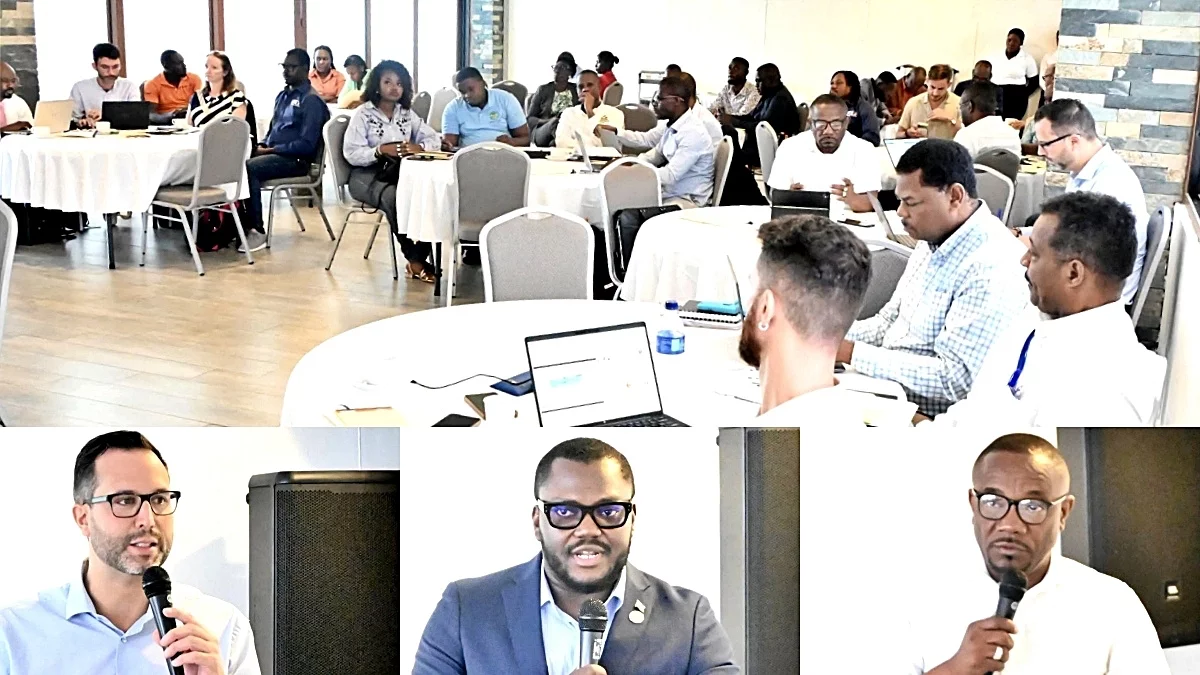
    This week, tax authorities from 24 Caribbean jurisdictions are convening to address a pressing shared challenge: boosting tax revenue collection as regional economies grow increasingly digitalized. The gathering, which runs from July 27 to 31, marks the 27th Annual General Assembly and Technical Conference of the Caribbean Organisation of Tax Administrators (COTA), co-hosted by the CARICOM Secretariat and the Guyana Revenue Authority. The event centers on advancing the integration of artificial intelligence, big data analytics, and streamlined operational frameworks to modernize tax collection across the region.

    Against the overarching theme “Future-Ready CARICOM Tax Administration – Smart, Data-Driven and AI-Enabled for Sustainable Revenue”, tax commissioners and fiscal policy experts from across participating jurisdictions are diving into actionable strategies to leverage emerging technologies. The core goals of these discussions include strengthening compliance with tax regulations, cutting inefficiencies in collection processes, and improving public service delivery for both individual taxpayers and local businesses.

    Regional leaders from CARICOM have emphasized that Caribbean tax systems face mounting pressure to adapt to a rapidly evolving economic landscape defined by growing cross-border activity and digital transformation. Advanced tools including AI-powered analytics and cloud-based digital tax administration are now critical to detecting tax evasion, closing compliance gaps, and expanding sustainable public revenue streams for member states, the organization notes.

    Alongside technical working sessions, the conference will host a High-Level Regional Meeting on Tax and Development, organized in partnership with the Organisation for Economic Co-operation and Development (OECD) and other global institutional partners. This high-level forum will focus on unpacking both the opportunities and obstacles Caribbean nations face as they navigate sweeping shifts in international tax governance norms.

    For Suriname, one of the 24 participating jurisdictions, the conference carries heightened strategic importance. The South American nation is currently in the process of overhauling its national tax system, as it prepares to manage a projected surge in public revenue from upcoming oil and gas production. Regional fiscal stakeholders frame a modernized, technology-driven tax administration as a foundational requirement to effectively manage these new natural resource revenues and curb widespread tax avoidance that has long eroded public income.

    COTA, which operates under the auspices of the CARICOM Secretariat, works to support regional tax bodies through targeted training programs, cross-border knowledge sharing, and the development of unified regional tax standards. The annual conference serves as the organization’s flagship event for aligning member jurisdictions on shared modernization priorities.