作者: admin

  • Do You Know How Many Caribbean Countries Reached the World Cup?

    Do You Know How Many Caribbean Countries Reached the World Cup?

    The 2026 FIFA World Cup, football’s most prestigious global tournament, is set to mark an unprecedented milestone for Caribbean football, as two nations from the region will compete on the sport’s biggest stage this year — a rare achievement that has not happened in the tournament’s history. For context, only five Caribbean nations have ever earned a World Cup qualifying spot before 2026: Cuba, the trailblazer that first qualified in 1938, Haiti (1974), Jamaica (1998), and Trinidad and Tobago (2006).

    This year’s tournament breaks new ground for the region, with two standout stories capturing global football fans’ attention. First, Haiti secures its return to the World Cup after a 52-year absence, becoming the first Caribbean nation ever to qualify for the tournament twice. Even more remarkable is the historic debut of Curaçao, a tiny Caribbean island nation tucked just 37 miles off Venezuela’s northern coast. With a total land area of just 171 square miles — smaller than most individual districts in Belize — and a population of barely more than 150,000 people, Curaçao will go down in history as the smallest country ever to compete at a FIFA World Cup.

    Curaçao’s journey to the 2026 tournament was no easy feat. The underdog side fought through two grueling qualifying rounds, competing in 10 matches, claiming seven wins, and finishing the entire qualification process undefeated to claim their spot. Their Cinderella run will now face its toughest test, as they have been drawn into Group E alongside formidable opposition: four-time World Cup champions Germany, South American contender Ecuador, and African powerhouse Ivory Coast. All of Curaçao’s group stage matches will be hosted across venues in the United States, one of the three host nations for the 2026 tournament.

    For Haiti, the long-awaited return to the World Cup kicked off on June 14 with their first Group C match against Scotland at Boston’s Gillette Stadium in Massachusetts, where the side suffered a narrow 1-0 defeat. Haiti’s next group stage challenge is scheduled for June 19, when they will take on five-time World Cup winners Brazil, in what is expected to be one of the most watched group stage matches of the tournament. For Caribbean football as a whole, the 2026 World Cup stands as a landmark moment, proving that even the smallest and most under-resourced footballing nations can compete with the world’s best.

  • Belize’s Jungles and Coastlines Used as Cartel Routes

    Belize’s Jungles and Coastlines Used as Cartel Routes

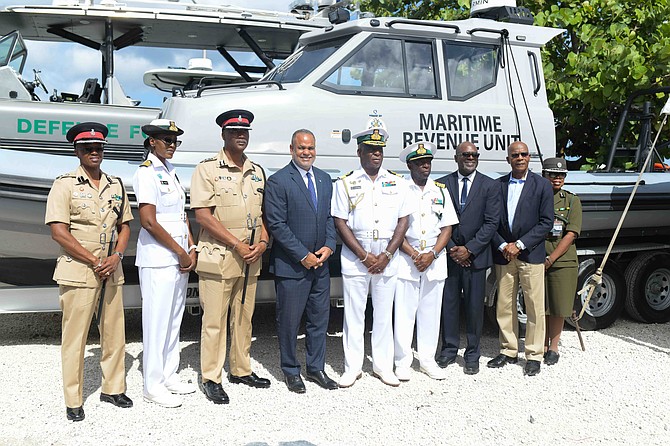
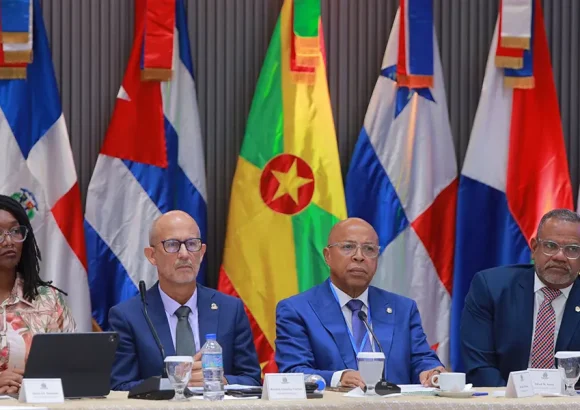
    On June 12, 2026, senior military leaders from Belize and Mexico gathered in Belize City for the 21st iteration of the bilateral Border Commanders Conference, where the two nations formally recommitted to deepening cross-border security collaboration to dismantle drug trafficking operations that have exploited Belize’s remote jungles, unmonitored river systems, and extensive coastlines for decades.

    The high-level meeting opened with a keynote address from Florencio Marin Jr., Belize’s Minister of National Defence, who opened his remarks by acknowledging a long-standing diplomatic tie: Mexico was the first sovereign nation to formally recognize Belize’s independence back in 1981. Marin emphasized that transnational criminal networks have systematically taken advantage of the rugged, sparsely populated shared terrain between the two countries to move illicit drug shipments, presenting a growing threat to the security and stability of both nations. He stressed that unilateral action cannot address this networked threat, stating, “Standing isolated against such a threat is not an option. To defeat a networked adversary, we must operate as an interconnected, seamless network.”

    The conference brought together top security officials from both sides: senior commanders from the Belize Defence Force and Belize Coast Guard met with their counterparts from Mexico’s national army and navy to align strategies for countering organized criminal activity across all domains. Attendees discussed plans to expand coordinated patrols on land, at sea, and in the air, as well as to strengthen real-time intelligence sharing that allows security forces to disrupt trafficking operations before shipments move across the border.

    By the close of the conference, delegations from both countries signed formal, bilingual agreements — drafted in both English and Spanish — that codify the new framework for closer coordination. The updated partnership creates a more unified front against cartel activity, closing critical gaps that criminal networks have long exploited to move illicit goods through Central America’s transit corridors.

  • Wereldbankgroep pompt miljoenen in Caribisch fonds; ook Suriname komt in aanmerking

    Wereldbankgroep pompt miljoenen in Caribisch fonds; ook Suriname komt in aanmerking

    On June 14, the International Finance Corporation (IFC), the private sector investment arm of the World Bank Group, announced a landmark commitment of up to $15 million to a new regional investment fund designed to drive inclusive economic growth, expand employment opportunities, and advance climate-resilient development across 13 Caribbean nations, including Suriname.

    Named the Caribbean Community Resilience Fund (CCRF), the initiative was developed by the Caricom Development Fund (CDF) and will be managed by Sygnus, a regional Caribbean investment firm. Unlike traditional funding mechanisms that focus on small, micro-level projects, the CCRF is tailored to deliver financing to mid-sized enterprises, critical infrastructure projects, and broad-based development initiatives that strengthen the overall economic resilience of Caribbean island and coastal states. This investment marks the first time the IFC has directly invested in the Caribbean through a regional debt fund, a historic shift in the institution’s regional engagement strategy.

    IFC leaders project that their $15 million anchor investment will catalyze additional interest from global and regional private investors, with the ultimate goal of growing the fund’s total assets to between $75 million and $125 million. The launch of the CCRF addresses a long-standing, crippling gap in the Caribbean’s financial ecosystem: World Bank Group data confirms that the region currently faces a total financing shortfall exceeding $22 billion, as most local small and medium-sized enterprises (SMEs) and mid-sized projects are locked out of long-term capital. Commercial banks across the region typically avoid funding projects that are too large, too high-risk, or require long repayment timelines, stifling growth in production capacity, innovation, and business expansion across the region.

    For Suriname, the fund opens new access to capital for businesses operating in 13 priority sectors, including agriculture, energy, transportation, affordable housing, water management, financial services, and information and communications technology. Projects focused on climate adaptation and long-term sustainable development also qualify for CCRF financing, a critical benefit for Suriname, which is classified as one of the most climate-vulnerable nations in the Western Hemisphere. Unlike traditional funding sources tied to the country’s emerging oil and gas sector, the CCRF offers a diversified, complementary capital stream that can support growth across non-extractive sectors of Suriname’s economy.

    A core overarching goal of the CCRF is to mobilize private capital to rebalance the Caribbean’s development financing model. For decades, regional economies have relied heavily on public sector spending, multilateral loans, and international development aid to fund growth. By attracting private investment to underserved market segments, the fund’s backers aim to broaden and diversify the region’s economic base, building greater capacity to withstand future economic shocks and climate-driven natural disasters. “Companies in small island and coastal states need flexible, long-term financing to grow and build resilience against economic volatility and climate disasters,” noted Elizabeth Martínez de Marcano, IFC Regional Director for the Caribbean.

    The CCRF launch arrives at a pivotal moment for the Caribbean, where governments and private sector leaders are actively seeking new capital sources to fund large-scale planned investments in renewable energy, climate-resilient infrastructure, and digital transformation. For Suriname in particular, successful access to CCRF capital could unlock widespread benefits: if local enterprises can secure this funding, analysts project it will drive new investment, expand business activity, and create sustained new employment opportunities across the country’s non-extractive economy.

  • Record arrivals and ‘Tourism 3.0’ shared at BHTA awards

    Record arrivals and ‘Tourism 3.0’ shared at BHTA awards

    Barbados’ tourism industry has capped off a landmark year of recovery and expansion, hitting a historic record for total visitor arrivals that underscores the sector’s central role in the island nation’s economy, Tourism and International Transport Minister Ian Gooding-Edghill announced Saturday.

    Speaking to an audience of industry stakeholders at the Gallagher BTMI BHTA Tourism Awards Gala, the minister highlighted the extraordinary resilience of Barbados’ tourism ecosystem and the success of targeted efforts to expand international air access to the island. The final 2025 data showed that Barbados welcomed 727,310 long-stay visitors and 817,950 cruise ship passengers over the course of the year — figures that represent the highest combined visitor volume the country has ever recorded.

    As Gooding-Edghill emphasized, tourism is far more than a signature industry for Barbados: it directly contributes roughly 45 percent of the country’s total gross domestic product, making it the undisputed backbone of the national economy. Beyond the headline numbers, the record-breaking visitor totals have translated into tangible benefits for everyday Barbadians, supporting thriving local small businesses, keeping cultural entertainers fully booked, and maintaining steady demand for taxi and transport services across the island.

    The strong growth momentum from 2025 has already carried into the early months of 2026, with first-quarter visitor data pointing to a standout start to the year. Industry projections forecast a 22 percent increase in cruise traffic for the upcoming winter season, which is on track to draw more than 800,000 additional cruise passengers to Barbadian shores.

    To turn this post-pandemic recovery into long-term, inclusive prosperity, Gooding-Edghill used the gala event to unveil the government’s new strategic framework: Tourism 3.0. Where previous iterations of the country’s tourism strategy — labeled Tourism 1.0 and 2.0 — centered on growing overall visitor volume, the new model refocuses policy priorities on three core goals: boosting per-visitor spending within Barbados, increasing local Barbadian participation in the sector, and expanding domestic ownership of tourism-related businesses. This shift is designed to ensure that the benefits of tourism growth spread more broadly across the national economy, rather than just flowing to external stakeholders.

    Even as the government celebrates this historic milestone, Gooding-Edghill warned against industry complacency, noting that the sector still faces significant ongoing headwinds from global economic pressures. Spiking international fuel prices, persistent global inflation, and escalating geopolitical tensions all create uncertainty for international travel and tourism. To mitigate these risks, the minister confirmed that he is currently engaged in active negotiations with major international air carriers, including U.S.-based JetBlue, to secure additional airlift capacity that will support continued growth in visitor arrivals in the coming months and years.

  • NOTICE For Calypso Monarch Competition

    NOTICE For Calypso Monarch Competition

    The Antigua and Barbuda Festivals Commission has issued an official notification calling a critical mandatory gathering for all key stakeholders involved in the upcoming 2026 Calypso Monarch Competition. The meeting is set to take place on Tuesday, June 16, 2026, kicking off promptly at 5:00 p.m. at Carnival City, the central hub for the island nation’s carnival activities.

    Who is required to attend? The Commission has outlined specific groups that must be present: every calypsonian who has completed registration for the 2026 competition, all accompanying band members, assigned backup vocalists, and sitting members of the Calypso Sub-Committee. Organizers have stressed that punctuality and full attendance are non-negotiable for this session, as the agenda covers high-stakes details that will shape the course of the competition in the coming months.

    During the gathering, the Festivals Commission will walk attendees through critical logistics, address key outstanding questions, and lay out a clear roadmap for all participants ahead of the main event. The commission closed its notice by expressing anticipation for full cooperation from all attendees, noting that collective teamwork is essential to pulling off a dynamic, memorable, and successful 2026 Calypso Monarch Competition.

  • More Details on the Murder of Oscar Flota

    More Details on the Murder of Oscar Flota

    A brutal fatal assault has shaken the small island community of Caye Caulker, where a well-known local man identified as Oscar Flota, who went by the nickname Fox, was killed in a violent attack on Saturday night. The incident unfolded on the island’s northern side, where multiple eyewitnesses confirmed that Flota was struck repeatedly with a shovel by an attacker he was personally acquainted with.

    According to unconfirmed information obtained by local outlet News 5, the primary suspect is a squatter residing in the Caye Caulker area who already has documented connections to regional criminal activity. Local residents have long linked this individual to gang affiliation and illicit drug distribution operations.

    In the hours following the attack, multiple witnesses provided formal statements to law enforcement officers, who maintained a visible investigative presence across the northern district of the island through all of Sunday morning. While reports circulating in the community indicate that several people connected to the killing have been taken into police custody, official law enforcement representatives have not yet released any public confirmation of these detentions.

    Local residents told reporters that interpersonal and territorial tensions have been simmering in the area for months, with repeated reports of property disputes and violent threats filed with governing authorities over that period. News 5 has announced that it will continue providing updated coverage as new details about the investigation and legal proceedings emerge.

  • NISSS moves to join BiMPay

    NISSS moves to join BiMPay

    Barbados is taking a major step forward in modernizing its public benefit delivery system, with plans to integrate the National Insurance and Social Security Service (NISSS) into the country’s new national instant payment infrastructure, BiMPay, during the platform’s second rollout phase. The integration is designed to cut wait times and streamline access to funds for pensioners and other NISSS contributors across the island.

    BiMPay, the Central Bank of Barbados’ new real-time payment network, officially launched on Friday. Ahead of the system’s go-live, Central Bank Governor Dr. Kevin Greenidge confirmed that the platform would be expanded in subsequent months to connect all Barbadian government agencies to the unified payment network.

    Two days after the launch, NISSS Chief Executive Officer Kim Tudor confirmed the agency’s place in the second phase of integration during a media address at the 59th anniversary church service for the NISSS, held at St Matthias Anglican Church. Tudor shared that technical preparations for the integration are already well underway, noting the system will be particularly transformative for emergency and cost-of-living support disbursements.

    “We have actually started proprietary work to go live. We will be in the next phase and making good use of it, especially when we have to pay things like the cost of living cash credit. BiMPay will be very useful for things like that,” Tudor told reporters.

    Tudor issued a call to action for NISSS beneficiaries who currently receive paper cheques or do not hold traditional bank accounts, encouraging them to register for BiMPay throughout June to switch to digital fund deposits. The NISSS has already simplified the sign-up process, offering a web-based form that allows applicants to upload required verification documents and complete the switch entirely online.

    To ensure no older beneficiaries are excluded from the new digital system, the NISSS is partnering with the Ministry of Technological and Vocational Training to host targeted educational workshops that walk pensioners through basic BiMPay functionality. Minister Sandra Husbands confirmed that this training initiative aligns with the government’s broader national push to improve digital literacy across all age groups, which will roll out through 2024 and into early 2025.

    Husbands emphasized that closing the digital divide for seniors is critical to supporting independent living for older Barbadians, noting that most seniors continue to live in their own homes rather than residential care facilities. “Seniors need to know how to use digital technology to pay their bills, receive money, make payments and other things, so this will be part of the programme that we roll out this year and early next year so that our seniors are not left behind,” she said. “Every senior cannot be housed at a residential facility, and they will need to know how to operate independently at home, and that can only happen if they use technology to enable them to continue to manage their own lives and move around only when they want to.”

  • Caribbean fishing industry in mourning after death of Chief Fisheries Officer

    Caribbean fishing industry in mourning after death of Chief Fisheries Officer

    The Caribbean fishing community is reeling from sudden, devastating loss after the unexpected death of Dr. Shelly-Ann Cox, the groundbreaking Chief Fisheries Officer of Barbados who made history as both the youngest person and first woman to lead the nation’s fisheries sector. Industry representatives across local and regional levels have spoken out this week to express their shock and grief at her passing. The 46-year-old trailblazer collapsed on stage Saturday afternoon, just moments before she was set to present awards at a public event hosted at the Weston Fish Market. Emergency first aid was administered immediately by former military personnel who were in attendance at the gathering, who performed cardiopulmonary resuscitation (CPR) right away, but Cox could not be revived and was pronounced dead shortly after. Long before she rose to lead the nation’s fisheries work, Cox was deeply rooted in the fishing community: as the daughter of a Barbadian fisherman, Moonesh Dharampaul, president of the 6,000-member Black Fin Fleet Co-op Society, described her as a true “daughter of the sea.” In an interview reflecting on her legacy, Dharampaul shared that the entire industry remains in a state of stunned disbelief just days after her death. “It was more than a job to her… she showed that passion every single day,” he said, adding that Cox fundamentally transformed the relationship between the fisheries sector and the Barbadian general public. On the morning of the day she died, Cox had personally led a community outreach event, guiding a tour of the Fisheries Division for a local group of Brownie Troop members from St. Stephen’s, before joining the Weston Fish Market event. Though Cox’s tenure leading the division was cut far too short, her time in office was defined by bold leadership through unprecedented challenge. She steered the Barbadian fishing industry through widespread devastation left by Hurricane Beryl, and she personally built critical partnerships with major global development bodies including the World Bank and the Inter-American Development Bank (IDB). Her work extended far beyond Barbados’ borders, leaving a lasting imprint on fisheries policy across the Caribbean and even as far south as Argentina. In response to her passing, the fishing industry has moved to restructure all planned events for the upcoming national Fisherman’s Month, turning the calendar of celebrations into a series of tributes honoring her life and work. Industry leaders are currently organizing a large public funeral and a candlelit vigil to be held at sea, where hundreds of fisherfolk are expected to gather to pay their respects. “We want to dedicate all the other events that have to happen for the Fisherman’s Month as a memorial to Dr. Cox and how she lived,” Dharampaul said, closing his tribute with a traditional fishing blessing: “We wish her calm seas and tight lines on her final journey.” The Caribbean Regional Fisheries Mechanism (CRFM) Secretariat also released an official statement Sunday mourning Cox’s passing, noting that her technical expertise, steady leadership, and unwavering commitment to the sector earned her widespread respect and admiration from colleagues across the Caribbean and beyond. CRFM Executive Director Dr. Marc Williams emphasized that Cox’s contributions stretched far beyond Barbados’ coastline. “Through her active engagement in regional initiatives and collaboration with the CRFM and other partner organisations, she helped to shape policies and programmes that have strengthened fisheries governance, enhanced food and nutrition security, and supported the livelihoods of thousands of fisherfolk and fish workers across the Caribbean,” Williams said. He added that Cox’s voice was consistently a valued contributor to regional policy discussions, and her dedication to the sustainable development of the fisheries sector will leave a durable legacy that will benefit generations of fishing communities to come.

  • Masons Celebrate Father’s Day with Families at St. John’s Anglican Cathedral

    Masons Celebrate Father’s Day with Families at St. John’s Anglican Cathedral

    On Father’s Day, members of multiple Masonic Lodges based at the Clement E. M. Bird Masonic Centre gathered alongside their immediate family members, extended relatives and friends to take part in a special celebratory worship service at St. John’s Anglican Cathedral. This joint observance was far more than a simple commemorative gathering: it stood as a thoughtful, powerful reminder of the irreplaceable role that fathers and father figures hold within both family units and the broader community.
    Throughout the specially organized service, speakers and faith leaders centered their messages on three core pillars: enduring family values, intentional spiritual guidance, and the far-reaching positive impact that fathers cultivate through consistent leadership, unconditional love, and steady support. For the Freemasons in attendance, representing a range of local Lodges, the opportunity to participate in this cross-community celebration came with a deep sense of pride. The event allowed them to publicly reaffirm their longstanding commitment to the fundamental guiding principles of their fraternity: faith, family prioritization, and selfless service to others.
    A particularly striking element of the day was the presence of multiple generations of family members worshipping side by side. This intergenerational gathering underscored the event’s core message about the importance of nurturing resilient family bonds and cultivating a widespread culture of respect, personal responsibility, and compassionate care across the community. Attendees also reflected on the enduring role of the church as a foundational cornerstone of stable, connected family life. By creating intentional space for families to come together for shared worship and mutual connection, faith institutions like St. John’s Anglican Cathedral continue to strengthen local community fabric and embed values that build a more compassionate, cohesive society.
    After the formal worship service concluded, attendees and their families moved to a space for casual fellowship, where they shared light refreshments and reflected on the meaning of the day. Many took the opportunity to express sincere gratitude for the fathers, grandfathers, community mentors, and other father figures who shape lives and leave lasting positive impressions on people across all age groups. In closing, the leadership and members of all Lodges meeting at the Clement E. M. Bird Masonic Centre extended warm, heartfelt Father’s Day greetings to every father across the region, offering wishes for continued joy, health, and blessing as they guide and nurture their families through every stage of life.

  • Randy Jagdeo surrenders for seized AK-47s probe

    Randy Jagdeo surrenders for seized AK-47s probe

    A major illegal firearms investigation in Guyana has taken a new turn, with a local city businessman turning himself in to authorities on Sunday, June 14, 2026, following a massive seizure of 23 US-manufactured AK-47 assault rifles and hundreds of rounds of ammunition earlier this week.

    Randy Jagdeo, 40, surrendered peacefully at the headquarters of the Guyana Police Force’s Criminal Investigations Department (CID) in the company of his legal representation, confirmed Deputy Police Commissioner Wendell Blanhum, who heads the CID. As of Sunday afternoon, Jagdeo remained in police custody as investigators continue to unpack details of the smuggling case.

    The large cache of weapons — 23 assault rifles and 503 matching rounds of ammunition — was intercepted by law enforcement late Thursday during a seizure at Schoonard, on the West Bank of Demerara. Blanhum previously confirmed that all the firearms originated in the United States. While one weapon still retained its original factory serial number, investigators found that the identifying serial numbers on every other rifle had been intentionally erased, a common tactic for illegal arms traffickers.

    One suspect has already been taken into custody in connection with the Schoonard bust: 28-year-old Jonathan Gans, a Venezuelan man who resides in Third Street, Grove, East Bank Demerara. Authorities have also issued an official wanted bulletin for a second Guyanese suspect, Orlando Gabriel, who is still being sought on charges of unlawful weapons possession linked to the case.

    This seizure marks the second large interception of illegal assault rifles in Guyana in just one month. Just last month, authorities seized 10 AK-47 rifles in Berbice, and three Guyanese nationals have already been formally charged and are currently going through court proceedings for that incident.

    As of Sunday, top Guyanese security officials have declined to comment on the driving forces behind what appears to be a growing influx of high-powered assault weapons into the country, leaving many open questions about the intended destination and use of the seized contraband. The case underscores growing regional concerns over cross-border illegal arms trafficking in South America.