作者: admin

  • Caribbean Family Planning Affiliation welcomes landmark Dominica court ruling

    Caribbean Family Planning Affiliation welcomes landmark Dominica court ruling

    The Eastern Caribbean Supreme Court has issued a historic constitutional ruling that overturns the criminalization of abortion in Dominica for specific high-risk cases, including rape, incest, severe fetal impairment, and situations where a pregnant person’s life or long-term health is endangered. The judgment has drawn widespread praise from reproductive health advocates across the region, with the Caribbean Family Planning Affiliation (CFPA) — the region’s leading regional body advancing sexual and reproductive health and rights (SRHR) — framing the decision as a transformative milestone for gender equity, human dignity, and fundamental human rights across the Caribbean.

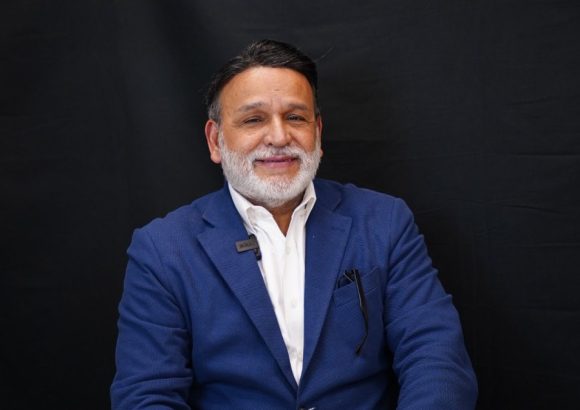
    Rev. Patricia Sheerattan-Bisnauth, Chief Executive Officer of CFPA, emphasized that while the ruling does not decriminalize abortion across all circumstances in Dominica, it marks an irreversible step forward for reproductive justice. “This judgment makes clear that women and girls should never face criminal penalties for accessing life-saving and essential healthcare when they are navigating the most traumatic, life-altering circumstances,” she said. “It also confirms that outdated laws inherited from our colonial era can no longer stand in the way of women accessing their constitutionally guaranteed rights to health, autonomy, and dignity.”

    For decades, broad abortion criminalization across much of the Caribbean has pushed vulnerable people into impossible, deadly dilemmas: choosing between protecting their own health and facing criminal prosecution, or foregoing safe, regulated medical care to seek unregulated, unsafe procedures that put their lives at risk. This systemic harm has fallen disproportionately on marginalized groups with the least access to resources and care: low-income women, adolescent girls, survivors of sexual violence, and people living in underserved communities with limited access to quality healthcare. Advocates stress that criminalization has never succeeded in eliminating abortion — it has only widened systemic inequality, reinforced harmful stigma, and caused untold preventable suffering and death.

    Roxanne Christopher, CFPA’s Board President, paid tribute to the collective effort that made the ruling possible, commending the courage of the women who brought the original legal challenge, the commitment of healthcare providers who upheld their ethical duty to care despite legal risks, and the persistent advocacy of legal teams and civil society groups that have pushed for reproductive justice across the region for years. “As a regional organization dedicated to SRHR, CFPA holds that every woman deserves access to compassionate, evidence-based healthcare delivered with dignity and respect, and without the constant threat of criminal punishment,” Christopher said. “Women’s health is not a luxury for the few — it is a non-negotiable fundamental human right.”

    Legal analysts note that the court’s decision, which anchored its ruling in both constitutional protections and binding international human rights standards, sends a powerful and resonant signal to governments and courts across the Caribbean: protecting women’s health and protecting human rights are inseparable goals.

    Even as advocates celebrate the ruling, they are clear that the fight for full reproductive justice across the region is far from finished. Millions of women and girls across the Caribbean still live under the shadow of outdated laws that criminalize access to essential reproductive healthcare, perpetuating widespread fear, stigma, and systemic inequality. This ruling opens a critical new path for reform, but it does not complete the journey, advocates say. Substantial work remains to ensure that all women, regardless of their place of residence or economic status, can exercise their fundamental rights to health, bodily autonomy, and informed, uncoerced decision-making about their own bodies.

    In response to the ruling, CFPA has issued a broad call to action, urging national governments, parliamentarians, healthcare professional bodies, faith leaders, civil society organizations, and local communities to engage in respectful, evidence-centered dialogue that centers the health, dignity, and well-being of women and girls in public policy design. Advancing full reproductive health equity across the region requires not just targeted legal reform, but also investment in comprehensive, age-appropriate sexuality education, expanded access to modern contraception, improved quality maternal healthcare, and intentional work to eliminate the stigma and discrimination that still block millions of women from accessing the care they need.

    “The struggle continues for laws that protect women instead of punishing them; for healthcare systems that heal instead of excluding marginalized people; and for a Caribbean where every woman and girl can make decisions about her own health with dignity, safety, and hope,” the organization said in a statement. “When women are healthy, informed, and empowered, families flourish, communities grow stronger, and nations become more just and equitable.”

    CFPA, a leading regional SRHR organization, works through a broad network of local member and partner organizations across the Caribbean to advance universal access to quality sexual and reproductive healthcare, gender equality, human rights, and empowerment for women and young people across the region.

  • TDC Mourns the Passing of Mr. Charles L. A. Wilkin, KC Former Director and Legal Counsel

    TDC Mourns the Passing of Mr. Charles L. A. Wilkin, KC Former Director and Legal Counsel

    One of the most enduring and influential figures in the leadership of St. Kitts Nevis Anguilla Trading and Development Company Limited (TDC), Charles L. A. Wilkin, KC, has passed away, prompting an outpouring of grief and tribute from the company’s board, leadership team, and entire workforce. In an official press release issued July 27, 2026, TDC confirmed the death of its former director and legal counsel, describing Wilkin as a distinguished attorney, respected business leader, and a foundational member of the TDC corporate family.

    Wilkin’s decades-long tenure with TDC began in 1977, and he remained committed to the organization’s mission and growth from that start through the final days of his life. Over the course of nearly 50 years of service, he delivered consistently trusted legal guidance, thoughtful strategic direction, and steady leadership that shaped the company’s corporate governance framework, fueled its sustained expansion, and laid the groundwork for its long-term market success.

    Throughout his career at TDC, Wilkin earned widespread respect and admiration from colleagues, fellow board members, employees, and corporate stakeholders alike. His professional reputation was built on uncompromising integrity, sharp institutional wisdom, meticulous professionalism, and an unwavering dedication to upholding the highest standards of excellence. He played a central, instrumental role in steering TDC through dozens of major corporate milestones and high-stakes strategic decisions, bringing calm perspective and thoughtful guidance to the table during periods of both rapid growth and unforeseen challenge.

    Beyond his specialized legal expertise, Wilkin emerged as one of the company’s most trusted strategic advisors, whose insight, sound judgment, and relentless commitment contributed immeasurably to TDC’s overall strength and long-term stability. His impact stretched far beyond the walls of the company’s boardroom, leaving behind a lasting legacy of dedicated service, institutional accountability, and principled leadership that continues to define the organization’s culture.

    TDC’s statement emphasized that the entire corporate community holds deep gratitude for Wilkin’s transformative contributions to both the company’s development and the broader business ecosystem of the region. Company leadership noted that his professional example will remain a touchstone of inspiration for future generations of TDC leaders and business professionals across St. Kitts and Nevis.

    On behalf of the full TDC community, the company extended its deepest and most heartfelt condolences to Wilkin’s immediate family, close friends, professional colleagues, and all those who had the privilege of working alongside him over his decades-long career. TDC also formally recognized Wilkin’s far-reaching contributions to the regional legal profession, global standards of corporate governance, and the broader economic development of St. Kitts and Nevis, acknowledging the profound, lasting impact he built through his distinguished decades of service. The statement closed with a final tribute: May he rest in eternal peace.

  • Digital Nomads can access global capital. But are their startups ready?

    Digital Nomads can access global capital. But are their startups ready?

    In today’s interconnected digital economy, a startup founder can launch a venture in Santo Domingo, legally register it in the United States, recruit talent across Latin America, serve clients across Europe, and pitch to potential investors in Miami, Madrid, or Dubai — all without maintaining a single permanent physical office across any of these regions. On the surface, this borderless way of building a company looks like a major advantage for fundraising. And in some cases, it is.

    I have personally observed founders host investor meetings from hotel lobbies, airport departure lounges, and shared coworking spaces in countries they had not even lived in three months prior. They travel light: just a laptop, a registered Delaware corporation, and a pitch deck dotted with upward-trending projections. This generation of founders has access to levels of global capital that their parents’ business-building cohorts could never have dreamed of. Yet for all this access, what most of these location-independent founders lack is genuine negotiating leverage.

    The freedom to pitch investors from any corner of the globe has spawned a risky misconception: that access to cross-border capital automatically makes a company globally investable. That could not be further from the truth. Investors do not write checks for cool passport stories, flexible travel itineraries, or compelling narratives about location independence. They invest in businesses they can clearly understand, thoroughly evaluate, and reasonably expect will generate solid returns. Mobility may get a founder in the door for more meetings, but it cannot make up for lackluster revenue, unclear ownership structures, disorganized operations, or a venture that relies entirely on the founder’s personal charisma and individual connections to survive. Capital is not sentimental — it does not care how many borders a founder has crossed, or how deeply they believe their target market needs their offering. It only cares if the startup has turned an uncertain future into a credible enough opportunity to invest in. Access to capital is abundant in today’s market. Genuine investment conviction, by contrast, is hard-won and rare.

    The traditional fundraising process was built around geographic proximity. For decades, founders flocked to startup hubs like Silicon Valley, New York, or London because capital, talent, and industry relationships were all concentrated in those locations. In-person presence increased the odds of warm introductions, repeated follow-up meetings, and the development of trust that underpins most early-stage investment deals. That old model has weakened in recent years, but it has not disappeared entirely. Today, conversations with investors can start through accelerator networks, online startup communities, virtual introductions, global industry conferences, and cross-border professional connections. A founder based in the Caribbean can chat with an angel investor in Florida first thing in the morning, meet a strategic partner in Puerto Rico that same afternoon, and connect with a European fund manager before the end of the week. That level of global connectivity is undeniably real progress.

    But it has also created a scenario where founders can gain access to investor meetings long before their companies are actually prepared to withstand the scrutiny that comes with fundraising. A charismatic, well-crafted pitch can lock in a meeting slot. A spot at a respected accelerator can lend borrowed credibility to an unproven venture. A speaking slot on a conference stage can produce social media content that makes the company look much closer to closing a funding round than it actually is. Eventually, though, every investor conversation gets around to the questions that actually matter: Who is currently paying for your product? Why are they choosing to pay for it? How consistently do they renew their payments? How much does it cost to acquire a new customer? What will keep them with your company long-term? Can you scale sales without the founder personally orchestrating every deal? And most importantly: What will this new capital allow your company to achieve that it cannot already do on its own? A founder’s location, whether fixed or nomadic, cannot answer these questions. Only a functioning, revenue-generating business can.

    Activity is not the same as economic performance. Digital nomad founders have a unique kind of optionality: they can explore multiple markets, compare regulatory and tax frameworks across jurisdictions, build cross-border partnerships, and grow professional networks outside the constraints of a single local startup ecosystem. They are far less dependent on the investors, institutions, and industry gatekeepers of one single country. That freedom definitely creates access to more opportunities. But leverage is an entirely different thing.

    A founder holds genuine leverage when their company has enough hard commercial evidence that they can choose which capital to accept, rather than just chasing any investment they can get. That evidence can take many forms: contracted recurring revenue, strong customer retention rates, disciplined pricing strategy, improving profit margins, defensible intellectual property, or a repeatable, scalable customer acquisition process. Without these tangible markers, a founder is not offering investors an opportunity — they are asking investors to fund a list of unproven assumptions. And founders who most visibly need capital almost always have the least negotiating power when it comes to valuations and terms. Geographic mobility often disguises this critical distinction.

    A full calendar of investor meetings across multiple countries can easily feel like traction. Invitations to exclusive global startup programs can feel like external validation. Interest from contacts in several different markets can feel like proof of product demand. A warm WhatsApp introduction to a high-net-worth investor can even feel like a complete financing strategy. But activity around the edges of a company is not the same as strong economic performance at its core. I have seen founders accumulate mentors, awards, speaking slots, and dozens of investor conversations while avoiding the single most important interaction a startup can have: getting a paying customer to commit. The global startup ecosystem celebrates visible movement, because movement is easy to show off. Revenue, by contrast, tends to be quieter. It comes through contracts, invoices, customer renewals, and solid margins — it is far less glamorous than winning a pitch competition, but infinitely more convincing to serious investors.

    Capital approaches investment with organized suspicion. Founders often frame fundraising as an exercise in selling an inspiring vision of the future. But investors approach due diligence as an exercise in testing that vision for doubt. The founder sells a story about what the future will hold. The investor’s job is to sort which parts of that story are probable, which are just possible, and which have been overpolished for the pitch meeting. That makes capital inherently organized suspicion: every serious investor asks the same core question, one way or another: What do I have to believe for this company to deliver the returns it is promising? The stronger the company’s fundamentals, the fewer leaps of faith the investor has to make.

    Revenue eliminates one big leap of faith. Proven customer retention eliminates another. Credible governance, clear ownership, and disciplined operations eliminate several more. A founder’s job is not to eliminate all risk — after all, a startup with no risk is rarely a meaningful startup. Their job is to make that risk clear, bounded, and worth taking.

    The quality of revenue matters more than the existence of revenue. Many founders operate under the assumption that any amount of revenue strengthens their fundraising case. It does, but only up to a point. When investors evaluate a cross-border startup, they need to understand the quality of that revenue, not just the total number. Is it recurring revenue, or one-off transactional income? Does it come from one single large client, or a diversified base of customers? Was it generated through a repeatable scalable process, or just the founder’s personal network? Are customers buying the company’s core scalable product, or are they paying for custom consulting that keeps the lights on but cannot grow? A startup could have clients in Miami, Madrid, and Santo Domingo and still have no reliable system for winning a fourth new client. Another startup could operate entirely from the Dominican Republic and still boast healthy margins, valuable intellectual property, and clear access to regional demand. Geography never determines the quality of a company — its underlying commercial structure does. Investors need to be able to see where demand comes from, how that demand turns into a sale, what keeps the customer relationship intact, and how new capital will expand that entire system. Capital should accelerate an already working business engine — it should not be expected to build the engine from scratch.

    For globally mobile founders, a startup’s legal and financial structure is not just boring administrative housekeeping — it is a core part of being investable. Investors need to know exactly which entity they are investing in, where the company’s intellectual property is legally held, who owns what shares, which entity signs customer contracts, and whether the banking structure can support cross-border operations. A founder may live in one country, operate through a registered entity in another, employ contractors across three more, and accept payment in multiple currencies. On LinkedIn, that can look like a sophisticated global operation. When you look under the hood in the data room, it can easily turn out that no one is entirely sure who owns what. Not every early-stage venture needs a Delaware incorporation. Not every Dominican startup needs to move its ownership overseas. But every serious founder must be able to clearly explain why their corporate structure exists, and how capital can legally enter the business, create value, and eventually exit for investors. If those answers are still improvised, the investor is not just evaluating market risk — they are being asked to take on unnecessary structural risk created by the founder. That rarely leads to a better valuation for the founder.

    One of the costliest mistakes founders make in fundraising is framing capital as the cure-all for every weakness in their business. We need capital to build out a sales team. We need capital to figure out our pricing. We need capital to professionalize our operations. We need capital to find product-market fit. But capital does not automatically create discipline. It cannot fix a broken customer acquisition process that the company itself does not understand. It cannot set pricing for a founder who has never even tested what customers are willing to pay. It cannot turn loose connections into a reliable sales pipeline. Capital simply amplifies whatever is already present in the business. When a company already has a working revenue system, investment can speed up customer acquisition, strengthen the core product, or open up new markets. When a company is disorganized and unproven, capital just gives that disorganization a bigger payroll.

    That is why the right question to ask about fundraising is not just How much money can we raise? It is What proven economic behavior are we prepared to accelerate with this capital? This question is far less exciting than plugging numbers into a valuation model, but it is far more likely to result in a successful funding round that benefits both founder and investor.

    The real advantage of being a globally mobile founder is not the ability to pitch investors from a tropical beach, a coworking space, or an airport lounge. It is the ability to spot unique cross-border opportunities that founders tied to one hub might miss. A founder based in Santo Domingo can identify demand in one market, source affordable talent in another, register the company in the jurisdiction that works best for their goals, and access customers or capital from anywhere in the world. This perspective can lead to startups that are regional from day one, rather than being trapped inside a small limited domestic market. But mobility without a clear strategy just becomes expensive aimless drift.

    A founder has to know which market will buy their product, which market will provide the best funding terms, which jurisdiction will protect their intellectual property and business, and which relationships will create a repeatable distribution system. They also need to build up enough commercial evidence to negotiate from a position of strength. A company with no revenue, limited cash runway, and only one interested investor is negotiating from a position of exposure. A company with growing customer demand, multiple strategic options, and several paths to capital is negotiating from strength. Power does not come from sounding confident in a pitch meeting. Power comes from having alternatives.

    Finally, fundraising itself is not a victory. The startup ecosystem often treats a closed funding round as proof that a company has already succeeded. That is not true. A funding announcement only proves that an investor agreed to take a risk on the company. The real commercial test starts the next day, when the company has to convert that capital into new customers, growing revenue, operating capacity, and long-term enterprise value. The press release is just the ceremonial celebration. Deploying the capital to build a sustainable business is the actual hard work.

    The winners in this new borderless startup world will not be the founders who can pitch from more countries than anyone else. They will be the founders whose businesses remain understandable, well-governed, and commercially productive no matter where they operate. Global mobility opens the door to global capital. Only a solid underlying commercial, legal, and operational architecture gives founders the leverage to shape what happens after they walk through that door. At Successment, we call this foundational work Innovation Architecture: aligning the commercial, operational, and institutional systems needed to turn a compelling narrative into a genuinely investable enterprise. Because capital is never the system itself — it merely reveals whether a solid system was already there.

  • Dominican Constitutional Court upholds ruling on Jaragua National Park boundaries

    Dominican Constitutional Court upholds ruling on Jaragua National Park boundaries

    SANTO DOMINGO — In a landmark decision that has sparked debate over environmental protection and private land rights, the Constitutional Court of the Dominican Republic has formally upheld a lower court ruling that mandates the Ministry of Environment revise the country’s official National Cadastre of Protected Areas (SINAP). The update is required to reflect longstanding territorial adjustments outlined in 2004’s Law 266-04, which calls for the removal of four disputed parcels of land from the official boundaries of Jaragua National Park.

    The court’s ruling, registered as case TC/0568/26, rejected two separate appeals brought by the Ministry of Environment and the General Administrative Prosecutor’s Office. This rejection leaves intact an earlier decision from the Superior Administrative Court, which ruled in favor of private developer Inversiones del Sur, SRL in the years-long land dispute.

    The boundary adjustment at the center of the case is tied to the creation of the Southwest Region Tourist Hub, a major development initiative first formalized under Laws 202-04 and 266-04 that redefined portions of Jaragua National Park’s official limits. The high court’s decision drew on authoritative technical evidence to support its outcome: a 2025 geospatial assessment compiled by the National Directorate of Cadastral Surveys, which definitively concluded that the four contested parcels do not fall within the boundaries of Jaragua National Park, nor any other legally protected area in the country.

    Despite the majority’s ruling, the decision has not come without opposition. One justice issued a formal dissenting opinion, arguing that the legal mechanism of an amparo action — a court proceeding typically used to protect constitutional rights — is not the appropriate avenue to formalize private property claims or adjust the boundaries of specific protected land parcels. The dissenting justice warned that the ruling could set a problematic precedent that undermines collective environmental rights enshrined in Dominican law, raising questions about how future land disputes involving protected natural areas will be resolved.

  • Migration agency launches upgraded system to speed traveler processing

    Migration agency launches upgraded system to speed traveler processing

    Santo Domingo – The Dominican Republic’s General Directorate of Migration (DGM) has launched a comprehensive modernization of its DOM-02 immigration management system, rolling out a suite of new features designed to raise border security standards, cut down on administrative delays, and deliver a smoother experience for domestic and international travelers.

    Central to the system update is the integration of advanced biometric verification technology. Unlike previous check processes that relied solely on manual visual comparison, the upgraded platform now automatically cross-references a traveler’s live or submitted passport photograph against the biometric image stored directly on the passport’s integrated electronic chip. This automated matching process drastically improves the reliability of identity confirmations, creates a strong new line of defense against identity theft and document fraud, and minimizes the rate of human error that often occurs during manual document validation.

    To further strengthen document authenticity checks, the updated DOM-02 system adds multispectral imaging analysis for all passport inspections. The tool generates and displays three separate scans of each passport, captured under natural, infrared, and ultraviolet light respectively. This multi-angle scanning allows border inspectors to easily spot subtle alterations, forgeries, or tampering that would go undetected by the naked eye or basic scanning tools, while also making it simpler to verify the built-in security features of legitimate travel documents. Complementing this capability, the system also grants inspectors authorized access to a traveler’s full historical photographic record on file, adding an extra layer of confirmation for high-risk or ambiguous identity checks.

    The benefits of this modernization extend far beyond routine border inspections. DGM has also used the system upgrade to overhaul back-end administrative workflows, standardizing inconsistent traveler registration processes across all entry and exit points, improving the transparency and management of immigration fee collection, and reducing wait times for both inbound travelers and people completing routine immigration administrative requests. Overall, the project represents a major step forward for the Dominican Republic’s immigration infrastructure, aligning the country’s border management technology with international best practices.

  • David Collado oversees El Faro Beach redevelopment in San Pedro de Macorís

    David Collado oversees El Faro Beach redevelopment in San Pedro de Macorís

    In the eastern Dominican city of San Pedro de Macorís, a major public coastal revitalization initiative is reaching its final milestone: Tourism Minister David Collado has confirmed that the full-scale redevelopment of El Faro Beach is complete, with an official inauguration ceremony set for Friday, headlined by President Luis Abinader.

    Carried out with a total investment of RD$67 million, the project transformed a 570-meter, 12,000-plus square meter stretch of underdeveloped beachfront into a multi-use public space aligned with the national government’s broader goals: upgrading accessible coastal areas for both local communities and visitors, and driving long-term tourism growth across the country’s less-promoted coastal regions.

    The scope of the renovation extends far beyond basic landscaping. To meet the needs of all stakeholders, the project integrated dedicated infrastructure for local artisanal fishermen, along with expanded public parking lots and upgraded road access to reduce congestion and improve visitor flow. For recreational users, the site now includes a new children’s playground, a regulation-sized volleyball court, enhanced native vegetation landscaping, full LED lighting for after-hours use, and modern public restrooms.

    Critical civic upgrades were also a core focus of the work. A new stormwater drainage system was installed to reduce chronic flooding in low-lying areas of the beachfront, alongside full reconstruction of sidewalks, curbs, and adjacent local streets that improves overall accessibility for pedestrians with mobility devices and cuts flood risk for nearby neighborhoods. The project also added a permanent security post managed by POLITUR, the Dominican Republic’s national tourism police, to ensure public safety for all visitors.

    Minister Collado emphasized that the El Faro Beach project builds on the government’s earlier RD$267 million investment to restore the broader San Pedro de Macorís waterfront. For local residents who have pushed for upgrades to the popular public beach for decades, Collado described the finished redevelopment as a long-overdue transformation that will deliver lasting benefits to both the local community and the regional tourism economy.

  • Pro Consumidor and debt collectors sign pact to end abusive collection practices

    Pro Consumidor and debt collectors sign pact to end abusive collection practices

    In a major step to curb abusive debt collection practices and safeguard consumer rights across the Dominican credit industry, two key stakeholders have formalized a landmark regulatory agreement that sets clear new standards for how collection agencies operate.

    The pact, signed by the country’s National Institute for the Protection of Consumer Rights (known locally as Pro Consumidor) and the Association of the Credit and Collection Ecosystem (COB-RD), directly addresses the most frequent consumer grievances that have plagued the Dominican debt collection sector for years. Two of the highest-volume complaints received by Pro Consumidor — aggressive collection efforts targeting third parties who bear no legal responsibility for an outstanding debt, and relentless unsolicited communication that disrupts daily life — are explicitly targeted for elimination under the new agreement.

    Beyond banning these abusive practices, the accord creates a framework for advancing a culture of humane, responsible debt collection across the nation’s credit ecosystem. The framework outlines mandatory adoption of industry-wide best practice guidelines, requires regular training for collection staff to ensure teams understand legal and ethical boundaries, and commits both parties to rolling out public consumer education campaigns that help borrowers understand their rights when interacting with collection agencies. The agreement also imposes strict new oversight requirements for all collection procedures, holding agencies accountable for consistent adherence to the new standards.

    Notably, the new rules extend to modern digital collection channels that have grown in popularity in recent years. All digital communication methods, including email, automated calling systems, consumer instant messaging platforms, and even artificial intelligence-powered collection tools, are required to align fully with existing national consumer protection regulations and official telecommunications laws.

    To ensure the agreement does not remain an unenforced policy statement, the two organizations have agreed to launch a permanent joint technical committee. This cross-stakeholder body will be tasked with tracking on-the-ground implementation of the new standards, recommending policy updates as the credit and technology landscape evolves, facilitating the spread of proven responsible collection practices across the industry, and conducting formal reviews of consumer complaints related to potential violations of the agreed-upon rules.

  • Dominican Navy’s Admiral Juan Bautista Cambiaso returns from US Sail 250

    Dominican Navy’s Admiral Juan Bautista Cambiaso returns from US Sail 250

    Santo Domingo – In a formal homecoming ceremony held Tuesday at the Sans Souci Naval Station, the Dominican Republic Navy celebrated the return of its flagship training vessel, the Admiral Juan Bautista Cambiaso (BE-01), after a months-long international training deployment for naval midshipmen. The cruise, branded “Brotherhood of the Seas Summer 2026”, brought the vessel and its trainee crew across North American ports to take part in landmark international celebrations. The welcoming event was presided over by Dominican Defense Minister Lieutenant General Carlos Antonio Fernández Onofre, alongside Navy Commander Vice Admiral Juan B. Crisóstomo Martínez. Senior military leaders, former commanders of the Dominican Navy, and dozens of family members of the participating midshipmen gathered to mark the successful completion of the voyage, greeting the crew and vessel as they docked back at their home base.

    Speaking at the ceremony, Vice Admiral Crisóstomo Martínez framed the training mission as far more than a routine exercise for future naval officers. He emphasized that the cruise demonstrated the Dominican Republic’s longstanding dedication to advancing military diplomacy across the Americas and beyond. The deployment also underscored the active support of Dominican President Luis Abinader for two key national priorities: expanding the armed forces’ professional international engagement, and elevating the quality of training for the next generation of Dominican military officers.

    During their time at sea, the Admiral Juan Bautista Cambiaso served as the official floating representative of the Dominican Republic at two major U.S. port calls: New York and Boston. The vessel joined a large lineup of international ships in the Sail 250 celebration, a global maritime event organized to commemorate the 250th anniversary of the United States’ declaration of independence. Beyond ceremonial duties, the port visits created valuable opportunities for the Dominican midshipmen to train alongside their international peers, share maritime best practices, and deepen professional connections with U.S. and foreign naval personnel. In the process, the voyage helped raise the profile of the Dominican Republic as a cooperative maritime partner, boosted cultural and diplomatic exchange between the Caribbean nation and the United States, and strengthened longstanding naval cooperation between the two countries.

  • GBPA issues stop-work order on $21m marina

    GBPA issues stop-work order on $21m marina

    A high-stakes $21 million revitalization project for the aging Port Lucaya Marina on Grand Bahama has hit an unexpected legal roadblock, just 24 hours after demolition work got underway. The Grand Bahama Port Authority (GBPA) has issued a stop-work order that has brought the entire first phase of the redevelopment to a sudden standstill, centered on unresolved questions surrounding the legal transfer of the marina’s critical seabed lease.

    The project’s new developer, Bahamas Land and Waterways, received the cease-and-desist notice from GBPA’s Inspection Department on Friday, putting a premature end to the initial demolition of the long-deteriorated waterfront facility. Frank Delancy, managing director of Bahamas Land and Waterways, has pushed back against the order, arguing that regulators issued the mandate in error. Delancy noted the stop-work order incorrectly references prohibited repair work, when the firm was clearly engaged in full demolition of the existing structure.

    “I explained to the personnel at the Inspection Department that we’re not doing repairs. We are actually doing demolition,” Delancy told reporters. “They were very overzealous in issuing that, and if you look at the stop-work order, it says repairs when we’re doing demolition.”

    The dispute expanded further on Monday, when the Grand Bahama Development Company (DEVCO) – the entity that still claims to be the official landlord under the existing seabed lease – confirmed it has not received required legal documentation to formally recognize the marina’s new ownership or their authorized project representatives. DEVCO emphasized that the original lease remains fully in effect, and it requires any change to the property’s beneficial ownership to be formally disclosed and approved through standard administrative channels.

    “While we understand that the property has been sold by third parties, DEVCO has not yet received the legal documentation confirming the new ownership or identifying the individuals authorized to act on behalf of the owner,” the company said in an official statement. DEVCO stressed that its request for paperwork is a routine legal and administrative requirement baked into the original lease agreement, not a broader objection to the much-anticipated redevelopment project.

    “Our only requirement, as stated in our lease agreement, is that we receive the necessary legal documentation so that we can recognize the properly authorized party and fulfill our obligations under the lease,” the statement continued. “This is a standard legal and administrative process that is common to landlord and tenant relationships. The new owners of the Port Lucaya Marina are not exempt from this requirement.”

    Project contractor Executive Marine Management announced demolition had officially kicked off on Thursday, marking the formal launch of the first phase of the waterfront transformation. According to Delancy, Bahamas Land and Waterways notified GBPA of its project plans well in advance of the start date, and the contractor submitted an application for the required demolition permit eight to nine days prior to beginning work. Delancy claims the project received verbal approval from regulators, was assigned a permit number, and was told formal documentation would be processed after work commenced.

    “We kept in communication through the contractor, which is a very reputable contractor, and they’ve done things of this nature before,” Delancy said. “They applied for the permit. They were given a verbal approval, with the permit number to be processed later. However, that did not happen, but we were told to commence the work.”

    Delancy added that open communication between the developer and GBPA continued through the previous Wednesday, when the firm once again received verbal clearance to move forward with demolition. He noted that no GBPA representatives visited the work site to halt the project before work started, even after the developer publicly announced the demolition timeline. Delancy stressed the developer does not view the conflict as a broader breakdown in relations with GBPA, and the firm is eager to resolve the administrative standoff quickly to get the project back on track. Bahamas Land and Waterways has scheduled a meeting with GBPA officials this week to negotiate a path forward.

    Charisse Brown, president of GB DEVCO, echoed that sentiment, saying her company welcomes the planned private investment and has no fundamental objection to the proposed redevelopment work. “We welcome the planned investment in and improvement of the marina,” Brown said. “Enhancements to this important asset are positive for Port Lucaya, Grand Bahama, and the wider economy. DEVCO has no objection to the proposed works and is committed to supporting responsible development.”

    Brown added that there appears to be “some misunderstanding and misinformation” surrounding the public dispute, and DEVCO is fully willing to work with the new ownership to secure all required approvals and move the project forward once the necessary legal paperwork is submitted.

    Prior to the stop-work order, Delancy said demolition was expected to take between four and six weeks to complete. Once that phase wraps up, the developer planned to wait for delivery of new prefabricated dock infrastructure before beginning installation. “We just want to get this development started because we know the state of Grand Bahama, so we’re trying to do things in order to progress forward with this development,” Delancy said.

  • Mother demands answers after viral school attack

    Mother demands answers after viral school attack

    A violent bullying incident at C.H. Reeves Junior High School has sparked widespread public outrage after a viral video captured a group of students surrounding and attacking a 13-year-old boy, who was ultimately forced to flee for his safety across school grounds. The incident, which unfolded during summer classes for incoming eighth-grade students last Thursday, has also drawn sharp criticism over alleged failures by school administration to protect the victim, according to his mother Genal Bodie.

    The confrontation traces back to a heated group phone call the night before the attack, when multiple participants mocked the 13-year-old following the recent death of his grandmother. When the boy pushed back against the insults, the attackers planned to target him at school the next day, a escalation he never anticipated. On Thursday morning, tensions boiled over: at least eight boys cornered the teen on campus, with one attacker ordering another to strike the victim before a boy in a black head wrap shoved him. The victim repeatedly refused to fight, telling the group the primary aggressor was once his friend, but his attempts to de-escalate only egged on the crowd. Surrounding students jeered and urged the attackers to continue, with some shouting calls to seriously hurt the teen. One attacker grabbed the 13-year-old by the shirt, another slapped him in the head, and a third threatened the victim by claiming he had a knife. Overwhelmed, the teen ran for his life, with the entire group chasing him across the school campus.

    After escaping the pursuit, the teen fled to the school administration office to request help, saying he feared for his safety if he tried to walk home alone. According to Bodie, school officials contacted the parents of the attacking students, notified them their children would face suspension through September, and asked the families to pick up their children from campus. However, no administrator reached out to Bodie to inform her of the incident, nor did any staff arrange safe transport home for her son. When the teen eventually left campus on his own, he found the entire group of attackers waiting for him just outside the school gate. Only the quick intervention of the victim’s cousin, a school security officer, prevented further violence: she pulled the boy into her car for protection while other security personnel ordered the group to disperse.

    Bodie said she first sensed something was wrong when her son arrived home earlier than usual, but he hid the full extent of the attack from her because she lives with a seizure disorder and he did not want to cause her additional stress. The teen initially only told her a few boys had tried to fight him, and said the school had resolved the issue. It was only after Bodie noticed a lump on her son’s head and swelling along his cheek that she began pressing for more details, and she learned the full truth only when a neighbor’s daughter shared the viral video with her while the pair ran errands.

    “When I saw the video, I felt my knees go weak,” Bodie told local outlet The Tribune. “Watching that happen to my child was heartbreaking — I felt every blow he took, every bit of fear he went through. When I showed it to him, he just started trembling; it was only then that the full trauma of what happened really hit him.”

    Bodie questioned the school’s handling of the incident, saying: “What were the teachers and administrators at C.H. Reeves thinking? Aren’t they parents themselves? How could they let my son walk out of the gate when the same boys who just attacked him were waiting there for him?”

    Bodie, who is now considering transferring her son to a different school for his safety, reported the incident to police on Friday and accompanied officers to the campus to demand answers about the school’s response. She acknowledged that her son had been involved in two minor fights in the past, and had completed a two-week behavioral program to learn conflict resolution skills after yielding to peer pressure to fit in. Still, she said the attackers must be held legally accountable for their actions, warning that unaddressed bullying could easily end in tragedy.

    As of press time, police have not released any updates on the investigation, including whether any attackers have been taken into custody. The viral video of the incident has spread rapidly across social media in the region, racking up nearly 1,000 shares and more than 700 comments by the time local media reported on the case. The incident has sparked widespread condemnation of the attack, with many social media users praising the 13-year-old for avoiding a fight and escaping the dangerous situation, while questioning the upbringing of the students involved.

    Khandi Gibson, president of local advocacy group Families of All Murder Victims, has called for an urgent meeting with all families involved to resolve the conflict, and urged the broader community to take a public stand against bullying. She praised the 13-year-old as a hero for choosing to run rather than escalate the violence, and has organized community support for the victim: she is gifting him a new phone for the upcoming school year, and community members have stepped forward to donate school supplies, with response overwhelming. “This child endured humiliation, fear and embarrassment that no young person should ever have to face at school,” Gibson said. “It’s long past time we stood together to put a stop to this kind of senseless violence.”