作者: admin

  • ‘I forgive her, but I won’t forget’

    ‘I forgive her, but I won’t forget’

    Stephanie Ann Braynen, permanently blinded in a devastating 2020 acid attack, has expressed complex emotions following the Court of Appeal’s decision to uphold her attacker’s seven-year prison sentence. While relieved that Pandora McKenzie’s appeal for sentence reduction was denied just one year into her imprisonment, Braynen maintains the punishment constitutes ‘a slap on the wrist’ for what she describes as ‘premeditated attempted murder.’

    The November 2020 assault left Braynen with irreversible blindness and significant facial disfigurement. Despite undergoing specialized treatment at Miami’s Bascom Palmer Eye Institute, medical professionals could not restore her vision. The victim now depends on her pension and requires substantial support from her children for daily living, though she has developed adaptive skills to navigate her home environment.

    Braynen has raised serious concerns about the judicial handling of her case from its inception. She contends the initial charge of ‘grievous harm’ significantly underestimated the attack’s severity and suggests possible improper influence due to McKenzie’s son serving as a police officer. ‘The magistrate acknowledged this was attempted murder,’ Braynen recalled, ‘but indicated the seven-year term represented the maximum penalty allowable under the charged offense.’

    The legal proceedings extended across four years, culminating in McKenzie’s conviction on September 16, 2024. The recent appeal, filed on September 8, resulted in the appellate court affirming both the conviction and original sentence. Braynen expressed disappointment that the appellate judges didn’t enhance the punishment, noting: ‘When you appeal, you disrespect what you were supposed to get. They should have added more time.’

    Financial recourse remains unavailable as McKenzie lacks tangible assets for civil litigation. Adding to the tragedy, Braynen revealed that the man whose alleged affair motivated the attack has since divorced and remarried, regularly checking on her wellbeing and highlighting the senselessness of the violence.

    Despite her profound losses, Braynen demonstrates remarkable resilience, explicitly stating she refuses to harbor bitterness and has extended forgiveness to her attacker. ‘I feel sad for her. I don’t hate her. I forgive her. But I won’t forget,’ she stated. While dissatisfied with the sentencing outcome, she acknowledges closure in the judicial process: ‘I’m glad they see fit she must stay and finish her time. It is what it is. I will live it. And I thank God I lived through it.’

  • Seventh-day Adventists reject claims of providing gov’t with people’s personal data

    Seventh-day Adventists reject claims of providing gov’t with people’s personal data

    KINGSTON, Jamaica — The Jamaica Union Conference (JAMU) of Seventh-day Adventists and its humanitarian division, ADRA Jamaica, have formally refuted social media allegations accusing them of sharing personal data with the government. The claims suggested that information gathered during Hurricane Melissa relief operations was being funneled to Jamaica’s National Identification System (NIDS).

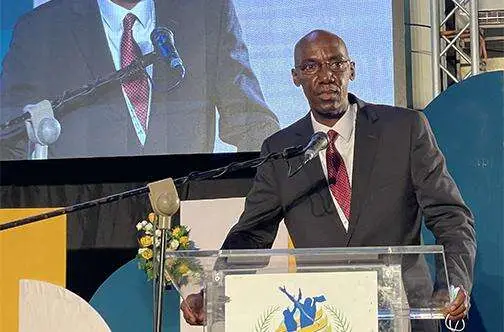
    During a press conference held Wednesday, JAMU Treasurer Pastor Adlai Blythe categorically denied these accusations. He explained that all data collected serves exclusively for internal record-keeping and coordinating relief efforts. “We conduct initial damage assessments to determine individual losses and coordinate our response accordingly,” Blythe stated. “As a registered charity, ADRA Jamaica gathers information solely for distributing aid to affected persons. This information is never shared with any external entity, governmental or non-governmental.”

    Blythe emphasized the organization’s compliance with data protection regulations, noting they employ a dedicated data protection officer to ensure protocol adherence.

    JAMU President Pastor Everett Brown provided additional context about their hurricane response preparedness. “Prior to Hurricane Melissa’s landfall, we allocated $500,000 across our five conferences to pre-position food and water supplies in strategic locations,” Brown revealed. Following the hurricane, the church deployed ADRA Jamaica staff and conference workers to assess needs and distribute relief materials.

    Brown clarified the funding sources for these efforts: “All deployed resources originate from international partners, the global Seventh-day Adventist church, and local contributions. We have received no governmental financial support for this initiative.”

    While expressing openness to future government collaboration, Brown stressed the current operation’s independent nature. “As a church embodying Christ’s mission, we respond to human needs wherever they exist. We stand ready to distribute materials through our nationwide network, but our current operations are independently funded through collaborative efforts, not government support.”

    ADRA Jamaica operates as a registered humanitarian agency serving vulnerable populations affected by disasters, poverty, and social changes, with presence in over 118 countries worldwide.

  • PSA President’s response to CPO offer: We want the cash

    PSA President’s response to CPO offer: We want the cash

    A significant dispute has emerged between Trinidad and Tobago’s Public Services Association (PSA) and the Chief Personnel Officer (CPO) regarding the payment structure of a $3.8 billion backpay settlement for public service workers.

    PSA President Felisha Thomas has taken an unequivocal stance against the government’s proposal to distribute the substantial backpay amount through a combination of cash and non-cash benefits. Thomas maintains that her mandate from union members requires full cash payment without alternative compensation mechanisms.

    The conflict intensified following December 2 statements from CPO Daryl Dindial, who outlined the government’s position that the massive payout needed careful financial management. Dindial explained that while a $500 million ‘advance on arrears’ would be distributed before December 23, the complete $3.8 billion settlement remains subject to ongoing negotiations regarding disbursement methods and timing.

    Dindial emphasized fiscal responsibility, stating: “We need to ensure the public doesn’t perceive government borrowing $3.8 billion as reckless. The government operates responsibly and has provided the CPO with broad negotiation guidelines.” He further noted that Finance Minister allocations hadn’t specifically provided for these arrears, requiring the ministry to identify appropriate funding sources.

    Thomas vehemently rejected these explanations, citing contradictory statements from Finance Minister Davendranath Tancoo, who told reporters on November 26 that the government indeed possessed sufficient funds for the payment. This contradiction prompted Thomas to question: “Is the CPO lying, or is he calling the finance minister a liar?”

    Despite the payment method disagreement, both parties confirmed that negotiations continue productively. The PSA and CPO have already reached agreement on multiple components including a ten percent wage increase for 2014-2019 periods, cost of living adjustments, new salary structures effective January 2014, and various allowance enhancements covering meals, housing, transportation, and vehicle provisions.

    Thomas affirmed that negotiation processes remain uninterrupted, noting: “I see nothing affecting negotiations. Both parties have their positions and we engage in discussion.” Further negotiations regarding the complete arrears payment are scheduled to resume in January.

  • Tobago decides

    Tobago decides

    The Tobago House of Assembly (THA) election campaign has commenced with profound implications that extend far beyond the island’s shores, marking significant shifts in Tobago’s political landscape. TPP leader Farley Augustine officially launched his campaign on December 1st amid extraordinary circumstances that have elevated foreign policy matters to unprecedented prominence in a local election.

    The upcoming vote, scheduled for January 12th, will serve as the first electoral test of the controversial decision to permit the United States to install military-grade radar systems at the ANR Robinson International Airport. This development has effectively transformed the local election into a de facto referendum on both Mr. Augustine’s leadership and Prime Minister Kamla Persad-Bissessar’s administration.

    Recent diplomatic efforts have eased initial tensions between Tobago and the central government regarding the radar installation. Following Mr. Augustine’s initial claims of being uninformed about the project details and the Prime Minister’s assertion that he didn’t require full disclosure, Attorney General John Jeremie and Defence Minister Wayne Sturge were dispatched to thoroughly brief the Tobago People’s Party leader.

    The TPP leadership has subsequently embraced the radar project, with former THA councillor Certica Williams-Orr characterizing it as a ‘Christmas gift’ and Tobago East MP David Thomas affirming its necessity. Mr. Augustine now expresses confidence that the equipment won’t be used for offensive operations, while acknowledging Trinidad and Tobago’s limited influence over US foreign policy decisions.

    This election represents the TPP’s first THA contest since its formation in 2023 when Mr. Augustine separated from Watson Duke’s Progressive Democratic Patriots. The party enters the race strengthened by its sweeping victory in both Tobago seats during the April 28th general election, potentially signaling the decline of Mr. Duke’s political influence.

    The opposition PNM faces its own challenges, attempting to recover from significant losses in both the 2021 and recent April elections. The defection of Keigon Denoon, the popular Tobago West constituency chairman, to the TPP further complicates the PNM’s path to recovery.

    Meanwhile, Prime Minister Persad-Bissessar has maintained strong ties with Mr. Augustine, even adopting the TPP’s ‘anchor’ motto during her November visit to Tobago. While hoteliers express concerns about potential negative impacts on tourism revenue from the radar installation, the Prime Minister’s administration has facilitated substantial economic benefits through licensing agreements that have generated billions in aggregate revenues.

    Tobagonians will ultimately deliver their verdict on these complex matters when they cast their ballots in January, determining both the island’s political direction and the broader implications of enhanced surveillance capabilities at Crown Point.

  • Financial checks every family should do before the new year

    Financial checks every family should do before the new year

    As the calendar year draws to a close amidst seasonal celebrations and holiday spending, financial experts emphasize the critical importance of year-end financial assessments. This period offers a strategic window for families to evaluate their fiscal health and implement protective measures for the coming year.

    Financial advisors recommend five fundamental checks to ensure financial stability entering 2026. First, insurance policies require comprehensive review, particularly following life events such as marriages, career changes, or income fluctuations. Coverage adequacy for health, life, and critical illness insurance must be assessed relative to age and family medical history to prevent potential financial vulnerabilities.

    Second, beneficiary designations demand verification—a frequently neglected yet crucial task. Ensuring accurate spelling and intended recipient listing in all policies can prevent protracted legal complications and unnecessary expenses. This simple five-minute verification process offers disproportionate long-term protection.

    Third, emergency fund evaluation remains paramount. Households should maintain minimum three-month expense reserves, assess any current-year withdrawals, and plan necessary replenishments for early 2026. Financial stability fundamentally depends on robust emergency preparedness.

    Fourth, debt audit procedures require systematic implementation. Listing all outstanding obligations—credit cards, loans, hire purchases—enables identification of high-interest liabilities. Developing strategic reduction or elimination plans for 2026 forms the foundation of financial liberation.

    Fifth, budgetary analysis provides critical insights. Examining actual versus projected expenditures helps distinguish necessary expenses from emotional spending patterns. Adjusting future budgets to align with financial objectives represents one of the most effective wealth-building strategies.

    These year-end financial rituals transform seasonal festivities into opportunities for creating family security and economic confidence. Professional financial guidance is recommended for policy reviews and goal establishment, providing families with protective assurance and financial clarity as they transition into the new year.

  • Collapse of BWIA’s deal with Canada

    Collapse of BWIA’s deal with Canada

    In 1967, the Trinidad and Tobago government faced a critical crossroads in preserving its national airline, BWIA, after the collapse of a highly anticipated Canadian rescue plan. Despite prolonged diplomatic efforts, Canada’s Air Canada partnership proposal foundered due to one fundamental requirement: the unwillingness of other Caribbean governments to join a regional consortium.

    Canadian Prime Minister Lester B. Pearson conveyed the setback with diplomatic nuance in correspondence with TT’s leadership, noting, ‘In a matter as complex as this… reactions have not been forthcoming quickly, or in a clear-cut fashion. What information we have received has not in fact been uniformly encouraging.’ This diplomatic phrasing masked the stark reality that regional cooperation efforts had failed.

    Simultaneously, an alternative proposal emerged from New York investment firm R.W. Pressprich & Co. International Ltd. and Trans World Airlines (TWA). Their July 1967 proposition outlined a radical restructuring: a multinational Caribbean carrier with 60% government ownership (TT, Barbados, Guyana, Jamaica) and 40% private investment, though profit distribution would favor investors at 60%.

    Initially skeptical due to previous regional disappointments, the TT government found Pressprich unexpectedly flexible. By August 29, the firm amended its proposal to invest directly in BWIA’s existing structure without requiring prior commitments from other governments. The revised terms exempted TT from additional capital injection while maintaining existing debt guarantees and offering appropriate economic incentives.

    A significant sweetener emerged in the form of a proposed Hilton hotel development at Rocky Point, Tobago, recognizing the symbiotic relationship between airline seats and hotel beds. This tourism infrastructure component, backed by TWA’s technical expertise, added considerable appeal to the package.

    After intensive negotiations throughout September and October 1967, a memorandum of understanding was accepted by the TT government on December 5. This led to the formation of Caribbean International Ltd. as Pressprich’s investment vehicle, while TWA commenced comprehensive operational studies under the direction of senior aviation experts.

    The culmination arrived on May 24, 1968, with signed agreements between the TT government, BWIA, and Caribbean International Ltd., concluding a complex nine-month negotiation that salvaged the national airline through transatlantic investment rather than regional cooperation.

  • The best tech to level up your content in 2026

    The best tech to level up your content in 2026

    As the holiday shopping season accelerates following Black Friday, content creators and business owners face a pivotal opportunity to upgrade their technological arsenal for the coming year. The evolving digital landscape has transformed equipment upgrades from luxury to necessity, driven by fundamental shifts in content consumption patterns.

    Audience preferences have dramatically shifted away from traditional talking-head formats toward experiential, visually dynamic content. This evolution occurs alongside an overwhelming flood of AI-generated material across platforms, forcing algorithms to prioritize authentically human content that demonstrates technical sophistication and creative originality.

    Camera technology represents the frontline of this transformation. The era of smartphone-only creation has ended, replaced by specialized devices offering superior stabilization, color accuracy, and low-light capabilities. Action cameras like DJI Osmo Action 6 and GoPro Hero 13 deliver cinematic movement capture, while the Insta360 X5 enables revolutionary 360-degree filming with post-production reframing capabilities. The compact DJI Pocket 3 has emerged as a versatile solution, functioning both as a stabilized camera and high-quality webcam for diverse shooting scenarios.

    Drone technology has transitioned from luxury to essential creative tool, with ultralight models like DJI Neo 2 and Mini 5 Pro revolutionizing aerial perspectives. These sub-250g devices offer simplified legal compliance across most regions, including the Caribbean, while advanced tracking autonomy provides creator follow capabilities without additional crew.

    Smartphone innovation continues with brands like Vivo, Oppo, Xiaomi, and Huawei leading creator-focused development. Devices such as the Vivo X300 Pro and Huawei Pura 80 Ultra feature larger sensors, enhanced low-light performance, and superior stabilization—all ranking among DxOmark’s top photographic performers. These mobile powerhouses now function as complete editing studios, publishing systems, and research assistants.

    Audio quality remains non-negotiable, with the Shure MV7+ microphone paired with wireless systems like Rode Wireless GO III ensuring professional recording anywhere. Monitor upgrades, including 4K displays from LG and ASUS ProArt series, enable precise color management and editing accuracy.

    Storage solutions have entered a new era with Network-Attached Storage (NAS) systems from Synology and UGREEN DH2300. These private cloud alternatives offer massive capacity, remote access, and long-term cost savings compared to subscription-based cloud services.

    The 2026 content landscape will prioritize quality over quantity, with human creators leveraging technological advantages to build genuine connections amidst AI-generated volume. Success will depend on creative angles, lifestyle-driven narratives, efficient workflows, and multi-platform consistency—all supported by strategic equipment investments during current holiday sales periods.

  • Roadmap for building Trinidad and Tobago’s innovation ecosystem

    Roadmap for building Trinidad and Tobago’s innovation ecosystem

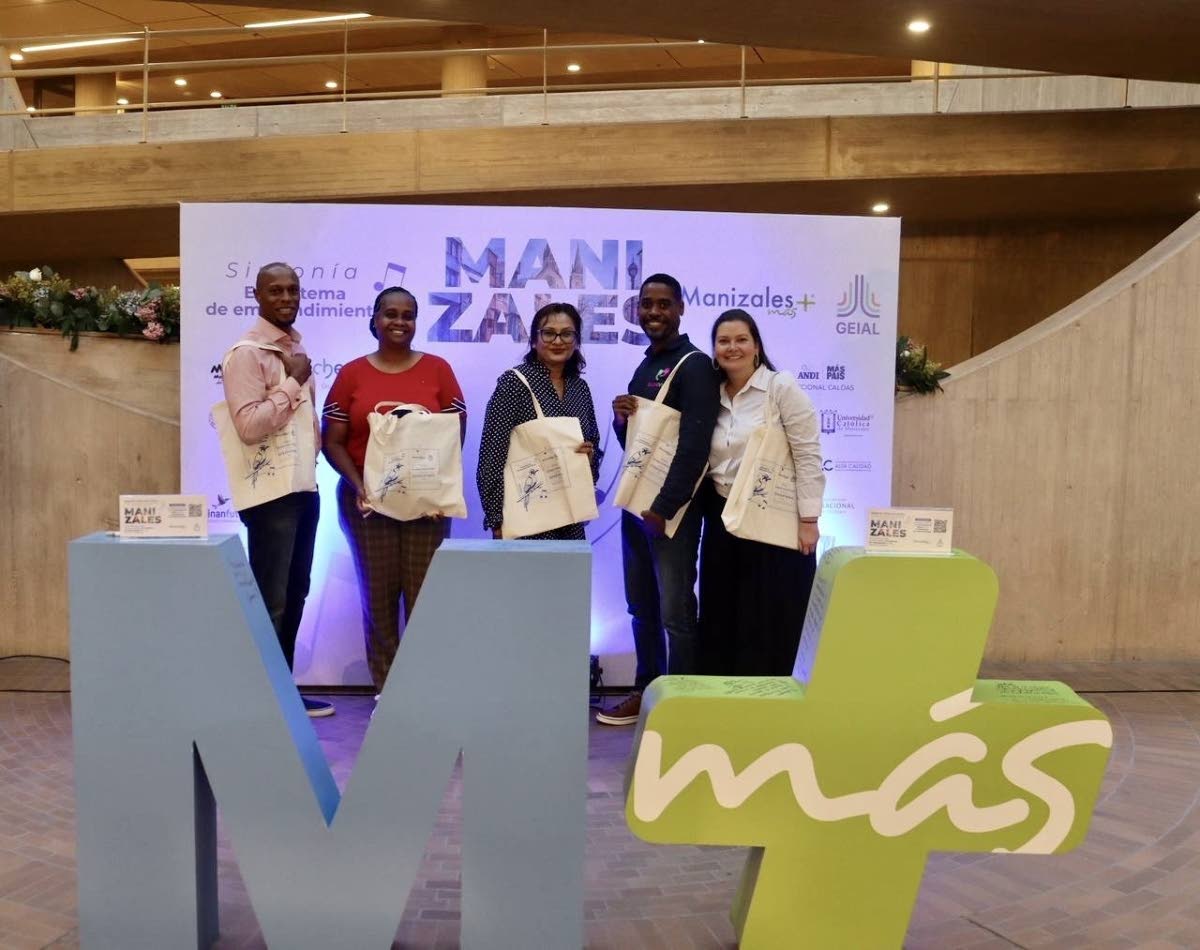
    A recent study tour to Manizales, Colombia has provided Trinidad and Tobago with a strategic blueprint for developing a robust national innovation ecosystem. Led by Vashti Guyadeen of the Trinidad and Tobago Chamber of Industry and Commerce, the delegation examined Colombia’s successful Triple Helix model that integrates academia, industry, and government collaboration to accelerate entrepreneurship and economic growth.

    The research identified five foundational pillars essential for innovation ecosystem development: coordinated national governance to align ministerial initiatives, integrated programming across accelerator programs and university initiatives, accessible infrastructure including prototyping labs and research facilities, capacity development through entrepreneurship training, and data-driven decision making using systematic innovation metrics.

    Educational alignment emerged as a critical success factor, with recommendations for cross-disciplinary entrepreneurship education, enhanced research commercialization pathways through innovation vouchers and matching grants, strengthened internship programs, and shared infrastructure agreements among tertiary institutions modeled after Colombia’s SUMA alliance.

    The proposed institutional architecture calls for a National Innovation Partnership comprising senior leaders from public, private, academic, financial, and civil society sectors to set strategic priorities and oversee funding allocations. This co-ownership model reduces government dependency while increasing sustainability.

    Priority sectors identified for diversification include technology (fintech, cybersecurity, energy tech), advanced manufacturing utilizing Industry 4.0 technologies, agriculture technology with climate-smart farming approaches, and creative industries leveraging global demand for music and digital content.

    Strategic infrastructure requirements encompass enhanced accessibility to Cariri’s existing facilities, purpose-built innovation hubs, structured national mentorship networks, and continuously coordinated accelerator programs. Financing mechanisms should include a National Innovation Fund, private sector venture arms, diaspora engagement for investment and technical capacity, and risk mitigation instruments like credit guarantee schemes.

    Accountability measures propose transparent tracking through key indicators: new firm creation, SME scale-up performance, research commercialization outputs, non-energy job creation, venture capital investment levels, and Global Innovation Index performance, with annual Innovation Report Cards to monitor national progress.

    The Manizales case study demonstrates that formalized governance, integrated programming, and shared accountability create successful innovation ecosystems, offering Trinidad and Tobago a proven framework for economic diversification and resilience building.

  • Agostini posts $312m profit amid complaints of pharmaceutical monopoly

    Agostini posts $312m profit amid complaints of pharmaceutical monopoly

    Celebrating its centennial anniversary, Caribbean conglomerate Agostini Ltd. has announced robust financial results for fiscal year 2025, demonstrating significant growth amid strategic expansion. The Trinidad-based group reported a 6.9% increase in revenue, reaching $5.44 billion compared to $5.09 billion in the previous year.

    Chairman Christian Mouttet characterized the period as one of ‘strategic transformation,’ noting the company achieved ‘another year of record revenue and earnings.’ The performance was primarily driven by two major acquisitions—Pharmacy Holdings Ltd (PHL) and Massy Distribution (Trinidad) Ltd—which substantially expanded Agostini’s presence in pharmaceutical and consumer distribution markets.

    Financial metrics showed substantial improvement across key indicators: Profit attributable to shareholders climbed to $230.3 million from $209.7 million, while earnings per share increased from $3.03 to $3.33. Operating profit rose 5.4% to $511.2 million, and pretax profit reached $435.6 million. After accounting for $123.3 million in taxes, net profit settled at $312.3 million, marking a 7.6% year-over-year improvement.

    The group’s comprehensive income, incorporating foreign exchange gains and pension adjustments, totaled $328.2 million, with $247.8 million attributable to shareholders and $80.4 million to non-controlling interests. Total assets grew to $4.89 billion, while shareholder equity increased to $2.48 billion.

    Despite these gains, the company acknowledged challenges including persistent inflation, supply chain disruptions, and foreign exchange constraints that continue to pressure margins. Finance costs increased to $75.6 million, though these were partially offset by foreign exchange gains of $15.57 million.

    Agostini’s expansion strategy has attracted regulatory attention. Recent parliamentary hearings examined market concentration in pharmaceutical distribution, with industry representatives noting that Agostini’s Aventa division reportedly imports approximately 74% of privately supplied medicines. While no formal investigation has been announced, the Prime Minister has signaled intentions to address drug pricing and market dominance concerns.

    The conglomerate continues to pursue growth through acquisition, currently proposing a share-swap merger with Prestige Holdings Ltd. that would exchange one AGL share for every 4.8 PHL shares. This transaction remains subject to regulatory approval from the Trinidad and Tobago Fair Trade Commission.

  • Brazilian dwarf: the seed to reviving Trinidad and Tobago’s coconut industry

    Brazilian dwarf: the seed to reviving Trinidad and Tobago’s coconut industry

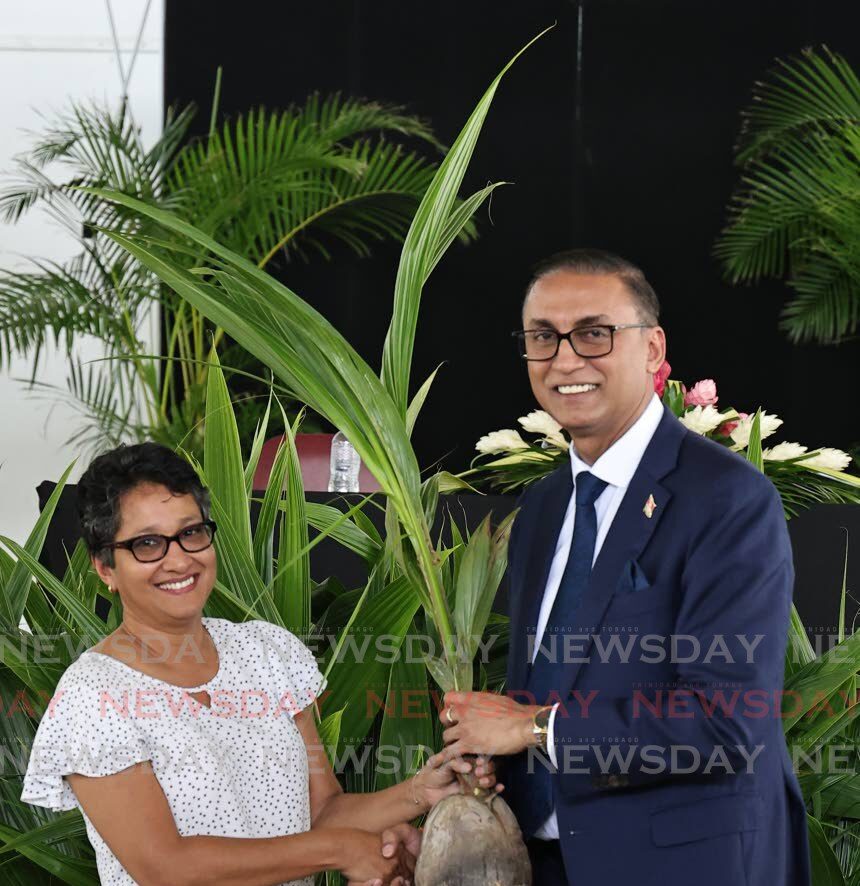
    The Trinidad and Tobago Ministry of Agriculture and Fisheries has initiated a comprehensive strategy to resurrect the nation’s declining coconut sector, targeting US$1 billion in agricultural exports. Minister Ravi Ratiram unveiled the ambitious plan during a ceremonial distribution of Brazilian dwarf coconut seedlings at the Central Experiment Station in Centeno on December 1.

    Minister Ratiram revealed alarming statistics showing agriculture’s contribution to GDP has plummeted by $1.4 billion to just $650 million over the past decade, representing a more than 50% deterioration. The ministry’s intervention focuses on developing a complete coconut value chain rather than simply increasing raw nut production. This integrated approach encompasses farming, processing, manufacturing, distribution, and export operations.

    The Brazilian green dwarf coconut variety was specifically selected for its superior genetics, pest resistance, and exceptional water-producing capacity of over 600ml per nut. Each participating farmer received ten seedlings as part of the initial phase, with over 150 growers already expressing interest in the revitalization program.

    The Caribbean Agricultural Research and Development Institute (CARDI) plays a crucial role in this initiative, providing expertise in genetic improvement, pest management, and technical training. Executive Director Ansari Hosein outlined parallel efforts including establishing seed gardens across nine EU countries, with projected annual production of 45,000 nuts within two years.

    Global market projections indicate substantial opportunity, with the coconut water market expected to surpass US$11 billion by 2060 and the overall coconut market anticipated to exceed US$58 billion by 2030. The ministry recognizes challenges including aging tree populations, lethal yellowing disease, South American palm weevils, and decades of underinvestment.

    Chief Technical Officer Ian Mohammed emphasized that the seedling distribution symbolizes both literal and figurative investment in transforming agriculture into a driver of food security, rural development, and economic diversification. The program represents a strategic partnership between government, research institutions, and farmers to restore Trinidad and Tobago’s position in the global coconut market.