作者: admin

  • Crisis of wind-resistant roof construction in Trinidad and Tobago

    Crisis of wind-resistant roof construction in Trinidad and Tobago

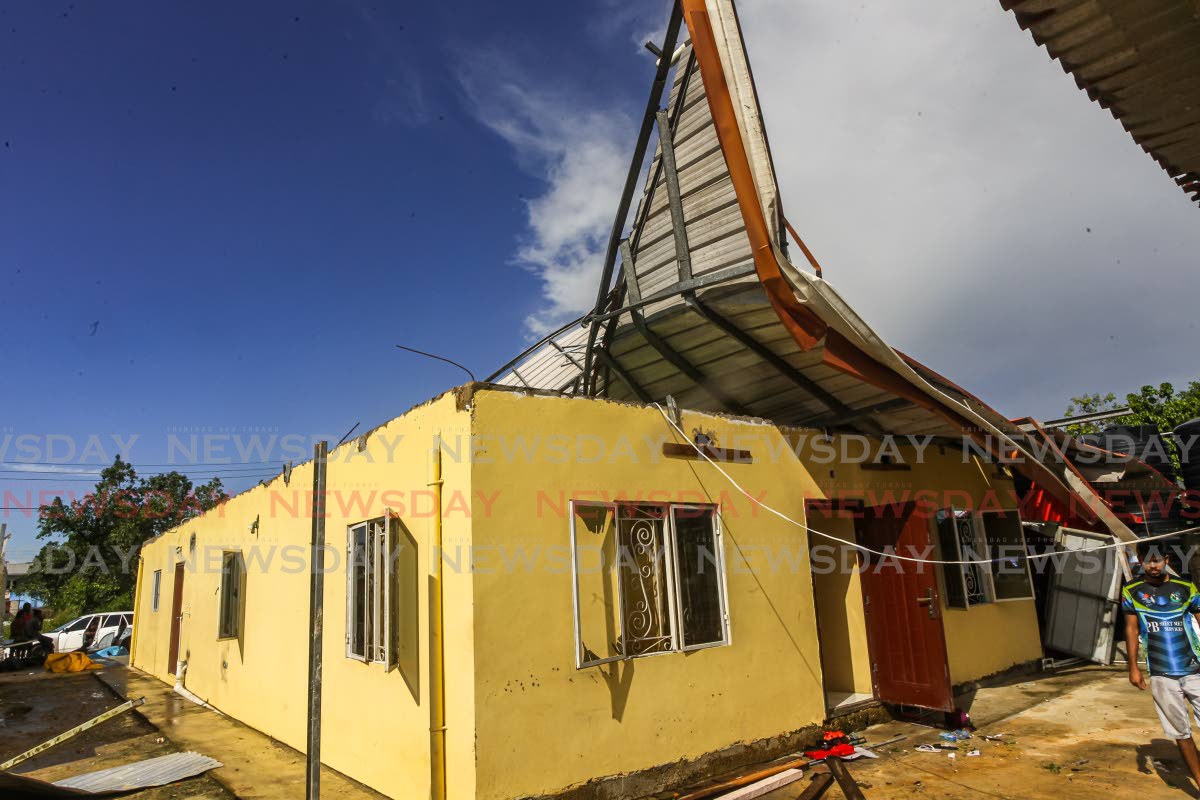
    Trinidad and Tobago confronts a recurring pattern of structural vulnerability as moderate wind events continue to cause catastrophic roof failures across the nation. Over the past decade, increasingly severe weather phenomena—including torrential rains, flash flooding, and powerful windstorms—have exposed critical deficiencies in residential construction practices, particularly within the informal housing sector.

    The core issue lies in inadequate anchorage systems connecting roof structures to supporting walls. Investigations reveal that entire roof assemblies—including framing, rafters, purlins, and sheeting—are frequently detached during wind events far below hurricane intensity. This systematic failure points to fundamental engineering flaws rather than exceptional weather conditions.

    Financial implications for affected families are devastating. While replacing individual roofing sheets might cost a few thousand dollars, complete roof reconstruction ranges from $40,000 to $90,000—economically crippling sums for working-class households. The cyclical nature of damage and reconstruction without improved standards creates a perpetual burden on communities.

    Despite existing technical solutions outlined in the TT Bureau of Standards’ TTS 599:2006 guidelines, implementation remains critically limited. The informal construction sector—comprising small-scale contractors and self-built homes—often operates without formal engineering supervision, relying on experiential knowledge rather than scientific principles.

    A multi-faceted solution framework proposes: 1) Comprehensive public education on wind-resistant design principles, 2) Institutional collaboration between disaster management agencies and engineering associations, 3) Community-level outreach through hardware stores and municipal offices, 4) Enhanced enforcement of building standards, and 5) Professional certification programs for contractors.

    As climate change intensifies wind patterns, the urgency for structural resilience becomes increasingly pressing. Proper roof anchorage represents not merely technical compliance but fundamental disaster preparedness—protecting families, preserving economic stability, and strengthening national resilience against future climate challenges.
  • Trinidad’s opportunity with Exxon to get local content right

    Trinidad’s opportunity with Exxon to get local content right

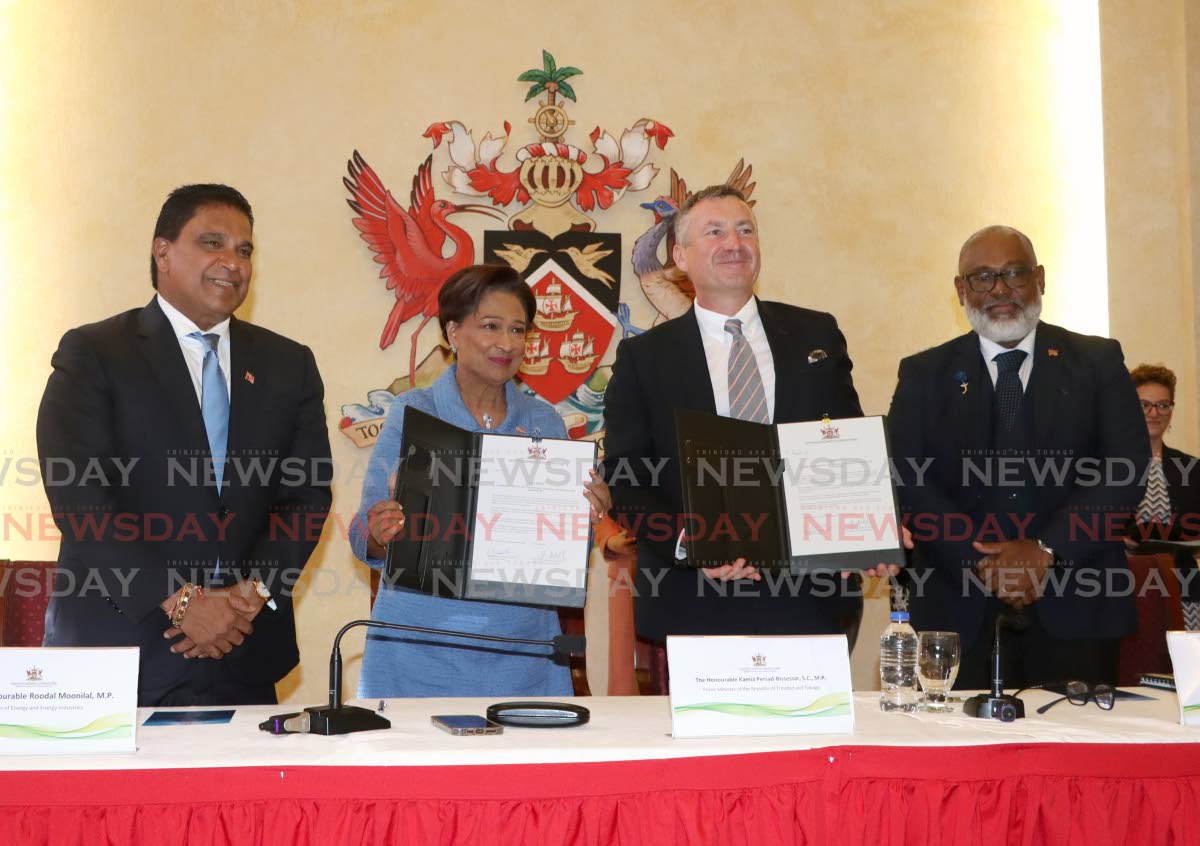
    In a landmark development for Caribbean energy markets, ExxonMobil has finalized a comprehensive production sharing contract for Trinidad and Tobago’s Ultra Deep 1 block (UD1), marking the largest multinational oil company’s strategic expansion beyond its Guyana successes. The agreement, signed just three months after Prime Minister Kamla Persad-Bissessar’s administration took office, covers 7,765 square kilometers of unexplored maritime territory—an area larger than Trinidad itself—positioned at the nation’s eastern maritime boundary near Barbados and Guyana.

    The contractual framework mandates accelerated exploration timelines, with 3D seismic acquisition scheduled for 2026 and initial drilling by 2028—exceptionally rapid deployment for deepwater operations. This urgency reflects Exxon’s regional operational advantages and the block’s strategic significance amid ongoing Venezuela-Guyana territorial disputes that create complex geopolitical dimensions for the project.

    Critical to the agreement’s implementation are robust local content provisions detailed in Article 39 of the production sharing contract, requiring preferential treatment for Trinidadian companies across supply chains, workforce development, and technology transfer. The contract stipulates that all tenders must be advertised, evaluated, and awarded within Trinidad, with mandatory high weighting for local value addition in evaluation criteria. Exxon must further ensure technology transfer in seven strategic areas including fabrication, seismic processing, maritime services, and business support functions.

    However, enforcement mechanisms remain problematic through the under-resourced Permanent Local Content Committee (PLCC), which lacks sufficient staffing, authority, and governmental support despite its mandate to monitor compliance. Industry analysts emphasize that strengthening the PLCC represents the most urgent reform priority, requiring no new legislation but rather political will and administrative reinforcement.

    The discovery of commercially viable reserves could prove transformational for Trinidad’s declining hydrocarbon sector, where oil production has dwindled below 50,000 barrels daily. Successful development might mirror Guyana’s spectacular output growth from zero to 900,000 barrels daily since 2019, potentially establishing a new Caribbean energy corridor alongside Suriname’s emerging developments.

  • Tershawna Glasgow tops Japanese speech contest

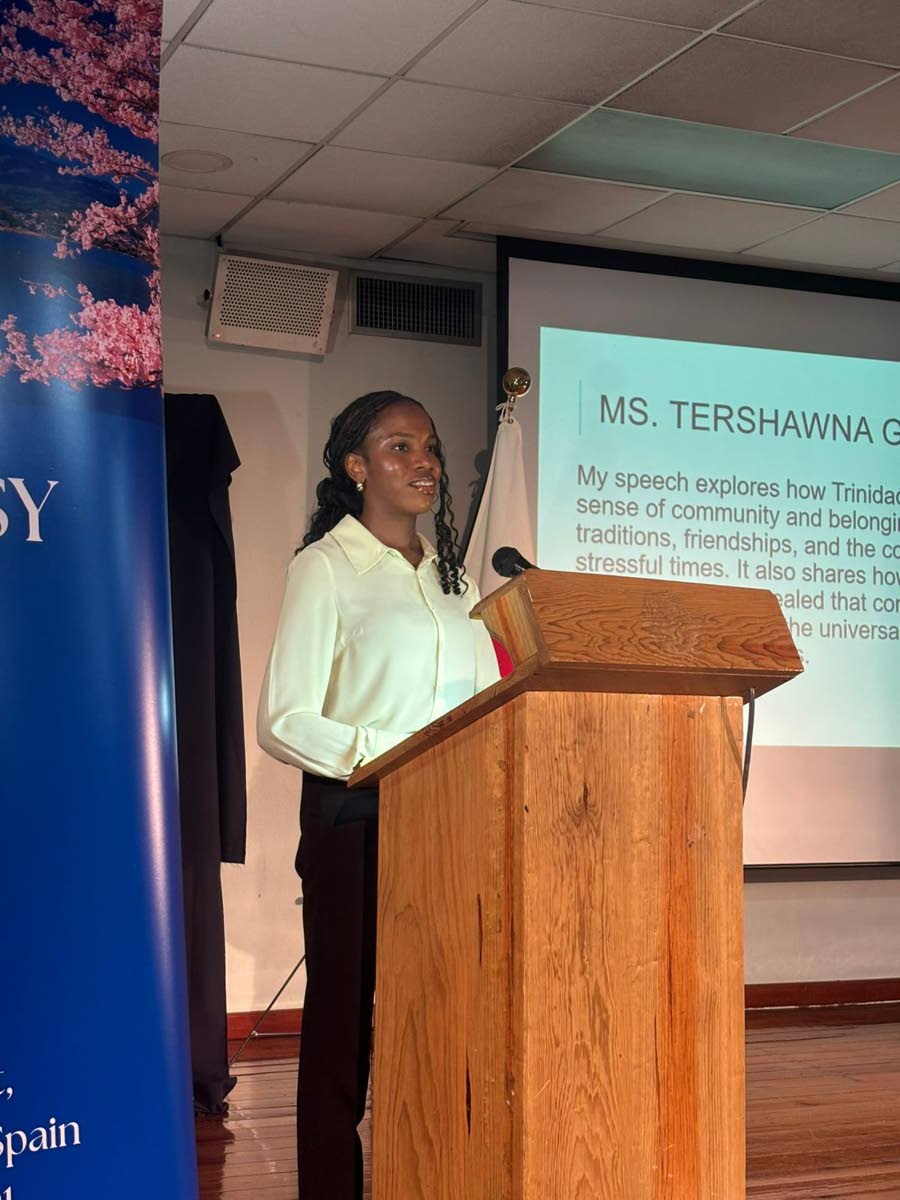
    Tershawna Glasgow tops Japanese speech contest

    The eighth annual Japanese Speech Contest, a collaborative initiative between the Embassy of Japan and the Centre for Language Learning at the University of the West Indies, St. Augustine Campus, successfully convened on November 29. Held at the CLL auditorium, the event underscored the growing cultural and educational exchange between Japan and Trinidad and Tobago.

    Japanese Ambassador Dr. Akima Umezawa inaugurated the proceedings with a keynote address emphasizing the contest’s pivotal role in fostering bilateral relations. He articulated that the platform significantly contributes to the proliferation of Japanese language acquisition and cultivates a deeper appreciation for Japanese cultural nuances within the local community, according to an official media release.

    The ambassador extended profound appreciation to key sponsors—Caribbean Gas Chemical Company (CGCL), Hachidorikai (the Japanese Ladies’ Association of Trinidad and Tobago), and More Vino Restaurant—for their sustained patronage. Their consistent support, particularly in endowing special prizes to laureates, has been instrumental in the event’s continued success over eight consecutive years.

    This year’s competition featured six participants: five competed in Category I, designed for learners at The Japan Foundation’s A1/2 standard with 100-200 study hours, while one contender participated in Category II, targeting A2 standard and above with over 200 study hours.

    An esteemed panel of adjudicators, comprising Ambassador Umezawa, Keio KATO (CEO of Caribbean Gas Chemical Limited), and Asahi Kunito (Japanese Language Education Advisor from The Japan Foundation in Mexico), evaluated the speeches.

    Tershawna Glasgow clinched first place in Category I with her presentation ‘How Curry Shaped My Life,’ while Ambika Ramdass secured second place with ‘How Anime Impacted My Life.’ Ariel Procope received the Recognition Award in Category II for her discourse on ‘Nature: Positive Impact of Mangroves.’

    Preceding the speech contest, the Japan Cultural Association of Trinidad and Tobago orchestrated a ‘Japan Day’ exhibition. The event offered immersive experiences in both traditional and contemporary Japanese culture, including art demonstrations and interactive workshops, providing the public with a holistic cultural encounter.

  • Naparima College hosts Paradise Parang on December 5

    Naparima College hosts Paradise Parang on December 5

    San Fernando prepares for an immersive cultural experience as Naparima College presents its acclaimed NAPS Paradise Parang event on December 5th. The Offside Restaurant and Bar will transform into a holiday celebration venue starting at 8 PM, featuring an innovative blend of traditional parang music with contemporary interpretations.

    This year’s musical lineup showcases exceptional talent including Jerome “Rome” Precilla with his pioneering soca-parang fusion, Timothy “Baron” Watkins performing cherished Christmas classics, and acclaimed ensembles Viva Jesús and Fuego Caribeño presenting authentic parang traditions. The event has evolved into a signature celebration on the school’s annual calendar, offering attendees an early immersion into the holiday spirit.

    Beyond musical entertainment, the event serves a significant philanthropic purpose. Proceeds from ticket sales directly support educational initiatives and development programs for Naparima College students. This alignment with the institution’s “Putting Students First” philosophy ensures that community enjoyment translates into tangible educational benefits.

    Devin Kissoon, Vice-President and Chairman of NAPS’ events committee, emphasized the dual purpose of the celebration: “We’ve created an experience that honors our cultural heritage while building meaningful support systems for current students. The event strengthens connections between alumni, parents, and the broader community while directly funding student resources and enhancement programs.”

    The Paradise Parang represents how cultural preservation and educational advancement can harmoniously coexist, transforming musical celebration into a vehicle for positive community impact and student development.

  • UWI spotlights production of its high-quality field station milk

    UWI spotlights production of its high-quality field station milk

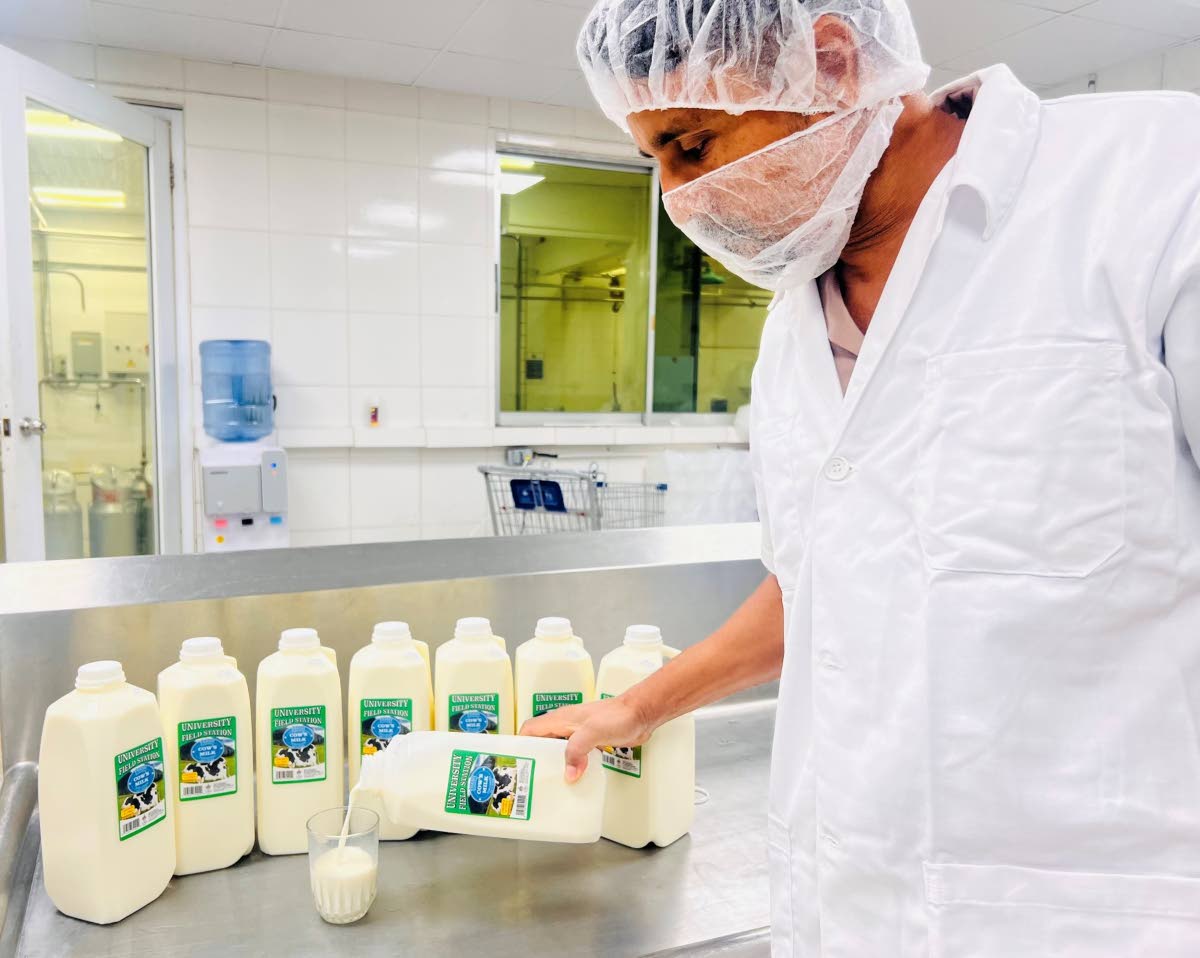
    The University of the West Indies (UWI) St. Augustine’s Faculty of Food and Agriculture (FFA) has showcased its advanced dairy production system through a special digital publication released during World Quality Week 2025 (November 10-14). The publication highlights the institution’s commitment to agricultural excellence through its vertically integrated milk production process at the Valsayn Field Station.

    Under the guidance of Dr. Martin Hughes, Deputy Dean of Farms, the FFA maintains complete oversight of the production chain—from pasture management to bottled milk distribution. The operation begins with carefully nurtured mulato grass, specifically cultivated for its nutritional richness, which forms the primary diet for the dairy herd. The faculty recognizes that animal welfare directly impacts product quality, implementing comprehensive veterinary monitoring and maintaining pristine living conditions for the cattle.

    The milking process incorporates rigorous hygiene protocols aligned with Good Manufacturing Practices (GMPs). Stockmen meticulously sanitize both udders and equipment before each milking session. Following extraction, milk undergoes immediate pasteurization in a dedicated facility where precise temperature controls eliminate pathogens while preserving nutritional integrity and flavor profiles.

    Quality verification continues with laboratory testing that confirms both pasteurization effectiveness and nutritional composition. The bottling process occurs in sanitized environments designed to prevent contamination, with finished products rapidly moving to refrigerated storage until distribution.

    The FFA’s publication emphasizes that quality represents an institutional culture rather than mere compliance. This philosophy aligns with the 2025 World Quality Week theme ‘Quality: Think Differently,’ positioning the milk as an exemplar of preventive, data-driven agricultural science. Consumers can purchase the premium dairy product at UWI Field Station sales offices and select local supermarkets.

  • Happy Merry Green Christmas!

    Happy Merry Green Christmas!

    As festive seasons approach, environmental expert Anjani Ganase advocates for a fundamental shift in Christmas celebrations, urging communities to prioritize meaningful gift-giving that benefits both recipients and the planet. The traditional commercialized approach has created alarming environmental consequences that demand immediate attention.

    Globally, plastic waste surges by approximately 30% during Christmas festivities, primarily from product packaging, food wrappers, decorations, and gift wrapping materials. This plastic deluge predominantly ends up in landfills, with significant portions eventually polluting marine ecosystems. Compounding this issue, studies reveal that 18-30% of Christmas gifts remain unused, representing billions in wasted resources annually.

    Food waste presents another critical concern during the holiday period. United Kingdom data indicates the disposal of two million turkeys, five million Christmas puddings, and 74 million mince pies during seasonal celebrations. This wastage accounts for 17% of all holiday-generated food, totaling 931 million tonnes of discarded sustenance. The environmental impact extends beyond mere quantity, as decomposing food in landfills generates substantial greenhouse gas emissions while squandering valuable resources including labor, transportation, water, and land.

    Ganase proposes transformative strategies for sustainable celebrations:

    Experience-Based Gifting: Instead of material presents, consider gifting local tourism experiences in Trinidad and Tobago. Options range from waterfall hikes and culinary tours to community visits and nature retreats. Wellness certificates, Carnival fitness packages, or skill-development classes in activities like sailing or steelpan playing offer memorable alternatives that support local businesses.

    Local Artisan Support: Purchasing from small businesses that utilize seasonal ingredients or recycled materials strengthens community economies while reducing carbon footprints. Seasonal specialties like ponche de crème, black cake, and artisanal crafts represent both cultural preservation and environmental responsibility.

    Plastic-Free Presentation: Embrace creative wrapping solutions using recycled fabrics, newspapers, or reusable containers. Traditional ribbon and twine can replace tape, while natural decorations add aesthetic appeal without environmental cost.

    Sustainable Children’s Gifts: Opt for durable, non-plastic alternatives like wooden educational toys, sporting equipment, or exploration kits that encourage outdoor activities and can be passed between generations.

    The movement toward eco-conscious celebrations emphasizes gifts that foster community connections, create lasting memories, and demonstrate genuine environmental stewardship—proving that the most valuable presents aren’t necessarily wrapped in plastic.

  • ‘TAPPA’ TIME

    ‘TAPPA’ TIME

    Jamaica’s football landscape is experiencing a significant resurgence, spearheaded by Mount Pleasant Football Academy’s historic victory in the Concacaf Caribbean Cup. The St. Ann-based club secured the regional title following a dramatic 3-2 aggregate triumph over Dominican Republic’s O&M FC at the National Stadium on Tuesday, marking a remarkable turnaround from their previous group stage exit.

    Under the guidance of Head Coach Theodore Whitmore, the three-time Jamaica Premier League finalists have become the nation’s fourth club to claim regional honors, joining the prestigious company of Cavalier FC, Portmore United, and Harbour View FC. This back-to-back Jamaican dominance in the Caribbean Cup—following Cavalier’s 2023 victory—signals a promising evolution in the quality of local football.

    Whitmore, who previously led Jamaica’s Reggae Boyz to two Caribbean Cup titles (2008, 2010) and Mount Pleasant to the 2023 JPL championship, emphasized the significance of this achievement for Jamaican football development. “We’re improving a lot,” Whitmore stated. “Last year it was Cavalier and we decided, regardless of the situation, the trophy must not leave Jamaica.”

    The victory propels Mount Pleasant into the Concacaf Champions Cup round of 16, where they potentially face a star-studded confrontation with Inter Miami CF and global icon Lionel Messi—a scenario that would mirror Cavalier’s encounter with the MLS side last season. The upcoming draw could also pair the Jamaican champions against other international superstars including Son Heung-Min (LAFC), Thomas Mueller (Vancouver Whitecaps), or national team captain Andre Blake (Philadelphia Union).

    Beyond immediate competitive aspirations, Whitmore views the tournament as a vital platform for player development and international exposure. “We’ve put ourselves in a position now where we’re in a bigger league for players to showcase their talent,” he explained, emphasizing his desire to see players advance to overseas opportunities rather than remaining comfortably at the domestic level.

    Despite his impressive coaching record, Whitmore remains characteristically modest about his personal legacy, noting: “I don’t run down titles. Theodore Whitmore is always going to do his best whether for club or country. You can’t beat the stats—it is there to show.”

  • Christmas wish for competence

    Christmas wish for competence

    Residents of Greenvale Park, La Horquetta are confronting what they describe as systemic governmental neglect and political favoritism that compromises both infrastructure maintenance and essential services. According to longtime resident Arthur Dash, the community operates under a dual system of ‘contactocracy and contractocracy’ where garbage collection and flood prevention measures depend more on political connections than equitable public service distribution.

    The area, which endured catastrophic flooding in 2018, faces renewed risks as critical water management infrastructure remains dangerously neglected. The primary retention pond is now completely overgrown with vegetation, while uncleared bridges and choked waterways create perfect conditions for another disaster. Despite these visible hazards, authorities appear reliant on fortune rather than proactive intervention.

    Post-election service deterioration has exacerbated living conditions. Garbage collection has become irregular at best, leading to public health concerns as stray animals scatter waste and insect populations multiply. Bulk waste removal services demonstrate apparent cronyism, with trucks reportedly serving only ‘streets of affiliation’ rather than the entire community.

    Additional complications arise from Frederick Settlement Industrial Estate employees parking commercial vehicles along residential roads not designed for such traffic. This obstruction now prevents public transportation from accessing certain areas, particularly affecting elderly residents’ mobility.

    Local MP Phillip Watts faces sharp criticism for perceived absence beyond photo opportunities. The community demands merit-based governance rather than seasonal political attention, emphasizing that flood prevention and basic services shouldn’t require personal connections to implement.

    The Tunapuna/Piarco Regional Corporation’s offer of a single December service day has been dismissed as tokenism rather than genuine problem-solving. Residents argue that as tax-paying citizens, they deserve consistent services equivalent to other communities receiving triple-weekly collections.

    With another rainy season approaching, Greenvale Park stands as a case study in how administrative lethargy transforms natural weather patterns into human-made disasters, where political promiscuity during election cycles gives way to operational abandonment thereafter.

  • Fair trade body should get its act together

    Fair trade body should get its act together

    A critical examination of Trinidad and Tobago’s pharmaceutical sector reveals systemic challenges in market competition, with the Fair Trading Commission (FTC) facing intense scrutiny for its perceived inactivity. Despite receiving $11.4 million in taxpayer funding over five years, the regulatory body has demonstrated remarkable reluctance to address market concentration concerns, as revealed during recent parliamentary committee disclosures.

    The core issue stems from fundamental market distortions created by state-subsidized healthcare systems, which have systematically shifted consumer behavior from local pharmacies toward large chains offering significantly lower prices. This transition has created an environment where a handful of major distributors dominate the market, particularly those securing lucrative government contracts for supplying public healthcare facilities.

    Recent developments highlight the FTC’s operational paralysis. In 2024, the Private Pharmacy Retail Business Association filed a formal complaint alleging monopolistic practices within the drug sector. Rather than initiating investigation procedures, the FTC dismissed the submission on technical grounds, requesting additional documentation instead of addressing the substantive concerns. Compounding this regulatory inertia, FTC executive director Bevan Narinesingh revealed the commission’s hesitation to pursue matters without a fully constituted board—an explanation that raises questions about the organization’s operational capacity.

    The political dimension has further complicated the situation. Prime Minister Kamla Persad-Bissessar has drawn parallels between pharmaceutical market concerns and previous allegations about foreign exchange cartels, accusing previous administrations of enabling monopolistic practices that benefit privileged interests. However, market analysis suggests the situation involves more complex structural factors rather than simple monopolistic exploitation.

    Contrary to conventional economic theory suggesting monopolies inherently drive prices upward, some major distributors actually offer common medications like Panadol at reduced prices. This apparent paradox underscores the market’s unique dynamics, where state procurement practices create economies of scale for selected distributors while simultaneously delaying payments to suppliers—creating a contradictory environment of both advantage and financial strain.

    The fundamental concern remains the FTC’s failure to provide transparent market data and timely regulatory intervention. Without authoritative analysis from the designated regulatory body, the pharmaceutical market continues operating amid uncertainty regarding competition, pricing structures, and market fairness—leaving both consumers and smaller market participants without clear guidance or protection.

  • Yuh Doh Leave Fowl To Watch Corn! final show at SAPA on December 6

    Yuh Doh Leave Fowl To Watch Corn! final show at SAPA on December 6

    After an acclaimed season of sold-out performances and continuous audience laughter, RS/RR Productions’ uproarious theatrical comedy “Yuh Doh Leave Fowl To Watch Corn!” is set for its final curtain call on December 6th at the SAPA venue.

    The production, which has become a cultural phenomenon in Trinidad’s entertainment scene, masterfully brings to life the timeless local proverb through a narrative of comedic chaos. The plot centers around what begins as an ordinary day but rapidly descends into pandemonium, featuring women discovering themselves in unexpected beds, men desperately professing their innocence, and a housemaid whose inability to maintain confidentiality fuels the escalating hilarity.

    Directed by the talented duo of Debra Boucaud Mason and Richard Ragoobarsingh, the show boasts an ensemble of Trinidad’s finest comedic performers. The cast includes renowned comedy virtuosos Richard Ragoobarsingh, Leslie Ann Lavine, Zo Mari Tanker, Kala Neehall, Benita Wilson, and Andrew Friday, whose collective chemistry has been instrumental in the production’s overwhelming success.

    The SAPA box office remains open daily from 12:00 PM to 6:00 PM for ticket purchases, with the final performance scheduled to commence at 8:30 PM. For additional information and reservation inquiries, patrons may contact 481-2185, 338-6024, or 744-7581.