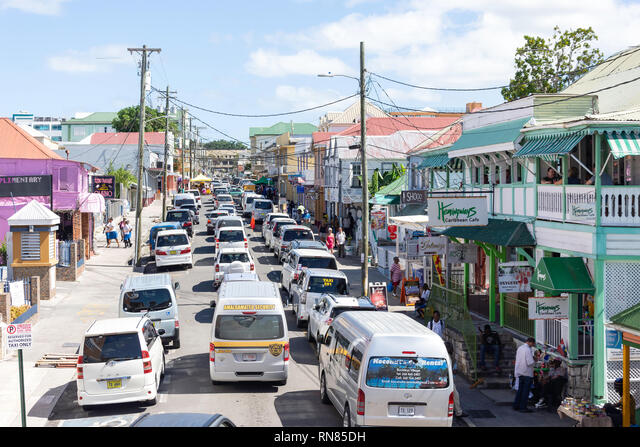
In the twin-island nation of Antigua and Barbuda, worsening traffic gridlock has pushed the national government to launch a comprehensive cross-agency planning initiative to rework the country’s strained road network, Prime Minister Gaston Browne has confirmed. The planning process, which is already underway, requires coordinated collaboration between four key entities: the police Traffic Department, the Ministry of Public Works, the Development Control Authority, and the Ministry of Social and Urban Transformation. A multidisciplinary approach is non-negotiable, Browne emphasized during his regular weekly broadcast, as the complex issue of traffic congestion cannot be resolved by law enforcement alone, nor through piecemeal, uncoordinated adjustments to road infrastructure. The push for a formal solution followed public input from a radio listener, who drew attention to the unprecedented strain placed on Antigua’s roads by a rapidly growing vehicle fleet: an estimated 50,000 cars and trucks currently operate across the island, far exceeding the capacity of the original road design. The listener put forward two key proposals to improve flow: convert select roads to two-lane one-way corridors, and build expanded roundabouts at the most heavily trafficked intersections. One high-priority site highlighted was the busy junction of All Saints Road and American Road, where the listener argued existing unused space could be repurposed to accommodate a large, two-lane roundabout that would cut down on intersection delays. Browne confirmed that all public suggestions, including these, will be formally evaluated and considered for inclusion in the government’s overarching strategy. Police authorities have already submitted their own set of traffic management recommendations to the planning working group, the prime minister added, and the government is also open to recruiting international expertise from overseas traffic management and urban planning specialists to inform the final plan. As of now, however, no details have been released about which specific roads are under consideration for one-way conversion, whether any new roundabouts have received formal approval, or what the official timeline will be for completing the plan, opening public comment periods, or rolling out approved infrastructure changes. Traffic congestion has become one of the most visible daily disruptions for Antiguan commuters, with particularly severe delays recorded during morning and evening rush hours on major routes leading into and out of the capital, St. John’s. The surge in vehicle registrations over recent years has stretched existing infrastructure far beyond its original design capacity, creating chronic bottlenecks at intersections, increasing demand for limited parking, and accelerating wear on under-sized roadways. Browne reaffirmed that the government will conduct a full review of all submitted proposals to deliver a coordinated, long-term solution that addresses the current strain on the country’s transportation network.
作者: admin
-

Economy : Accounting framework for local authorities
Against a backdrop of ongoing efforts to modernize Haiti’s public financial management system, a pivotal multi-stakeholder meeting took place last week at Port-au-Prince’s Hotel Montana, bringing together key national and local actors to advance long-awaited reform of local authority accounting practices. Organized by Haiti’s Directorate General of the Treasury and Public Accounting (DGTCP), the gathering included representatives from the Ministry of the Interior and Local Authorities, senior public treasury accountants, delegations from the Superior Court of Auditors and Administrative Disputes (CSC/CA), and municipal leaders from seven of Haiti’s most populous jurisdictions: Port-au-Prince, Delmas, Cité Soleil, Tabarre, Pétion-ville, Carrefour, and Croix-des-Bouquets.
Opening the summit, Jean Michel Silin, Director General of the Budget, marked a key milestone in the reform process, announcing that years of planning have transitioned into tangible action. Silin confirmed that the long-planned assessment of Haiti’s existing local authority accounting framework has officially moved beyond conceptual stages and is now actively underway, with all work fully documented and undergoing systematic consolidation. He underlined that the overarching reform strategy has been intentionally structured to be progressive, practical, and long-term sustainable, developed through iterative collaboration with all affected stakeholders to deliver tangible improvements in public service delivery for Haitian citizens.
Guided by Nicodème Adzra, a financial management expert from Expertise France, alongside technical leads from the DGTCP and CSC/CA, working sessions centered on two core priority areas. First, participants mapped and reviewed end-to-end workflows for both local government revenue collection and public expenditure, diving into granular details of current processes, approval procedures, the existing chart of accounts, and the digital IT tools currently used by local authorities to manage public funds. Second, the group discussed clarifying and strengthening the CSC/CA’s mandate to provide effective oversight and targeted capacity support to municipal and local governments across the country.
Looking ahead to the coming months, stakeholders have outlined clear next steps to keep the reform on track. The next major milestone will be the completion of the ongoing assessment and the publication of a technical analysis note, drafted using insights and data collected from recent field visits to local authorities across Haiti. This document will form the evidence-based foundation for two critical subsequent efforts: a full revision of the outdated local accounting framework, and the development of a comprehensive national training and capacity-building program. This program will be rolled out alongside the broader launch of the Haitian State’s new standardized Chart of Accounts (PCEH), a key plank of national public financial reform.
-

Antigua and Barbuda Still Struggling to Recruit Teachers and Police Officers for Barbuda
ST. JOHN’S, Antigua and Barbuda — Prime Minister Gaston Browne has publicly confirmed what many residents have feared for months: the national administration is still struggling to attract qualified teachers and police officers willing to relocate to and work on the smaller sister island of Barbuda.
The prime minister brought the long-running staffing crisis to light during a recent episode of his weekly public radio broadcast, where he was responding to constituent concerns over persistent understaffing at Barbuda Secondary School, most notably a widely reported vacancy for a full-time mathematics educator.
Speaking candidly to listeners, Browne admitted that convincing public sector workers to take up postings in Barbuda has proven one of the more persistent challenges for his administration. “In all fairness, it has been a challenge getting policemen and teachers to work in Barbuda,” he stated.
While recruitment gaps for these critical roles impact both of the nation’s two main islands, the problem is far more pronounced in Barbuda, Browne explained. The island’s small total population limits the pool of locally trained, qualified candidates for teaching and law enforcement positions, leaving most openings dependent on attracting workers from the larger island of Antigua or overseas.
The mathematics teaching shortage at Barbuda Secondary School emerged as a public controversy just weeks ahead of the start of the 2024 academic term, prompting widespread calls for government action to resolve the gap before classes began. Browne pushed back on framing the issue as an isolated failure for Barbuda, noting that the lack of qualified math instructors is a long-standing challenge affecting schools across the entire country.
“I’ve always had an issue with attracting math teachers in both islands,” he said, emphasizing that the barrier becomes even greater when trying to fill a posting on the smaller island.
The prime minister also called for collaboration from local stakeholders to address the crisis, noting that Barbuda’s Member of Parliament Trevor Walker and the regional Barbuda Council could lend support to the effort by identifying suitable local candidates. Browne argued that the staffing shortage should be approached as a shared community priority rather than being leveraged as a political talking point.
Even with this call for collaboration, the ultimate responsibility for ensuring public schools and law enforcement agencies are fully staffed rests with the national government and national education authorities, a reality Browne did not dispute.
Industry analysts and local observers point to a set of unique structural barriers that make working in Barbuda less attractive for workers based in Antigua. Relocation requires not just a willingness to leave established social and professional networks, but also securing affordable, suitable housing on an island with limited residential inventory. New arrivals must also adjust to the slower pace of a small close-knit community and the more limited range of commercial and public services available compared to the larger, more developed Antigua.
For law enforcement, consistent staffing is particularly critical: officers posted to Barbuda are responsible for maintaining 24/7 public safety coverage across the entire island and responding rapidly to any emergencies that arise, so understaffing directly risks community safety.
Notably, Browne made no new policy announcements during the radio interview to address the crisis. He did not reveal how many total teaching and police positions remain vacant across Barbuda, nor did he outline any new strategies the government plans to deploy to attract workers from Antigua or other regions. No new financial incentives, housing support packages, or specialized location allowances were proposed to encourage workers to accept Barbuda postings, and the prime minister offered no clear timeline for filling the open mathematics role or any other outstanding vacancies.
-
Olie boven $107 terwijl Washington “overwinning” uitroept
On Monday, global crude oil prices jumped more than 3% following two high-stakes energy infrastructure disruptions over the weekend: an attack on an Iranian vessel in the Strait of Hormuz and a drone strike that damaged Saudi Arabia’s critical East-West oil pipeline. Benchmark Brent crude climbed $3.21 to settle at $107.82 per barrel, while U.S. West Texas Intermediate gained $3.17 to reach $103.22 per barrel. This uptick extended an existing rally, after Brent closed at $101.21 on September 9 — its highest level since late May. Market analysts note the price increase is not driven by a single isolated incident, but rather markets pricing in the probability of a prolonged regional conflict that disrupts global energy supplies.
Washington has pushed back against growing anxiety, claiming that transit traffic through the Strait of Hormuz, one of the world’s most vital energy chokepoints through which roughly one-fifth of global oil and gas supplies pass, is improving despite a ongoing diplomatic deadlock between the U.S. and Iran. U.S. Energy Secretary Chris Wright said Sunday that an average of 10 million barrels of oil passed through the strait daily over the previous week, adding that volumes have recovered to two-thirds or more of pre-conflict levels. Former U.S. President Trump echoed these claims, asserting that U.S. forces have “full control” over the waterway and are escorting vessels carrying millions of barrels of oil through the passage.
Iran has directly disputed these U.S. claims. Tehran maintains it retains control over access to the Strait of Hormuz, and has warned vessels against using unapproved shipping routes. Last week, Iran announced a new restricted shipping zone around the critical waterway, tightening its leverage over transit.
Independent shipping data from tanker trackers backs up Iran’s implicit assertion that traffic remains far below normal levels. Preliminary tracking data cited by Reuters shows that the number of daily transits through the strait dropped to single digits over the weekend, well below the 10-day average of 14 transits per day. In total, just 14 vessels passed through the waterway over the entire weekend, with four exiting the Persian Gulf and 10 entering. Before the U.S.-Israeli war against Iran began in February, more than 100 vessels transited the strait daily, carrying an estimated 20 million barrels of oil. Reuters notes that the data remains preliminary and may be updated, as some vessels travel with their Automatic Identification System transponders disabled to avoid detection, placing them outside official counts.
The disruption has put massive pressure on alternative supply routes that Saudi Arabia turned to after Iran’s blockade of the Strait of Hormuz. Saudi officials confirmed that the kingdom’s East-West oil pipeline, which carries crude to Red Sea export terminals, was temporarily shut down after a drone strike launched from Iraqi territory. If the pipeline remains offline, roughly 4% of global oil supply could be taken off the market. A wave of recent rocket and drone attacks by Yemen’s Houthi movement on southern Saudi Arabia has further amplified uncertainty over energy exports from the world’s largest oil producer.
On Tuesday, Houthi forces struck civilian and economic sites across the Saudi cities of Abha, Khamis Mushait, Jizan and Najran, leaving 73 people injured including women and children. The attack marks a sharp escalation of the long-running Yemeni civil war, which reignited in July after nearly four years of relative calm under a UN-brokered ceasefire.
Despite repeated U.S. reassurances that the strait is open for business, market analysts warn that upward pressure on oil prices will persist as long as Hormuz transit remains disrupted. “Despite American claims to the contrary, Hormuz is not under U.S. control, and oil is not flowing freely,” said Chris Beauchamp, chief market analyst at IG Group. Beauchamp explained that transits through the strait remain severely restricted, vessels continue to face attack risks, and Houthi strikes on energy infrastructure add an extra layer of uncertainty for global energy markets. “Near-month futures are still trading at a premium to spot prices, which reflects market expectations that supply disruptions will continue, putting additional pressure on the already fragile global economy,” he added.
Christopher Haines, Global Head of Oil at Energy Aspects, also forecasts that crude prices will keep rising, pointing out that flows through the Strait of Hormuz remain drastically lower than pre-conflict levels, while global inventories that helped stabilize markets over the past six months have shrunk considerably. “The U.S. Strategic Petroleum Reserve has very little capacity to add additional supply now that planned releases have been completed… Meanwhile, China will not be able to cut back on crude purchases as it did this summer, as seasonal winter demand is ramping up,” Haines told Al Jazeera. “Crude buying has remained robust because refineries have to run at higher rates to produce the heating fuels the Northern Hemisphere needs for the cold season. We believe oil prices can continue climbing, because without the inventory buffers we had in previous months, prices will have to rise to cool demand.”
Over the weekend, new security incidents reinforced the ongoing risk to transit. Early Sunday, the UK Maritime Trade Operations reported that a vessel was hit by an unknown projectile while transiting Hormuz. Then on Monday, Iran’s Islamic Revolutionary Guard Corps announced it had intercepted and destroyed an advanced U.S. MQ-1 drone flying over the strait.
Diplomatic efforts to de-escalate the crisis have also hit a wall. A planned meeting between Gulf states and Iran in Oman, scheduled for Monday to discuss potential agreements on Hormuz transit, was postponed — a major setback to diplomatic efforts to end the six-month conflict. Iran said Monday that Saudi Arabia requested the postponement in response to recent events in Yemen. U.S. Energy Secretary Wright also poured cold water on hopes for a near-term diplomatic breakthrough, telling Bloomberg that “betting on a consensus agreement with Iran today is certainly not a good wager.”
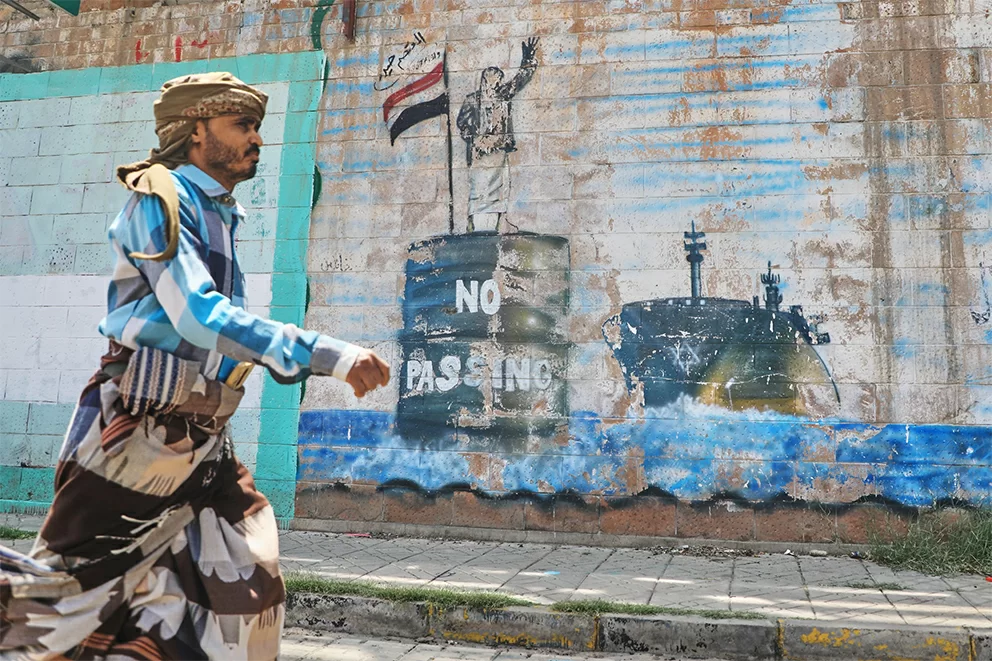
Growing Houthi control over another critical global shipping chokepoint, the Bab al-Mandeb strait off Yemen’s western coast, is adding further upward pressure to oil prices, according to maritime experts. “The Bab al-Mandeb, which connects Asia to Europe, is now largely under Houthi control,” Abdul Khalique, head of the Liverpool John Moores University Maritime Centre, told Al Jazeera. After seizing the port of Mocha and the Hanish and Zuqar islands earlier this week, Iranian-aligned Houthi forces captured the strategically vital island of Perim (also called Mayyun) and the mainland town of Dhubab, giving the group effective control over Yemen’s entire Red Sea coastline.
Khalique added that war risk insurance premiums for Hormuz transits have skyrocketed, jumping from roughly 0.25% of a vessel’s hull value before the war to between 3% and 10% today, depending on the vessel and route. “For a $100 million tanker, that works out to a war risk premium of $3 million to $10 million for a single transit, before adding coverage for cargo and additional freight costs,” he said. “The U.S. may have substantial military control over the theater of operations, but it has not restored the conditions needed for normal commercial shipping to resume. That gap is exactly why oil prices keep rising even as Washington declares victory.”
With no diplomatic breakthrough on the horizon and multiple key chokepoints remain disrupted, Beauchamp says a return to the March 2024 price highs is only a matter of time. “With no party rushing to negotiate, it looks like oil prices will keep climbing, and a return to the March peaks is a question of when, not if,” he said.
-

Pioneers Athletics Club Inc. to receive major donation of sports equipment from Tropical Shipping Co. Ltd.
A major corporate investment in local grassroots sports is set to take place this week in Dominica, as shipping firm Tropical Shipping Co. Ltd. prepares to hand over a batch of new sports equipment to Pioneers Athletics Club Inc. at a public presentation ceremony.
The event, scheduled for 4:30 p.m. on Tuesday, September 15, 2026, will be hosted at the Botanic Gardens in Roseau, the capital of Dominica. The announcement was shared in an official statement sent by Pioneers Athletics Club to Dominica News Online this past Sunday.
Club leadership emphasized that the donation is a transformative, generous contribution that will directly bolster ongoing efforts to grow athletics and recreational sports for both the organization’s members and young emerging athletes across the region. Unlike many generic corporate contributions, this package of gear is tailored to fill critical gaps in the club’s current training resources, giving both athletes and on-the-ground coaches the tools they need to advance their development work.
With the new equipment in place, the club expects to expand access to high-quality training opportunities for athletes of all skill levels. This support will also help the organization advance its core mission: nurturing competitive athletic talent while encouraging broad adoption of healthy, active lifestyles among local communities.
Pioneers Athletics Club extended sincere public gratitude to Tropical Shipping for the company’s intentional commitment to advancing sports development and investing in Dominica’s youth. The statement noted that cross-sector partnerships like this one highlight the outsized positive impact that private corporate entities can have when they invest in local grassroots organizations, helping amateur athletes turn their sporting ambitions into tangible progress.
In advance of Tuesday’s ceremony, the club extended a formal invitation to all expected attendees, including senior representatives from Tropical Shipping, participating athletes, coaching staff, club members, and representatives of local media outlets to join the public presentation.
-

Antigua and Barbuda Targets 1.5 Million Cruise Visitors Within Two Years
ST. JOHN’S, Antigua and Barbuda — As the Caribbean nation accelerates upgrades to its cruise infrastructure and on-shore visitor experiences, Prime Minister Gaston Browne has unveiled an ambitious goal to draw roughly 1.5 million annual cruise ship visitors to Antigua and Barbuda over the next 24 months.
When Browne’s administration first took office more than 10 years ago, the country welcomed just 500,000 cruise tourists annually, meaning the new target would represent a 200% jump in visitor volumes from that baseline. Browne shared the projection during his regular weekly broadcast to the public, emphasizing how far the country’s cruise sector has come in the past decade.
Among the key developments poised to support this growth goal is the Upland Development project located on Newgate Street, a shoreside commercial space built specifically to cater to cruise passengers. Browne confirmed the project is in its final stages of completion and will be fully operational in time for the upcoming cruise season. The development will host 20 retail outlets, with a notable portion of the commercial space reserved exclusively for local small businesses, ensuring community members benefit directly from growing tourism demand.
Browne highlighted the critical role of international partner Global Ports Holding in advancing the country’s cruise ambitions, noting the firm has poured significant capital into expanding and upgrading Antigua and Barbuda’s port infrastructure. That investment has transformed the country’s standing in the competitive Caribbean cruise market: just over a decade ago, Antigua and Barbuda was widely regarded as having one of the weakest cruise tourism offerings in the entire region. Today, it is gaining international recognition as a top-tier cruise destination and building the capacity to capture a much larger share of the regional market.
Despite the clear optimism around the growth target, Browne did not release additional granular details to support the projection. He offered no specifics on projected numbers of ship calls, pre-confirmed passenger bookings from major cruise lines, or what additional large-scale infrastructure projects will need to be completed to handle a tripling of annual visitor volumes. Industry analysts note that hitting the 1.5 million target will hinge on several critical factors: sustained growth in the number of cruise ships choosing to include Antigua and Barbuda on their itineraries, sufficient port capacity to accommodate larger and more frequent vessel arrivals, and the country’s ability to scale up complementary services including ground transportation, guided tours, retail offerings, and hospitality staff to serve the sudden influx of passengers.
-

Prime Minister’s promise to CFEF and ENS students
A September 12, 2026 online gathering between senior Haitian education officials and hundreds of trainee teachers has brought new hope to education sector interns who have waited months for rightfully owed stipend payments. Hosted by Minister of National Education and Vocational Training (MENFP) Vijonet Déméro, the meeting brought together probationary trainees from the Port-au-Prince-based Training Center for Fundamental Education (CFEF) and graduate students from the École Normale Supérieure (ENS), alongside top ministry leadership including MENFP Human Resources Director Dr. Jean Ricot Docteur, Ministry Administrator Rousseau Dumond Larionne, Departmental Education Directorates Coordination Unit Coordinator Ernest Clergé, and CFEF Administrative Director Jacques Ronald Jean.
The working session was convened specifically to address a long-running backlog: dozens of trainees that had already completed required probationary periods, internship hours, and all required reporting documentation, but had yet to receive their final payment checks. For the first time, participants gave students a direct platform to ask questions about their individual file statuses and raise concerns about processing delays.
During the open discussion, Minister Déméro reaffirmed the Haitian government’s full commitment to fulfilling its financial obligations to the trainee educators, restating the promise he first made during a September 7, 2026 appearance on Radio Caraïbes’ popular talk program *Premye Okazyon*. He stressed that resolving the backlog is a top priority for his ministry, and emphasized his determination to wrap up the entire process in the shortest possible timeline.
Dr. Jean Ricot Docteur, the ministry’s human resources director, provided a key update to attendees: all required administrative approvals and document sign-offs were completed as of September 4, 2026, clearing the final bureaucratic hurdle that had stalled the payment process. Per directives issued by Minister Déméro, he confirmed that eligible trainees should be able to collect their owed checks within the week of the meeting.
Ministry Administrator Rousseau Dumond Larionne echoed this commitment, pledging to work closely with Dr. Jean Ricot Docteur to cut through any remaining red tape and deliver payments to eligible trainees as quickly as possible. To keep the process moving, Larionne announced that he would schedule a follow-up meeting with the Ministry of Finance’s public accountant on September 14, 2026, to coordinate final processing steps and remove any remaining interdepartmental barriers.
For the trainee educators who completed their required service months ago, the meeting marks a long-awaited breakthrough. After months of uncertainty while waiting for owed compensation, the clear timeline and official commitments from top ministry leadership have left the group optimistic that the backlog will be resolved imminently.
-

Antigua and Barbuda’s PM Accuses Local Banks Of Failing Borrowers with Conservative Lending
The prime minister of Antigua and Barbuda has publicly raised sharp criticisms against the nation’s domestic banking sector, arguing that excessively conservative lending approaches are leaving countless qualified borrowers locked out of access to critical capital. In a recent public address, the country’s leader highlighted that local financial institutions have drastically tightened their lending standards in recent months, adopting risk-aversion policies that go far beyond prudent financial management.
This overly cautious stance, the prime minister claims, is creating unnecessary barriers for small business owners, aspiring homeowners, and entrepreneurs seeking funding to grow their ventures or cover unexpected expenses. Many borrowers who would have previously qualified for mortgages, small business loans, or personal lines of credit are now being rejected outright or offered terms with prohibitively high interest rates that put financing out of reach.
The prime minister emphasized that this trend is not just harming individual borrowers—it is also dragging down broader economic growth across the twin-island nation. Restricted access to credit slows business expansion, suppresses job creation, and weakens the housing market, creating ripple effects that touch multiple sectors of the local economy. The head of government has indicated that he intends to convene urgent talks with banking industry leaders to address the issue, pushing for a reevaluation of current lending policies that balances the banks’ need for risk management with the economy’s demand for accessible, affordable credit. He called on financial institutions to find a middle ground that supports both financial stability and inclusive economic growth, warning that continued inaction could lead to prolonged stagnation for businesses and households alike.
-

Health : Towards strengthening the capacity of the National Ambulance Center (video)
On September 12, 2026, Haiti’s National Ambulance Center (CAN) gathered key domestic and international stakeholders at Port-au-Prince’s Royal Hotel to mark World First Aid Day with a day of strategic reflection and collective mobilization focused on transforming the country’s fragmented emergency response infrastructure. Convened under the theme “Strengthening the Emergency Response Chain in Haiti for a More Resilient Emergency Management System”, the event was led by CAN Director General Dr. Ricardo Jean Baptiste, with administrative support from his senior leadership team including Director of Administration and Budget Hansy Beethoven Joseph.
Attendees included high-ranking officials and institutional partners spanning multiple sectors: Cheng Hao Hu, Ambassador of Taiwan (Republic of China) to Haiti; Haitian Minister of the Environment Valéry Fils-Aimé; Director General of Haiti’s National Civil Protection Emmanuel Pierre; emergency response units from the Haitian National Police; delegates from the International Committee of the Red Cross (ICRC); Delmas municipal firefighting teams; and dozens of representatives from Haiti’s public and private health and emergency services sectors.
In his keynote address to attendees, Dr. Jean Baptiste outlined a sweeping multi-part plan to overhaul CAN operations across all 10 of Haiti’s administrative departments. The first core component of the plan is a full systemic reorganization of CAN’s emergency call handling workflow, designed to streamline intake, inter-agency coordination, and dispatch of emergency services to communities in need. Second, Dr. Jean Baptiste confirmed planned investments in upgraded life-saving medical equipment to reinforce CAN’s clinical capabilities, with the explicit goal of raising the standard of care for Haitian residents facing acute medical emergencies. The third major initiative is an infrastructure expansion project that will see nine new regional CAN administrative offices constructed across the country. This expansion is intended to address longstanding gaps in working conditions for frontline ambulance staff and extend CAN’s formal institutional presence to underserved rural and regional departments.
Dr. Jean Baptiste also used the occasion to publicly thank the ICRC for its critical ongoing support to CAN, highlighting a recently completed partnership that restored 13 idle CAN ambulances to active service. Funded through coordination with Haiti’s Ministry of Public Health, the ambulance repair project has already delivered measurable gains to the network’s response capacity by increasing the number of fully operational vehicles available for emergency deployments.
Following opening remarks, the day’s program progressed to two expert panels that centered on the most pressing challenges facing Haiti’s emergency management sector. The first panel, focused on the unique complexities of delivering first aid in Haiti’s growing migration context, featured a keynote presentation from Emmanuel Pierre and was moderated by Dr. Jeanty Fils Exalus, who also served as the event’s master of ceremonies. The second panel, which aligned with the day’s overarching theme of building a more resilient national emergency system, was moderated by Dr. Rose Anaëlle Pierre Jean, and brought together stakeholders to unpack both structural barriers to progress and untapped opportunities for system-wide improvement.
The event concluded with the formal launch of a new national regulatory initiative: the National Program for the Registration and Certification of Ambulance Companies and First Aid Training Schools, presented by Midelson Emmanuel Jr. Juste, coordinator of CAN’s Legal Unit. The new regulatory framework aims to formalize the fragmented emergency response sector, enforce consistent professional standards for practitioners, and improve the overall quality of first aid and emergency care accessible to Haitian communities across the country.
-

Dominica to launch climate change resilience project for Caribbean fisheries sector
Small island nations across the Caribbean have long watched climate change erode the marine ecosystems that underpin their food security, cultural identity, and economic stability. This week, one regional step forward aims to turn the tide for local fishing communities: the Ministry of Agriculture, Fisheries, Blue and Green Economy of the Commonwealth of Dominica is preparing to officially launch the CC4FISH-II Climate Change Resilience in the Caribbean Fisheries Sector Project on September 15, 2026.
This landmark resilience-building initiative does not move forward alone. It brings together three leading global and regional environmental and development bodies for coordinated impact: the Global Environment Facility (GEF) provides core funding support, the Food and Agriculture Organization of the United Nations (FAO brings technical expertise and global fisheries insight, and the Caribbean Community Climate Change Centre (CCCCC) contributes on-the-ground regional knowledge tailored to the unique vulnerabilities of Caribbean coastal nations.
The official launch event is scheduled to kick off at 10:30 a.m. local time, organized in a hybrid format to maximize participation across the region and beyond. Attendees will have the option to join in person at a venue in Dominica, or connect remotely from anywhere in the world, breaking down barriers to stakeholder involvement that often limit small regional projects.
At its core, CC4FISH-II is designed to directly address the growing climate crisis facing Caribbean fisheries. For years, rising ocean temperatures, ocean acidification, more intense tropical storms, and shifting fish migration patterns have threatened the viability of marine resources that millions of people in the region depend on for daily sustenance and livelihoods. Fishing communities, particularly small-scale artisanal operations that form the backbone of many local economies, have borne the brunt of these changes with few resources to adapt. The new project prioritizes strengthening the adaptive capacity of the sector, building long-term resilience that can protect both marine ecosystems and the human communities that rely on them for generations to come.