作者: admin

  • MV Barima Inquiry Commissioners sworn in, media not invited

    MV Barima Inquiry Commissioners sworn in, media not invited

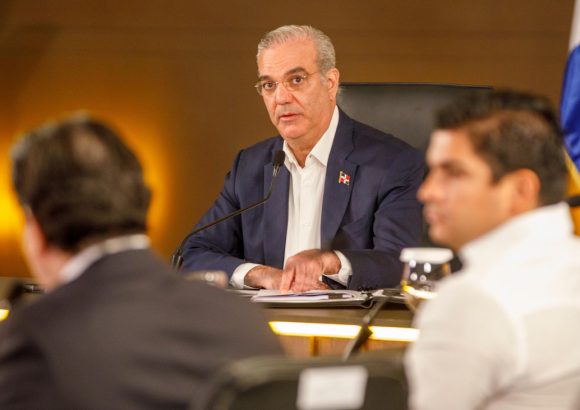
    On Thursday, July 30, 2026, a five-member international Commission of Inquiry officially took office to investigate the sinking of the Guyanese ferry MV Barima, a maritime disaster that occurred earlier this month that has left more than 100 people unaccounted for or confirmed dead. The closed-door swearing-in ceremony, which notably excluded media presence, was overseen by Chief Justice Judy Latchman and attended by Guyana President Irfaan Ali, who appointed the panel. Commission Chairman Justice Godfrey Philip Smith, a veteran judicial official from Belize who also serves as the CARICOM High Level Representative for Law and Criminal Justice and an ad hoc judge of the Eastern Caribbean Court of Appeal, completed his oath of office remotely.

    The disaster, one of the deadliest maritime incidents in Guyana’s recent history, unfolded when the MV Barima sank with 179 passengers and crew members on board. To date, rescue teams have recovered 72 fatalities, rescued 76 survivors, and 31 people remain missing, bringing the unofficial total of lives lost to over 100. In the weeks since the sinking, three people – the ferry’s captain, chief mate, and the Transport and Harbours Department’s Goods Superintendent – have been charged with murder, though Prime Minister Mark Phillips has publicly stated he does not believe the incident was a deliberate act of killing.

    President Ali defended the panel’s credibility in remarks following the ceremony, emphasizing that the commission brings together cross-disciplinary maritime experts from across the Caribbean and Europe to deliver a rigorous, unbiased investigation. “This Commission meets the highest benchmarks of independence, impartiality, and objectivity,” he said, noting that Guyana’s people deserve a full, transparent accounting of what led to the tragedy to prevent similar losses in the future. The head of state also committed that the Guyanese government would allocate full administrative, technical, financial and logistical resources to support the inquiry, saying “Every resource required to facilitate a thorough, professional, and independent inquiry will be made available.”

    The commission’s broad mandate covers multiple core objectives: establishing an authoritative factual record of the sinking, analyzing the root causes and contributing factors behind the disaster, assessing whether all relevant parties complied with existing maritime laws and operational safety standards, evaluating the effectiveness of the initial search, rescue and body recovery operations, identifying systemic or operational shortcomings and failures that led to the incident, and drafting targeted recommendations to strengthen the safety and resilience of Guyana’s entire maritime transportation system. “The nation awaits such report. The families who have suffered unimaginable loss await these answers,” President Ali added.

    The inquiry panel is composed of highly credentialed international experts with deep specialized experience in maritime affairs. Joining Chairman Smith are Dr. Andre Jesse Anungski, a Polish naval architect and marine engineer who has consulted on investigations into numerous major global maritime disasters; Captain Hamada Fauda, a senior maritime surveyor and compliance auditor with Jamaica’s Maritime Authority; Nairi Dawn Alfonso, an attorney from Trinidad and Tobago specializing in admiralty and maritime law; and retired Rear Admiral Hayden Pritchard, also from Trinidad and Tobago, who brings decades of hands-on experience in maritime operations and security. As of the swearing-in date, the government has not yet announced a appointment to the role of Commission Secretary.

    Despite the President’s assurances of the panel’s impartiality, public questions have already emerged about the transparency of the process and the potential for bias among the commissioners. The decision to bar media from the official swearing-in ceremony has fueled concerns about openness in the inquiry, which carries high stakes for the families of victims and Guyana’s maritime regulatory reform moving forward.

  • Sir Garry Sobers forever ‘not out’

    Sir Garry Sobers forever ‘not out’

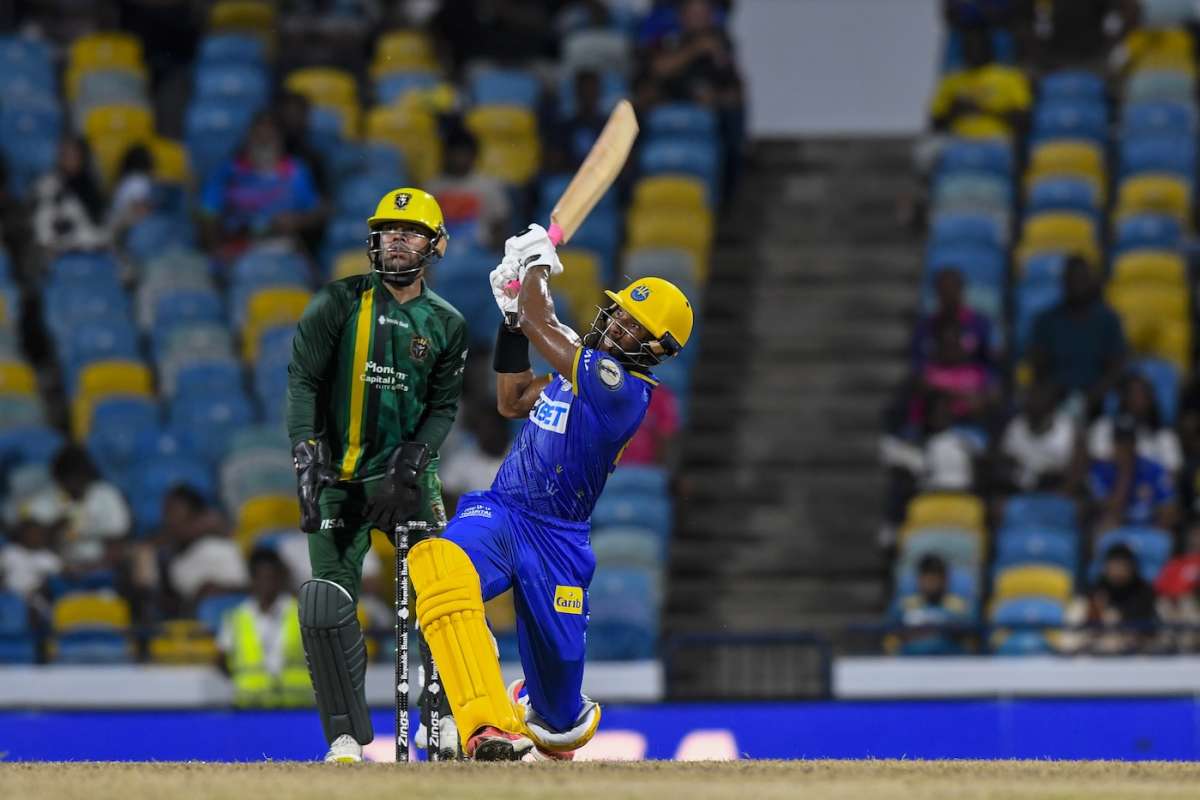
    On a momentous day marked by reflection and celebration of a legendary legacy, thousands gathered at Bridgetown’s iconic Kensington Oval for a two-and-a-half-hour state funeral to honor Sir Garfield St Auburn Sobers, Barbados’ beloved National Hero widely hailed as the greatest all-rounder in cricket history. The ceremony brought together heads of state, cultural icons, global cricket leaders, and ordinary fans alike, all united in paying final respects to a figure who transformed global cricket and inspired generations across the Caribbean and the world.

    Sir Garry Sobers first captured global attention in 1958 at just 21 years old, when he set a new world record for the highest individual score in first-class cricket, cementing his place as a household name across the Commonwealth and beyond. When the procession arrived at Kensington Oval after moving from Barbados’ Parliament building, the casket — draped in the national flag of Barbados — was carried through an honor guard of cricket representatives, who paid tribute by holding up cricket bats in a symbolic farewell. As the casket was placed on the catafalque, the packed stands fell completely silent for a two-minute period of mourning, with thousands of fans filling the Worrell, Weekes and Walcott Stand and the Greenidge and Haynes Stand watching the ceremony on large screens to witness the island’s final goodbye.

    Dignitaries in attendance included Barbados President Jeffrey Bostic, Prime Minister Mia Mottley, CARICOM Chairman and Saint Lucia Prime Minister Philip Pierre, Chief Justice Leslie Haynes, and fellow Barbadian National Hero Robyn Rihanna Fenty, alongside delegations from regional and international cricket organizations.

    Reverend Canon Guy Hewitt delivered a personal message of condolence from King Charles III, who had met Sir Garry on multiple occasions over the decades. “History is distinguished with sporting champions whose records have widely commanded respect across generations. There have been few, far fewer however whose name alone brings a smile to peoples faces across Barbados, the Caribbean and the entire Commonwealth. Sir Garfield Sobers belongs very firmly in the latter category,” the message read. “I send deepest sympathies to Sir Garry’s family as they come to terms with this great loss.”

    In his funeral sermon, Canon Hewitt encouraged attendees to emulate the values that defined Sir Garry’s life: a relentless commitment to excellence paired with extraordinary humility, and a strength of character that allowed him to overcome every obstacle he faced. Quoting the late legend, he noted: “Sir Garry said ‘People call me a genius, but I achieved what I did because I worked hard’. We do not know how strong we are until we face up to life’s challenges.” Canon Hewitt pointed out that modern society often prioritizes fame and personal gain over service, but Sir Garry embodied the truth that “The higher one rises, the more they are called to serve.” Closing his reflection, he declared that even though Sir Garry’s life “innings” ended just short of his 90th birthday, he remains “not out” forever in the hearts of millions.

    Extending national condolences to Sir Garry’s surviving children — Matthew, Daniel, and Genevieve — and all his extended family, Canon Hewitt shared a Hebrew proverb to offer comfort: “Say not in grief that he is no more, but in thankfulness that he was.”

    The service blended formal tributes with vibrant cultural celebration of Sir Garry’s life and connection to Barbadian heritage. Renowned spoken-word artist Winston Farrell performed a moving original poem titled Last Stroll to the Wicket, followed by a series of musical performances from leading Caribbean artists. Cultural Ambassador Anthony “The Mighty Gabby” Carter drew loud applause for his powerful performance of his original composition Well Done, while Biggie Irie performed Sparrow’s Who is the Greatest Cricketer on Earth, Adrian Clarke performed Garry Sobers’, and Nikita moved the crowd with a rendition of Rally Round the West Indies. The ceremony closed with Stephen Brathwaite’s soulful performance of Time to Say Goodbye (Con Te Partiro). Following the service, President Bostic laid a formal wreath at Sir Garry’s gravesite, marking the final act of national respect for a figure who forever changed global sport.

  • VS stopt financiering van WHO via Gavi, maar blijft steun geven aan vaccinalliantie

    VS stopt financiering van WHO via Gavi, maar blijft steun geven aan vaccinalliantie

    A new policy shift from the second Trump administration has upended global public health funding: the United States has committed $600 million to Gavi, the international vaccine alliance, while simultaneously cutting off all U.S. government funding for the World Health Organization (WHO) that was channeled through the partnership. The move marks the latest escalation of a years-long conflict between the Trump administration and the United Nations health agency, delivering a major financial blow to the global health body.

    In a joint statement released by the U.S. Department of State and the Department of Health and Human Services, officials confirmed the funding freeze, noting the decision aligns with President Donald Trump’s directive that Gavi negotiate structural reforms as a precondition for the resumption of full U.S. support that includes funding for WHO.

    Gavi operates as a unique public-private partnership focused on expanding equitable access to life-saving vaccines across low- and middle-income developing countries. It collaborates with national governments, vaccine manufacturers, philanthropic groups, and global multilateral institutions to scale up immunization programs, targeting high-burden preventable diseases including polio, measles, and malaria. For decades, the U.S. has been one of the alliance’s largest and most consistent donors. The newly allocated $600 million is earmarked to support the production of mercury-free vaccines, a policy improvement Gavi has already agreed to implement in coordination with its board and member partner nations.

    Tensions between the U.S. and the WHO date back to Trump’s first term in office. In 2020, early in the COVID-19 pandemic, Trump paused U.S. contributions to the WHO, citing fierce criticism of the agency’s pandemic response and falsely accusing it of spreading disinformation to align with China. At that time, the U.S. was the WHO’s single largest donor, contributing more than $400 million annually—roughly 15% of the organization’s total core budget. Former President Joe Biden reversed the decision within days of taking office in 2021, restoring full funding and halting Trump’s planned withdrawal from the organization. But when Trump returned to the presidency for a second term in January 2025, he used his inauguration day to announce a new U.S. withdrawal from the WHO and suspended all American contributions to the body.

    Global health experts say the latest cuts to WHO funding through Gavi appear to be driven more by ideological commitments than evidence-based public health strategy. The WHO’s total annual operating budget sits at roughly $3.4 billion, just one-third of the budget of the U.S. Centers for Disease Control and Prevention, drawing its funding from both mandated membership contributions from member states and voluntary contributions from partner organizations like Gavi. Despite its relatively small budget, the WHO holds an irreplaceable role in global health: it leads global prevention and control efforts for infectious diseases, and coordinates emergency public health responses to outbreaks and health crises in conflict-affected regions including Gaza, Sudan, and the Democratic Republic of Congo.

  • Agriculture Interns Experience Hands-On Learning at Sea

    Agriculture Interns Experience Hands-On Learning at Sea

    As this year’s cohort of interns prepared to wrap up their professional development program in Antigua and Barbuda, they capped off their months of learning with the event nearly all had been looking forward to: a day of hands-on fishing and industry education out on local waters.

    On Tuesday 27th, interns alongside their program mentors set off on the collaborative excursion, organized by veteran local fisherman Euton Henry. The trip received additional support from a second local fisherman and the Coast Guard division of the Antigua and Barbuda Defence Force, ensuring the outing would be both educational and safe for all participants.

    Before anyone boarded the vessels, Henry and a serving Coast Guard officer delivered a short but critical briefing on water safety and the need for constant caution while at sea. Attendees were then split into small groups of three, with each group moving to their assigned fishing boats. For the large majority of the interns, this marked their first time ever out on a commercial fishing trip, and a mix of excitement and gentle nervousness was visible across the group as they set off.

    The day-long outing gave young participants a rare chance to learn directly from a seasoned industry professional, moving beyond classroom lessons to build first-hand insight into how Antigua and Barbuda’s fishing sector operates. Aboard Henry’s vessel, interns got to try their hand at steering the boat, take in scenic views of coastal stretches of the island only accessible by water, and learn core industry skills including the traditional fish pot fishing method and how to identify prime fishing zones in local waters.

    Though their time out on the water was shorter than many would have liked, the interns left with overwhelmingly positive impressions of the day. They got to try their hand at every step of the process: baiting hooks, helping deploy fish pots, and reeling in catches of the day. All the while, they picked up context about the sector from a guide who has spent decades working in local fisheries.

    A core context for the outing is the outsize role the fishing industry plays in Antigua and Barbuda’s national wellbeing. The sector is central to boosting the country’s food security, maintaining the long-term sustainability of marine natural resources, supplying affordable nutritious food to local communities, and driving inclusive economic growth for coastal populations.

    Through the full day of activity, interns remained engaged and curious about their work. Only a small number experienced sea sickness, and even those pushed through to participate in the full program. The day closed with Henry encouraging the young attendees to consider future roles in the fishing sector and to keep supporting local fishermen as they build careers in whatever path they choose.

  • Paving Completed on VC Bird International Airport Runway

    Paving Completed on VC Bird International Airport Runway

    A key milestone has been reached in the runway rehabilitation initiative at Antigua and Barbuda’s VC Bird International Airport, with all asphalt paving work now fully wrapped up. This progress shifts the multi-phase upgrade project into its last critical phase, which encompasses technical testing, system commissioning, and final regulatory clearance.

    Rex Daly, operations manager for the Antigua and Barbuda Airport Authority, explained that the completion of paving marks a major turning point for the project. After months of large-scale construction activity, the work program has now transitioned to focused final tasks designed to confirm the upgraded runway meets all strict international regulatory benchmarks and operational safety requirements.

    Several key outstanding tasks remain before the project can be declared complete. These include cutting precision grooves into the runway surface to improve wet-weather traction, applying standardized airfield pavement markings, and finishing the installation, testing, and activation of the remaining sections of the airfield ground lighting network.

    Engineering teams will also carry out a full aerodrome survey to cross-verify the exact positioning of both the new lighting system and pavement markings, ensuring alignment with international civil aviation guidelines. Additional mandatory checks include comprehensive flight inspections to validate navigation and lighting performance, calibration of all on-site operational equipment, and rigorous testing of runway surface friction to confirm it meets safety standards for all aircraft types.

    Before the project can be formally finalized, local aviation officials will be required to submit a formal statement of compliance to the Eastern Caribbean Civil Aviation Authority, the regional regulatory body that oversees airworthiness and airport operations across the area. They will also need to complete and submit finalized as-built surveys and detailed technical drawings documenting all changes made during the rehabilitation work.

    According to current project timelines, the full runway rehabilitation initiative is on track to reach substantial completion by the end of August, positioning the upgraded runway to begin supporting regular commercial air traffic in the near term.

  • Youth honour Sir Garfield Sobers

    Youth honour Sir Garfield Sobers

    On a solemn Wednesday in Bridgetown, thousands of mourners packed into the iconic Kensington Oval cricket ground, with young Barbadians making up a striking share of the crowd, all gathered to bid a final national farewell to beloved National Hero Sir Garfield Sobers. Among the sea of people paying respects were student groups from across the island, who came not just to offer condolences to Sir Garfield’s family, but to celebrate the indelible legacy that continues to shape Barbadian culture and sport today.

    Delegations from Springer Memorial Secondary School were among the first groups to arrive, with each student sharing deeply personal reasons for wanting to take part in the historic state funeral. For 16-year-old student Miracle Little, the opportunity to represent her school at the ceremony carried far more meaning than simply marking the passing of a famous athlete. “I think it was important to come here today… to represent the school as well as to express condolences for the family of Sir Garry,” she explained, noting that Sir Garfield’s impact stretched far beyond the boundary ropes of the cricket pitch.

    Her classmate Latara Bovell echoed that sentiment, emphasizing the legend’s foundational role in putting Barbadian cricket on the global map. “He was our national hero,” Bovell said. “If it wasn’t for him, I don’t think nobody would really be playing cricket or would even know Barbados as a place that plays cricket.” Accompanied by their teachers and parents, the Springer Memorial students joined the procession into the stadium, where stands that have hosted some of cricket’s most legendary matches filled with people from every walk of Barbadian life.

    One of the youngest attendees at the service was Nathaniel Nicholls, a student from Bay Primary School – an institution with a unique, personal connection to Sir Garfield. The cricket icon began his formal education at Bay Street Boys’ School, the predecessor to modern Bay Primary, and even honed his first cricket skills on the school’s playing fields as a child. For Nicholls, being selected to represent his school at the funeral was a point of immense pride. After taking part in the ceremony, he said he felt “happy and special” to be part of the national tribute.

    During his time at Kensington Oval, Nicholls got the chance to meet some of Barbados’ most prominent public figures, including the only living National Hero, global pop superstar Rihanna, and Prime Minister Mia Mottley. He also caught a glimpse of President Jeffrey Bostic during the proceedings. When told of Bay Primary’s historic link to Sir Garfield, Nicholls said simply: “It makes me feel like I’m a cricketer.”

    The state funeral brought together a cross-section of Barbadian society, from senior government officials and international dignitaries to Sir Garfield’s extended family, former cricket teammates, and ordinary residents who had grown up inspired by his achievements. Widely regarded as one of the greatest cricket players of all time, Sir Garfield Sobers transformed the sport and turned global attention to Barbados’ deep cricketing roots, earning the status of National Hero for his contributions to the country’s global identity. For the young people who turned out in force Wednesday, his memory will remain a guiding inspiration for generations to come.

  • DAIC: Business community mourns death of Valentine Poponne

    DAIC: Business community mourns death of Valentine Poponne

    The small Caribbean island of Dominica is grieving the loss of a foundational figure in its local commercial landscape, Valentine Poponne, who passed away over the recent weekend. Leading the tributes to the well-respected entrepreneur, the Dominica Association of Industry and Commerce (DAIC) has joined the entire national business community in extending formal condolences to Poponne’s loved ones.

    In an official statement released to the public, DAIC Public Relations Officer Natasha Yeeloy-Labad shared that the organization received the news of Poponne’s passing with profound sorrow. “Mr. Poponne was not just a prominent member of Dominica’s business circle; he was a familiar, trusted pillar who shaped the island’s commercial life for decades,” she noted.

    Widely recognized as the founder and proprietor of Valentine’s Store, Poponne built far more than just a retail establishment — the shop became an integral part of daily life for generations of Dominican residents, much like Poponne himself became a staple of the community.

    Yeeloy-Labad emphasized the unique role of small local businesses in tight-knit island communities, a role that Poponne embodied fully. “Unlike large chain operations, a small neighborhood store holds far more than the goods it sells on its shelves. It holds intergenerational relationships, hard-earned public trust, and a quiet, consistent commitment to service that molds a community slowly, over many years,” she explained.

    On behalf of DAIC’s Board of Directors, its full membership base, and the broader Dominican business community, Yeeloy-Labad extended the organization’s sincerest condolences to Poponne’s immediate family, close friends, and professional colleagues. She reflected that those who mourn him can find comfort in the lasting legacy Poponne leaves behind: a life well-lived, a record of faithful service to his community, and a memory held in deep warmth by all who knew him. “We mourn this great loss alongside all who loved and knew him,” the statement concluded. “May his soul rest in eternal peace.”

  • New dialysis unit opens at St Jude Hospital

    New dialysis unit opens at St Jude Hospital

    A state-of-the-art 14-station dialysis unit has officially opened at the upgraded St Jude Hospital in Augier, Saint Lucia, marking a major step forward in expanding access to critical, life-saving renal care for patients across the island — especially for those residing in the country’s southern region. The Ministry of Health, Wellness and Nutrition reports that the renovated facility delivers a far more modern, comfortable treatment environment for people relying on regular dialysis, and stands as the latest milestone in the government’s ongoing push to strengthen the nation’s public healthcare ecosystem. The new unit replaces dialysis services that were previously temporarily hosted at George Odlum Stadium, and health officials prioritized eliminating any gaps in care for vulnerable patients throughout the entire relocation process. Jenny Daniel, Permanent Secretary at the Ministry of Health, explained that the ministry arranged for continued treatment at partner medical facilities across the island while the transition to the new Augier location was completed. “The Ministry of Health fully understands the urgent nature of dialysis care for these patients,” Daniel noted. “When a patient needs dialysis, they cannot wait — a lack of required treatment can quickly become fatal.” To support uninterrupted care, the ministry pre-allocated the necessary funding and put operational protocols in place long before the move began, to guarantee no patient would be left without their scheduled treatment. Daniel emphasized that the seamless transition to the new facility was the result of months of coordinated planning between government technical teams and Renal Dynamics, a specialized partner that supported upgrades to ensure all dialysis equipment, water purification systems and electrical infrastructure met strict national medical standards. “Relocating the entire dialysis service from the stadium to our new Augier home was not a last-minute, overnight project,” Daniel explained. “Today’s successful launch is the product of extensive foundational work to make sure every unit, every water system, every electrical network was properly installed and tested before opening. That preparation is what made this transition a success.” Minister for Health, Wellness and Nutrition Moses Jn Baptiste marked the official commissioning of the facility, highlighting that it will address a long-unmet need for accessible renal care in southern Saint Lucia. “Many residents in the south of our island require regular dialysis treatment,” the minister noted. “This improved department will bring services far closer to home for these individuals, cutting down on travel time and transportation costs while making consistent care far easier to access.” The Ministry of Health added that the opening of the new dialysis unit is part of the government’s broader national strategy to upgrade healthcare delivery and modernize public health infrastructure, as the phased rehabilitation and reopening of St Jude Hospital continues. The project aligns with long-term commitments to expand access to high-quality primary and specialized care for all Saint Lucians, regardless of their location on the island.

  • A hero’s rest

    A hero’s rest

    The Caribbean nation of Barbados came to a reverent standstill on Wednesday to lay to rest its beloved national hero, cricket icon Sir Garfield Sobers, at Coral Ridge Memorial Gardens. The state funeral, held with full military honours, drew a cross-section of attendees including immediate family, regional heads of government, global cricket royalty, and senior state officials, all gathering to honor the life and legacy of the man widely regarded as the greatest cricketer in the sport’s history.

    Heavy, coordinated security measures were implemented across the surrounding area ahead of the ceremony, with all public access blocked from the Coral Ridge roundabout leading to the cemetery entrance. Uniformed police officers occupied strategic positions along the entire funeral procession route, forming a formal guard of honour that stood rigid at attention as the ceremonial cortege approached the burial grounds.

    Shortly after 1 p.m., a polished gun carriage painted in the signature green of the Barbados Defence Force made its slow, deliberate way toward the memorial site. The deep, steady thrum of drums from the combined Massed Band of the Barbados Police Service and Defence Force rolled across the quiet landscape, announcing the arrival of the Bayland native who carved his name into global cricket history as an undisputed, unrivaled legend of the game.

    Most of those gathered outside the cemetery gates were credentialed media crews from regional and international outlets, waiting to capture the historic final moments of the procession carrying Sir Garfield’s casket. Among the small number of local residents in attendance was one man who shared a decades-old personal connection to the cricketer, saying he felt compelled to attend to offer one last salute to a man he remembered as consistently humble and warm to members of the public. Speaking to local outlet Barbados TODAY, he recalled a 1970s photograph of himself shaking hands with Sir Garfield, noting that “He touched so many lives, and I wanted to be here to pay my respects one last time.”

    In a moving display of state tradition, uniformed members of Barbados’ armed forces lined the main driveway of the memorial gardens, standing in solemn formation to salute as the gun carriage carried the casket toward its final resting place. The service drew a distinguished guest list that included foreign dignitaries, senior government leaders, and national cultural icons, all of whom took part in a formal wreath-laying ceremony at the gravesite.

    Sir Garfield’s son Daniel Sobers was the first to place flowers on the casket. He was followed by Robyn Rihanna Fenty, Barbados’ only living National Hero, who joined President Jeffrey Bostic, Prime Minister Mia Mottley, Chief Justice Leslie Haynes, Chief of Staff Brigadier Carlos Lovell, and Police Commissioner Sonia Boyce to lay official memorial wreaths.

    The regional and global importance of the occasion was highlighted by the attendance of senior international figures, including CARICOM Chairman and Saint Lucia Prime Minister Philip J. Pierre, and former Trinidad and Tobago Prime Minister Dr. Keith Rowley, a long-time close supporter of Sir Garfield. Cricket West Indies President Dr. Kishore Shallow and members of the international diplomatic corps also joined the wreath-laying.

    Many of Sir Garfield’s fellow cricketing legends were also in attendance to bid farewell to their iconic peer, including Sir Wes Hall, Sir Andy Roberts, Sir Curtly Ambrose, and Sir Vivian Richards.

    In a symbolic tradition at Barbadian state funerals, a senior army officer presented the carefully folded national flag of Barbados to Sir Garfield’s son Matthew Sobers. As the casket was slowly lowered into the ground, a ceremonial 19-gun salute echoed across the memorial grounds, while Senator the Reverend Canon John Rogers delivered the final religious rites.

    As family, close friends, and dignitaries offered their final goodbyes, the service closed a defining chapter in Barbados’ national history. It united members of the public, regional leaders, and cultural trailblazers in celebrating the extraordinary legacy of a man who reshaped global cricket and cemented Barbados’ reputation on the world stage.

  • Commonwealth Youth Forum to Bring Young Leaders to Antigua and Barbuda in November

    Commonwealth Youth Forum to Bring Young Leaders to Antigua and Barbuda in November

    The small Caribbean nation of Antigua and Barbuda is preparing to welcome hundreds of young change-makers from all corners of the Commonwealth bloc this November, for a landmark gathering dedicated to elevating youth voices in global leadership and building collaborative routes to inclusive economic growth.

    Scheduled to run from November 2 to 4 at the University of the West Indies Five Islands Campus in St. John’s, the 2025 Commonwealth Youth Forum will be held in advance of the 2026 Commonwealth Heads of Government Meeting (CHOGM), aligning youth priorities with the bloc’s top-level policy agenda. Under the official theme “Investing in Youth Agency — Co-Creating Pathways Towards Shared Prosperity”, the forum will create space for delegates to examine how young people can drive the development of a more resilient, adaptive Commonwealth that responds to 21st-century challenges.

    This upcoming Antigua and Barbuda gathering builds on a successful pre-forum event held in London this past July: a special edition of the Commonwealth Leadership Series, hosted jointly by the Commonwealth Youth Council and the John A. Kufuor Foundation. Held on July 24, that event brought together more than 40 emerging young leaders to unpack the evolving demands of effective leadership in a fast-shifting global landscape.

    Speaking at the London session, former Ghanaian President John Agyekum Kufuor, the namesake of the co-host foundation, urged participants to embrace technological transformation and evolving social norms while retaining a people-centric approach to leadership. “In an era defined by artificial intelligence, climate disruption, democratic pressure and economic uncertainty, leadership is no longer measured only by title or office. It is measured by judgment, service and the ability to hold ambition together with empathy,” Kufuor told delegates.

    The focus on youth leadership comes as no surprise for the 56-nation bloc: demographic data shows that more than 60% of the Commonwealth’s total 2.7 billion population is under the age of 30, making youth engagement a critical priority for the organization’s long-term relevance and impact.