作者: admin

  • School Bus Carrying Dozens of Students Involved in Crash

    School Bus Carrying Dozens of Students Involved in Crash

    On June 1, 2026, one day ahead of the official public announcement, a collision involving a school bus carrying dozens of high school and technical students shook the small community of Pueblo Viejo Village in southern Belize’s Toledo District. The bus was transporting learners from Julian Cho Technical High School, with additional students from the Toledo Institute of Development and Extension’s Technical and Vocational Education Training (ITVET) program also on board at the time of the crash.

    Belize’s Ministry of Education, Culture, Science and Technology (MoECST) later issued an official confirmation verifying that 32 students were present on the vehicle when the accident occurred. In the immediate aftermath of the collision, emergency response teams arrived at the scene to triage affected passengers and coordinate next steps. Four students were diagnosed with only minor injuries and quickly transported to the nearby San Antonio Polyclinic to receive urgent medical care. All other students on the bus were unharmed and relocated to an alternate vehicle to continue their journey or be reunited with their families.

    In a public statement released following the incident, MoECST shared that officials were relieved to confirm that no life-threatening or severe injuries had been recorded across all passengers. The ministry also emphasized its ongoing commitment to providing support—including academic accommodations, counseling resources, and logistical assistance—to the affected students, their family members, and the broader Julian Cho Technical High School community as they process the event.

    As of the latest update, local traffic law enforcement and education sector officials have launched a formal investigation to pinpoint the exact cause of the crash. Investigators are reviewing evidence from the scene, interviewing witnesses, and examining the condition of the bus and surrounding roadway to determine whether factors such as weather, mechanical failure, driver error, or road conditions contributed to the collision. No preliminary findings have been released to the public as the inquiry remains ongoing.

  • Honderden kinderen bidden voor vrede, onderwijs en de toekomst van Suriname

    Honderden kinderen bidden voor vrede, onderwijs en de toekomst van Suriname

    On Saturday, more than 300 people — including children, parents, youth leaders and volunteers — came together in Suriname for the annual National Children’s Prayer Day, hosted at the Gods Rainville municipality venue. The gathering centered on intercessory prayer for the nation of Suriname, local families, educational institutions, national and global leaders, and children across the world navigating challenging living conditions.

    This year’s event was jointly organized by three faith-focused groups: the Weid Mijn Lammeren Foundation, the Suriname Bible Society, and the Children’s Evangelization Society. Young participants came from a wide range of Christian denominational backgrounds, including Roman Catholic, Pentecostal, Baptist, and Wesleyan congregations. The day’s program blended a variety of activities, including group singing, dance performances, collective worship, and open prayer sessions.

    Gloria Lie Kwie Sjoe, one of the event’s co-organizers, expressed deep gratitude for the large turnout and the enthusiastic engagement from the young participants. “The sincerity that children bring to their prayers is extraordinary,” she shared in remarks during the gathering. “Their prayers come straight from the heart. It is so important for children to learn that prayer is not difficult or boring — anyone can pray, no matter how old or young you are. God listens to the prayers of children just as he listens to adults. Prayer gives people hope, comfort, and strength when they need it most.”

    One of the most memorable segments of the day was a personal prayer writing activity, where each child jotted down their own private prayers on small notes. These handwritten messages offered an intimate window into what young people across Suriname care about most, and produced many deeply moving moments for everyone in attendance.

    The prayers reflected a wide range of hopes and concerns for both local and global communities: one child prayed that Suriname’s national football team would qualify for the FIFA World Cup, while another wrote that they hoped all conflict and war would end around the world. Many children asked for greater peace within Suriname, improved living conditions for unhoused residents, healing for sick loved ones, and safer public environments for all children.

    Education was also a key focus of the children’s prayers. Many young participants prayed for teachers and fellow students, as well as for improved educational infrastructure and resources across the country. Additional prayers called for safer, cleaner public streets and healthy, prosperous futures for all people living in Suriname.

    In closing remarks, event organizers emphasized that the gathering made clear an important truth: children are not only the future of the nation, they already hold a meaningful and powerful voice in the present. Their simple, unfiltered, sincere prayers came together to form a strong, unified message of hope, faith, and shared connection across all of Suriname.

  • Electoral Office List of Confirmed Voters May 1-31, 2026

    Electoral Office List of Confirmed Voters May 1-31, 2026

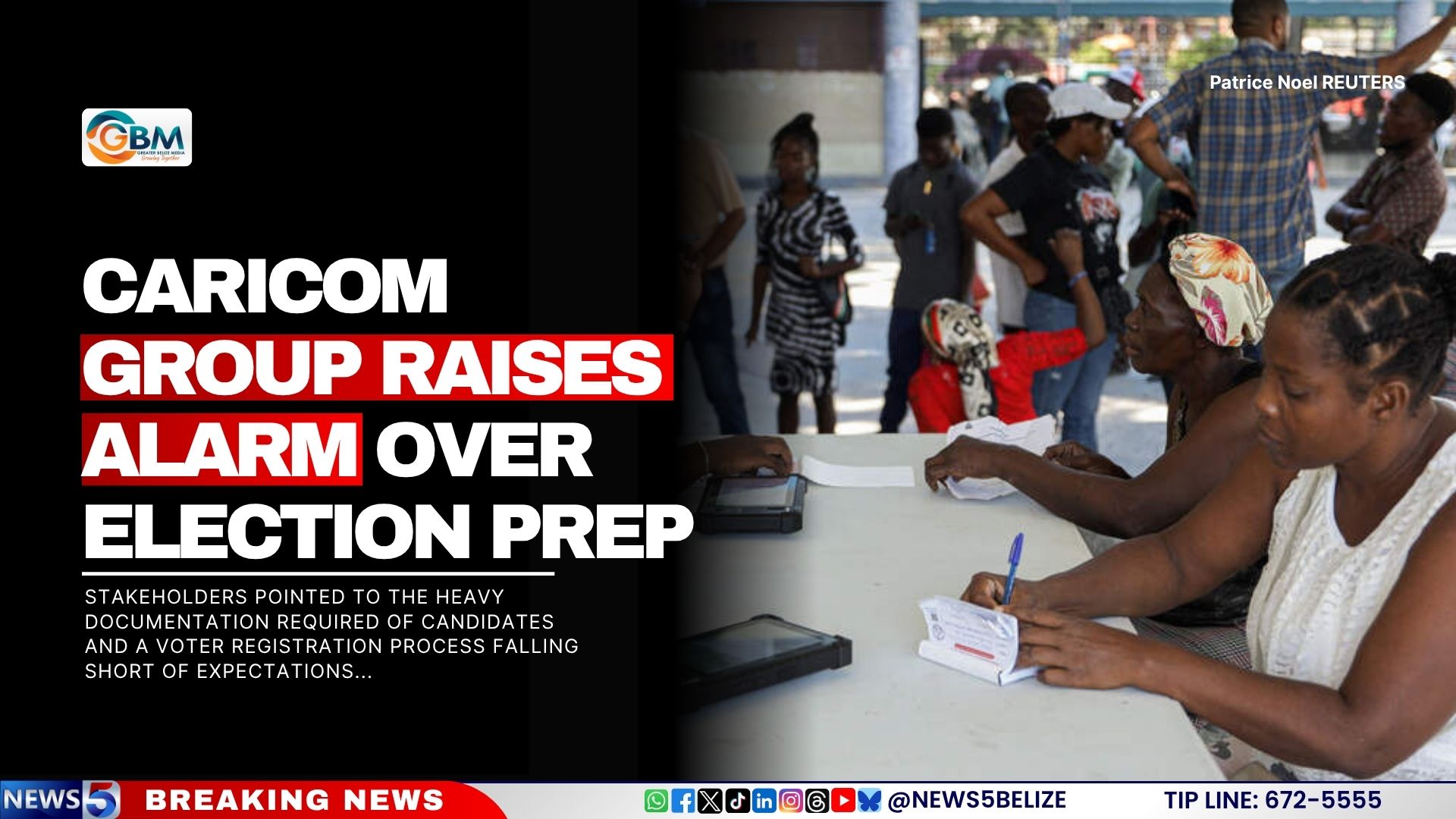
    The official body responsible for overseeing electoral processes has published two key voter registration documents covering the spring registration period, bringing clarity to the electorate ahead of upcoming voting events. As of the May 31, 2026 deadline, the Electoral Office has formally released both the master Confirmed Voters List for all registrations processed between May 1 and May 31, as well as the updated Supplementary Voter List approved by the close of the month.

    The public can access both documents directly through dedicated links provided by the office: the Confirmed Voters List is available via the first published link, while the approved Supplementary List can be viewed through the second posted link. This release marks a critical milestone in pre-election preparations, giving candidates, political organizations, and registered voters the opportunity to verify registration status and resolve any discrepancies before polling begins.

  • MVP Gilgeous- Alexander: I failed

    MVP Gilgeous- Alexander: I failed

    The Oklahoma City Thunder’s 2024-25 NBA playoff run came to a devastating close in Game 7 of the Western Conference Finals, where a 4-3 series defeat at the hands of the San Antonio Spurs ended their bid for a back-to-back championship. For two-time reigning league MVP Shai Gilgeous-Alexander, the early exit does not just mark a disappointing end to the campaign — it qualifies the entire season as a failure.

    In the wake of the hard-fought loss, Gilgeous-Alexander opened up about his high personal standards, saying that he fell short of the goal he set at the start of the season. “I failed at my goal,” he explained. “I didn’t achieve what I wanted to achieve. But I learn the most about myself and make the greatest amount of growth in my career when I fail and don’t get what I want. I look at this no different. I didn’t get where I wanted to go this season. There’s a reason for that. Now I have to examine that reason and work to make sure this outcome never happens again.”

    Throughout the regular season, Gilgeous-Alexander turned in a historic individual performance, averaging 31.1 points per game on 55.3% field goal shooting and 38.6% three-point shooting. But his signature elite efficiency dipped sharply across the seven-game series against San Antonio, where he dropped to 25.9 points per game on just 40.9% shooting from the field and 28.6% from beyond the arc. Even so, the MVP delivered a vintage performance in the do-or-die Game 7, pouring in 35 points on 21 attempts and nearly lifted an injury-depleted Thunder squad to an upset series win.

    San Antonio’s defensive game plan was built entirely around slowing Gilgeous-Alexander, funneling all his drives toward anchor Victor Wembanyama at the rim to force the MVP into high-contest midrange jumpers instead of the high-percentage looks he typically generates. “There’s a guy on their back line that is a little bit different,” Gilgeous-Alexander said of Wembanyama. “They funnel everything to him. It’s a really good defense. But it’s not impossible to score. I just think it’s very different.”

    Beyond the Spurs’ game planning, the Thunder were crippled by key injuries to their supporting cast that left Gilgeous-Alexander without his usual offensive help. Second-leading scorer Jalen Williams aggravated a nagging left hamstring injury early in Game 2, and was limited to just 54 total minutes across the entire series. He made a brief, rusty appearance in Game 6 before being sidelined entirely for the deciding Game 7.

    Williams made no secret of his belief that his absence changed the series’ outcome. “Obviously I think I could have made an impact,” Williams said. “I think we could have won if I played. We went to seven with them without me playing. I don’t think I make us worse. That’s really my answer to that. But it’s also hats off to them. What do you want them to do about me being hurt?”

    The Thunder also lost replacement starter Ajay Mitchell for most of the series. Mitchell had been a breakout star in the team’s second-round sweep of the Los Angeles Lakers, averaging 22.5 points per game in that matchup, but suffered a strained right calf in Game 3 against San Antonio that ended his season prematurely.

    With the Thunder eliminated, the San Antonio Spurs will advance to the 2025 NBA Finals, where they are set to tip off against the New York Knicks on June 3.

  • ‘Sea Wolves in Warm Waters: The U-Boat Battle In The Caribbean’ – Book review and author response

    ‘Sea Wolves in Warm Waters: The U-Boat Battle In The Caribbean’ – Book review and author response

    For most students and enthusiasts of World War Two naval history, the Caribbean theatre is rarely given the attention it deserves. Popular and even academic narratives often fixate on better-known battlegrounds, from the high-stakes Atlantic convoy crossings to the frigid Arctic supply routes, framing the sun-drenched Caribbean archipelago as a tranquil backdrop far removed from the chaos of global conflict. That widespread neglect is exactly what author and Caribbean scholar Clement Richards sets out to correct with his new release, *Sea Wolves in Warm Waters: The U-boat Battle in the Caribbean*, published in May 2026. A new review from military historian Dr. James Bosbotinis, originally featured in The Naval Review, offers a balanced deep dive into this groundbreaking work of historiography, which the book’s author has since responded to with contextual clarifications.

    Drawing on hundreds of declassified multinational archival sources – ranging from official military war diaries to cabinet-level government policy documents – Richards repositions the Caribbean as a strategically critical linchpin of the Allied war effort, rather than a peripheral afterthought. During Operation NEULAND, Germany’s 1942 offensive in the region, Nazi U-boats targeted the Caribbean’s core economic assets: the massive oil refineries across Aruba, Curaçao, and Trinidad, plus key shipping lanes that carried vital supplies of oil and bauxite to feed Allied industrial production. By cross-referencing Grand Admiral Karl Dönitz’s personal diaries with the individual operational logs of deployed U-boats, Richards builds a convincing case that Operation NEULAND was not a scattered string of opportunistic raids, but a coordinated, well-planned strike aimed at crippling a core Allied supply artery.

    The book’s multi-perspective framework draws on four distinct source bases: German military records, British high command policy papers, U.S. intelligence summaries, and local Caribbean community and government archives. This approach allows Richards to clearly trace how Allied defenses in the region evolved over the course of the campaign, from the initial uncoordinated response to the gradual rollout of formal convoy systems, expanded aerial patrol coverage, and growing anti-submarine warfare capacity that steadily eroded U-boat effectiveness by the mid-war period.

    One of the book’s greatest strengths is its commitment to centering the human cost of the conflict, rather than only detailing troop movements and strategic planning. Richards shines a light on the experiences of merchant seamen who suddenly found their routine shipping routes transformed into killing fields, where torpedo strikes left ships burning and leaking oil across once-calm waters. He also explores how the war abruptly shattered the relative peace of Caribbean island communities, which had long viewed the global conflict as a distant European affair. Beyond the immediate violence, Richards details how the massive military infrastructure built by the Allies during the war permanently reshaped Caribbean islands physically and economically, laying the groundwork for the modern commercial tourism industry and accelerating the push for decolonization in the post-war era.

    For all its contributions to the field, Bosbotinis notes the work is not without its limitations. A notable methodological imbalance emerges from the uneven availability of source material: while German, British and American military operations are reconstructed through detailed, complete institutional records, the experiences of local Caribbean populations are drawn from far more fragmented sources, including oral histories and scattered social accounts. This leads to a narrative that often frames Caribbean communities primarily through stories of suffering, rather than highlighting instances of local agency and active participation in the war effort. Additionally, Bosbotinis argues that the text devotes disproportionate space to the opening phase of Operation NEULAND in 1942, leading to repetitive coverage of the initial German offensive and the region’s first response, while the period after 1943 – when Allies had solidified their defensive posture – is covered far too briefly. This overemphasis on the initial “crisis” phase leaves the long-term impacts of wartime mobilization on daily Caribbean life underexplored. Finally, while Anglophone Caribbean communities receive extensive coverage, the Dutch ABC Islands and Vichy-controlled French Antilles are given only limited treatment, and the author’s choice to use summary source notes rather than full detailed citations will likely frustrate academic researchers hoping to verify specific claims or follow up on obscure local incidents.

    Despite these shortcomings, Bosbotinis concludes that *Sea Wolves in Warm Waters* is an indispensable addition to both World War Two maritime history and Caribbean historiography. It builds on the foundational work of earlier scholars like Kelshall and André, while expanding public and academic understanding of how global war touched even the most seemingly remote tropical communities. Even with its structural and geographic gaps, the book successfully challenges the persistent myth of the Caribbean as a passive, peripheral paradise during the war, reminding readers of the strategic importance of the theatre and the enduring legacy of struggle and sacrifice that lies beneath its popular image as a tranquil tourist destination.

    Following the publication of the review, Richards released a formal response clarifying two key criticisms raised by Bosbotinis. Addressing the claim that the book overemphasizes Caribbean suffering at the expense of local agency, Richards noted that during the war the Caribbean was almost entirely controlled by colonial powers, leaving local populations with very little scope for autonomous political or military action. As colonial subjects, most Caribbean communities experienced the war as the recipients of Allied policy rather than independent actors, and the emergence of distinct Caribbean political agency only came in the post-independence era after the war ended. That historical context necessarily shaped the narrative structure of the book.

    On the topic of limited coverage of French and Dutch Caribbean territories, Richards explained that access to local archival material presented significant practical barriers. Most French Caribbean territories were controlled by Vichy France for much of the war, and language barriers combined with restricted access to local French archives made deep research difficult. Dissident activity from French Caribbean territories connected to the Free French movement is covered in a dedicated chapter of the current book, and Richards plans to explore this topic in full in a future work, given Dominica’s central role in those events. Similar access issues impacted research on Dutch islands, with most available material coming from British and other English-language sources, limiting the depth of local Dutch perspectives that could be incorporated. Richards emphasized that he did not aim to excuse the gaps identified in the review, only to explain the practical contextual constraints that shaped the book’s research and writing.

  • Upgrades to traffic signals at Beckles Road, St Michael start June 3

    Upgrades to traffic signals at Beckles Road, St Michael start June 3

    A critical infrastructure improvement project is set to get underway this week at one of St. Michael’s busiest urban intersections, with government transportation officials announcing a month-long series of upgrades to the traffic signaling system at the junction of Highway 7 and Beckles Road.

    Located directly adjacent to the Government Headquarters Building along Bay Street, this high-traffic crossing will see teams from the Ministry of Transport and Works (MTW) carry out comprehensive upgrades to existing traffic signals over a 28-day timeline. In addition to modernizing the current signal infrastructure, the project will also add a new street light to improve visibility and safety for all users of the intersection.

    Work on the site is scheduled to begin this Wednesday, June 3. Throughout the duration of construction, motorists, cyclists and pedestrians should anticipate intermittent changes to traffic signal operations. At various points during the work, signals may be switched to flashing amber mode or shut off entirely to allow crews to work safely.

    MTW has issued a public advisory urging all people traveling through the work zone to exercise extra caution during this period. Road users are reminded to pay close attention to temporary traffic management signage posted around the site and follow any instructions given by on-site traffic control personnel to avoid accidents or delays.

    In a public statement released by the ministry, MTW pre-emptively thanked local residents and daily commuters for their patience and cooperation while the upgrades are carried out. Officials also offered an apology in advance for any temporary disruption, congestion or inconvenience that the construction work may cause to people’s regular travel routines in the area.

  • The Archbishop and the Chambermaid

    The Archbishop and the Chambermaid

    For decades following the end of colonial rule, small Caribbean nation-states have navigated a persistent, unresolvable contradiction at the heart of their regional identity and foreign policy. These countries publicly uphold the values of national sovereignty, cross-border solidarity, anti-imperialism, and regional fraternity, but they must operate in a global order defined by crippling power asymmetries—economic, military, and political—that tilt the playing field sharply against smaller actors. Nowhere is this tension more acute than in the region’s current fraught positioning between Cuba, Venezuela, and the United States.

    On the surface, the choice appears to be a simple binary: stay loyal to Cuba, a decades-long ally and benefactor to the region, or realign to align more closely with Washington, the undisputed dominant superpower of the Western Hemisphere. But the reality is far more nuanced, with Venezuela sitting at the core of the calculus across economic, ideological, geographic, and military lines. Today, Caribbean nations find themselves pulled in conflicting directions by gratitude, strategic fear, moral principle, and the raw imperative of national survival.

    Cuba’s role in the Caribbean extends far beyond transactional diplomatic exchange. For generations, Havana has supported the region in ways that major global powers never prioritized. Cuban medical professionals have staffed under-resourced rural clinics across dozens of Caribbean islands, and Cuban disaster response brigades have deployed immediately after hurricanes, disease outbreaks, and other catastrophic events when international support was slow to arrive. When Western university education was out of financial reach for most Caribbean young people, thousands earned full scholarships to study medicine in Havana. Today, entire national healthcare systems across the region remain deeply dependent on Cuban medical personnel.

    This bond is rooted in more than aid: it grows from a shared history of colonial exploitation, racial justice struggles, geographic vulnerability, and collective resistance to external domination. Like individuals, nations remember unwavering loyalty when it was offered when no one else would step forward.

    The regional solidarity network deepened dramatically with the launch of Venezuela’s PetroCaribe initiative. The program offered Caribbean nations heavily subsidized oil on generous concessionary terms, giving fragile, debt-burdened regional economies critical breathing room during periods of energy crisis, fiscal collapse, and global market shock. PetroCaribe was never just an economic program: it was a deliberate act of oil diplomacy, converting Venezuela’s energy wealth into regional political influence and collective solidarity.

    At the heart of this arrangement was the tight strategic partnership between Cuba and Venezuela. Caracas provided the subsidized energy that kept regional economies afloat, while Havana contributed technical expertise, intelligence support, and ideological legitimacy to the project. Caribbean nations reaped the benefits of both, turning what could have been a crippling energy burden into a foundation for modest growth and stability. For many regional governments, this alignment was never about ideological alignment—it was a matter of basic national survival.

    But that calculus of survival has shifted dramatically in recent years. As Venezuela descended into deep economic collapse, growing authoritarianism, and increasingly assertive territorial claims in the region, the moral and strategic equation has flipped, particularly for two key Caribbean states: Guyana and Trinidad and Tobago.

    Guyana currently faces what it frames as an existential territorial threat from Venezuela over the long-running Essequibo border dispute, a resource-rich region that Caracas claims as its own. Trinidad and Tobago, which sits just miles off Venezuela’s coast, confronts the constant risk of cross-border spillover from Venezuelan instability, including surges of irregular migration, the expansion of transnational organized crime, and heightened strategic vulnerability to external pressure.

    At the same time, many members of the Caribbean Community (Caricom) remain wary of Trinidad and Tobago’s close alignment with the current U.S. administration’s regional policy, especially when that approach is seen as overly interventionist or heavy-handed. This dynamic lays bare a new reality for the region: governments are no longer simply choosing between old friendship and great power influence. Increasingly, they are forced to navigate a raw tension between inherited historical loyalties and urgent contemporary security needs.

    In this context, moral clarity becomes impossible to maintain. Core principles remain important, but when a state’s core security and territorial integrity are perceived to be on the line, absolute ethical positions often give way to painful trade-offs and deeply uncomfortable choices.

    This unenviable predicament echoes a famous thought experiment proposed by philosopher William Godwin in his work *An Enquiry Concerning Political Justice*, widely known as “The Archbishop and the Chambermaid.” Godwin asked the public to imagine choosing which person to save from a burning building: a prominent archbishop whose work benefits thousands of people, or an unknown chambermaid whose death would impact only a small circle. Godwin’s utilitarian conclusion was that morality demands saving the archbishop, as his survival creates greater collective good.

    Critics quickly countered with a devastating question that upends the utilitarian logic: what if the chambermaid is your mother, your spouse, or a lifelong benefactor who saved your life when no one else would? That is exactly the Caribbean’s dilemma with Cuba.

    Purely strategic logic would seem to point toward alignment with the United States. Regardless of the contradictions and moral flaws of U.S. foreign policy in the region, only Washington possesses the combination of military and economic power capable of deterring Venezuelan aggression against Guyana or containing wider regional instability.

    But for the Caribbean, Cuba is never just an abstract piece on a geopolitical chessboard. Cuba is the ally that showed up when major powers turned away. Abandoning Cuba under pressure from Washington feels to many regional leaders and populations less like pragmatic diplomacy and more like a betrayal of a trusted friend.

    Philosopher Bernard Williams further refined this moral dilemma, arguing that if a person pauses to calculate whether morality permits them to save their own wife from a fire before acting, they have already had “one thought too many.” Williams’ core point is that human morality cannot function by treating loved ones as interchangeable with strangers; loyalty itself is a core moral good that gives meaning to collective and individual life.

    Yet national governments are not private individuals. States hold a fundamental obligation not just to honor old friendships and historical gratitude, but to protect the survival and well-being of their current citizens. In moments of crisis, nations often practice a brutal form of political triage: prioritizing the survival of the state and its people, even when the choice inflicts deep moral harm.

    This is why the Caribbean’s predicament cannot be resolved through abstract moral rules alone. Immanuel Kant’s ideal of acting only on principles that one would want to be universally applied becomes impossible to uphold when the very existence of a small state is at stake. Absolute loyalty to old alliances can become national suicide, but unbridled self-interest destroys the regional trust and solidarity that small nations depend on to counterbalance great power influence.

    The cruelest irony of this dilemma lies in the role of the United States itself. Washington often frames its demands on the region in moral terms, but its own history in Latin America and the Caribbean is marked by unilateral interventions, economic embargoes, covert operations, and deeply inconsistent commitments to democracy and national sovereignty, undermining any claim to moral high ground.

    Even so, Caribbean nations face an uncomfortable, unignorable truth: if Venezuela truly moves to threaten Guyana’s territorial integrity or trigger wider regional instability, only the United States has the credible military and economic power to deter that action. Not Cuba, not Caricom, not international law alone can provide that deterrence.

    This is the core tragedy of small-state power politics: moral discomfort does not eliminate the reality of strategic dependence. Great powers can afford to speak in the abstract language of principle, because they never face the existential consequences of their choices. Small nations rarely have that luxury.

    For every Caribbean state, every diplomatic choice carries existential stakes. Aligning with Cuba risks jeopardizing critical security partnerships and economic access to U.S. and global markets. Aligning with the United States feels like abandoning a loyal friend that stood by the region for decades. Opposing Venezuela carries the risk of immediate retaliation, while accommodating Caracas opens the door to future coercion.

    There is no morally clean path forward, because Caribbean states do not control the global and regional power structure that forces these choices on them. That is the deepest lesson of this crisis: abstract ethical theories are easy to defend when one’s survival is not on the line. For small nations living next to great powers and unstable neighbors, morality is never an abstract intellectual exercise. It is negotiated every day under the weight of historical memory, fear, necessity, and the constant, unending calculation of survival.

    Today, the Caribbean’s challenge is no longer simply balancing principle against power. For states facing immediate security threats, it has become a painful, ongoing struggle to reconcile decades of cross-regional political solidarity with urgent, immediate concerns for territorial integrity, domestic stability, and national survival.

  • Two Killed During Protests Over Proposed U.S.-Backed Ebola Facility

    Two Killed During Protests Over Proposed U.S.-Backed Ebola Facility

    On June 2, 2026, deadly violence erupted during mass demonstrations in central Kenya against a proposed United States-backed Ebola isolation center at the Laikipia Airbase, leaving two local men dead and deepening public divisions over the controversial public health project.

    Hundreds of area residents gathered near the military installation to voice their opposition to the 50-bed treatment facility, which is planned to be staffed by American medical personnel and exclusively treat U.S. citizens infected during the ongoing Ebola outbreak in the neighboring Democratic Republic of Congo. Notably, Kenya has not recorded any confirmed Ebola cases to date, a fact that has amplified local skepticism of the project. Protesters took to major access roads, blocking vehicle traffic and setting burning tires in the roadways to draw attention to their demands. In response to the unrest, law enforcement officers deployed tear gas to disperse the crowd, and gunfire later broke out that claimed the two lives.

    Local reporting confirms that the first victim was shot close to the perimeter of the airbase, then transported to a nearby hospital by friends, where he succumbed to his injuries. The second victim was carried to the same medical facility by Kenyan soldiers, and medical staff pronounced him dead immediately upon arrival. Community leader Patrick Wahome told the British Broadcasting Corporation that one of the two slain men was simply traveling home after closing his small business when he was caught up in the violence and fatally shot.

    The project has faced legal challenges from the moment it was announced. Last Friday, Kenya’s High Court ordered a full halt to construction on the facility after a local human rights organization filed a legal challenge, arguing that the center posed unacceptable infection risks to nearby residential communities. On Tuesday, the court extended the temporary suspension and issued a formal order directing the Kenyan national government to release full, public details about the terms and scope of the agreement with the United States.

    Kenyan President William Ruto has publicly defended the bilateral agreement, framing the project as a gesture of longstanding friendship between the two nations. Ruto confirmed that the initiative was launched at the request of the U.S. government, stating: “When President Trump asked Kenya to support them by having a centre in Laikipia Airbase, I gave the ok because it was an agreement with friends who have walked with Kenya for 30, 40 years.” He added that Kenya has taken all possible measures to protect the health and safety of its citizens throughout the planning process. The deaths have now escalated public pressure on the Kenyan government to scrap the project entirely, while legal proceedings over the facility’s future remain ongoing.

  • Dr Naun Bonilla Remembered as “A Servant of Humanity”

    Dr Naun Bonilla Remembered as “A Servant of Humanity”

    The Belmopan medical community and broader public are grappling with shock and grief this week after the targeted execution of 35-year-old beloved physician Dr. Naun Bonilla, who was killed last Friday while en route to drop his daughter at school. Tributes poured in across the community Monday, as hundreds of colleagues, patients, and loved ones took to Belmopan’s streets to honor a doctor widely remembered as a selfless servant to both his patients and his family.

    During a segment on the local morning program *Open Your Eyes*, close friend and colleague Gianni Alamilla opened up about Bonilla’s legacy of commitment to lifting up others. “He genuinely was a servant of humanity,” Alamilla shared. “He invested his entire life into people, and he always inspired everyone around him to do more. That’s why we all rallied together to honor him — if the roles were reversed, Dr. Bonilla would have done the exact same for any of us.”

    Dr. Jorge Hidalgo, an internist and fellow member of Belize’s medical community, framed the public gathering as an act of collective solidarity, celebrating the life of a physician who embodied the core mission of medicine. “We came together as a medical community to honor the life of a very young, brilliant physician who perfectly exemplifies why we chose this profession: to serve people, support our communities, and cherish our families,” Hidalgo explained.

    Dr. Virginia Smith, director of the Belmopan Medical Imaging Center and Bonilla’s colleague of eight years, described the quiet, persistent impact he left on their workplace. “It feels surreal to walk the clinic corridors this morning and not see him pass by in his signature green scrubs. His office was directly across from mine, and it always felt warm seeing his patients lined up outside — he would spend hours with each one, making sure every person got the time and care they deserved,” Smith said.

    Beyond his dedication to patient care, those who knew Bonilla emphasized his equal devotion to his young daughter, a role cut tragically short by his killing. Alamilla recalled that Bonilla protected a strict, non-negotiable window of time every single workday to prioritize his child: “12 to 1 o’clock was always reserved, no exceptions — that was when he went to have lunch with his daughter. He once shared that his biggest fear was his daughter growing up without her dad, and that’s what makes this so impossible for his family and all of us to accept.”

    As the community mourns, Belizean law enforcement continues to advance their investigation into the killing. Authorities have confirmed they have identified a vehicle of interest and a person of interest connected to the crime, and are currently pursuing two potential motives. Investigators have declined to release further public details, citing a need to protect the integrity of the ongoing case. No arrests have been made as of this update, and no motive has been officially confirmed.

  • Ireland women defeat West Indies for first in rain-affected T20I clash

    Ireland women defeat West Indies for first in rain-affected T20I clash

    Monday’s Women’s T20I clash at Dublin’s Castle Avenue delivered a dramatic, rain-soaked chapter in Irish cricket history, as the home side secured their first ever victory over the West Indies thanks to the DLS rain rule, after an untimely downpour left them just one run ahead of the required par score when play was called off permanently.

    The match had been built on a shaky foundation for Ireland from the moment they began their chase of a 142-run target. In a stunning opening collapse, promoted openers Alana Dalzell and Arlene Kelly both fell to seamer Shawnisha Hector in the very first over, leaving Ireland reeling at 3 runs for 2 wickets before the innings had truly begun. What followed was a masterclass in captaincy and resilience, led by Irish skipper Orla Prendergast.

    Prendergast joined forces with Rebecca Stokell to rebuild the innings, putting together a steady 57-run third-wicket stand that dragged Ireland back into contention. When Stokell was dismissed for 12 in the ninth over with the score at 60 for 3, another collapse followed: Leah Paul and Alice Tector fell in quick succession for just 1 and 2 runs respectively, meaning Ireland had lost three wickets for only five runs, leaving their victory hopes hanging by a thread at 65 for 5.

    But Prendergast refused to crumble. The captain crafted an unbeaten innings of 71 runs from just 46 deliveries, marking her 11th T20I half-century for Ireland, hammering 11 fours and one six to keep the chase on track. By the 15th over, Ireland had reached 99 for 5 after 14.1 overs. All-rounder Louise Little hit a boundary off the first delivery of the next over, a four that nudged Ireland one run clear of the DLS par score set for the point the match had reached. Moments later, heavy rain swept across Castle Avenue, forcing players off the field, and no further play could be restarted. The result was called, handing Ireland the historic win.

    The outcome of the match had been shaped by solid Irish bowling earlier in the day, after West Indies captain Hayley Matthews won the toss and opted to bat first. The decision backfired almost immediately: Ava Canning removed Matthews for just one run in the third over, before Leah Paul pulled off a stunning low diving catch at square leg to dismiss all-rounder Deandra Dottin for 12, leaving the West Indies wobbling at 21 for 2 after just four overs.

    Wicket-keeper Christina Coulter-Reilly matched Paul’s catch with a diving dismissal of Qiana Joseph for 12, handing Canning her second wicket of the innings and pushing the Caribbean side down to 33 for 3. Jahzara Claxton was run out for 11 in the ninth over, leaving the Windies at 49 for 4, and veteran batter Stafanie Taylor was forced to retire hurt after managing only 9 runs from 18 deliveries, compounding their troubles.

    A late 46-run partnership between Shemaine Campbelle, who scored a gritty 21, and Jannillea Glasgow, who notched a defiant top score of 36, steadied the West Indies innings, but the damage had already been done. The visitors could only post a total of 141 for 8 from their allotted 20 overs, giving Ireland a modest but challenging target.

    The landmark win pulls Ireland level with the West Indies at the top of the Tri-Nations series standings, which also includes Pakistan. Up next, the West Indies will face Pakistan on Wednesday, before Ireland wrap up their campaign against the South Asian side on Thursday.