作者: admin

  • Dominican Republic joins global effort to protect high seas

    Dominican Republic joins global effort to protect high seas

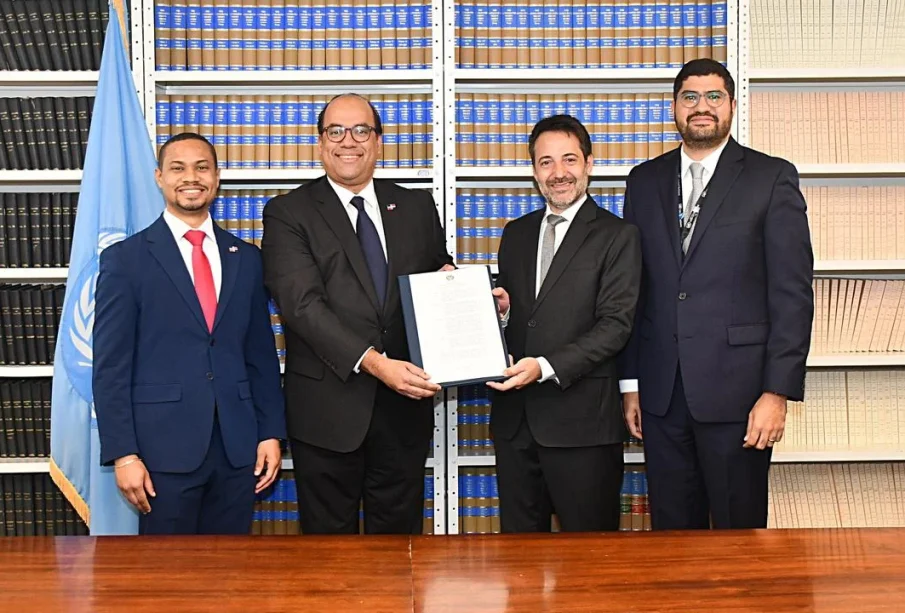
    In a significant move for international marine conservation, the Dominican Republic has formally ratified the groundbreaking Agreement on the Conservation and Sustainable Use of Marine Biodiversity in Areas Beyond National Jurisdiction (BBNJ). Ambassador Wellington Bencosme, the nation’s Permanent Representative to the United Nations, executed the official deposition of the ratification instrument at the UN headquarters, accompanied by senior officials from the Ministry of Foreign Affairs.

    This ratification positions the Caribbean nation as the 87th country to endorse this pivotal international framework. The Dominican government articulated that this action reinforces its dedication to multilateral cooperation, the preservation of oceanic environments, and the adherence to international legal standards. As an island state whose economy and food security are intrinsically linked to marine resources, the country emphasized the critical importance of unified global efforts to safeguard marine ecosystems for sustainable development.

    The administration further detailed that the BBNJ Treaty will enhance global ocean governance through several key mechanisms: advancing marine scientific research, facilitating the establishment of marine protected areas in international waters, and promoting the transfer of marine technology and capacity-building initiatives. These provisions are deemed particularly crucial for supporting developing nations and Small Island Developing States (SIDS).

    Widely recognized as the first legally binding international instrument dedicated to protecting biodiversity in the high seas—which constitute approximately two-thirds of the world’s oceans—the BBNJ Agreement introduces comprehensive measures. These include mandatory environmental impact assessments for activities with potential effects on the marine environment and frameworks for the fair and equitable sharing of benefits arising from marine genetic resources. The overarching goal is to combat the escalating crises of ocean degradation and biodiversity loss.

    By completing this ratification, the Dominican Republic now stands among the vanguard of nations championing the treaty’s implementation. The country is set to actively participate in the preparatory proceedings for the inaugural Conference of the Parties (COP), where the operational details and future trajectory of the agreement will be established.
  • Solutions Cuba: A Space for Perseverance

    Solutions Cuba: A Space for Perseverance

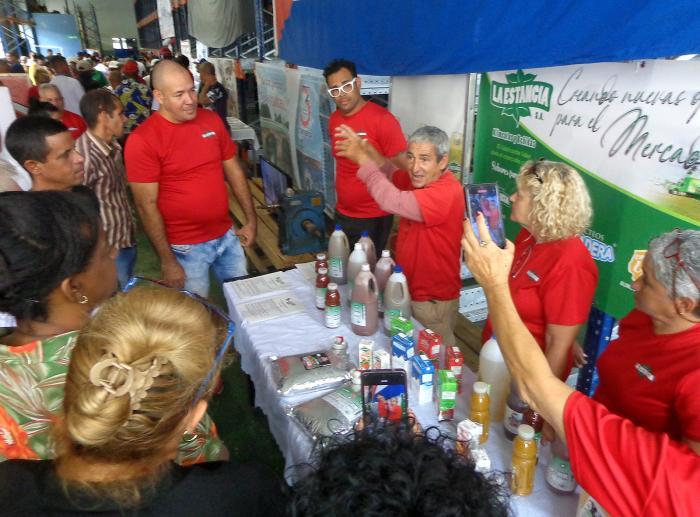
    In the face of mounting economic constraints and resource limitations, Cuban communities are demonstrating remarkable resilience through grassroots innovation. The province of Sancti Spíritus has launched a decentralized series of 22 local exhibitions under the Expo Soluciones Cuba initiative, showcasing homegrown solutions to pressing production and service challenges.

    The program commenced at La Estancia Foods and Beverages, a facility renowned for processing fruits and vegetables into jams and juices. Unlike previous centralized formats, this year’s fourth edition will unfold across multiple municipalities including Cabaiguán, Yaguajay, and Jatibonico—a strategic response to fuel shortages and energy constraints.

    Ana Isa González Farfán, provincial head of the National Association of Innovators and Rationalizers (ANIR), emphasized the participatory nature of these events. “We’re creating spaces for collective learning where women, retirees, farmers, and various social segments can contribute and exchange practical experiences,” she noted.

    Notable innovations include a manually-operated mixer fabricated from repurposed metal sheets at La Estancia, enabling continued production of popular desserts despite equipment shortages. Similarly, the Matisha company has developed product lines utilizing previously discarded waste materials.

    Upcoming sector-specific gatherings will address challenges in healthcare (April 9 at Camilo Cienfuegos Hospital) and communications. The exhibitions reveal a pattern of adaptive creativity emerging precisely where material resources are most scarce—evidence that necessity remains the mother of invention even under severe economic pressure.

  • Inclusive and Global Artificial Intelligence

    Inclusive and Global Artificial Intelligence

    New Delhi recently hosted the landmark AI Impact Summit India 2026, convening from February 16-20 as a pivotal international forum addressing artificial intelligence’s global implications. The summit assembled government officials, technology experts, and multilateral organization representatives to critically examine how AI is reshaping technological and economic paradigms worldwide.

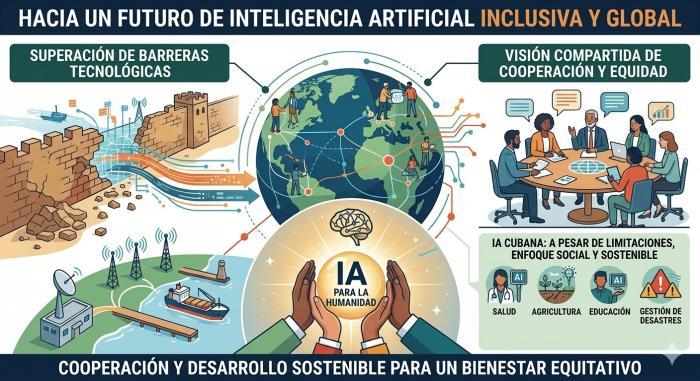
    Central to the discussions was the urgent need to ensure AI’s transformative potential benefits all humanity rather than concentrating advantages in traditionally dominant regions. The gathering specifically amplified perspectives from Global South nations, highlighting concerns about the widening technological divide between developed and developing economies.

    Cuba’s Communications Minister Mayra Arevich Marín emerged as a prominent voice, articulating the challenges facing developing nations. While acknowledging AI’s enormous potential for innovation and social progress, Minister Arevich highlighted profound disparities in investment, adoption, and implementation capabilities. She emphasized that many Southern nations lack adequate computational infrastructure and energy resources while simultaneously contending with AI models trained on data that fails to reflect their socioeconomic, cultural, and environmental realities.

    The Cuban minister advocated for establishing open, compatible, and non-discriminatory international standards alongside strengthened South-South cooperation. She specifically cited Cuba’s collaboration with India as exemplary of the partnerships needed to build shared technological capabilities and reduce existing asymmetries.

    Minister Arevich also reiterated Cuba’s firm rejection of AI applications for criminal or terrorist purposes, including their use for interfering in sovereign states’ internal affairs through historical manipulation or other means.

    Despite significant constraints, Cuba has pursued structured AI development through its 2024-approved National Artificial Intelligence Strategy. This framework promotes AI applications across strategic economic and service sectors, with current projects spanning healthcare, agriculture, education, and disaster management—all prioritizing social benefit and sustainable development.

    Minister Arevich notably highlighted how the United States’ economic embargo creates substantial obstacles to Cuba’s digital advancement, restricting access to essential technologies, platforms, and energy resources required for robust AI infrastructure.

    The summit concluded with a collective commitment to ensuring AI development translates into universal well-being, with technological opportunities equitably distributed across all global regions.

  • When solidarity finds a home in Cuba

    When solidarity finds a home in Cuba

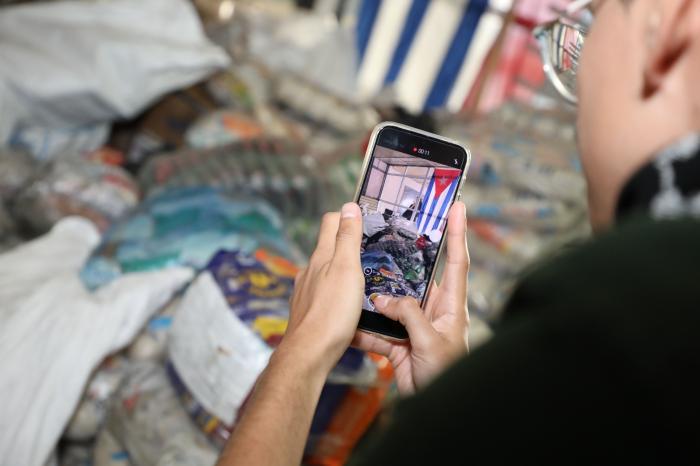
    In a powerful demonstration of global solidarity, the humanitarian vessel Granma 2.0 has successfully delivered 14 tons of medical supplies to Havana’s William Soler Pediatric Cardiology Center. The mission, organized by international activists, represents a significant effort to counter the devastating impacts of the U.S. economic blockade on Cuba’s healthcare system.

    Among the organizers was Nicole León Avilés, an Ecuadorian communist activist who previously participated in the blocked Gaza-bound Global Sumud Flotilla. For León, this successful delivery to Cuba transformed previous humanitarian frustration into what she described as “an act of justice and a breath of fresh air.”

    Dr. Eugenio Selman Housein-Sosa, director of the cardiology center, emphasized the critical nature of the donation, explaining how the U.S. blockade creates daily obstacles in obtaining essential medical equipment and supplies for treating children with heart conditions. “When it comes to purchasing any equipment needed to care for critically ill patients,” he stated, “the Cuban healthcare system faces a dilemma, a tragedy.”

    The international crew, which included activists from Australia and Latin America, personally funded their journey and collected the donations through grassroots efforts. Dr. Selman highlighted the special significance of aid originating from “the sweat, care, and hearts of people who want to help” rather than institutional sources.

    Australian activist Daniel Herbert articulated the mission’s philosophical foundation: “We have always known Cuba as a country that has defended the right to health for all. The rights to health, to medicine, to the basics, to life—these should never be used by politicians.”

    The ship’s name, Granma 2.0, deliberately echoes the historical vessel that carried Fidel Castro’s revolutionary forces in 1956, symbolizing continued resistance against adversity. The delivered supplies, now stored in the hospital’s warehouses, will enable life-saving surgeries and provide crucial medical support for Cuban children, while the mission itself stands as testament to the reciprocity of international solidarity.

  • Díaz-Canel Receives Panama’s Foreign Minister

    Díaz-Canel Receives Panama’s Foreign Minister

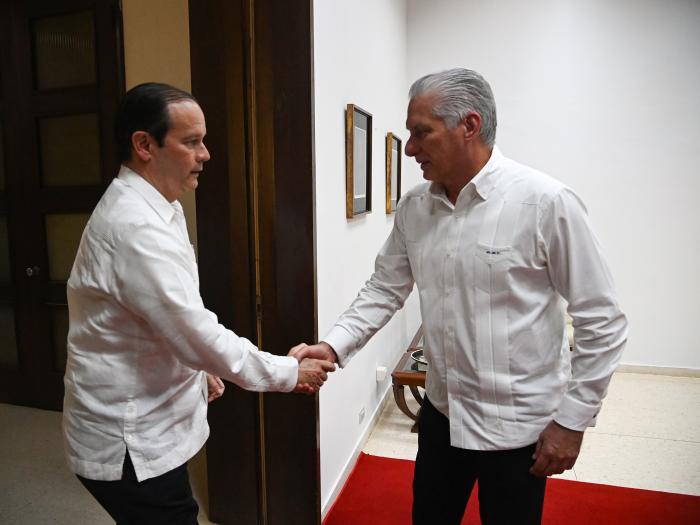
    In a significant diplomatic engagement at Havana’s Palace of the Revolution, Cuban President Miguel Díaz-Canel Bermúdez hosted Panama’s Foreign Minister Javier Eduardo Martínez-Acha Vásquez this Wednesday, marking a pivotal moment in bilateral relations between the two Latin American nations.

    The high-level meeting, attended by Cuban Foreign Minister Bruno Rodríguez Parrilla, centered on strengthening economic cooperation and addressing regional political matters. President Díaz-Canel expressed profound gratitude for Panama’s consistent support of the annual United Nations resolution condemning the U.S. economic, commercial, and financial embargo against Cuba—a longstanding point of contention in international diplomacy.

    During the cordial exchange, the Cuban leader emphasized the untapped potential for enhanced trade relations, acknowledging that while current economic exchanges remain modest, both nations possess substantial opportunities for expanded commercial engagement. The discussions reflected mutual interest in developing more robust economic partnerships across various sectors.

    Foreign Minister Martínez-Acha, currently on an official working visit to Cuba, conveyed appreciation for the warm reception and logistical support extended by Cuban authorities. The Panamanian delegation included Ambassador Edwin Abel Pitty Madrid, presidential advisor Marcos Caisuutti, and foreign ministry advisor Adolfo Ahumada.

    The bilateral talks extended beyond economic matters to address pressing regional and international issues, with both parties characterizing the development of Cuba-Panama relations as progressing positively. Notably, the Panamanian diplomat’s itinerary included meetings with detained Panamanian citizens accused of crimes against Cuba’s constitutional order—a sensitive matter highlighting the complex nature of international legal and diplomatic relations.

    This diplomatic engagement represents continuing efforts by Caribbean and Latin American nations to foster regional solidarity despite external political pressures and economic challenges.

  • Column: Aftellen

    Column: Aftellen

    Football enthusiasts worldwide are marking their calendars for the planet’s most anticipated sporting spectacle—the 2026 FIFA World Cup. With precisely 76 days remaining until the tournament’s June 11th kickoff, anticipation builds for what promises to be the most inclusive and commercially significant edition in football history.

    This edition breaks records with 16 additional teams compared to previous tournaments, dramatically expanding regional representation and creating unprecedented opportunities for smaller footballing nations. While most participants are confirmed, several countries continue battling through intercontinental playoffs for the final coveted spots. Host nations from the Caribbean region received automatic qualification, further diversifying the participant pool.

    Suriname narrowly missed direct qualification and now faces a decisive playoff against Bolivia, with Iraq awaiting the winner for a chance at historic participation. The expanded format has intensified global engagement, particularly among nations celebrating their inaugural World Cup appearance, such as Curaçao.

    The commercial landscape anticipates unprecedented returns, with FIFA securing lucrative sponsorship deals from global corporations eager to capitalize on worldwide viewership. Local entrepreneurs likewise prepare for economic benefits through artisanal souvenir production and hospitality sector growth.

    Beyond commercial implications, the tournament serves as a global showcase for emerging talents seeking professional advancement through international exposure. Players recognize the World Cup’s unique platform for demonstrating their value to elite clubs worldwide.

    The convergence of sporting excellence, commercial opportunity, and cultural celebration establishes the 2026 World Cup as a multifaceted global phenomenon with far-reaching impacts across sports, business, and international relations.

  • Quiz : Did You Know ? #10

    Quiz : Did You Know ? #10

    In a fascinating intersection of mathematics and etymology, the term ‘gogol’—popularized in English as ‘googol’—represents the astronomical numerical value of 10¹⁰⁰, equivalent to a digit 1 followed by one hundred zeros. This conceptual giant emerged not from academic circles but from the imagination of nine-year-old Milton Sirotta in 1938, who coined the term at the request of his uncle, renowned American mathematician Edward Kasner. Kasner sought a tangible way to illustrate the vast distinction between extraordinarily large numbers and the abstract concept of infinity.

    The googol’s magnitude transcends physical scales so dramatically that it exceeds the estimated number of subatomic particles in the observable universe, which scientists calculate to be between 10⁷⁸ and 10⁸². While this numerical behemoth lacks practical application in conventional physics or engineering, it serves as an invaluable pedagogical instrument for demonstrating mathematical scale and numerical theory.

    This nomenclature took on cultural significance when the founders of the revolutionary search engine Google adapted the term (intentionally modifying the spelling) to symbolize their ambitious mission to organize the seemingly infinite information landscape of the internet. The mathematical lexicon further expanded with the ‘googolplex’—an even more mind-boggling number defined as 1 followed by a googol zeros. This value is so incomprehensibly large that physical representation would require more space than exists in the entire universe.

    This revelation originates from the educational quiz platform HaitiLibre Quiz, launched in January 2026, which offers free, registration-free access to knowledge games across three difficulty levels in both French and English. The platform features dozens of regularly updated games covering diverse topics about Haiti and global knowledge, inviting users to expand their understanding through interactive learning experiences.

  • Natio op scherp voor play-off om WK-kwalificatie tegen Bolivia

    Natio op scherp voor play-off om WK-kwalificatie tegen Bolivia

    Suriname’s national football team, under the guidance of head coach Henk ten Cate, is preparing for their crucial World Cup qualifying match against Bolivia with unwavering determination. Since his appointment in December, Ten Cate has instilled a singular focus throughout the entire squad and technical staff: securing Natio’s place in June’s final tournament.

    The coach has made World Cup qualification his personal mantra, emphasizing to players: “The boys need to go to bed with it and wake up with it. It won’t be easy, but we’re going to make it happen. We have the players for it.”

    Players arrived in Monterrey, Mexico, on Sunday and Monday in staggered groups following an exhausting journey from the Netherlands. Lengthy layovers in Houston and Atlanta, combined with the challenging seven-hour time difference, tested the team’s resilience, though the internationals have grown accustomed to such demanding travel conditions.

    Despite Ten Cate’s preference for keeping media at a distance to minimize distractions, journalists including an NOS camera team—set to broadcast the Bolivia match live—were granted a brief press opportunity on Tuesday afternoon.

    Newcomer Joel Piroe, Leeds United striker joining alongside goalkeeper Janilho Wiegel and midfielder Melayro Bogarde for their first national team selection, expressed eagerness about his impending debut: “It’s true I hesitated for a while. The possibility of being called up for the Netherlands played a role, but I’m already thrilled to be here. This is a unique opportunity we intend to capitalize on.”

    Winger Gyrano Kerk, returning to the squad after battling a persistent muscle injury late last year, praised the extensive Zoom preparation sessions with Ten Cate and assistant coaches Winston Bogarde and Jimmy Hasselbaink: “These are legends I look up to. Those conversations have been crucial for group cohesion and atmosphere.”

    Central defender Myenty Abena reflected on the team’s journey: “We’ve worked years for this. Look how far we’ve come—we’ve grown tremendously as a team, and the organization keeps becoming more professional. We’ve long moved past the loss to Guatemala. We’re grateful for this second chance and determined to achieve our goal this time.”

    Abena described the emotional pre-match rituals: “When we’re in the locker room praying together, I always get goosebumps. Recently, I’ve been the one giving the powertalk. That’s when I remember we’re doing this for our country and everyone supporting us—the country where I was born and raised. How incredible to have this opportunity to represent Suriname.”

    The team is accommodated in a comfortable hotel in San Pedro, Monterrey’s most upscale district, with training facilities just fifteen minutes away. At manager Brian Tevreden’s explicit request, a brand-new artificial turf pitch was installed after his inspection last month revealed unsatisfactory conditions: “It was a sandy field full of holes, but FIFA left nothing to chance—they fixed it rapidly for us.”

    Natio faces Bolivia at 7:00 PM Surinamese time tonight. A victory would set up a Tuesday confrontation with Iraq, while Jamaica and New Caledonia meet in the other semifinal. The winners will ultimately compete against Congo for a place in the final tournament.

  • Man who attempted to rape baby among 2 people killed in SVG

    Man who attempted to rape baby among 2 people killed in SVG

    Two separate shooting incidents in St. Vincent on Wednesday resulted in fatalities, including a man recently released from prison for a disturbing attempted rape case. The killings mark the third homicide within 48 hours, elevating the nation’s murder count to 10 for the year—already reaching one-quarter of 2025’s total.

    Sebastian John, a 57-year-old welder from Ottley Hall, was fatally shot in the West Kingstown community shortly after 3 p.m. John had served a seven-year prison sentence imposed in March 2023 for attempting to assault a three-year-old girl in 2018. According to trial records, the child’s grandmother discovered John naked from the waist down, holding his penis, inside the toddler’s bedroom at approximately 12:45 a.m. on August 19, 2018.

    Hours after John’s killing, another shooting occurred in Lowmans Hill, another West Kingstown community, around 8 p.m. Sources identified the victim as Collis Charles, also known as ‘Brain,’ a 33-year-old farmer from the area.

    Law enforcement authorities have not officially commented on either shooting or confirmed the victims’ identities. These incidents follow Monday’s chopping death of Munti ‘Munt-I’ Thomas in Barrouallie, for which 41-year-old Keon Dennie has been charged with murder and appeared before the Serious Offences Court in Kingstown.

  • GCAA probing aircraft accident at Port Kaituma airstrip

    GCAA probing aircraft accident at Port Kaituma airstrip

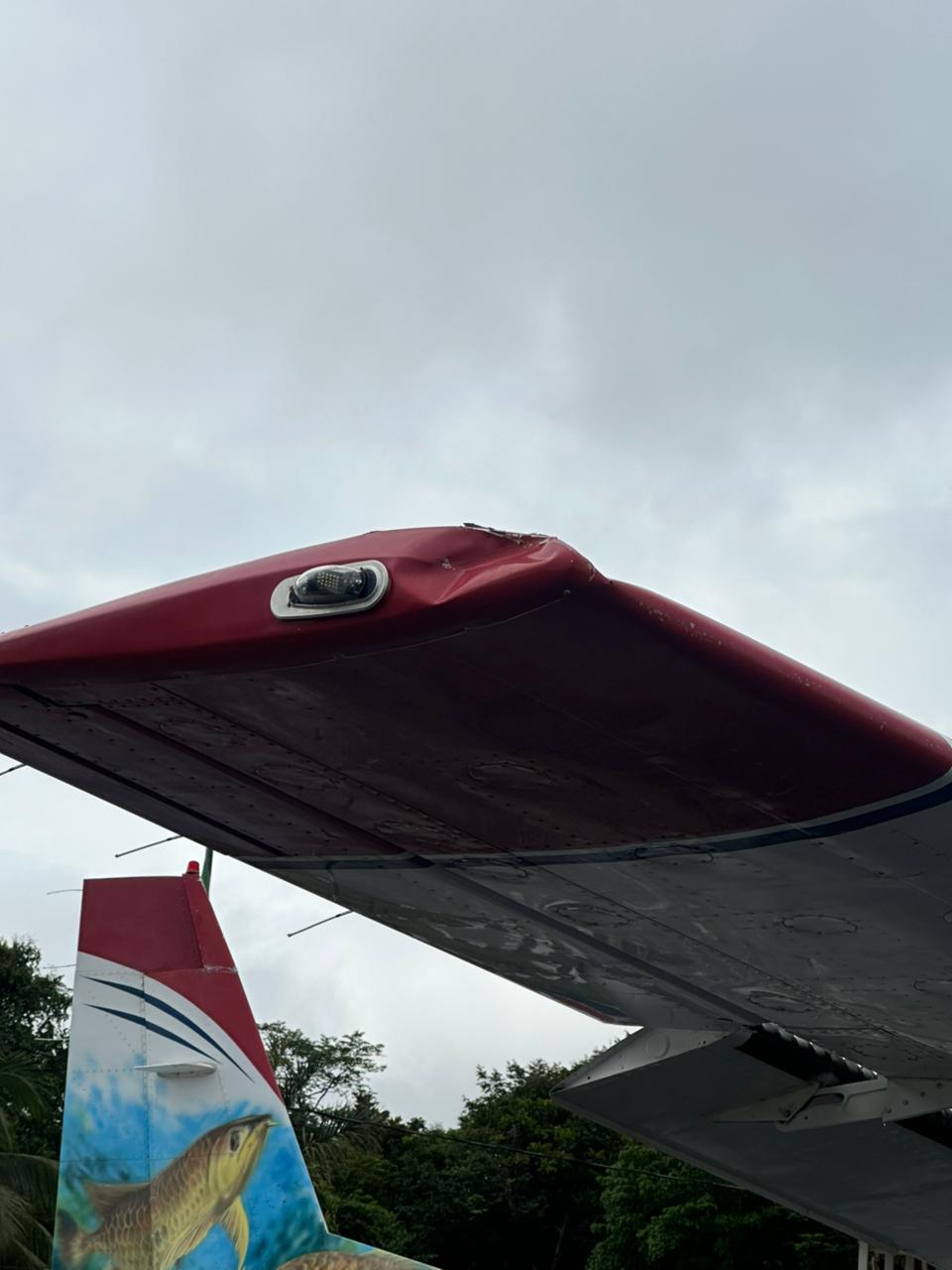
    Aviation authorities in Guyana have initiated a formal investigation following a ground collision incident involving two aircraft belonging to Trans Guyana Airways at Port Kaituma Airstrip. The incident occurred when a departing aircraft’s wing made contact with another plane parked on the tarmac, resulting in visible damage to at least one wing.

    Retired Lt. Col. Egbert Field, Director-General of the Guyana Civil Aviation Authority (GCAA), confirmed the regulatory body’s active investigation into the matter. Preliminary assessments suggest that operational consequences may follow for one or both pilots involved, pending the investigation’s findings.

    Aviation industry sources revealed to Demerara Waves Online News that the underlying issue extends beyond pilot operation to fundamental infrastructure limitations. The Port Kaituma Airstrip’s restricted parking capacity presents significant challenges when accommodating multiple aircraft simultaneously, creating potentially hazardous conditions.

    Industry insiders have identified the airstrip’s constrained dimensions as a critical safety concern, particularly when three aircraft attempt to utilize the facility concurrently. This incident has prompted renewed calls for infrastructure expansion at the regional aerodrome to address capacity constraints and enhance operational safety measures.

    The investigation will likely examine multiple factors including pilot procedures, ground operations protocols, and the adequacy of current infrastructure to handle domestic flight operations safely. The GCAA’s findings are expected to influence both immediate operational adjustments and long-term infrastructure planning for regional airstrips across Guyana.