作者: admin

  • Nunes eyes 2026 redemption after missing out on trainers’ title

    Nunes eyes 2026 redemption after missing out on trainers’ title

    The 2025 Jamaican trainers’ championship reached its dramatic climax at Caymanas Park on December 6th, with Anthony ‘Baba’ Nunes’ aspirations for a fourth title evaporating when his prized contender Nautical Star underperformed in the prestigious US$300,000 Mouttet Mile.

    Entering race day trailing rival Jason DaCosta by approximately J$14.5 million in earnings, Nunes had strategically positioned two recent imports for championship contention. Of A Revolution delivered triumphantly in the US$100,000 Bruceontheloose Sprint, but the crucial performance from Nautical Star in the feature event failed to materialize.

    Reflecting on the outcome, Nunes acknowledged the long odds: ‘It was always a pipe dream, if we’re being honest. We identified 2026 as our primary target, though the substantial Mouttet Mile purse unexpectedly presented an opportunity.’

    The trainer conducted comprehensive post-race examinations of Nautical Star, revealing no apparent physical issues. ‘He just ran flat,’ Nunes concluded, suggesting earlier arrival in Jamaica might have enabled better preparation. ‘I strongly believe that talent is still there and he will demonstrate that in 2026.’

    Despite the disappointment, Nunes maintains optimistic prospects for the coming season. Both Nautical Star and Of A Revolution will remain in training alongside Barnaby’s return to full fitness. The trainer also highlighted exceptional promise among his two-year-old prospects, indicating strengthened contention for next year’s championship.

    Nunes graciously acknowledged DaCosta’s successful campaign while raising philosophical questions about championship structures. ‘It would have been disappointing if one race decided the trainers’ championship,’ he noted, referencing his similar 2018 experience. ‘We must examine whether these high-stakes races should define twelve months of competition.’

    With four race days remaining and a J$9 million deficit, Nunes conceded the mathematical improbability of overtaking DaCosta but expressed satisfaction with his stable’s overall performance, considering 2025 an accelerated building year toward 2026 championship ambitions.

  • COMPANIES TIGHTEN BELTS

    COMPANIES TIGHTEN BELTS

    A comprehensive sector-wide assessment conducted by the Jamaica Observer reveals a significant contraction in corporate bonus distributions for 2024, marking a departure from traditional year-end compensation practices as businesses grapple with Hurricane Melissa’s economic aftermath.

    Economic analysis indicates that discretionary payments have become increasingly selective, with benefits concentrated within a limited segment of corporate Jamaica. While not entirely eliminated, bonus allocations have been substantially reduced or maintained at previous levels, reflecting heightened fiscal conservatism across industries.

    Multiple enterprises have implemented formal communication strategies to manage employee expectations. One marketing organization formally notified staff that their customary Christmas gratuity payment would be deferred pending “cashflow availability,” while a Kingston manufacturing enterprise advised workers that any potential bonus would likely match or fall below previous allocations.

    Public sector employees faced similar constraints, with most receiving no monetary bonuses though some institutional leaders attempted symbolic seasonal gestures. This trend emerges against a backdrop of persistent economic challenges, including elevated inflation metrics, restrictive credit conditions, and ongoing global market uncertainties.

    Prominent economist Keenan Falconer contextualized these developments, noting: “The convergence of multiple economic shocks has fundamentally altered corporate approaches to discretionary compensation. Organizations are prioritizing liquidity preservation as they brace for potentially exacerbated challenges through 2026.”

    The bonus reduction carries significant socioeconomic implications, as December traditionally represents the most critical compensation period for Jamaican households. These payments typically facilitate holiday expenses, educational costs, and debt servicing, with their absence potentially dampening consumer confidence and expenditure patterns.

    One affected employee expressed disappointment: “Anticipating even modest recognition would have enabled familial celebrations during this challenging period. This decision fundamentally alters our holiday dynamics and financial planning.”

    Falconer highlighted the macroeconomic paradox presented by this trend: “Bonus restraint occurs during precisely the period when economic stimulus is most needed for post-hurricane recovery. These payments traditionally provide crucial household income supplementation during first-quarter economic contractions.”

    Not all enterprises adopted restrictive approaches. The tourism sector demonstrated notable resilience, with at least one major hotel group distributing bonuses despite ongoing operational disruptions at several properties. One grateful employee noted: “Our employer’s commitment during this difficult period has been exceptionally reassuring.”

    Even among companies maintaining bonus traditions, many delayed communication until compensation processing, reflecting heightened strategic caution in financial management. Falconer observed that maintained bonus distributions might signal organizational stability and commitment to employee welfare amid broader economic challenges.

    This evolving compensation landscape suggests fundamental recalibration of employer-employee expectations as Jamaica navigates complex post-disaster economic recovery.

  • ‘Warrior Chief’ reigns

    ‘Warrior Chief’ reigns

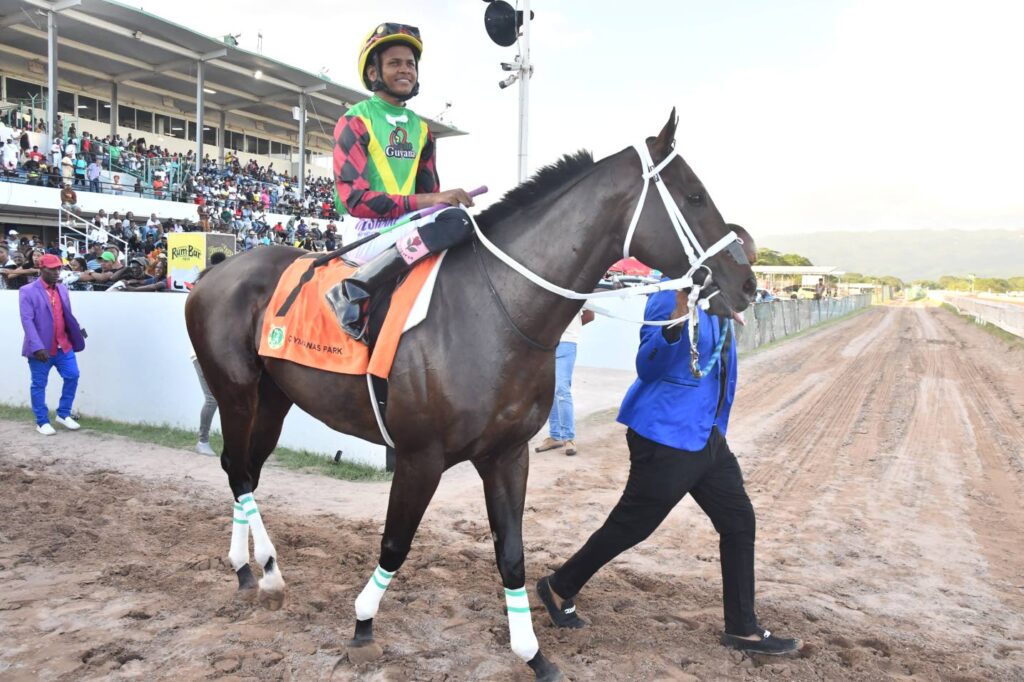
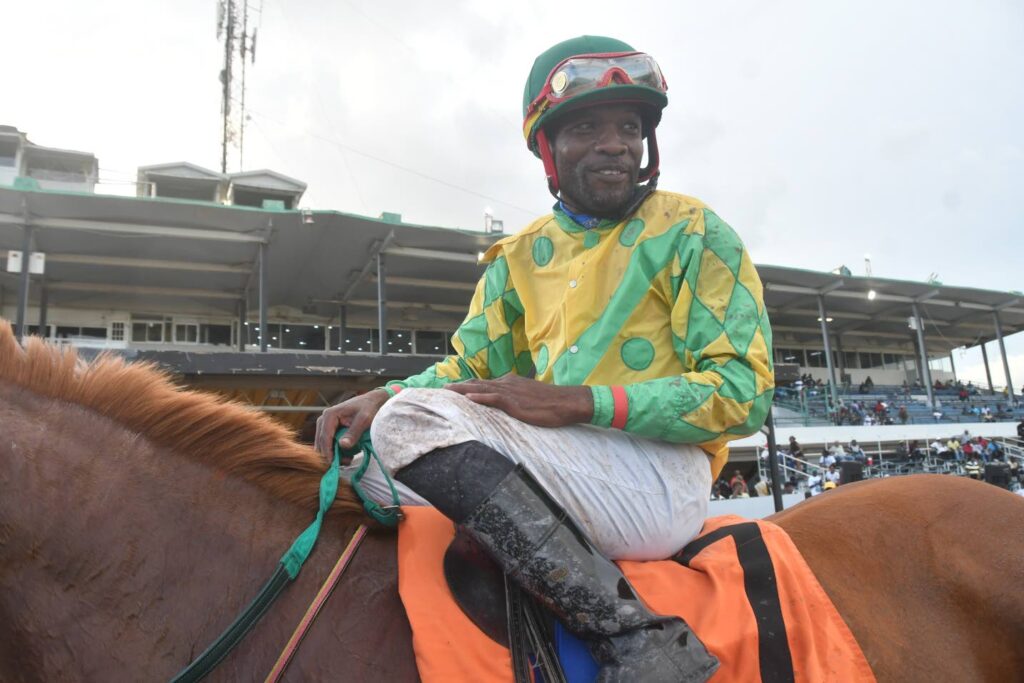
    Caymanas Park witnessed an electrifying display of horsemanship on Saturday, December 13, 2025, as Jamaican racing icons Dane Nelson and Raddesh Roman delivered a monumental showdown in the Ahwhofah Trophy. The Overnight Allowance contest, spanning six furlongs, culminated in a breathtaking photo finish that saw Nelson aboard Atlantic Convoy prevail over Roman on Zulu Warrior by the narrowest of margins.

    The race evolved into a strategic masterclass, with the veteran jockey’s patience ultimately trumping raw power. Nelson expertly guided Atlantic Convoy, a horse returning to winning form after a year-long drought, through a fierce stretch battle that also included Miniature Man ridden by Abigail Able. The victory marked a triumphant return for both horse and jockey, showcasing Nelson’s unparalleled racecraft.

    In post-race comments to The Supreme Racing Guide, Nelson reflected on the significance of his victory. ‘Atlantic Convoy took a year to win back a race… I won on him last year and then came back to win again this year,’ Nelson remarked, suggesting a special connection with the thoroughbred. The four-time local champion was quick to acknowledge his opponent’s exceptional talent, stating, ‘This race showed that this kid [Raddesh Roman] can ride. He is very powerful and a very good rider.’

    Despite evident disappointment, Roman displayed remarkable sportsmanship in defeat. ‘He gave a very good ride,’ Roman conceded regarding Nelson’s performance. ‘As you know, Dane Nelson is one of the best riders in Jamaica.’ The current champion added philosophical perspective: ‘I lost the race but I don’t lose anything in defeat because I think I did my very best. Somebody had to win the race and Dane just got the better of me.’

    The celebration saw trainer Kibbeisha Litte and Nelson’s wife Christina joining connections in commemorating the emotional victory, captured in photographs by Garfield Robinson. Roman’s comments also hinted at the changing landscape of Jamaican racing, noting Nelson’s Canadian citizenship would likely mean more part-time appearances in local competitions, making such legendary matchups increasingly rare treasures.

  • 2025 MG HS High quality stuff

    2025 MG HS High quality stuff

    The automotive landscape has witnessed a significant shift as legendary sports car manufacturers embrace the SUV segment, a transition now met with widespread acceptance rather than skepticism. This evolution demonstrates that engineering prowess can indeed transcend vehicle categories, often yielding exceptional results or, at the very least, elevating SUVs beyond conventional standards. The 2025 MG HS firmly establishes itself in this transformative movement.

    EXTERIOR DESIGN
    MG’s design language translates effectively into the HS model, presenting a distinctive yet conservative aesthetic. The front fascia features an unmistakably large grille complemented by sleek LED daytime running lights, creating an immediate brand association. While the overall profile maintains cleaner lines than the bold front presentation, the cohesive design achieves a modern appearance that respects MG’s heritage without excessive flamboyance.

    INTERIOR EXPERIENCE
    The cabin continues the exterior’s cohesive design philosophy with a modern, spacious environment that offers generous rear passenger accommodation and trunk capacity. Practical storage solutions abound throughout the interior. Technology integration strikes an ideal balance between innovation and usability, featuring dual 12.9-inch screens without overwhelming occupants. Most convenience features remain accessible through intuitive infotainment menus, while critical functions retain physical controls for immediate access. The interface operates seamlessly with razor-sharp graphics, complemented by high-quality switchgear.

    Connectivity options include wireless capability and four strategically placed USB ports. The audio system delivers authentic sound reproduction regardless of input source. Interior quality surpasses segment expectations with soft-touch materials at key contact points, enhanced by contrast stitching and refined accent elements that elevate the cabin beyond many class competitors.

    DRIVING DYNAMICS
    MG’s engineering expertise manifests clearly in the driving experience. Urban navigation proves exceptionally smooth, with the 1.5-liter turbocharged engine delivering 170 horsepower to the front wheels through a seven-speed dual-clutch transmission that avoids typical CVT drawbacks. Low-speed operation leverages a fat torque curve for seamless shifts while achieving fuel efficiency exceeding 30mpg.

    The MG Pilot driver assistance suite enhances safety and comfort with features including full-range automatic cruise control capable of operating down to 0 km/h—particularly valuable in heavy traffic conditions. For enthusiastic drivers, deep throttle application unlocks additional power reserves, while a dedicated SPORT transmission mode enables faster shifts and extended gear retention.

    Chassis tuning demonstrates particular brilliance for varied road conditions, striking an ideal balance between sportiness and comfort. The suspension system outperforms many premium models, exhibiting remarkable compliance across Jamaica’s diverse road surfaces—from unpaved stretches to cratered sections and smooth highways. This engineering achievement maintains impeccable body control while preserving passenger comfort, inspiring confidence across all driving scenarios.

    CONCLUSION
    Though the substantial leather-wrapped steering wheel suggests performance intentions, the MG HS makes no pretenses as a sports car. Instead, it excels as a comfortable, practical, and efficient daily driver capable of handling urban commutes and long-distance journeys with equal competence. The harmonious integration of suspension, power delivery, and braking systems enables confident navigation of smaller roads at pace.

    While not designed primarily for high-speed enjoyment, the HS proves fully capable when necessity demands rapid progress—such as navigating returning country traffic—though drivers should advise passengers before increasing pace. With a starting price below six million dollars, the 2025 MG HS delivers exceptional value that significantly exceeds expectations in the competitive compact SUV segment.

  • Daybreak’s @10

    Daybreak’s @10

    The upcoming Daybreak breakfast party at Sabina Park this Sunday, December 21, will serve a dual purpose of celebration and humanitarian aid following Hurricane Melissa’s devastating impact on Jamaica. Event organizers announced a significant portion of proceeds will be directed toward hurricane relief efforts after several team members and community partners experienced direct effects from the natural disaster.

    Jywanza Hall, a director of the Daybreak event, emphasized the gathering’s fundamental community ethos in statements to the Jamaica Observer’s Splash. “Daybreak has always been about community, not just celebration. After the hurricane we knew many of our patrons, partners, and wider Jamaican family were directly affected. Giving back wasn’t an add-on, it was a responsibility,” Hall explained, framing the initiative as an organic response to national need rather than detached philanthropy.

    The event will feature an elite musical lineup including Coppershot Sound with DJ Cutty and Kitt, DJ Franco and Brush1, DJ Jigga, A-Team, Nico Lee and DJ Insaneo. These performers will guide attendees through a sonic journey from nostalgic classics to contemporary anthems, maintaining the event’s signature high-energy yet sophisticated atmosphere.

    This special staging marks Daybreak’s 10th anniversary with elevated production elements including premium culinary experiences, immersive décor, and carefully curated sensory moments. Hall noted the intentional design of “surprise ‘wow’ moments throughout the event” aimed at providing attendees with temporary respite and emotional uplift amid recovery efforts.

    The transformation of this celebration into a relief mechanism represents what Hall describes as “support coming from within the same shared experience”—a demonstration of community solidarity following natural disaster.

  • TITANS COLLIDE!

    TITANS COLLIDE!

    The National Stadium prepares for an epic confrontation as Jamaica College (JC) and Excelsior High face off in the ISSA Manning Cup final, determining the ultimate champion of urban schoolboy football. This championship match represents not just athletic competition but a clash of institutional legacies and aspirations.

    Symbolically, the final embodies a mythological battle between JC’s Griffin—a legendary creature combining lion’s body with eagle’s head and wings—and Excelsior’s conventional eagle. While mythology might favor the hybrid beast, victory will ultimately be decided on the pitch through skill, strategy, and determination.

    Jamaica College, established in 1795, stands as the tournament’s most decorated institution with 28 Manning Cup titles. Their quest for a record-extending 29th championship traces back to the competition’s 1914 inception. Historical records indicate JC’s early dominance, having secured the Sydney Olivier Inter Scholastic Challenge Trophy in 1909, 1910, and 1913 before the Manning Cup era began.

    The current JC squad represents a footballing juggernaut, characterized by exceptional balance and coordination. Key players including Jabarie Howell (considered among schoolboy football’s elite), Donald Stewart (a defensive stalwart following his father’s legacy), and Devonte Allen form what appears an impregnable unit. Despite earlier second-round inconsistencies with draws against Mona High and Eltham High, JC demonstrated overwhelming dominance in knockout stages with decisive victories over Charlie Smith High (4-0), Hydel High (5-0), and St Andrew Technical (4-0).

    Head Coach Raymond ‘Stampy’ Watson emphasizes psychological preparedness: ‘We’re not thinking about the opponents. Let them think about us… We just believe in what we are doing.’ Watson acknowledges their previous 2-1 quarter-final victory against Excelsior holds no significance in the final context: ‘This is now where something is on the line… We know what they can do.’

    Excelsior High seeks to break a 21-year championship drought, pursuing their eighth Manning Cup since first winning in 1953. Under Head Coach Keon Broderick, the Mountain View Avenue institution reaches its first final in 19 years. Their squad features talented players hardened by recent disappointments—including losses in the 2024 Walker Cup and Under-16 finals—creating a determined group craving redemption.

    Offensive prowess centers around prolific scorer Kimarly Scott (19 goals), supported by Terrence Williams, Damarly Williams, and Kivann Salmon. Coach Broderick emphasizes strategic flexibility: ‘It’s for us to be very flexible within the game… We want to capitalize on goalscoring opportunities and limit JC’s chances.’

    The anticipated final promises compelling individual duels and tactical sophistication, representing one of the most eagerly awaited schoolboy football championships in recent memory. While Jamaica College enters as statistical favorite, Excelsior’s hunger and preparation could produce a historic upset when the whistle blows at the National Stadium.

  • The police fear of mosquitoes

    The police fear of mosquitoes

    A scathing public letter has condemned Trinidad and Tobago Police Commissioner Allister Guevarro for what the author terms the ‘dengue defense’—the official explanation that a critical operation against a $171 million narcotics empire was aborted over officers’ fears of mosquito-borne illness. The editorial, penned by Hugo Maynard and published in Newsday, lambasts this justification as a new low in law enforcement logic that has made the nation an international laughingstock.

    The piece contrasts the TTPS’s (Trinidad and Tobago Police Service) retreat with the resolve of global agencies like the US DEA, UK’s Scotland Yard, and Colombian anti-narcotics units, which would not abandon missions due to insects or humidity. The author argues this incident reveals a profound institutional failure: the force is equipped with military-grade technology and resources yet refuses to engage in the ‘gritty, itchy, uncomfortable work of actual policing.’

    Maynard’s core criticism focuses on the strategic failure of seizing drugs while allowing the criminal architects to escape. This approach, he asserts, acts merely as a ‘tax collector for the underworld,’ writing off inventory while leaving the destructive infrastructure of crime intact. The terrifying question posed is one of preparedness: if mosquitoes deter a stakeout, how will officers respond when bullets fly?

    The letter concludes with a direct address to Commissioner Guevarro, stating his primary duty is to protect the population from the violent drug trade, not officers from dengue. As long as this ‘dengue doctrine’ remains policy, the author warns, major traffickers will operate with impunity, exacerbating the murders, home invasions, and robberies plaguing the country.

  • Taking Christmas to the West

    Taking Christmas to the West

    In an unprecedented move demonstrating national solidarity, the Jamaican Government has officially reallocated funds from cancelled ministerial Christmas celebrations to support communities in Western Jamaica devastated by Hurricane Melissa. The strategic decision emerged from a governmental consensus that all citizens deserve festive cheer despite recent hardships.

    Minister of Labour and Social Security Pearnel Charles Jr. articulated this policy shift during a Jamaica Observer Press Club meeting last Thursday. Government ministries have received mandates to moderate their internal holiday activities and redirect both financial resources and organizational efforts toward community-based Christmas engagements. This initiative establishes formal partnerships between government ministries and specific affected communities, creating structured schedules for targeted outreach.

    The policy originated from an earlier directive canceling all traditional Christmas parties across ministries, state agencies, and departments following the Category 5 hurricane that struck the island on October 28. While small-scale, internal morale-building activities remain permissible, the prohibition on external venue rentals ensures maximum fund diversion to relief efforts.

    Senator Dr. Dana Morris Dixon, Minister of Education, Skills, Youth and Information, previously encouraged ministries to conduct outreach activities targeting staff members residing in affected regions. This has now evolved into a comprehensive governmental strategy extending support beyond government employees to the general population.

    Minister Charles Jr. emphasized the humanitarian aspect of the initiative, noting that many children, parents, and elderly residents face unimaginable loss during what should be a celebratory season. The approach transcends material assistance, focusing on emotional support through personal engagement and meaningful conversations. The government is actively collaborating with religious institutions and welcoming participation from private entities and civilian volunteers.

    The minister highlighted critical needs at the Petersfield shelter in Westmoreland—currently the nation’s largest shelter—which houses 42 children and 10 newborns. He specifically encouraged mothers to connect with those caring for infants in shelter conditions, framing the initiative as a national call to action that values time and emotional support as highly as financial contributions.

  • Cautious optimism greets US shift on marijuana

    Cautious optimism greets US shift on marijuana

    Jamaica has responded with measured optimism to U.S. President Donald Trump’s executive order initiating the reclassification of marijuana from Schedule I to Schedule III under U.S. federal drug laws. While acknowledging this move stops short of full federal legalization, Jamaican officials described it as a substantial step toward broader liberalization at the federal level.

    Minister of State in the Ministry of Industry, Investment and Commerce, Delano Seiveright, issued a statement following the Oval Office signing ceremony, noting that the ultimate implications for banking access, cross-border investment, research collaboration, and market engagement would depend on implementation specifics and international compliance responses.

    President Trump announced the executive action surrounded by medical professionals, stating, “Today I’m pleased to announce that I will be signing an executive order to reschedule marijuana from a Schedule I to a Schedule III controlled substance, with legitimate medical uses.” He emphasized receiving overwhelming public support for the action, particularly from patients experiencing severe pain and debilitating conditions.

    The order directs the Attorney General to complete the rule-making process expediently. This shift moves marijuana from the DEA’s most restrictive category—which includes substances like heroin and LSD deemed to have “no currently accepted medical use and a high potential for abuse”—to Schedule III, which recognizes medical utility and includes drugs such as ketamine and codeine-containing medications.

    While the rescheduling represents the most significant drug policy reform in decades, it maintains federal prohibition of recreational use. However, it potentially facilitates expanded medical research, reduces tax burdens for state-licensed dispensaries by allowing tax deductions previously barred under Schedule I, and reflects the evolving landscape where 24 states permit recreational use and approximately 40 allow medical use.

    Minister Seiveright highlighted that the change would substantially ease barriers to medical and scientific research while expanding clinical study opportunities. Jamaica’s Cannabis Licensing Authority will carefully monitor developments, engage stakeholders, and assess knock-on effects in the international cannabis market.

  • 150 children benefit from health fair

    150 children benefit from health fair

    In a significant humanitarian initiative, approximately 150 young students at Laura’s Basic School in Duhaney Park, St Andrew, received comprehensive medical attention during a health fair organized this Tuesday. The event represented a collaborative effort between the Indian High Commission in Jamaica, the Kiwanis Club of West St Andrew, and the healthcare organization Global Health Care.

    Dr. Nagamalleswara Rao Chandolu, head of Global Health Care and the recent recipient of the Order of Distinction for his medical contributions in Jamaica, revealed the health fair was conceived by India’s High Commissioner, Mayank Joshi. The initiative provided a wide array of services, including sugar tests, haemoglobin analyses, urine tests, and crucial de-worming medication, which Dr. Chandolu personally sponsored. He emphasized the critical importance of de-worming, explaining that parasitic infections are a common precursor to anaemia, weakened immune systems, and recurring illnesses like coughs and colds in children.

    Ten Indian pharmaceutical companies contributed medications to the cause. The fair also featured optometric services provided by a Cuban optometrist through Global Health Care, resulting in free frames and lenses for approximately 20 individuals diagnosed with vision problems. Free dental check-ups and necessary medications were also administered.

    This event marked the 50th health fair hosted by Global Health in Jamaica since 2020. Sherrell Wilson, president-elect of the Kiwanis Club of West St Andrew, expressed profound gratitude for the partnership, aligning perfectly with the Kiwanis International mission—celebrating its 110th anniversary this year—particularly its ‘Young Children Priority One’ arm focused on early childhood health and educational assessment.

    The success of the day brought immense satisfaction to Laura’s Basic School Vice-Principal Michelle Dixon, who described it as a beacon of hope that lifted spirits still dampened by the recent Hurricane Melissa. She praised the demonstration of care from corporate Jamaica and international partners for the early childhood sector.

    High Commissioner Joshi stated the fair was part of a joint outreach initiative under the theme ‘Serving the Unserved; Reaching the Unreached; Touching the Untouched.’ He highlighted that such initiatives reinforce the deep-rooted historical, cultural, and people-centric relations between India and Jamaica, grounded in shared democratic values and Commonwealth ties.