Barbados’ Mottley administration has launched a landmark new offshore energy licensing initiative, putting 19 prospective ultra-deepwater exploration blocks up for grabs for international energy companies while requiring all bidders to adhere to rigorous new climate and environmental protection benchmarks.
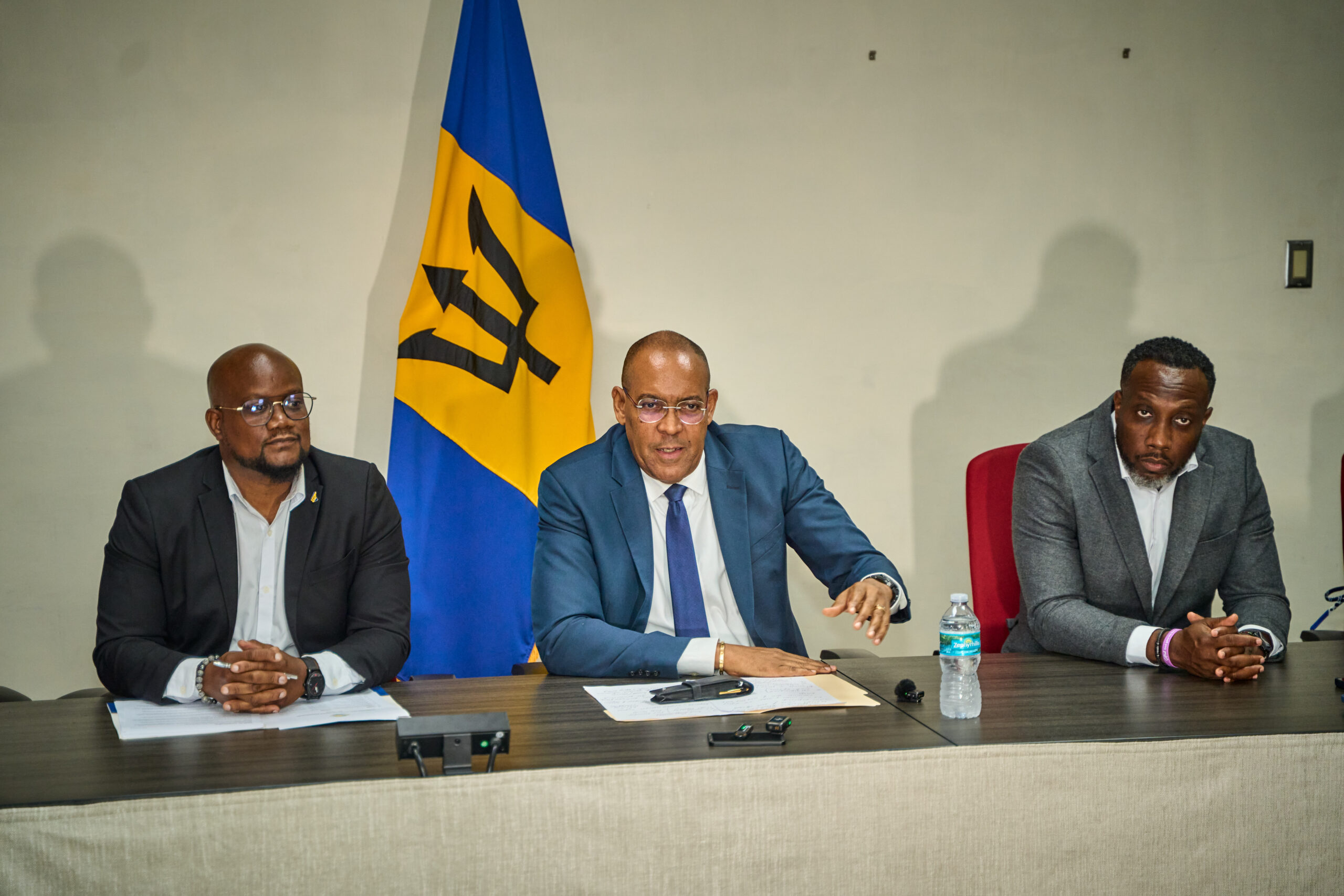
The 2026 Offshore Petroleum Direct Negotiations program opened a three-month pre-qualification window that started Monday, with applications set to close September 1, Acting Prime Minister and Energy, Business Development and Commerce Minister Kerrie Symmonds confirmed during a Tuesday press conference at his ministry’s headquarters. The goal of the round, Symmonds explained, is to attract experienced, responsible international partners to advance hydrocarbon exploration in the Caribbean nation’s offshore territory, while ensuring all activity aligns with Barbados’ national climate goals and renewable energy transition commitments.
“We are seeking partners that can demonstrate a proven track record in oil and gas exploration, but also show they are effective methane managers, committed environmental stewards, and aligned with global climate action,” Symmonds told reporters. “We need operators that can match our holistic national objectives.”
Addressing widespread public and scientific concern over methane emissions – a particularly potent contributor to anthropogenic climate change – Symmonds noted that emissions mitigation technology has advanced significantly since the country’s last bid round in 2022. He emphasized that the government now recognizes methane’s outsized environmental impact: the gas traps roughly 80 times more heat than carbon dioxide over a 20-year period, making it a leading driver of near-term global warming and a critical priority for regulation.
In a policy shift from the 2022 bid round, the government has reduced the number of blocks on offer from 22 to 19, reserving the three remaining blocks for future development by Barbados’ national energy entities to protect domestic national interests. “We have made a deliberate policy choice to hold back additional blocks to advance the interests of our country’s own national energy company and domestic stakeholders,” Symmonds said.
The licensing round forms a core component of a broader whole-of-government multi-energy strategy, designed to balance three critical national priorities: accelerating the expansion of renewable energy capacity, strengthening Barbados’ energy security, and boosting long-term economic resilience. Preliminary geological assessments suggest the country’s offshore waters hold substantial untapped hydrocarbon resources, officials confirmed.
Jamar White, Director of Barbados’ Natural Resources Division, told the press conference that years of comprehensive seismic surveys and technical analysis have confirmed the potential for significant offshore reserves. “Current data indicates we could have more than 13 billion barrels of oil in place, alongside an estimated 40-plus trillion cubic feet of natural gas,” White said.
To ensure only qualified, responsible operators advance to negotiations, the government has expanded pre-qualification criteria to five core assessment areas, with an added focus on climate performance that was not required in previous rounds. The criteria evaluate applicants’ legal standing, technical expertise, financial stability, health, safety and environmental (HSE) track records – including climate action and methane management – and commitment to local content development.
“These expanded criteria are designed to ensure only the best-qualified operators with top-tier environmental records move into the negotiation stage,” White explained. Following the close of pre-qualification in September, qualified firms will receive formal approval notices from the Barbadian government, clearing them to enter direct negotiations for blocks of interest.
Officials project negotiations will be finalized by January 15, 2027 at the latest, after which successful bidders will receive cabinet approval for their selected blocks. Before any exploration activity can begin, operators will be required to complete rigorous mandatory environmental impact assessments (EIAs) and collect comprehensive baseline environmental data for their blocks. As part of the EIA process, companies must outline their operational plans, detail emissions mitigation strategies, and propose measures to protect local marine wildlife and ecosystems – only after government officials review and approve these plans will exploration be permitted to start.