作者: admin

  • OP-ED: From schoolyard games to couches – Why play belongs at the heart of public health

    OP-ED: From schoolyard games to couches – Why play belongs at the heart of public health

    As the international community marked World Day of Physical Activity on April 6 and World Health Day on April 7 2026, two Caribbean public health advocates are calling for a return to the region’s deep-rooted cultural tradition of spontaneous, community-centered play as a foundational solution to growing public health crises.

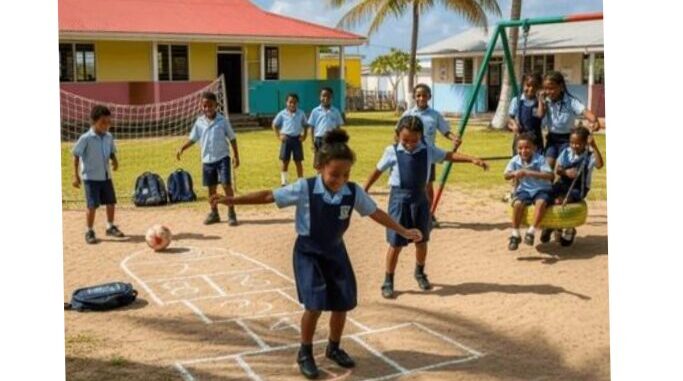
    For generations across Caribbean island nations, unstructured physical movement was woven into the very fabric of childhood. Simple, shouted calls—“RUN!”, “HOME!”, “OUT!”—sent generations of children sprinting across sunbaked fields, dodging opponents and chasing victory across open community spaces. Long before “physical activity” became a formal public health term, movement was just part of how children lived: through local games adapted to every island’s unique culture and landscape.

    In Barbados, children repurposed city sidewalks into makeshift courts for road tennis, gripping rough wooden paddles to rally back and forth across chalked boundary lines. In Trinidad and Tobago, traditional games like Scotch, Moral and Peesay had children hopping, balancing, and jumping in steady rhythm, while marble matches kept competitors crouched for hours, honing focus and fine motor control. Jamaica’s beloved Dandy Shandy and Stuck and Pull had children running, twisting, and laughing together, filling neighborhood open spaces with squeals of delight. From rounders to chase, every island had its own set of rules, its own shared calls, and its own memories of movement tied to community connection. This spontaneous play was never structured or formal—but it acted as an informal, remarkably effective public health system, building physical strength, coordination, emotional resilience, and tight social bonds across generations.

    Today, however, that legacy of natural daily movement has faded. The rise of screen time, packed structured schedules, and the loss of open community play spaces have pushed traditional childhood games out of schoolyards and neighborhoods. What was once an automatic part of growing up has been replaced by a modern narrative that frames physical activity as something that only happens in gyms, structured fitness programs, or competitive performance contexts—erasing the Caribbean’s own cultural foundation of free movement in the process.

    This shift is not just a loss of cultural nostalgia; it has created a measurable public health crisis across the region. Non-communicable diseases (NCDs) including hypertension, type 2 diabetes, and heart disease now account for more than 70% of all deaths across the Caribbean, and the region holds one of the world’s highest rates of premature death from NCDs among people aged 30 to 70. Public health researchers point to physical inactivity, alongside unhealthy diets, tobacco use, and excessive alcohol consumption, as a key driver of this crisis. Currently, 30 to 40% of all Caribbean adults fail to meet the World Health Organization’s recommended minimum weekly physical activity levels, a trend that traces back to the decline of active play in childhood. The “stillness” that has replaced neighborhood games in childhood follows people into adulthood, creating lifelong health risks that strain regional healthcare systems, which must bear the cost of long-term treatment, medications, and ongoing care for preventable chronic conditions.

    As the authors, youth public health advocate Kayla Wright and sports medicine and physiotherapy specialist Offniel Lamont, both advocates with the Healthy Caribbean Youth and Healthy Caribbean Coalition, note, the traditional Caribbean saying “prevention betta dan cure” holds true here—but most current prevention efforts focus only on changing adult behavior, rather than restoring the community and school environments that made daily movement natural for children. Reclaiming this tradition of active play is not just about nostalgia; it is about recognizing that good health is built early in life, through shared, joyful community activity.

    Regional policymakers have already laid the groundwork for action. CARICOM member states have enshrined the right to health in national policy frameworks, and the Caribbean Public Health Agency (CARPHA) has developed the Six-Point Policy Package, a targeted strategy to combat NCDs and childhood obesity across the region by transforming food and activity environments. Regional initiatives like Caribbean Moves have launched national public campaigns to promote active lifestyles, spurring local programs including Jamaica Moves, Dominica’s Fit for Life Campaign, St. Lucia’s National Physical Activity Day, and Barbados’ Creative Play Initiative. Recent policy moves, such as Jamaica’s proposed sugar-sweetened beverage tax, also signal growing recognition that systemic action to address the root causes of NCDs is critical. The path forward, the authors argue, does not require new policy promises—it requires full implementation of the commitments regional leaders have already made, starting with recognizing safe, accessible, unstructured play as a core public health priority that cannot be overlooked.

    On this year’s back-to-back global health observances, the message from the region’s advocates is clear: daily movement is not a privileged lifestyle choice for the wealthy—it is a birthright, and a core part of Caribbean cultural heritage that must be protected. If the region is serious about preventing chronic illness and improving long-term public health, policymakers, schools, and communities must make space once again for the joyful, traditional play that defined generations of Caribbean childhood.


  • IMPORTANT CLOSURE NOTICE: Rhudd & Associates

    IMPORTANT CLOSURE NOTICE: Rhudd & Associates

    A significant announcement has been made this week regarding the permanent closure of Rhudd & Associates, a long-standing entity that has operated in its respective industry for an extended period. The formal closure notice, issued directly by firm leadership, confirms that the organization will wind down all business activities and cease client services completely in the coming weeks.

    While specific details surrounding the exact catalysts for the closure have not been fully disclosed to the public, industry observers note that the decision comes amid a shifting economic landscape that has impacted many similar firms across the sector. Stakeholders, including current clients, employees and partners, have already begun receiving individual notifications to assist with the transition process, including the transfer of ongoing projects and closure of outstanding accounts.

    For long-time clients who have relied on Rhudd & Associates for specialized services, the closure marks the end of a trusted professional partnership. The firm’s leadership has stated that they are committed to making the wind-down process as orderly and transparent as possible, to minimize disruptions for all parties involved. As the firm completes its final operational procedures, industry groups are already noting the gap that will be left by Rhudd & Associates’ exit from the market.

  • Free Weekend HPV Testing Offered at Villa Polyclinic in April and May

    Free Weekend HPV Testing Offered at Villa Polyclinic in April and May

    A new public health initiative is bringing free, weekend-accessible human papillomavirus (HPV) testing to Villa Polyclinic across select weekends in April and May, designed to boost early detection of pre-cancerous changes and cut cervical cancer mortality rates in the eligible population.\n\nOrganizers have confirmed the testing will operate between 9 a.m. and 1 p.m. on three scheduled weekends: April 18 and 19, followed by May 9 and 10, and a final weekend of testing on May 16 and 17. The weekend scheduling was chosen specifically to accommodate women who work standard weekday schedules and face barriers to accessing routine screening during business hours.\n\nPublic health officials are actively urging all women who meet the eligibility criteria to take advantage of this no-cost service, stressing that regular HPV screening is one of the most critical tools available for preventing invasive cervical cancer. Unlike many routine cancer screenings, this initiative offers free access to a test that can detect high-risk HPV strains responsible for nearly all cases of cervical cancer long before any symptoms develop.\n\nThe program is open to a broad group of eligible women, ranging from 30 to 65 years of age. First-time test-takers who have never undergone an HPV screening are specifically prioritized for the service, and women who retain their uterus after other gynecological procedures also qualify. Organizers have clarified a common point of confusion: women who have previously completed a Pap smear as part of routine gynecological care are still eligible to receive this free HPV test.\n\At its core, the campaign reinforces a life-saving public health message: consistent, regular screening and early detection of abnormal cellular changes directly reduces cervical cancer death rates. For additional questions about eligibility or location details, interested women can contact organizers at (268) 781-8256.

  • Barbados fourth at the CARIFTA Games

    Barbados fourth at the CARIFTA Games

    The CARIFTA Games, the Caribbean’s premier regional junior track and field competition, wrapped its 2024 edition with a historic final-day surge from Team Barbados that secured the nation its strongest result in eight years. Holding the highest medal total and placing fourth overall in the standings, Barbados amassed 17 total medals – six gold, three silver, and eight bronze – matching its 2016 medal haul when the Games were last hosted in St George’s, Grenada. The event’s crowning moment for the island nation came in the Under-20 Boys’ 4x400m relay, where the Barbadian quartet broke a 11-year-old meet record to claim the final gold medal of the competition.

    After a slow start to the final competition day, the gold streak kicked off with Jayden Walcott’s unexpected shot put victory. Competing in his first ever Under-20 Boys’ Shot Put event amid intermittent rain showers, the tall Combermere School athlete threw 18.41 meters to take top place. Even his second-best effort would have outperformed Jamaica’s reigning discus champion Joseph Salmon, who took silver in the event.

    Middle-distance runner Ashlyn Simmons continued Barbados’ winning momentum, claiming her second gold medal of the Games. The 17-year-old Alexandra School student had already secured the Under-20 1500m title earlier in the Easter weekend, having won the Under-17 1500m division three years prior. She crossed the finish line of the Under-20 800m in 2:09.07 to add a second gold to her personal haul, with teammate Danya Skeete following close behind to take silver in 2:10.50.

    The McIntyre family earned its second medal of the Games when 17-year-old Luke McIntyre of Harrison College took bronze in the Under-20 Boys’ 5000m. Spurred on by cheers from traveling Barbadian fans along the final straight, McIntyre clocked a personal best of 15:42.51, just days after his sister won silver in the Girls’ Open 3000m event.

    Barbadian relay teams delivered consistent podium results across age divisions on the final day. In the Under-17 Boys’ 4x400m, anchor runner Jalino Hamlett pulled off a dramatic late pass of Trinidad & Tobago’s Michal Paul on the final stretch, guiding teammates Khalil Bryan, Taje Coward, and Jakio Devonish to a bronze medal finish in 3:19.90. The Under-20 Women’s 4x400m relay team matched that result, with 400m silver medallist Kadia Rock splitting a blistering 51.20-second final leg after a strong setup from Kanedra Morgan, Ashlyn Simmons, and Danya Skeete to edge out Trinidad & Tobago and secure bronze in 3:40.68. Aaron Massiah added one more bronze before the final event, clearing 15.26m in the Under-20 Boys’ triple jump.

    Indisputably, the standout performance of the Games for Barbados was the victory in the Under-20 Boys’ 4x400m relay. The four-person team of Nadal Seale, Aidan Moore, Jahkye Brewster, and Shamari Greenige-Lewis clocked a winning time of 3:05.49, breaking the previous Games record that had stood untouched since 2013. This gold capped off a historic medal haul for Barbados, matching the six golds the nation won at the 2016 CARIFTA Games hosted in Grenada, and pushing the total medal count to 17 – also the highest since that 2016 competition.

    Team Barbados has earned double-digit medals at seven of the last eight editions of the CARIFTA Games, but officials and fans alike have called this 2024 performance the strongest in recent memory. Looking ahead, Barbados has formally expressed interest in hosting the 2028 CARIFTA Games at a newly renovated national stadium. No official decision has been announced regarding the host of the 2027 Games, but the Barbadian team has made clear its goal to carry the momentum from this 2024 performance into future competitions.

  • Election Campaign Will Not Disrupt CHOGM Preparations, Officials Say

    Election Campaign Will Not Disrupt CHOGM Preparations, Officials Say

    As the Caribbean nation of Antigua and Barbuda enters a busy period of general election campaigning this April, organizers of the upcoming Commonwealth Heads of Government Meeting (CHOGM) have reaffirmed that all preparations for the November summit will proceed without disruption.

    The high-profile international gathering, scheduled to run from November 1 to 4, has already advanced to a critical planning phase that demands consistent, focused attention — even as political activity accelerates across the entire country, summit overseers say. During a recent convening of the national CHOGM Task Force, Foreign Affairs Minister E.P. Chet Greene, who leads the planning effort, outlined a clear arrangement to balance competing demands: he will split his schedule between official election campaign duties and ongoing oversight of the summit’s preparation process. He also emphasized that the full cross-functional team responsible for the event must maintain consistent progress to hit key milestones.

    To ensure no gaps in leadership emerge when Greene is occupied with campaign commitments, veteran diplomat Ambassador Anthony Liverpool has been appointed as Special Advisor to guarantee continuity in planning. Liverpool brings substantial relevant experience to the role, having previously played a central part in organizing the 2024 Small Island Developing States Conference, which makes him well-suited to lead Task Force meetings in Greene’s absence.

    Day-to-day operational coordination will remain anchored with the permanent CHOGM Secretariat, led by Coordinator Celia Roberts-Morgan. A network of specialized committees is already working in parallel to advance core components of the summit, including logistics arrangements and the design of the official program.

    When it convenes in November, CHOGM will be the largest international event ever hosted by Antigua and Barbuda, drawing heads of state, senior government officials, and delegates from all 56 member states of the Commonwealth. Beyond the core formal leadership meetings, the summit will feature a full slate of parallel engagement events, including dedicated forums for youth, women’s leadership, business cooperation, and civil society dialogue, alongside a range of other bilateral and multilateral international engagements.

    Organizers project that more than 5,000 participants will travel to Antigua and Barbuda for the four-day gathering. Given the massive scale of the event and the complex work required to deliver a successful summit, officials stress that there is no margin for scheduling delays — even as the national government and political leadership navigate the full demands of a national election season.

  • WATCH: PM Browne Rejects Claims of Election “Treating,” Says Land And Other Programmes Are Ongoing

    WATCH: PM Browne Rejects Claims of Election “Treating,” Says Land And Other Programmes Are Ongoing

    As Antigua and Barbuda gears up for an upcoming general election, Prime Minister Gaston Browne has strongly refuted opposition claims that his administration is rolling out targeted government programs as pre-election “treating” to sway voter support.

    During an appearance on the *Browne and Browne Show* aired on local radio outlet Pointe FM, Browne made clear that the government’s ongoing social and economic empowerment initiatives are not last-minute campaign tactics. He emphasized that core programs, including land distribution schemes, duty-free concessions for targeted groups, and targeted housing assistance, have been part of his administration’s policy agenda for multiple years, with rollouts scheduled far in advance of the formal election cycle.

    These measures, Browne explained, were crafted to advance long-term developmental goals: expanding accessible economic opportunities across the country and raising living standards, with a specific focus on supporting low- and middle-income households that have historically faced greater barriers to property ownership and financial stability. The prime minister stressed that these initiatives align fully with the broader governing vision his administration put forward after taking office, and they should not be misrepresented as short-term bribes designed to win votes.

    The controversy comes as political activity intensifies across the nation, with opposition figures increasingly questioning the timing of recent program announcements and launches. Critics have argued that the rollout of visible, voter-focused initiatives immediately ahead of a general election amounts to improper election treating, a practice aimed at buying electoral support through policy handouts.

    Browne dismissed these concerns outright, reiterating that the consistent rollout of empowerment programs reflects the government’s commitment to sustained, proactive governance rather than election-motivated decision-making. He added that the administration’s core governing priority has always centered on empowering citizens through expanded access to critical assets like land and housing, a policy direction that has remained consistent long before discussions of the upcoming election entered the national political discourse.

  • LISTEN: Massiah Questions Why Lovell Ran From City East To All Saints West Having Only Lost by 6 Votes

    LISTEN: Massiah Questions Why Lovell Ran From City East To All Saints West Having Only Lost by 6 Votes

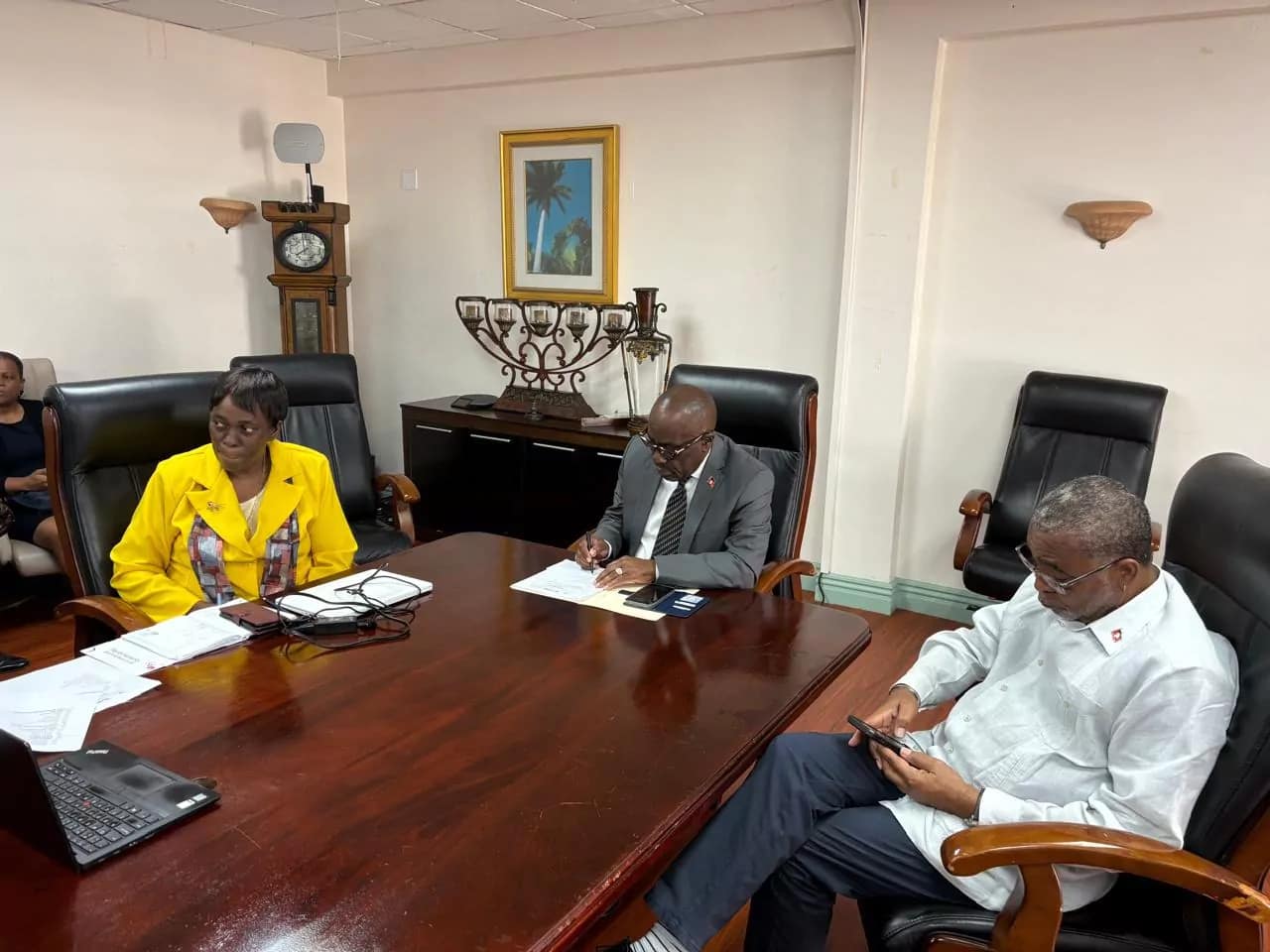
    A prominent political figure, Massiah, has publicly questioned the decision of fellow politician Lovell to abandon the City East constituency and seek candidacy in All Saints West, a move that comes immediately after Lovell’s razor-thin six-vote loss in his previous electoral contest.

    The surprising party-switch or cross-constituency move has stirred fresh debate across the local political landscape, with observers noting that such a rapid shift just after a narrow electoral defeat is unusual in the country’s political practice. Massiah has pushed for clarity on the motivations behind the change, arguing that constituents of both constituencies deserve transparency about why Lovell opted to relocate rather than continuing to build support in City East, where he came within a handful of votes of securing victory.

    Political analysts point out that the six-vote margin is one of the closest electoral results in recent regional memory, making the decision to walk away from the nearly-won seat even more puzzling to many political insiders. Lovell has not yet issued an official public response to Massiah’s questions, leaving local political circles speculating about whether the move is part of a broader party negotiation, a response to internal constituency tensions, or a strategic calculation to improve his chances of winning a parliamentary seat in the next general election.

    The controversy comes as parties across the political spectrum continue to adjust their candidate slates ahead of the upcoming electoral cycle, with constituency selection emerging as a key point of internal and public scrutiny for all major political groups.

  • Afscheid van ex-president tevens VHP voorzitter Chan Santokhi

    Afscheid van ex-president tevens VHP voorzitter Chan Santokhi

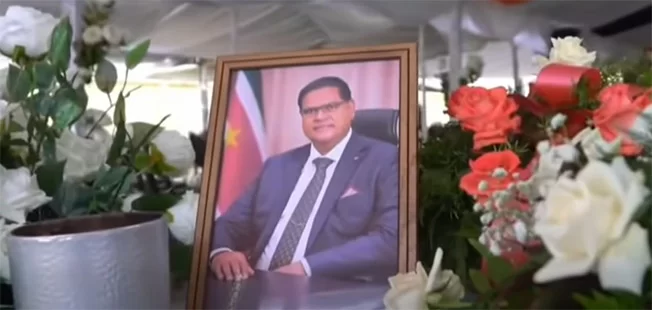
    Early on the morning of April 7, formal ceremonies marking the state cremation of former Suriname President Chan Santokhi officially commenced, nearly a week after his sudden passing at the age of 67.

    The solemn procession began after a joint detachment of military and police personnel retrieved Santokhi’s remains from the morgue of Paramaribo Academic Hospital. Following the retrieval, the cortège embarked on a pre-planned processional route past multiple key government buildings, making its first major stops at the Presidential Palace and the National Assembly building. At these sites, official delegations and gathered dignitaries led formal tributes to bid farewell to the former leader, who died unexpectedly on March 30.

    From the National Assembly, the procession continued through Paramaribo’s inner city to De Olifant, the headquarters of the Progressive Reform Party (VHP). Santokhi had served as the party’s chairman from 2011 until his death, and crowds of residents had gathered along the processional route from early morning to pay their final respects to the fallen statesman.

    Another ceremonial stop was held along Eddy Brumastaat, near the national headquarters of the Boy Scouts Suriname (Weest Paraat). Santokhi held the title of Chief Scout for the organization for many years, and members of the scouting leadership rank-and-file scouts gathered to greet the procession, holding a formal farewell in accordance with scouting tradition.

    Local Surinamese media outlet Starnieuws is covering all events related to Santokhi’s state cremation via a continuously updated live blog to keep the public informed of the day’s proceedings.

  • Ministry of Sports Invites Public to Welcome Home CARIFTA Champions

    Ministry of Sports Invites Public to Welcome Home CARIFTA Champions

    The Jamaican Ministry of Sports has extended an open invitation to members of the public across the country to join in a joyous homecoming celebration honoring the nation’s standout CARIFTA Games champions, fresh off their dominant performance at the regional youth athletic competition.

    CARIFTA, the Caribbean Free Trade Association Games, stands as one of the most prestigious annual track and field events for young athletes across the Caribbean region, serving as a launching pad for many future Olympic and world championship competitors. This year’s edition saw Jamaican young athletes deliver a record-breaking performance, topping the overall medal standings once again and cementing the nation’s reputation as a global powerhouse in youth track and field.

    In a statement released to the media, a spokesperson for the Ministry of Sports noted that the public celebration is designed to recognize the hard work, dedication, and extraordinary achievement of every athlete who represented Jamaica at the games. Unlike closed private receptions, this event is open to all Jamaicans who wish to turn out and cheer on the next generation of sporting stars, allowing communities to connect directly with the young champions who have brought national pride to the country.

    Organizers have confirmed that the homecoming event will include a formal motorcade through key areas of the capital Kingston, giving community members on both sides of the route the chance to wave flags, hold celebratory signs, and personally congratulate the athletes. A short official ceremony will follow the motorcade, where government sporting officials will address the crowd and highlight the role of these young champions in inspiring the next generation of Jamaican athletes.

    The Ministry has encouraged members of the public to come out in large numbers, wear the national colors of black, gold, and green, and share their celebratory messages on social media using an official event hashtag to amplify the national pride surrounding the team’s historic win. This public welcome marks a long-standing tradition in Jamaican sports culture, where elite athletic achievements are celebrated as collective national victories rather than individual accomplishments.

  • Sluiting Straat van Hormuz verdeelt olie-inkomsten Midden-Oosten: winnaars en verliezers

    Sluiting Straat van Hormuz verdeelt olie-inkomsten Midden-Oosten: winnaars en verliezers

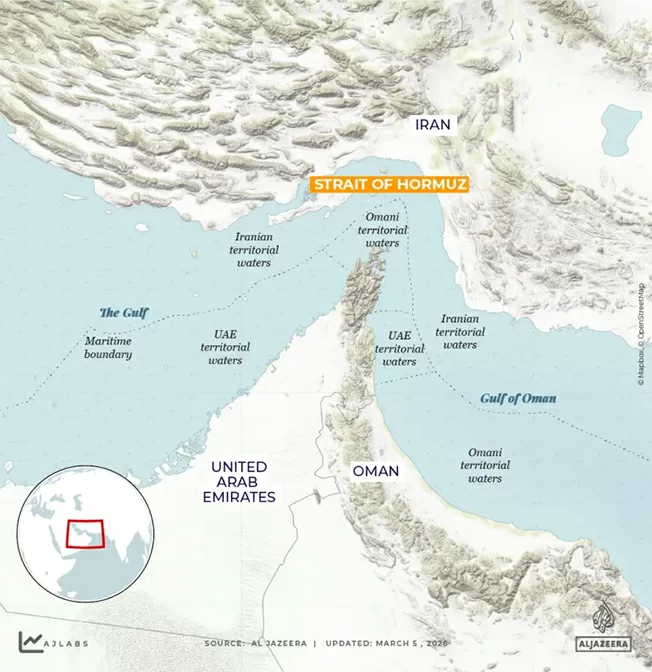
    Since late February, one of the world’s most critical energy chokepoints, the Strait of Hormuz, has been effectively closed by Iranian authorities, sending shockwaves through global energy markets and creating a stark divide in financial outcomes for oil-producing nations across the Middle East, a new Reuters analysis finds. Roughly 20% of the world’s daily oil and liquefied natural gas flows pass through this narrow waterway, making its disruption a major global economic flashpoint.

    The closure followed escalating regional tensions after the United States and Israel launched airstrikes on Iranian targets. While Iran later relaxed restrictions to allow vessels with no American or Israeli links to transit, keeping a small number of tankers moving through the strait, global energy markets have remained extremely volatile. Brent crude prices recorded a historic 60% jump in March alone, a surge that has reshaped revenue calculations for every major producer in the region.

    The uneven impact of the crisis boils down to one key factor: geography. Nations that control the strait or have pre-built alternative export routes are reaping massive financial windfalls from sky-high prices, while countries dependent entirely on Hormuz access are facing catastrophic revenue losses.

    Iran, which controls access to the strait, has seen its oil revenue climb 37% compared to last year. Oman and Saudi Arabia have also posted gains: Omani revenue rose 26% year-on-year in March, while Saudi Arabia recorded a 4.3% increase. The United Arab Emirates (UAE) saw a modest 2.6% dip in revenue, as higher global prices offset most of the losses from reduced export volumes.

    Saudi Arabia’s ability to weather the crisis stems from a key infrastructure investment made decades ago. During the 1980s Iran-Iraq War, the kingdom built the 1,200-kilometer East-West Pipeline, which connects its eastern oilfields directly to the Red Sea port of Yanbu, bypassing the Strait of Hormuz entirely. Since the closure, the pipeline has been operating at full capacity of 7 million barrels per day. Even though Saudi Arabia’s total crude export volume dropped 26% in March, the record-high oil prices pushed the total value of its exports up by more than $550 million compared to typical monthly levels. Exports through Yanbu have operated near maximum capacity despite recent attacks on the port, though the kingdom remains vulnerable to further strikes on its energy infrastructure and the nearby Bab el-Mandeb shipping lane from Iran and its Houthi allies in Yemen.

    For nations without alternative export routes, the picture is far grimmer. Iraq and Kuwait have been hit hardest, with year-on-year revenue drops of 76% and 73% respectively in March. Iraq’s total oil revenue for the month fell to just $1.73 billion, while Kuwait’s dropped to $864 million. Iraq saw limited support from cargoes that departed just before the escalation of tensions, but analysts warn April revenue will likely be even lower. Qatar has also suffered steep losses due to its lack of alternative export infrastructure for both oil and gas.

    The UAE, which operates the Habshan-Fujairah pipeline that can bypass Hormuz with capacity between 1.5 million and 1.8 million barrels per day, still saw its total revenue fall by more than $174 million in March after attacks targeted the Fujairah port, disrupting operations.

    Looking ahead, most Gulf states appear to have the financial buffer to absorb this short-term shock, according to Adriana Alvarado, vice president at ratings firm Morningstar DBRS. With the exception of Bahrain, most regional governments hold enough reserve savings and maintain public debt levels below 45% of GDP, giving them room to borrow or draw down savings to offset temporary revenue losses.

    In the longer term, the crisis has reignited global debates over energy security. Some Western oil companies and political leaders are calling for increased investment in fossil fuel production to avoid future supply disruptions, but many energy analysts argue that accelerating the transition to renewable energy is the only durable protection against future geopolitical price shocks. A recent high-profile example of this transition push came earlier this year, when French energy giant TotalEnergies and UAE-backed renewable firm Masdar announced a $2.2 billion joint venture to rapidly scale up renewable energy development across nine Asian nations.

    As the standoff over the strait continues, with U.S. President Donald Trump threatening severe retaliation against Iran if the waterway is not reopened by Tuesday, the global energy industry remains on edge, waiting to see how the crisis will reshape long-term energy policy and market dynamics.