
Public anxiety has been building across Dominica in recent weeks over a planned basalt quarry in the Stonefield Concord area, prompting the island nation’s Tourism Minister, Honorable Denise Charles-Pemberton, to step forward to directly answer constituent concerns. According to official documents from the Office of the Prime Minister (OPM), the quarry operation is intended to extract raw basalt material to support ongoing expansion and construction work on the runway of Dominica’s planned new international airport — a major infrastructure project that has drawn both support for its long-term economic benefits and pushback from local communities worried about environmental and quality-of-life impacts. The project’s connection to a critical national development initiative has amplified public attention to the quarry proposal, with many local residents raising questions about unaddressed environmental degradation, noise pollution, and disruption to nearby residential and ecologically sensitive areas. In her public address, which was recorded and released to media for public distribution, Charles-Pemberton acknowledged the depth of community worry, emphasizing that the government is committed to full transparency around the project’s permitting, environmental impact assessments, and operational plans. The minister’s intervention marks a key step in the government’s engagement with local stakeholders, as the future of the quarry and its role in advancing the island’s flagship airport project remain top of public discussion in Dominica.
作者: admin
-
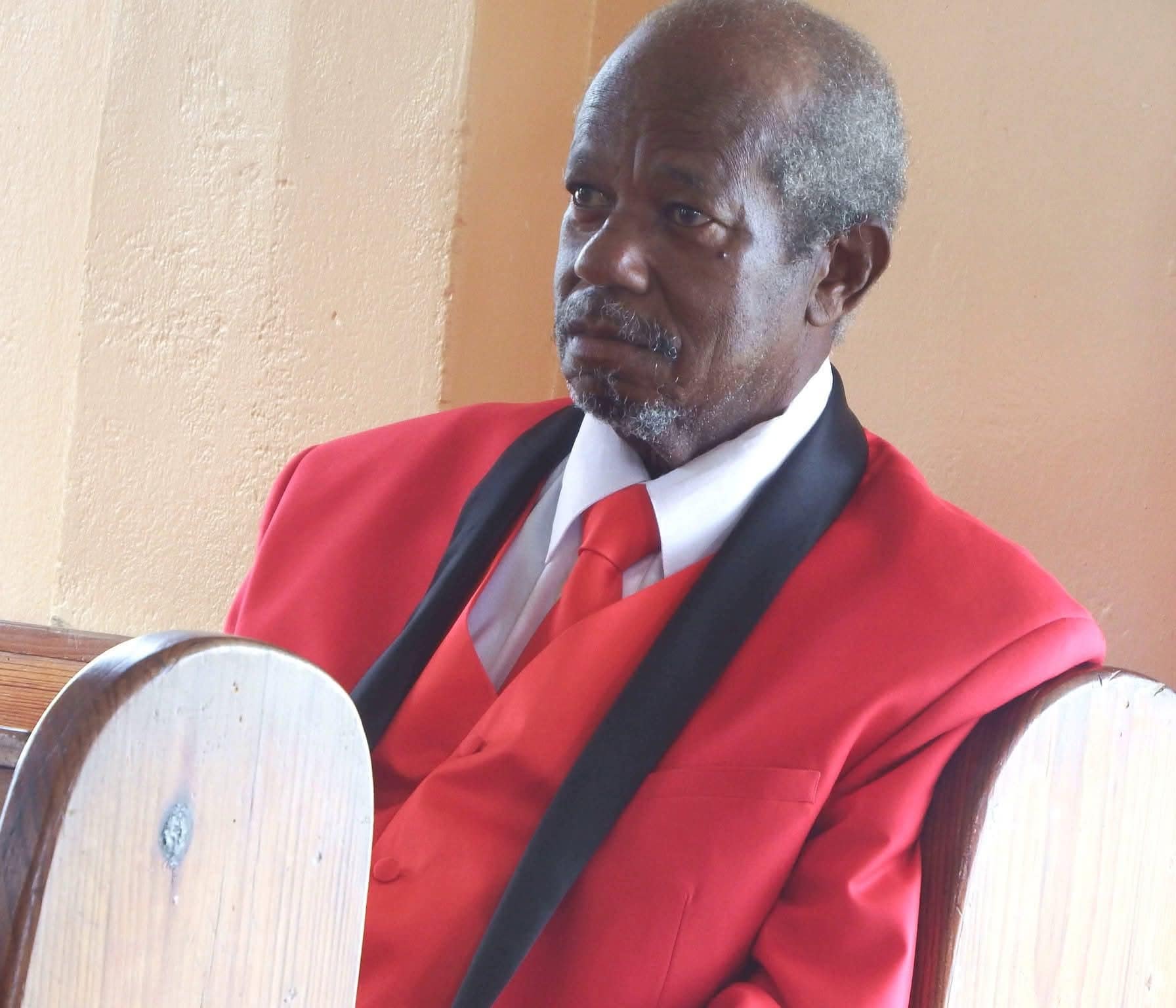
Potters Stalwart Walcott Lewis Remembered as Pillar of Community by ABLP St George Candidate Michael Freeland
ST JOHN’S, Antigua — The Antigua and Barbuda Labour Party (ABLP) candidate for the St George constituency, Michael Freeland, has opened up about his profound grief following the death of Walcott Lewis, a beloved and longstanding community leader from Potters Village.
In a heartfelt statement shared this week, Freeland paid tribute to Lewis, remembering him as one of the most respected and reliably dedicated public figures the Potters Village community has ever known. Freeland characterized Lewis as a person defined by strong moral character, quiet resilience, and unshakable loyalty to the people and causes he cared about. Beyond his community impact, Freeland emphasized that Lewis’s death carries deep personal weight for him and his family.
As a lifelong, dedicated member of the ABLP, Lewis’s commitment to both his neighborhood and his political principles set him apart from many, Freeland noted. He went on to share the close, decades-long tie that bonded Lewis to his late father, former political figure Sir Adolphus Freeland. The two men worked side by side through every high and low of their political and community work, standing together through all manner of challenges and celebrating every milestone of success along the way.
Freeland described Lewis as a consistent, grounding presence in the lives of countless residents across Potters Village, calling him a foundational pillar of the community. His loss will leave a gaping hole that will be felt by residents of the village and many people beyond its borders, Freeland added. In a moving closing tribute, he said, “Walcott, you are never to be forgotten. Your impact on Potters and on our family will live on forever.”
Freeland concluded his statement by extending his deepest condolences to all of Lewis’s loved ones, including immediate family members and close friends. He encouraged all those gathered to mourn Lewis to lean on one another for support during this challenging period of grief, ending with a simple, respectful wish: “Rest in peace, Walcott.”
-

HIRING: Bartenders and Cooks
The food and beverage sector continues to show signs of steady recovery, as one local hospitality business has recently posted open positions for two key front- and back-of-house roles: bartenders and cooks.
As consumer demand for dining and social experiences out of the home continues to climb following years of industry disruption, venues across the country are working to rebuild their teams to match rising customer foot traffic. The open bartender role will be responsible for crafting beverage menus, mixing classic and signature drinks, interacting with guests to deliver a welcoming venue experience, and managing bar stock to keep service running smoothly. Ideal candidates will bring prior hospitality experience, a deep understanding of safe alcohol service protocols, and strong interpersonal skills to connect with patrons.
For the open cook position, the business is seeking professionals who can maintain consistent food quality, work efficiently in a fast-paced kitchen environment, adhere to strict food safety and sanitation standards, and collaborate with front-of-house staff to coordinate timely order delivery. Relevant culinary experience, the ability to multitapse during peak service hours, and a commitment to delivering high-quality dishes are listed as key qualifications for the role.
Industry analysts note that ongoing hiring activity in frontline hospitality roles signals growing confidence among small business owners in the sustained strength of consumer spending on leisure and dining experiences. Many venues are currently offering competitive hourly wages, flexible scheduling, and in some cases tips and performance-based bonuses to attract qualified workers to fill these critical positions.
-
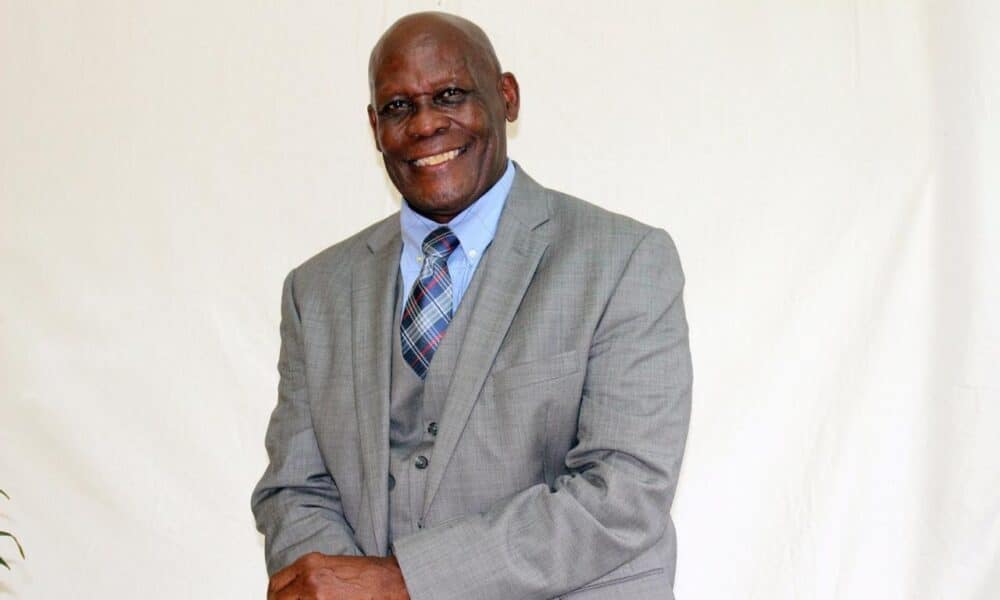
Kentish Pentecostal Church Marks One Year Since Passing of Bishop Lester Emanuel
One year ago this week, the Kentish Pentecostal community lost its long-serving spiritual leader, Bishop Rev. Dr. Lester Emanuel. On Monday, congregants and church leadership gathered to mark the somber anniversary, celebrating a life defined by 45 years of devoted ministry that transformed both the institution and the broader local area.
In an official tribute released April 7, church leadership walked through the decades of impact Emanuel carved out during his tenure. Framed not just as a church leader but as a caring shepherd to his flock, Emanuel was credited with strengthening family bonds across the congregation and nurturing spiritual growth across multiple generations of worshippers.
“Today, we pause not only to remember Bishop Emanuel’s remarkable journey, but to acknowledge the lasting imprint he left on every heart he touched,” the church’s official statement reads.
Church leaders have repeatedly highlighted three core traits that defined Emanuel’s service: an unwavering commitment to his calling, a steady abiding faith that anchored the community through uncertain times, and a willingness to give sacrificially of his time and energy for others. Even a year after his passing, his influence remains palpable in the ministry he helped grow and the countless lives he mentored and supported.
As a foundational pillar of Kentish Pentecostal Church for decades, Emanuel earned a reputation for preaching the gospel with unshakable conviction, guiding the congregation with thoughtful wisdom, and extending radical compassion to every member of his flock, from the youngest new worshipper to the longest-serving members.
Though his voice no longer echoes from the church’s pulpit during weekly services, the institution emphasizes that his teachings and personal example continue to act as a guiding light for current leadership and congregants alike.
“His legacy is alive in our worship, our fellowship, and the love we share as a community,” the statement added.
The tribute was coordinated and issued by current Bishop Michael C. Butler, Sis. Bunny Butler, and the full Kentish Pentecostal Church Board. The group collectively affirmed that Emanuel’s entire life was marked by faithful, dedicated service to God, setting a benchmark for future leaders to follow.
Moving forward, the church says it will continue to hold Emanuel’s memory in grateful esteem, noting that the strong institutional foundation he built over decades of work continues to inspire and direct all current and future work of the congregation.
-
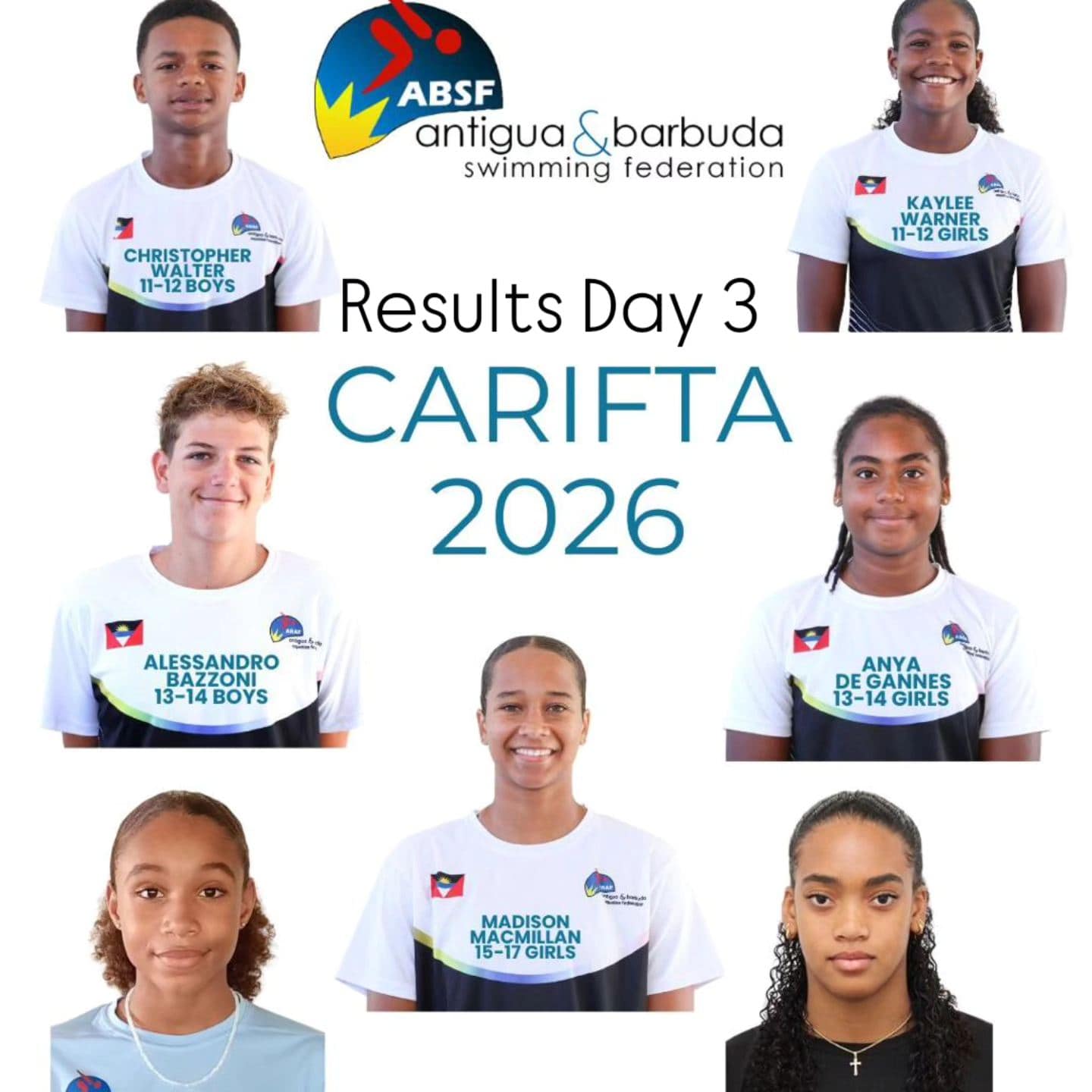
Antigua and Barbuda swimmers claim four gold medals on Day 3 at CARIFTA Aquatics
On the third evening of finals at the CARIFTA Aquatics Championships, the swimming team from Antigua and Barbuda turned in an outstanding, career-defining performance that has cemented the country’s status as one of the most improved competitors in this year’s tournament. The team left the block with one clear goal: to exceed expectations and collect hardware, and they delivered far beyond projections, wrapping up the night with four gold medals and two bronze medals – the strongest single-session result the nation has posted throughout the entire competition.
Leading the charge for the underdog Caribbean squad were three standout young competitors: Madison MacMillan, Ellie Shaw, and Anya DeGannes, each of whom not only claimed top podium spots but also rewrote the Antigua and Barbuda national record book by the end of the session. Beyond the six medals, the team set two new all-time national records and three new age-group benchmarks, with multiple swimmers hitting personal best times across their events.
MacMillan kicked off the medal surge for the team, claiming the top spot on the podium in the girls’ 1500-meter freestyle in a tightly contested race that came down to the final lap. It was Shaw, however, who delivered the most dominant performance of the night for Antigua and Barbuda, walking away with two gold medals in separate events. First, she claimed victory in the 200-meter individual medley, a race that saw her break both the long-standing national record and the age-group record while also clocking a new personal best time. She did not slow down after that win, returning to the pool shortly after to take another gold in the 50-meter breaststroke, further cementing her status as one of the tournament’s rising stars.
DeGannes added the team’s fourth gold of the night in the 200-meter butterfly, turning in a personal best performance that also earned her a new national age-group record. Even in her non-medal race later that evening, the 200-meter individual medley, DeGannes continued to push boundaries, finishing fourth overall while clocking another age-group record and another new personal best, a testament to the team’s depth of training and competitive drive.
The two bronze medals earned by the squad came from equally impressive efforts from Kaylee Warner and Alessandro Bazzoni. Warner finished third in the 100-meter freestyle, hitting a personal best time to secure her spot on the podium, while Bazzoni matched that result with a bronze of his own in the men’s 200-meter butterfly, also turning in a new personal best to round out the medal haul.
Beyond the podium finishers, several other Antigua and Barbuda swimmers turned in strong performances that contributed to the team’s overall successful night. Christopher Walter finished sixth in both the 100-meter freestyle and the 200-meter individual medley, holding his own against far more experienced competitors from larger regional nations. Selah Wiltshire placed eighth in the 50-meter breaststroke, and even outside the top three, she walked away with a new personal best time to cap her performance.
For Antigua and Barbuda, this historic medal haul is far more than just a one-night success: it caps off a string of strong results throughout the CARIFTA Aquatics Championships, with the nation’s swimmers consistently delivering podium finishes and record-breaking performances across a wide range of events. As the tournament progresses, the team has proven that small Caribbean nations can compete at the highest level of regional aquatics competition.
-

The Wrong Reform: Why Term Limits and Fixed Election Dates Cannot Work in Antigua and Barbuda
Across Caribbean political circles over recent years, two popular constitutional reform proposals have risen to prominence: legally fixed election dates and binding term limits for heads of government. Both are marketed as critical upgrades to democratic accountability, and both draw unacknowledged influence from the governing structures of presidential systems. As legal scholar Gavin V. Emmanuel argues in a landmark four-part series on Antigua and Barbuda’s constitutional framework, however, neither reform fits the Westminster model enshrined in the country’s 1981 independence constitution—they are not just impractical, but structurally incompatible with the nation’s core governing architecture.
Emmanuel’s series analyzes each proposal individually, grounding its arguments in the specific text of Antigua and Barbuda’s founding document and drawing comparative lessons from other Commonwealth Westminster jurisdictions to contextualize its claims. The first installment lays the constitutional groundwork for the entire series, explaining the central doctrine of responsible government that underpins the Westminster system, and demonstrating how key sections of the constitution are explicitly structured around parliamentary confidence rather than rigid electoral timelines.
The second part of the series tests this core argument against its most prominent counterexample: the United Kingdom’s 2011 Fixed-term Parliaments Act, the most high-profile attempt to impose a fixed electoral schedule on a Westminster parliament. Drawing lessons from the UK’s ultimately unsuccessful experiment with the policy, alongside analysis of boundary reform provisions laid out in Sections 62 through 65 of Antigua and Barbuda’s constitution, this section explains why date-fixed elections fail both in constitutional theory and on-the-ground practice.
Part three shifts focus to the second popular reform proposal: term limits for prime ministers. Emmanuel contends that term limits import presidential-style logic into a parliamentary governing framework, directly contradicting key provisions of Section 69 of the constitution. Far from curbing excessive executive power, he argues, term limits would actually accelerate the presidentialization of the prime minister’s office—a outcome that critics of Caribbean governance have repeatedly identified as a core problem to solve.
The final installment of the series concludes the argument by breaking down the actual impact term limits would have on democratic accountability. Emmanuel explains that term limits would weaken the electoral incentives that keep leaders responsive to voter demands, disrupt critical institutional memory in small island states like Antigua and Barbuda, and completely fail to address the root structural causes of patron-client political systems that undermine good governance. The series closes by outlining targeted, constitutionally permissible reforms that align with the existing framework and deliver the genuine democratic renewal that reformers seek.
In the opening of the first series installment, Emmanuel addresses the appeal of reformism couched in the language of accountability, noting that many well-intentioned proposals carry a fundamental misunderstanding of how parliamentary democracy actually functions. While fixed election dates have gathered broad momentum across the Caribbean and sound intuitively appealing on paper, their structural incompatibility with the Westminster model is uniquely clear when examined through the lens of Antigua and Barbuda’s constitution.
To understand the conflict, one must start with the core design of the Westminster system, not just surface-level political debate. The Westminster model is far more than a vote-counting procedure: it is a cohesive governing theory built around a single foundational principle: the executive branch derives its governing authority continuously and conditionally from the confidence of the elected legislature. The moment that confidence is withdrawn, executive authority collapses. Under this model, government is not a fixed, predetermined tenure—it is a living mandate that can be renewed, revoked, and is always contingent on parliamentary support. This is not a accidental feature of the system; it is the entire point of the design, and what constitutional scholars refer to as the doctrine of “responsible government.”
Antigua and Barbuda’s 1981 independence constitution reflects this doctrine with intentional precision. Section 60(1) of the document grants the Governor-General the authority, acting on the advice of the prime minister, to prorogue or dissolve Parliament at any time. The word “any” is not just ceremonial wording—it is the constitutional codification of executive-legislative accountability, creating a mechanism that allows a government to call a new election if it loses its parliamentary majority, if a national crisis requires a fresh public mandate, or if an unresolvable legislative impasse gridlocks governance. While Section 60(2) sets a five-year maximum term for Parliament, after which it must automatically dissolve, this cap is not a rigid electoral schedule—it is simply an outer limit on an otherwise flexible governing instrument.
This distinction is not a trivial legal technicality; it shapes how the entire system functions. A legally fixed election date fundamentally rewrites this arrangement, turning the five-year maximum cap into a mandatory floor. It requires that even if a government loses all parliamentary confidence, even if the country urgently needs a new policy direction, an election must wait for the pre-set date. This is not accountability—it is institutional paralysis framed as procedural reform.
The Antigua and Barbuda constitution explicitly anticipates this risk. Section 60(4), often referred to as the Governor-General’s reserve power, grants the office discretionary authority to unilaterally dissolve Parliament if the House of Representatives passes a vote of no confidence and the prime minister fails to either resign or call an election within seven days. This is a non-partisan safety valve, a guarantee that no government can cling to power after losing the legislature’s support. A fixed election date would render this core constitutional provision legally incoherent: if the election date is set by statute, the Governor-General’s constitutionally mandated discretionary dissolution power becomes a source of legal conflict rather than a conflict resolution tool. Since Section 2 of the constitution explicitly names it the supreme law of Antigua and Barbuda, any statute conflicting with its provisions would be ruled void. This means a fixed election date law passed without a full constitutional amendment would not just be bad policy—it would be constitutionally invalid and unenforceable.
-

Saint Lucia finish 10th at CARIFTA Games
The Caribbean’s premier junior athletics showcase, the CARIFTA Games, wrapped up its 2025 edition on the evening of April 6 at Grenada’s Kirani James Stadium, with Saint Lucia matching its 2024 medal haul to finish 10th on the overall regional medals table. For the second straight year, the island nation left the competition with four podium finishes, all earned by its standout field event competitors.
Saint Lucia’s medal count got off to a blazing start on the competition’s opening days, when 16-year-old Destinee Cenac claimed gold in the Under-17 girls’ high jump. Clearing a new personal best height of 1.72 meters, the St Joseph’s Convent student and Morne Stars Athletics Club member improved on her bronze medal finish from the 2024 Games, kicking off a dominant run for Saint Lucia’s field athletes. Cenac’s win marked the 16th high jump medal the island has earned in CARIFTA Games history, making it the nation’s most successful individual discipline – a legacy built by previous CARIFTA record holders and Olympic athletes Levern Spencer and Jeannelle Scheper.
Naya Jules added a silver medal to Saint Lucia’s tally in the Under-20 girls’ pole vault, recording a clearance of 2.95 meters. This marked Jules’ fourth consecutive CARIFTA medal in the event, and her second straight silver after taking home gold in the Open girls’ division in both 2023 and 2024. Beyond pole vault, Jules also delivered a strong personal best performance of 41.59 meters in the Under-20 girls’ javelin throw, finishing just outside the podium in fifth place.
Opening night of the Games saw Denzel Phillips claim his third career CARIFTA medal, taking bronze in the Under-20 boys’ discus throw with a best throw of 53.24 meters. The Saint Lucia athlete finished behind Jamaican pair Kamari Kennedy and Joseph Salmon on the podium, and narrowly missed a second medal after spending most of the competition in top-three position for the shot put, ultimately dropping to fifth in the final standings.
The final medal of the competition for Saint Lucia came on Easter Monday, the event’s closing day, from Under-17 long jumper Randall Monroe. Making his CARIFTA Games debut just hours after finishing a narrow fourth in the Under-17 boys’ high jump, Monroe fought through challenging stiff headwind conditions to record a jump of 6.60 meters, good enough for bronze. The young athlete will remain eligible to compete in the Under-17 division when the next CARIFTA Games are held.
The 12-member Saint Lucian delegation included a number of young athletes who are expected to build on their 2025 experience in future editions of the meet. Fifteen-year-old thrower Eavan Edgar placed 11th in the Under-17 shot put and fouled out of the discus competition, but will be eligible to return next year. Similarly, long jumpers Barbara-Marie Maximin and Syesha Rogers placed ninth in the Under-17 and Under-20 divisions respectively, with Maximin moving up to the Under-20 bracket in 2026.
For the nation’s Under-20 male athletes, the 2025 Games marked their final appearance in the junior regional competition, as all will age out of the division ahead of 2026. Middle-distance runner Evann John delivered an impressive improved performance from his 2024 showing, qualifying for the 800m final and clocking 1:53.44 to finish fifth. Sprinter Joaqwan Alexander ran a faster time than he did in 2024 in the 400m event, but once again just missed out on a spot in the final round. Benique Mann placed 13th in the 1500m, Ryan Simeon finished 24th in the 100m, and triple jumper Darvin Forde placed 11th in his first and final CARIFTA Games appearance.
-

OPINION: From Schoolyard Games to Couches: Why Play Belongs at the Heart of Public Health
For generations of Caribbean children, the sounds of outdoor play filled open green spaces and paved sidewalks across every island. Shouted calls of “RUN!”, “HOME!” and “OUT!” spurred spontaneous sprints across fields, dodges during competitive games, and mad dashes for safety long before the phrase “physical activity” entered common public discourse. Movement was not a scheduled chore or a gym membership requirement—it was woven into the very fabric of childhood, experienced through the simple, joyful act of play.
Every island across the region nurtured its own unique traditional games that kept bodies moving constantly. In Barbados, children transformed ordinary sidewalks into makeshift road tennis courts, wielding rough wooden paddles to rally back and forth across boundaries marked in chalk. Across Trinidad and Tobago, hopping games like Scotch, Moral and Peesay built coordination and rhythm, while marble matches kept children crouched for hours, steadying their hands to aim and compete. Jamaica’s beloved Dandy Shandy and Stuck and Pull had kids running, laughing, and twisting to break free from grips, filling the air with squeals of delight. Rounders, chase, circle games like “Bluebird In and Out the Window” and “Bull in the Pen” turned empty lots into hubs of constant, unstructured movement, with every community adding its own rules, calls, and shared memories.
Today, however, this rich tradition of spontaneous outdoor play has faded from Caribbean schoolyards and neighborhoods. The rise of screen time, packed modern schedules, and shrinking public play spaces have replaced the shouts of childhood with silence. This shift is far more than a loss of nostalgia: modern public health conversations around physical activity increasingly center on formal gym memberships, structured workout programs, and performance metrics, erasing the deep cultural foundation of free movement that once kept generations healthy.
For decades, unstructured play served as an informal, wildly effective pillar of Caribbean public health. It built physical strength, fine motor coordination, emotional resilience, and tight social bonds across communities without any formal policy or programming. But the decline of childhood movement has left a measurable public health crisis in its wake.
Non-communicable diseases (NCDs) such as hypertension, type 2 diabetes, and heart disease now account for more than 70% of all deaths across the Caribbean, giving the region one of the world’s highest rates of premature NCD-related death among people aged 30 to 70. While poor diet, tobacco use, and excessive alcohol consumption are key contributors, physical inactivity is a major driving force behind the crisis. Today, 30 to 40% of Caribbean adults fail to meet the World Health Organization’s recommended weekly physical activity targets—a trend that traces back to the disappearance of unstructured play in childhood. The “stillness” that settled into schoolyards decades ago now follows people into adulthood, placing enormous strain on regional healthcare systems that bear the cost of long-term chronic disease treatment, medication, and ongoing care.
Current public health prevention efforts often focus almost exclusively on changing adult behavior, rather than restoring the community and school environments that made natural daily movement the norm for generations. Local advocates argue that reviving traditional childhood play is not a trip down memory lane—it is a core public health intervention that recognizes good health is built early in life, through collective community action.
Already, regional policy frameworks reflect this growing understanding. CARICOM member states have formally affirmed the public right to health, and the Caribbean Public Health Agency’s (CARPHA) Six-Point Policy Package targets NCDs and childhood obesity across the region through targeted policy action. Regional campaigns under the umbrella of Caribbean Moves promote active lifestyles, supporting national initiatives including Jamaica Moves, Dominica’s Fit for Life Campaign, St. Lucia’s National Physical Activity Day, and Barbados’ Creative Play Initiative. Countries like Jamaica have also introduced policy measures targeting NCD risk factors, such as a proposed tax on sugar-sweetened beverages, signaling growing recognition of the need to address the root causes of chronic illness.
Advocates emphasize that the next step is not to draft new, unfulfilled commitments—it is to fully implement the promises policymakers have already made. Crucially, this means centering safe, accessible unstructured play as a core public health priority, rather than sidelining it as an afterthought.
As the world marks World Day of Physical Activity and World Health Day, the message from Caribbean public health advocates is clear: movement is not a privileged lifestyle choice, it is a human birthright and a core part of Caribbean cultural heritage worth protecting. To truly prevent chronic illness and build healthier communities, policymakers, schools, and community leaders must make space for the same joyful, traditional childhood play that defined generations—just like the good old days.
-

Trump dreigt met vernietiging: ‘Een hele beschaving zal vannacht verdwijnen’
As the April 2026 deadline for the reopening of the Strait of Hormuz draws near, U.S. President Donald Trump has issued increasingly aggressive threats against Iran, raising fears of a dramatic regional escalation that could reshape global energy security. In a incendiary post shared to his social media platform Truth Social, Trump warned that an entire civilization could be erased permanently if Iran did not comply with his order to reopen the key strategic waterway. The U.S. leader went further, framing the moment as a potential turning point that would bring about full regime change in Iran, claiming that 47 years of what he described as extortion, corruption, and death would finally be brought to an end. He suggested that less radical, more pragmatic leaders could seize control of the country if Tehran refused to back down.
Iran’s Islamic Revolutionary Guard Corps (IRGC) responded immediately via state-run media, issuing a blunt counter-warning that the country would not hesitate to launch retaliatory strikes far beyond the Middle East if the U.S. targets Iranian civilian infrastructure. The IRGC made clear that any American attacks on key Iranian energy infrastructure or critical transport links including bridges would cut off oil and gas supplies to the United States and its regional allies for years, if not decades. “American leaders underestimate how many critical targets are already within our reach,” the IRGC statement read. “If U.S. military forces cross our established red lines, our response will extend far beyond the borders of this region.”
Parallel to these escalating verbal exchanges, Iranian media has confirmed a recent attack on Kharg Island, the country’s primary hub for crude oil exports. While previous attacks on the island have targeted military positions, a strike on core oil export infrastructure would mark a dangerous new phase of escalation in the ongoing conflict, according to regional analysts.
Meanwhile, U.S. Vice President JD Vance offered a contrasting narrative, stating that American military objectives in the ongoing conflict with Iran have largely been achieved. Vance added that the U.S. still holds out hope that Iran will respond to American peace proposals before the deadline set by President Trump.
Hassan Ahmadian, a political science lecturer at the University of Tehran, told Al Jazeera that Trump’s increasingly harsh rhetoric signals growing frustration and desperation on the part of the American administration. “His tone gets more aggressive day after day. It looks like he is facing significant domestic and strategic problems,” Ahmadian explained. While Trump intends to force Iran to alter its policy through these extreme threats, Ahmadian argues the U.S. leader cannot ultimately follow through on all his warnings. That said, Trump does retain the ability to ramp up pressure and intensify ongoing attacks, to which Iran has already pledged a forceful and proportional response.
Ahmadian concluded that the conflict has already devolved into a complex, tangled conflict that has produced little progress for the United States since it began, and is likely to drag on for the foreseeable future.
-
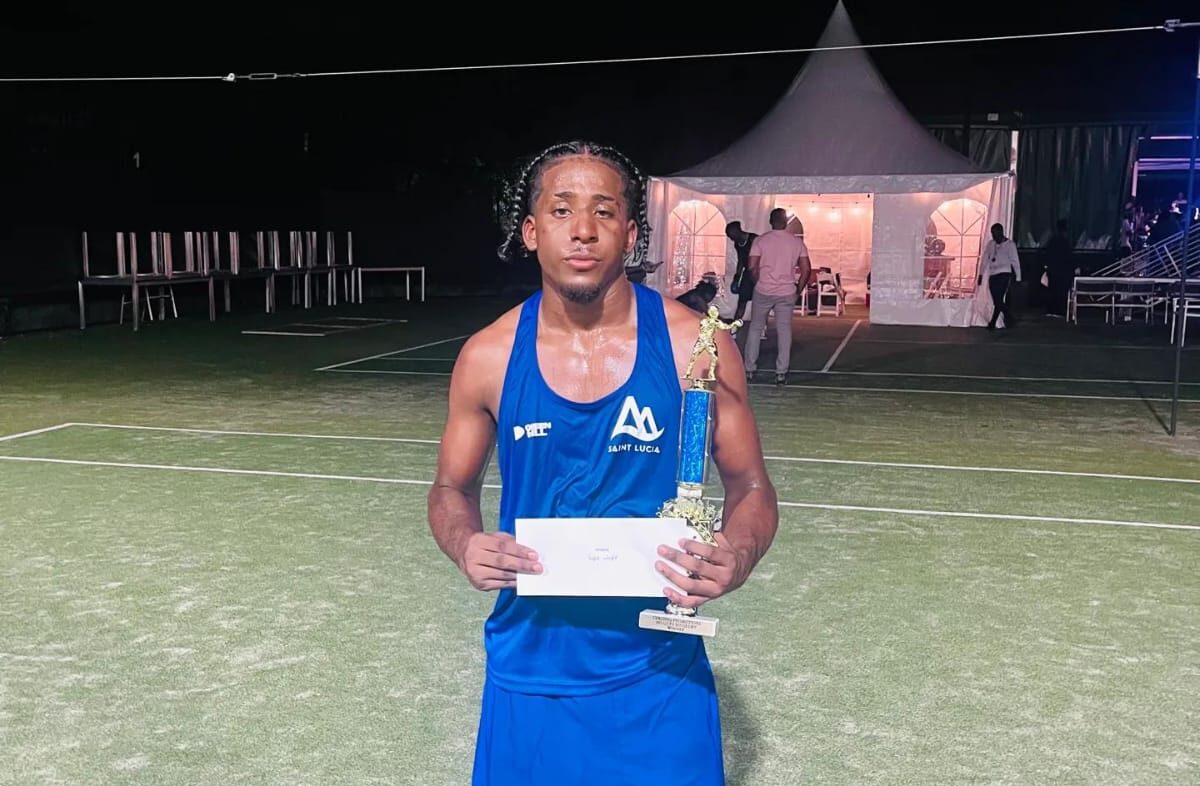
Cooman wins in Antigua, eyes Commonwealth Games
A sold-out crowd packed Lucky Eddi’s venue in English Harbour, Antigua & Barbuda, on Saturday, April 4, to witness a thrilling display of boxing skill that ended with Saint Lucia’s Danaii Cooman claiming a standout win over local competitor Jeremiah Toussaint at Fight Night 2.
Hailing from Vieux Fort and competing in the 60kg Lightweight Elite division under the guidance of Saint Lucia’s senior national head coach Conrad Fredericks, Cooman turned in a performance that highlighted far more than just individual talent. Across every round, the young boxer showcased sharp technical precision, unwavering disciplinary focus, and remarkable resilience when faced with pressure from his Antiguan opponent. His consistent dominance in the ring has also drawn new attention to the growing strength of boxing development across southern Saint Lucia, marking the region as an emerging hub for elite athletic talent in the sport.
Beyond the immediate glory of a win in front of a packed international crowd, this victory holds major strategic significance for Cooman’s long-term career goals. It serves as a critical milestone in his multi-year preparation cycle for the 2026 Commonwealth Games, where he intends to earn a spot representing his home nation of Saint Lucia. The 2026 Games are scheduled to run from late July through early August in Glasgow, Scotland, giving Cooman just over two years to refine his craft and secure his place on the national squad.
Cooman will not pause his training momentum after this latest win. Just under two weeks from his Antigua & Barbuda victory, he is set to join a five-member Saint Lucian squad traveling to Martinique for the second annual Caribbean Golden Glove competition, which will run from April 17 to 19. The upcoming regional tournament will offer another high-stakes opportunity for Cooman to test his skills against top Caribbean talent and continue building momentum toward his 2026 Commonwealth Games goal.