作者: admin

  • Terrelonge leads Jamaica’s delegation to OACPS summit

    Terrelonge leads Jamaica’s delegation to OACPS summit

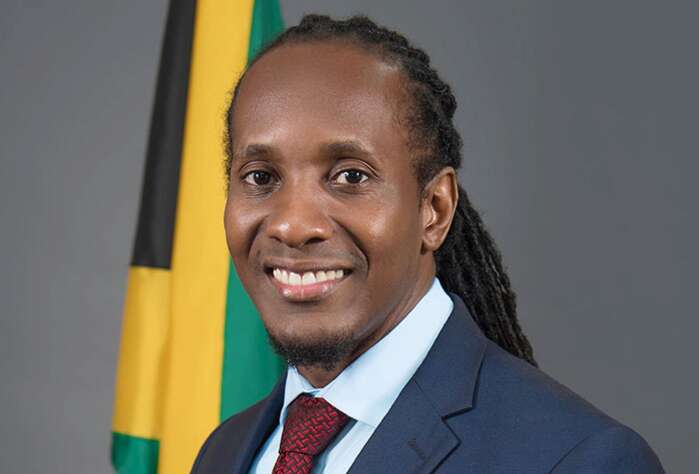
    From March 27 to 29, the capital of Equatorial Guinea, Malabo, played host to the 11th high-level summit of the Organization of African, Caribbean and Pacific States (OACPS), a gathering that brought together delegations from 79 member nations to confront shared global challenges under the unifying theme “A Transformed and Renewed OACPS in a Changing World”. Leading Jamaica’s delegation to the event was Alando Terrelonge, Minister of State in the Ministry of Foreign Affairs and Foreign Trade, who stood in for Prime Minister Andrew Holness during the three days of talks.

    Against a backdrop of shifting global geopolitics and mounting economic volatility, the summit centered its agenda on accelerating progress in South-South cooperation, advancing collective sustainable development goals, scaling up ambitious climate action, and forging more effective cross-regional partnerships. For Jamaica, one of the world’s most climate-vulnerable Small Island Developing States (SIDS), the summit offered a critical international platform to amplify the urgent, existential risks that climate change poses to small island nations.

    Speaking at the summit, Terrelonge opened with a stark example of the immediate harm of climate inaction, referencing the devastating impact of Hurricane Melissa, which is projected to strike Jamaica in October 2025. Early estimates place total damage from the storm at more than US$12 billion – a sum that equals roughly 56.7% of Jamaica’s entire annual gross domestic product. The minister emphasized that for SIDS, climate change is far from an abstract academic debate or a distant future threat.

    “For Small Island Developing States, climate change is not a scientific or academic discussion; it is an existential threat that disrupts livelihoods, damages critical infrastructure, affects food and water security, and undermines economic growth – particularly in climate-sensitive sectors on which our economy is heavily reliant, such as tourism, agriculture and fisheries. In extreme cases, it also costs lives. It is therefore imperative that global action matches the scale and urgency of the crisis,” Terrelonge stated during the summit.

    As a panelist at the official SIDS forum held alongside the summit, Terrelonge doubled down on Jamaica’s longstanding calls for systemic change in global climate governance. He reaffirmed the nation’s demand for equitable, universally accessible climate financing that meets the unique needs of vulnerable small island states, more robust and accountable implementation of existing global climate commitments, and formal legal and institutional recognition of SIDS’ special circumstances in all international climate and development frameworks.

    Beyond climate action, Terrelonge also added his voice to growing calls for internal reform of the 50-year-old OACPS organization. He reiterated Jamaica’s position that targeted reforms to strengthen OACPS’ governance structures, boost its operational efficiency, and enhance its financial accountability are necessary to create a more responsive organization that can deliver tangible outcomes for all member states. He also emphasized the critical role OACPS continues to play in advancing inclusive multilateral cooperation, deepening economic and social engagement across member states, and driving sustainable development progress across the Global South.

    Founded in 1975 via the Georgetown Treaty, OACPS has long centered its core mission on advancing sustainable development and reducing poverty across its member states, while supporting greater, more equitable integration of member nations into the global economy. This latest summit reinforced the shared commitment of OACPS members to coordinate collective action on climate finance and sustainable development – two top policy priorities for Jamaica in ongoing multilateral negotiations.

    Closing his remarks, Terrelonge made clear that Jamaica will continue to leverage every available international platform to advocate for decisive, equitable, and urgent global action that meets the unique needs of Small Island Developing States on the frontlines of the climate crisis.
  • Gunmen kill 60 in northwest Nigeria—humanitarian groups

    Gunmen kill 60 in northwest Nigeria—humanitarian groups

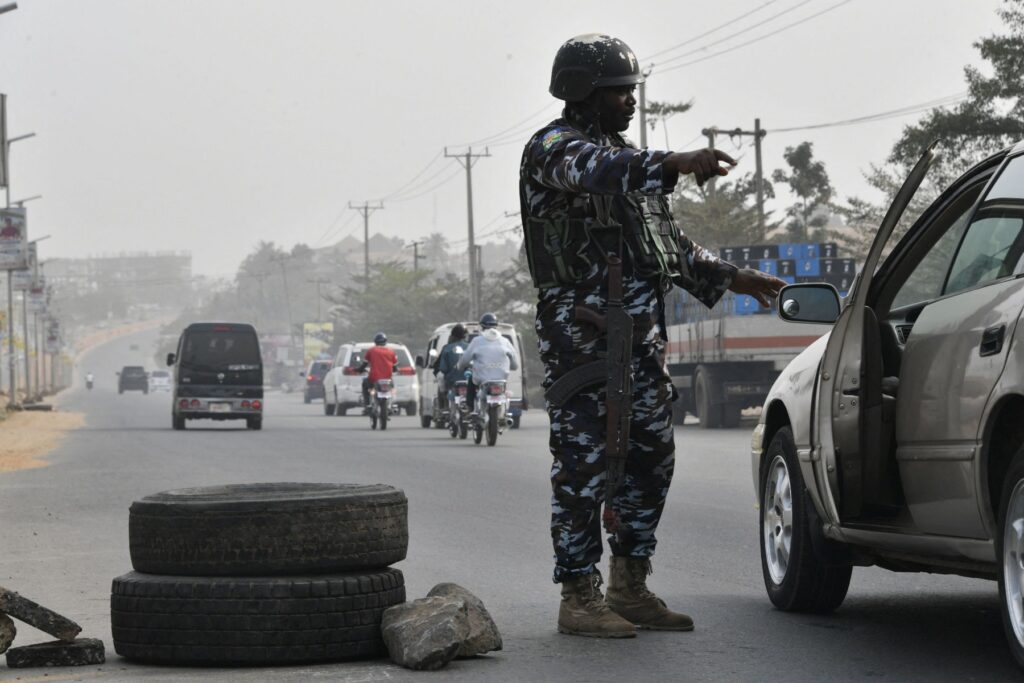
    In a devastating wave of violence that has underscored Nigeria’s deepening insecurity crisis in its predominantly Muslim northern region, armed gunmen have killed no fewer than 60 civilians across a series of remote rural villages in two neighboring northwestern states this week, local religious leaders and humanitarian organizations confirmed Wednesday in statements to Agence France-Presse.

    The coordinated assaults targeted at least 10 settlements spread across Kebbi and Niger states, according to regional clergymen and a detailed humanitarian situation report reviewed by AFP. The document, which draws on testimony from three on-the-ground humanitarian sources including a local medical facility and a community advocacy group, records 20 fatalities from a Tuesday strike on Erena, a community located in Niger state’s Shiroro local government area.

    A separate classified military security assessment identifies the perpetrators of the Erena attack as well-armed bandits who launched a direct incursion on a local military outpost. Regional police have verified the assault, adding that three additional members of the local security ecosystem — two volunteer vigilante fighters and a driver assigned to the joint security task force — were also killed in the clash.

    Shiroro district has long been a hotspot for persistent violence, terrorized repeatedly by both local criminal gangs known locally as bandits and transnational jihadist insurgent networks. In recent years, security analysts have documented a growing trend of collaboration between these two groups, whose joint raiding campaigns have displaced tens of thousands of residents across northwest Nigeria.

    In neighboring Kebbi state, one anonymous clergy member — who requested anonymity out of concern for his personal safety — confirmed an initial death toll of 24, but added that updated witness reports put the actual number of fatalities above 40. A second senior Christian leader in the region corroborated this estimate, placing the Kebbi death toll at approximately 40.

    Speaking to AFP, the first clergy member described a campaign of indiscriminate violence that spared no group: “They killed everybody in sight, they killed Christians, Muslims and traditional worshippers. They killed indiscriminately.” The attackers burned down religious sites of both Christian and Muslim communities, slaughtered livestock including sheep and cattle, and destroyed stored food reserves, he added. The incursion unfolded over three straight days of rampage, with gunmen systematically combing the surrounding brush where residents typically flee to hide during attacks.

    “They comb the surrounding bushes where villagers would ordinarily hide during attacks and hunt around for those who were hiding in the bush and shoot them down,” he said. “They were not leaving anything, they were not taking anything. They were there to kill and destroy.”

    More than 500 displaced residents have fled the affected villages to take shelter in churches and public schools in Kebbi’s Yauri town, and the security situation remains so precarious that families cannot return to their homes to recover and bury their dead, the clergy member added.

    No insurgent group has yet claimed responsibility for the coordinated attacks, but Kebbi state police have pinned the blame on a local jihadist cell known as the Mahmuda group, which operates across the northwest region. The cell is affiliated with Mahmud al-Nigeri, a senior commander in the Ansaru jihadist network. Ansaru split from the notorious Boko Haram insurgent group more than a decade ago and has since aligned itself with Al-Qaeda in the Islamic Maghreb (AQMI), a regional branch of al-Qaeda.

    Kebbi state, which shares international borders with Benin and Niger, has seen a sharp uptick in jihadist attacks since 2025, according to regional security data. Armed Conflict Location & Event Data Project (ACLED), a leading independent conflict monitoring organization, has recorded a major recent surge in violence across northwest Nigeria carried out by insurgent groups aligned with both al-Qaeda and the Islamic State. Like other northern Nigerian states, Kebbi faces a dual security threat: both transnational jihadist insurgency and banditry, criminal gangs that raid villages, seize residents and hold them for ransom.

  • Australia PM welcomes Iran ceasefire, says Trump threats not ‘appropriate’

    Australia PM welcomes Iran ceasefire, says Trump threats not ‘appropriate’

    In a development that reverberated across global diplomatic circles this week, top Australian officials have offered a mixed response to the sudden US-Iran two-week ceasefire, welcoming the de-escalation of conflict while sharply criticizing inflammatory rhetoric from former US President Donald Trump that threatened the complete annihilation of Iranian civilian infrastructure.

    The ceasefire agreement came into effect barely 60 minutes before Trump’s self-imposed deadline for Iran to reach a negotiated deal was set to expire, ending a month of open hostilities between the US-Israeli bloc and Iranian forces that had upended global energy markets. Ahead of the deadline, Trump issued a chilling warning that if Iran did not comply with his demands, “a whole civilization will die tonight, never to be brought back again” — a comment that has drawn widespread international rebuke for its extreme tone.

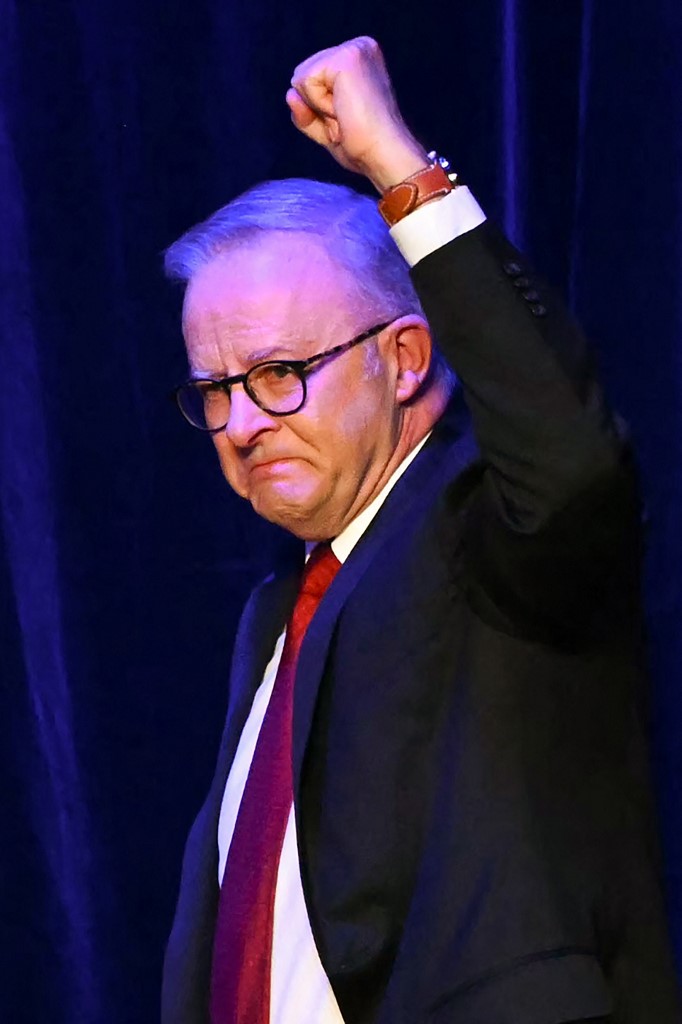
    Speaking to Sky News Australia on Wednesday, Australian Prime Minister Anthony Albanese broke ranks with the previous pro-strike position of his government to push back against the US leader’s language. “I don’t think it’s appropriate to use language such as that from the president of the United States, and I think it will cause some concern,” Albanese said, adding that threats targeting entire civilian populations have no place in modern diplomatic discourse.

    Despite his criticism of Trump’s comments, the prime minister welcomed the ceasefire as a step in the right direction, aligning with his government’s weeks-long calls to dial back regional tensions. “What we have called for is a de-escalation, and that is what has occurred, and that’s a good thing,” Albanese noted. “This is positive news. We’ve been calling for a de-escalation for some time. We want to see a resolution of the conflict.”

    For its part, Iran has framed the ceasefire as a strategic victory. In the wake of more than a month of coordinated US and Israeli attacks, Tehran announced it would temporarily reopen the Strait of Hormuz — the world’s most critical chokepoint for global oil and gas shipments, which Iran had effectively closed after US-Israeli strikes on February 28 reignited full-scale regional conflict. The closure sent global energy prices soaring to multi-year highs, inflicting economic pain on energy-importing nations around the world, Australia included.

    Australia’s Foreign Minister Penny Wong echoed Albanese’s condemnation of Trump’s remarks during an interview with the national public broadcaster ABC, doubling down on the government’s call for the ceasefire to be extended across the entire Middle East region. “I don’t think anyone should be threatening the destruction of a civilisation,” Wong said. The foreign minister added that Australia, which is heavily reliant on imported fuel and currently holds only around 39 days of national petrol supply, has already felt the severe economic fallout of the conflict. “The damage that is happening to the global economy, to global energy markets, means that the world does need this ceasefire to hold,” she emphasized.

    Wong also pushed back against Israeli claims that the ceasefire does not extend to Lebanon, where weeks of Israeli bombardment have killed more than 1,500 people and displaced over a million residents according to Lebanese official statistics. “The world expects the ceasefire to apply to the region,” Wong stated.

    The shift in the Australian government’s public position comes after it initially voiced support for the US-Israeli strikes on Iran. Last week, Albanese already signaled a change in tone, saying the original military objectives of the campaign had been achieved and it remained unclear what further gains could be made through continued conflict. To offset the domestic impact of skyrocketing fuel prices driven by the regional crisis, the Canberra government has already moved to cut petrol taxes, easing cost-of-living pressures for Australian households.

  • BOOT Jamaica named business of the year at St Ann Chamber awards

    BOOT Jamaica named business of the year at St Ann Chamber awards

    RUNAWAY BAY, St Ann — The St Ann Chamber of Commerce’s annual awards ceremony, one of the most prestigious business events in the region, crowned BOOT Jamaica as its 2026 Business of the Year on March 29, capping off a night of celebration for outstanding enterprise across the parish. Held at the Cardiff Hall Hotel in Runaway Bay, the gathering drew a cross-section of attendees, from local business owners and chamber leadership to national government representatives and cross-sector stakeholders invested in St Ann’s economic growth.

    As the highest accolade of the night, the Business of the Year award was presented by Jamaica’s Prime Minister Andrew Holness, who also delivered the event’s keynote address focused on driving private sector growth across the country’s northern parishes. Founder and Executive Director Wayne Boothe alongside Chief Operating Officer Alexcia Boothe accepted the award on the company’s behalf, marking a major milestone in BOOT Jamaica’s years-long trajectory of expansion and innovation across Jamaica.

    In his acceptance remarks, Wayne Boothe framed the recognition as a milestone that comes as the company enters a new era of strategic growth. “This award comes at a defining moment for BOOT Jamaica. As we expand through developments such as BOOT 2 and planned growth in parishes, including St James and Trelawny, we are reimagining what convenience and service look like across Jamaica,” he said. “We are honoured by this recognition and remain committed to sustained investment, innovation, and excellence in St Ann and beyond.” Boothe also extended gratitude to his company’s team, community partners, and loyal customers, reaffirming the organization’s core mission of delivering exceptional customer service while driving inclusive economic growth and sustainable community development across the island.

    Beyond its commercial success, BOOT Jamaica’s commitment to community emergency preparedness also earned special recognition during the ceremony. Custos of St Ann Joseph Issa highlighted the work of the Custos Commandos, a volunteer emergency response initiative, in strengthening local disaster response systems across the parish. Alexcia Boothe was separately honored for leading a parish-wide shelter support initiative launched in the wake of Hurricane Melissa. The program delivered 2,000 sleeping bags and soup kits to vulnerable communities, while also funding critical infrastructure upgrades to shelters that improved access to reliable power during emergencies and boosted overall response efficiency in post-storm recovery efforts.

    The St Ann Chamber of Commerce’s annual awards were created to celebrate outstanding business performance and measurable contributions to local economic development across the parish. For the 2026 iteration, organizers awarded 12 honors across diverse categories, including social responsibility and community impact, education excellence, and small business of the year, with Business of the Year standing as the pinnacle of achievement for local enterprises. BOOT Jamaica claimed the top prize from a competitive pool of high-profile nominees that included Pure Chocolate Jamaica and the Jamaica Public Service Company. Judges and peer industry voters highlighted the company’s aggressive, forward-thinking expansion strategy as the key deciding factor in its selection, pointing specifically to the 2025 groundbreaking of the highly anticipated BOOT 2 development as evidence of the company’s outsized impact on the parish’s economic outlook.

  • No ongoing egg importation, says Agriculture Ministry

    No ongoing egg importation, says Agriculture Ministry

    Jamaica’s Ministry of Agriculture, Fisheries and Mining has formally wrapped up its emergency temporary duty waiver for egg imports, with the policy officially expiring on February 28, 2026 and no further imports permitted under the arrangement. According to an official statement released Tuesday, the government has not approved any new egg import licenses since December 2025, a deliberate policy choice rooted in clear confirmation from local industry groups that domestic egg production has fully bounced back from widespread weather-related disruptions last year.

    The temporary import program, launched in the wake of Hurricane Melissa that hit the island in October, was established at the direct request of the Jamaica Egg Farmers’ Association. At the time, the storm had devastated local production capacity, creating severe supply gaps that the domestic sector could not fill on its own. The association turned to the government for support to stabilize market supplies and prevent crippling price spikes for consumers, leading to the implementation of the short-term duty waiver.

    A revealing detail from the ministry’s breakdown shows that more than 60 percent of all eggs imported through the scheme were brought in by local egg producers themselves. This statistic underscores a key point about the policy: it was entirely driven by the domestic industry and designed to address an urgent short-term crisis, rather than being an outside intervention that undercut local farmers. The temporary measure was never meant to permanently replace domestic production, only to bridge the gap while the sector rebuilt.

    Government officials emphasized that their approach to managing the egg market has always struck a deliberate balance between two core priorities: ensuring consumers have consistent access to affordable eggs, and protecting the long-term economic health and viability of Jamaica’s domestic agriculture sector. Temporary import relaxation, they noted, is only activated during periods of genuine crisis, and is never intended to undermine local farming operations. Instead, it serves as a safety net to keep markets stable when unforeseen events disrupt domestic output.

    Now that the domestic egg industry has demonstrated a full recovery from Hurricane Melissa’s impacts, the government has shifted its full focus back to supporting long-term growth for local producers. Key priorities going forward include strengthening domestic production capacity, building greater climate resilience across the sector to withstand future extreme weather events, and maintaining targeted support for small and large egg farmers alike. The ministry closed its statement by calling for continued collaboration across all parts of Jamaica’s egg industry, to ensure the sector remains strong, self-sufficient, and able to meet all of the country’s domestic demand for eggs moving forward.

  • Soca artiste Patrice Roberts ordered to pay US$30,000 to Canadian entertainment company

    Soca artiste Patrice Roberts ordered to pay US$30,000 to Canadian entertainment company

    PORT OF SPAIN, Trinidad – A long-running legal disagreement between internationally recognized Soca performer Patrice Roberts and her former Canadian management firm has concluded with a binding ruling from the Trinidad and Tobago High Court, ordering the entertainer to compensate the company for professional services rendered during her two-year representation.

    The case centered on an informal oral management contract struck between Roberts, 40, and Ontario-based agency Soca Bookings Incorporated in February 2015. Under the terms of the unwritten deal, the company committed to delivering end-to-end career management support, spanning international performance bookings, brand development, studio recording coordination, and global promotional outreach to expand Roberts’ audience outside the Caribbean.

    While both parties never disputed that a working agreement existed, key contractual details remained ambiguous, most critically the timeline for management fee payments. Soca Bookings argued fees were due immediately upon provision of services, while Roberts maintained all compensation would be deferred until the business partnership turned a profit.

    Delivering the final judgment, Justice Robin Mohammed sided with Roberts’ account of the payment terms, finding the management firm failed to provide evidence that the profitability threshold had ever been met. Even so, the judge ruled that equity demanded Roberts compensate the company for the tangible work and financial support it provided to advance her career. He awarded Soca Bookings US$35,472, a sum that covers both reasonable compensation for the firm’s services and cash advances the company issued on Roberts’ behalf between 2015 and 2017, plus accrued interest.

    The ruling also offset this award with a separate sum owed to Roberts: the court ruled the entertainer was entitled to US$10,367.88 plus interest, representing digital music sales revenue the firm collected on her behalf during the management period that it had not turned over. A separate US$11,600 claim tied to expenses for a music video production was thrown out entirely, after justices found the company provided no credible proof it had actually incurred that cost.

    After accounting for mutual awards of pre-judgment interest and legal costs that the judge ordered can be set off against one another, the final net sum Roberts must pay amounts to roughly US$25,104.12 plus TT$26,983.71 in cost assessments.

    In closing remarks accompanying the ruling, Justice Mohammed issued a stark warning to entertainers and industry professionals about the pitfalls of informal, unwritten contracts in the entertainment space. He noted that the entire costly and time-consuming legal dispute could have been completely avoided if the two sides had formalized their arrangement in a written, signed contract that clearly outlined all core terms and expectations.

  • Iran hits Gulf states after agreeing ‘fragile’ truce with US

    Iran hits Gulf states after agreeing ‘fragile’ truce with US

    Just hours after the United States and Iran announced a temporary 14-day ceasefire that halted weeks of open regional conflict, new missile and drone strikes targeted US-allied Gulf nations on Wednesday, underscoring just how precarious the hard-won truce remains. US Vice President JD Vance emphasized the fragility of the agreement during remarks in Budapest, warning that the success of upcoming negotiations hinges entirely on Iran’s willingness to negotiate in good faith.

    The ceasefire, brokered at the eleventh hour after US President Donald Trump issued an ultimatum threatening the annihilation of Iran if it did not reopen the strategic Strait of Hormuz, went into effect this week. The waterway, which carries roughly one-fifth of the world’s daily oil trade, was closed by Iran in retaliation for a joint US-Israeli airstrike in late February that killed Iran’s supreme leader Ayatollah Ali Khamenei, the attack that ignited the full-scale regional war.

    By Wednesday morning, two commercial vessels — a Greek-owned bulk carrier and a Liberia-flagged ship — had successfully transited the strait, marking the first confirmed commercial passage since the closure, according to maritime tracking service Marine Traffic. Trump has credited Pakistani and Chinese mediation for pushing Tehran to agree to the temporary truce, and both the US and Iran have publicly claimed victory in the lead-up to formal peace talks scheduled to begin this Friday in Islamabad.

    Despite the celebratory rhetoric from both sides, deep divides remain on all core issues that separate the two nations. Iran’s publicly released 10-point negotiating framework includes maximalist demands that directly contradict long-standing US positions: the permanent lifting of all US economic sanctions, international recognition of Iran’s full control over the Strait of Hormuz, a complete withdrawal of US military forces from the Middle East, and international acceptance of Iran’s sovereign right to uranium enrichment. The US has said Iran’s uranium enrichment program must be restricted as part of any permanent deal, with Trump claiming Iran is close to developing a nuclear weapon — a claim that has not been verified by the United Nations nuclear watchdog or most independent global observers.

    Even as the ceasefire was announced, fresh violence erupted across the region. Iranian state media confirmed it launched new missile and drone attacks against Kuwait and the United Arab Emirates, retaliating for earlier airstrikes on Iranian oil infrastructure. Kuwait reported significant damage to its oil facilities, power plants, and desalination plants after hours of sustained strikes, and issued an immediate demand for Iran to halt all offensive operations. The UAE confirmed it was intercepting incoming attacks, while Bahrain reported strikes targeting its capital Manama. For weeks, Iran has launched regular attacks on these Gulf states, citing their hosting of US military forces, and has upended the region’s long-held reputation for stability and security.

    Fighting also continued unabated in Lebanon, where Israel launched what it described as its largest coordinated strikes across the country on Wednesday. The Lebanese armed group Hezbollah, backed by Iran, had announced it had ceased all offensive operations ahead of the ceasefire, but Israeli Prime Minister Benjamin Netanyahu clarified that the US-brokered truce does not apply to Israel’s campaign in Lebanon. Local Lebanese authorities report that more than 1,500 people have been killed in the Israeli operation to date, and state media reported strikes targeting central Beirut and its suburban areas Wednesday. The White House has said Israel agreed to the ceasefire terms, but Netanyahu’s comments have cast further uncertainty over the broader regional truce.

    Global financial markets reacted sharply to the news of the temporary ceasefire: international oil prices plummeted more than 17 percent, European natural gas prices fell 20 percent, and Asian stock markets posted strong early gains Wednesday, as investors breathed a sigh of relief over the easing of global energy supply risks. Iran’s closure of the Strait of Hormuz had sent energy prices soaring in recent weeks, sparking fears of a full-blown global energy crisis.

    In comments to AFP, Trump described the ceasefire as a “total and complete victory” for the United States, and said US negotiators are “very far along” in reaching a permanent agreement with Iran, calling Tehran’s 10-point proposal “workable.” But Vance warned Wednesday that if Iran does not negotiate sincerely, Trump will not hesitate to resume hostilities. “If not, they’re going to find out that the President of the United States is not one to mess around. He’s impatient to make progress,” Vance said.

    Iranian officials have struck a far more cautious tone, stressing that the ceasefire does not mark the end of the conflict, and that the war will continue unless Tehran’s core demands are met in formal negotiations. The Islamic Revolutionary Guard Corps, Iran’s most powerful military force, said Wednesday it has “no trust” in US promises, and warned that its “finger is on the trigger” to resume hostilities at any moment. In Tehran, residents remained on edge Wednesday, with most shops closed and streets far quieter than usual after weeks of anxiety over potential large-scale US attacks.

    The international community has widely welcomed the ceasefire, with global leaders including Pope Leo calling for a full end to the conflict that has already killed thousands of people and roiled global markets. Egyptian leaders praised efforts to “give diplomacy a chance”, while Omani officials called for negotiations that would resolve the crisis “at its roots”. British Prime Minister Keir Starmer, who is preparing for an upcoming visit to the Gulf, pledged Wednesday that the UK will do everything in its power to help turn the temporary truce into a lasting, permanent peace agreement that guarantees the permanent reopening of the Strait of Hormuz.

  • Mayberry Investments seeking $3 billion from bond market

    Mayberry Investments seeking $3 billion from bond market

    Jamaica-based leading securities dealer Mayberry Investments Limited (MIL) has announced a new secured bond issuance, seeking to raise between $2 billion and $3 billion from global and local investors to refinance a recently matured debt obligation and advance its ongoing corporate transformation strategy.

    On March 19, MIL fully redeemed its outstanding Tranche II bond, which carried a 10.75% interest rate and had a total face value of $2.06 billion. To replace this matured debt, the firm is launching a new 18-month bond tranche priced at a lower 10.50% interest rate, with an initial issuance target matching the size of the redeemed bond. In a positive sign of market accessibility, MIL chairman Gary Peart noted in the offering prospectus that the new issuance fills a gap in the market for small investors seeking stable, competitive fixed-income returns for their savings.

    To accommodate strong investor demand, MIL reserves the right to upsize the offering to a maximum of $3 billion. The new bond is backed by a fixed charge over MIL’s secured loan book pool, which is valued at $12.5 billion, underpinned by underlying assets worth $29.58 billion. To protect investor interests, MIL has agreed to binding financial covenants: its debt-to-equity leverage ratio will not exceed 4x, and it will maintain a minimum current ratio of 1.2x.

    Following the closure of the offering, MIL plans to apply to list the new tranche on the Jamaica Stock Exchange (JSE) Bond Market. Total transaction expenses are capped at $61.1 million, per the offering terms. This issuance marks the latest in a series of regular debt raisings by MIL and its sister subsidiary Mayberry Jamaican Equities Limited (MJE) on the JSE Bond Market, a trend that has continued annually since 2023. Currently, the two firms collectively have five listed securities worth $7.33 billion on the exchange. MIL previously redeemed its $1.98 billion Tranche IV bond in January 2025, while MJE faces $1.23 billion in combined bond maturities in August and October 2026. Both entities are core subsidiaries of the publicly traded Mayberry Group Limited.

    As of the latest market data, the JSE Bond Market hosts 15 listed securities with a total face value of $19.01 billion, alongside three USD-denominated bonds worth $32 million on the JSE USD Bond Market. MIL most recently served as lead broker and arranger for Dolla Financial Services Limited’s $1.5 billion dual-tranche bond listing, which closed on March 31.

    For the upcoming offering, the minimum subscription amount is set at $20,000, with additional increments available in multiples of $10,000 to accommodate different investor sizes. The offer opens for subscriptions on April 13 and is scheduled to close on May 11. Existing Mayberry clients can complete their subscriptions via the dedicated portal https://ipo.mayberryinv.com/mi-ipo, while new and non-client investors can apply through designated selling agent Sagicor Investments Jamaica Limited.

    The bond issuance comes on the heels of a landmark financial turnaround for MIL in 2025, which saw the 40-year-old broker swing from a pre-tax loss of $380.06 million in the prior year to a pre-tax profit of $377.61 million, representing a net $757.67 million improvement in profitability. The strong performance stemmed from a combination of aggressive cost-cutting initiatives and robust growth in the company’s core business lines, under the leadership of CEO Patrick Bataille in his first full year at the helm.

    Operating expenses fell 12% year-over-year, from $2.26 billion to $1.99 billion, a $275.63 million reduction. The largest single improvement came from a collapse in operational losses, which shrank from $255.49 million to just $1.87 million, driven by tighter operational oversight. The company also reversed $5.32 million in prior credit loss provisions, compared to a $148.13 million credit loss expense in the prior year. Bataille explained that the adjustment followed a comprehensive review of MIL’s loan book, which confirmed that existing collateral coverage was sufficient for all outstanding loans, eliminating the need for excess loss provisions.

    “What we did do in 2025, we reviewed everything that we’re provisioning. We identified where there were scenarios where we may have been over provisioning for things where we had enough collateral to cover it,” Bataille told attendees during a virtual investor briefing on Friday.

    Interest income for the year climbed 11% ($281.38 million) to $2.73 billion, fueled by a 20% expansion in the company’s loan and receivables book to $11.94 billion, alongside higher yields on repurchase agreements, promissory notes, and investment securities. While interest expense also rose 11% to $2.01 billion, MIL still posted $724.04 million in net interest income. Total full-year revenue grew 26% to $2.36 billion, lifted by higher consulting and commission fees, foreign exchange gains, and unrealized valuation gains on investment properties.

    Currently, 42% of MIL’s total revenue comes from fee-based consulting and commission income, and the company has set ambitious targets to grow this share over time: 50% in the near term, and 75% in the longer term. The strategic shift will see MIL reduce its reliance on balance sheet lending and reorient the business toward recurring fee income, a mandate Bataille received from the company’s board of directors.

    “Our goal is to really transform the business into a fee income generating business. That’s the mandate I got from my board,” the CEO said.

    As part of this transformation, MIL plans to de-risk its balance sheet through the use of structured financing vehicles to manage its lending portfolio more efficiently, alongside a planned sale of non-core assets to free up capital for its core advisory and wealth management lines. The company is also expanding its investment banking division, led by bankers Dan Theoc and Rachel Kirlew, and has multiple deals in the pipeline. Chairman Peart confirmed that the firm is on track to complete at least one initial public offering (IPO) within the next three months.

    Thanks to the strong full-year performance and the utilization of deferred tax credits, MIL’s net profit surged 358% year-over-year, from $139.28 million to $637.92 million. Total assets grew 7% to $44.25 billion, driven by the expanded loan book and $5.44 billion in net cash holdings. Total liabilities also rose 7% to $37.37 billion, with total outstanding loans standing at $13.21 billion and accounts payable growing 26% due to higher client payables. Shareholders’ equity improved 6% to $6.87 billion, translating to a book value of $5.72 per share. MIL’s capital adequacy ratio hit 18.16% at year-end, far exceeding the Jamaican regulatory minimum of 10%.

    “I’m very focused on our liquidity mix, what we’re borrowing at, what we’re lending at and identifying ways to become more efficient, particularly controlling our interest expense and getting a better balance of liquidity. We’re looking at more creative ways of managing that balance sheet,” Bataille said in closing.

  • Campari Xodus Wet Music Festival delivers

    Campari Xodus Wet Music Festival delivers

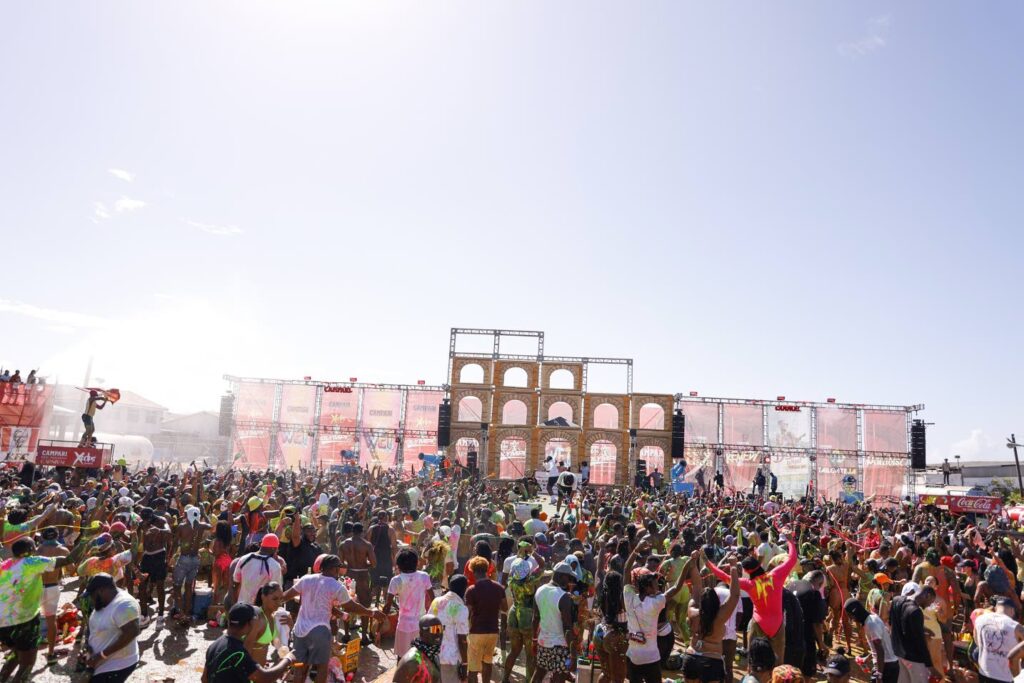
    Jamaica’s downtown Kingston came alive with color, rhythm and nonstop energy on Easter Monday, as the highly anticipated Campari Xodus Wet Music Festival kicked off Xodus Carnival week at Port Spectrum. True to its immersive, one-of-a-kind branding, the event drew hundreds of carnival enthusiasts who spent hours embracing the full experience: mixing sun, splashing water, vibrant paint and colored powder, and relentless soca beats that kept crowds moving from pre-dawn until late morning.

    Even an early 4:00 a.m. start time failed to dampen the spirit of diehard soca fans, with many arriving hours before sunrise to secure their spot and mark the official launch of the week-long carnival celebration. A stacked lineup of top-tier disc jockeys, including fan favorites Travis World, Tony X, Sinistar, Zess, Rico The DJ, Papi Jae, Fatalic, and Tegabrooks, kept the energy soaring for hours, with wet, paint-dusted partygoers dancing continuously until the event wrapped up just 20 minutes before noon.

    One of the festival’s defining features was its massive foam pit, a hit with attendees of all ages. Building on the momentum of the successful inaugural staging in October 2025, organizers upped the ante for 2026 by offering branded Xodus Wet monokinis for pre-order and purchase as early as 2025, giving attendees the chance to pick up themed apparel ahead of the main event.

    Scott Dunn, Group Managing Director of Dream Entertainment Limited, which produces the festival, shared his unreservedly positive assessment of the day’s events in an interview with the Jamaica Observer following the fete. “Campari Xodus Wet met all our metrics for success: crowd size, production quality, food and beverage offerings, and overall vibe,” he said, noting that he had no major complaints about how the day unfolded.

    Thanks to strategic collaborative partnerships with major food brands, attendees enjoyed complimentary catering from well-known names including Elle & Vire, Foska Oats, Pizza Hut, and KFC, adding extra value for early-morning partygoers who worked up an appetite dancing.

    The highlight of the festival came with a headlining live set from Trinidadian soca superstar and celebrated songwriter Voice, who delivered a high-energy performance packed with his most popular hits, including *Cyah Behave*, *Pandemonium*, and *Dear Promoter*. In a surprise crowd-pleasing moment, Voice invited legendary Trinidadian soca veteran Iwer George to the stage, where George delivered a fitting performance of his iconic track *Water* that sent the crowd into a frenzy.

    By the time the festival drew to a close, the Port Spectrum venue was transformed into a vivid kaleidoscope of rainbow hues from the paint and powder. Many attendees left so saturated with water and paint that some discarded clothing items that were too stained and soaked to be cleaned and saved.

    With the wet festival marking only the start of Xodus Carnival week, Dunn confirmed that Dream Entertainment is fully prepared to deliver the full “Xodus Xperience” for the rest of the season, which has been in planning for a full year under the event name OlympiX. “We’ve got five more large-scale events, costume distribution, and the biggest Road March Carnival Jamaica has ever seen coming up,” he said. “Everyone needs to feel what the Xodus Xperience is all about. Even if you only make it to one event this week, you’ll leave feeling like part of the Xodus Family.”

  • Market rises but participation weakens

    Market rises but participation weakens

    The first quarter of 202X closed with positive headline returns for Jamaica’s main stock market, but beneath the surface, the rally is losing foundational strength as upward momentum becomes concentrated in an increasingly narrow group of assets and investor risk appetite pulls back.

    For the three-month period ending March 31, the Main Market index logged an overall 8.83% gain, built on strong upward movement from the earlier months of the quarter. That overall gain, however, obscured a softening trend that intensified through March: the benchmark slipped 0.18% during the final month of the quarter, erasing a portion of earlier gains and signaling the broad rally was running out of steam by quarter-end.

    Market breadth shifted sharply negative in March, underscoring the uneven nature of recent gains. Only 14 stocks posted advances, while 38 closed lower, a marked deterioration from February’s 21 gains and 32 declines. The trend confirms that market participation has steadily weakened as the quarter progressed, meaning a shrinking share of listed companies are contributing to the index’s overall growth.

    Put plainly, the headline index has moved higher, but that growth is being driven by fewer and fewer names. This narrow leadership pattern was clearly visible in the performance of the market’s top outperformers: Kingston Properties and Sagicor Real Estate X Fund notched robust double-digit gains that propped up the broader index, while the majority of other listed assets lagged far behind.

    At the same time, several widely held large-cap stocks, including Caribbean Producers, Mayberry Jamaican Equities and JMMB Group, all trended downward, highlighting how fractured investor confidence is across different segments of the market. For the full quarter, the gap between top and bottom performers widened dramatically: TransJamaican Highway and Kingston Properties led the market with gains of roughly 50%, while dozens of other stocks posted double-digit losses.

    This growing divergence between a small cohort of strong winners and a much larger group of declining stocks signals a clear shift in investor strategy: the market is becoming far more selective, with market participants concentrating capital in a handful of targeted opportunities rather than spreading investments broadly across the benchmark.

    Trading data further reinforces the trend of rising investor caution. In March, the total number of transactions climbed 17% year-over-year to 27,101, but total trading volume plummeted 70% to 321.84 million units. The aggregate value of all trades also fell sharply, dropping to $4.11 billion from $24.51 billion in the same period a year earlier.

    This data points to a clear shift in investor positioning: while more trades are being executed, investors are committing far less capital per transaction, a clear signal of growing risk aversion and a shift toward shorter-term trading strategies. The pattern also suggests many market participants are testing the waters with small, tactical positions rather than making large, long-term commitments to equities.

    The junior market segment mirrored the main market’s weak underlying performance, even with more muted overall movement. The junior market index gained 1.04% in March and posted a meager 0.21% gain for the full first quarter, showing almost no net upward momentum for the period. Within the segment, performance was similarly uneven: Jetcon Corporation and Future Energy Source Company posted gains, while Kintyre Holdings and IronRock Insurance closed lower, echoing the main market’s pattern of narrow, uneven growth.

    Taken together, the data paints a clear picture of a stock market that still shows positive headline gains, but lacks broad underlying support. This dynamic matters for future performance: narrow rallies driven by a small handful of stocks and declining average trade values are notoriously difficult to sustain over the long term, particularly if broader investor confidence fails to improve in coming months. If the current trend of weakening breadth and declining capital commitment continues, the market will likely struggle to build on its strong early-quarter gains, even if benchmark headline indices remain in positive territory.